
Many so-called “X-planes”—as in “eXperimental” airplanes—have roared their way into the pages of aviation history, from the Bell X-1 that then-U.S. Air Force Major Charles Elwood “Chuck” Yeager used to become the first Homo sapiens to break the sound barrier in 1947, to the North American X-15 rocket plane that then-USAF Maj. William John “Pete” Knight flew to an incredible Mach 6.7 airspeed in 1967. By contrast, the X-62A won’t ring a bell with anybody other than the most hardcore military aviation buffs.
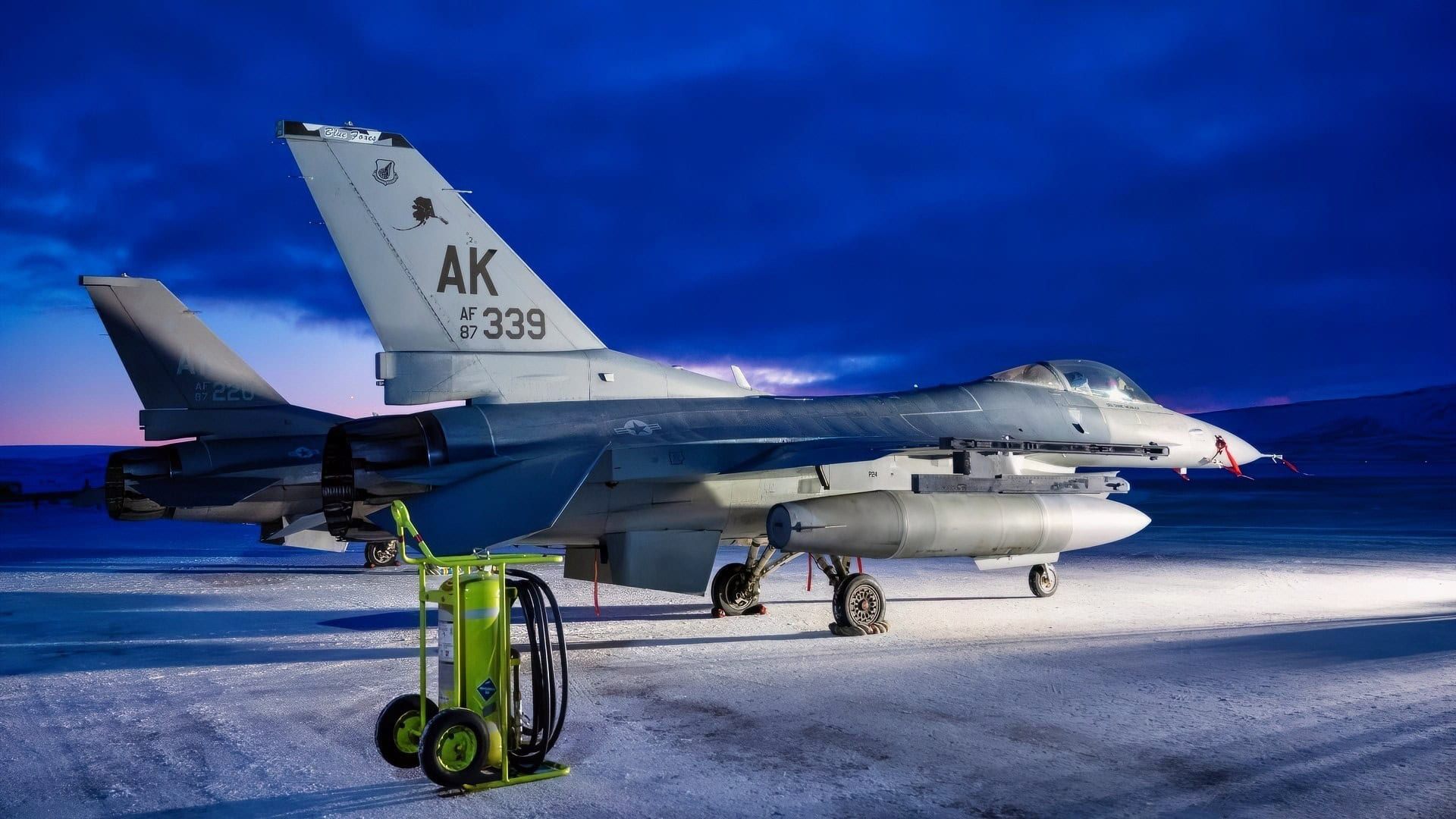
F-16 Fighting Falcon aircraft assigned to the 18th Fighter Interceptor Squadron from Eielson Air Force Base, Alaska, are placed on the flightline during Operation NOBLE DEFENDER at Pittufik Space Base, Greenland, Jan. 29, 2025. Operation NOBLE DEFENDER is an air defense operation under the direction of the North American Aerospace Defense Command designed to demonstrate the command’s ability to defend the approaches of North America from current and future threats while integrating across domains with partners and allies. NORAD routinely conducts sustained, dispersed operations in defense of North America through one or all three NORAD regions, include Alaska, Canada and the continental U.S. (U.S. Air Force photo by Tech. Sgt. Christopher Ruano)
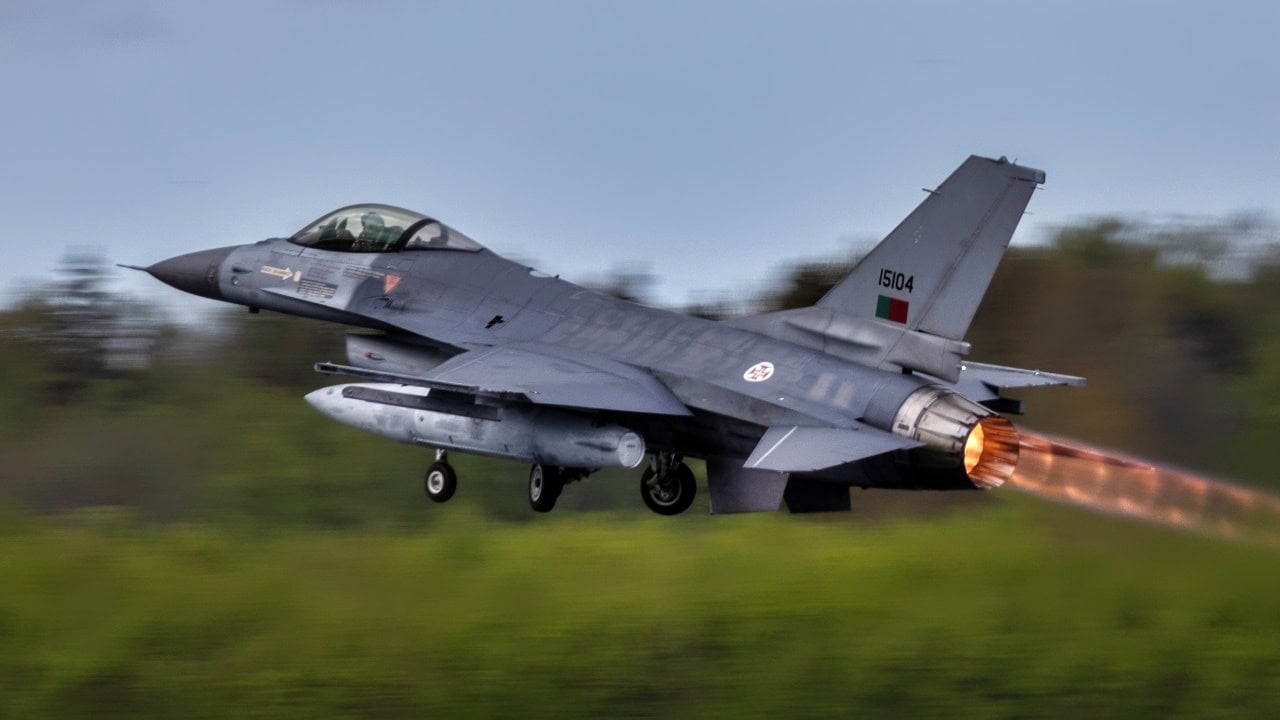
A Portuguese Air Force F-16 Fighting Falcon takes off during a Baltic Air Policing Rotation in Estonia.
Baltic Air Policing is a peacetime mission in which NATO Allies deploy fighter jets to cover the airspace of Estonia, Latvia and Lithuania. Image Credit: NATO.
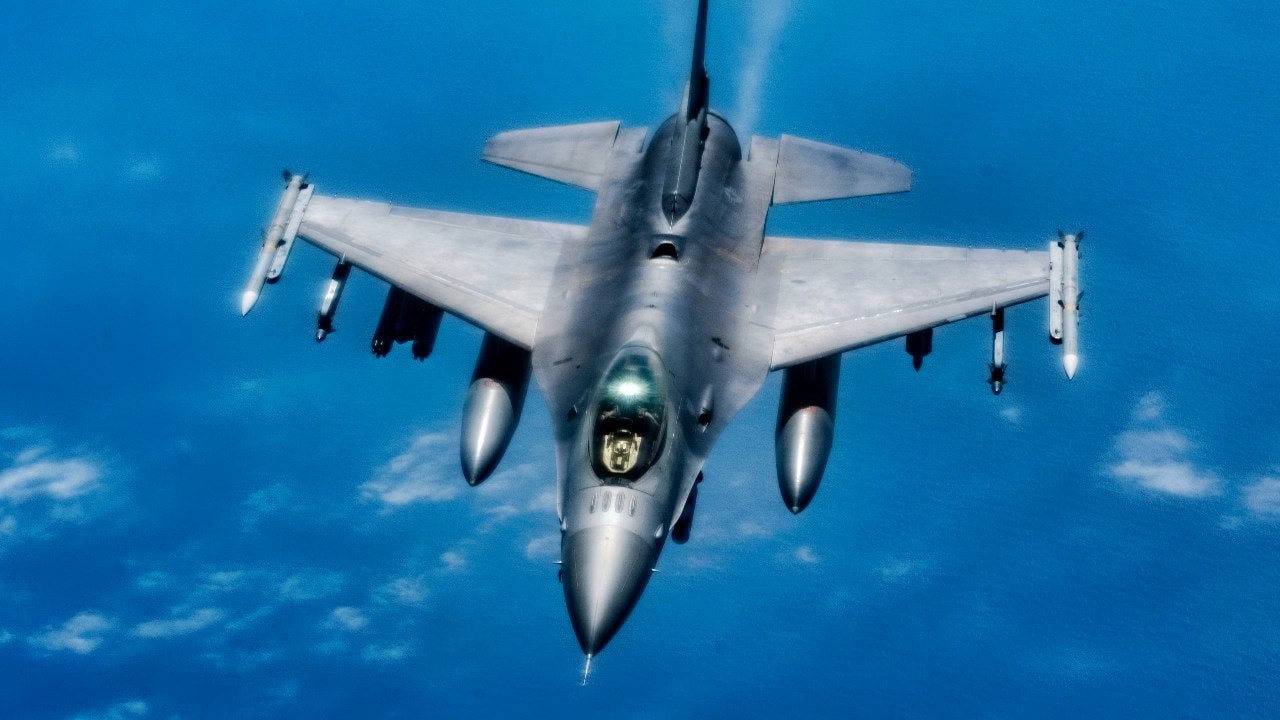
That said, our readers will definitely recognize the name and alphanumeric designation of the X-62’s baseline aircraft, the General Dynamics cum Lockheed Martin F-16 “Fighting Falcon” AKA the “Viper.” And now the X-62A is mating the concepts of X-planes, F-16s…and artificial intelligence (AI).
Bottom Line Up Front (BLUF)
According to recent reporting, in a series of flight tests conducted jointly by Lockheed Martin’s famed Skunk Works division and the U.S. Air Force Test Pilot School—the latter is located at Edwards AFB, California—an AI agent flew a fighter aircraft using live sensor data to locate and intercept another aircraft.
The interceptee was a live Northrop T-38 Talon, the mainstay trainer aircraft for USAF Undergraduate Pilot Training (UPT) students aspiring to be fighter jocks and bomber drivers alike. The interceptor was, yep, you guessed it, an X-62A.
The modified Viper employed a sensor package known as the Legion Pod, which fed infrared (IR) search-and-track data directly into an onboard AI agent that controlled the X-62A and guided it into tactical intercept positions.
This is particularly significant because previous AI demonstrations typically relied on simulated targets or pre-generated datasets.
By contrast, live sensor feeds expose autonomous software to the same type of information military pilots encounter during real missions, i.e., “Train as you fight, fight as you train.”
Lockheed Martin’s engineers completed a total of 27 autonomous intercepts spread out across eight sorties.
Along the way, those engineers also completed AI integration, software validation, and ground testing in roughly three months, crediting their employer’s “Supermassive” AI development framework for accelerating the process and allowing teams to move new autonomous agents from development to flight testing much faster than traditional methods.
The program’s proponents say handing selected tasks to AI could reduce pilot task saturation during complex missions, thus allowing aircrews to devote more attention to tactical decision-making whilst autonomous software handles time-sensitive actions.
Digging Deeper: Experts and Spokespersons Weigh In
–Ron Fehlen, vice president and general manager of Skunk Works: “The future of air combat isn’t just autonomous — it’s sensor-driven… This breakthrough moves AI beyond simulation and into operationally relevant environments, demonstrating how trusted autonomy can help pilots make faster decisions, reduce workload and maintain the advantage when it matters most.
I’m proud of our team and our partners at the United States Air Force Test Pilot School for advancing the next era of AI-enabled air dominance.”
–Stacy Kubicek, vice president and general manager of Lockheed Martin Sensors and Global Sustainment: “This flight test shows how advanced sensing and AI together become a decisive force multiplier – paving the way for future missions where combat systems, sensors and autonomous agents operate seamlessly within a next-generation network.”
X-62A Backstory
The X-62A is also known as the VISTA, which stands for “Variable Stability In-flight Simulator Test Aircraft.” Designed jointly by General Dynamics and the Calspan Corporation as a derivative of the F-16D variant of the Fighting Falcon, the VISTA made its maiden flight in April 1992 and was initially designated the NF-16D; in June 2021, that designation was officially changed to X-62A as part of an upgrade to the USAF’s Skyborg fleet, with System for Autonomous Control of Simulation (SACS).
Among the distinctive features of the VISTA warbird:
-Incorporation of a multi-axis thrust vectoring (MATV) engine nozzle that provides for more active control of the aircraft in a post-stall situation
-Dorsal fairing that runs the length of the fuselage aft of the canopy and houses most of the variable-stability equipment and test instrumentation
-Heavyweight landing gear and a higher-capacity hydraulic pump and lines to accommodate the increased surface motions needed to simulate other aircraft
The VISTA team was a finalist for the 2023 Robert J. Collier Trophy and won both the Society of Flight Test Engineers’ James S. McDonnell Award and Aviation Week’s 2024 Laureate Award for Defense.
About the Author: Christian D. Orr
Christian D. Orr is a Senior Defense Editor. He is a former Air Force Security Forces officer, Federal law enforcement officer, and private military contractor (with assignments worked in Iraq, the United Arab Emirates, Kosovo, Japan, Germany, and the Pentagon). Chris holds a B.A. in International Relations from the University of Southern California (USC) and an M.A. in Intelligence Studies (with a concentration in Terrorism Studies) from American Military University (AMU). He is also the author of the book “Five Decades of a Fabulous Firearm: Celebrating the 50th Anniversary of the Beretta 92 Pistol Series,” the second edition of which was recently published.