
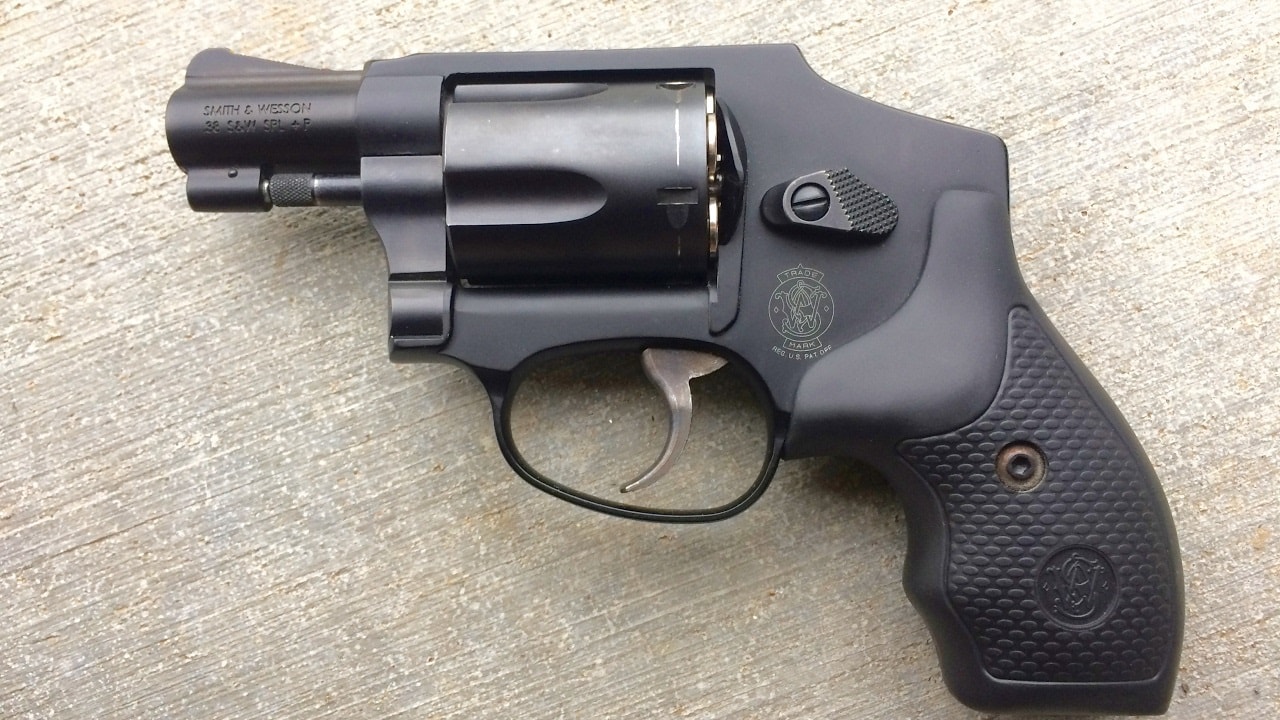
What Makes the Smith & Wesson Model 442 Revolver Special: Some guns get replaced. The Smith & Wesson Model 442 is now carried by someone else. It’s a five-shot .38 Special revolver with a two-inch barrel and an aluminum frame that weighs less than a full soda can. No accessory rail, no optics cut, no 15-round magazine. By spec-sheet standards, it should have been retired by the polymer wave decades ago. It wasn’t. It’s still one of the most carried backup and concealment guns in the country, and the reasons go back further than most shooters realize.
A Hammer That Disappeared On Purpose: Meet the Model 442
The 442 traces its DNA to 1952, when Smith & Wesson built the original Model 40 to mark the company’s hundredth anniversary.
The idea was simple: bury the hammer completely inside the frame so nothing could snag on a coat pocket during a draw.
A lightweight companion, the Model 42 Airweight followed that same year, featuring an aluminum frame to shave ounces. Both went out of production in 1974.
However, the concept refused to stay dead. Smith & Wesson revived the hammerless Centennial design in the early 1990s, and the Model 442 that came out of that revival is the one still on shelves today: an aluminum-alloy frame, a blued carbon-steel cylinder, a fully enclosed hammer, and a double-action-only trigger.
Point it, pull it through, and it fires.
That’s it in a nutshell.
Empty weight runs around 15 ounces. Current production is rated for +P .38 Special loads.
Five rounds, no more, no less.
Out of a five-shot cylinder, that’s the ceiling, and every serious owner learns to make peace with it early.
Trading More Capacity For Simplicity And Reliability
Here’s the trade you’re making with a J-Frame like this one.
You give up ten rounds of 9mm capacity, and you get a gun that will not jam, will not stovepipe, and will not need a malfunction drill taught to someone who’s never held a pistol before.
In many circles, that’s a fair trade for a huge segment of the concealed carry world, particularly for a backup gun that spends most of its life forgotten in an ankle holster or a jacket pocket.
Law enforcement figured that out decades ago.
Off-duty and backup carry is where the 442 built its reputation, and it’s not hard to see why.
It disappears under a T-shirt.
It survives months of sweat and lint without complaint.
And when an officer or shooter needs it, there’s no slide to rack and no safety to think about.
Pull the trigger; it fires every time.
I’ve always thought that simplicity is undervalued by shooters who’ve never had to explain a pistol’s manual of arms to someone under stress, and especially to shooters who don’t have much experience.
The .38 Special cartridge helps too.
It’s cheap, it’s soft-shooting compared to many carry calibers, and it’s one of the easiest rounds in the country to find and reload.
That matters more than ballistics charts do, because a gun people can actually afford to train with gets shot more, and a gun that gets shot more gets shot better.
Why It Keeps Showing Up
So why has a hammerless five-shooter outlived three generations of striker-fired micro-nines built to replace it? Reliability is most of the answer.
Shooters who’ve run thousands of rounds through J-Frames routinely say they’ve never seen one fail outright, and that’s not a claim you hear often about a defensive pistol pushed that hard.
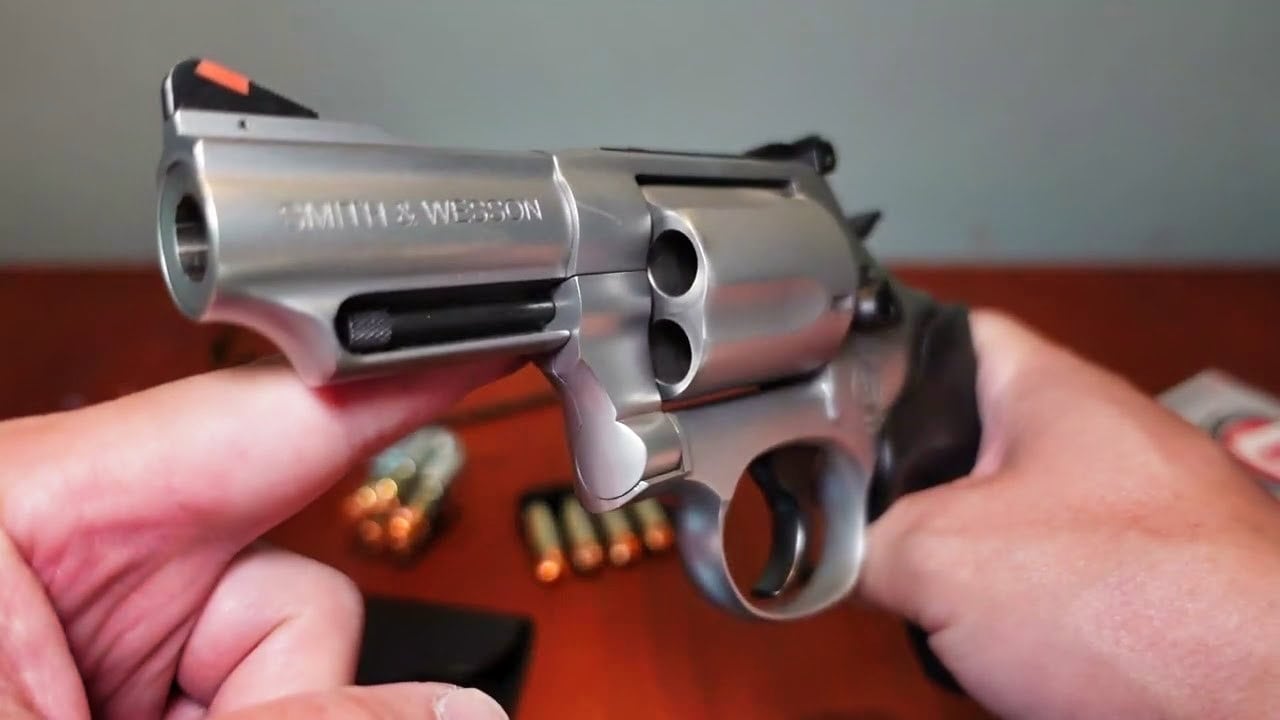
Model 69 Combat Magnum Smith and Wesson Gun. YouTube Screenshot.
It doesn’t hurt that Hollywood keeps casting it either.
Chris Evans carried one in Cellular. Bryan Cranston’s Walter White had one in Breaking Bad.
Melissa McBride’s Carol carried one across multiple seasons of The Walking Dead.
None of that sold a single unit on its own, but it kept the gun in front of an audience that had never set foot in a gun shop, and that visibility matters more than people give it credit for.
Smith & Wesson still sells it in half a dozen configurations, from a no-frills base model up through a Performance Center version with Crimson Trace laser grips.
The aftermarket for grips and holsters is as deep as anything in the J-Frame world.
None of that is an accident.
It’s a company still building for a customer base that never stopped buying.
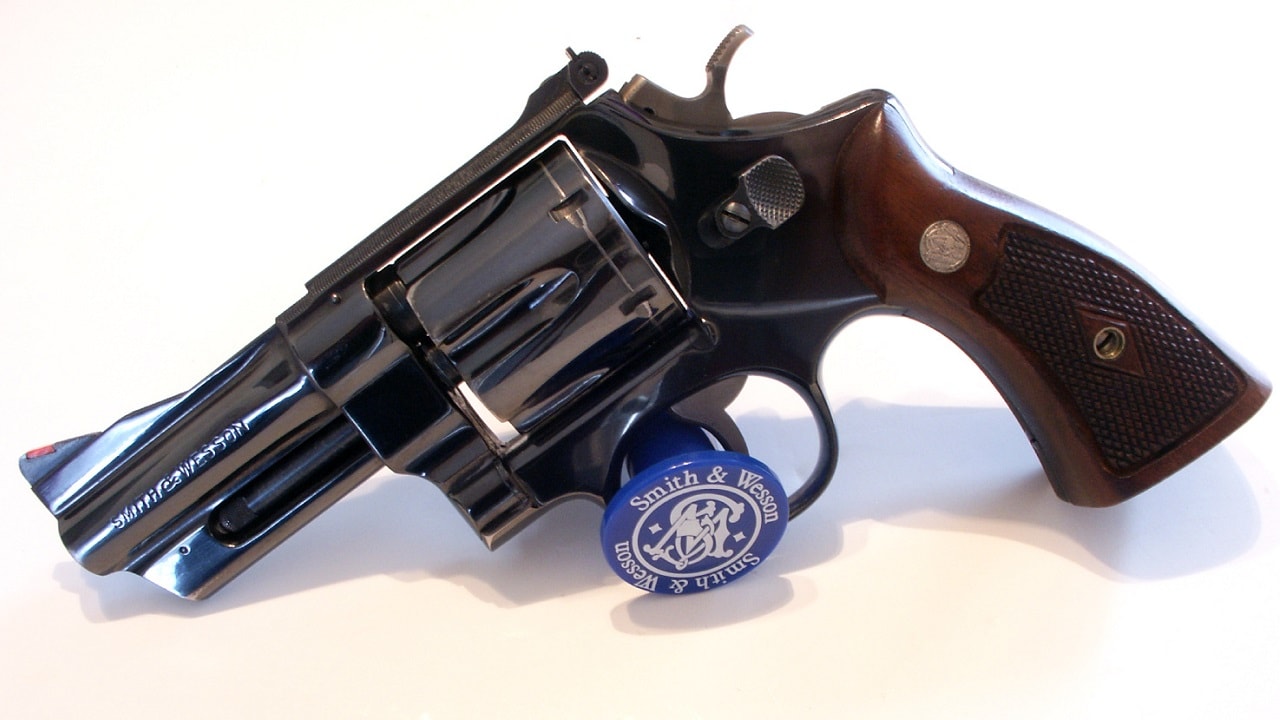
Smith and Wesson Model 27. Image Credit: Creative Commons.
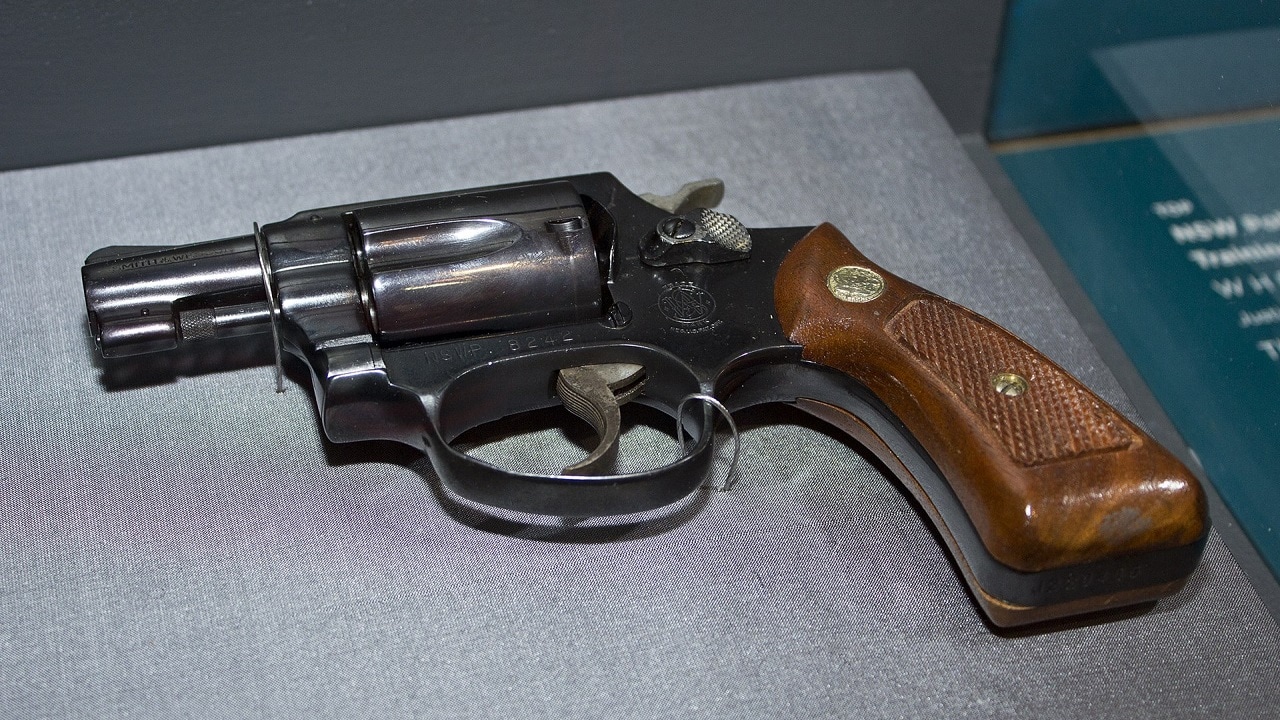
Model 36 .38 calibre Smith & Wesson which was issued to women in the NSW Police, on display at the Museum of the Riverina as part of the touring exhibition The Force: 150 years of NSW Police.
Say what you want about revolvers being outdated in a world of 15- or 17-round pistols.
That’s beside the point.
The 442 was never built to win a magazine capacity argument. It was built to work every single time it’s needed, without a second thought from the person holding it. It still does.
About the Author: Steve Balestrieri
Steve Balestrieri is a 19FortyFive National Security Columnist. He served as a US Army Special Forces NCO and Warrant Officer. In addition to writing for 19FortyFive, he covers the NFL for PatsFans.com and is a member of the Pro Football Writers of America (PFWA). His work was regularly featured in many military publications.