
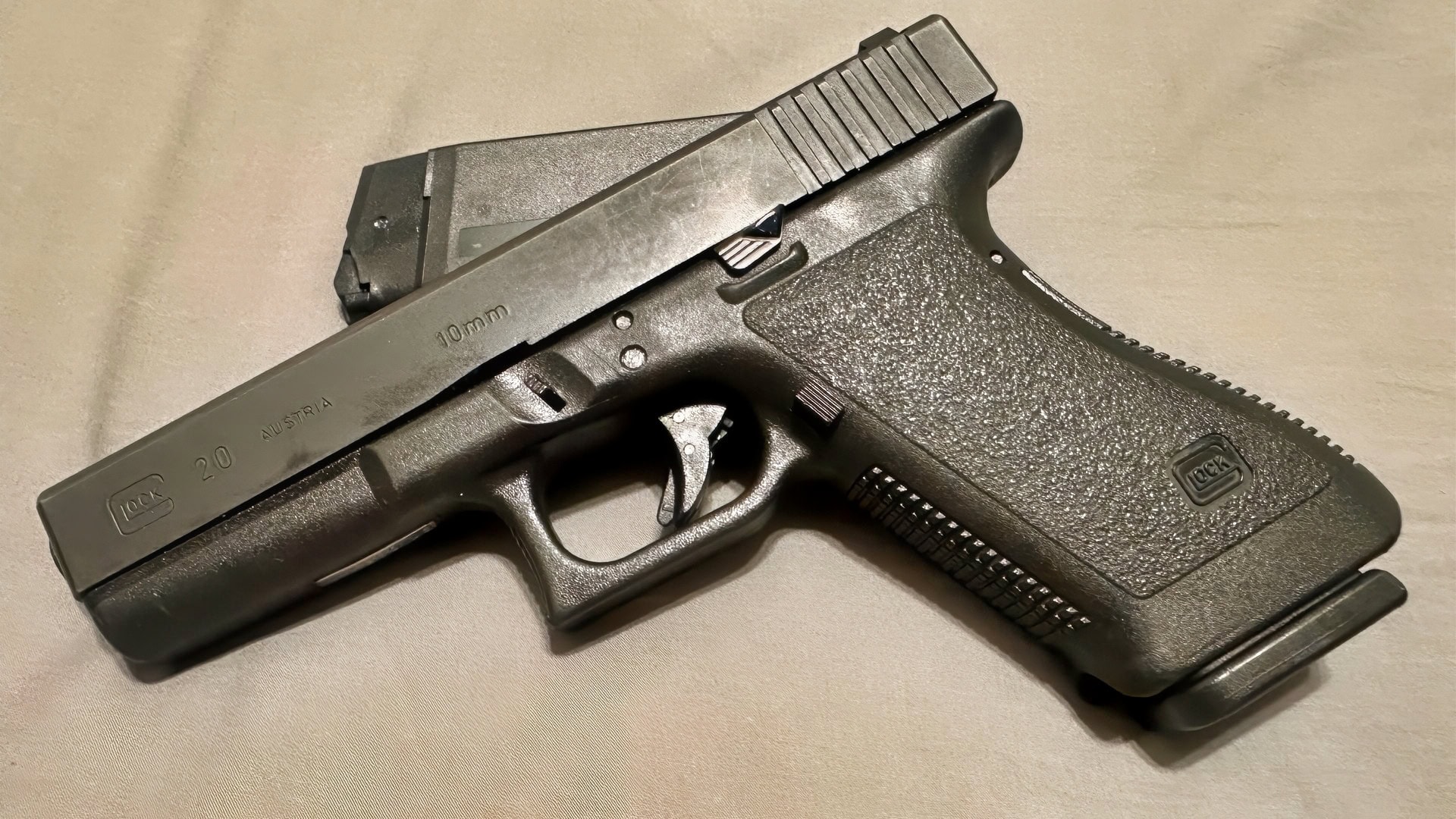
The Glock 20 10mm: Is the “Big Boy” Worth Carrying Concealed? – The Glock 20 has been around since 1990, and in that time it’s earned a reputation as one of the most capable full-size semi-autos chambered in 10mm Auto.
It’s a favorite among hunters, backcountry hikers worried about large predators, and handloaders who want to push the 10mm cartridge to its full potential. But when the conversation turns to everyday concealed carry, the Glock 20 becomes a much more polarizing choice.
I’ve always had an affinity for the 10mm cartridge. I was trying to get my hands on a Bren Ten back in the day, but after the FBI ditched the round because many agents couldn’t handle its power, the ammo got scarce and much more expensive.
But here’s an honest look at what it does well, where it struggles, and whether it makes sense as a daily carry gun.
What the Glock 20 Brings to the Table
At its core, the Glock 20 is built around the 10mm Auto cartridge, a round developed in the 1980s that hits noticeably harder than the more common 9mm or .45 ACP.
The 10mm was originally intended as a law enforcement cartridge, and while agencies eventually moved away from it in favor of milder options like .40 S&W, the cartridge found a lasting home with hunters and outdoorsmen who need a semi-auto capable of handling medium and large game, or, in bear country, serious defensive power in a pinch.
The Glock 20 pairs that cartridge with the same design philosophy that makes every Glock reliable: a striker-fired polymer-frame system with minimal parts, a reputation for functioning in harsh conditions, and easy maintenance.
Standard capacity is 15 rounds, which is generous for a caliber this powerful. The pistol also enjoys strong aftermarket support, with a wide range of sights, holsters (relative to other 10mm options, at least), and magazines available.
For self-defense purposes, that extra power can matter in specific scenarios, most notably if you live or spend time somewhere large predators are a genuine concern.
A properly loaded 10mm has enough penetration and energy to be a credible deterrent against something a 9mm might not reliably stop. However, while some may consider the 10mm overkill in a self-defense situation, it has the knockdown power that may save a life.
Where It Falls Short as a Carry Gun
The trouble starts with size and weight. The Glock 20 measures roughly 8.07 inches long, 5.51 inches tall, and weighs around 26 to 30 ounces unloaded, depending on which generation you have.
Add a loaded 15-round magazine and the gun gets heavy fast. This is a full-size, all-purpose pistol, not one really designed for concealment. For daily carry under normal clothing, that bulk is a real obstacle; printing becomes more likely, and all-day comfort suffers.
Holster selection is another sticking point. While the G20 has more support than niche 10mm pistols, it’s still far more limited than what’s available for compact 9mm Glocks like the G19 or G43.
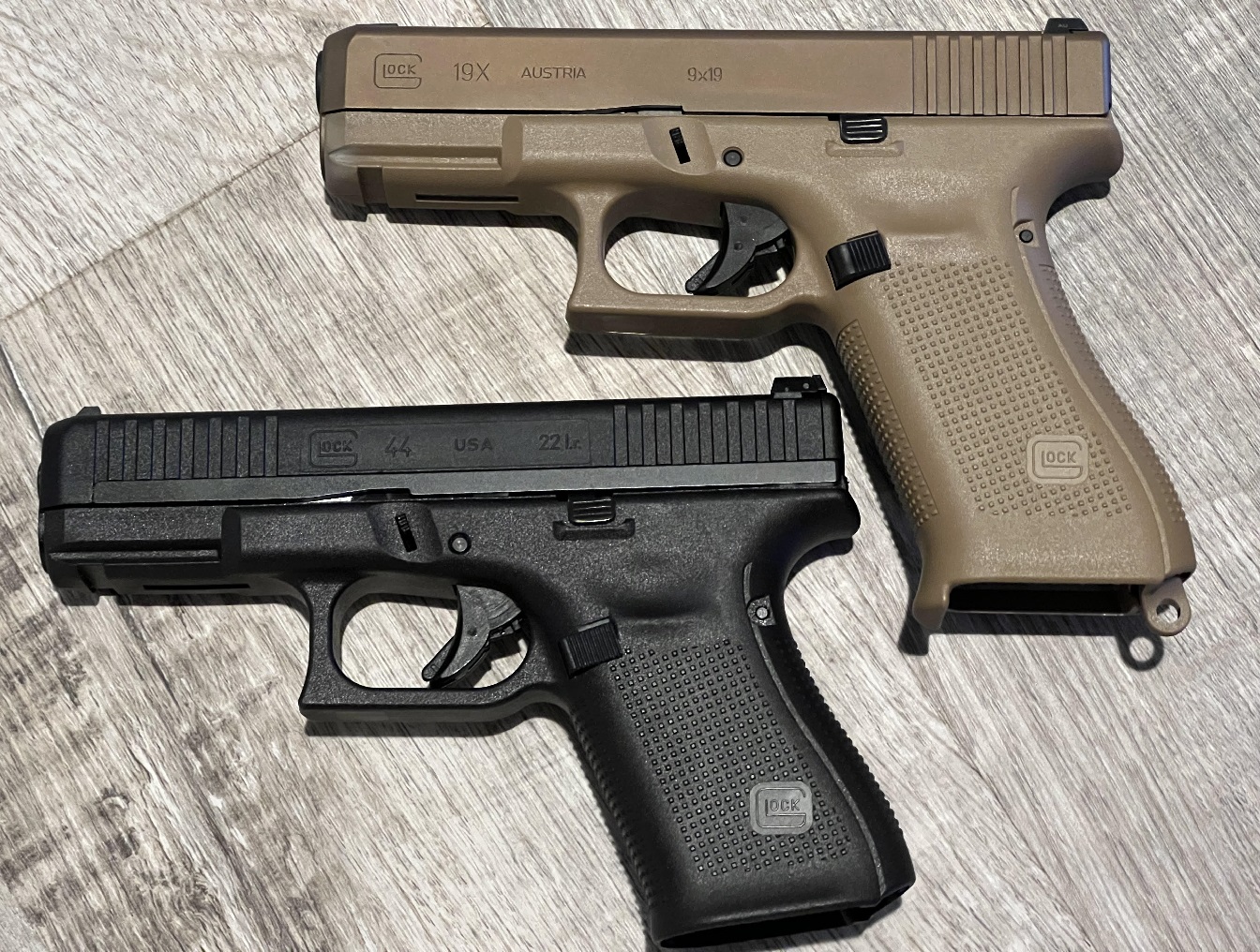
Glock 19X and Glock 44 side by side. Image Credit: 19FortyFive Original Image.
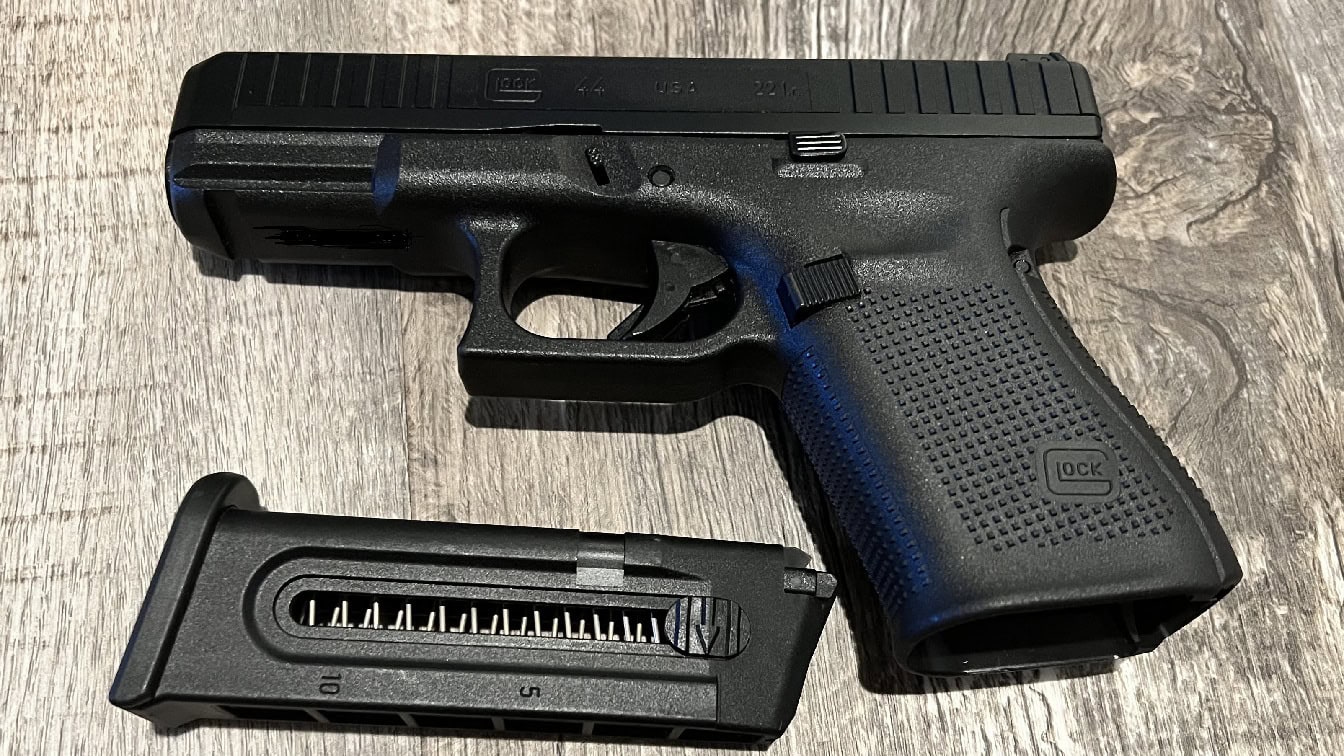
Glock 44. Image Credit: 19FortyFive Original Image.
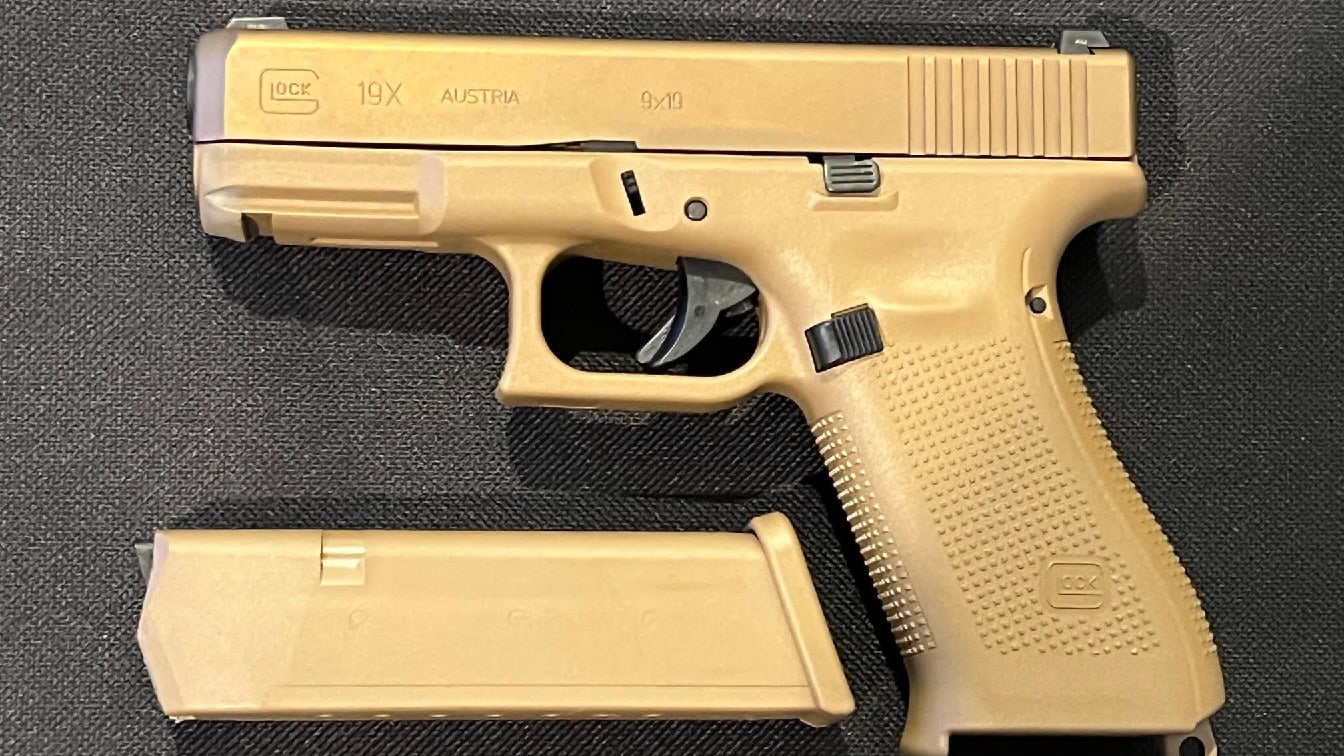
Glock 19X. Image Credit: Original Image from 19FortyFive.
If you’re building an appendix or IWB setup specifically for concealment, your options shrink considerably compared to more popular carry calibers.
Then there’s recoil. The 10mm Auto is a stout round, and even in a heavier gun like the G20, follow-up shots are harder to control than with a 9mm. In the past, I opted for the heavier calibers and practiced with them enough. Today, I don’t shoot as much as I should. Which is why 9mm is easier to maintain.
This isn’t a deal-breaker for an experienced shooter who trains regularly, but it is a legitimate consideration for anyone who wants a gun they can shoot quickly and accurately under stress without extensive practice.
The standard Glock trigger, which some shooters already find unremarkable, doesn’t do the recoil any favors either.
The aforementioned over-penetration is also a factor. The 10mm’s ability to punch through barriers is an asset in the woods but a liability in a home or urban self-defense context, where a round that passes through a threat and possibly a wall is a real safety concern.
This can be mitigated with the right self-defense ammunition, but it’s one more variable to manage.
So, Is It Worth Carrying Concealed?
The honest answer is: it depends heavily on what you’re actually carrying against. If your everyday concern is a mugging, a break-in, or a general self-defense scenario in a typical urban or suburban environment, the Glock 20’s size, weight, and recoil profile make it a tough sell next to a properly sized 9mm.
You’ll be fighting the gun’s bulk every day for a capability and extreme stopping power that you likely don’t need for those situations.
Where the calculation changes is if you spend serious time outdoors in regions with large predators, such as parts of Alaska or the Rockies, where the 10mm’s penetration and energy genuinely matter. If you can handle it, prioritize power and capacity over concealability, and are willing to build your clothing and holster setup around it, then the G20 V MOS may be a worthy option.
For most people whose primary use case is discreet, comfortable daily carry, the Glock 20 isn’t the ideal tool. Its weight will make it an uncomfortable carry. It is better suited as a duty, home-defense, hunting, or trail gun where its size is a non-issue and its power is the whole point.
About the Author: Steve Balestrieri
Steve Balestrieri is a National Security Columnist. He served as a US Army Special Forces NCO and Warrant Officer. In addition to writing on defense, he covers the NFL for PatsFans.com and is a member of the Pro Football Writers of America (PFWA). His work was regularly featured in many military publications