
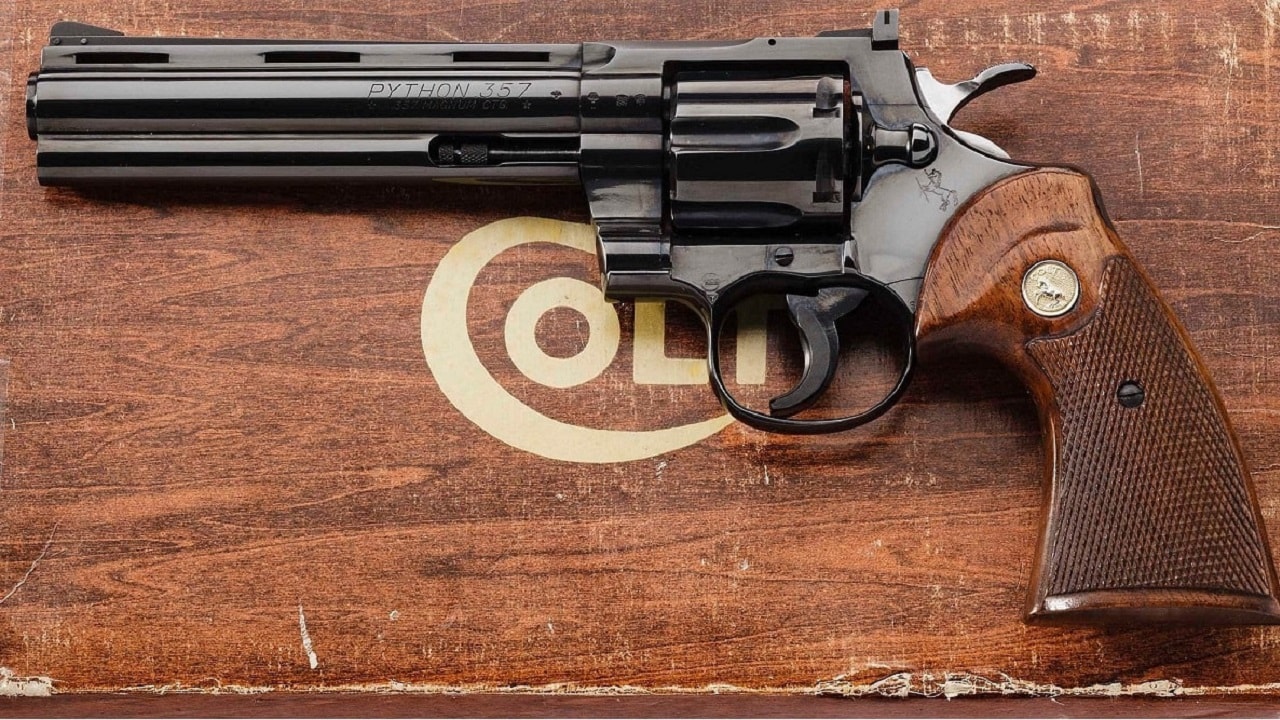
The Colt Python was introduced in 1955 as a premium addition to its revolver lineup, chambered in .357 Magnum and built on Colt’s medium “I-frame.”
From the start, it wasn’t designed to be economical; it was meant to compete on craftsmanship. But as the old saying goes, “You get what you pay for.” And that was plenty.
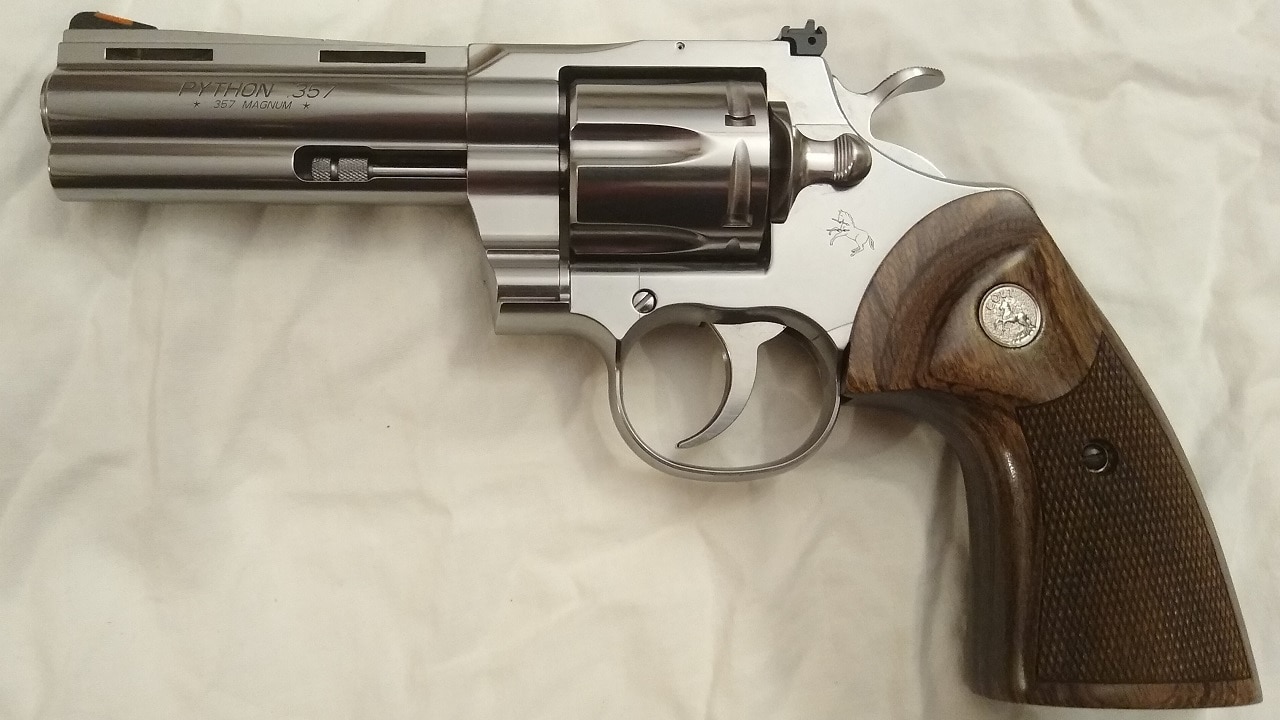
Colt Python Revolver. Image Credit: Creative Commons.
Every Python left the factory hand-fitted and hand-polished by skilled gunsmiths, a level of attention that gave it a reputation for a buttery-smooth double-action trigger pull and tight, repeatable accuracy that few production revolvers before or since have matched.
That reputation earned the Python nicknames such as “the Rolls-Royce of revolvers” and drew praise from well-known firearms writers and instructors over the decades.
It became a favorite of target shooters, several American police departments (especially before semi-autos dominated law enforcement), and Hollywood; the Python’s distinctive vented rib and full underlug barrel made it a recurring prop in film and television.
I went through a “wheel-gun” phase, especially with larger calibers; my favorites were the S&W Model 29 and the Python with the 6-inch barrel, which, while expensive, was everything it was made to be.
Everything about the pistol screamed luxury, from the hand-polished finish to the buttery-smooth action to its well-known accuracy. The Python is a fantastic revolver and was a joy to shoot.
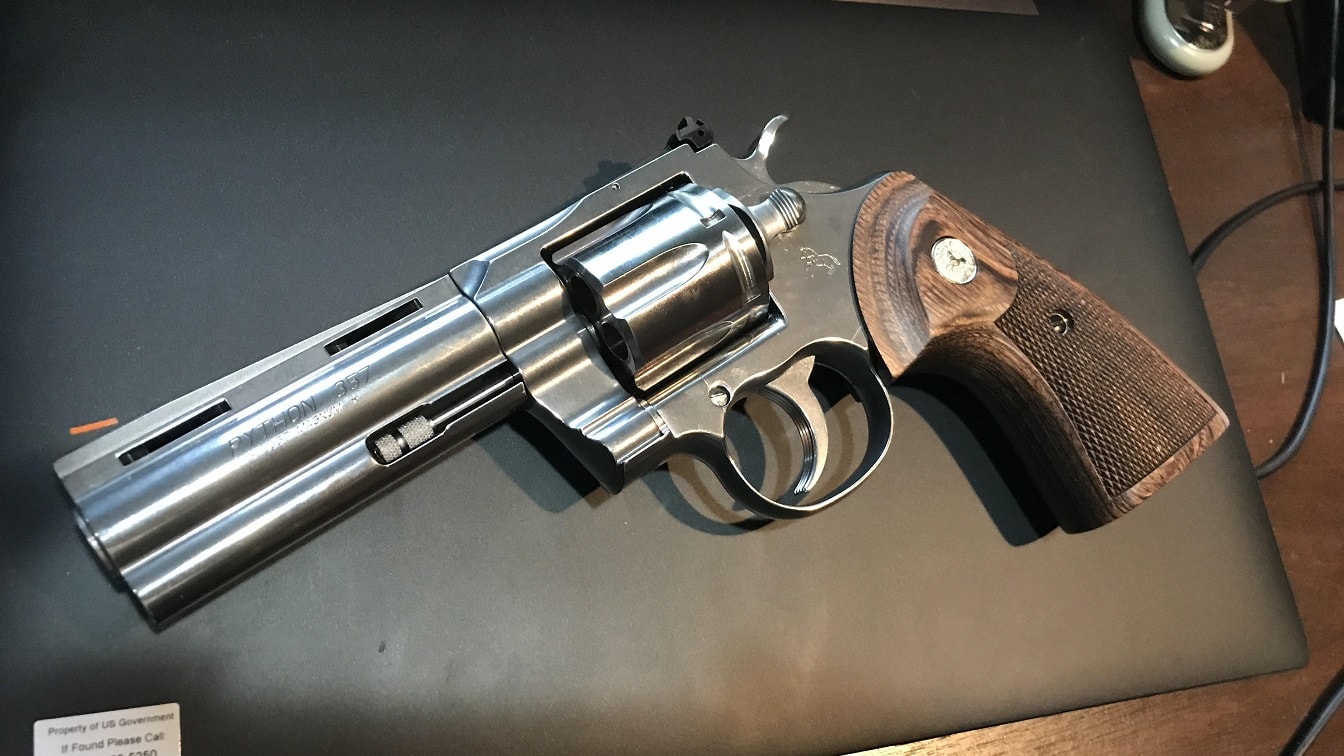
Colt Python. Image Credit: Creative Commons.
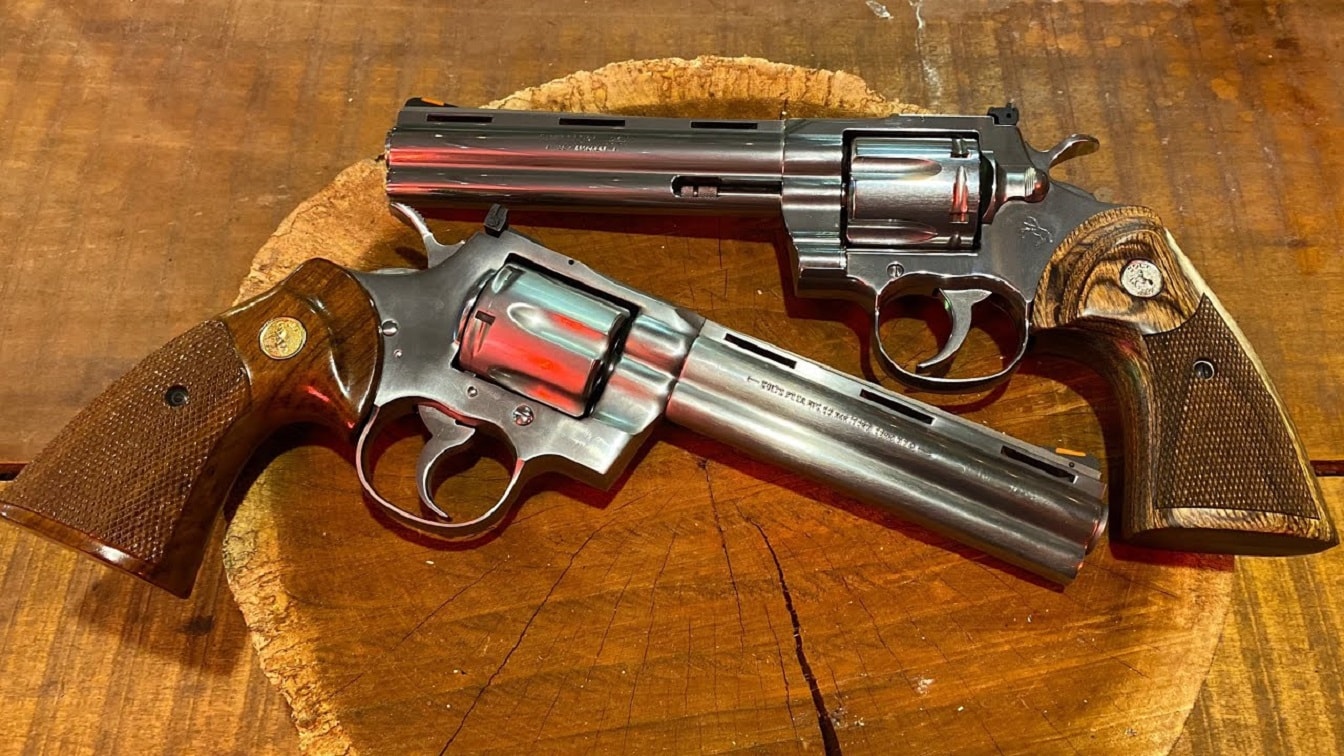
Colt Python. Image Credit: Creative Commons.
Colt Ceased Mass Production For A Time
Colt discontinued mass production in 1998, with the Custom Shop building small runs until roughly 2005.
Rising labor costs made the hand-fitting process increasingly uneconomical, and demand shifted toward semi-automatic pistols.
The Python quietly became a collector’s item, with used examples often selling for well above their original price.
In January 2020, Colt reintroduced the Python.
The new version looks nearly identical to the original on the outside but uses modern manufacturing techniques, CNC machining, and a stronger steel alloy internally, which brought the price down to a comparatively reasonable point and made it more durable for sustained magnum use.
It’s currently offered in several barrel lengths, in stainless steel, with a blued model added in 2024.
Pros Of The Python
-Trigger and accuracy. The Python’s double-action and single-action trigger pull is frequently cited as among the best of any factory revolver, which translates directly into shootability and precision.
-Build quality and fit and finish. Both the vintage and 2020 models are known for tight tolerances, smooth cylinder lockup, and an attractive, polished appearance.
-Versatility of ammunition. Chambered in .357 Magnum, it can also fire .38 Special rounds, giving shooters a lighter-recoiling practice option in the same gun and a cheaper way to go to the range.
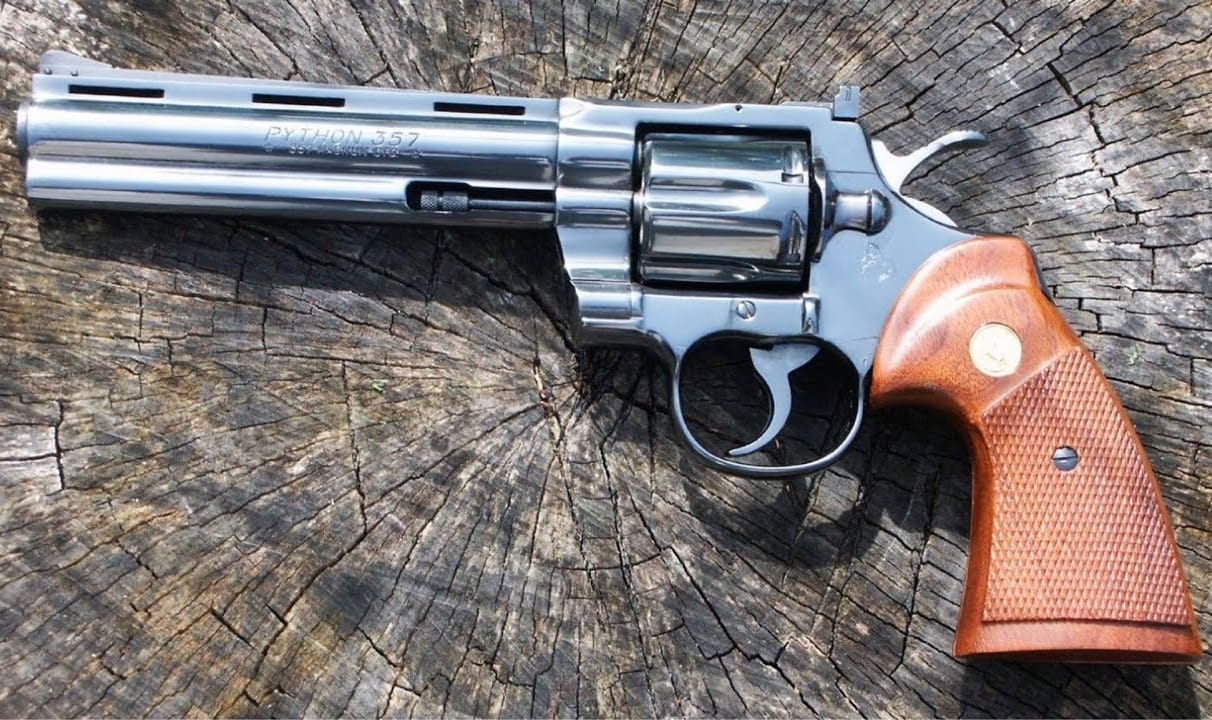
Image: Colt.
-Durability. The 2020 reissue was reportedly torture-tested with thousands of full-power magnum rounds and tens of thousands of trigger pulls without mechanical failure.
-Collector value. Vintage Pythons have strong resale value, and even the modern version carries brand cachet.
Cons Of the Snake
-Price. Even at its more attainable modern price point, the Python costs significantly more than comparable revolvers from Ruger or Smith & Wesson, and original vintage models can run into the thousands of dollars.
-Weight. At around 2.5 to 3 pounds depending on barrel length, it’s heavier than many compact defensive revolvers, which matters for all-day carry.
-Capacity. Six rounds is standard for the platform, which is less than most modern semi-automatic pistols.
-Reload speed. Like any revolver, reloading under stress takes more practice and time than swapping a magazine.
-Parts and service history. Older-vintage Pythons, especially those that saw heavy use before proper service, developed a reputation for timing issues when neglected, though this was often more about maintenance than design.
How Good Is It for Self-Defense?
As a defensive weapon, the Colt Python is genuinely capable but not necessarily optimal by modern standards.
The .357 Magnum cartridge is a proven manstopper with a long track record in law enforcement and civilian defense, and the Python’s exceptional trigger makes it easier to shoot accurately under pressure than many other revolvers.
For a larger caliber weapon, it was amazingly accurate and much easier to reacquire the target after the first shot than my Model 29 was.
However, six rounds and a slower reload, something I didn’t excel at and truthfully didn’t practice enough, put it at a practical disadvantage against most semi-automatic pistols in a self-defense context.
Mine was strictly a range weapon and a nightstand home-defense weapon. But a beautiful one at that. It never failed to get the attention of other shooters. Countless times they asked for and received permission to try it out for a few rounds.
The Python is an excellent, historically significant revolver that will do the job in a defensive scenario, but most people carrying for personal protection today would look at a modern semi-auto or a lighter, more purpose-built revolver first.
The Python may be 71 years old, but it has aged quite well.
About the Author: Steve Balestrieri
Steve Balestrieri is a National Security Columnist. He served as a US Army Special Forces NCO and Warrant Officer. In addition to writing on defense, he covers the NFL for PatsFans.com and is a member of the Pro Football Writers of America (PFWA). His work was regularly featured in many military publications