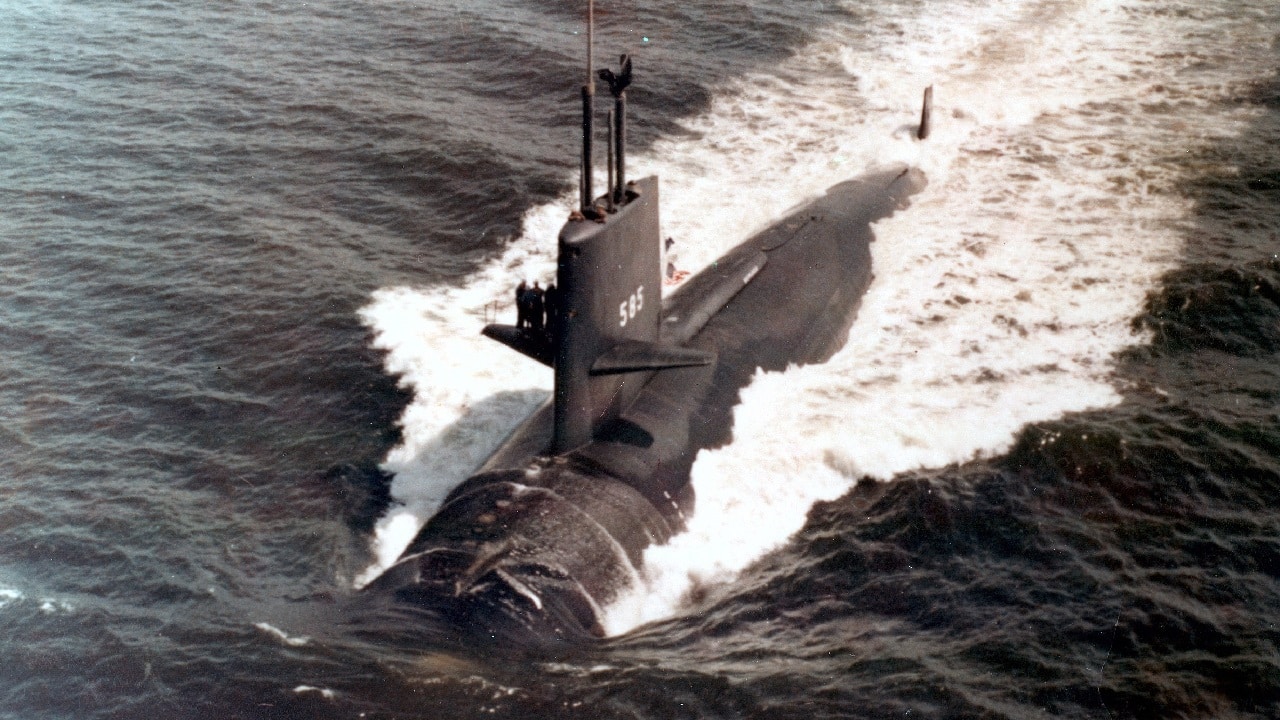
Summary and Key Points: The US Navy nuclear attack submarine USS Scorpion was lost with 99 men in May 1968, 400 miles southwest of the Azores in 10,000 feet of water. Her last message said she was closing in on the Soviet submarine K-135. The Navy searched with 35 aircraft and 55 ships, found her shattered hull in October, and ruled that the cause “cannot be ascertained.”
The Enduring Mystery Surrounding the Loss of the 3200 Ton Submarine USS Scorpion in 1968
Submarines have fascinated the public imagination since Jules Vern wrote of the Nautilus in his 1871 book, “20,000 Leagues Under the Sea.” This was nearly 30 years before the first true military submarine capable of running beneath the surface on battery power was commissioned as the USS Holland in 1900.
In 1968, the US Navy submarine USS Scorpion (SSN-589) was lost with all hands in 10,000 feet of water 400 miles Southwest of the Azores in the Atlantic Ocean. The Scorpion was a Skipjack-class nuclear submarine, about 251 feet long, weighing 3,200 tons, armed with 6 bow-firing torpedo tubes, and crewed by 99 officers and enlisted men.
The known circumstances of her disappearance were as follows. Scorpion left port in Norfolk, Virginia, on February 21, 1968, bound for the Mediterranean, where she operated with the 6th Fleet for some time before heading back to the US. Along the way, mechanical problems forced a brief stop in Naples, Italy, for repairs in April.
On her way out of the “Med,” Scorpion stopped in Rota, Spain, on May 17 to drop off two crew members and assisted a U.S. ballistic missile submarine exiting the harbor, making a noisy exit to draw off any Soviet subs that might have been waiting to tail the SSBN.
USS Scorpion Gets New Orders
Scorpion received a fragmentary order to move west into the Atlantic off the Azores to quietly monitor a Soviet naval exercise involving an Echo II-class submarine and at least one Soviet guided-missile destroyer.
When finished, her order was to return to Norfolk on or about 1 PM on May 27. On May 20, Scorpion repeatedly tried to send message traffic to the commander of submarines in the Atlantic (COMSUBLANT), saying she had found the Soviet task force, was approaching the Soviet Sub K-135, and was beginning to monitor its sound signature.
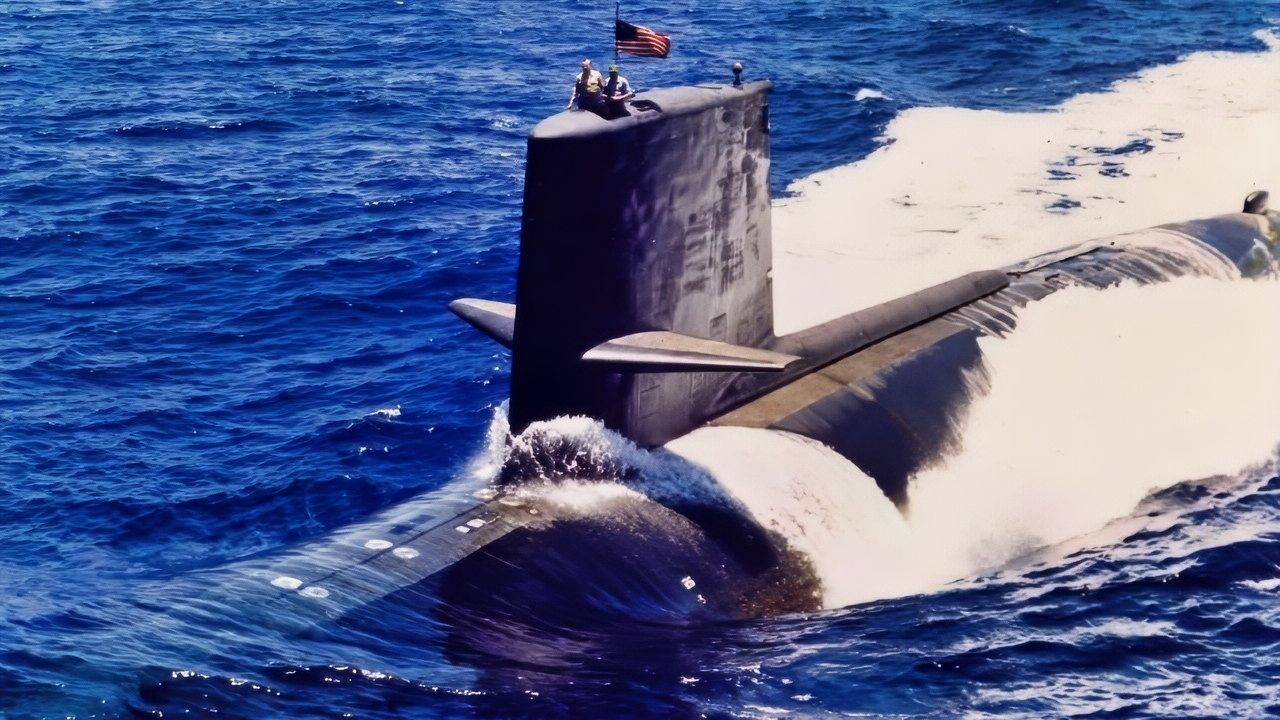
Skipjack-Class Submarine US Navy Submarine File Photo
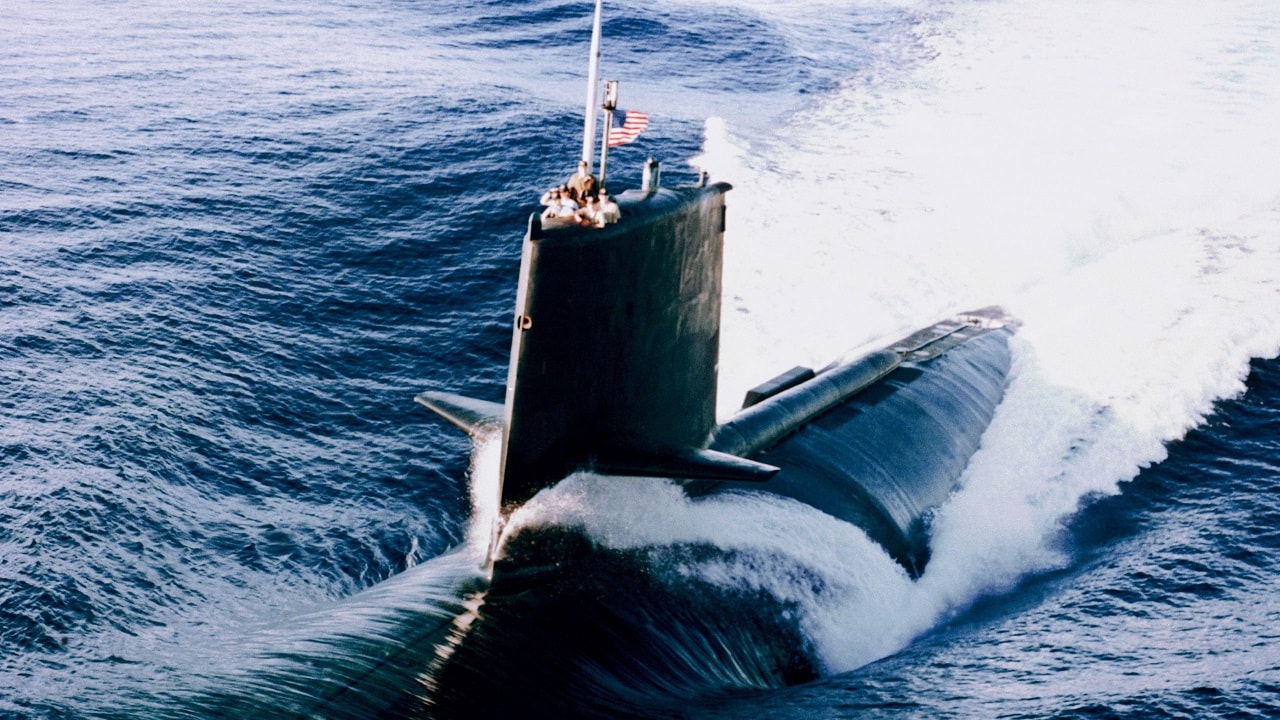
A port bow view of the nuclear-powered attack submarine USS SHARK (SSN-591) underway.
USS Scorpion Was Moving In On A Soviet Sub, And Then She Vanished
That was the last time anyone heard from the USS Scorpion.
When she didn’t arrive in Norfolk as expected on May 27, the Navy launched a wide search with 35 aircraft and 55 ships combing the route she should have taken home.
After a fruitless search, the Navy declared Scorpion lost on June 5, but the search continued for her final resting place.
The sub was finally discovered in October, some 400 miles Southwest of the Azores, at a depth of 10,000 feet. Using the Navy’s bathyscaphe Trieste II, they photographed Scorpion’s shattered hull to determine the cause of her loss.
The Navy’s board of inquiry could not make a definitive determination, saying, “The certain cause of the loss of the Scorpion cannot be ascertained from evidence now available.”
Into the void left by the lack of evidence, a wide variety of people have tried to offer their own explanations.
Here are the most common claims offered for consideration.
The Hot Run Torpedo Theory
The claim made here is that a Mk 37 Torpedo spontaneously activated it motor inside while loaded in a torpedo tube.
To try and deactivate it, Scorpion would have executed a 180-degree turn and perhaps even tried to expel it from the tube. It may have exploded internally or circled back and hit the submarine.
USS Scorpion Was Doomed By A Mechanical or Structural Failure
A favorite among engineers, this theory holds that a sudden mechanical failure of Scorpion’s stern planes pointed the sub toward the bottom, and she couldn’t recover before reaching crush depth.
Was USS Scorpion Destroyed By A Hydrogen Gas Explosion?
Scorpion carried a 63-ton lead-acid battery to power the ship in case of reactor failure.
Could hydrogen gas released by the battery cause an internal explosion and fire that sank the Scorpion?
Russia?
Was USS Scorpion attacked by the Russian Echo II sub, or was it ghosting and sunk? This theory suggests the Scorpion was attacked and sunk by the Echo II submarine it was trailing, its escorts, or both.
To prevent a world war from breaking out, the Soviets covered up the attack, and the US didn’t pursue real answers for fear of what it might find.
What Sank The USS Scorpion Remains A Mystery We May Never Solve
Ultimately, the lack of a full explanation comes down to insufficient information and incomplete evidence.
There is, however, the Navy’s official position on this matter:
“The official U.S. Navy position, then and now, is that the Scorpion most likely sank due to an unspecified mechanical malfunction that caused the 252-foot-long submarine to plunge below its crush depth, about 1,300 feet below the surface.”
In that gap, people tend to fill in with speculation, often missing evidence, to account for what we don’t know. In the modern age of nuclear-powered submarines, the Navy has lost only two in mishaps at sea: the USS Thresher in 1963 and the USS Scorpion in 1968.
The Navy cannot claim wide experience in figuring out how these things happen.
Instead, the Navy embarked on the SAFESUB program to prevent them from happening in the first place. That effort seems worth the time and expense. Since the loss of the USS Scorpion, the Navy hasn’t lost another submarine at sea with all hands aboard.
About the Author: Sean Spoonts
Sean Spoonts is the former Editor-In-Chief of SOFREP.com. He is a military analyst, writer, and commentator whose work has appeared in Newsweek, CNS News, Ukrinform, and various 30military/veteran media networks and professional publications, including the Military Intelligence Professional Bulletin. He is a U.S. Navy veteran, having served as an Aviation Anti-Submarine Warfare Operator and Search and Rescue Helicopter Aircrewman.