

Few handguns share the cultural space of the Smith & Wesson Model 29.
Chambered in .44 Magnum, it became one of the most recognizable revolvers in the world, not because of its practicality, but because of the myth built around it.
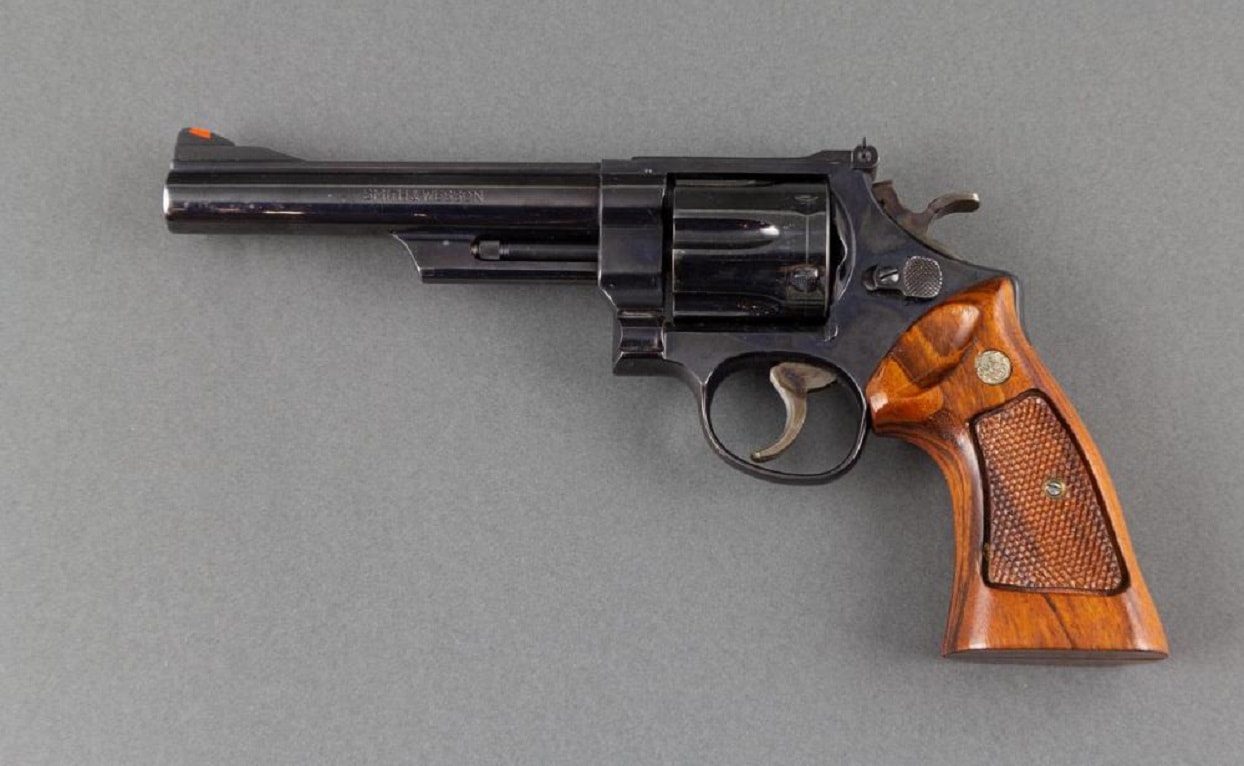
Image: Creative Commons.
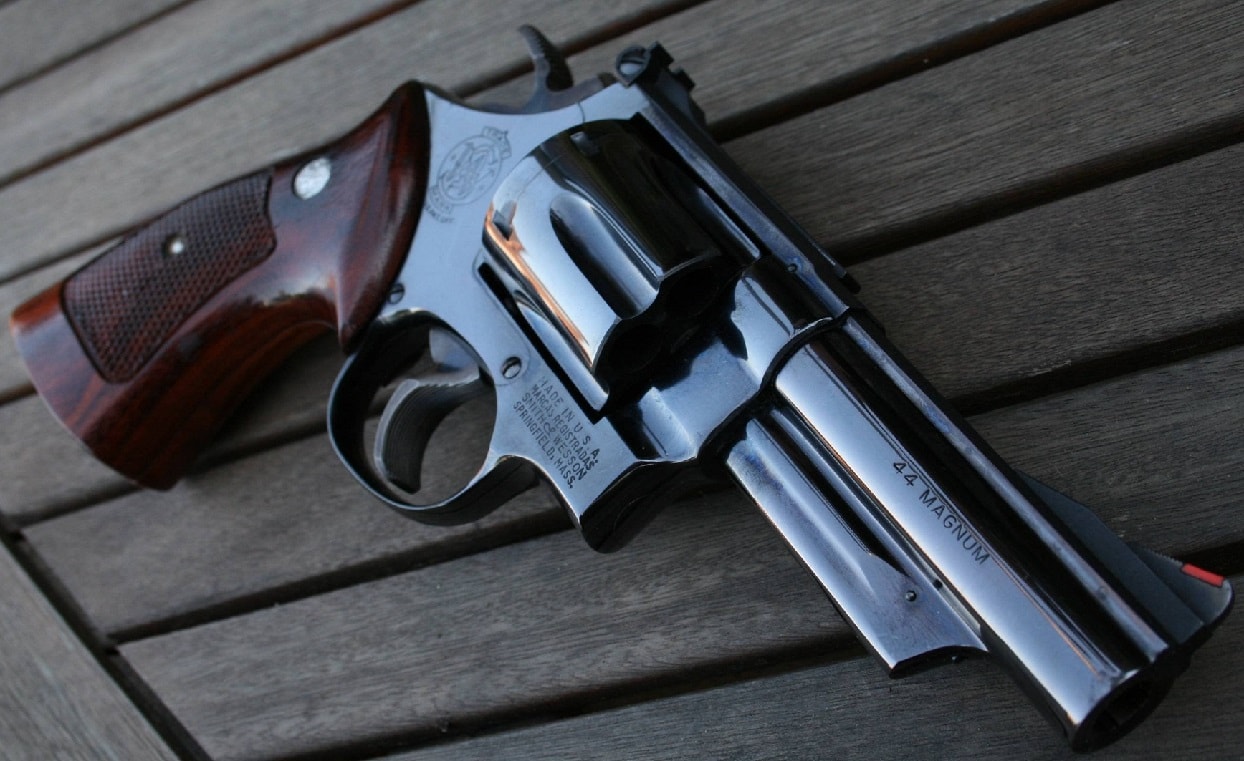
Understanding why the Model 29 captured the imagination of shooters, and why many of the same qualities that made it famous also make it a questionable choice for self-defense, requires looking at both its history and its ballistics.
It was partly because of the myth that I purchased one many, many years ago, and my friends and I spent happy hours on the range and in the sand pits close to home blasting away at all sorts of targets.
Origins of a Legend
Smith & Wesson introduced the Model 29 in 1955, developed alongside Remington’s new .44 Remington Magnum cartridge.
At the time, it was marketed as the world’s most powerful production handgun cartridge, a title it would hold for decades.
The heavy handgun was conceived primarily with hunters and outdoorsmen in mind, shooters who needed a sidearm capable of stopping large or dangerous game at moderate range, or backup protection against animals like bears.
For its first two decades, the Model 29 remained a niche product, prized by handloaders, hunters, and revolver enthusiasts, but hardly a household name. That changed dramatically in 1971.
The Dirty Harry Effect
Clint Eastwood’s portrayal of Inspector “Dirty Harry” Callahan transformed the Model 29 into a cultural phenomenon.
The character’s famous monologue, describing it as “the most powerful handgun in the world” and asking a suspect whether he felt “lucky,” turned an obscure hunting revolver into an object of mainstream fascination almost overnight.
Demand exploded.
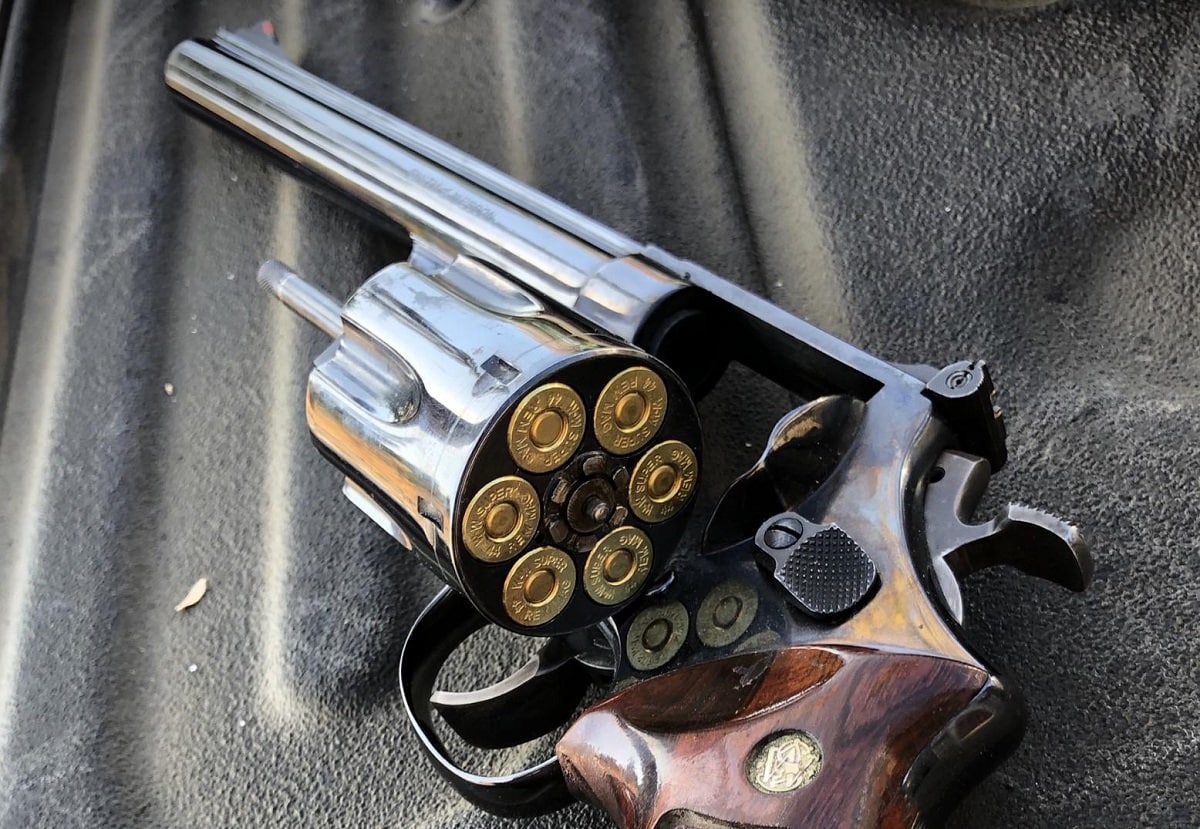
Image: Creative Commons.
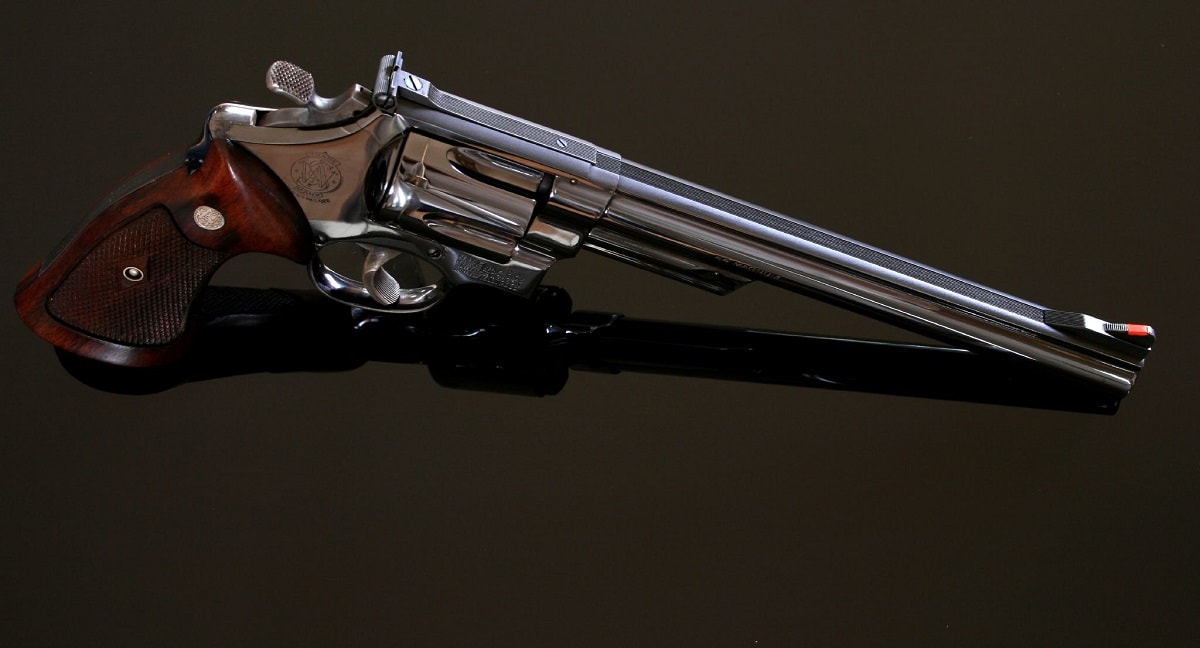
Smith and Wesson Model 29
Waiting lists at gun shops stretched for months, sometimes years, and secondhand prices soared well above retail. Smith & Wesson could not keep pace with orders.
The gun’s appeal was less about function than about image: owning a Model 29 meant owning a piece of cinematic machismo, a tangible connection to one of the most quoted action heroes in film history. As I said above, the myth of the pistol was one of the primary reasons people bought it.
Shooters, However, Loved It
Beyond the movie tie-in, the Model 29 earned genuine respect among revolver shooters for real reasons.
It was built on Smith & Wesson’s large N-frame, giving it the heft and rigidity needed to handle magnum-level pressures reliably over a long service life.
Its trigger, in both single- and double-action, was polished to the standard S&W was known for in that era. The blued finish and wood grips gave it a classic, well-finished appearance that appealed to collectors as much as shooters.
For hunters, silhouette competitors, and handloaders, the .44 Magnum cartridge offered genuine utility: enough energy to ethically take deer-sized game at reasonable ranges, and enough velocity for long-range metallic silhouette shooting, a discipline that grew in popularity through the 1970s and 1980s partly because of cartridges like this one.
At the range, it was very accurate with the 6.5-inch barrel. However, due to the recoil, reacquiring the second shot quickly was …a challenge. Using reloaded ammo that wasn’t quite as hot made that a tad easier.
As I mentioned, I took it to the nearby sand pits, which wasn’t quite legal for shooting, as it was, at that time, fairly ignored by the local police.
The one time that they showed up, they were enamored with the pistol and asked to try it out.
The pits offered some targets that one wouldn’t find on the standard pistol range.
Junked-out cars, which the .44 magnum easily went through both doors with ease.
And it cracked an engine block, albeit one that was a bit rusted out.
Shooting at an old 2.5-inch galvanized fence post with a hot load from about 20 meters peeled the top of the pipe back like rams’ horns.
The Self-Defense Issues
Despite its fame, the Model 29 has notable drawbacks as a self-defense handgun, drawbacks serious enough that most firearms instructors and defensive trainers today steer people toward other options.
The first issue is recoil. Full-power .44 Magnum loads generate substantial recoil energy, more than most shooters can manage comfortably, let alone accurately, under the stress of a real defensive encounter.
Fast, accurate follow-up shots, often decisive in a self-defense scenario, as mentioned above, are difficult even for experienced shooters and can be genuinely punishing for smaller-framed or less experienced ones.
A shooter who flinches in anticipation of recoil shoots less accurately, undermining the entire purpose of carrying a firearm for protection.
Second, the gun itself is large and heavy.
The N-frame that gives the Model 29 its durability also makes it a poor fit for concealed carry.
Its size and weight run counter to the realities of everyday personal defense, where most encounters happen at close range and require a gun that can be carried consistently and drawn quickly.
Third, the cartridge’s terminal ballistics, while formidable, don’t necessarily translate into meaningfully better defensive outcomes than smaller, more controllable calibers like 9mm or .357 Magnum.
Modern defensive ammunition in far more manageable calibers has closed much of the practical gap in stopping power, while offering faster shot recovery, higher capacity, and easier training.
Overpenetration is also a legitimate concern with magnum loads in home-defense settings, particularly in multi-unit housing.
Finally, cost and practicality matter. .44 Magnum ammunition is expensive and often less available than standard defensive calibers, discouraging the frequent practice that builds real proficiency, arguably the single most important factor in effective self-defense.
A Gun of Legend, Not of Everyday Carry
The Smith & Wesson Model 29 remains a beloved piece of American firearms history, a showcase of craftsmanship, a genuinely capable hunting revolver, and an enduring cultural icon thanks to Hollywood.
I actually took it bear hunting once, but didn’t see a thing…thankfully.
However, its size, recoil, and cartridge cost make it a poor practical match for the realities of concealed carry or home defense.
For collectors, hunters, and revolver enthusiasts, it remains as compelling as ever. And it was a blast to shoot, but only in a range-type situation. I later sold mine to another enthusiast who “absolutely had to have it.” I got that sentiment.
About the Author: Steve Balestrieri
Steve Balestrieri is a National Security Columnist. He served as a US Army Special Forces NCO and Warrant Officer. In addition to writing on defense, he covers the NFL for PatsFans.com and is a member of the Pro Football Writers of America (PFWA). His work was regularly featured in many military publications.