
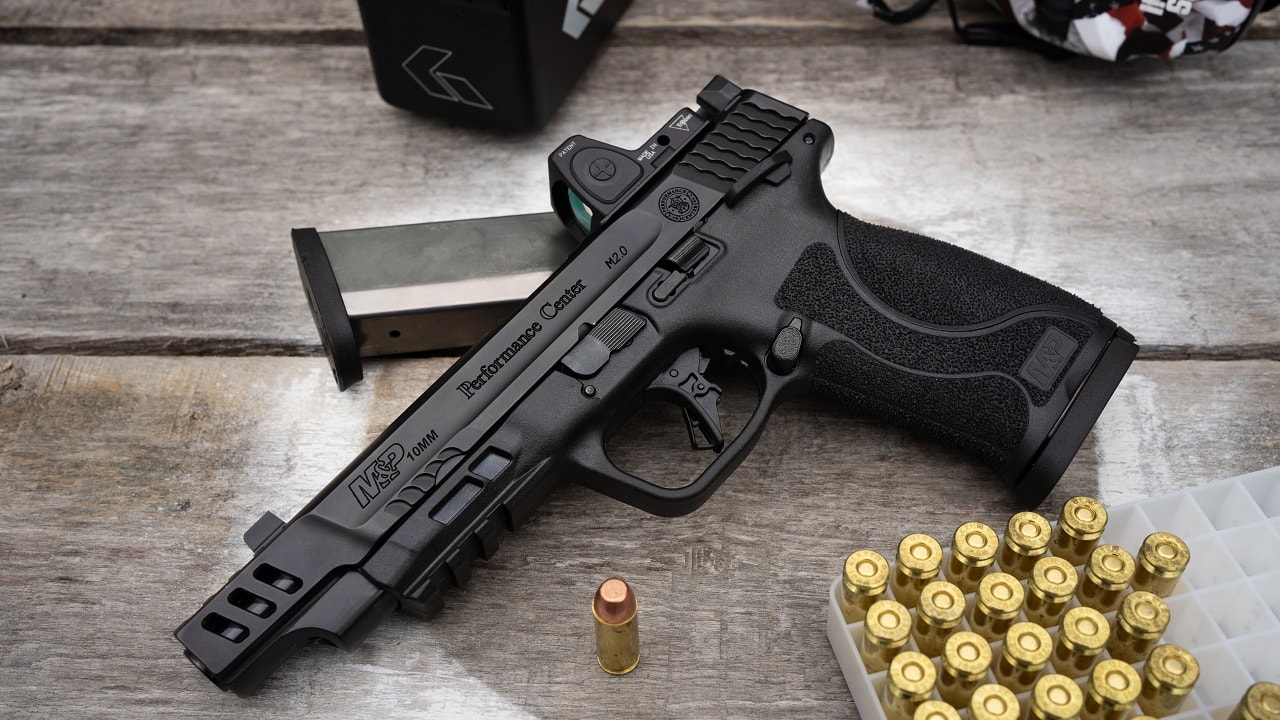
The 10mm Auto: Great Round, But Is It the Right One for Self-Defense? – The 10mm is the cartridge that refuses to die. It was born in the 1980s; it nearly vanished in the 1990s, and today it’s more popular than ever.
Walk into any gun shop, and you’ll find a rack of 10mm pistols and a customer asking whether he should carry one. That’s a fair question. The answer depends on what you’re defending yourself against, and how well-trained you are.
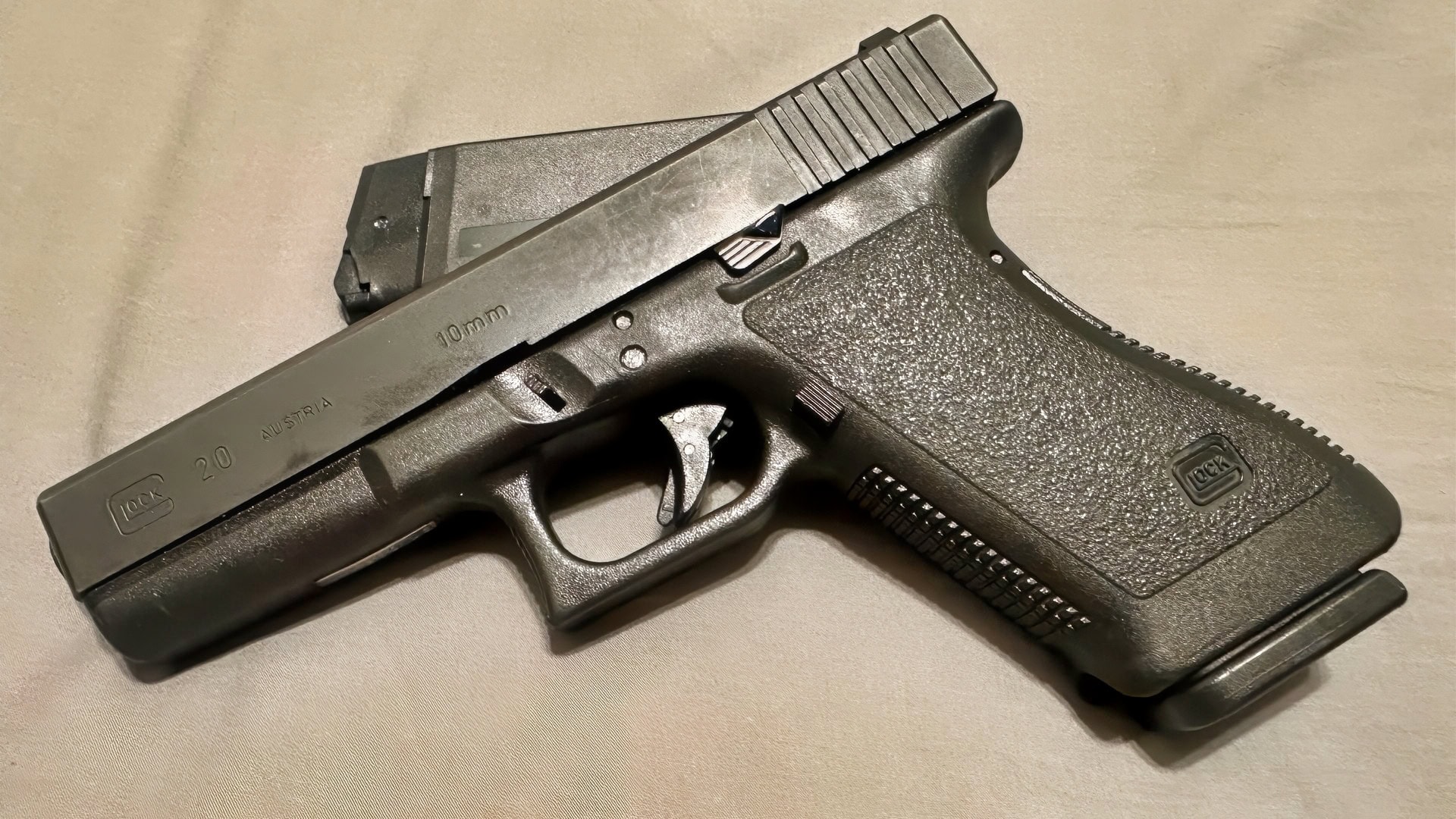
Glock 20 10mm Auto Creative Commons Photo
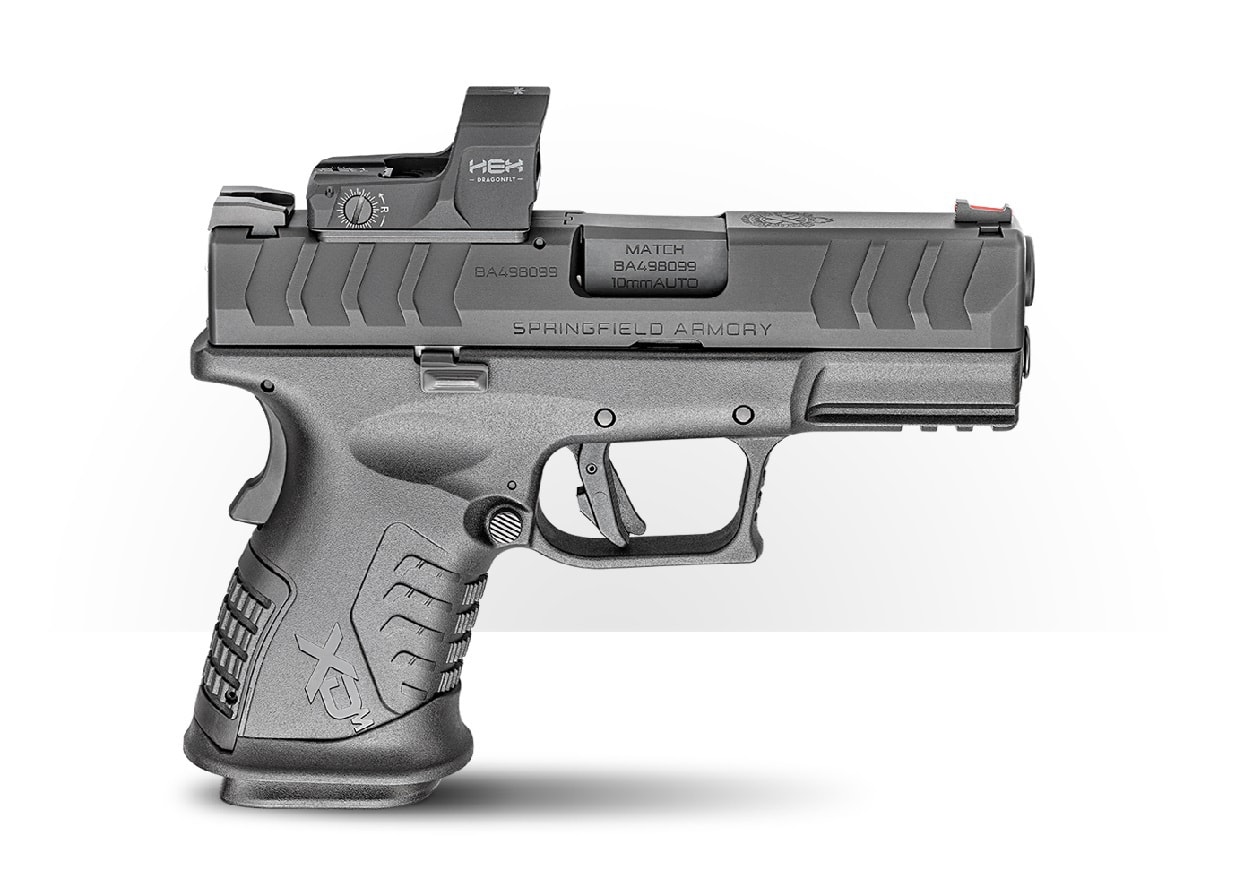
Image: Springfield Armory.
The 10mm Auto is popular for self-defense because it delivers massive kinetic energy (600–750 ft-lbs), flat trajectories, and deep penetration, bridging the gap between standard service pistols and magnum revolvers, while still offering high magazine capacities (15+ rounds in modern polymer handguns).
And let’s face it, Americans love their firepower.
A Round Born From A Bad Day In Miami
You can’t talk about the 10mm without talking about April 11, 1986. That day, two heavily armed bank robbers took on eight FBI agents in a Miami suburb.
Two agents were killed and five wounded. A 9mm Silvertip hit one of the suspects early in the fight but stopped just short of his heart, and he kept fighting for several more minutes.
Forgotten Weapons has a solid breakdown of the gunfight and how it led the Bureau to the 10mm.
After testing, the FBI signed a contract for 9,500 Smith & Wesson Model 1076 pistols in January 1990. However, agents struggled with the full-power load, so the Bureau reduced it to roughly 950 fps with a 180-grain Sierra hollow point.
The pistols had reliability problems too, and by August 1991 the FBI had ended the contract. That reduced “FBI Lite” load required a shorter case, which led to the .40 S&W. The 10mm went back to the enthusiasts.
The Case For The 10mm Round
Power is the obvious draw. Underwood’s 200-grain hard-cast flat-nose load is rated at 1,250 fps and 694 foot-pounds of energy. That’s about double what a typical 124-grain 9mm defensive load produces. Out of a semi-auto pistol that holds 15 rounds.
That capacity matters. The Glock G20 Gen5 MOS carries 15 +1 in the magazine, has a 4.61-inch barrel, and weighs 26.63 ounces unloaded. A .44 Magnum revolver hits harder, but it gives you six shots and a slow reload. In my opinion, that’s why the 10mm has become more popular in the backcountry, as it can double as a self-defense handgun of choice.
The field record supports it. Dean Weingarten at AmmoLand has spent years documenting handgun defenses against bears.
In his breakdown by caliber, he found seven documented 10mm cases between 2002 and 2022, six of them against brown or grizzly bears. All seven worked. His larger dataset of 205 bear incidents puts handguns overall at 98 percent effective. Seven cases isn’t a big sample, but it’s hard to argue with a perfect record.
Many moons ago, when the 10mm was first becoming popular, a friend of mine had a Bren Ten 10mm, based on the CZ-75. I loved it and, for quite some time, tried to find one, but they were very hard to come by at the time.
The 10mm is also versatile. You can shoot mild practice loads, midrange hollow points built for people, or hard cast loads built for bone and muscle, all from the same gun.
The Recoil Is A Drawback
However, power has a price, and you pay it every time you pull the trigger. The FBI learned that lesson firsthand. When the Bureau went back to 9mm in 2014, its Training Division wrote a justification memo noting that agents hit only 20 to 30 percent of their shots in real incidents.
It also found that most of its shooters were faster and more accurate with a 9mm than with a .40 S&W. If agents struggled with the .40, a full-power 10mm is a much bigger ask.
The Bureau trains its agents very well; I’ve been to the FBI Academy at Quantico, and their marksmanship training and instructors were top-notch. So, there is something to be said there.
That’s the core problem for self-defense against people. A hit with a 9mm beats a miss with a 10mm every time. Follow-up shots are slower with the bigger round, and under stress the gap only gets bigger.
The Honest Trade-Off
The same FBI memo said there’s little noticeable difference in wound tracks among premium law enforcement bullets from 9mm through .45 Auto.
Modern hollow points have closed most of the gap that the 10mm was built to address. On a human attacker, the 10mm’s extra energy mostly buys you more penetration; however, in a house or an apartment complex, overpenetration is a real concern.
There are practical costs too. That Underwood hard-cast load runs $30.25 for a box of 20, about $1.50 per round. Practice ammo costs more than 9mm, and you won’t find it at every big-box store.
The cost is what drove me to stick with a 9mm. I can practice more with a 9mm than with a 10mm because ammo is much cheaper. But in truth, I’d love to have a 10mm with enough ammo to get more than just proficient with it.
The guns are also larger. The Glock 20 is a full-size pistol on a large frame, and while the subcompact Glock 29 exists, a short 10mm barrel makes the recoil even snappier. Concealing a G20 all day in the summer takes commitment.
So Who Should Carry One?
If you hike, hunt, fish, or live where bears, moose, or feral hogs are part of the landscape, the 10mm makes a lot of sense. It’s arguably the best all-around handgun cartridge for that job, and I’ve always had a soft spot for a round that can handle both two-legged and four-legged threats.
If your self-defense plan is about carjackers and home invaders in the suburbs, then you’re probably better served by a 9mm with good hollow points and a lot of range time. You’ll shoot it faster, more accurately, and more often, because the ammo costs less.
Say what you want about the FBI’s 10mm experiment. That’s beside the point. The cartridge didn’t fail. It just asked more of the shooter than most people want to give. If you’re willing to put in the practice, the 10mm is a great self-defense round. However, it’s only as good as your ability to shoot it well.
It was born from a gunfight that went wrong. It still asks you to earn it.
About the Author: Steve Balestrieri
Steve Balestrieri is a 19FortyFive National Security Columnist. He served as a US Army Special Forces NCO and Warrant Officer. In addition to writing for 19FortyFive, he covers the NFL for PatsFans.com and is a member of the Pro Football Writers of America (PFWA). His work was regularly featured in many military publications.