
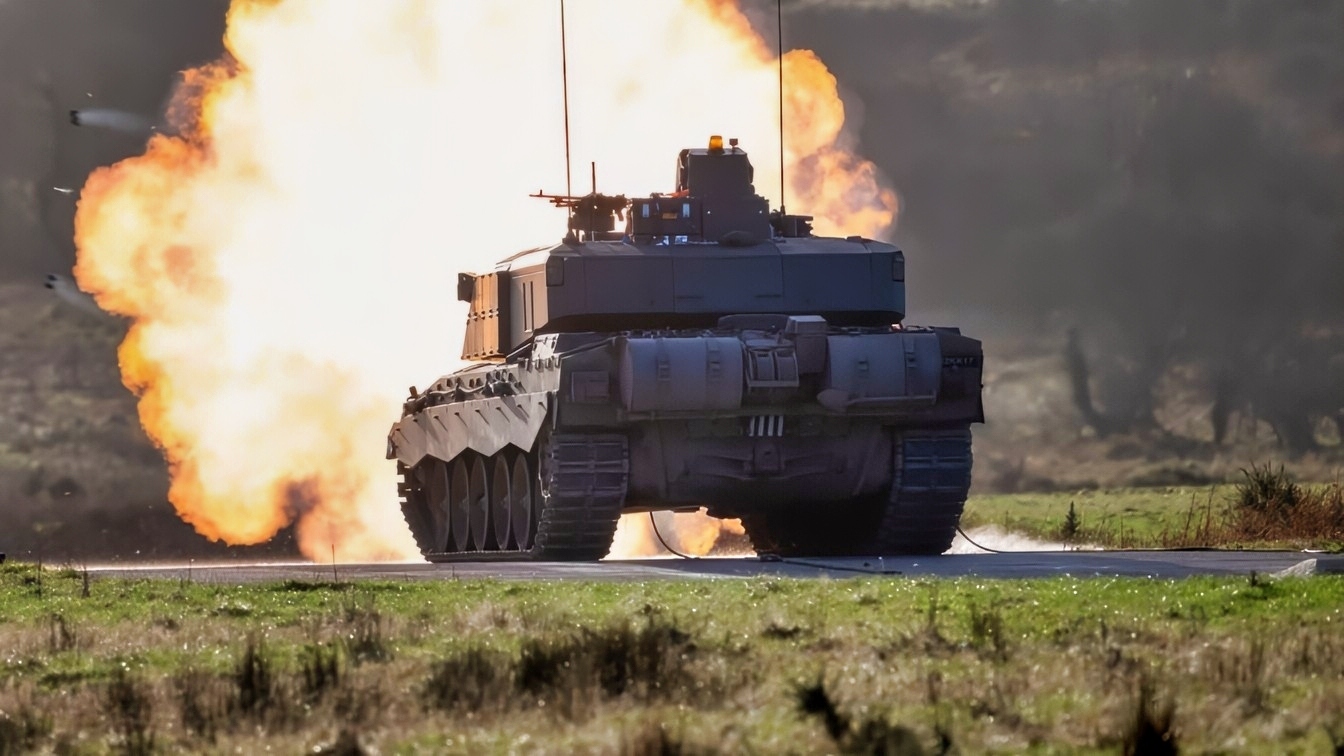
British officials have proudly boasted that their new Challenger 3, currently under development, can outgun any tank in Russia’s inventory, including the infamous T-14 Armata. The Challenger 3 is a further development of the Challenger 2 Main Battle Tank (MBT), incorporating numerous improvements in firepower, mobility, and survivability. By contrast, the T-14 needs no introduction. Everyone in the West is aware of the tank’s delayed development and uncertain future prospects.
Today, however, let’s set that aside and take a more objective look at the T-14 from a purely design perspective.
Is the Armata actually better than the UK’s newest tank, or is the British MoD right to boast about the Challenger’s advanced capabilities?
One Unproven Platform vs. Another
At its heart, the Challenger 3 is essentially a deep modernization of the Challenger 2. It evolved from the Challenger 2 Life Extension Program (LEP) of keep the platform relevant into the 2030s.
However, the program provides a comprehensive upgrade to practically all of the Challenger 2’s systems, changing everything except the tank’s general hull and layout. Everything else, from the turret to the suspension, has been changed or significantly altered, warranting the name change. The new tank is expected to reach operational capability by 2030; thereafter, all current Challenger 2s will be gradually upgraded to the new Challenger 3 standard.
The T-14 Armata is a completely different beast by comparison. Unlike the Challenger 3, the T-14 is not based on an existing platform. It is a clean-sheet design and a radical departure from previous Soviet/Russian designs, to its benefit and detriment.
The hull is noticeably larger than the T-90’s, and it was one of the first tanks to feature a completely unmanned turret, with the three-man crew now placed in an up-armored capsule.
Although the U.S. had experimented with unmanned turret designs in the past, none (except the M1E3) progressed far beyond the prototype phase. The tank is technically active in the Russian Army and in low-rate initial production, but thanks to the war in Ukraine, the program has taken a back seat, and its future is currently the topic of intense speculation.
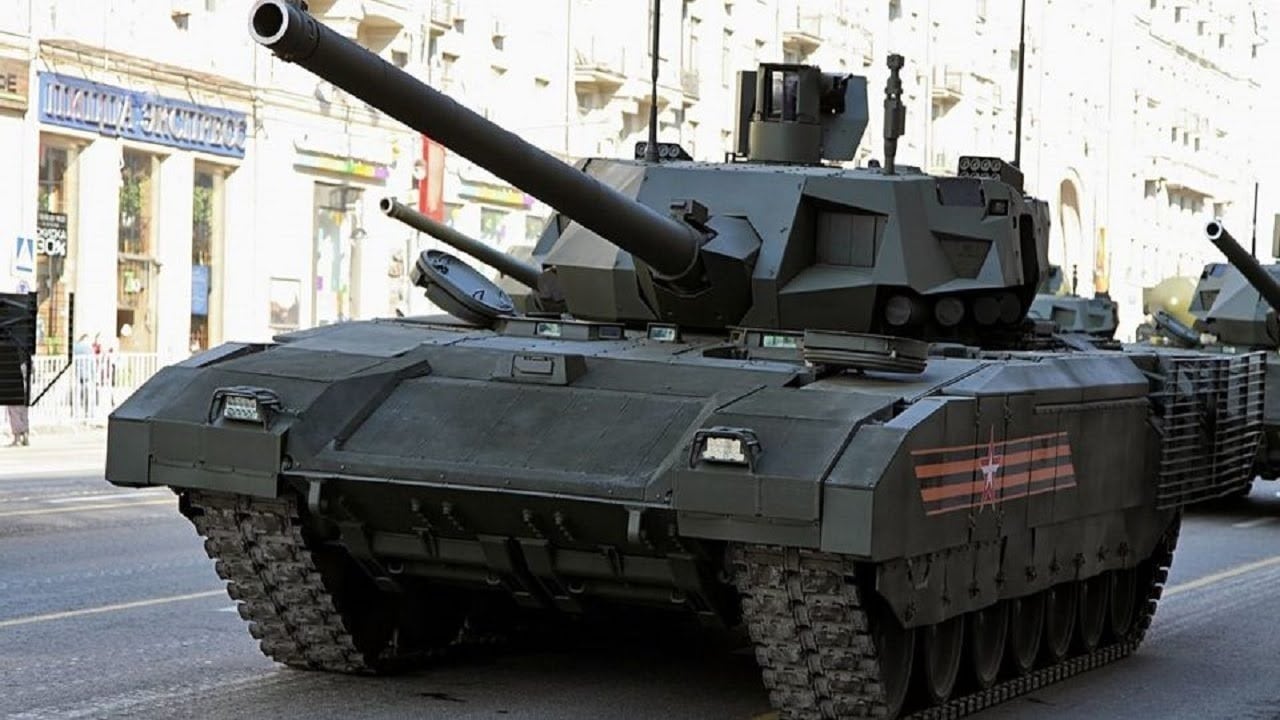
T-14 Armata. Image Credit: Creative Commons.
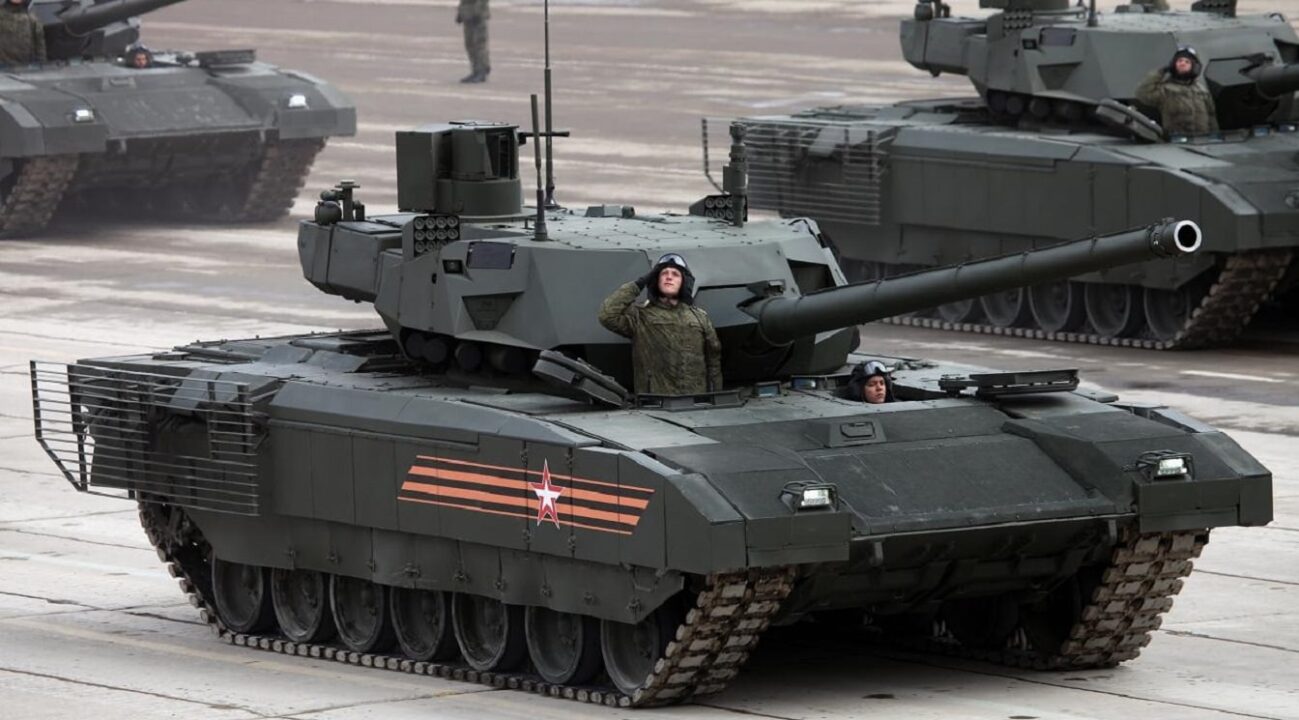
Russian Armata T-14 Tank. Image Credit: Creative Commons.
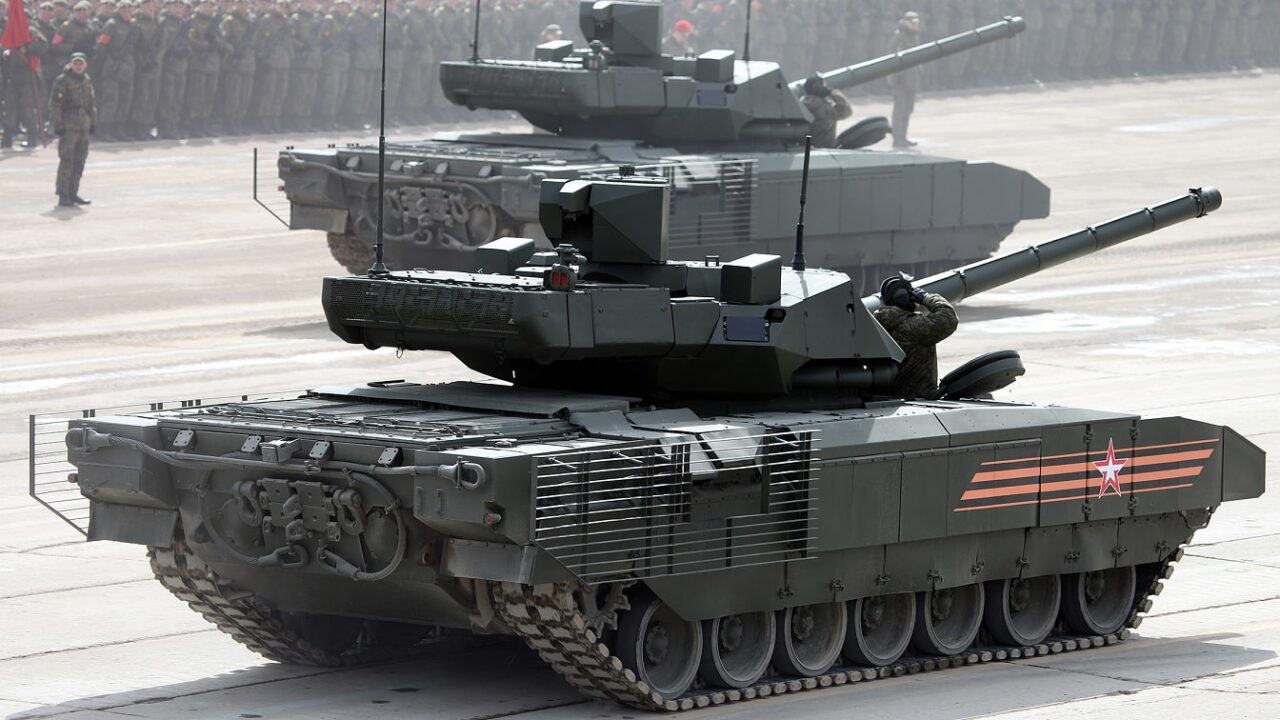
Main battle tank T-14 object 148 on heavy unified tracked platform Armata.
Russian news outlets have hyped up the T-14 to the moon and back, while Western sources and experts have made it their mission to discredit it as much as possible, which makes it excruciatingly difficult to find reliable information on the tank.
Survivability
In terms of protection, the Challenger 3 takes a more conventional approach to survivability by upgrading its armor and adding the option of Active Protection Systems (APS).
The turret and frontal hull reportedly feature new-generation Farnham armor, while the hull and turret sides can be fitted with external modular EPSOM armor. In comparison, the T-14 adopts a different approach, with the crew rehoused in a single compartment completely isolated from any ammunition.
While we don’t know the Armata’s armor layout, we do know it has new Monolit DZ ERA, lined across the hull and on the turret roof.
From the looks of it, the tank’s side skirts appear to have some form of modular armor, though this is unconfirmed.
The T-14 is also fitted with the Afghanit APS, which, according to Russian sources, can intercept kinetic penetrators, top-attack ATGMs, and small FPV drones. Again, these claims are impossible to verify.
Firepower
In terms of firepower, both tanks have improved over their predecessors.
The Challenger 3 replaces the old rifled L30A1 120mm gun with a new Rheinmetall L55A1 smoothbore gun. This new cannon offers better longevity, range, and accuracy than its predecessor.
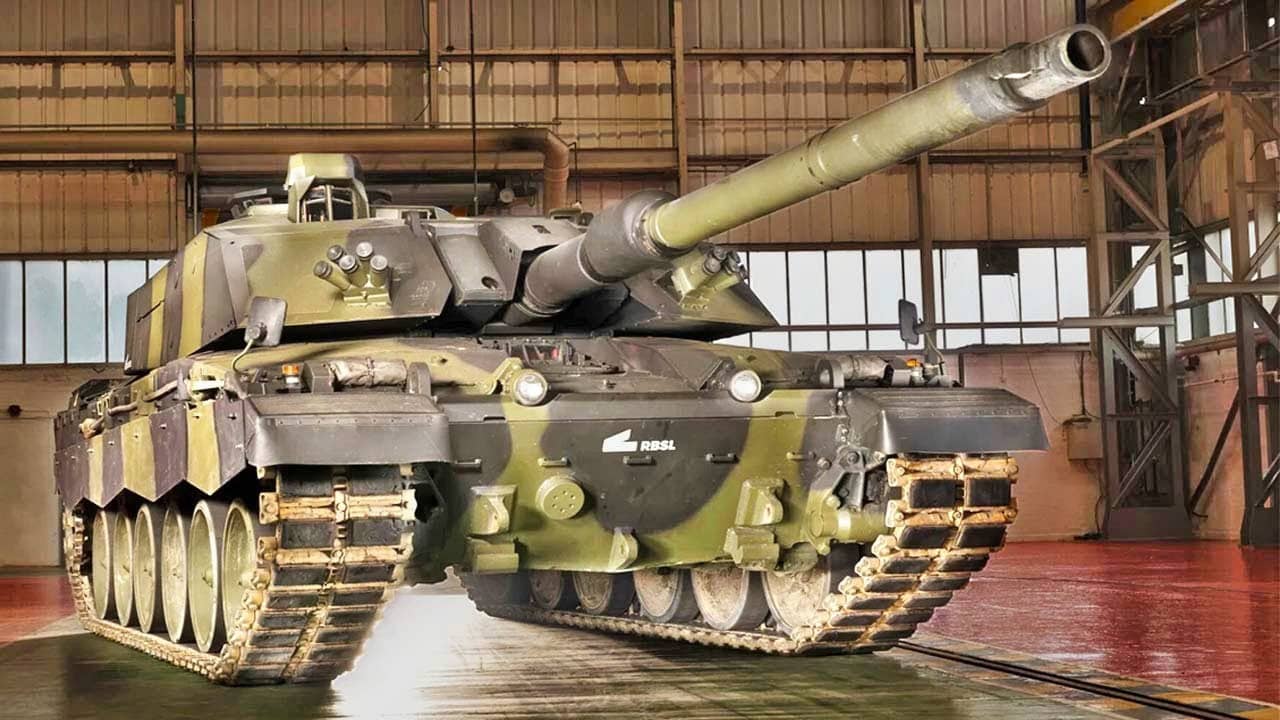
Challenger 3 Tank. Image Credit: Creative Commons.
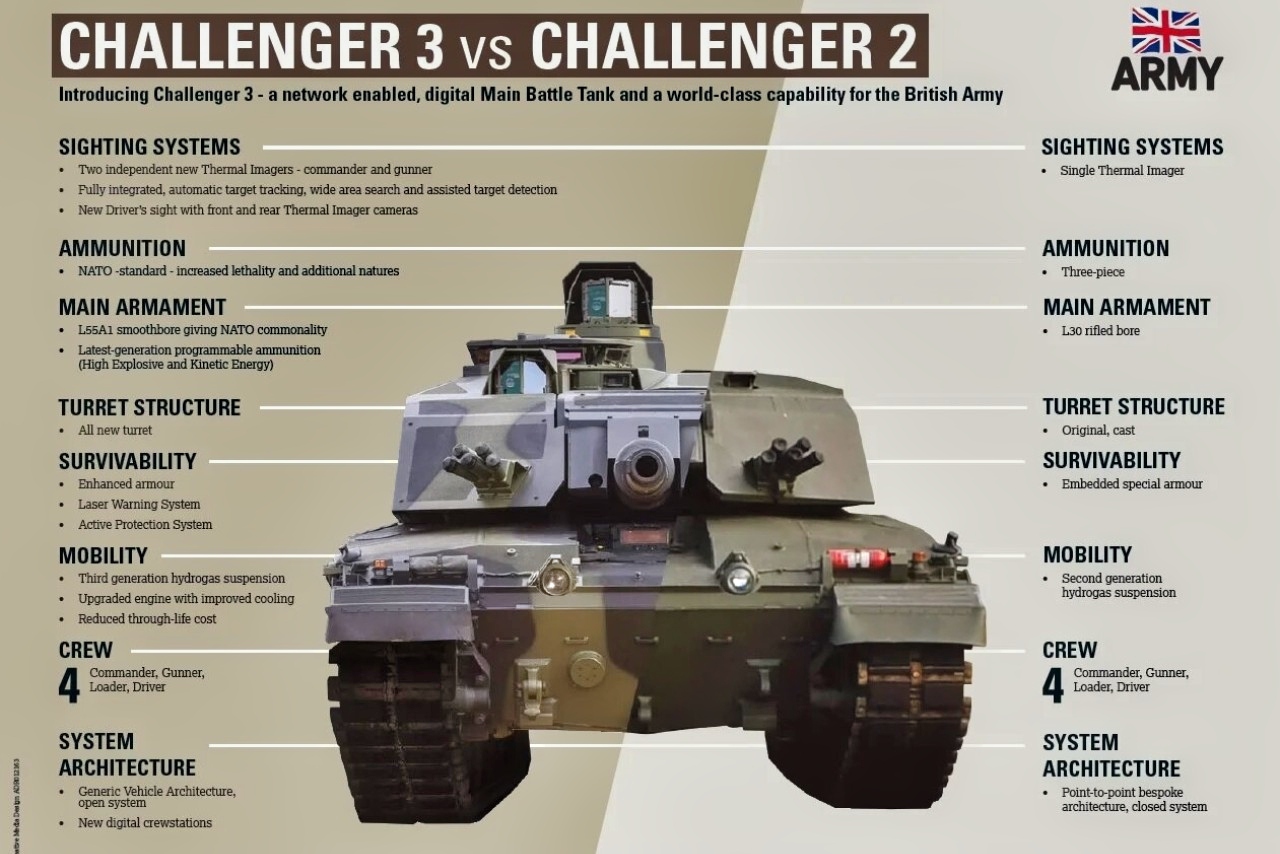
Challenger 3 Tank. Image Credit: Creative Commons.
According to some claims, the new gun has a range of up to five kilometers, if not longer. Meanwhile, the T-14 is armed with a 2A82-1M 125mm smoothbore gun, a further development of the 2A46M gun currently in service on other Russian tanks.
According to some sources, the T-14’s gun uses a new set of ammunition, developed specifically for the new gun, along with new barrel-launched ATGMs. The T-14 is also equipped with a roof-mounted, remotely controlled 12.7mm Kord machine gun.
Mobility
The Challenger 3 is powered by the Perkins CV12-9A V12 diesel engine, which provides somewhere between 1,200 and 1,500 horsepower (the exact power output hasn’t yet been specified). Because the tank’s lighter, it has a higher power-to-weight ratio and uses a next-generation hydrogas suspension system.
The T-14 is powered by an A-85-3A (some sources use the designation 12N360), which generates around 1,500 horsepower.
According to Russian sources, the tank has a top speed of around, if not exceeding, 75 km/h with a minimum range of 500 km.
Naturally, you should take these claims with a grain of salt. The T-14 also utilizes a new 12-speed automatic gearbox with equal forward and reverse gears, which FINALLY gives a Russian tank more than one reverse gear.
Is There a Clear Winner?
Comparing these two tanks is quite difficult. The Challenger 3 has yet to enter service, while most information on the T-14 (from Western and Russian sources) is highly biased and unreliable. In a sense, we are dealing with one set of unverified claims versus another.
On paper, at least, the T-14 seems more advanced, with better overall protection, comparable firepower, and much better mobility, but these claims are nearly impossible to verify.
Even if we grant such claims, it is hard to determine which tank is “better” in all circumstances.
Could a Challenger 3 beat a T-14? Absolutely, and the same is true in reverse. With the right crew and terrain, any modern MBT can beat another in a fight. It all comes down to crew skill and tactics. And that’s what matters most.
About the Author: Isaac Seitz
Isaac Seitz, a Defense Columnist, graduated from Patrick Henry College’s Strategic Intelligence and National Security program. He has also studied Russian at Middlebury Language Schools and has worked as an intelligence Analyst in the private sector.

