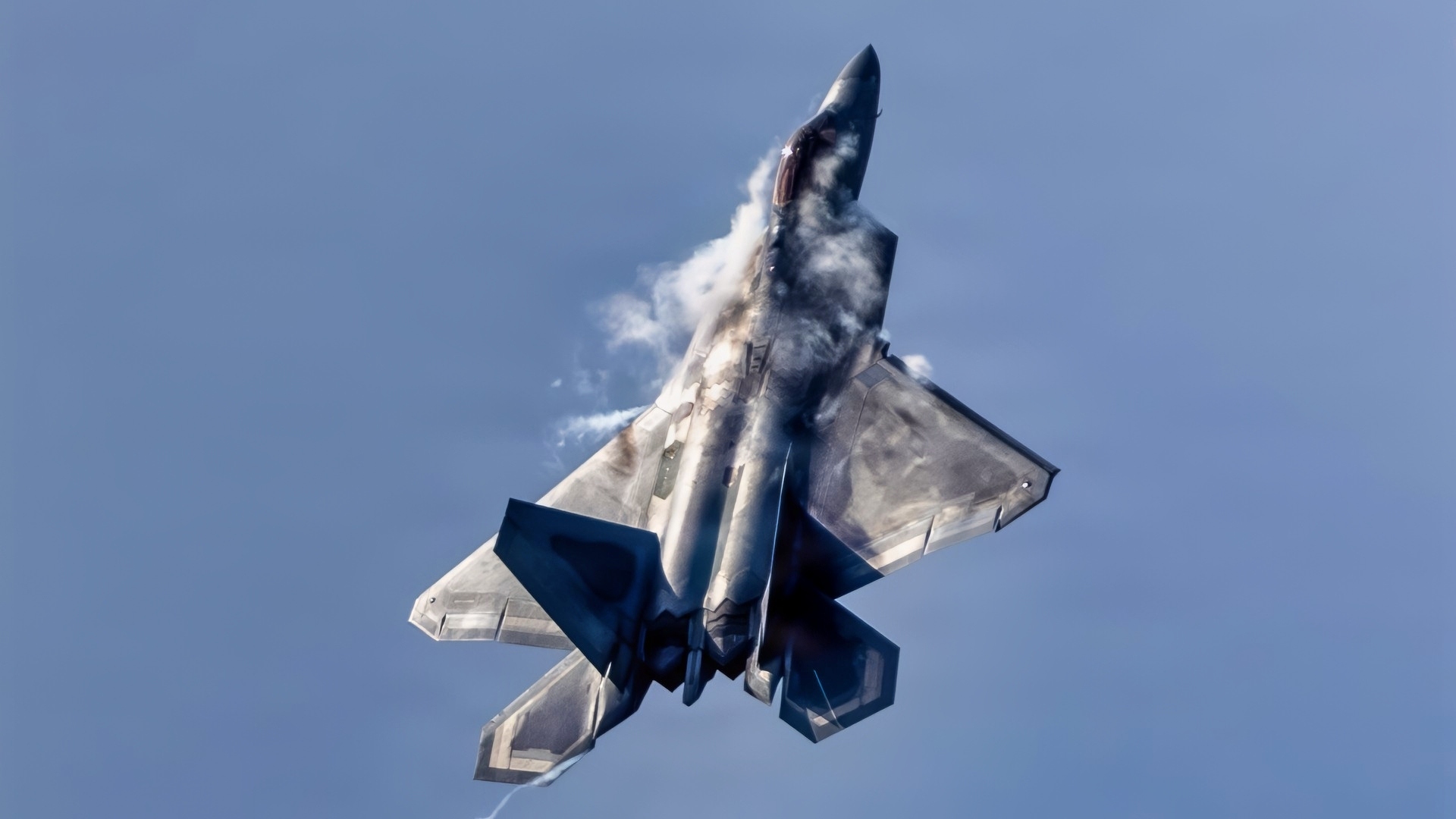
The Air Force’s F-22 Raptor Ended Up Costing $369 Million Per Fighter. Why On Earth Was It So Expensive? – The US Military never seems to get a good deal on anything it buys.
The Project On Government Oversight has documented numerous examples of the US military paying 4,000% markups on everyday items and spare parts, like a $747 valve for an Apache Helicopter that rose to almost $12,000. Several factors contribute, including how the government does business with the private sector, reliance on single-source suppliers, a lack of transparent pricing disclosure in contracts, poor negotiating skills, and limited competition.
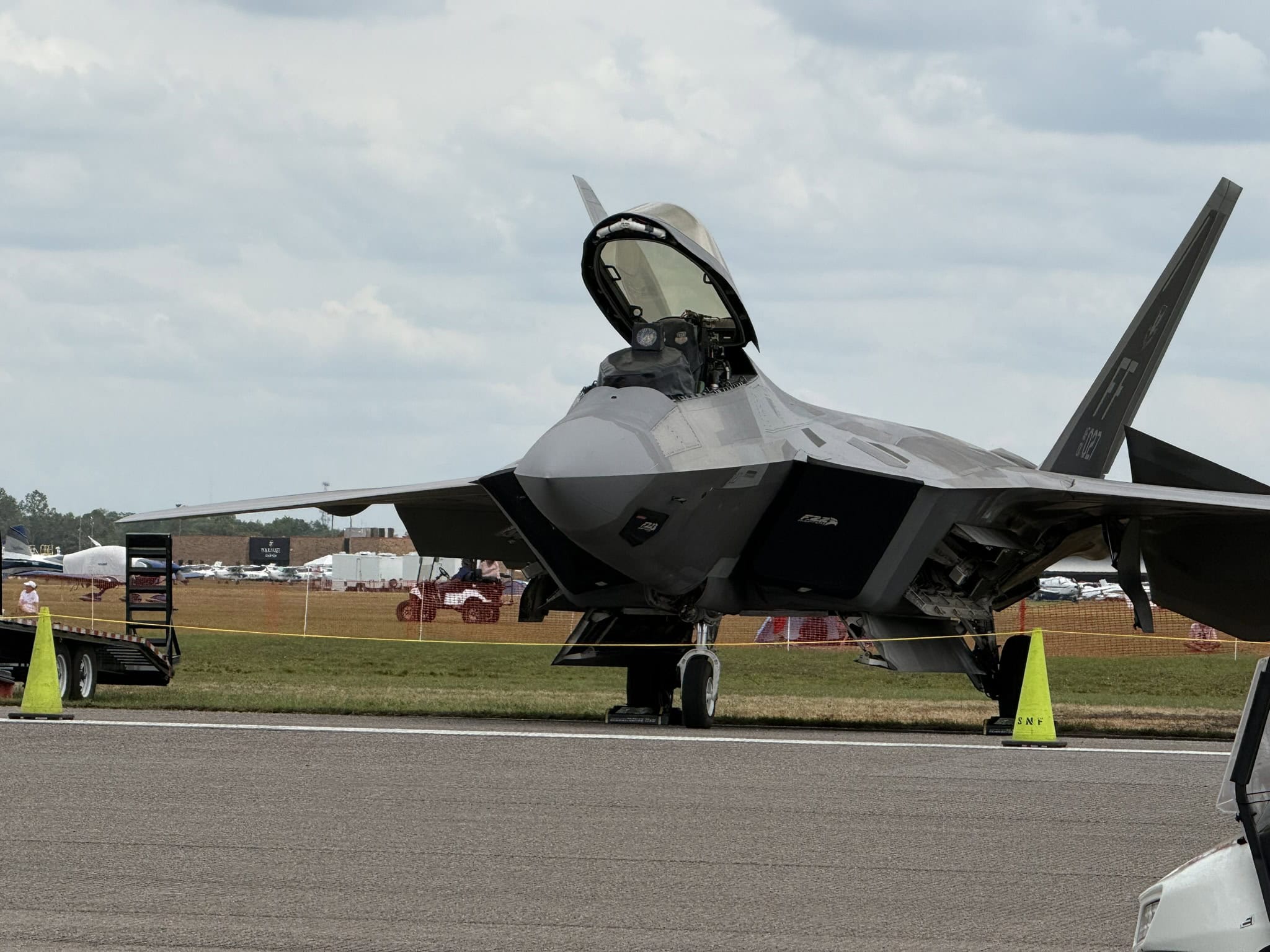
F-22 from Lakeland, Florida Airshow. Taken on 4/19/2026 by 19FortyFive.com
One might imagine hundreds of major competitors competing for Pentagon dollars, but since 1993 the number of major competitors for military contracts has shrunk from 51 to just 5: Lockheed Martin, Boeing, Raytheon, Northrop Grumman, and General Dynamics.
The F-22 Raptor
While some things like aircraft carriers, submarines, and planes like the B-2 Spirit bomber cost more per unit, the F-22 Raptor is the most expensive fighter per copy the US has ever bought.
This was due to a combination of political and economic factors outside the control of the villain you might imagine at Lockheed Martin.
The Air Force Placed A Tall Order In 1981
In 1981, the Air Force invited aerospace contractors to meet a very tall order in its Advanced Tactical Fighter program. It wanted a new plane using composite materials and lightweight alloys. It had to incorporate stealth technology, advanced avionics and flight control systems, and be capable of supercruise, sustained flight without afterburners at Mach 1.4 to 1.5.
Think for a moment about the year these requirements were being made: 1981. There was no internet; cell phones were an extravagant luxury; computers were simple word processors with green screens. The first commercially available airbags had just appeared in the Mercedes-Benz S-Class, a super luxury car.
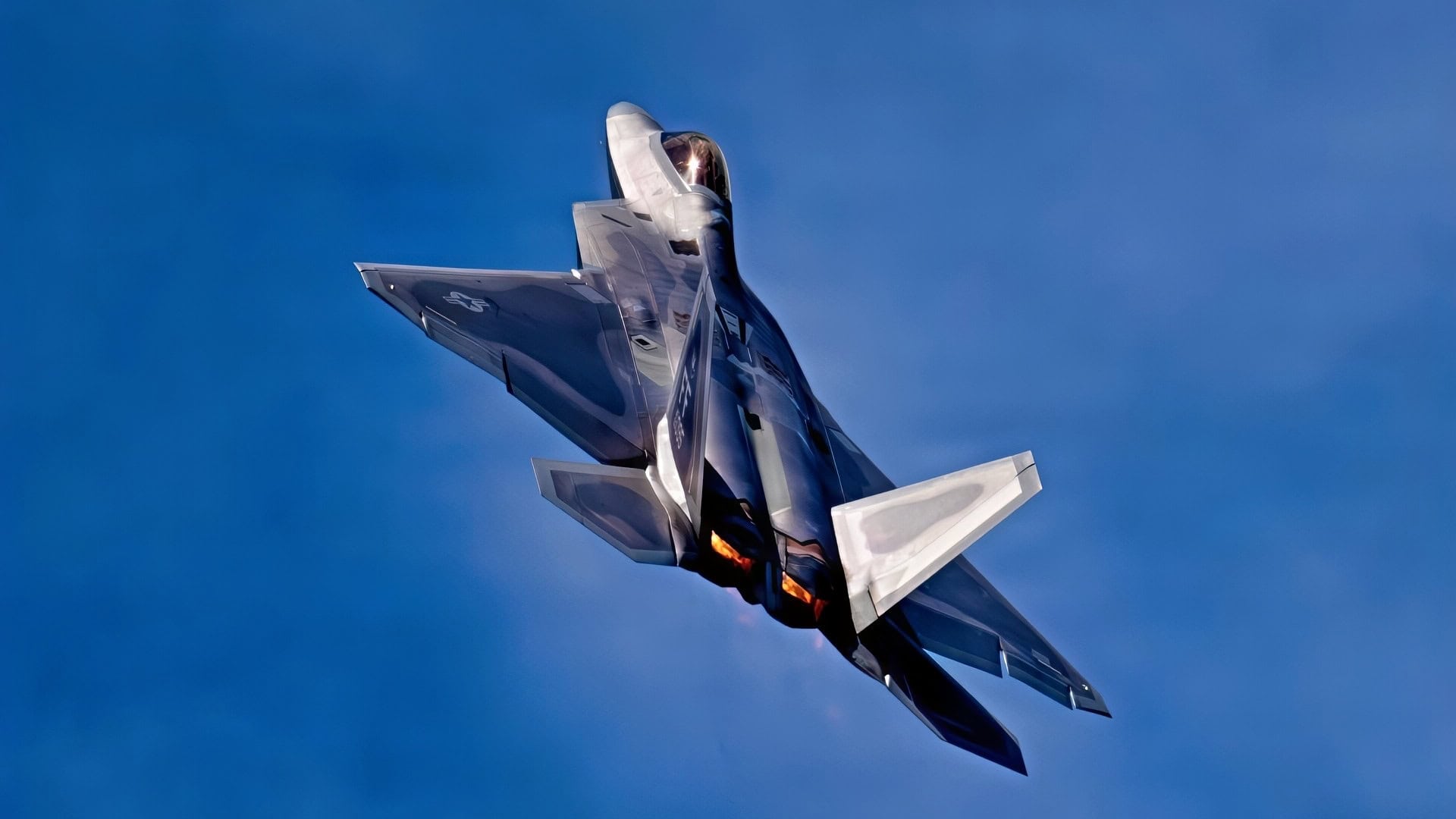
U.S. Air Force Capt. Nick “Laz” Le Tourneau, F-22 Raptor Aerial Demonstration Team pilot and commander, performs at the Airpower Over Hampton Roads Airshow 2025, Joint Base Langley-Eustis, VA, April 27th, 2025. The F-22 Raptor Aerial Demonstration showcases the unmatched maneuverability of the airframe by executing a series of combat maneuvers to inspire Americans and their allies, and deter foreign adversaries. (U.S. Air Force video by Staff Sgt. Michael Bowman)
All That Technology Came At A Price In The F-22 Raptor
Much of what the ATF program required would be new technology. Lockheed Martin won the contract with its F-22 Raptor proposal, but it came with staggering upfront costs.It required
$32.4 billion in research and development to create composites, light alloys, avionics, flight controls, stealth technology, and an engine capable of supercruise.
$34.2 billion to then procure those materials and build the aircraft.
$676 million to build climate-controlled hangars, flight-line infrastructure, storage and munitions facilities, training simulators, software, and pilot training.
This totaled $67.3 billion, but the Air Force wanted 750 Raptors to make the math look better on paper.
If we consider only the $34.2 billion procurement cost to build the planes, each Raptor would cost less than $46 million. Spreading the R&D and military construction costs over the entire 750-plane order brings the total cost to just under $90 million per copy, all in, on the F-22.
It Wasn’t Cheap But The F-22 Raptor Delivered
While $90 million per F-22 wasn’t a bargain, the Raptor proved an outstanding aircraft, capable of finding and shooting down the latest Soviet fighters before the Russian pilot even knew the Raptor was there.
Then the Soviet Union collapsed in December 1991. Lockheed Martin had finished the Raptor program’s R&D phase and built and flown the first two YF-22 prototypes just a year earlier, in 1990. Suddenly, it didn’t look like it would be fighting the latest Russian jets in a world war anymore. In fact, as the USSR’s demise was seen as a victory in the decades-old Cold War, Congress trimmed the number of F-22s from 750 to 648.
The F-22 Raptor Dies: The Death Of A Thousand Cuts
The F-22 Raptor program then began to die in slow motion, plane by plane and budget cut by budget cut.
In 1993, the number of development aircraft was cut from 11 to 9.
In 1996, the F-22B, a two-seat trainer variant, was cut completely, and 4 pre-production models were also canceled.
In 1997, the Pentagon’s Quadrennial Defense Review also cut the F-22, reducing the fleet to 339 aircraft.
In 2001, Congress reduced the fleet again to 227 Raptors and set a hard cap on the total budget at $77 billion.
In 2004, Pentagon accountants cut it to 179 Raptors, and negotiations tweaked it back up to 183.
At the 2009 finale, the Pentagon and Congress argued over funding for single jets and settled on a final fleet of 195 total airframes from an original order of 750.
Because the original contract committed the government to repay the $32.4 billion Lockheed Martin spent on F-22 Raptor research and development, the final cost of those 195 jets skyrocketed to about $369 million per copy (this number is argued over). This reflects the cost of all that R&D plus the money for hangars and other support facilities folded into the 195 Raptors in the final order.
The Air Force received the last Raptor in May 2012. For Lockheed Martin, which began the program in the 1980s, forty years was a very long time to realize an estimated profit of just $10-15 million per F-22 Raptor built.
About the Author: Sean Spoonts
Sean Spoonts is the former Editor-In-Chief of SOFREP.com. He is a military analyst, writer, and commentator whose work has appeared in Newsweek, CNS News, Ukrinform, and various military/veteran media networks and professional publications, including the Military Intelligence Professional Bulletin. He is a U.S. Navy veteran, having served as an Aviation Anti-Submarine Warfare Operator and Search and Rescue Helicopter Aircrewman.