
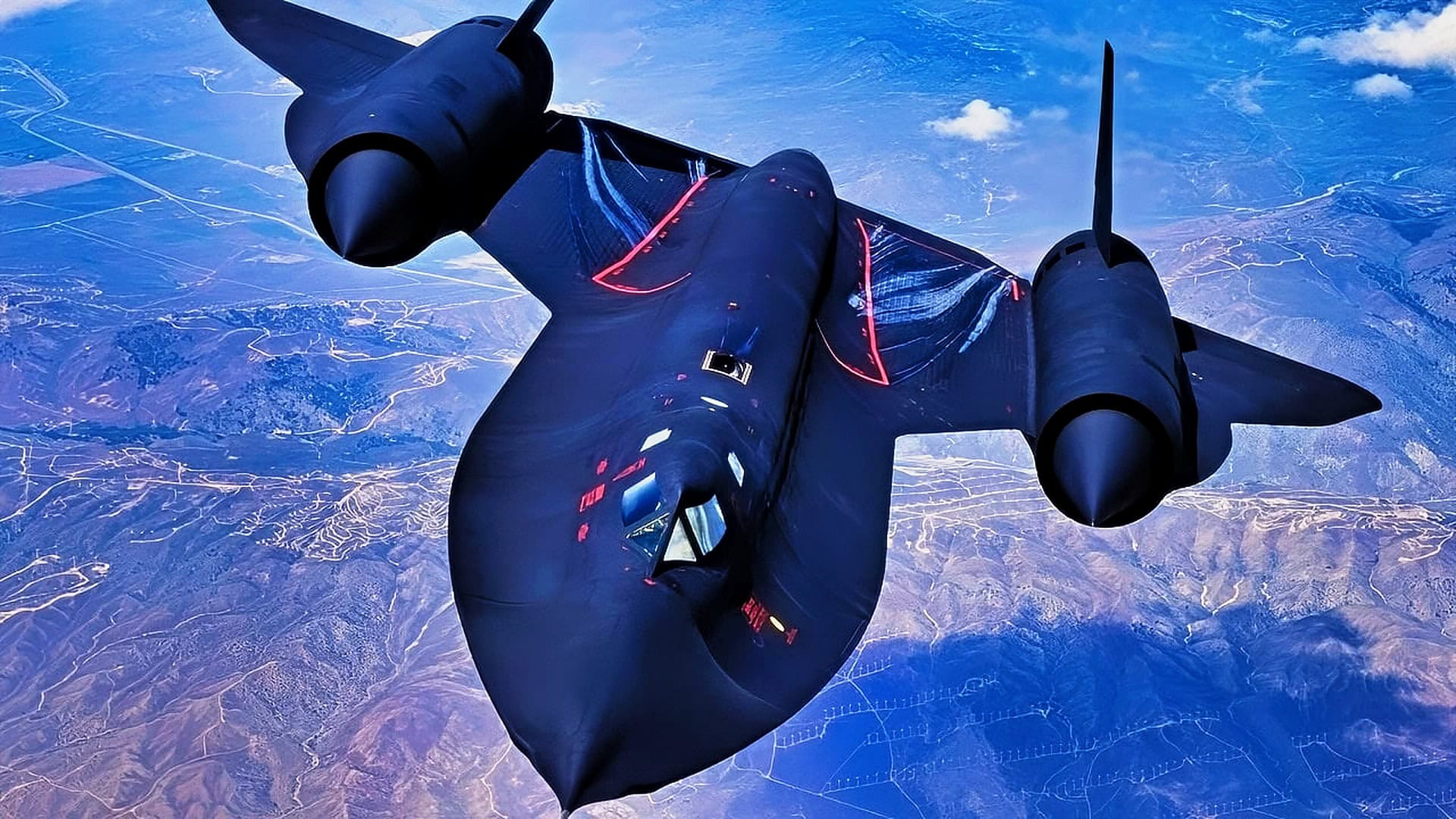
Summary and Key Points: The Lockheed SR-71 Blackbird flew at Mach 3.2 on two Pratt & Whitney J58 engines, each producing 32,500 pounds of thrust, which ordinary airport ground equipment could not start. The solution came from Buick.
The Lockheed SR-71 Blackbird Was Military History that Hit Mach 3
To this day, the Lockheed SR-71 Blackbird remains one of the fastest aircraft ever to fly.
Capable of hitting Mach 3.2, the aircraft relied on two highly specialized Pratt & Whitney J58 engines that produced 32,500 pounds of thrust each with afterburners engaged.
But these unique engines had a problem: ordinary airport ground-starting equipment couldn’t start them. Instead, the crew relied on specialized carts with more mundane equipment—two Buick V8 automobile engines.
Buick-Assisted Start
The J58 required substantial mechanical power to bring its compressor up to ignition speed.
Early SR-71 operations used specialized AG330 start carts, each containing two Buick nailhead V8 engines connected to a common gearbox.
Depending on the version, the Buick engines displaced 401 or 425 in³ and produced a combined output believed to exceed 600 horsepower.
The carts mechanically drove the J58’s starter system through a shaft connection beneath the engine nacelle, so ground crews positioned the cart, connected the drive, and accelerated the jet engine to starting speed.
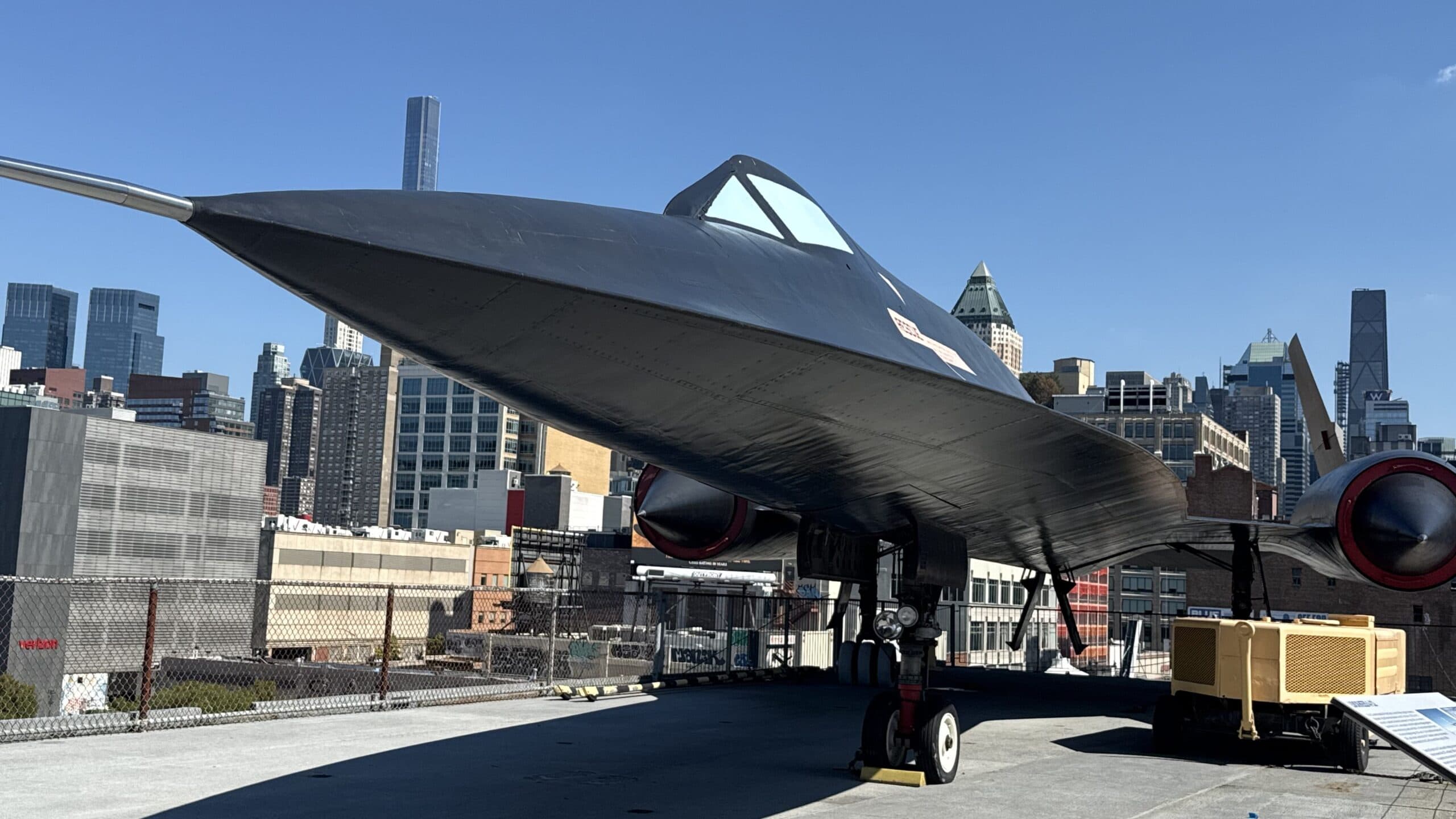
A-12, a plane from the same linage as the SR-71 Blackbird, aboard the USS Intrepid. 19FortyFive Photo.
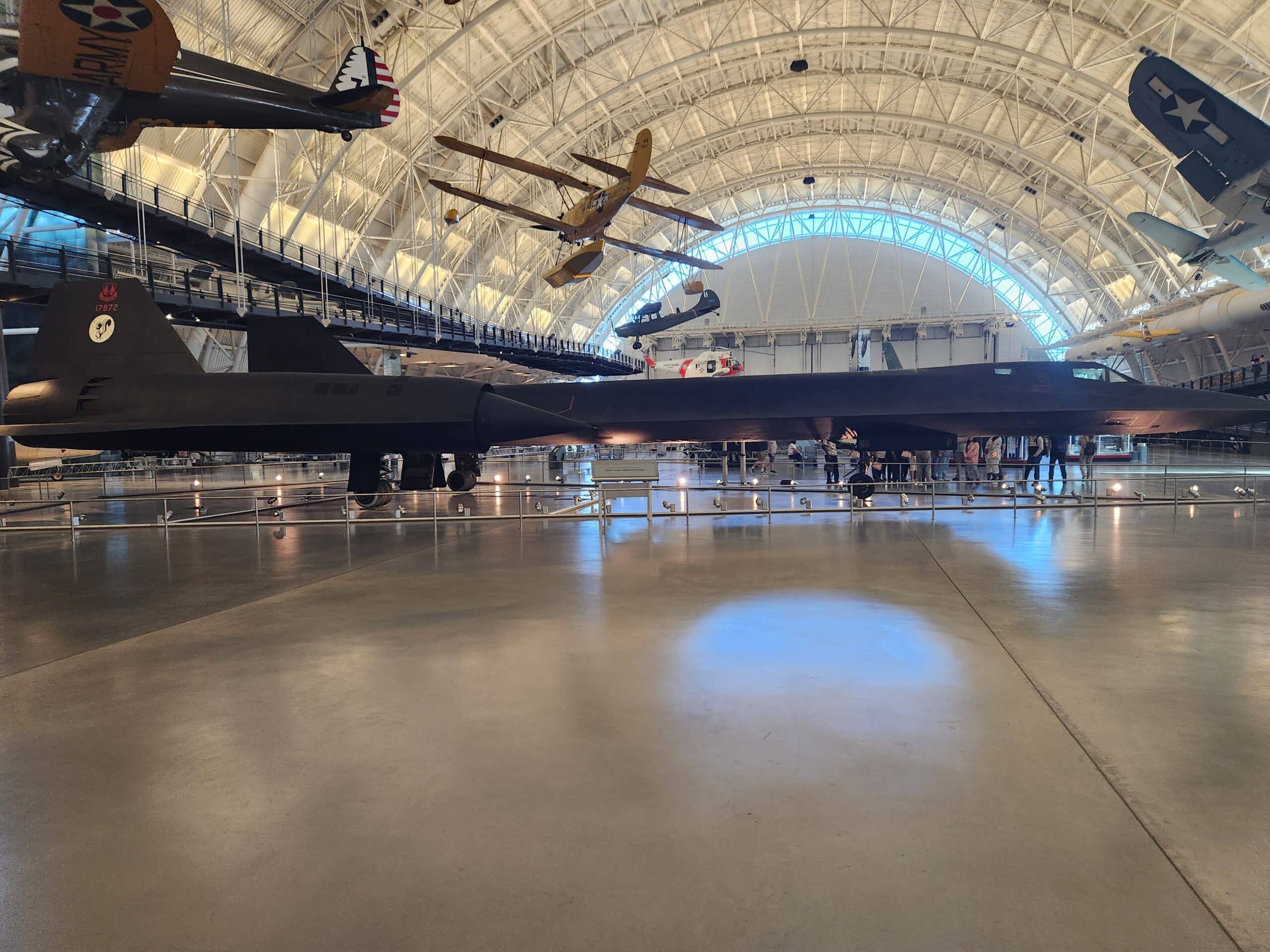
SR-71 Blackbird at the Smithsonian. 19FortyFive image taken back in 2025.
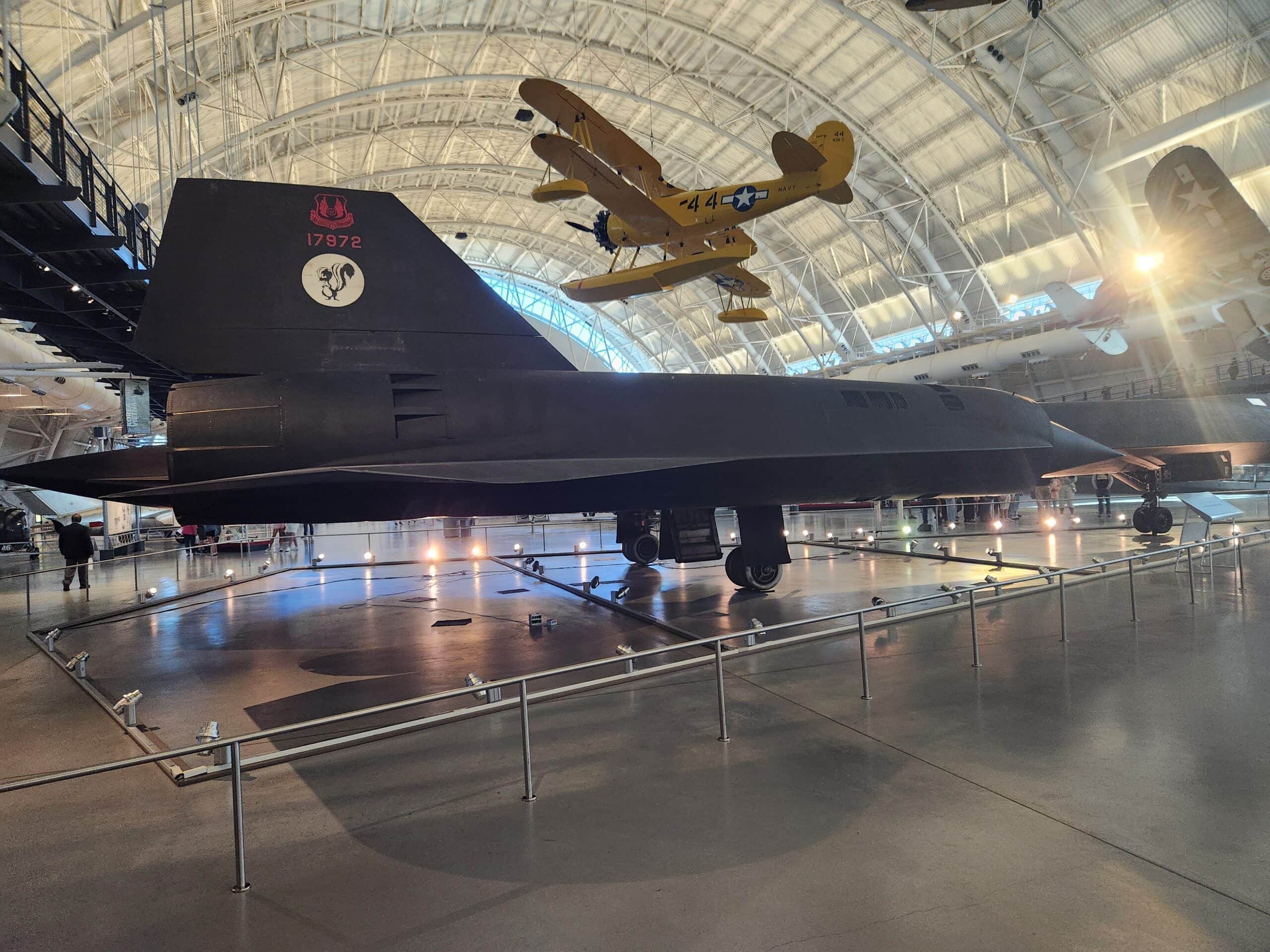
SR-71 Blackbird at the Smithsonian. 19FortyFive image taken back in 2025.
Once the J58 was running independently, ground crews could disconnect the cart.
Later starting equipment used Chevrolet V8 engines, and other starting methods eventually replaced them.
But it started with the Buick-powered carts, which became one of the Blackbird’s most recognizable ground-support features.
The J58
Officially designated the JT11D, Pratt & Whitney developed the J58 as a single-spool, afterburning turbojet designed for high-speed flight.
Producing approximately 32,500 lbf of thrust with afterburner, the two-engine SR-71 had 65,000 lbf available.
The J58 wasn’t just powerful; it was also specialized, with unique materials, fuel-management systems, and compressor-air bypass arrangements required for high-speed operation.
At Mach 3, compression heats the incoming air to extreme temperatures before it even enters combustion.
Conventional jet engines struggle with such high temperatures; their materials aren’t built for them.
So engineers designed the J58 to withstand prolonged exposure to these extreme operating conditions.
Unlike most fighter engines, the J58 was optimized to sustain supersonic cruise rather than deliver short bursts of maximum speed.
The Mach 3 Secret
The J58’s most remarkable characteristic was how it operated together with the Blackbird’s variable-geometry inlet system.
At high speed, the aircraft’s pointed inlet spikes managed shock waves and slowed incoming supersonic air to subsonic speed before it reached the compressor.
As a result, the inlet system generated much of the aircraft’s propulsion at Mach 3 cruise.
The J58 also featured six compressor bleed tubes, which diverted air from the fourth compressor stage into the afterburner, helping manage compressor operating conditions while also supporting high-speed propulsion.
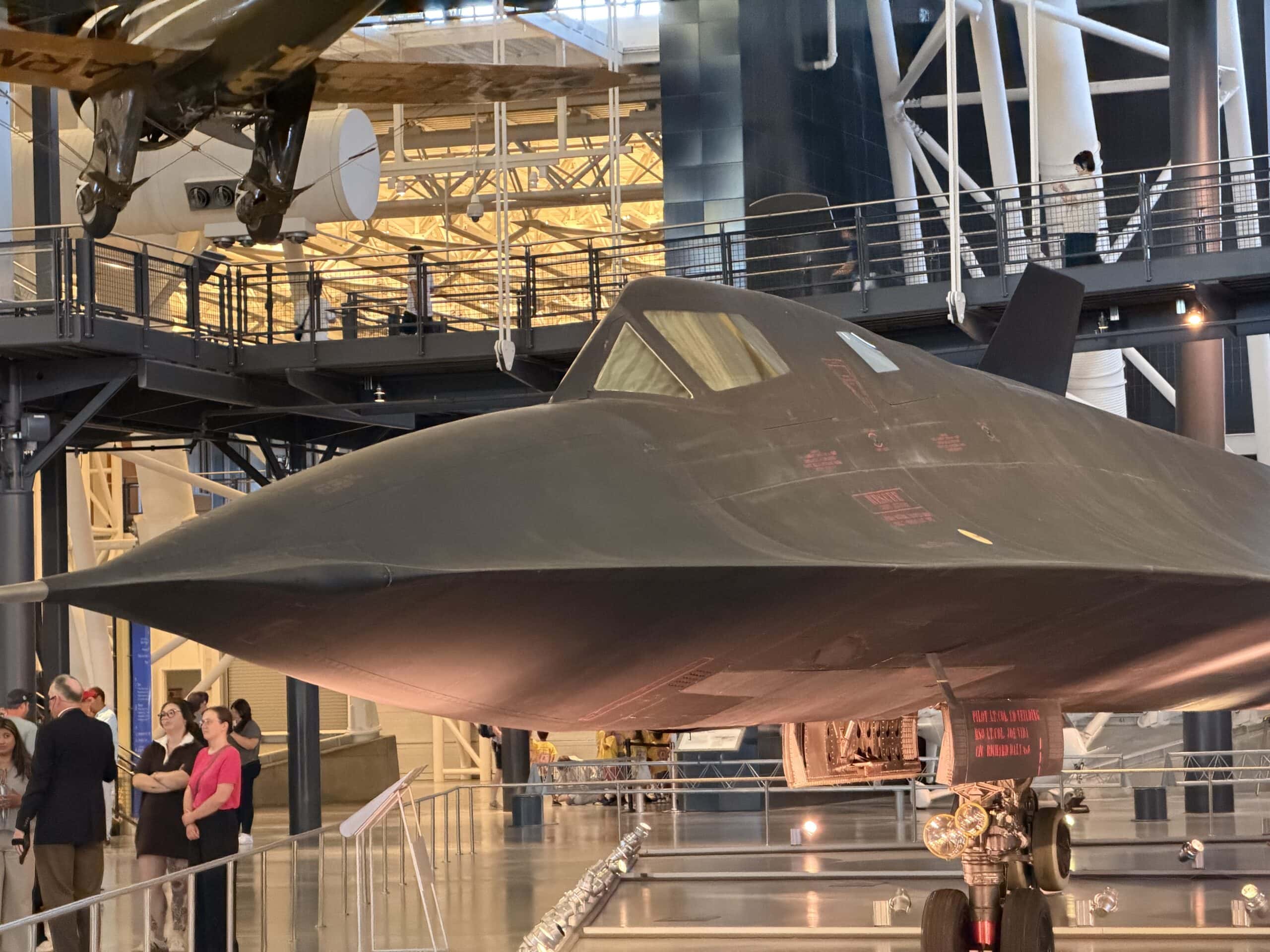
SR-71 Blackbird. Image taken at the Smithsonian on 6/30/2026 by 19FortyFive
So the overall effect, at Mach 3.2, was that the overall propulsion system behaved in some respects like a ramjet.
However, the J58 was not a pure ramjet, and the turbojet core continued operating throughout flight.
The inlet, engine, afterburner, and exhaust nozzle functioned as an integrated propulsion system.
Precise management of airflow and shock-wave position was essential, and an inlet unstart, when the shock system was disrupted, could cause asymmetric thrust and a violent yawing motion.
The Challenges of the J58
Operating the J58 wasn’t easy.
The engine required a specialized JP-7 fuel, developed for the excessive heat of SR-71 operations.
JP-7 was compatible with the SR-71 and J58 because it had low volatility and a relatively high flash point compared with conventional aviation fuels.
A common myth was that you could flick a lit match into a vat of JP-7 and it wouldn’t ignite.
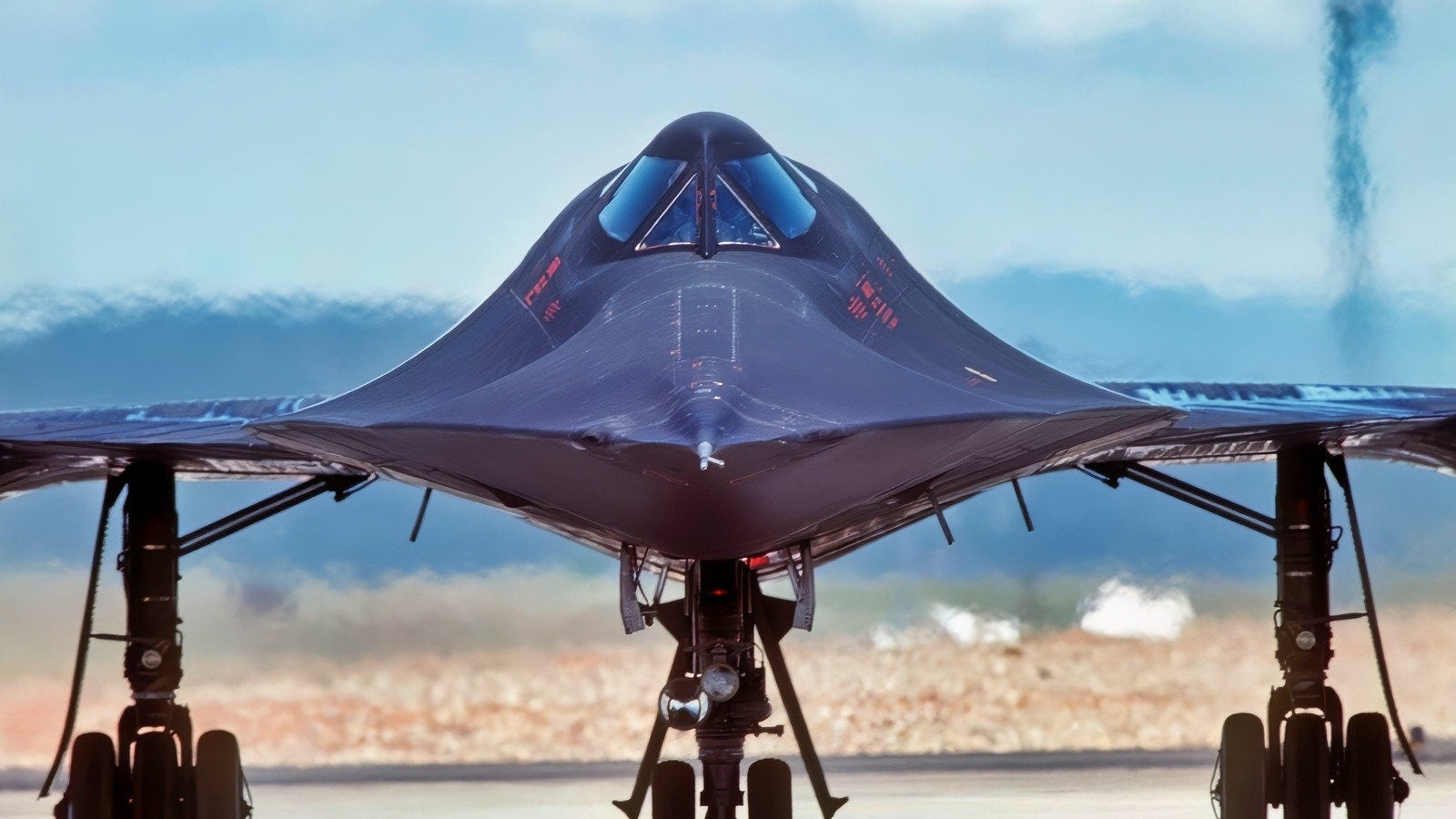
SR-71 Blackbird on the Tarmac Creative Commons Photo
This characteristic made the fuel suitable for an aircraft that routinely experienced aerodynamic heating at Mach 3.
The SR-71 also used its JP-7 fuel as a heat sink, circulating it through systems to absorb heat before combustion.
And of course, even when everything worked normally, the aircraft’s propulsion system required extensive maintenance by highly trained ground crews who knew their way around one of aviation’s most unique systems.
About the Author: Harrison Kass
Harrison Kass is a writer and attorney focused on national security, technology, and political culture. His work has appeared in Tablet, City Journal, The Hill, The Spectator, and The Cipher Brief. He holds a JD from the University of Oregon and a master’s in Global & Joint Program Studies from NYU. More at harrisonkass.com.