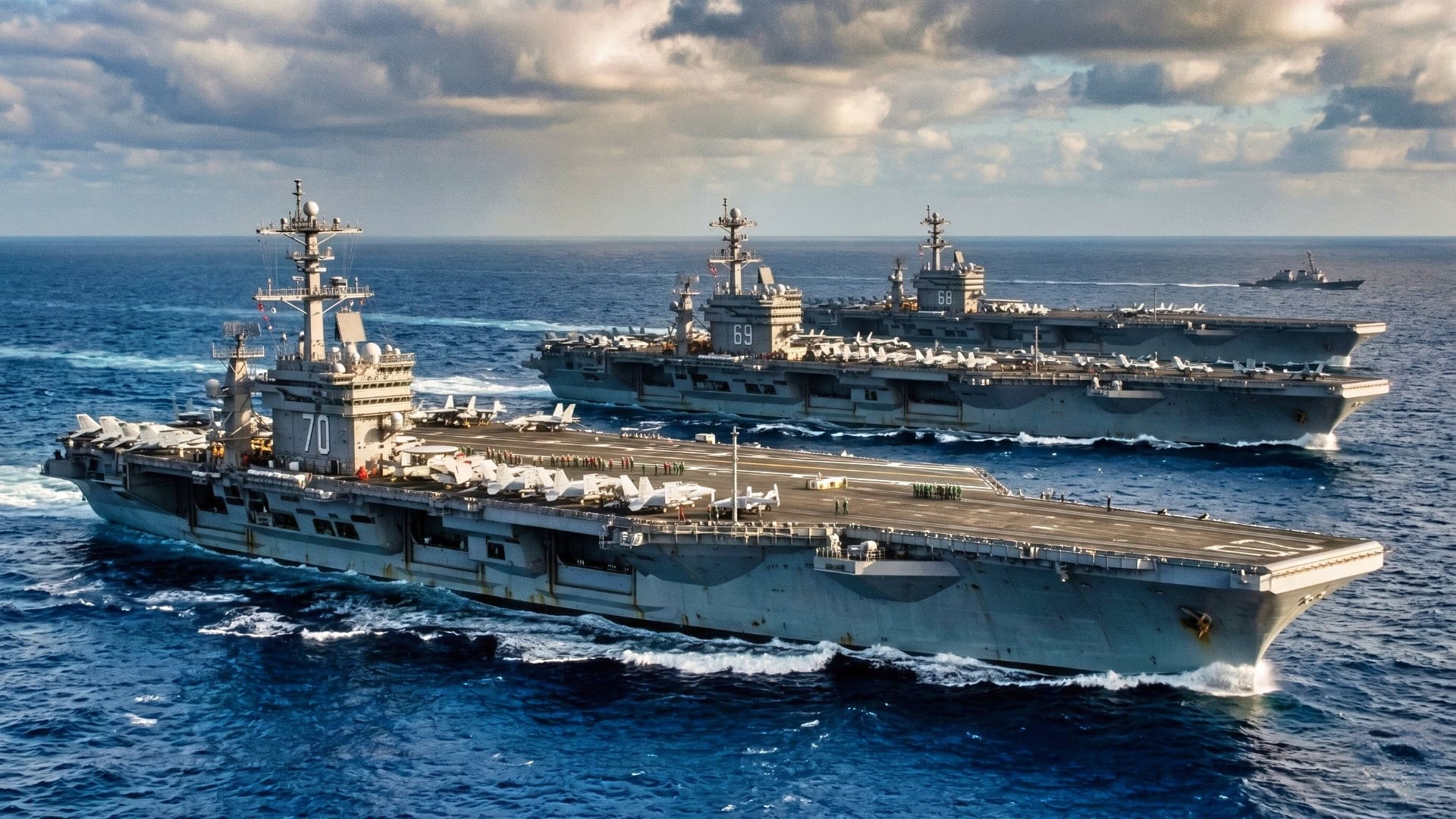
With the USS Gerald R. Ford returning to operational service in the Red Sea, the U.S. Navy will be operating “three” aircraft carriers in the Middle East, a scenario that concentrates a “massive” amount of maritime attack capabilities for potential use against Iran.
Adding more carriers does seem to make sense to a large extent, given the successes carriers and carrier strike groups have experienced in recent months.
Despite hundreds of Iranian attacks, no carriers have been hit thus far.
Carrier strike groups are, of course, critical to deterrence, national image, and establishing forward presence, yet US Navy Carrier Air Wings have also shown unique and tactically substantial value in counter-drone and maritime missile defense operations.
Strait of Hormuz Threat
Certainly, destroyers and cruisers operating in Carrier Strike Groups are well positioned with interceptors, threat detection radar, and various layered countermeasures such as lasers, EW, and deck-mounted guns, yet the US Navy’s Red Sea experience also showed that carrier-launched fighter jets could be essential to defensive counter-drone and counter cruise missile operations.
Not only can fighter jets provide a sensor layer or aerial node beyond the standard radar field of view available to surface ships to detect targets, but they also showed in the Red Sea that they could be in position to “take out,” “destroy,” or “intercept” Houthi drones and cruise missiles with air-to-air missiles.
This experience further showed that carriers could bring additional defensive maritime warfare combat maneuvers.
The commanding officer of Carrier Strike Group 2 from the Red Sea explained that, on one occasion, an F-18 Growler EW aircraft was able to detect, track, and “destroy” Houthi attack drones from the air.
Carrier-launched fighter jets are also known to be extremely valuable “targeting” assets in the counter-drone, counter-cruise missile defensive strategy, as they can be in position to “see” approaching or launching attacks from beyond the radar horizon reachable by surface ships
Dual-Carrier Ops
The scale and scope of dual carrier operations, which essentially deliver two combined, massive floating airports, expand the operational envelope and greatly increase attack volume, dwell time, and mission endurance, as aircraft can quickly replace or supplement one another over a given target area.
This can also reduce the need for aerial refueling, which can be quite dangerous over hostile areas, as most large tankers are non-stealthy and vulnerable to enemy air defenses. With extra sorties and attack aircraft volume, dwell time over targets can be greatly extended as newly arriving aircraft replace those operating over a target area.
There are many command-and-control advantages to these kinds of operations, provided transport-layer connectivity is both assured and secured. Carriers likely have radio connectivity between them, something which enables operational synergy and coordination. Fighter jet sorties can be properly staggered, scaled, and integrated to ensure any air attack campaign achieves its intended impact.
Secondly, each carrier operates a significant number of F-35C aircraft, 5th-generation stealth planes with a common Multi-functional Advanced Data Link (MADL) that enables all F-35s to seamlessly and immediately share data, voice, video, and other targeting and operational specifics in flight.
This means F-35s in high-threat areas can quickly alert other F-35Cs and Marine Corps F-35Bs of high-threat areas, enemy activity, or locations of air defenses. MADL operates with a significant range, so in the event that one group or formation of F-35s encounters a heavy concentration of enemy fighters and targets, reinforcements can be called quickly.
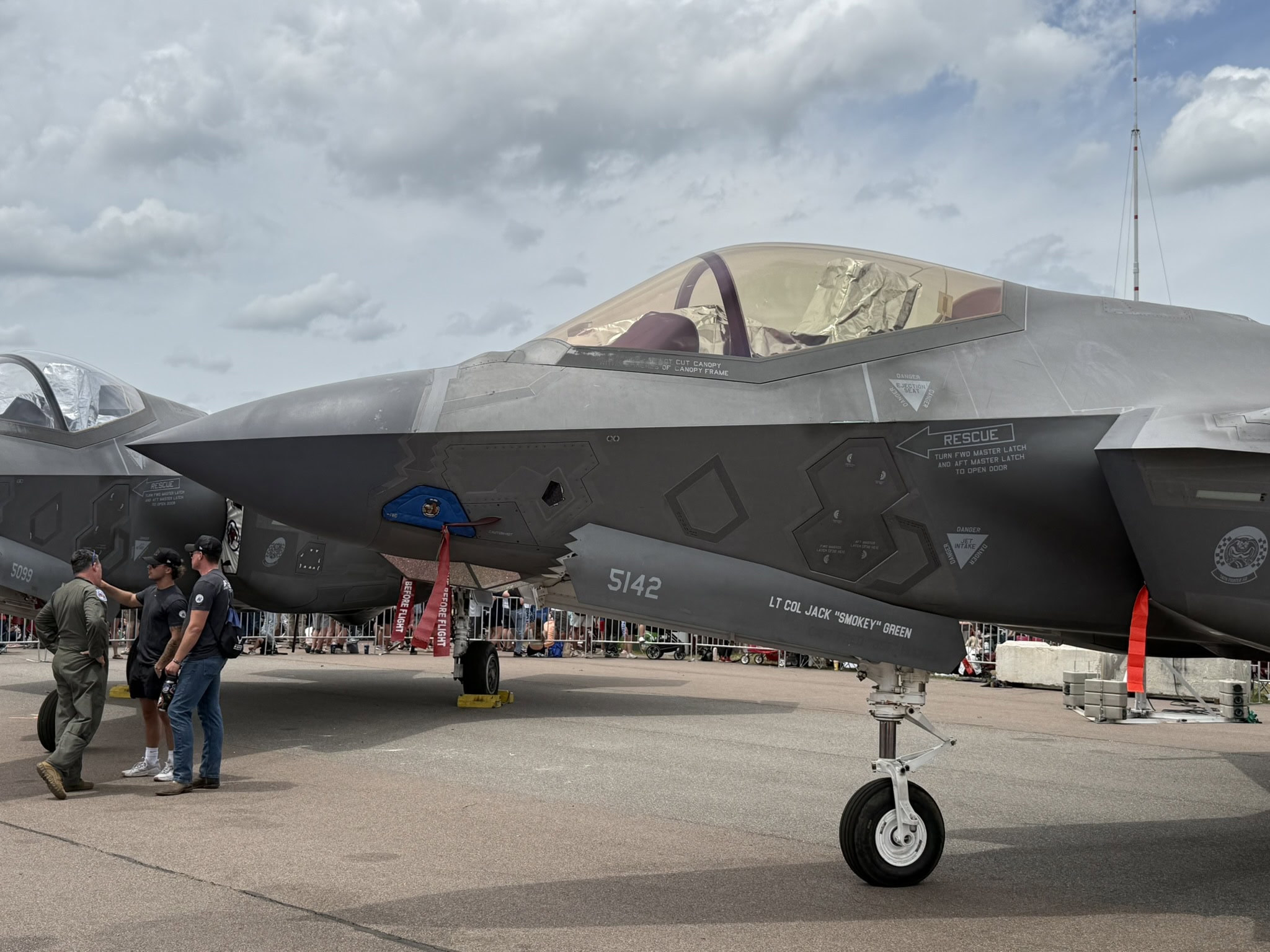
F-35C at Lakeland, Florida Airshow. Image Credit: 19FortyFive.com
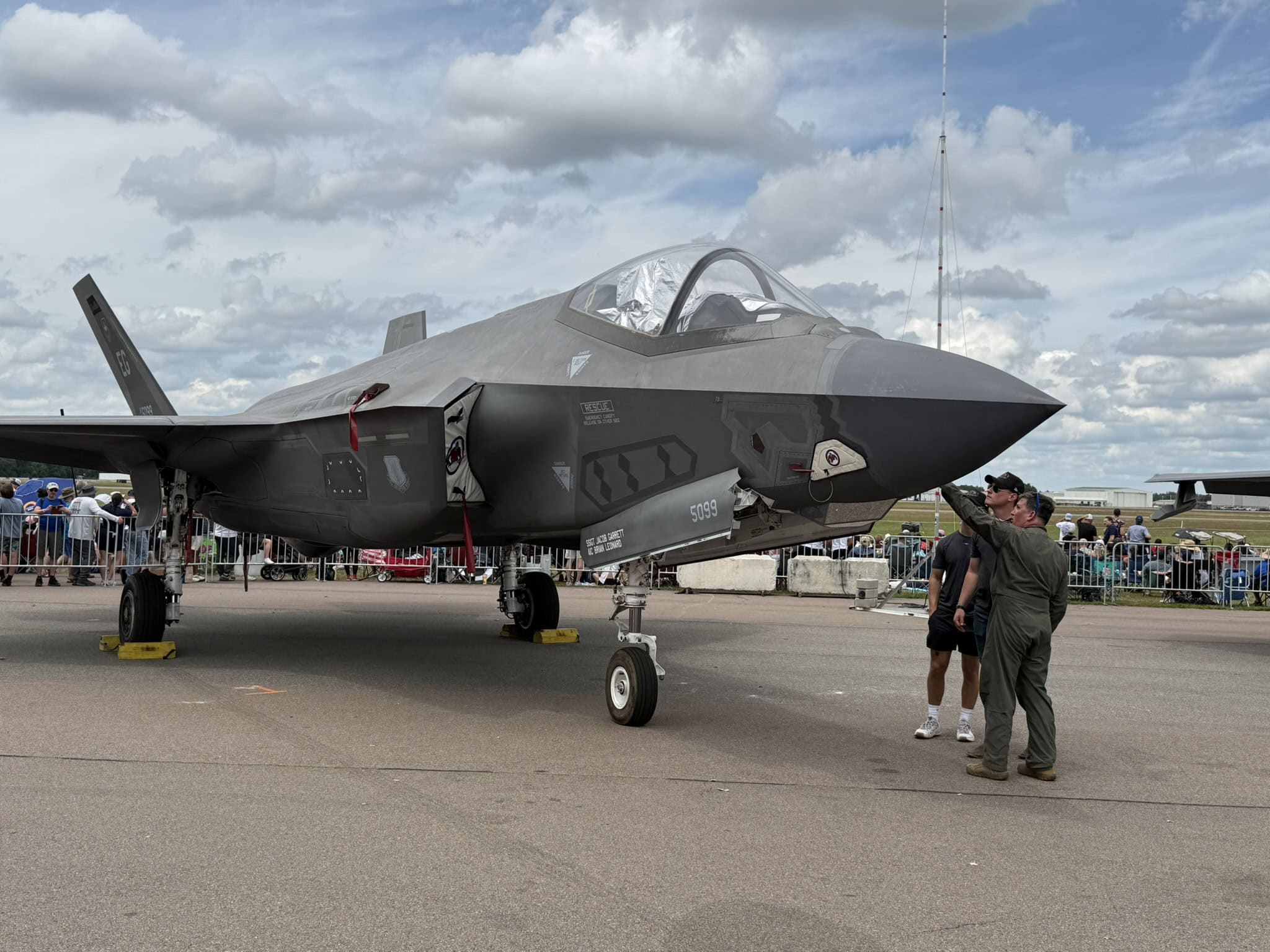
F-35C at Lakeland, Florida Airshow. Image Credit: 19FortyFive.com
This ability is bolstered by 5th-generation aircraft’s growing ability to exchange information with 4th-generation aircraft in flight, enabling 5th-gen fighters to use stealthy, long-range sensing to identify and destroy enemy air defenses. This kind of operation would be designed to create a safer “air corridor” for 4th-generation aircraft to enter with less risk of being destroyed by ground-fired air defenses or ship-based anti-aircraft guns.
Aircraft Carriers Defenses
Having three carriers in the Middle East theater does raise the question of potential vulnerability, although hundreds of Iranian attacks on U.S. carriers in the Persian Gulf have not been successful.
However, this does not mean the threat is non-existent; it’s likely that the three carriers and their supporting warships will operate in disaggregated formations to avoid presenting a concentrated target for Iranian surface-to-ship anti-ship missiles.
At the same time, the US Navy has … if somewhat quietly … been breaking through with advanced carrier and ship defenses. Many of the details of this are likely unavailable for security reasons, yet senior service leaders regularly discuss the growing advantages of ship-integrated EW, laser weapons, and enhanced radar detection systems.
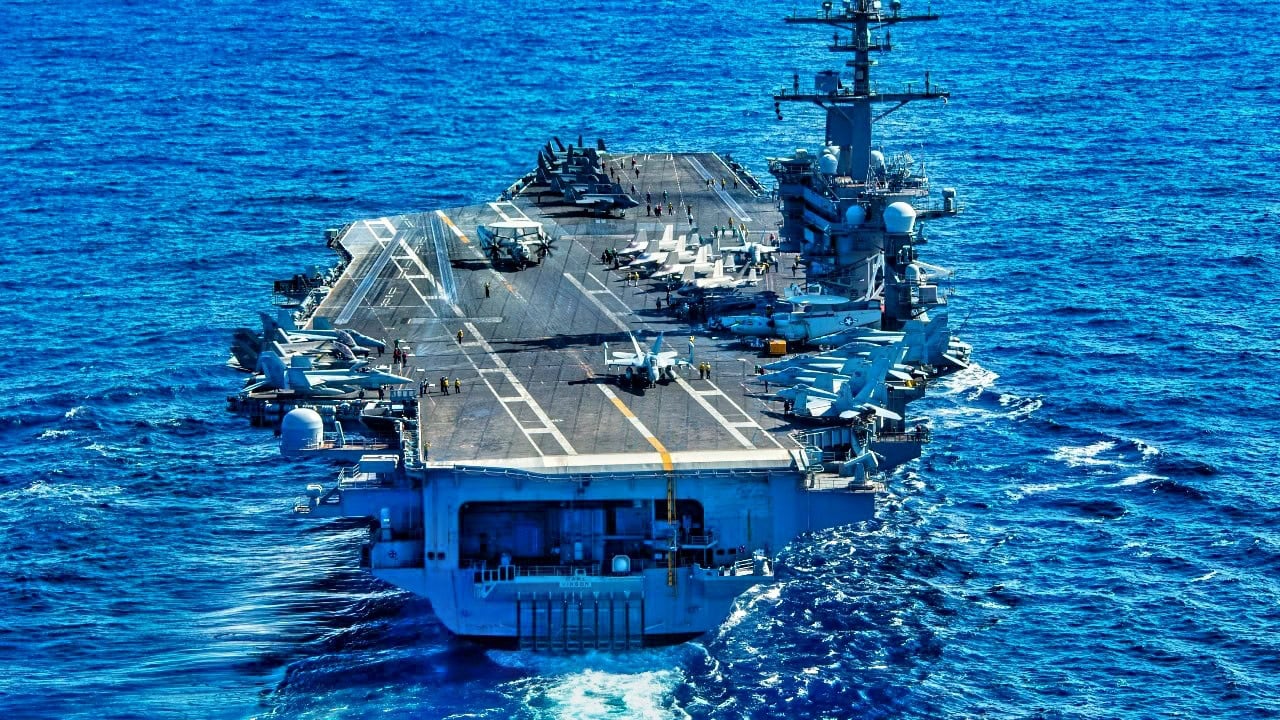
The Nimitz-class aircraft carrier USS Carl Vinson (CVN 70) transits the Philippine Sea with six additional F-35C Lightning II aircraft assigned to the “Argonauts” of Strike Fighter Squadron (VFA) 147, part of Carrier Air Wing FIVE, Dec. 13, 2024. VFA-147 operates from Marine Corps Air Station Iwakuni, Japan. U.S. Indo-Pacific Command forces perform operations in and around critical sea passages and trade thoroughfares to deter threats that create regional instability and impinge on the free flow of goods, people, and ideas. (U.S. Navy photo by Mass Communication Specialist Seaman Apprentice Pablo Chavez)
Ships in a Carrier Strike Group, such as destroyers and cruisers, now offer new dimensions of protection to carriers through technologies such as the Aegis 10 Combat System, which combines ballistic and cruise missile radars into a single system that can cue fire control and launch defensive interceptors.
Surface warships have also increasingly been armed with counter-drone weapons, such as deck-launched Coyote drone interceptors, designed to shoot a drone interceptor out toward an approaching drone swarm and detonate in an “area” with a proximity fuse to destroy multiple drones at once.
Interceptors & EW
An SM-6, for example, can now, due to software upgrades, track and destroy moving targets by adjusting course in flight.
US Navy destroyers are increasingly being armed with scalable lasers able to operate as both optical sensors and weapons to incinerate or simply disable an enemy aircraft, drone, or incoming missile.
There have also been breakthroughs in electronic warfare, with weapons able to find and “jam” or disable enemy communications or weapons guidance systems.
EW technologies are increasingly capable of deconflicting a cluttered spectrum, “frequency hop” to counter enemy “jamming,” identifying hostile versus friendly electronic signals, or launching a series of difficult-to-detect narrow “pencil beam” electronic beams to disable or jam an enemy system.
There are also upgraded close-in ship defenses increasingly able to track and intercept threats much more quickly, often using AI-enabled advanced algorithms to identify and destroy threats at exponentially greater speeds.
About the Author: Kris Osborn
Kris Osborn is the Military Technology Editor of 19FortyFive. Osborn is also President of Warrior Maven – Center for Military Modernization. Osborn previously served at the Pentagon as a highly qualified expert in the Office of the Assistant Secretary of the Army—Acquisition, Logistics & Technology. Osborn has also worked as an anchor and on-air military specialist at national TV networks. He has appeared as a guest military expert on Fox News, MSNBC, The Military Channel, and The History Channel. He also has a Masters Degree in Comparative Literature from Columbia University.