
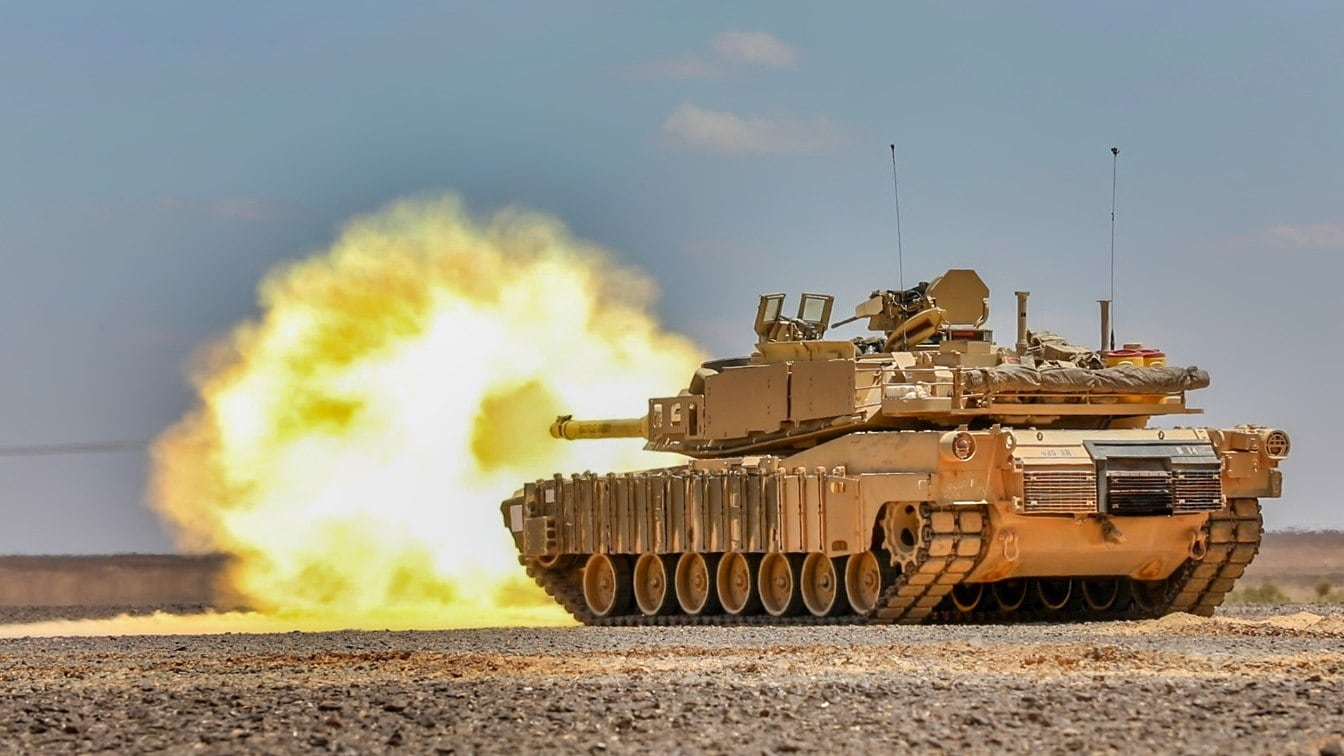
The U.S. Army’s M1 Abrams tank fires a depleted uranium round nicknamed the “Silver Bullet” that can punch through 1.6 feet of armor at over a mile—and ignites in flames upon impact. During Operation Desert Storm, the M829 sabot round terrified Iraqi tank crews, and it remains the deadliest anti-armor munition in the American arsenal today.
The M1 Abrams Tank Has a Secret Weapon: Uranium Bullets
I was a foot soldier and grunt in the U.S. Army, but I also served alongside armored brigade combat teams that combined tanks with mechanized infantry. I have been inside an M1A2 Abrams tank on a friendly tour, and it was surprising. The M1 Abrams looks big on the outside, but it is cramped on the inside. There is not a lot of space to move for a tall, lanky guy like me, but it was fun to see what tankers have to deal with on a daily basis.
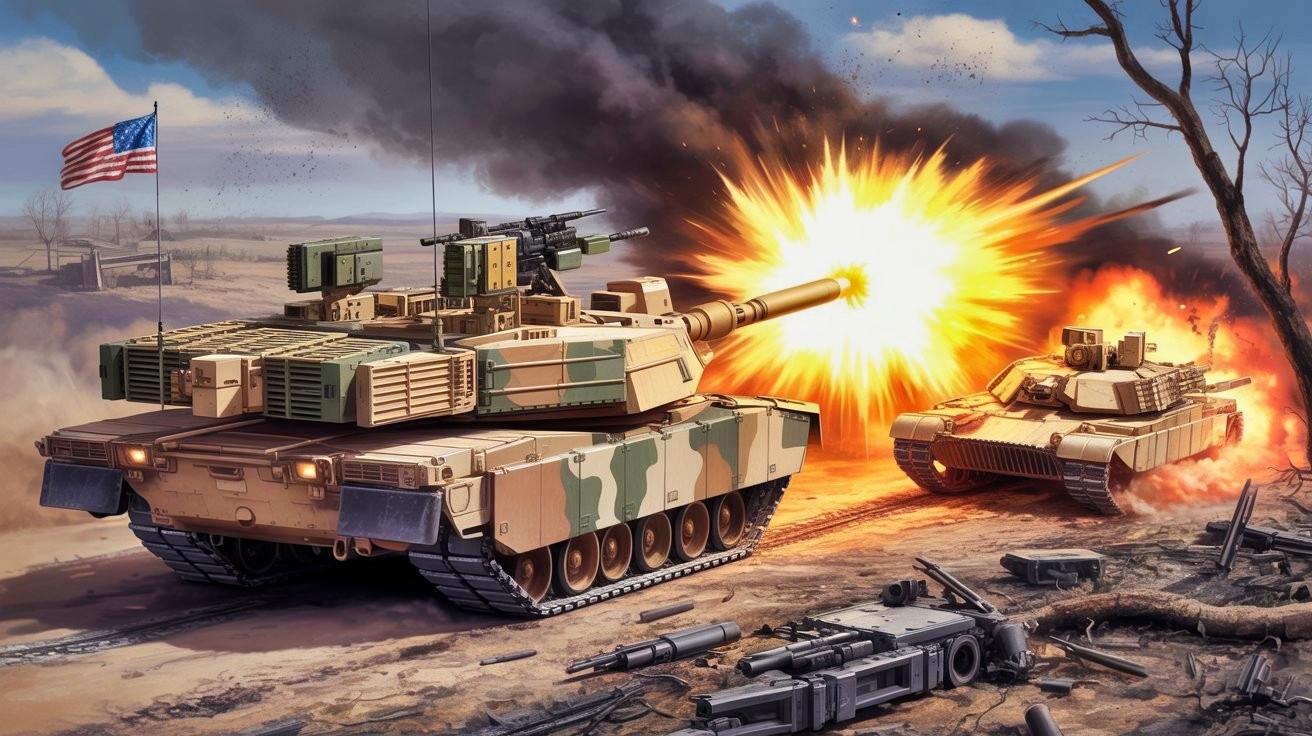
M1 Abrams Tank. Image Created via Ideogram.
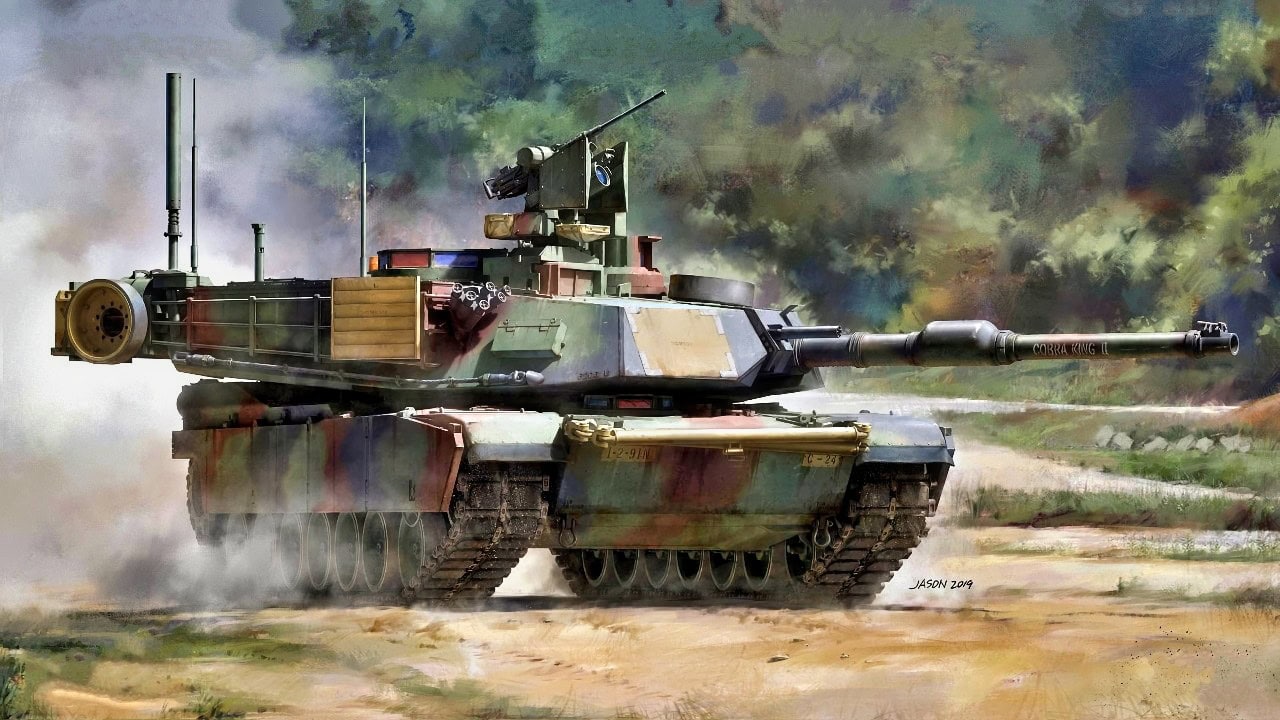
M1 Abrams Tank. Image Credit: Creative Commons.
Wrong Place, Wrong Time
One time while serving in South Korea, my company was on alert, and I went back to the barracks to check and see that all soldiers were accounted for. That put me on the wrong side of a long line of Abrams tanks going up the mountain.
The tankers all stared at me and had a laugh while I was trapped on one side of the line of tanks. Valuable minutes elapsed. They were not going to stop to let me cross. I had to let them all pass by me while my platoon was waiting for me to return. I’ll always remember the massive number of tanks we had to take on the North Koreans if necessary.
Home of the Armor Branch Was Inspiring
I also went to Army Basic Combat Training at Fort Knox, Kentucky. Back then, Fort Knox was the home of the Armor branch. It was amazing to see tanks operating beneath Apache attack helicopters, forming a single, powerful display of combat power. This was inspiring to see.
What Are the MainTypes of Abrams’ Ammunition?
One aspect of an Abrams tank that many people do not know is the range of ammunition fired through the 120mm main gun.
The most important is the M830 HEAT-MP-T that stands for “High-Explosive Anti-Tank-Multi-Purpose Tracer.” Next is the M1147 AMP or “Advanced Multi-Purpose.” Then there is the M829 APFSDS or “Armor-Piercing Fin-Stabilized Discarding Sabot.” This is known as the sabot round that has a depleted uranium penetrator. This can move through the heaviest armor on enemy tanks and armored personnel carriers.

U.S. Soldiers assigned to the 1st Armored Brigade Combat Team, 1st Armored Division fire at a target from an M1 Abrams main battle tank during Rotation 26-01 at the National Training Center, Fort Irwin, Calif., Oct. 17, 2025. Rotations at the National Training Center ensure Army Brigade Combat Teams remain versatile, responsive, and consistently available for future and current contingencies. (U.S. Army photo by Cpl. Anna Mae Tumacder, Operations Group, National Training Center)
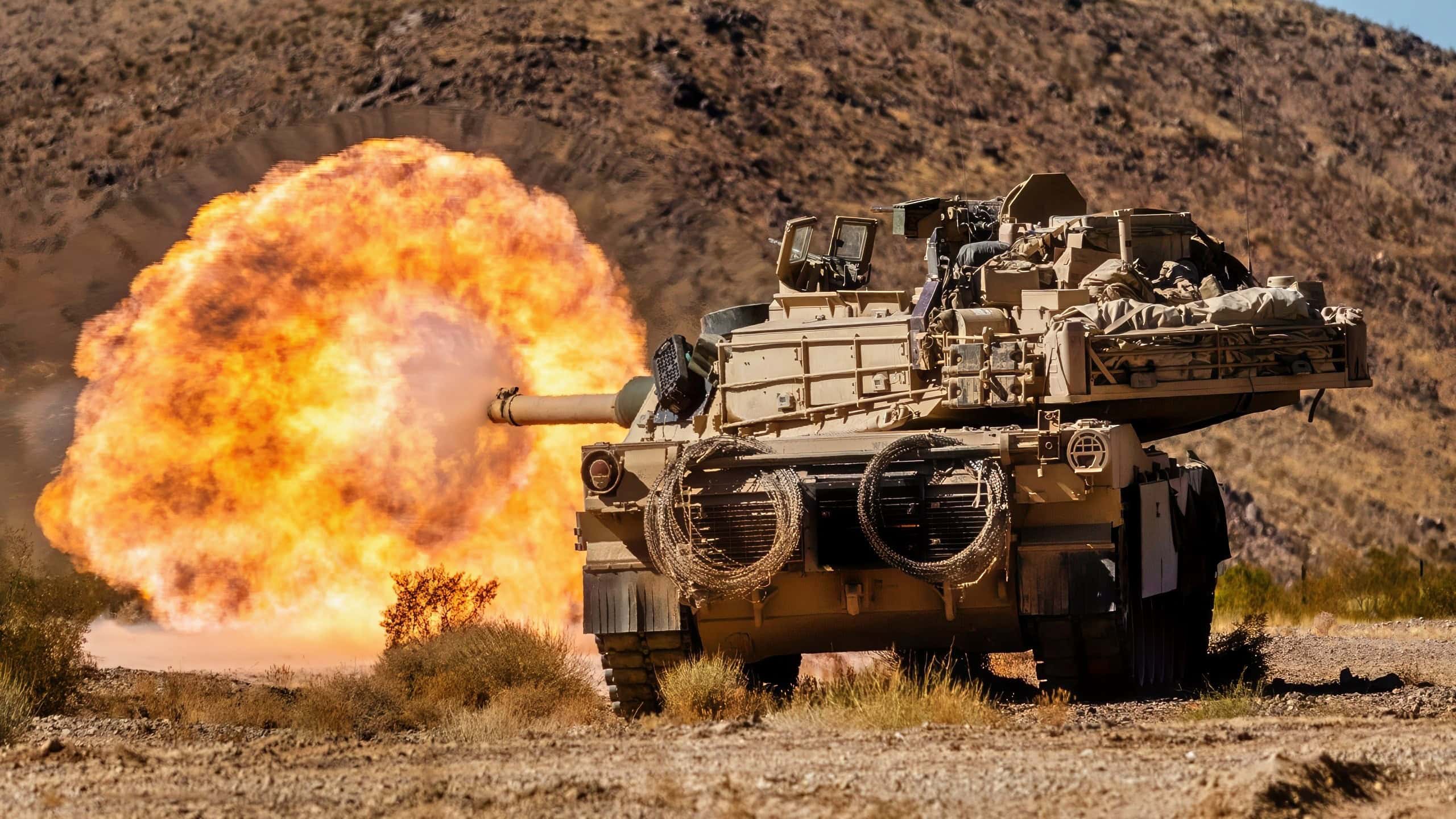
U.S. Soldiers assigned to 1st Battalion, 9th Cavalry Regiment, 2nd Armored Brigade Combat Team, 1st Cavalry Division fire an M1 Abrams main battle tank at an enemy target during Rotation 25-02 at the National Training Center, Fort Irwin, Calif., Nov. 07, 2024. Rotations at the National Training Center ensure Army Brigade Combat Teams remain versatile, responsive, and consistently available for current and future contingencies. (U.S. Army photo by Spc. Casey Auman, Operations Group, National Training Center).
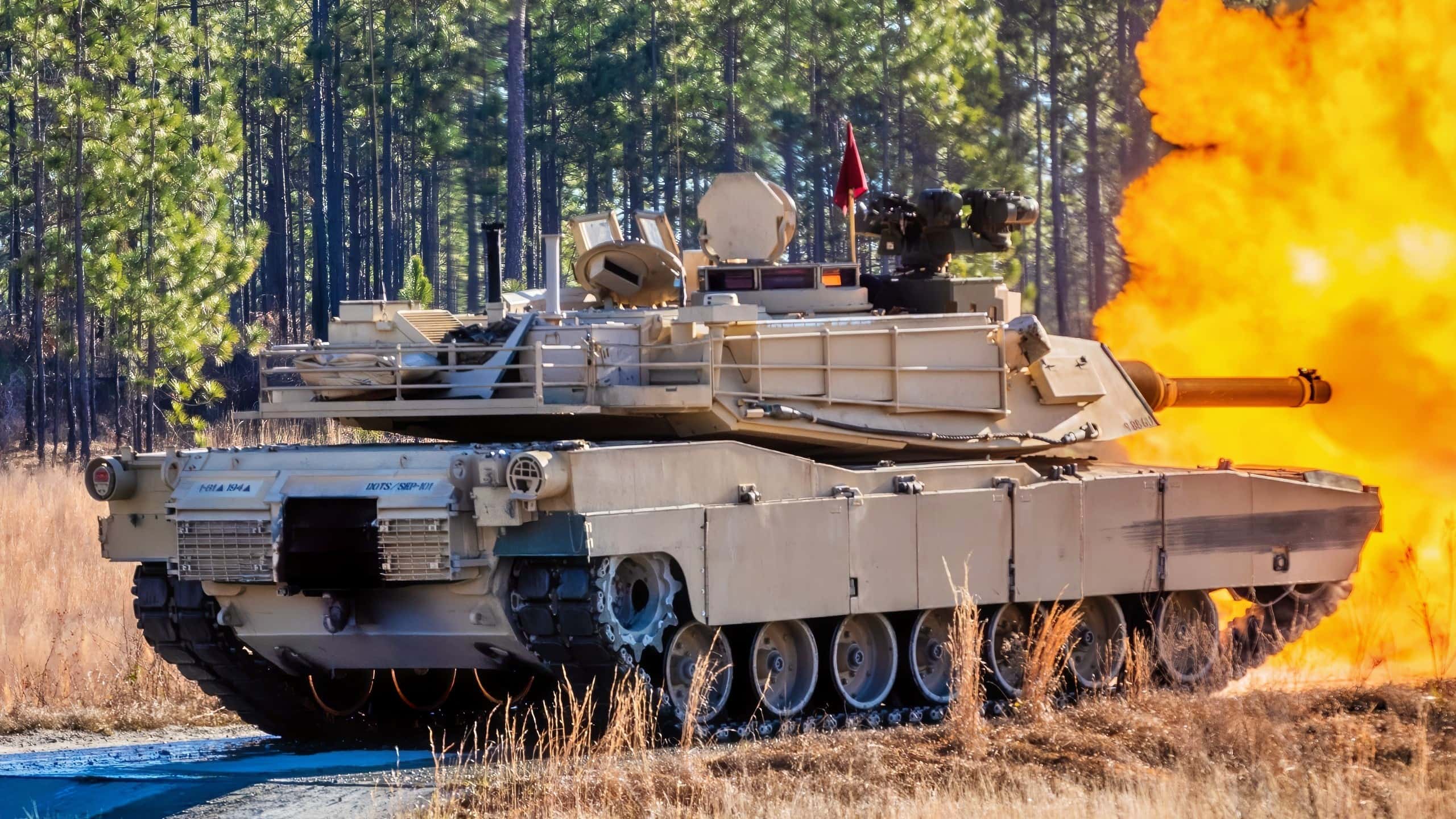
Soldiers from Echo Company, 1st Battalion, 81st Armor Regiment, 194th Armored Brigade, conduct gunnery training with the M1 Abrams tank, Jan. 14, 2025, at Brooks Range, on Fort Benning, Georgia. (U.S. Army photo by Joey Rhodes II)
The ‘Silver Bullet’ Is Plenty Lethal
The sabot is one of the most interesting rounds of ammunition for the Abrams and will be discussed today. Any weapon that can penetrate an enemy tank’s armor is highly valuable and the goal of all crews. The depleted uranium sabot is accurate and bursts from the gun with kinetic energy.
The Sabot was popular during Operation Desert Storm. The M829 made Saddam Hussein’s tank force pay the price, and the rounds were devastating munitions that dominated the battlefield. Nicknamed the “Silver Bullet,” they put the fear of God in the Iraqi tankers, and many never lived to tell about it.
The Composition of the Sabot Round
The M829 APFSDS starts out with an eclectic primer and propellant.
Then there is the sabot projectile itself, with a depleted uranium penetrator and a tracer. The M829 also features a ballistic tip to keep the round on a flatter trajectory and achieve higher muzzle velocity.
The Army transitioned before the M829, using tungsten-tipped penetrators earlier. But they invested in depleted uranium due to the material’s toughness and appetite for destruction.
Deeply Penetrating With a Burst of Flames
Depleted uranium is the compound the enemy fears most. The round causes a fire when it hits a target.
This burns exceedingly hot. The M829 round was later upgraded to the M829A4 variant, which can blast through 1.6 feet of armor at a range of over one mile.
However, sabots are not used against walls and buildings, as the round can go through the barriers like a regular bullet from a high-caliber sniper rifle. The round is better suited for targeting tanks and armored vehicles to cause maximum damage.
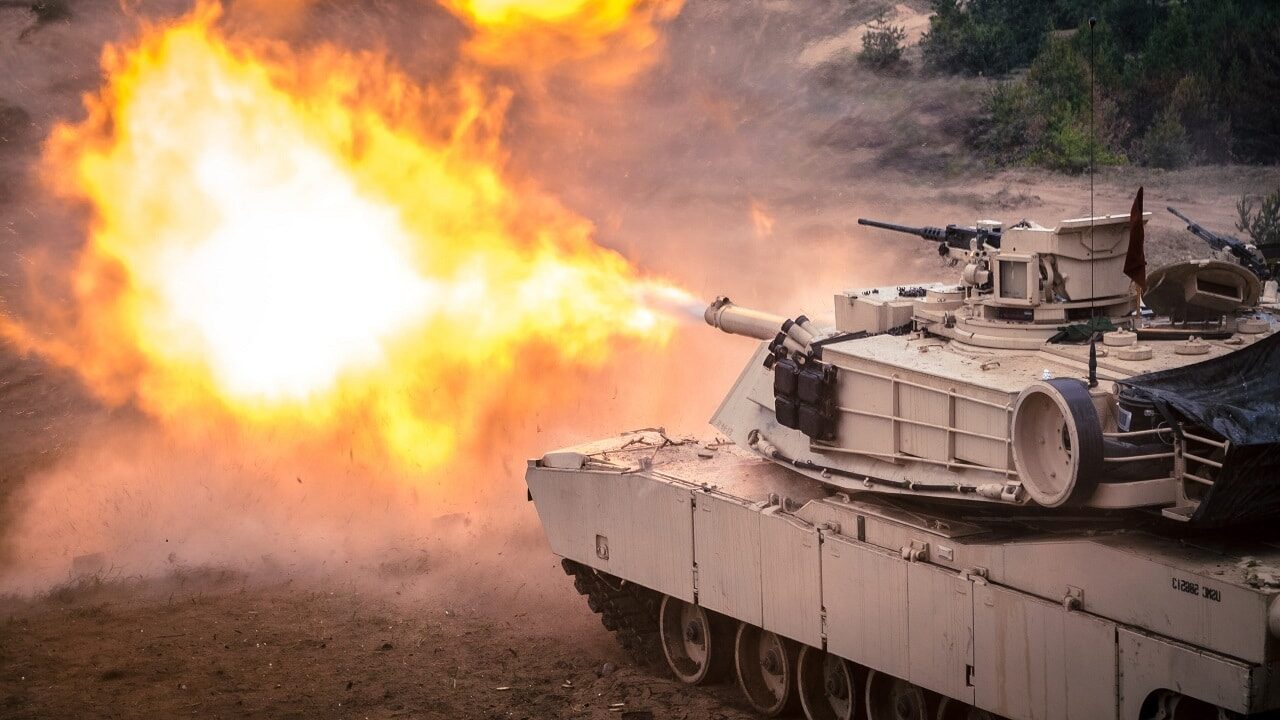
M1 Abrams Tank firing. Image Credit: Creative Commons.
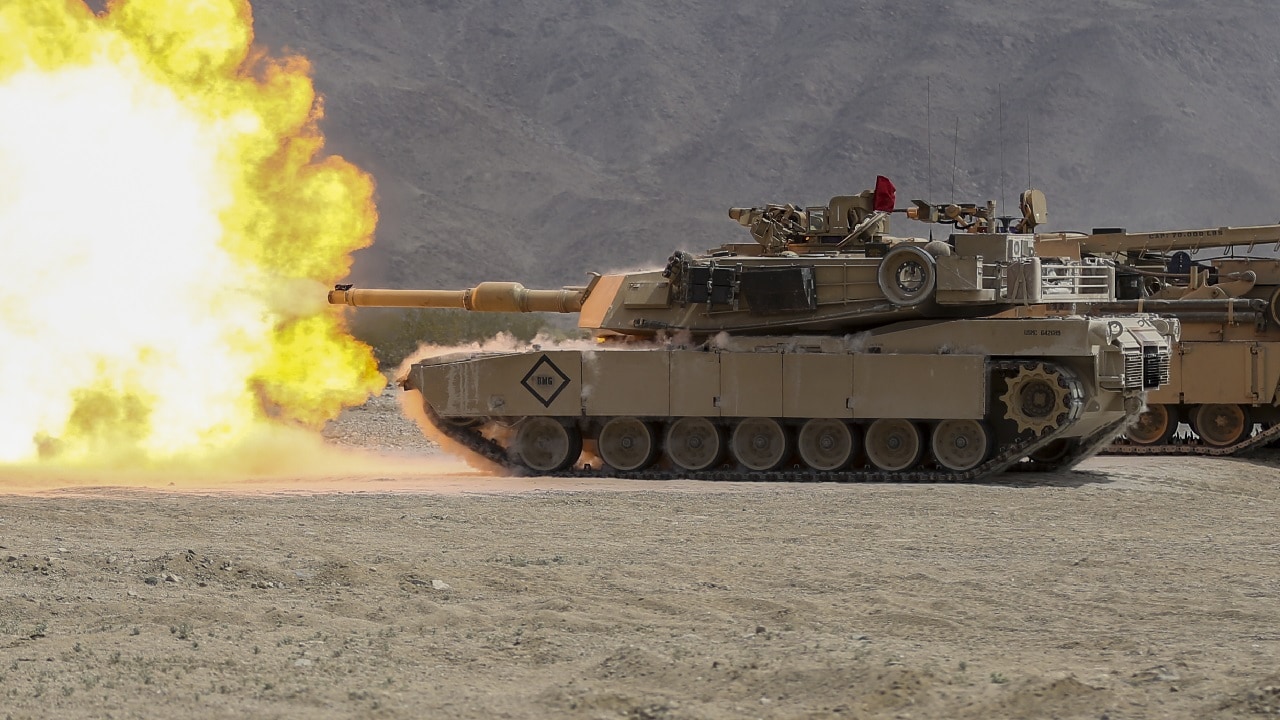
An M1 Abrams Tank fires off a round as a demonstration during 1st Tank Battalion’s Jane Wayne Spouse Appreciation Day aboard the Marine Corps Air Ground Combat Center, Twentynine Palms, Calif., April 3, 2018. The purpose of the event is to build resiliency in spiritual well being, the will to fight and a strong home life for the 1st Tanks Marines and their families. (U.S. Marine Corps photo by Lance Cpl. Rachel K. Porter)
For bunkers and other emplacements, the Army uses the M1147 AMP. This “replaces the anti-personnel canister and the obstacle-reduction round.”
Health Problems Using Depleted Uranium Shells
Depleted uranium has its critics.
During the First Gulf War, American soldiers would inspect damaged and destroyed tanks laid waste by sabot rounds, and some breathed in uranium particulate.
One 2007 study examined this problem and found that the material could be hazardous to humans.
Later Research Revealed Bad News
Scientists found that the radioactivity in the shells had a low risk of causing cancer and could also slightly damage the kidneys. Further research from Stanford in 2018 suggested that regular exposure to depleted uranium could cause long-term cancer in the kidneys and lungs.
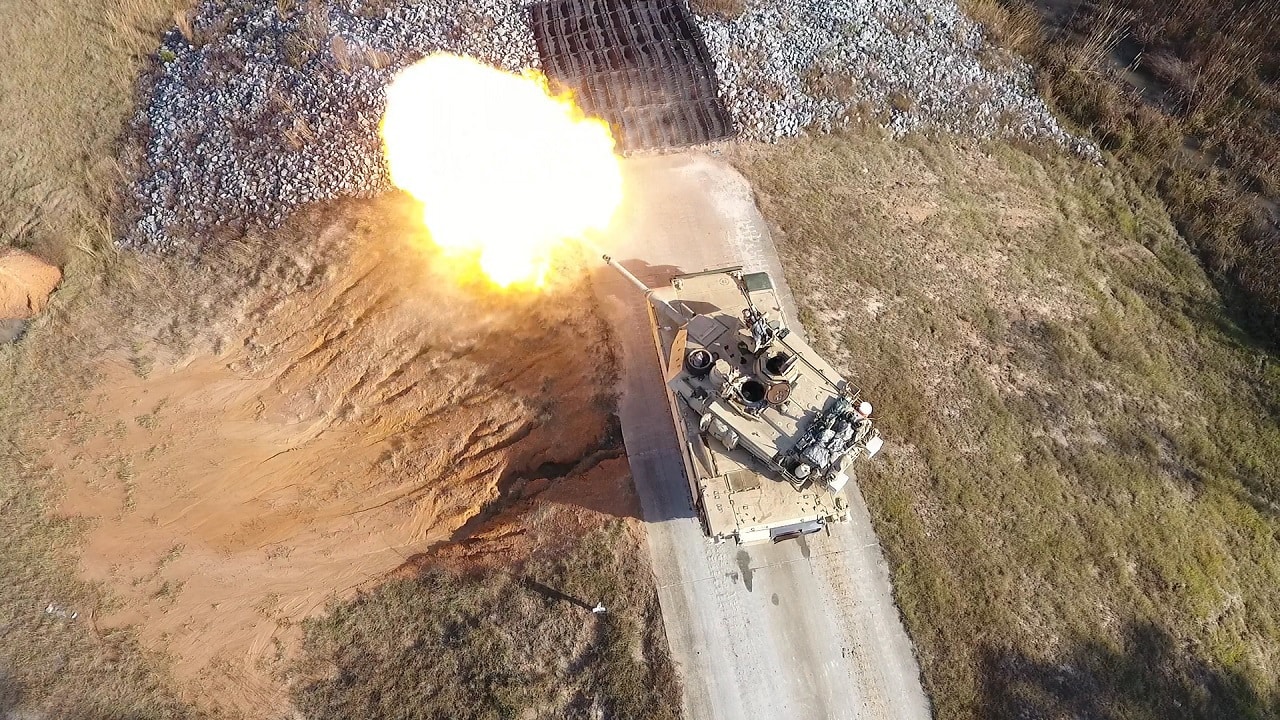
Aerial drone image of an M1A2 Abrams Main Battle Tank crew, from the 1st Armor Brigade Combat Team, 3rd Infantry Division, conducting Table VI Gunnery at Fort Stewart, Ga. December 6, 2016.
Keep Them Away from Civilians
As a result, the Department of Defense concluded it would not use depleted uranium shells around civilians.
The use of depleted uranium rounds is thus controversial, although they will still be used against enemy tanks. Ground combatants are encouraged to stay away from destroyed vehicles that may have been hit by a sabot. It is a good idea not to use sabot rounds against non-combatants.
There is a reported health risk of exposure. The Army does not want to punish civilians unnecessarily, but to tankers, they are accurate and lethal.
That is just the name of the game for friendly forces to eliminate as many tanks and armored personnel carriers as they can on the battlefield.
About the Author: Dr. Brent M. Eastwood
Author of now over 3,500 articles on defense issues, Brent M. Eastwood, PhD, is the author of Don’t Turn Your Back On the World: A Conservative Foreign Policy and Humans, Machines, and Data: Future Trends in Warfare, plus two other books. Brent was the founder and CEO of a tech firm that predicted world events using artificial intelligence. He served as a legislative fellow for US Senator Tim Scott and advised the senator on defense and foreign policy issues. He has taught at American University, George Washington University, and George Mason University. Brent is a former US Army Infantry officer. He can be followed on X @BMEastwood.