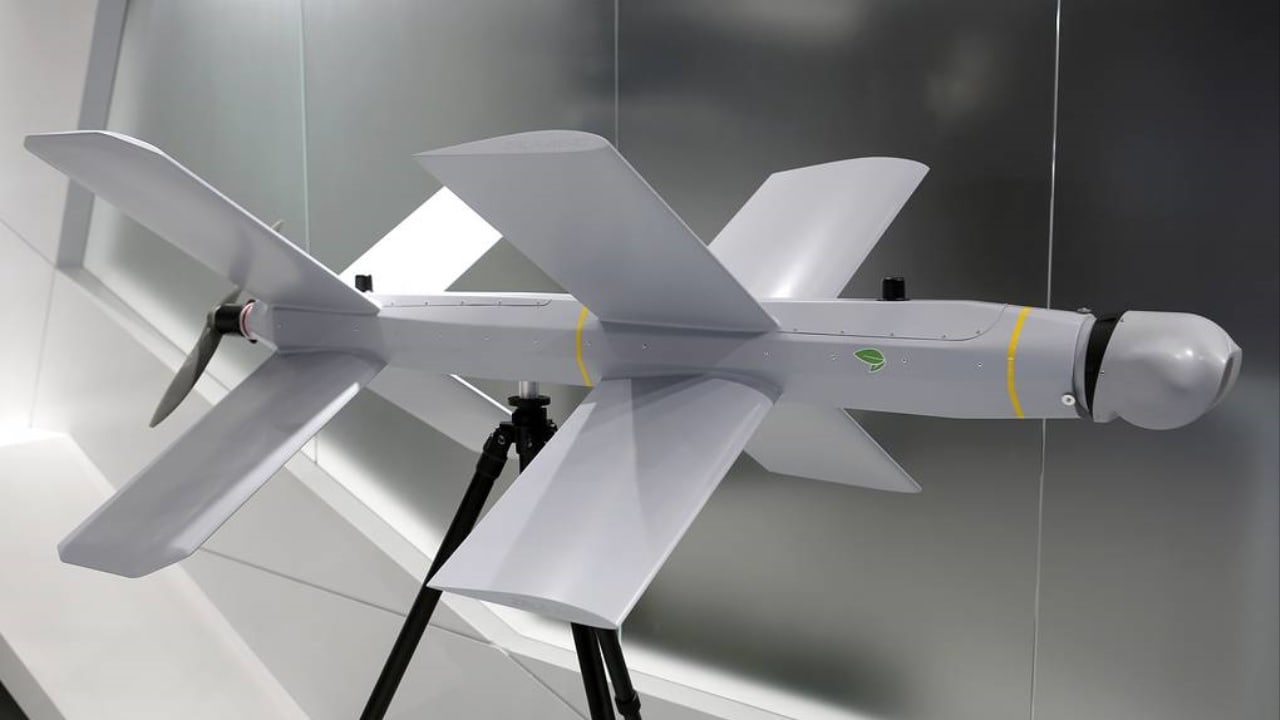
Ukraine’s Celebra Tech has developed an AI-powered anti-drone laser system called Trident. It reportedly burns a hole through a Russian Shahed drone from more than 3 miles away. Demo footage shows the laser burning through armor in 3 to 4 seconds. The system uses AI-based target acquisition integrated with radar and command-and-control. Ukrainian civilians currently have just 3 seconds to hide before a Shahed strikes. For nearly four years, Ukraine has been forced to use $3-5 million Patriot PAC-3 missiles to intercept $20,000 Russian-Iranian drones. The cost imbalance was unsustainable. The Trident system is reportedly approaching initial operational capability.
Ukraine Might Have a New Way to Beat Russia’s Drones
According to reports this week, Ukraine’s defense industry has developed an AI-powered anti-drone laser that may eliminate the threat posed to the country’s civilian population from one-way, Iranian-designed drones.
For almost four years now, Ukrainian cities have been at the mercy of these drones that, when originally developed in Iran, were called the Shahed. Russia eventually stopped purchasing these vehicles off the shelf from Tehran and began producing them locally under the designation Geran-2/3. The former is a copy of the Shahed-136 series, and the latter, the -3 variant, is a jet-powered Russian derivative of this drone.
Conservative estimates place the number of Ukrainian civilians killed by these weapons in the untold hundreds, with thousands injured. Just the sound of the motor of one of the propeller-driven Shaheds, which has a very distinctive pitch, now strikes terror into the hearts of those in Ukrainian cities.
In February, one of the Ukrainian inhabitants of the city of Kherson told France24, “Everyone has heard the sound of a drone, seen it. Children of all ages, when they hear the sound of a drone, they point upwards, and they say ‘Drone! Drone!’ It is recommended to drive in dangerous zones with the windows open, because you won’t hear a drone in a closed car. No one will warn you about a drone attack. Everyone relies on their own hearing or hearing a whistle. This means we have three seconds to hide somewhere.”
Ukraine’s Anti-Drone Laser
Ukraine has long sought a low-cost solution to these Iranian/Russian weapons, but has struggled with the cost-benefit issue. As a recent Ukrainian publication pointed out, the tragic disparity in the earlier periods of the war involved using “$5 million [air defense] missiles to shoot down $20,000 drones.”
Because of the daily waves of these low-cost Shahed drones, Ukraine was forced to rethink its air defense networks and the effectors it would employ. In the process, Ukrainian industry has developed an AI-powered anti-drone laser that, according to its developers, is now close to IOC battlefield readiness.
The Ukrainian company that developed the laser, Celebre Tech, now has a laser reportedly capable of burning a hole in a Shahed drone from more than three miles away in a matter of seconds. The system, nicknamed “Trident,” is designed to provide Ukrainian forces with a cheap, rapidly deployable countermeasure against massed Russian first-person-view (FPV) drone and reconnaissance unmanned aerial vehicle (UAV) operations.
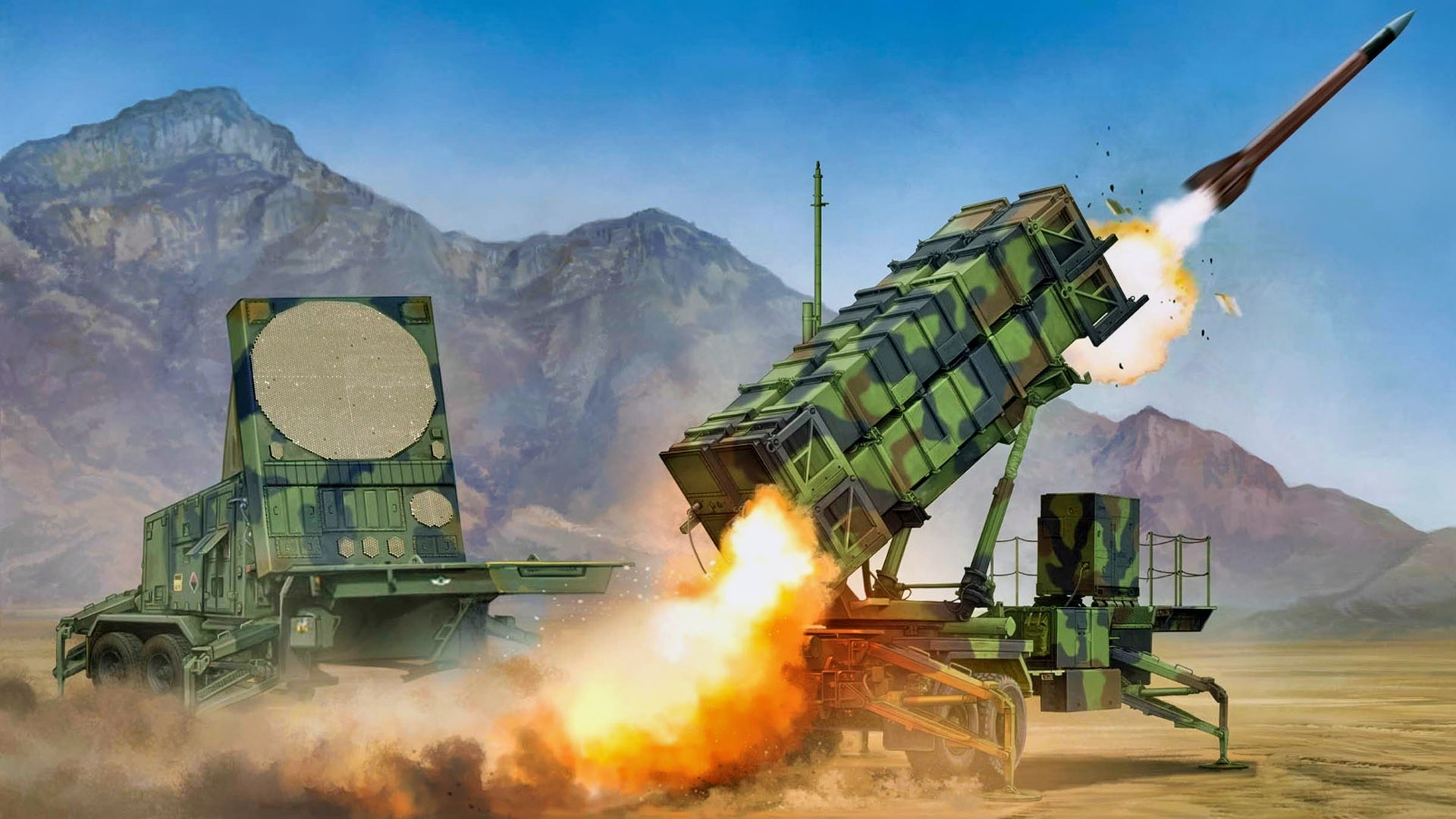
Patriot Missile. Image Credit: Creative Commons.
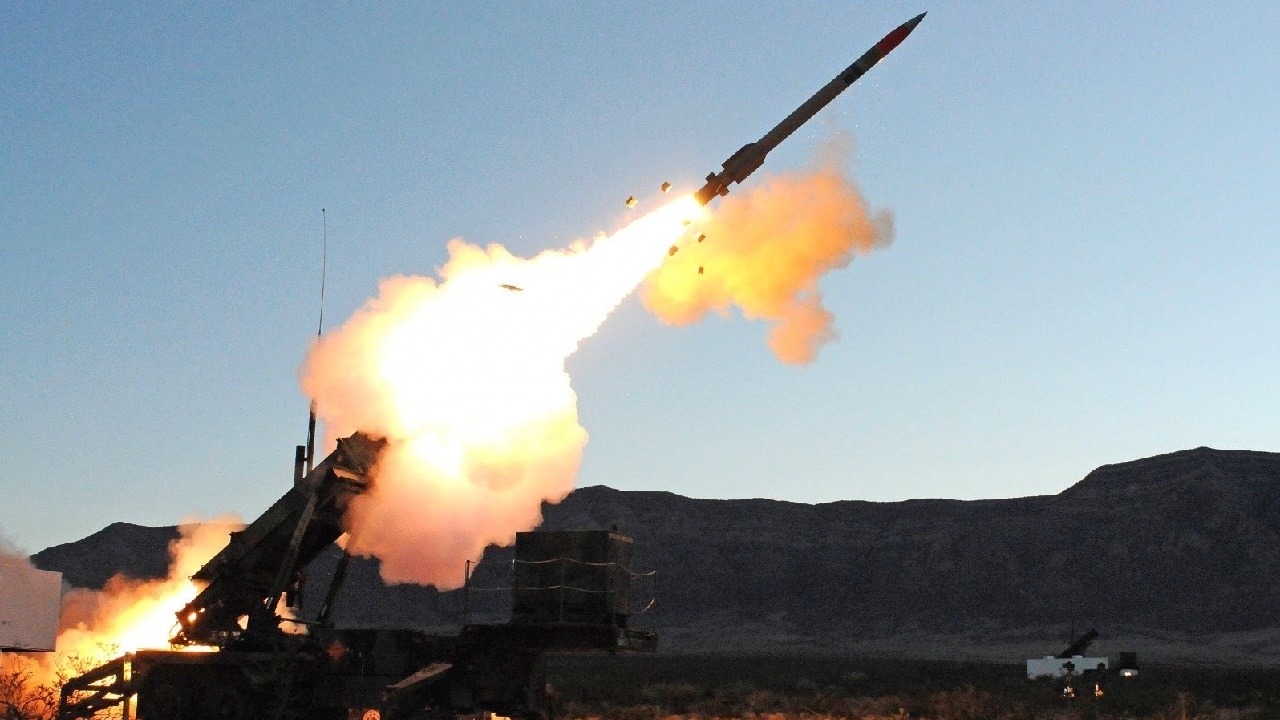
Patriot Missile. Image Credit: Creative Commons.
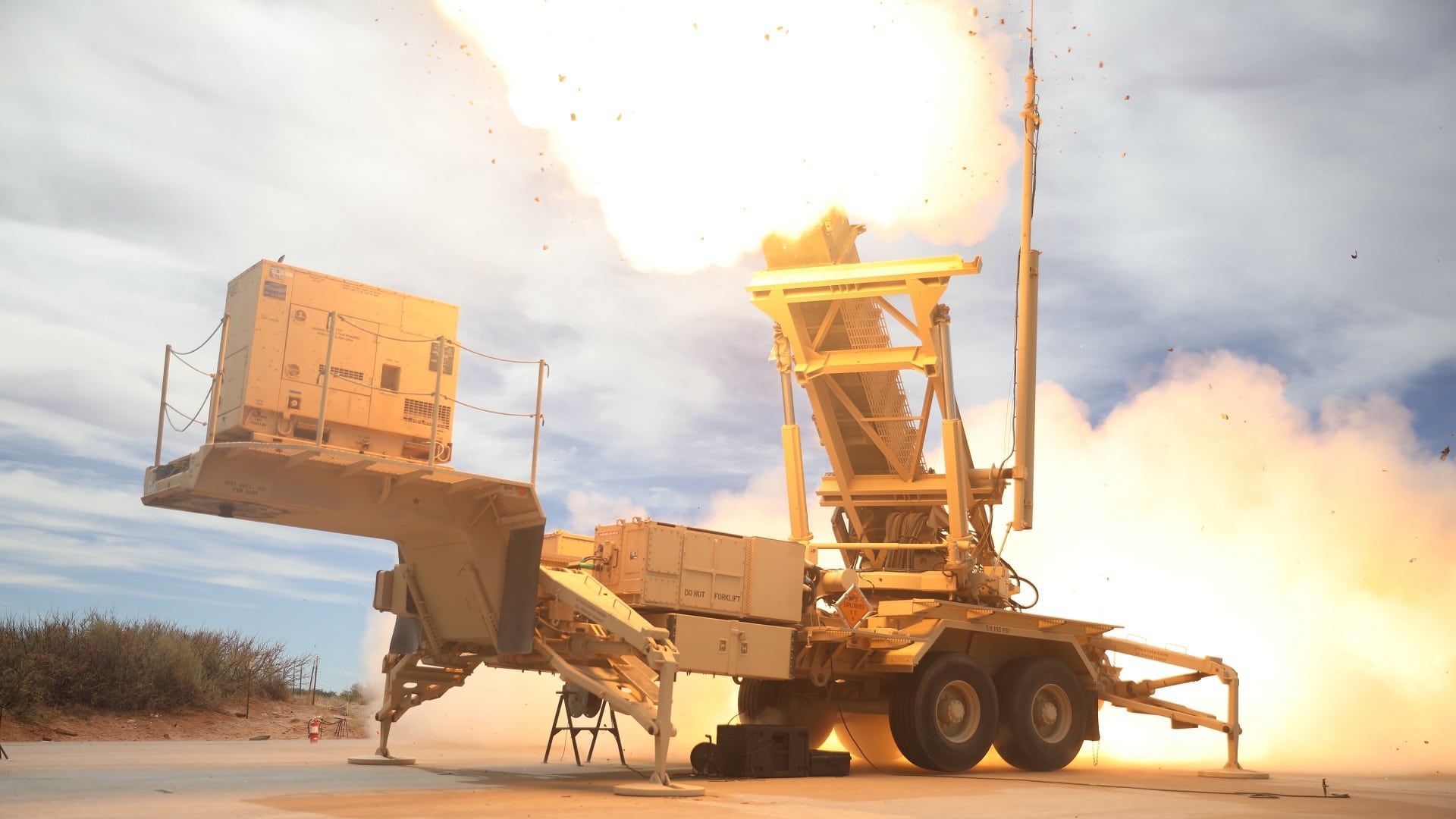
Soldiers from 69th Air Defense Artillery Brigade conducted Patriot Missile live fire training, November 5, at McGregor Range Complex on Fort Bliss. The live fire exercise was conducted jointly with Air Defense counterparts from the Japanese Self-Defense Force. (U.S. Army Photo by Staff Sgt. Ian Vega-Cerezo)
A video from the company shows the laser operating on the “Tryzub” trailer-mounted system burning a hole through armor in three to four seconds. The demo then shows an incoming drone being acquired by the system’s AI-assisted sights, lasered, and crashing to the ground only a few seconds later.
Lowering The Unit Cost
The interceptor missiles used for years to take down airborne threats, like the US Patriot PAC-3, cost between $3 million and $5 million each. Shorter-range options like the German-made Diehl IRIS-T infrared-guided missile cost around $430,000 apiece, and the NASAMS/AIM-120 active radar-homing interceptor prices out between $1 million and $1.5 million.
So far, the missiles used to intercept the Shaheds have been overkill in more ways than one. Shahed-style drones cost between $20,000 and $50,000 each, making them several orders of magnitude less than the cheapest missiles used against them.
The Ukrainian news outlet Euromaidan Press says the system has been under development by Celebra Tech since at least 2024, and its testing and validation are now in their final stages.
Celebra has also confirmed that the system has been tested against targets ranging from 7-inch (17-8 cm) to 13-inch (33 cm). Specifically, its laser has proven effective against electronic and optical guidance systems and structural elements such as wing surfaces.
The system’s developers say it incorporates AI-based target acquisition and tracking. The AI acquisition operates alongside an integrated radar and command-and-control module designed to improve the detection and tracking of incoming aerial threats.
Much remains unknown about the system. The laser’s power output has not been publicly disclosed. Neither have other critical features, such as its cooling setup, battery capacity, etc.
Regardless, it appears today to be a major leap in developing a non-kinetic anti-drone capability. If it can be deployed in large numbers, it could rid Ukraine of its perennial problem of not having enough air defense missiles to counteract Russian drones.
About the Author: Reuben F. Johnson
Reuben F. Johnson has thirty-six years of experience analyzing and reporting on foreign weapons systems, defense technologies, and international arms export policy. Johnson is the Director of Research at the Casimir Pulaski Foundation. He is also a survivor of the Russian invasion of Ukraine in February 2022. He worked for years in the American defense industry as a foreign technology analyst and later as a consultant for the U.S. Department of Defense, the Departments of the Navy and Air Force, and the governments of the United Kingdom and Australia. In 2022-2023, he won two consecutive awards for his defense reporting. He holds a bachelor’s degree from DePauw University and a master’s degree from Miami University in Ohio, specializing in Soviet and Russian studies. He lives in Warsaw.