
Days after the Iranian-aligned Houthi militia in Yemen declared an embargo on Saudi oil shipments going through the Bab al-Mandeb Strait in the Red Sea, the Wall Street Journal has stated that a “new front” in the Middle East conflict has opened.
This development has resulted in “a dangerous new variable [for] the U.S. and its allies and piling more pressure on the global economy.”
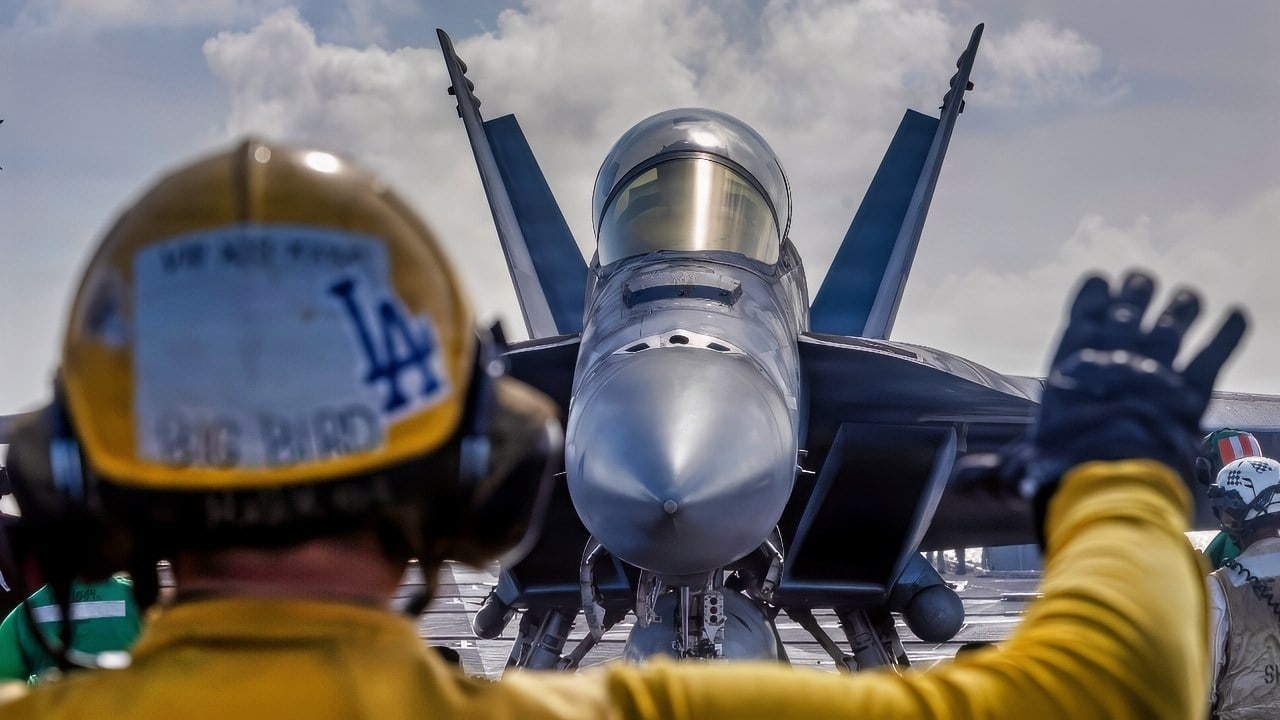
U.S. Navy Aviation Boatswain’s Mate (Handling) 2nd Class Michael Cordova directs an F/A-18E Super Hornet, attached to Strike Fighter Squadron (VFA) 14, on the flight deck of Nimitz-class aircraft carrier USS Abraham Lincoln (CVN 72) on Jan. 10, 2026. The Abraham Lincoln Carrier Strike Group is underway conducting routine operations in the U.S. 7th Fleet area of operations. Units assigned to 7th Fleet conduct regular Indo-Pacific patrols to deter aggression, strengthen alliances and partnerships, and advance peace through strength. (U.S. Navy photo by Mass Communication Specialist Seaman Daniel Kimmelman)
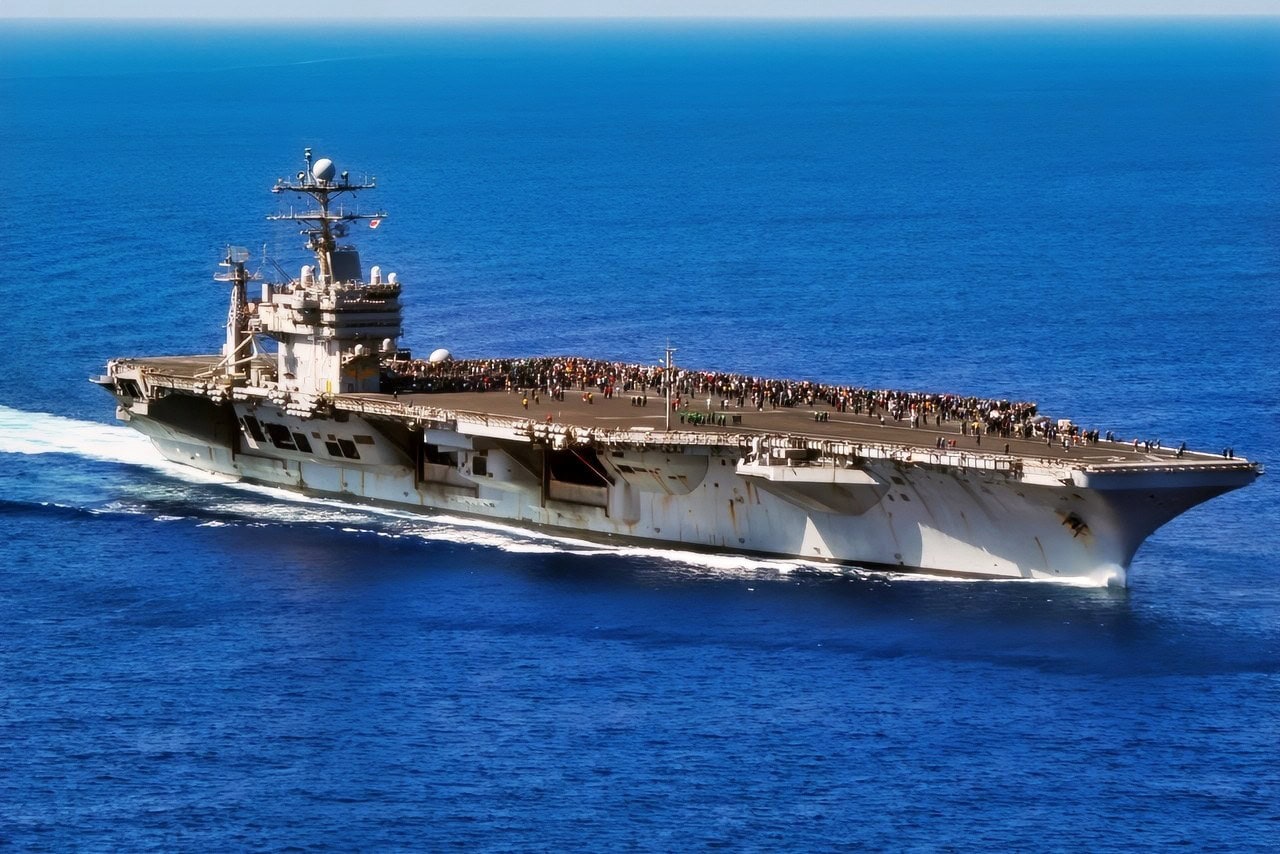
ATLANTIC OCEAN (Aug. 6, 2012) F/A-18 Hornets and Super Hornets from Carrier Air Wing (CVW) 2 fly in formation as MH-60S Seahawk helicopters assigned to the Golden Falcons of Helicopter Sea Combat Squadron (HSC) 12 fire flares during an air power demonstration above the Nimitz-class aircraft carrier USS Abraham Lincoln (CVN 72). Lincoln is returning to the United States after the completion of an eight-month change-of-homeport deployment during which she operated in the U.S. 5th, 6th and 7th Fleet areas of responsibility. (U.S. Navy photo by Mass Communication Specialist Seaman Zachary A. Anderson/Released)
According to the Journal analysis, the move follows the Houthis spending several months “on the sidelines” of the conflict.
The Houthis jumped in following Saudi Arabia reportedly bombing the international airport in the Yemeni capital of San’a.
“With the escalation, the Houthis constitute a nuclear option for Iran,” Adam Baron, a fellow at think tank New America and expert on the region, told the Journal. “They are a non-naval power that can execute a maritime blockade and hold the global economy hostage. They did this before and are aware they have this leverage.”
Commanders, Weapons and Gold From Iran
Meanwhile, Reuters reported Friday that Iran’s IRGC has delivered both commanders and missile gear to Yemen to assist the Houthis.
“Four sources familiar with the matter, including two Iranian sources, Yemen’s information minister and a regional security analyst, said Iran transferred the IRGC personnel and military-related equipment on a flight from Tehran to Yemen on July 13, a development that has not been previously reported,” the report said.
The flight, the report said, was to land at the San’a Airport but was diverted to Hodeidah after the Saudis attacked that airport.
“The IRGC commanders traveled there to support Houthi operations and provide training on new missile systems,” one source told Reuters, adding that Iran had also sent gold on the plane to “fund Houthi activities.”
A Houthi spokesman, however, blasted the part about “military experts” on the plane as “lies and fabrications.”
The Rising Price of Oil
This all has already begun to affect oil prices, with Brent Crude closing above $100 a barrel on Thursday for the first time in two months, although it had touched that mark earlier in the week.
The chokepoints, first in the Strait of Hormuz and now in the Red Sea as well, have forced oil shippers to consider alternative routes, including sailing around Africa.
“You don’t need an actual missile or drone to stop commercial traffic.
If the shipping companies don’t want to go through, you effectively have a blockade,” Michael Ratney, the former U.S. ambassador to Saudi Arabia, told the Journal.
Will Trump Hit the Houthis?
The U.S. had previously launched military strikes on the Houthis in the spring of 2025, in what was known as Operation Rough Rider.
The campaign was aimed at getting the Houthis to stop attacking ships in the Red Sea.
That ended with a ceasefire in May of that year, the month before the U.S. and Israel attacked Iran’s nuclear sites in Operation Midnight Hammer.
That campaign against the Houthis is perhaps best known for Signalgate, the controversy in which a journalist, Jeffrey Goldberg of The Atlantic, was accidentally added to a Signal discussion in which attack plans were discussed. Goldberg later wrote about the experience.
Could the U.S. strike the Houthis again, even if it meant broadening the war?
The president said on Thursday that he will hold Iran responsible for any Houthi attacks on oil tankers.
Per CNBC, Trump threatened Iran, as well as the Houthis themselves, on Truth Social.
“A year ago the United States of America attacked, very powerfully, the Houthis, for their interference with commerce and trade, by shooting at ships.
Since that time, and during our conflict with Iran, they have acted very responsibly. Unfortunately, now they are starting up again, shooting at two Saudi Arabian ships last night,” the president said on his social network.
“Please let this TRUTH serve to represent that if they do this again, the U.S. will hold Iran responsible, in that the Houthis are a Surrogate and/or Proxy of Iran, and major military punishment will be inflicted upon Iran and, of course, the Houthis, themselves, who I am very disappointed with in that they have, until now, acted very professionally and smart.”
About the Author: Stephen Silver
Stephen Silver is an award-winning journalist, essayist, and film critic, and contributor to the Philadelphia Inquirer, the Jewish Telegraphic Agency, Broad Street Review, and Splice Today. The co-founder of the Philadelphia Film Critics Circle, Stephen lives in suburban Philadelphia with his wife and two sons. For over a decade, Stephen has authored thousands of articles that focus on politics, national security, technology, and the economy. Follow him on X (formerly Twitter) at @StephenSilver, and subscribe to his Substack newsletter.