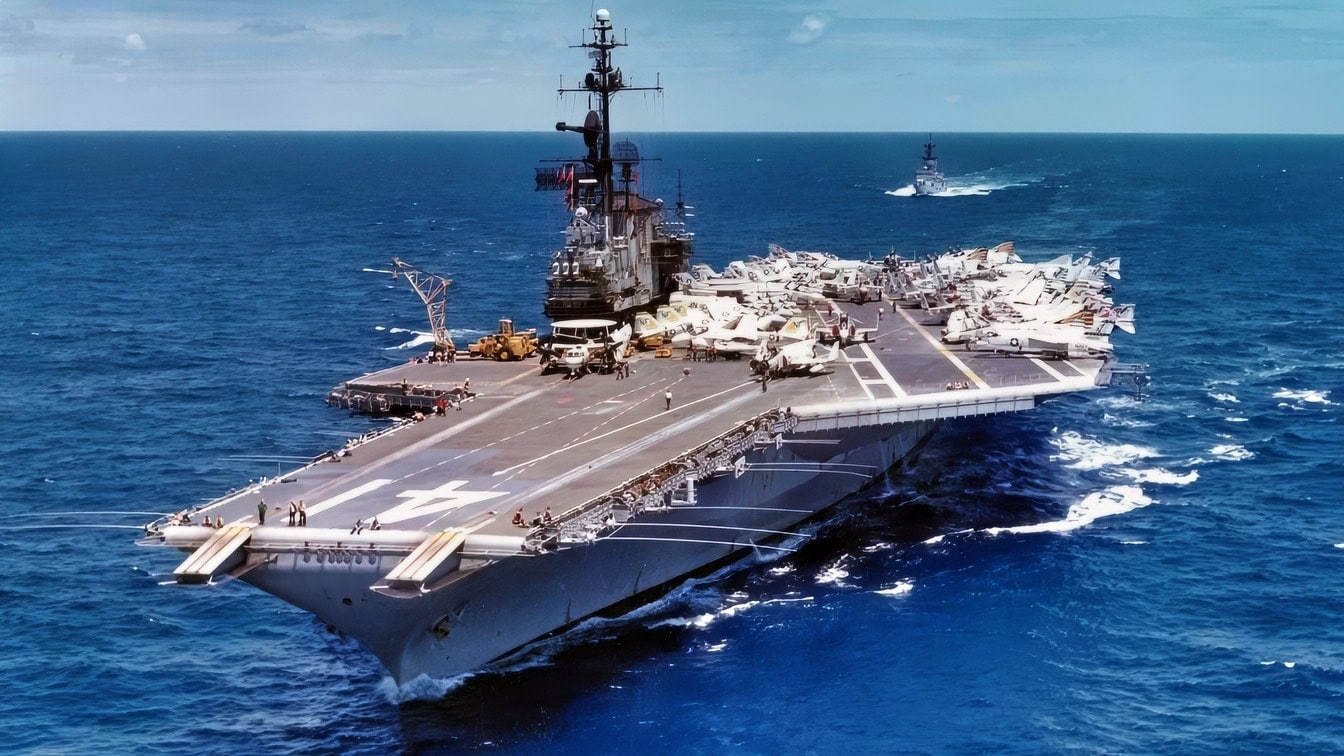
The United States Navy’s Midway-class aircraft carriers were one of the most iconic platforms the Navy built. The namesake of the class, the USS Midway (CV-41), currently sits in San Diego as a museum commemorating the carrier’s impressive service record.
Midway entered service just after the major fighting of the Second World War ended. A half-century later, the Midway served in a major conflict during Operation Desert Storm.
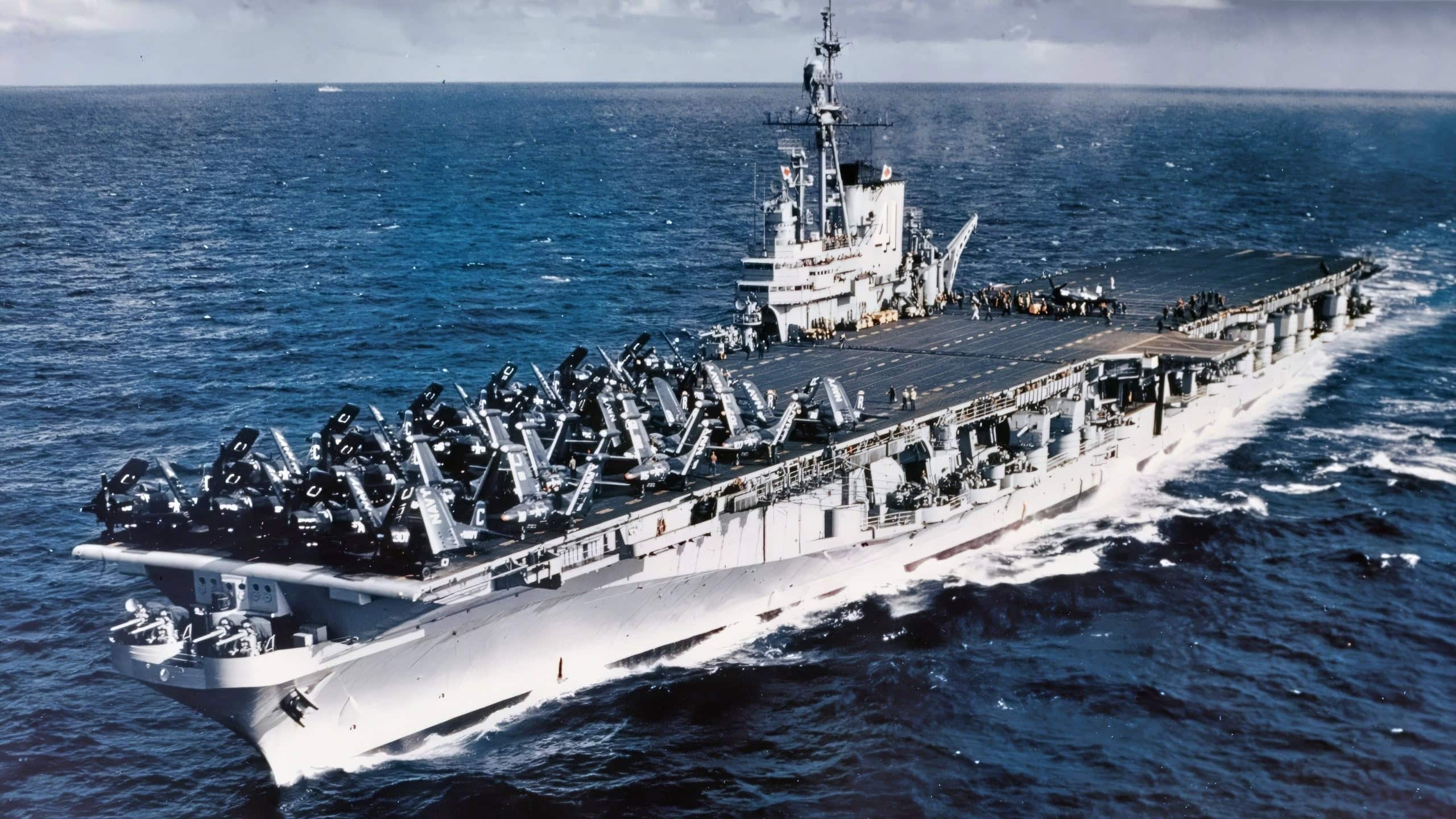
USS Midway Midway-Class Aircraft Carrier
A Legend: Meet the USS Midway
Commissioned on September 10, 1945, Midway was the lead ship of the Midway-class (consisting of three warships).
Her sister ships were the USS Franklin D. Roosevelt and the USS Coral Sea.
CV-41 was named after the critical Battle of Midway in the Pacific Theater of the Second World War in 1942. Newport News Shipbuilding built the carrier.
Like her sisters, the Midway was larger than the Essex-class carriers that preceded her. These ships could carry larger air wings. More importantly, though, the Midway-class carriers possessed armored flight decks. This critical development came after fighting the Japanese and seeing the damage Japanese Kamikazes and bombers could inflict on carrier flight decks lacking adequate armor.
The Midway and her sister ships were much larger than the older Essex-class carriers because the Navy wanted armored decks, as the British carriers had, but did not want to sacrifice aircraft numbers. So, the Navy just made the Midway-class bigger than whatever came before.
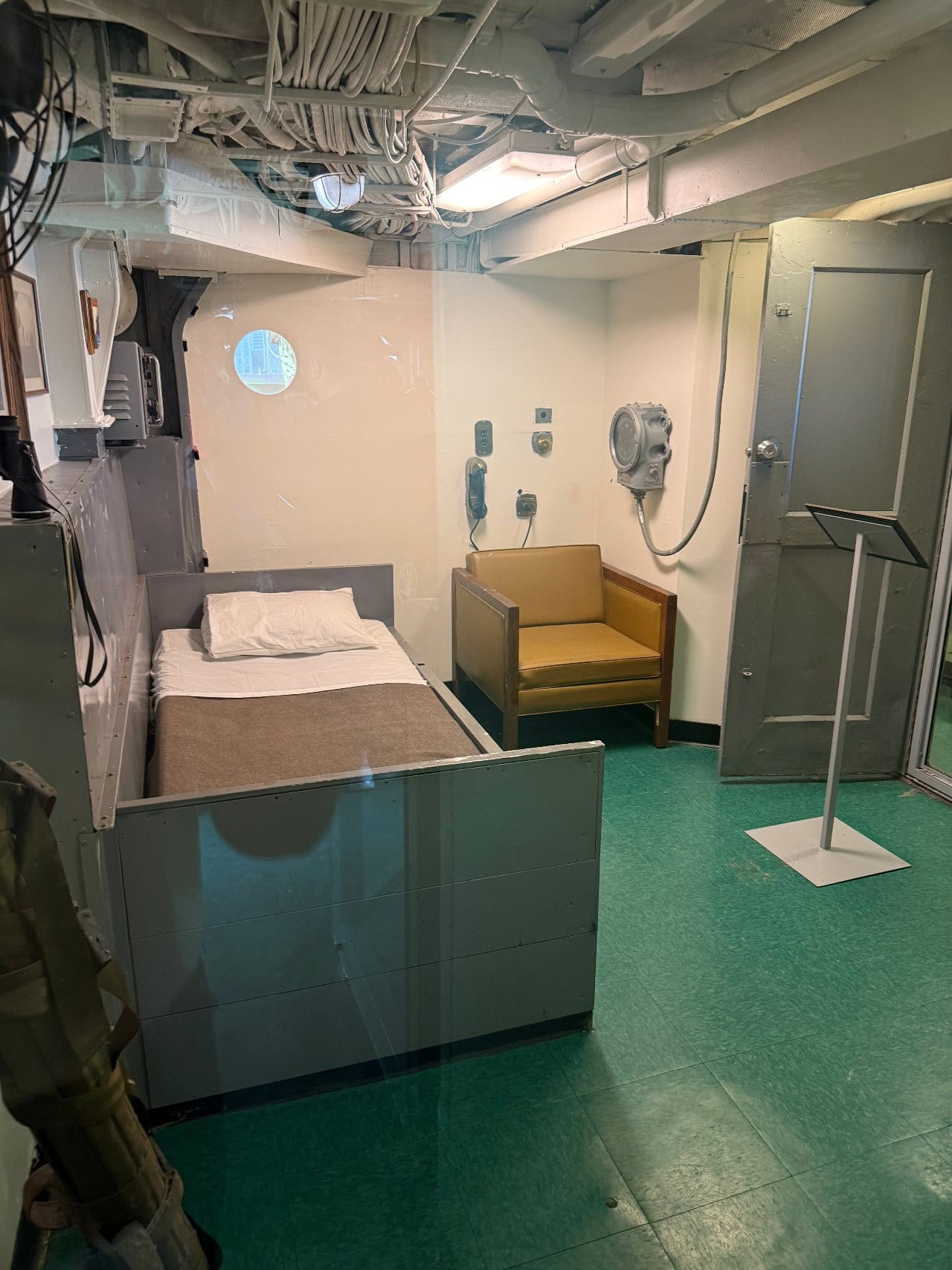
Inside USS Intrepid Essex-class. Image Credit: 19FortyFive.com
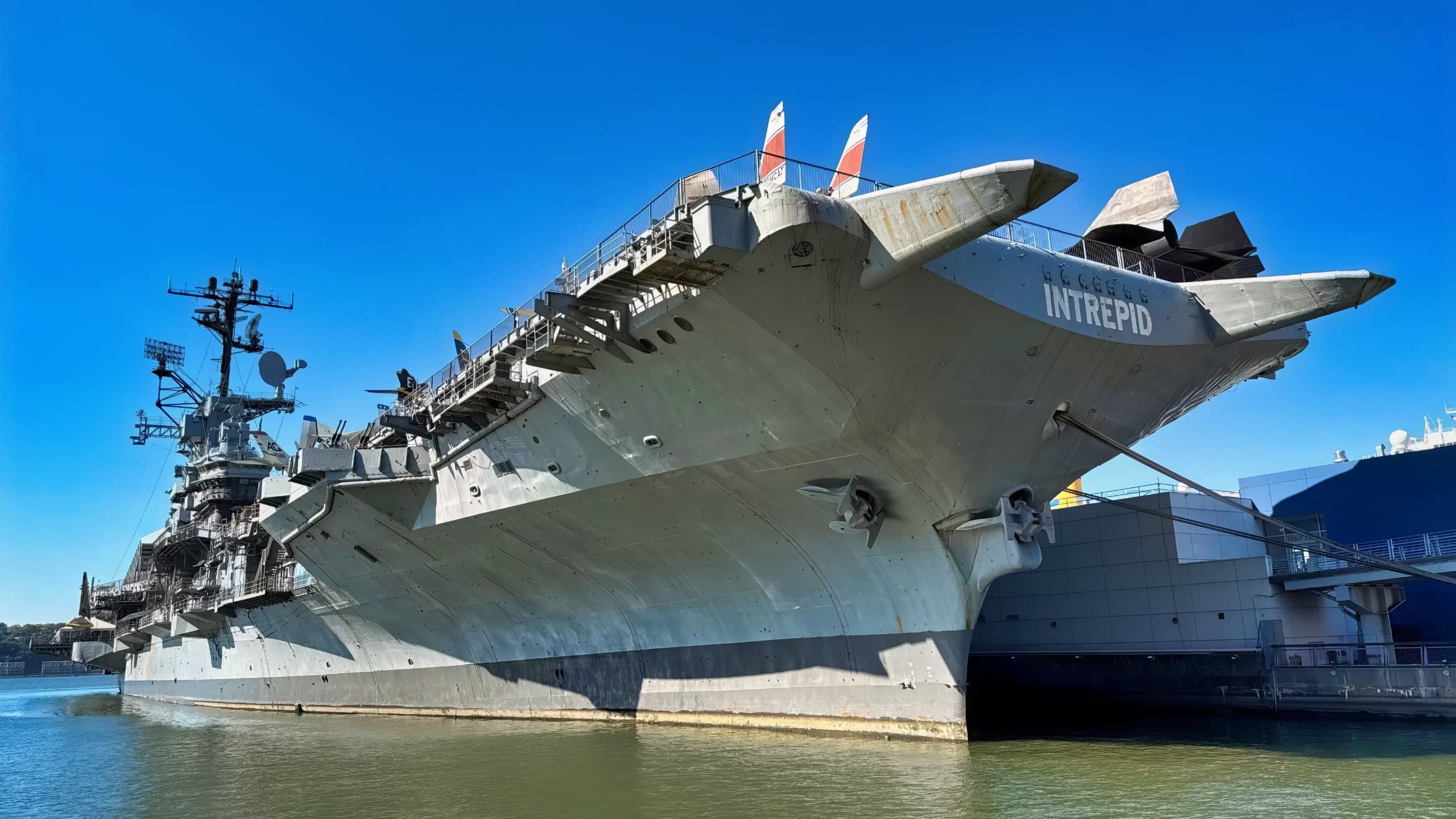
Essex-Class USS Intrepid 19FortyFive.com Photo
USS Midway displaced 45,000 tons (standard) when commissioned, making her one of the world’s largest warships. She could carry 4,000 sailors and Marines.
While the carrier could handle up to 145 aircraft onboard, the Navy resisted the urge to maximize the complement because the space inside was cramped.
When the Navy embraced jet fighters, these planes were bigger than the propeller-driven planes of WWII, meaning that the Navy had to reduce the number of planes in the Midway’s air wing.
Midway even launched a captured German V-2 rocket from her flight deck in 1947!
The Navy Loved the Midway
You know that because the Navy paid for several significant upgrades to the great ship. By the time her storied career ended, the carrier had grown to roughly 64,000 tons.
What’s more, the ship’s flight deck and her hull had been seriously altered.
In the 1950s, the Navy modernized the carrier by adding an angled flight deck, enclosed hurricane bow, improved aviation elevators, and steam catapults. Again, in 1966, the carrier was modernized, and her flight deck was expanded further.
This carrier also operated an extraordinary lineup of legendary planes. She began carrying aircraft such as the Vought F4U Corsair fighter and the SB2C Helldiver dive bomber. Over time, however, the Midway operated a variety of powerful jet planes throughout the Cold War.
These included systems such as the F-4 Phantom II, A-6 Intruder, and even the F/A-18 Hornet, as well as multiple generations of Navy helicopters.
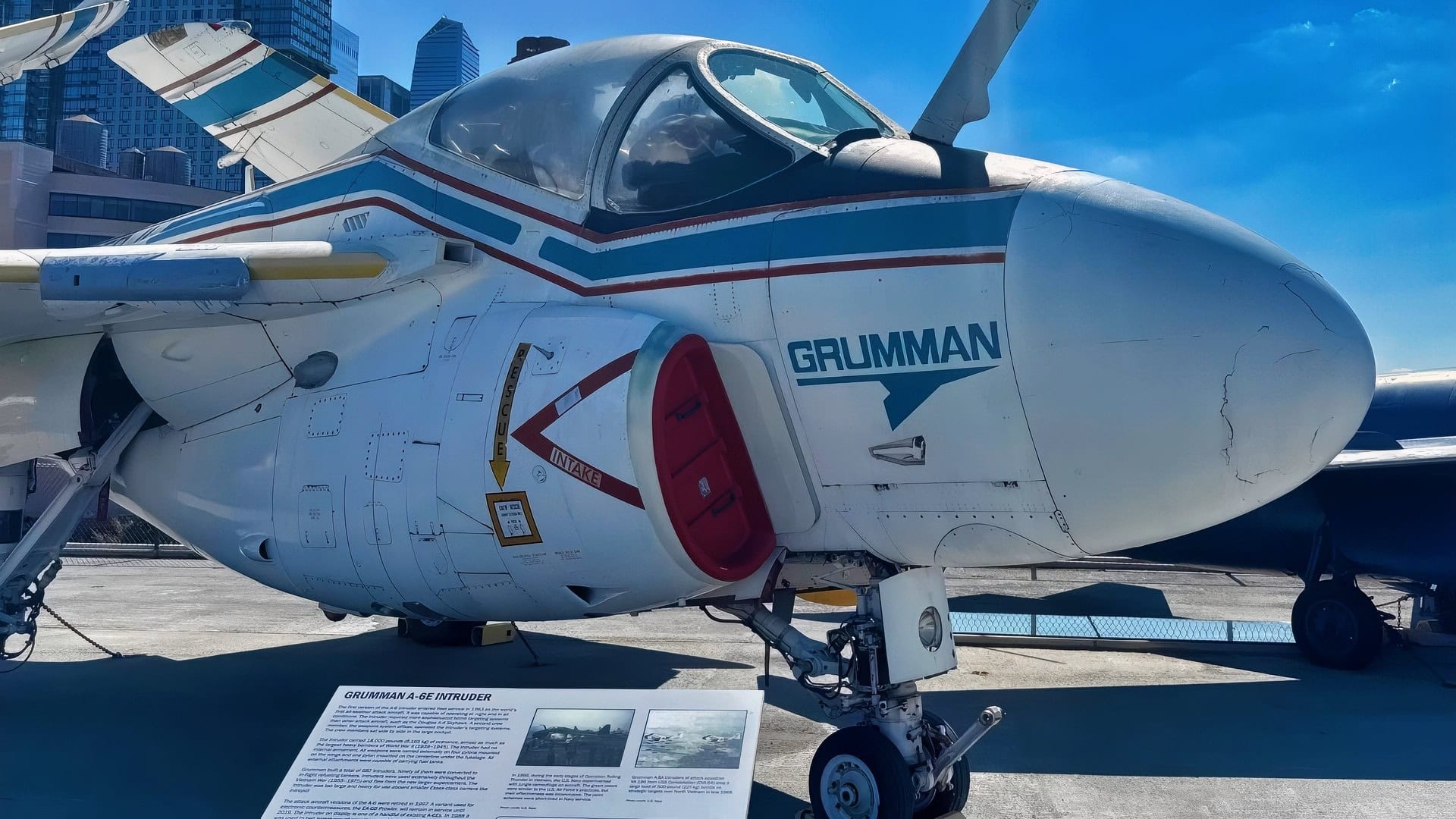
A-6 Intruder Original 19FortyFive.com Image Taken in July 2025.
During her first deployment fighting the Vietnam War in 1965, aircraft from her air wing struck targets in North and South Vietnam.
Then, on June 17 of that year, F-4B Phantoms from the Midway scored the first MiG kills of the war. Midway was also a key player during Operation Linebacker.
Midway participated in Operation Frequent Wind, the chaotic US withdrawal from Vietnam. During that operation, South Vietnamese Air Force Major Buang-Ly approached the carrier in an O-1 Bird Dog carrying his family.
After asking for permission to land, the carrier crew permitted him to do so, but not before pushing their own helicopters overboard.
Midway ultimately saved 3,000 evacuees during Operation Frequent Wind.
By the 1980s, a typical Midway deck contained everything from an A-6 to an EA-6B to SH-3 Sea Kings.
Forty-seven Years Strong
Unfortunately, the Midway had limitations — even after all the modifications the Navy paid for.
One of those limitations was that the WWII-era carrier could not carry the F-14 Tomcat.
In other words, the Midway did not have a real need for speed. It also could not sustain the S-3 Viking. Yet, the smaller F/A-18 proved a better match for the limited carrying capacity of the USS Midway.
After 47 years of service–including in Operation Desert Storm–the carrier was retired and turned into an iconic museum ship.
Today, you can visit this amazing museum of American naval greatness in the modern age in San Diego.
Entering the carrier from the side hangar, visitors can get a sense of the scope of this ship.
It looks old (especially compared to some of America’s larger carriers, which you can sometimes see from across the bay).
Yet, you can easily see why the Navy–and the men who served aboard her–loved the Midway. The boat has history and character.
She grew from a 45,000-ton to a 64,000-ton carrier that brought propeller-driven aircraft out of the Second World War, fired V-2 rockets, and ended her career deploying F/A-18 Hornets against Saddam Hussein’s forces.
More than any other ship, the Midway represented the radical transformation of the Navy from the end of WWII to the post-Cold War era.
About the Author: Brandon J. Weichert
Brandon J. Weichert is the Senior National Security Editor at 19FortyFive.com. He also manages The Weichert Brief on Substack. Weichert also hosts “National Security Talk” on Rumble. He is the author of four bestselling national security books, the most recent of which is A Disaster of Our Own Making: How the West Lost Ukraine (Encounter Books). Follow him via Twitter/X @WeTheBrandon.