
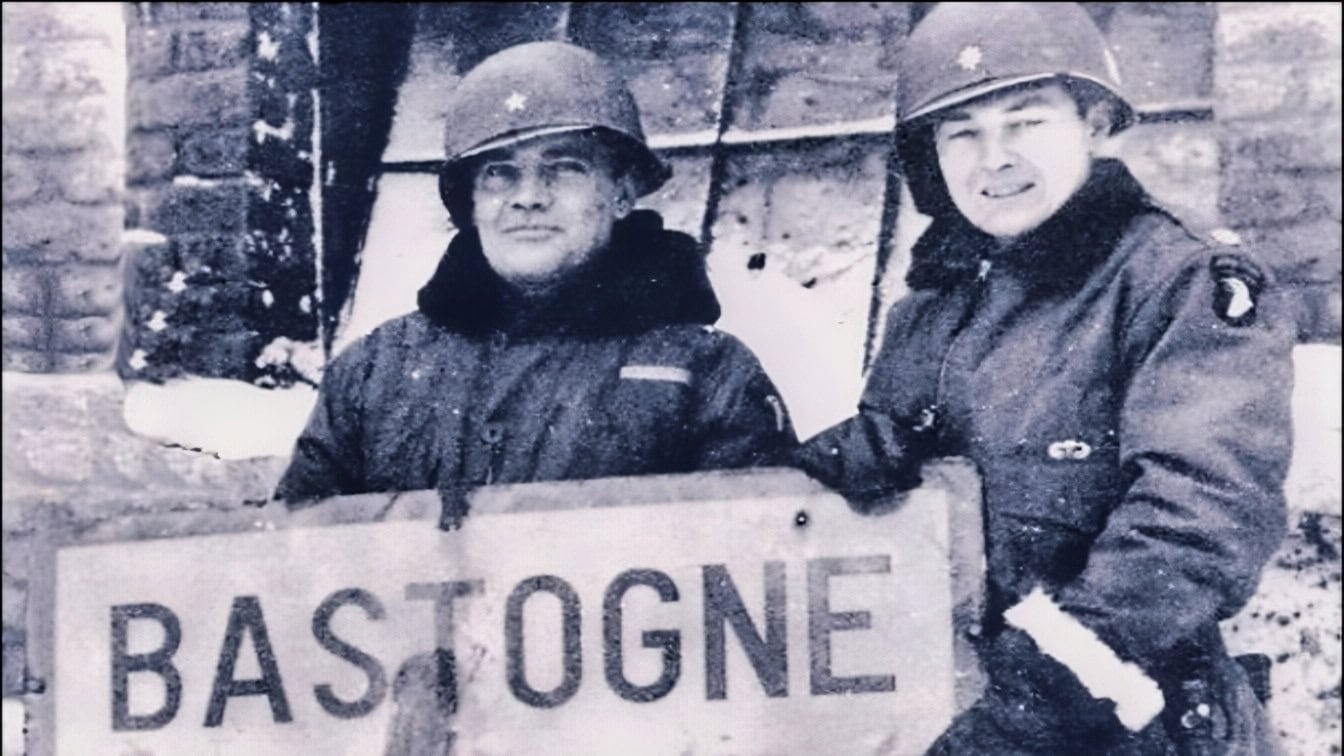
Summary and Key Points: Four Germans under a white flag delivered a two-hour ultimatum to the surrounded 101st Airborne on December 22, 1944: honorable surrender or annihilation. The acting commander had been asleep, thought at first the Germans wanted to surrender to him, and answered the real demand with the strongest word he ever used. Typed and centered on a full sheet — To the German Commander. NUTS! The American Commander. — the reply baffled its recipients, electrified the perimeter, and outlived everyone involved. The promised barrage never came, and four days later, Patton’s US Army tanks broke through.
One US Military Quote for the Ages During WWII
Mid-morning, December 22, 1944. The American soldiers holding the frozen perimeter southeast of Bastogne, Belgium, watched four Germans walk up the road under a large white flag: a major, a lieutenant who spoke English, and two enlisted men. They carried a typed ultimatum from General Heinrich Freiherr von Luttwitz, whose panzer corps had surrounded the town.
The answer they carried back has been quoted for 81 years, taught at West Point, carved into memorials, and never once improved upon. It was one word long.
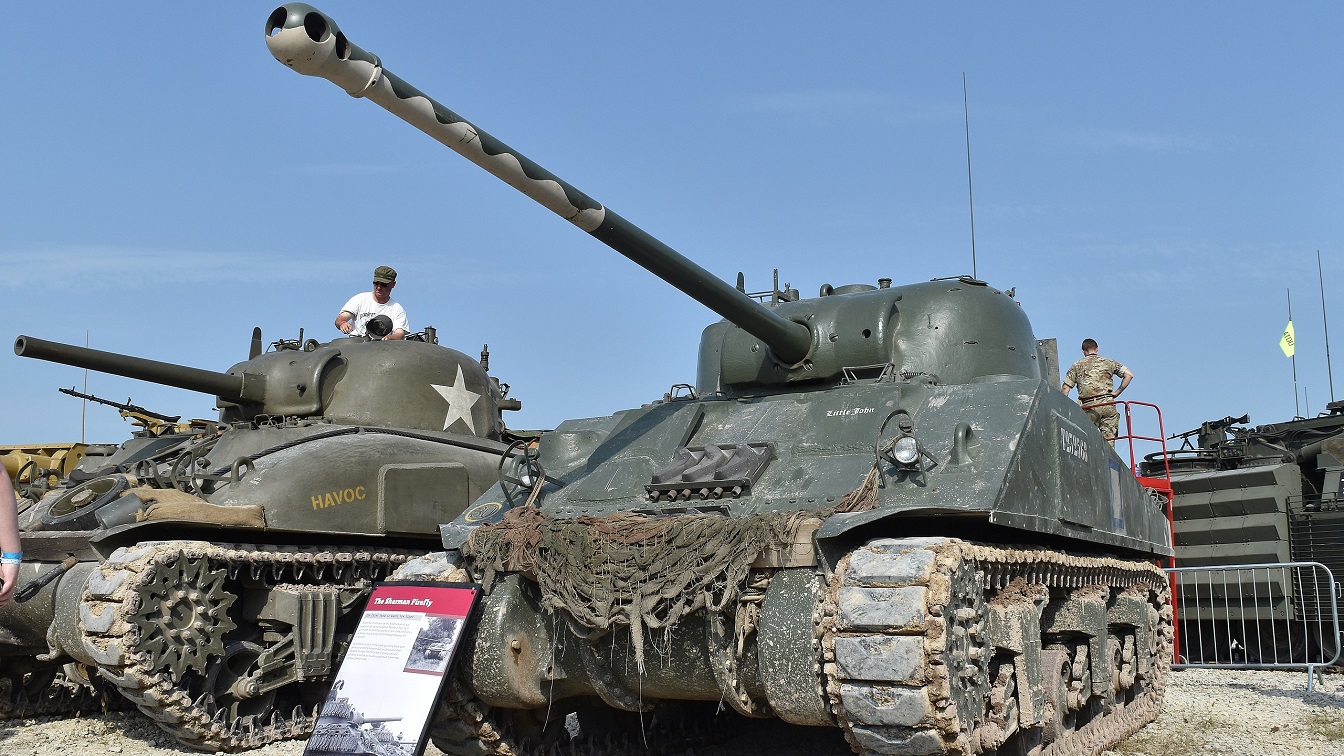
Serial No:- 16912 Official designation:- M4A4 Tank Medium 17Pdr. Total production:- 2,100-2,200 Main armament:- QF 17-pounder Anti-tank Gun The Firefly was a British modification of the M4 Sherman, with a 17 pounder gun replacing the usual 75mm. This gun was able to puncture the armour of a Tiger I or Panther, making the Firefly one of the few Allied tanks genuinely feared by Axis forces. This example comes from the Bastogne Barracks in Belgium, part of the Belgian Royal Military Museum. It was manufactured in the USA in 1942 and delivered to Europe in 1943 carrying the running number ‘USA 3017218’. It was converted to a Firefly in early 1944 and saw British service as ‘T232568’. She is fully operational and is seen in the ‘Tank Park’ after making a guest appearance at TankFest 2019. The Tank Museum, Bovington Camp, Dorset, UK.
The Demand
The German note was formal, almost courtly, and merciless underneath. The fortune of war was changing, it declared; American forces in Bastogne were encircled by strong German armored units, and there was only one possibility to save them from annihilation: “the honorable surrender of the encircled town,” with two hours granted to think it over. Refusal, the note promised, would bring a German artillery corps down on the town, and the responsibility for the civilian casualties would rest with the Americans.
The threat did not describe a bluff-proof position, but it described a real one: the 101st Airborne Division and its attached armor and tank destroyers were cut off, outnumbered, short of ammunition, food, and medical supplies, with their wounded lying in churches, in weather too foul for resupply aircraft to fly.
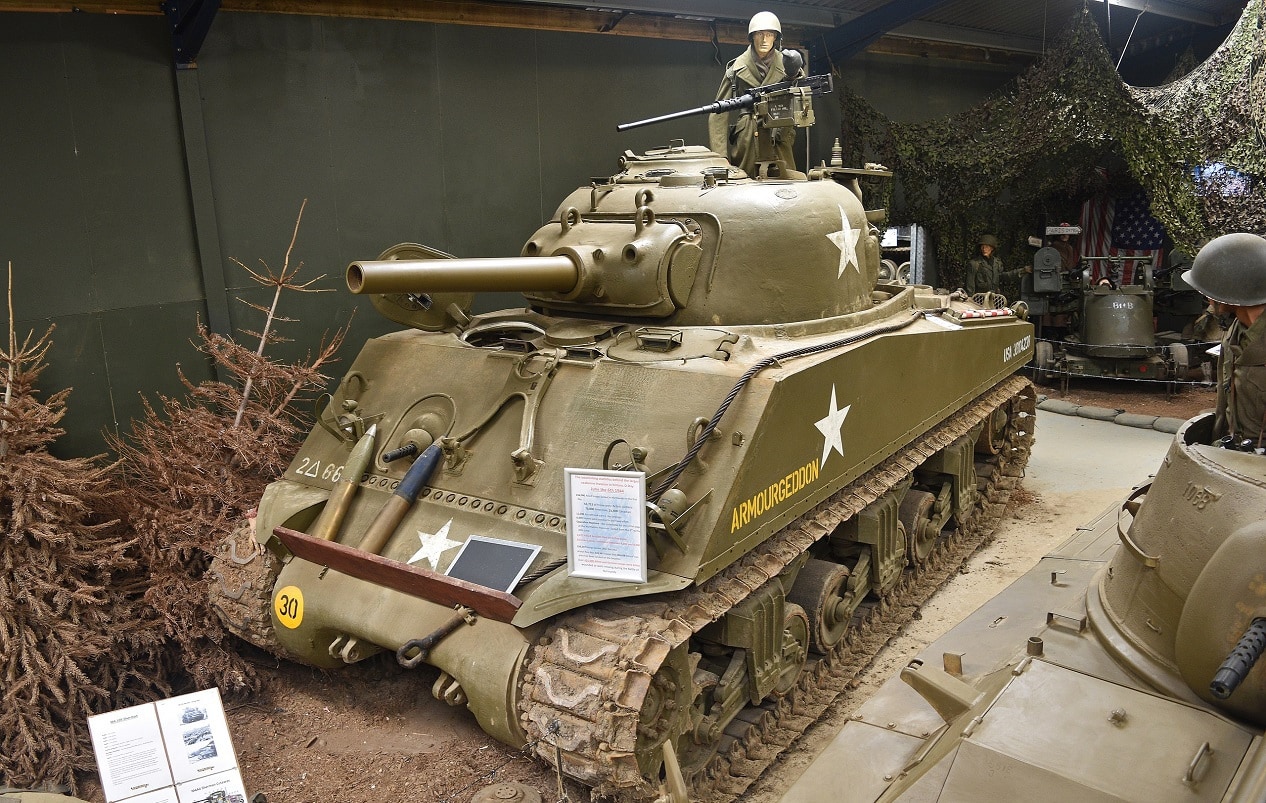
M4 Sherman Tank.
The Answer
The note worked its way up to the acting division commander, Brigadier General Anthony McAuliffe, the 101st’s artillery chief, running the division while Maxwell Taylor was in Washington. McAuliffe had been asleep. Told there was a surrender demand, he assumed at first the Germans were offering to surrender to him; corrected, he read the note, said “Us surrender?
Aw nuts!” and dropped it on the floor, then left to congratulate a unit that had smashed a German roadblock that morning. The Germans, though, were still waiting for a formal reply, and McAuliffe, back at his command post, confessed he did not know what to say.
His operations officer, Lieutenant Colonel Harry Kinnard, 29, pointed out that the general had already said it: “You said Nuts!” The staff loved it. The reply was typed and centered, alone, on a full sheet of paper:
To the German Commander.
NUTS!
The American Commander.
One detail makes the word perfect. McAuliffe’s aide, Captain Vincent Vicari, later recalled that the general was the only one he ever knew who never used profanity.
“Nuts” was not a euphemism sanitized for history. It was, verbatim, the strongest language the man used, which is to say, the Germans received McAuliffe at full strength.

M4 Sherman Tank from WWII Image: Creative Commons.
The Delivery
Colonel Joseph “Bud” Harper, commanding the 327th Glider Infantry, carried the sheet back to the blindfolded envoys, who read it and asked, reasonably, whether the reply was affirmative or negative. Harper assured them it was decidedly not affirmative and explained that, in plain English, the word meant they could go to hell.
By most accounts, he added a parting promise, remembered in slightly different wordings by different witnesses, that if the Germans continued to attack, the Americans would kill every German who tried to break into the city.
The envoys answered that this was war and walked back to their lines. The great barrage, the ultimatum promised never came: most of the German heavy artillery had already been pushed west, out of range. The bluff had been called by a man who did not know for certain it was one.
Why One Word Won
The word ran through the frozen foxholes faster than any order could have, and the men holding Bastogne understood exactly what their commander had committed them to.
Two days later, McAuliffe made it official, reprinting the entire exchange in his Christmas message to the division, under a proud accounting of the siege: “We have stopped cold everything that has been thrown at us” from every point of the compass.
The next morning, the skies cleared and the C-47s came over with ammunition and medicine, and on December 26, the lead tanks of the 4th Armored Division, the spearhead of George Patton’s famous 48-hour pivot, broke through to the perimeter. Patton himself called the whole operation the most brilliant of the war, and the defiance inside the ring was what gave his tanks a garrison to save.
Eighty-one years on, Bastogne still throws walnuts from the town hall balcony every December, a tradition attended by Belgian royalty and, some years, Patton’s own descendants; the square is named for McAuliffe, and the word is on the monuments.
The general who said it died in 1975, having commanded armies and chaired boards, and none of it followed him like the sheet of paper from December 22, 1944. Armies have libraries full of surrender correspondence, most of it long, careful, and forgotten. The greatest answer in U.S. Army history is four lines, and the middle one is a single word that meant, and still means, exactly what it said.
About the Author: Harry J. Kazianis
Harry J. Kazianis (@Grecianformula) was the former Senior Director of National Security Affairs at the Center for the National Interest (CFTNI), a foreign policy think tank founded by Richard Nixon based in Washington, DC. Harry has over a decade of experience in think tanks and national security publishing. His ideas have been published in the NY Times, The Washington Post, The Wall Street Journal, CNN, and many other outlets. He has held positions at CSIS, the Heritage Foundation, the University of Nottingham, and several other institutions related to national security research and studies. He is the former Executive Editor of the National Interest and the Diplomat. He holds a Master’s degree focusing on international affairs from Harvard University.

