
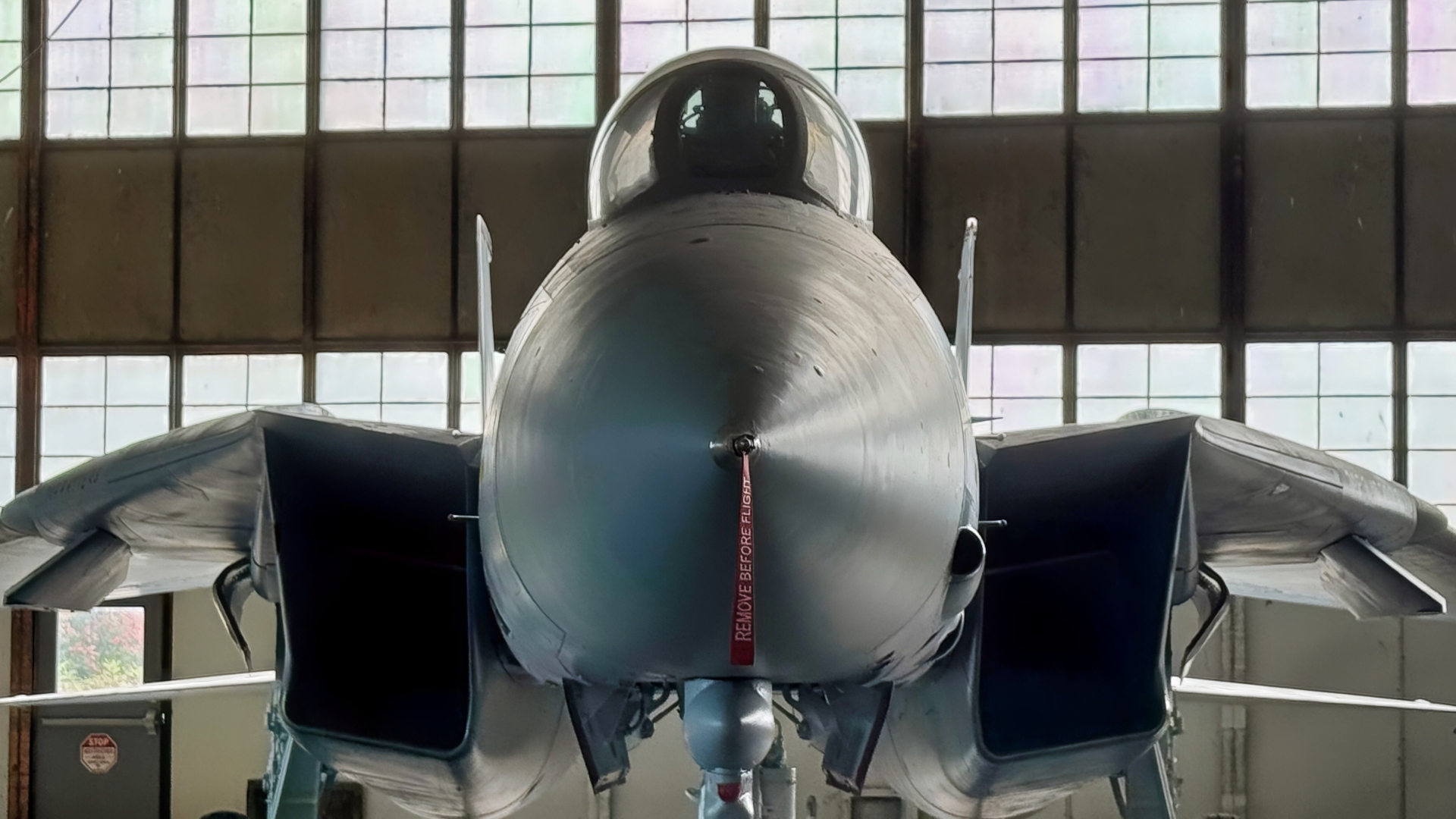
Summary and Key Points: The Grumman F-14D Super Tomcat entered US Navy service in 1991, 21 years after the F-14A’s first flight, adding the AN/APG-71 radar, LANTIRN targeting pod, JTIDS, IRST, and four JDAMs. Only 56 were made: 37 new, 18 F-14D(R) rebuilds, and one NF-14D. F-14Ds led the first strikes into Afghanistan, fought in Iraq, flew the last Tomcat combat mission from USS Theodore Roosevelt on February 8, 2006, and retired that September for the F/A-18 Super Hornet.
There Was Nothing Like the F-14D Tomcat
If any now-retired, Cold War-era, 4th-Generation fighter plane variant embodies the concept of “saving the best for last,” it was the F-14D. As you can tell from our new F-14 Tomcat photos below, we love getting as close as we can to this legendary carrier fighter.
The so-called “Super Tomcat” was the last Tomcat variant to enter production and operational service.
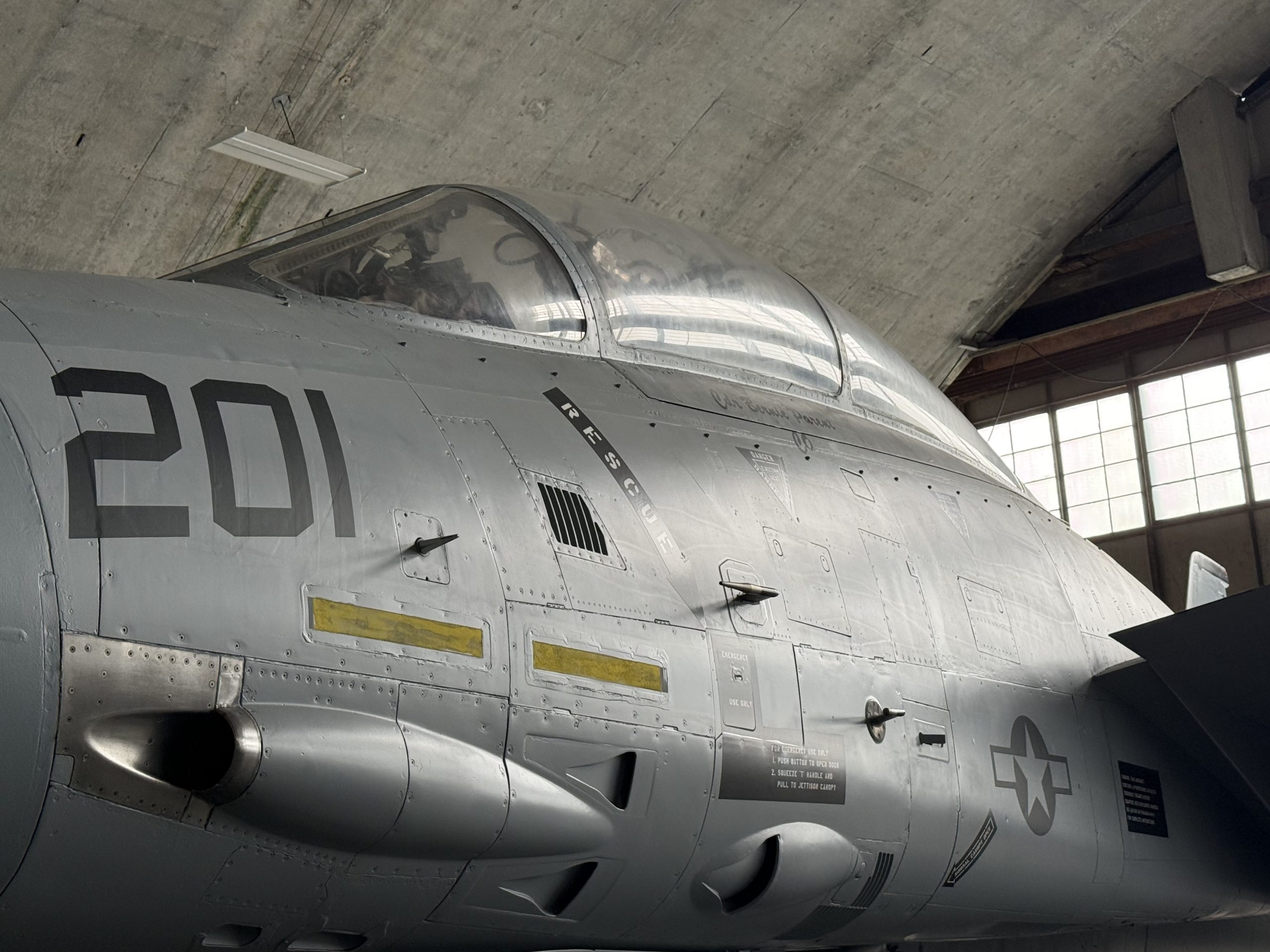
F-14 Tomcat. 19FortyFive staff photo from museum visit.
Now, mind you, it was Grumman’s original iteration of the Tomcat, i.e., the F-14A, that both (1) immortalized the Tomcat in the minds of Hollywood audiences via the original 1986 “Top Gun” film and (2) accounted for the platform’s 135:4 air-to-air kill ratio in real-world combat.
Nonetheless, the final version of the F-14 offered significant improvements over the first, and it might’ve become a standalone legend in its own right…if only the United States Navy had allowed it to stick around long enough. The Navy lost a lot of range, how far the F-14 Tomcat could fly, a math problem the F/A-18 Super Hornet has never been able to solve.
F-14D Initial History & Specifications
The U.S. Navy first received the F-14D in 1991, 21 years after the F-14A’s maiden flight.
This final version of the Tomcat had a veritable smorgasbord of upgraded features and improvements over its parent platform:
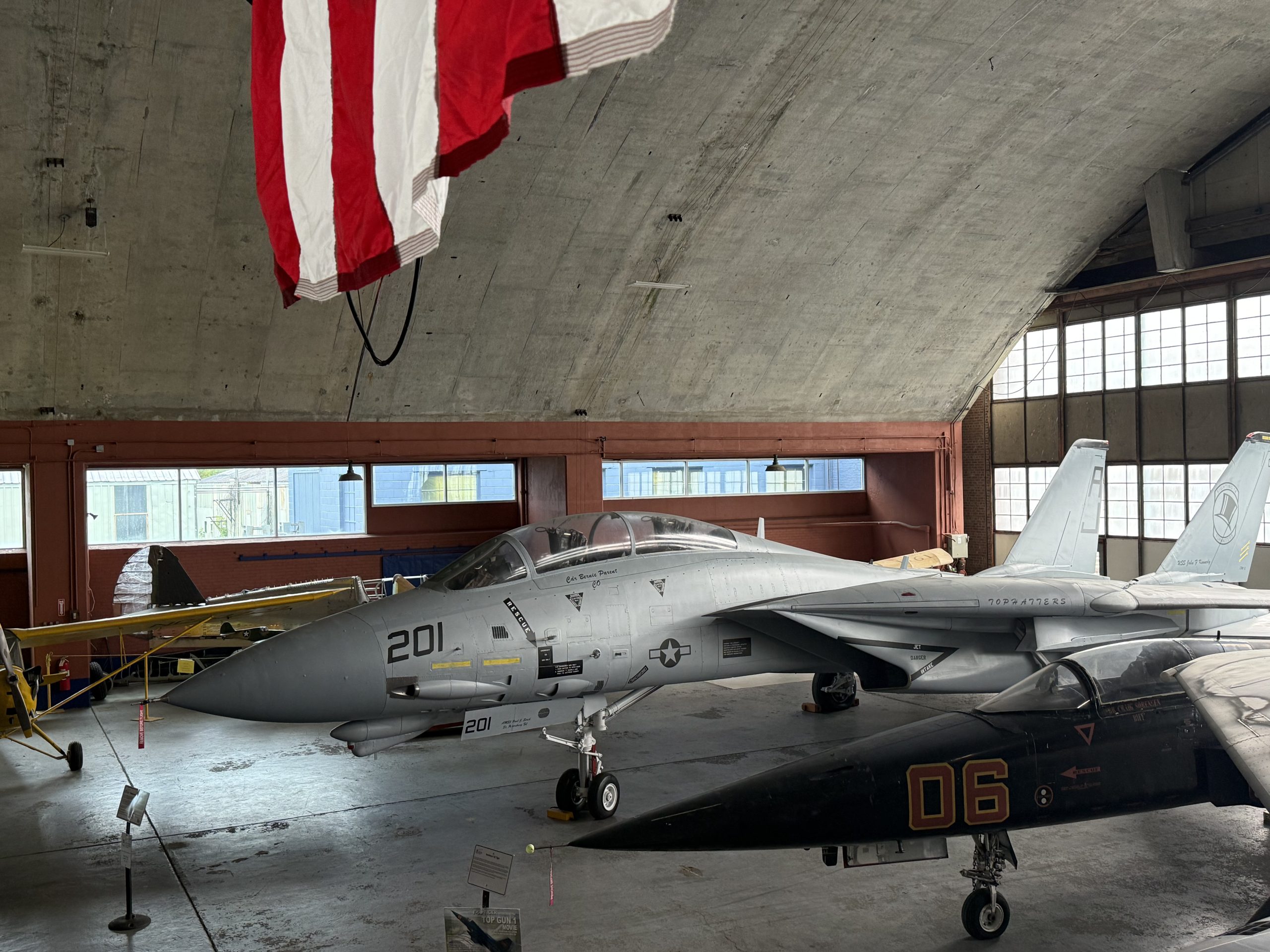
F-14 Tomcat. 19FortyFive staff photo from museum visit.
–Airborne Self-Protection Jammer
–Joint Tactical Information Distribution System (JTIDS)
–Low Altitude Navigation and Targeting Infrared for Night (LANTIRN) targeting system
-SJU-17(V) Naval Aircrew Common Ejection Seats (NACES)
-Infrared search and track (IRST)
-Tactical Air Reconnaissance Pod System (TARPS)
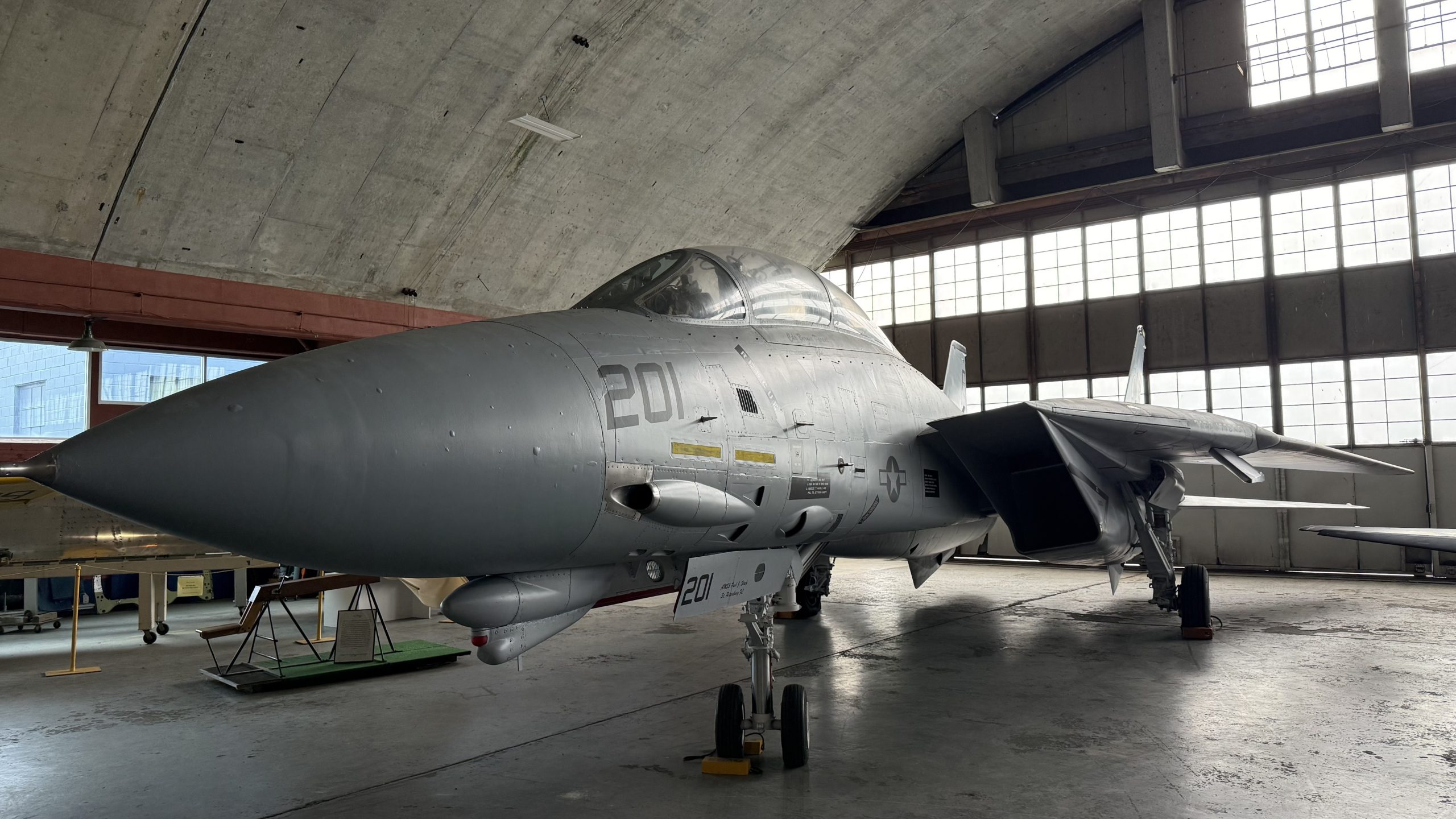
F-14 Tomcat. 19FortyFive staff photo from museum visit.
-Carrying capacity for four Joint Direct Attack Munitions (JDAMs), thus making more of a –“Bombcat” out of the “Super Tomcat”
-ROVER III Full Motion Video (FMV); this wasn’t actually implemented until 2005, so not all “Super Tomcats” received this
-A total of 56 Super Tomcat specimens were brought to life:
-37 F-14D airframes were built from scratch
-18 of the F-14A specimens received D-model upgrades and thus got re-designated as the F-14D (R)
-One so-called NF-14D, a former VX-23 flight test squadron aircraft.
Operational Performance
The F-14Ds didn’t arrive on scene in time for the 1991 Persian Gulf War, aka Operation Desert Storm, but ten years later they would get the opportunity to make up for lost time and combat action thanks to Operation Enduring Freedom (OEF), as JDAM-toting ‘Cats led some of the first strikes into Afghanistan, thus initiating America’s Global War on Terror (GWOT) as retaliation for the 9/11 attacks.
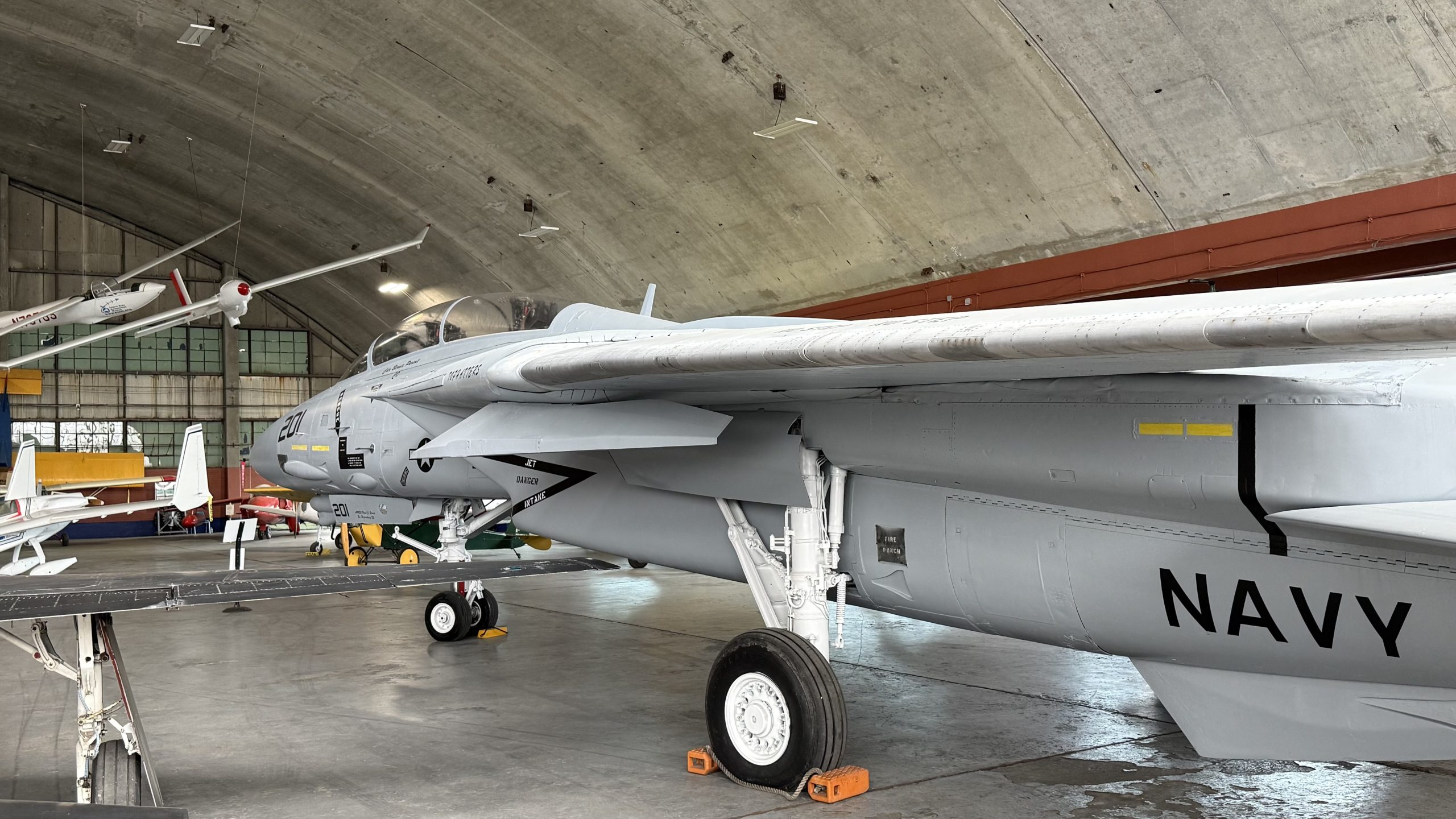
F-14 Tomcat. 19FortyFive staff photo from museum visit.
Two years later, the Ds saw plenty of additional action in Operation Iraqi Freedom (OIF).
In the spirit of “going out with a bang,” the F-14D’s last hurrah in battle came during a bombing mission flown by a dynamic duo of warbirds from the aircraft carrier USS Theodore Roosevelt (CVN-71) over Iraq on 8 February 2006.
The Tomcat’s swan song in U.S. Navy service took place on 14 September 2006—20 years after the first Top Gun movie was blasting its way to big bucks at the box office—carried out by F-14D Bureau Number (BuNo) 164603, number 711 of the 712 Tomcats built.
It was the end of an era.
Oh, What Might’ve Been
So then, why didn’t the F-14D last longer?
In four words: the F/A-18 Super Hornet.
The Navy brass had actually toyed with the notional of a follow-on aircraft to the F-14D and would’ve received the *official* designation of Super Tomcat—the F-14D’s “Super Tomcat” appellation was informal and unofficial—more specifically, the Super Tomcat 21 (ST21). Ultimately, however, the Navy chose the more cost-effective F/A-18.
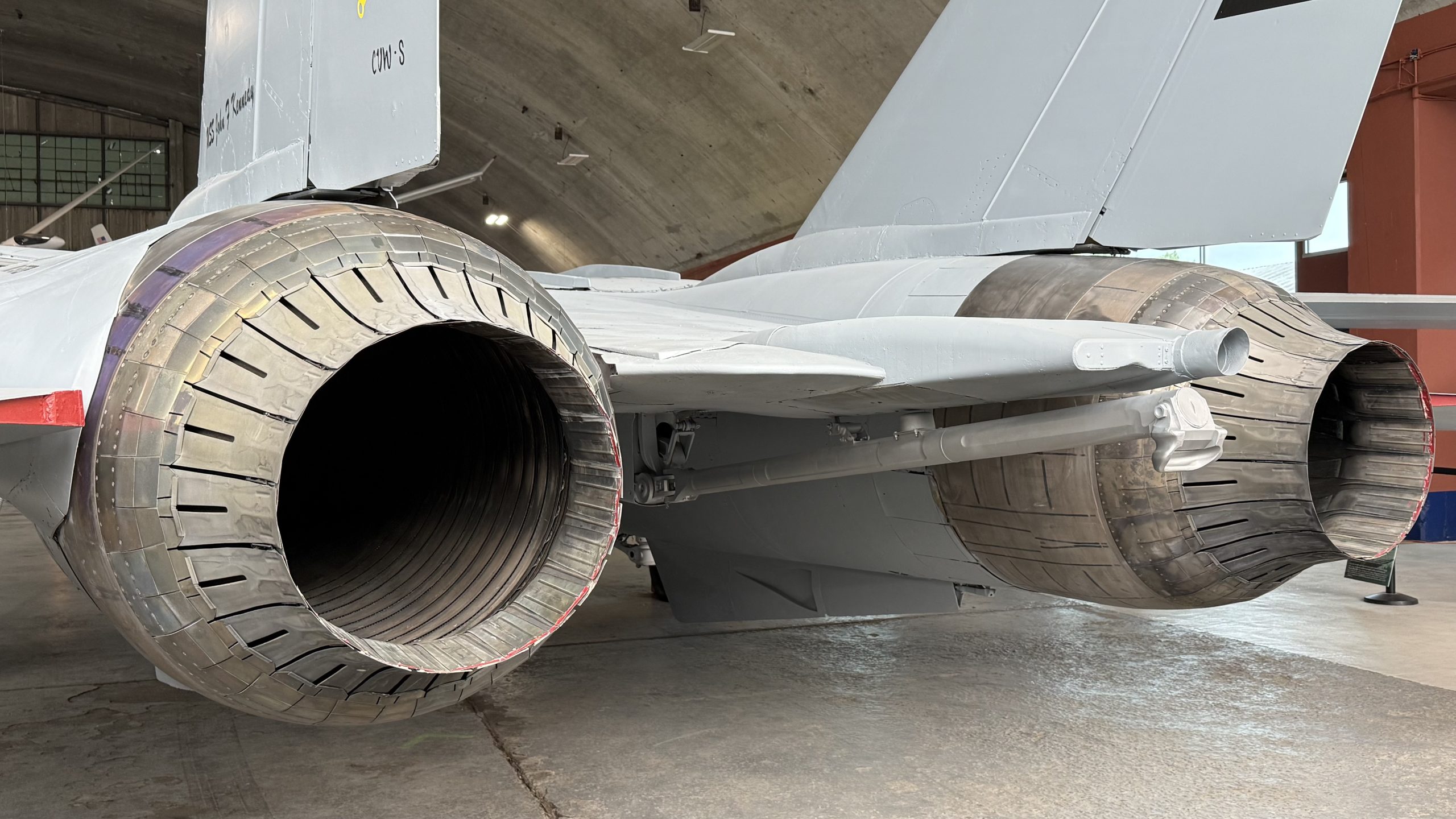
F-14 Tomcat. 19FortyFive staff photo from museum visit.
Now, of course, the USN is transitioning from the 4.5 Generation Super Hornet to the 5th Generation F-35C Lightning II…and keeping their fingers crossed on the survival of the 6th Generation F/A-XX program.
Ironically, Tom Cruise’s CAPT Pete “Maverick” Mitchell ends up flying both the Super Hornet and the non-Super Tomcat in the 2022 Top Gun sequel.
Where Are They Now?
If this writer’s counting skills are up to par, there are a total of 19 F-14Ds – including F-14D(R)s and the aforementioned lone NF-14D – still surviving today, including:
–BuNo 164343, at the Evergreen Aviation Museum, McMinnville, Oregon
-BuNo 163897, at the Aerospace Museum of California, McClellan Airfield, California
-BuNo 159610, at the Smithsonian National Air and Space Museum, Steven F. Udvar-Hazy Center, Chantilly, Virginia, a tour I can personally vouch for from having done it several times.
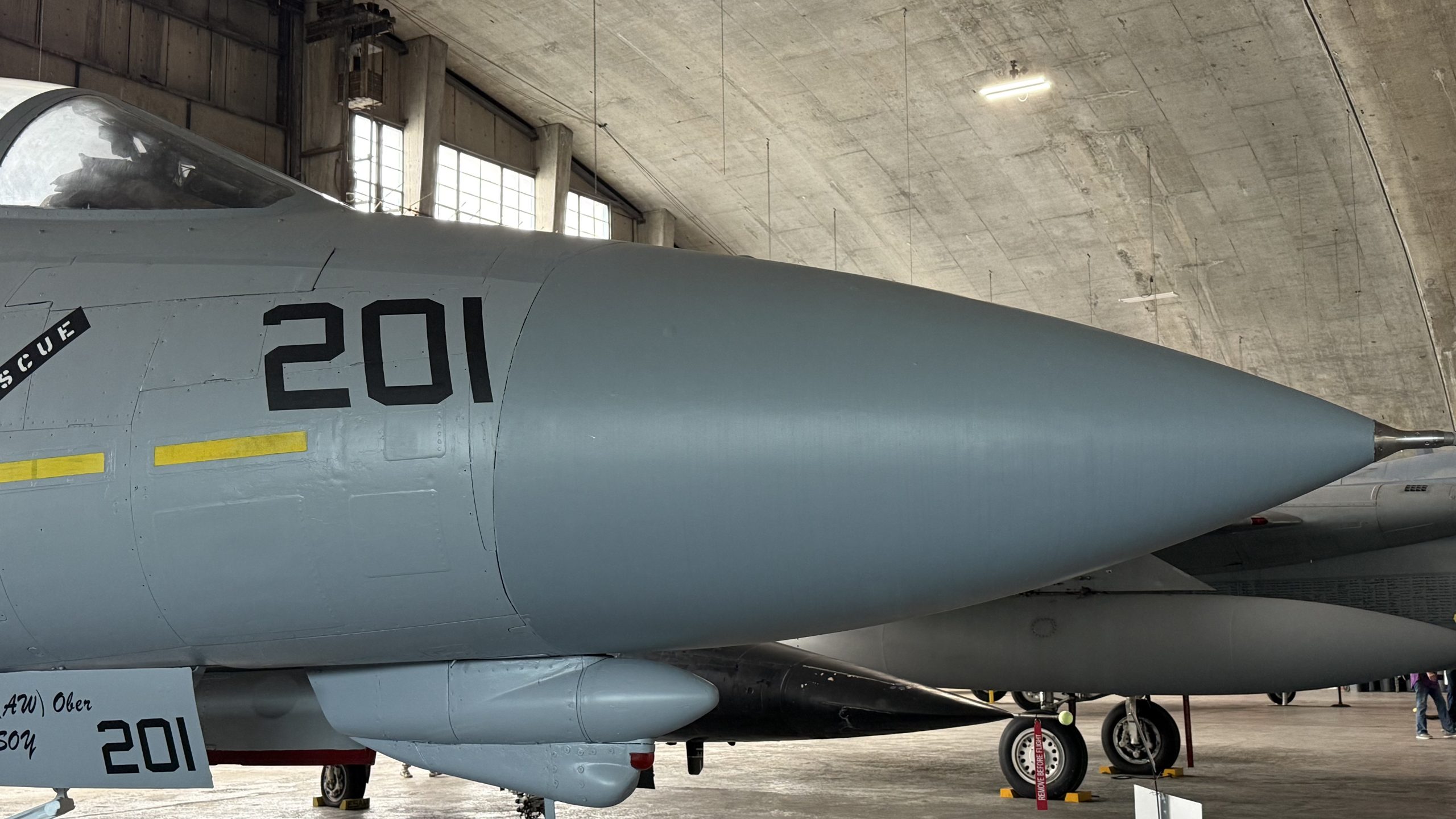
F-14 Tomcat. 19FortyFive staff photo from museum visit.
This particular proud warbird, one of the D(R) upgraded jets, was one of those involved in the Second Gulf of Sidra Incident in January 1989, in which two Libyan MiG-23 “Floggers” flying for the regime of then-strongman Muammar Ghaddafi were splashed.
-The aforementioned BuNo 164603, AKA “Felix 101,” at the Cradle of Aviation Museum, Garden City, New York
-BuNo 161163, currently on loan to the Prairie Aviation Museum in Bloomington, Illinois, courtesy of the National Naval Aviation Museum at NAS Pensacola, Florida
About the Author: Christian D. Orr
Christian D. Orr is a Senior Defense Editor. He is a former Air Force Security Forces officer, Federal law enforcement officer, and private military contractor (with assignments worked in Iraq, the United Arab Emirates, Kosovo, Japan, Germany, and the Pentagon). Chris holds a B.A. in International Relations from the University of Southern California (USC) and an M.A. in Intelligence Studies (with a concentration in Terrorism Studies) from American Military University (AMU). He is also the author of the book “Five Decades of a Fabulous Firearm: Celebrating the 50th Anniversary of the Beretta 92 Pistol Series,” the second edition of which was recently published.