
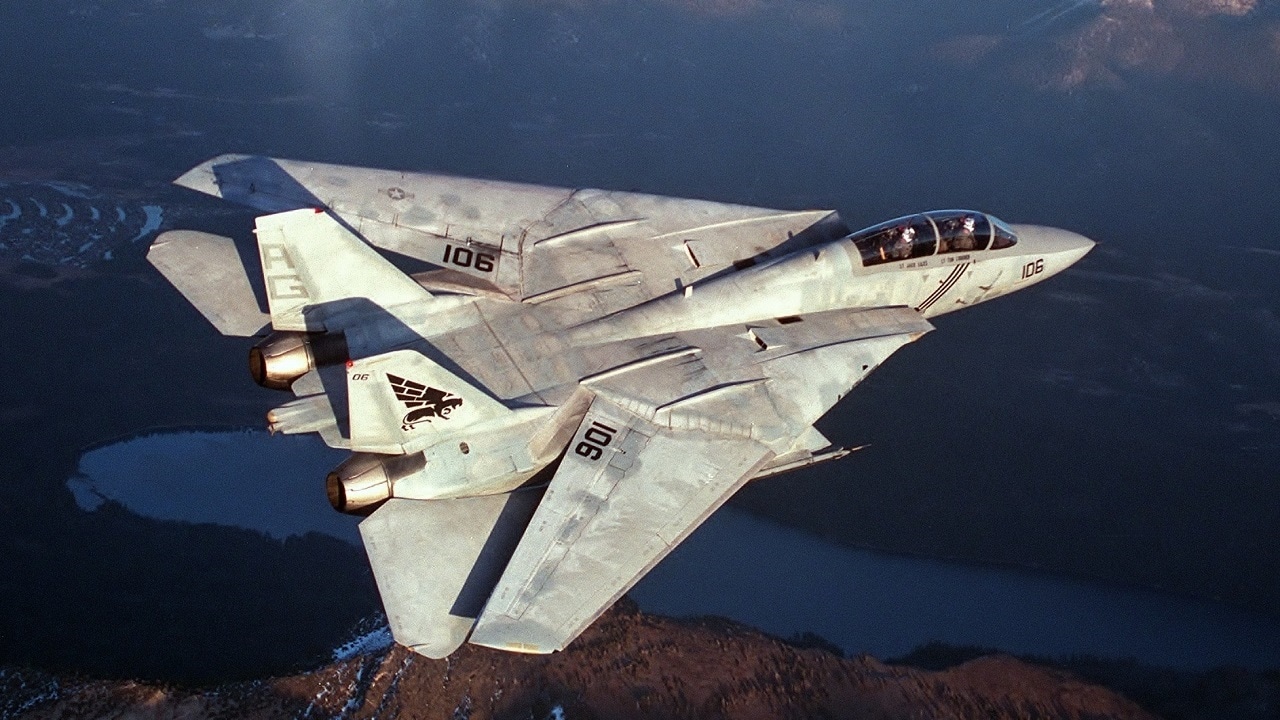
Super Tomcat 21 Was the Long-Range Fighter the Navy Did Not Buy- The F-14 Tomcat was retired from the fleet in 2006. The airplane that took its catapult slot was not a new Tomcat. It was the F/A-18E/F Super Hornet, a stretched cousin of the Hornet that had already been flying from carriers since the 1980s. In the gap between the A-12’s cancellation and that decision, Grumman put a different offer on the table: Super Tomcat 21, or sometimes called ST21, a rebuilt F-14D with more fuel, more unused-bomb bring-back, and a strike kit meant to cover the hole the Intruder and the A-12 had left.
It seemed like a good idea: Quickstrike was the cheap facelift — targeting pods, air-to-ground radar modes, more weapons stations on an existing F-14D. Super Tomcat 21, or ST21, added new wing gloves, more internal fuel, better flaps, and a hotter F110. Attack Super Tomcat 21 pushed the same idea further into the bomber role. ASF-14 was close to a new airplane, with some stealth shaping, and it priced itself out. None of them flew. The last new Tomcat left Calverton in July 1992.
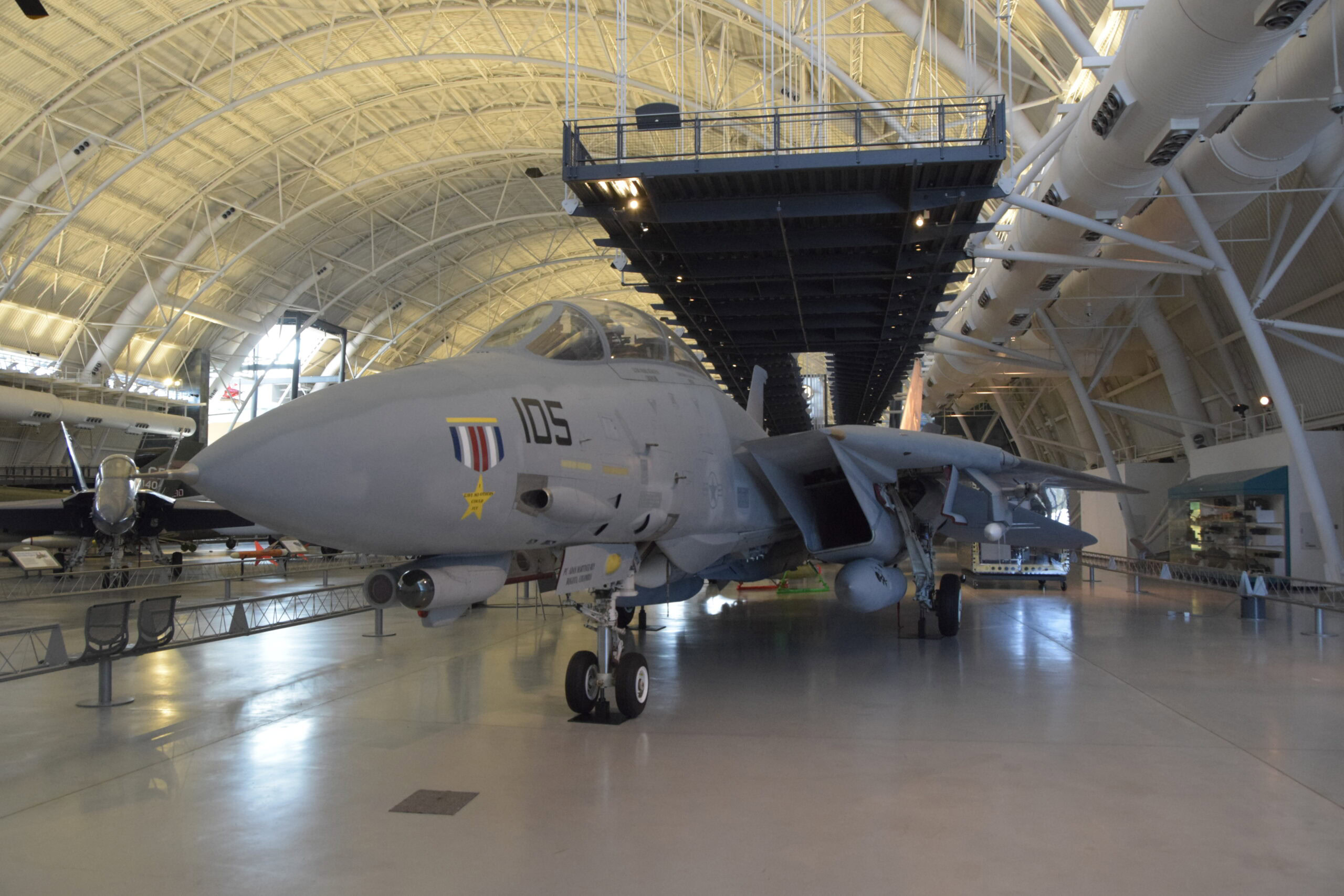
F-14 Tomcat at the Smithsonian. Image Credit: 19FortyFive.com
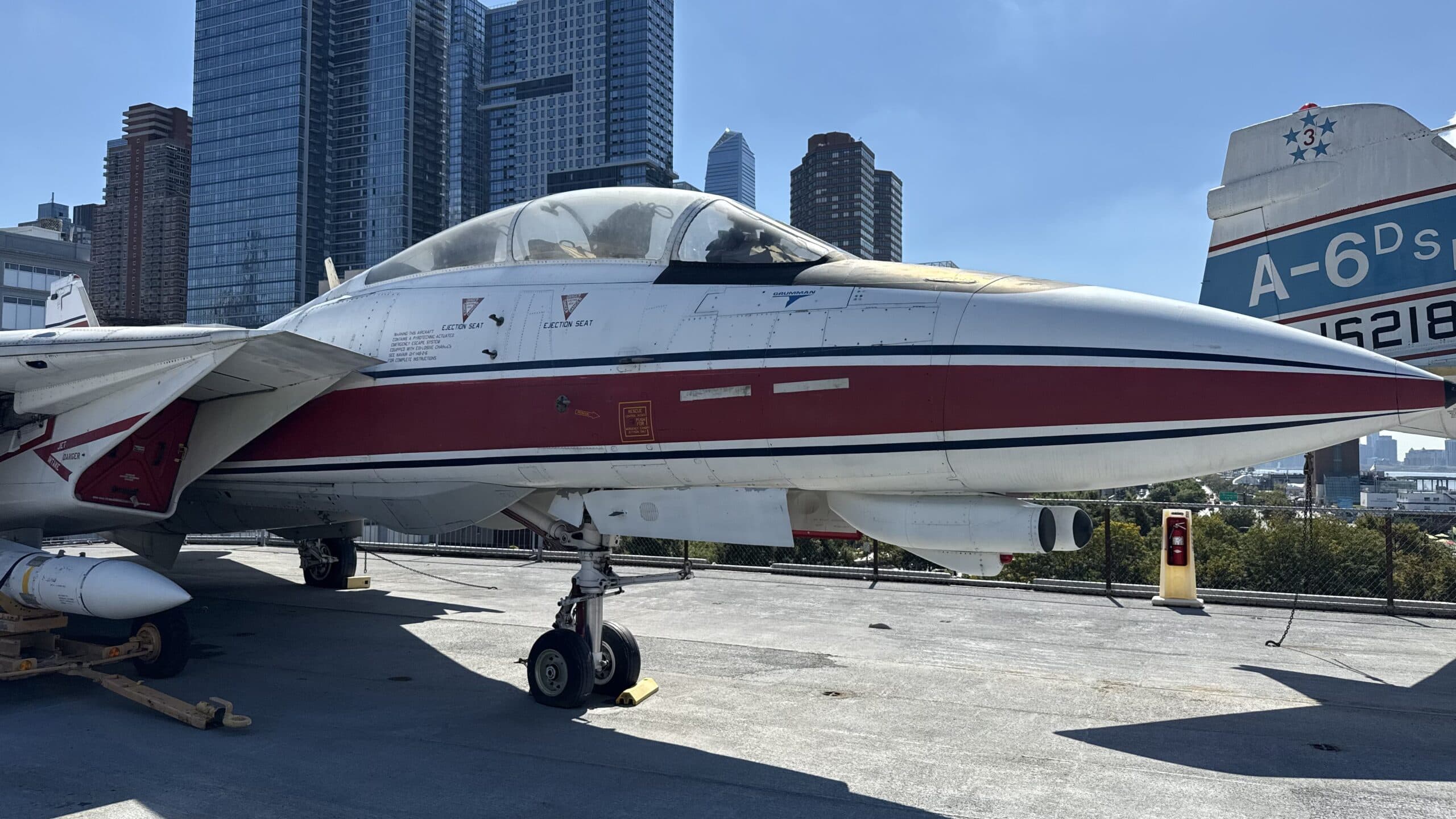
F-14 Tomcat. Image Taken by 19FortyFive.com
The Navy had reasons for saying no. The Tomcat was expensive to keep. The post-Cold War budget was shrinking. McDonnell Douglas could grow a Hornet the fleet already knew how to maintain. Those reasons were real. They were also incomplete. Super Tomcat 21’s load-bearing claim was not that it would look like the jet in the movie. It was that a carrier fighter could still reach out without a tanker, come home with unused bombs, and sit on station longer than a Super Hornet can. That is the benefit the Navy treated as optional. The air wing has been living with the opposite choice ever since.
What follows is the design that was offered, the money Grumman said it would take, why the Super Hornet won, and the long-range case that did not get a hard enough hearing.
The Hole After the A-12
On January 7, 1991, Defense Secretary Dick Cheney terminated the A-12 Avenger II program due to default. The contractors could not finish the stealth bomber on the contract schedule. A GAO testimony at the time put spending at about $3 billion. Other official and trade accounts of the program run nearer $5 billion. The Navy Advanced Tactical Fighter, the carrier cousin of what became the F-22, had already been dropped in late 1990 or early 1991. The A-6F had been canceled in 1988 to protect the A-12. Fleet Intruders then aged out through February 1997, and the KA-6D tanker went with them.
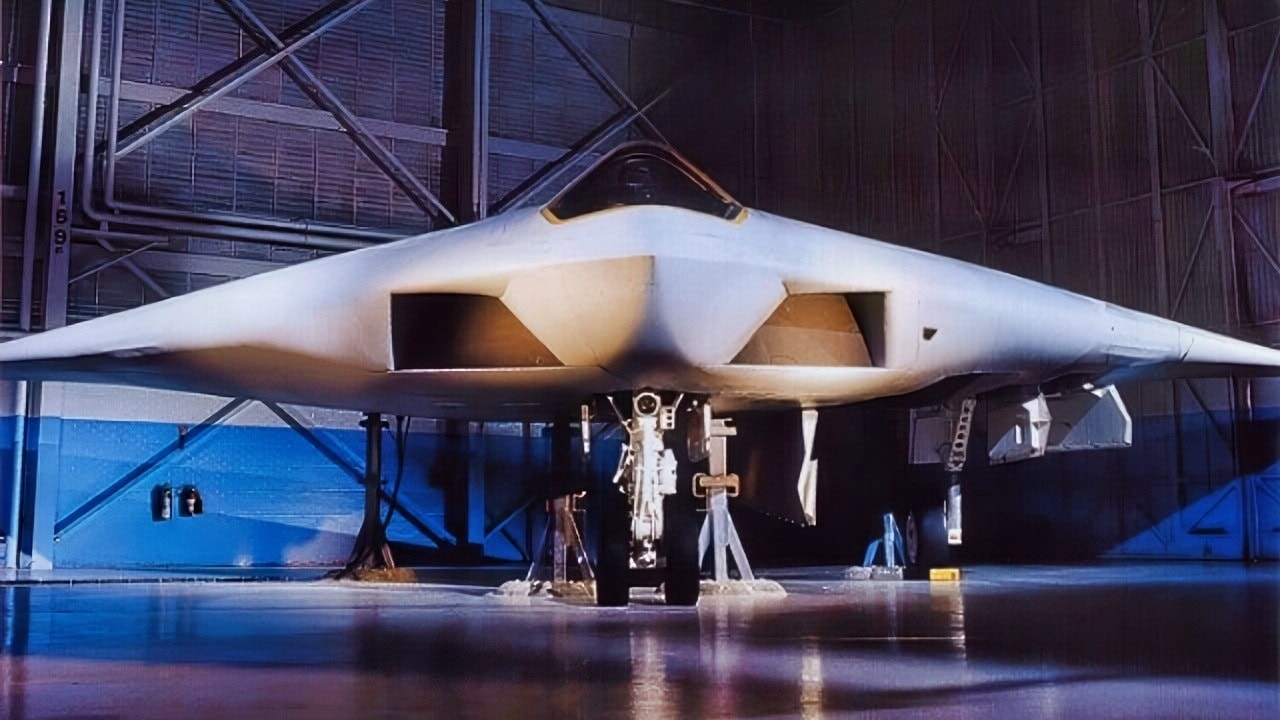
A-12 Avenger II Photo Media Handout
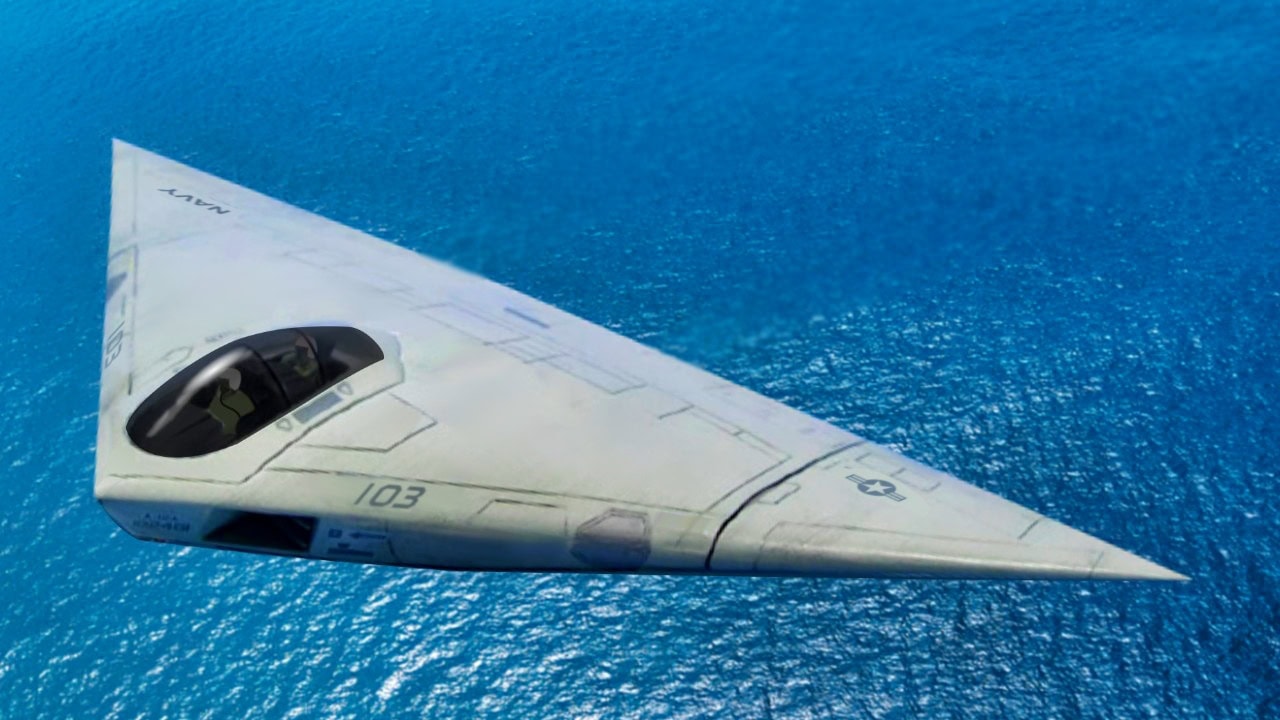
A-12 Avenger II. Image Credit: Creative Commons.
The Tomcat line was dying in the same season. Cheney’s April 1989 Major Aircraft Review killed new F-14D production. Congress bought one last lot — 18 new jets in fiscal 1990 — for a total of about 37 new Ds. Remanufacture of older airframes, once briefed in the hundreds, collapsed to 18 F-14D(R) conversions and was terminated on February 26, 1991. The last new Tomcat rolled in July 1992. The fleet that remained was a mix of A, B, and a thin D cadre, not a growth program.
That left a strike hole and a fleet-defense hole simultaneously. The original F/A-18 Hornet was already on the boat. It was a good day for fighters and a limited bomber. It was not a replacement for an Intruder with a full load, nor was it a F-14 Tomcat on a barrier combat air patrol hundreds of miles from the ship. Grumman tried to sell a way to keep the big swing-wing jet and grow it into both jobs. McDonnell Douglas sold a way to grow the Hornet instead. The Super Hornet won. NAVAIR states it plainly: the F/A-18E/F entered fleet service in 1999 as the replacement for the F-14. The first flight was in November 1995. Initial operational capability came in September 2001 with VFA-115.
What Super Tomcat 21 Was on Paper
Tyler Rogoway’s reconstruction for The War Zone is the cleanest public walk-through of the Grumman model.
ST21 was not a clean-sheet stealth jet. It was an F-14D with the parts that hurt the Tomcat cut out and the parts that made it valuable grown. The retractable glove vanes would go. In their place: enlarged, recontoured leading-edge gloves, usually briefed with about 2,200 pounds of extra fuel in each wing. Fowler flaps and longer slats would cut approach speed. A single-piece windscreen would improve the view over the nose. Digital flight controls, a glass cockpit, and an on-board oxygen system would modernize a 1970s office.
The engines in the pitch were F110-GE-429s, a higher-thrust member of the family already curing the F-14A’s TF30 problems on the F-14B and D. Later commentary, including Rogoway, has given ST21 a supercruise band of Mach 1.2 to 1.4. Aerospaceweb’s variant-by-variant account reserves supercruise for ASF-14, the new-build jet, not for ST21. Nothing flew. Do not treat Mach 1.3 as a specification.
The radar would stay an improved AN/APG-71, with the ground-mapping modes Quickstrike had already promised. There was no AESA on ST21. A Ford Night Owl targeting and navigation pod set was the usual briefing item; the fleet later got a cheaper half of that idea, the LANTIRN targeting pod, on the “Bombcat” from 1996. AIM-120 AMRAAM was on the planned list. It was flight-tested on the F-14. Fleet integration was never funded. Phoenix left the inventory in September 2004, two years before the last Tomcat cruise. Bring-back weight — what the jet can still land with — was briefed as rising from about 9,000 pounds on the F-14D to about 16,000. That is Grumman paper, not a NATOPS number.
Aerospaceweb says the extra glove fuel would “nearly double the aircraft’s range.” That is a paraphrase, not a quoted Grumman sentence, and the fuel math does not support it. A published F-14 internal load is about 16,200 pounds. Two 2,200-pound gloves is a bump of roughly 27 percent, not a doubling. Radius can grow more than linearly with a cleaner glove and a better engine. It still does not double.
Attack Super Tomcat 21 added still more fuel, nuclear carriage, more armor, and bombs under the nacelles. ASF-14 would have been a new-build jet with a lower radar cross-section and thrust vectoring. The Navy did not buy any of them.
Money, Maintenance, and Why the Super Hornet Got the Deck
There is no Selected Acquisition Report for Super Tomcat 21, because there was no program. Figures that circulate on secondary pages — a development bill under a billion dollars, a remanufacture price well below a new fighter, a mixed buy of hundreds of jets — are not a Navy budget line and do not have a fiscal year attached. What can be sourced is the comparison the Navy actually ran. A 1994 GAO report on F-14 upgrades records an April 1992 Navy cost and operational effectiveness analysis: Quick Strike was less capable as a strike aircraft than an F/A-18C. That finding, more than any brochure, is why ST21 never became a program of record. GAO’s own title was the verdict on even the cheap path: the upgrades were “not adequately justified.”
The Super Hornet team sold something the accountants could audit. Engineering and manufacturing development was approved in May 1992. Contracts were signed that July — about $4 billion for the airframe and three-quarters of a billion for the F414, in the figures CRS later compiled. A 1990 OpNav life-cycle comparison, cited in a 2001 Naval Institute essay, put a twenty-year air wing with two F-14D Quickstrike squadrons at $46.8 billion and the same wing with two Super Hornet squadrons at $41.9 billion. Later operating numbers in that same essay had the F-14 at about $10,900 per flight hour against about $6,700 for the Hornet. Contemporary published maintenance ran 40 to 60 man-hours per Tomcat flight hour against something closer to 20 for a Hornet and 10 to 15 for a Super Hornet.
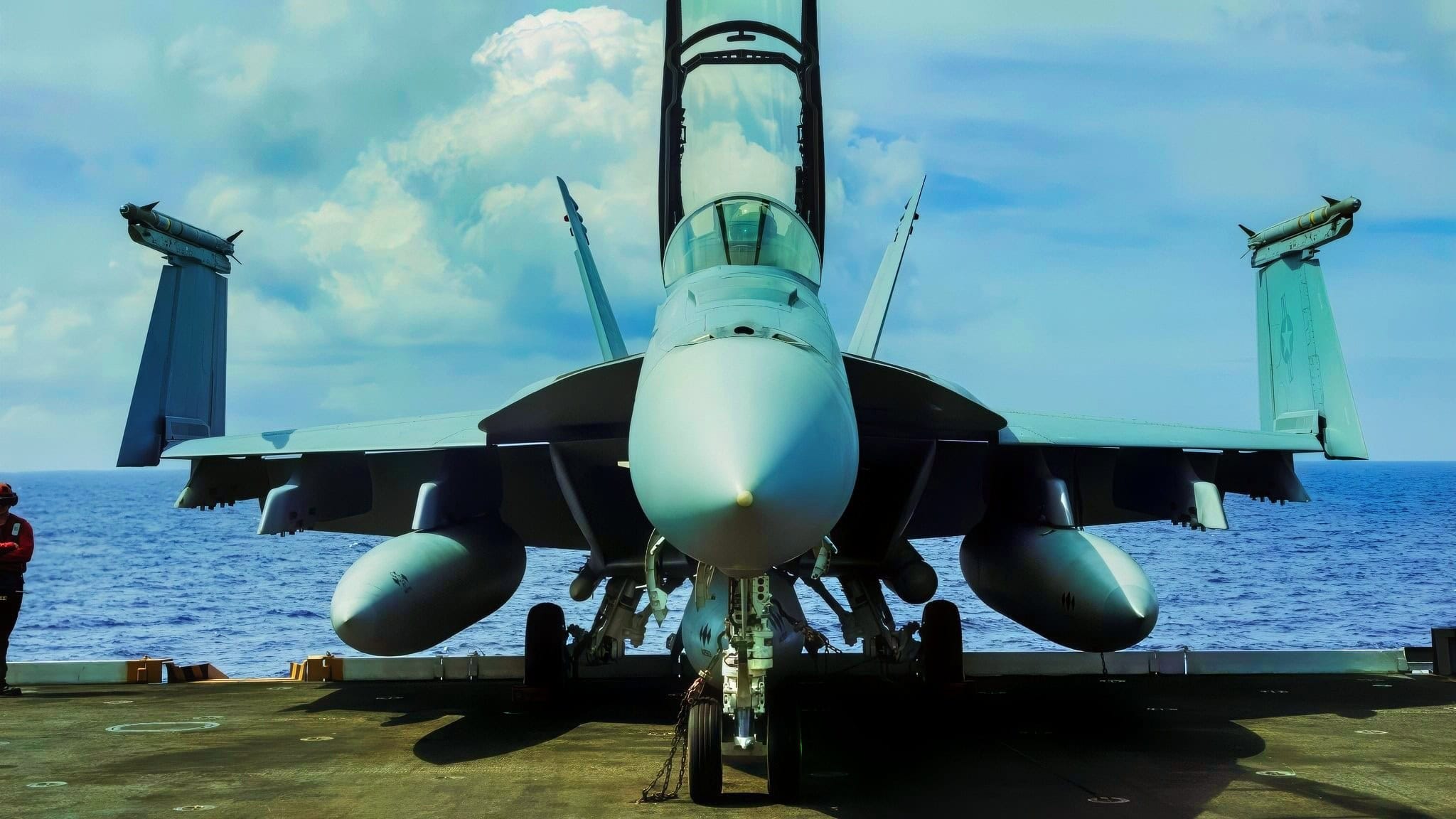
Capt. Tim Waits, commanding officer of Nimitz-class aircraft carrier USS George Washington (CVN 73), climbs into an F/A-18F Super Hornet, attached to Strike Fighter Squadron (VFA) 102, while underway in the South China Sea, Nov. 24, 2025. George Washington is the U.S. Navy’s premier forward-deployed aircraft carrier, a long-standing symbol of the United States’ commitment to maintaining a free and open Indo-Pacific region, while operating alongside allies and partners across the U.S. Navy’s largest numbered fleet. (U.S. Navy photo by Mass Communication Specialist 2nd Class Geoffrey L. Ottinger)
The swing wing, the glove, the hydraulics, and the early TF30s made every hour expensive. Safety problems and age did the rest. That is why the jet retired while the Air Force F-15 kept flying, a point this site has already walked through in the retirement record. Super Tomcat 21 would have fixed some of the aerodynamics and the cockpit. It would not have turned a 70,000-pound variable-geometry fighter into a Hornet-sized maintenance bill. After A-12, the Navy was not going to bet the air wing on another large, unique type. It took the airplane that shared tools and habits with the Hornets already on the roof.
There were other cons. ST21 had no stealth. Phoenix was leaving. A two-man crew is a strength in strike and a cost in billets. Remanufacture takes time, and the Super Hornet was already in EMD while ST21 was still a model. Grumman’s line was dying. The 1994 merger into Northrop did not reopen Calverton. Congress did tell the Navy, in the fiscal 1993 authorization, to keep an attack-capable F-14 in view alongside the Super Hornet. That became the Bombcat, not Super Tomcat 21.
The Range Case That Deserved a Harder Look
The Super Hornet is a fine carrier airplane. It is not a long-range airplane. NAVAIR lists a combat range of 1,275 nautical miles clean with two Sidewinders, and a ferry range of 1,660 with three 480-gallon tanks. Those are not combat-radius figures, and they should not be stacked against an F-14 brochure number as if they were.
Published Tomcat mission radii in Navy training material sit around 500 nautical miles on a hi-med-hi profile and about 380 on a hi-lo-lo-hi. Super Hornet operational requirements in the early 1990s were about 410 nautical miles in the fighter role and 430 in attack; later Selected Acquisition Reports sat in the mid-400s. Ferry range is a wash. Combat radius and loiter on internal fuel are not.
That is the ST21 argument that should have been fought on its own terms. Extra internal fuel in the gloves. A bring-back weight that lets a crew abort a target and still trap with the bombs.
Two people in the cockpit to run a long strike or a long barrier CAP. A radar built for the outer air battle. None of that required stealth. All of it required the Navy to keep a large, expensive, two-engine swing-wing jet in the hangar for another generation after OSD had already decided the Soviet bomber stream was no longer the requirement it would fund.
Why the Super Tomcat 21 Failed
The F-14D had already fixed the worst engine and radar problems. Super Tomcat 21 was the offer to spend the next increment of money on fuel and strike instead of on a new, smaller airframe. The Navy spent it on the Super Hornet. It got reliability, a common type, and a jet it could afford to fly every day. It did not get the unrefueled reach.
Boeing later offered conformal tanks for Block III to claw back some of that. The Navy dropped them as standard fit. Super Hornet production is ending. F/A-XX is the latest attempt to buy reach back. ST21 was the last serious chance to keep it without waiting for a sixth-generation stealth fighter.
About the Author: Harry J. Kazianis
Harry J. Kazianis (@Grecianformula) was the former Senior Director of National Security Affairs at the Center for the National Interest (CFTNI), a foreign policy think tank founded by Richard Nixon based in Washington, DC. Harry has over a decade of experience in think tanks and national security publishing. His ideas have been published in the NY Times, The Washington Post, The Wall Street Journal, CNN, and many other outlets worldwide. He has held positions at CSIS, the Heritage Foundation, the University of Nottingham, and several other institutions related to national security research and studies. He is the former Executive Editor of the National Interest and the Diplomat. He holds a Master’s degree focusing on international affairs from Harvard University.

