
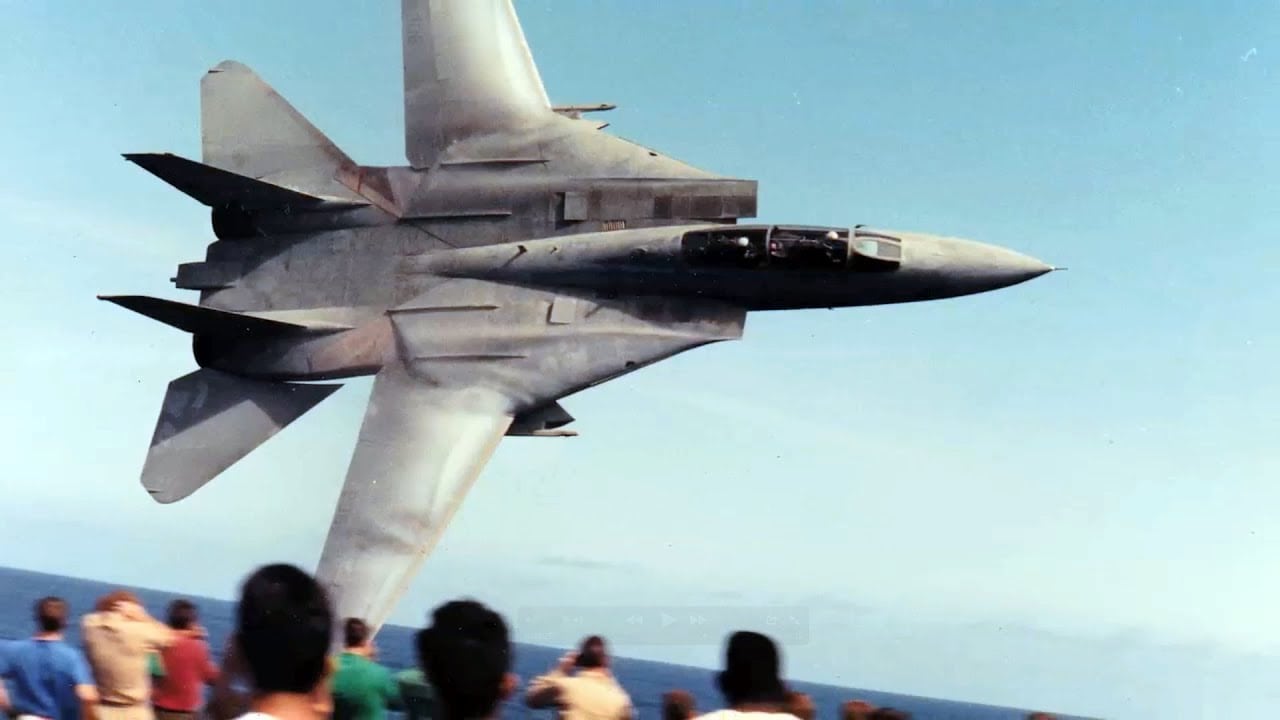
Key Points and Summary – This piece revisits the Grumman F-14 Super Tomcat 21, a 1990s proposal to turn the F-14D into a low-risk, next-generation fleet defender and strike fighter after the A-12 and NATF collapsed.
-Grumman’s ST21 concept added powerful F110 engines with supercruise, more fuel, modern glass cockpits, upgraded radar, and advanced weapons, all built on a proven airframe.
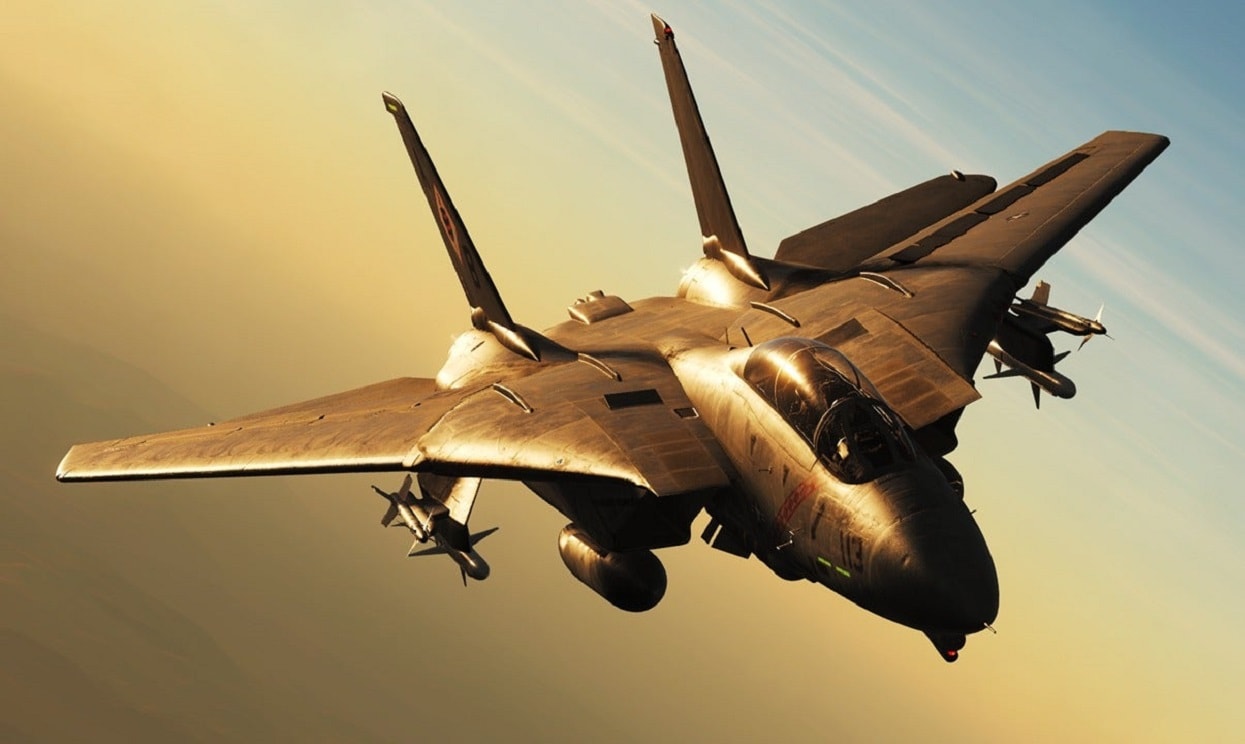
Image: Creative Commons.
-Tyler Rogoway and artist Adam Burch then imagine a further-evolved “Super Tomcat 2010,” with AESA radar, cutting-edge EW, datalinks, and new munitions.
-Instead, the Navy chose the F/A-18E/F Super Hornet—leaving the Super Tomcat as one of naval aviation’s most tantalizing “what ifs.”
F-14 Super Tomcat 21 vs. Super Hornet: Did the Navy Pick the Wrong Jet?
In a long-form feature for The War Zone, Tyler Rogoway just explored one of the greatest “what ifs: of U.S. naval aviation: the Grumman F-14 Super Tomcat 21 (ST21).
Conceived in the early 1990s after the collapse of the A-12 Avenger program and the Navy’s own Advanced Tactical Fighter initiative, the ST21 was pitched as a low-risk, high-reward evolution of the existing F-14D – the final, modernized variant of the F-14 Tomcat fighter.
Rather than gambling on entirely new designs, Grumman argued at the time that the Tomcat could be expanded into a next-generation fleet defender and strike fighter using relatively mature technology already available to them. The Navy, however, ultimately opted for the F/A-18E/F Super Hornet – Boeing’s twin-engine, carrier-capable strike fighter – leaving the Super Tomcat as an unrealized chapter of aerospace history.
Rogoway, working with aerospace artist Adam Burch, attempted to show readers exactly what was lost when the Navy chose to go a different way.
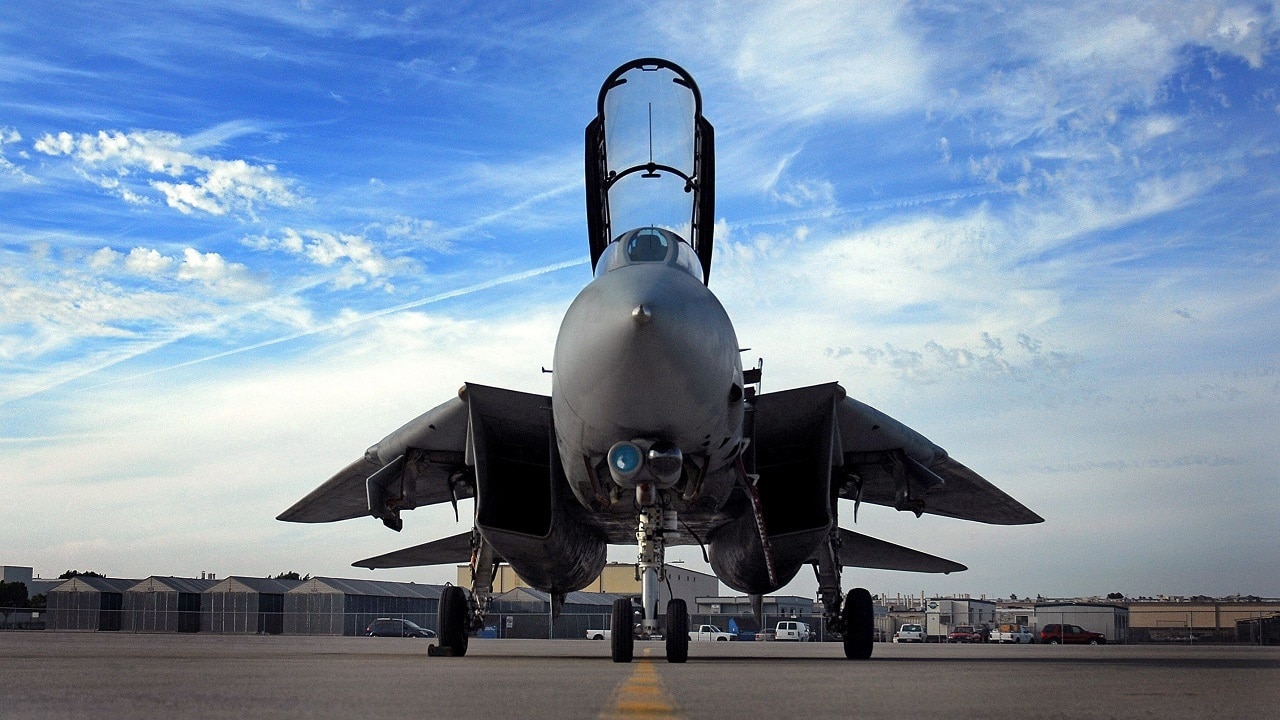
A U.S. Navy F-14D Tomcat aircraft from Fighter Squadron 31, sits on the flight line after completing its final flight at Naval Base North Island, San Diego, Calif., on Sept. 29, 2006. After 36 years of service, the Tomcat is being replaced by the F/A-18E/F Super Hornet aircraft.
In the piece, Rogoway and Burch built detailed digital renderings of the proposed Super Tomcat 21 and then went further, imagining what future evolutions of the aircraft may have looked like had the Navy chosen to continue investing in the platform. The result? A proposed “Super Tomcat 2010” (ST2010) – a hypothetical upgrade package that features the most powerful fighter AESA radar ever fielded, modern electronic warfare systems, satellite data links, and advanced weaponry.
Though only a hypothetical design, the piece outlines a realistic scenario in which the Navy chose a different path.
The History
Before we dive into the proposed designs from Rogoway, let’s first take a look at the history that makes the story of the Super Tomcat so interesting to naval aviation enthusiasts.
Following the cancellation of the A-12 Avenger II in 1991, the U.S. Navy found itself with a major capability gap. The A-12 had been intended as a stealthy, all-weather, carrier-based attack aircraft that would replace the A-6 Intruder – but cost overruns, increasing weight, and various delays ultimately saw the program canceled. At the same time, the Naval Advanced Tactical Fighter (NATF) program, which would have been a navalized equivalent of the U.S. Air Force’s ATF, was proving too expensive and far-off for near-term operational needs.
Grumman responded by pitching incremental growth designs built on the existing F-14 platform. One such design was known as the “Quick Strike,” a modest upgrade to existing F-14s that included targeting/navigation pods, improved ground-attack radar, and standoff weapon capability that could pick up the slack from the retiring Intruders.
But recognizing that Quick Strike was seen as insufficient, Grumman proposed a more ambitious “Super Tomcat 21.” The design would include more powerful engines, upgraded radar, targeting pods, loiter capability, and improved standoff weapons.
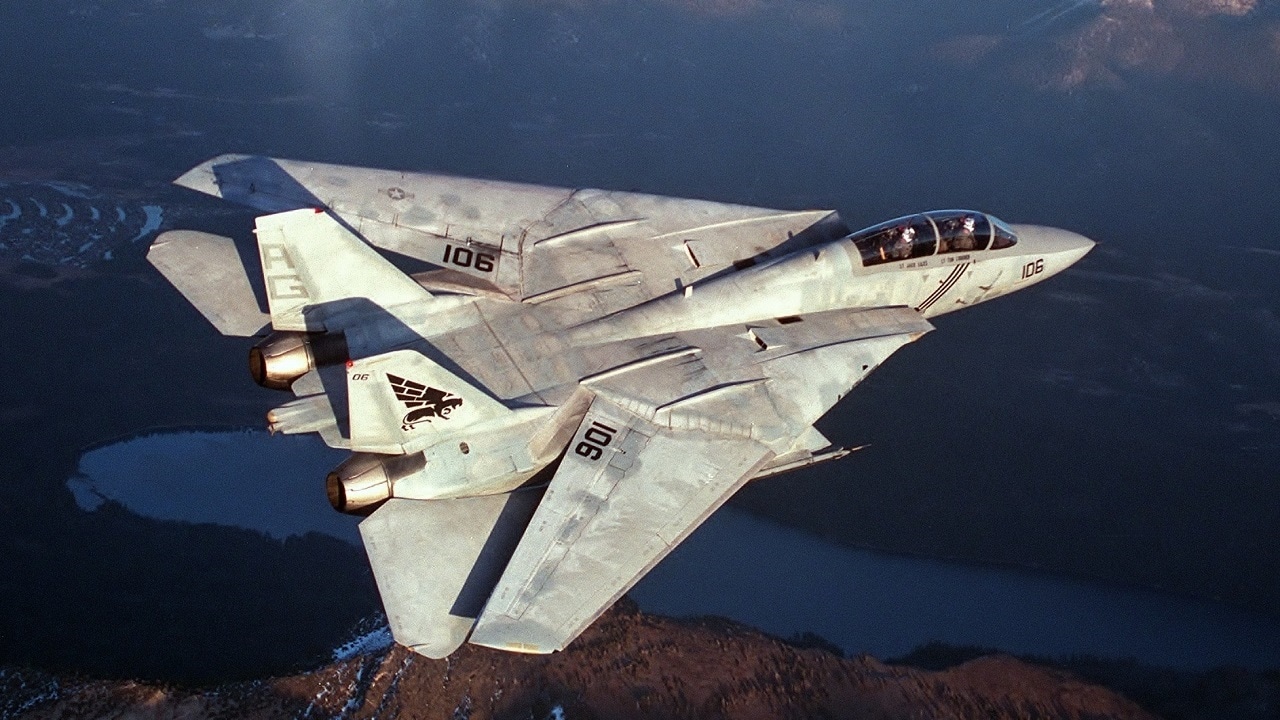
Right rear overhead view of an F-14AB Tomcat aircraft of Fighter Squadron 143 (VF-143), the Pukin’ Dogs, in flight over desert terrain.
Grumman argued that adopting its ST21 platform was a lower risk and more cost effective option, leveraging existing, mature technologies rather than leaning on entirely new, unproven, or cutting-edge systems. The idea was that the ST21 would become a near-term solution that would relieve the Navy of its reliance on new, high-risk platform programs – and extend the relevance of the F-14 well into the next century.
But it wasn’t to be. The Navy chose the Super Hornet, and they did so for multiple reasons ranging from budget concerns, maintenance costs, and the complexity of the F-14’s variable-sweep wing system. The Super Hornet, meanwhile, was seen to be a better fit for the Navy’s shifting strategic priorities, offering versatility, a lower life-cycle cost, and multirole capability.
The ST21 That Never Was
The ST21 was conceived as a logical extension of the F-14D rather than a radical new aircraft platform. Grumman’s proposal centered on taking the proven Tomcat airframe and addressing its key weaknesses while building on its strengths.
At the heart of the new aircraft were new F110-GE-429 engines, powerful enough to give the jet true supercruise capability – meaning it could sustain supersonic flight without afterburner while carrying a combat load. The aircraft’s enlarged wing gloves were designed to house additional fuel, which would extend range and endurance while its new digital flight controls and aerodynamic refinements promised better low-speed handling and overall performance.
The cockpit would have been radically transformed, too, with a single-piece windscreen, a wide-angle head-up display, as well as glass displays that were connected to upgraded computer systems. The radar system would have been reworked, based on the APG-71 and incorporating features already included in the F-15E Strike Eagle.
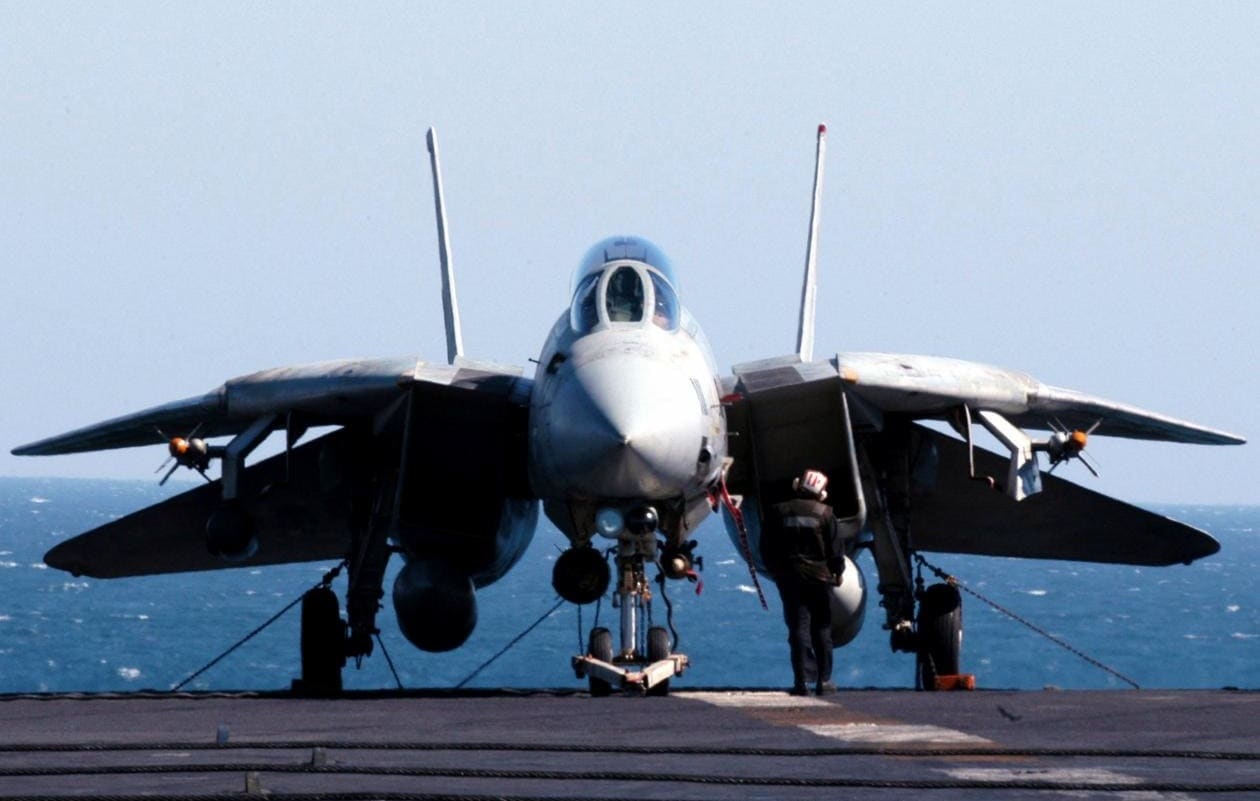
Image: Creative Commons.
An impressive range of weapons were on the table, too, including standoff munitions, AIM-120 AMRAAMS, and potentially improved Phoenix missiles. Incorporating those kinds of weapons would have turned the Tomcat into a long-range fleet defender as well as a precision strike platform.
The ST21 – the aircraft that never was – was pitched as the aircraft that could finally fulfill the full potential of the Tomcat. It was fast, powerful, equipped with advanced targeting technology, and importantly, versatile. And had the aircraft been built as planned, there’s no telling what the family of aircraft built around it could have become.
As for the ST2010 concept – you can read the full proposed specifications here.
About the Author: Jack Buckby
Jack Buckby is a British author, counter-extremism researcher, and journalist based in New York who writes frequently for National Security Journal. Reporting on the U.K., Europe, and the U.S., he works to analyze and understand left-wing and right-wing radicalization, and reports on Western governments’ approaches to the pressing issues of today. His books and research papers explore these themes and propose pragmatic solutions to our increasingly polarized society. His latest book is The Truth Teller: RFK Jr. and the Case for a Post-Partisan Presidency.

