
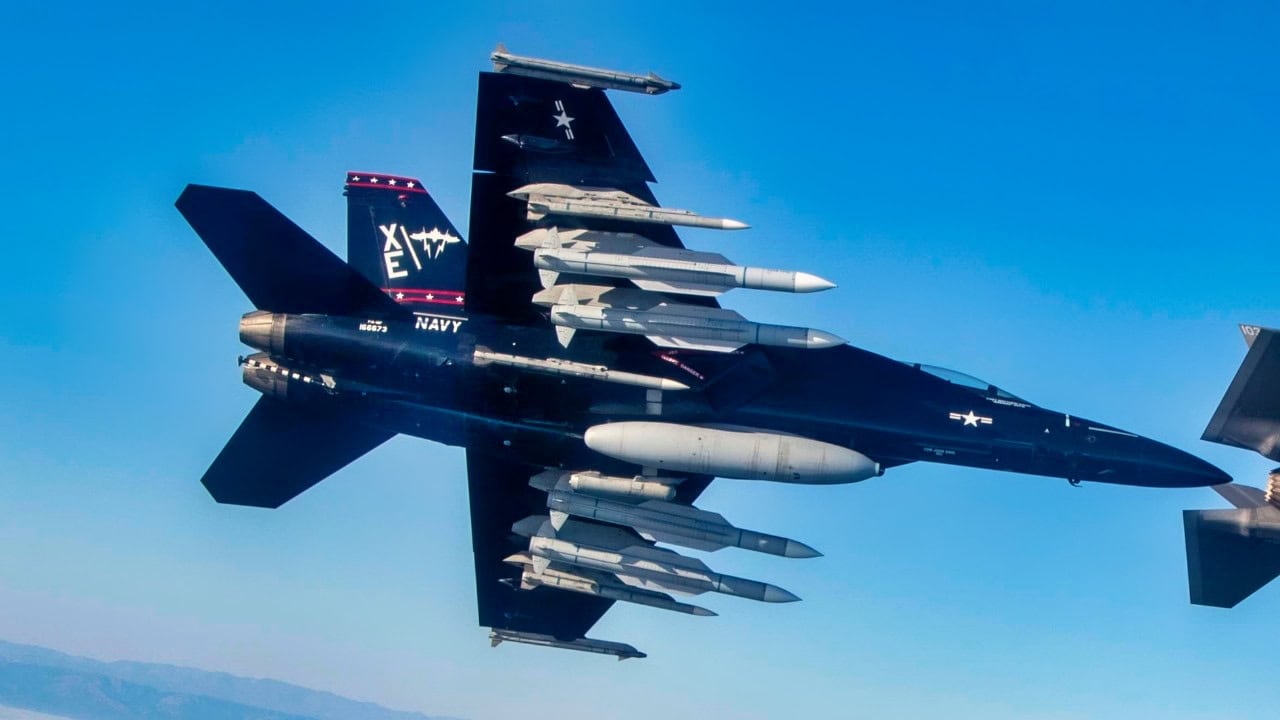
The F-18E/F Super Hornet has been the workhorse of the U.S. Navy’s carrier aviation fleet for nearly 30 years.
Recently, the Navy has tried to replace the Super Hornet with a next-generation, carrier-capable aircraft under the F/A-XX program.
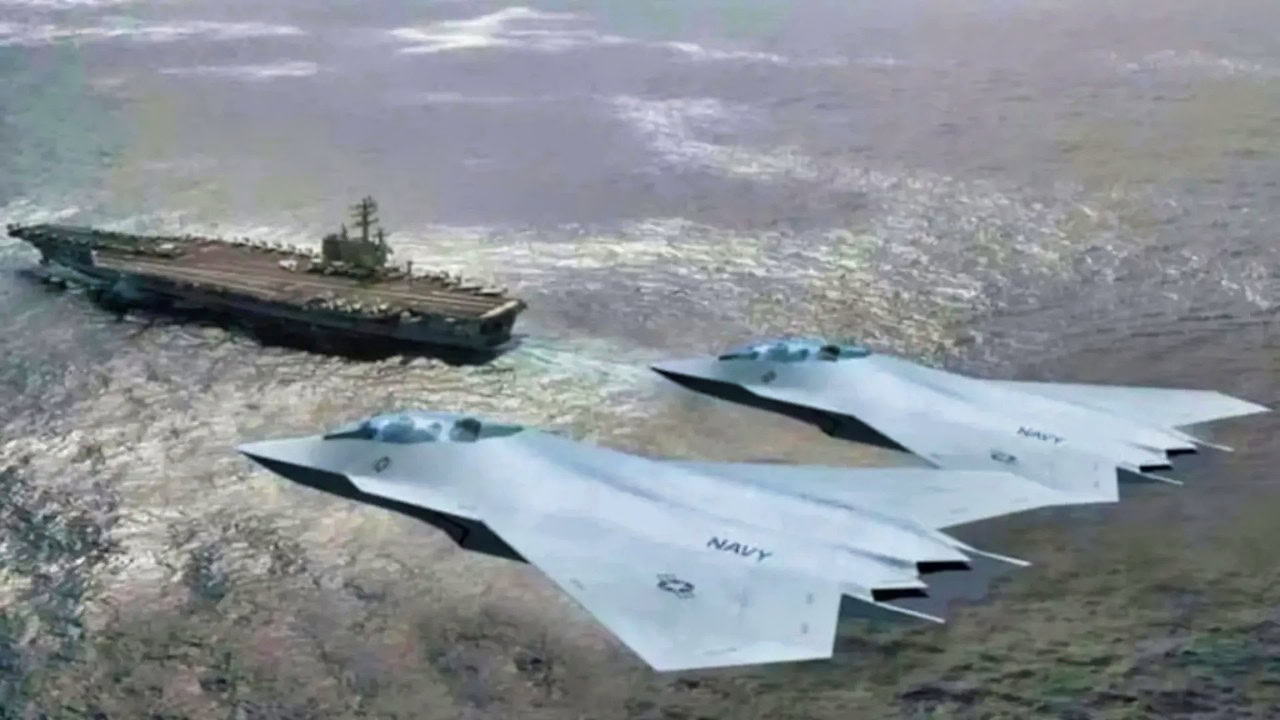
F/A-XX Fighter for US Navy. Navy graphic mockup.
This new aircraft is expected to have more range than current carrier aviation, along with the latest stealth technologies.
However, with the F/A-XX’s prospects uncertain, the Navy must rely on its long-serving fleet of F/A-18s. Introduced in the late 90s, the Super Hornet has served well across the Navy’s carrier fleets.
While it lacks the stealth capabilities of an F-35, the F/A-18 is versatile and incredibly reliable.
Modernizing the Navy’s Carrier Airwing
During the 1980s, the U.S. Navy operated a multitude of carrier aircraft, including the F-14 Tomcat, the A-6 Intruder, and the A-7 Corsair II.
In the early 2000s, the F-14 was being phased out across the US Navy (then-Secretary of Defense Dick Cheney also believed the Tomcat was obsolete), and the A-6 and A-7 were aging and in need of replacement.
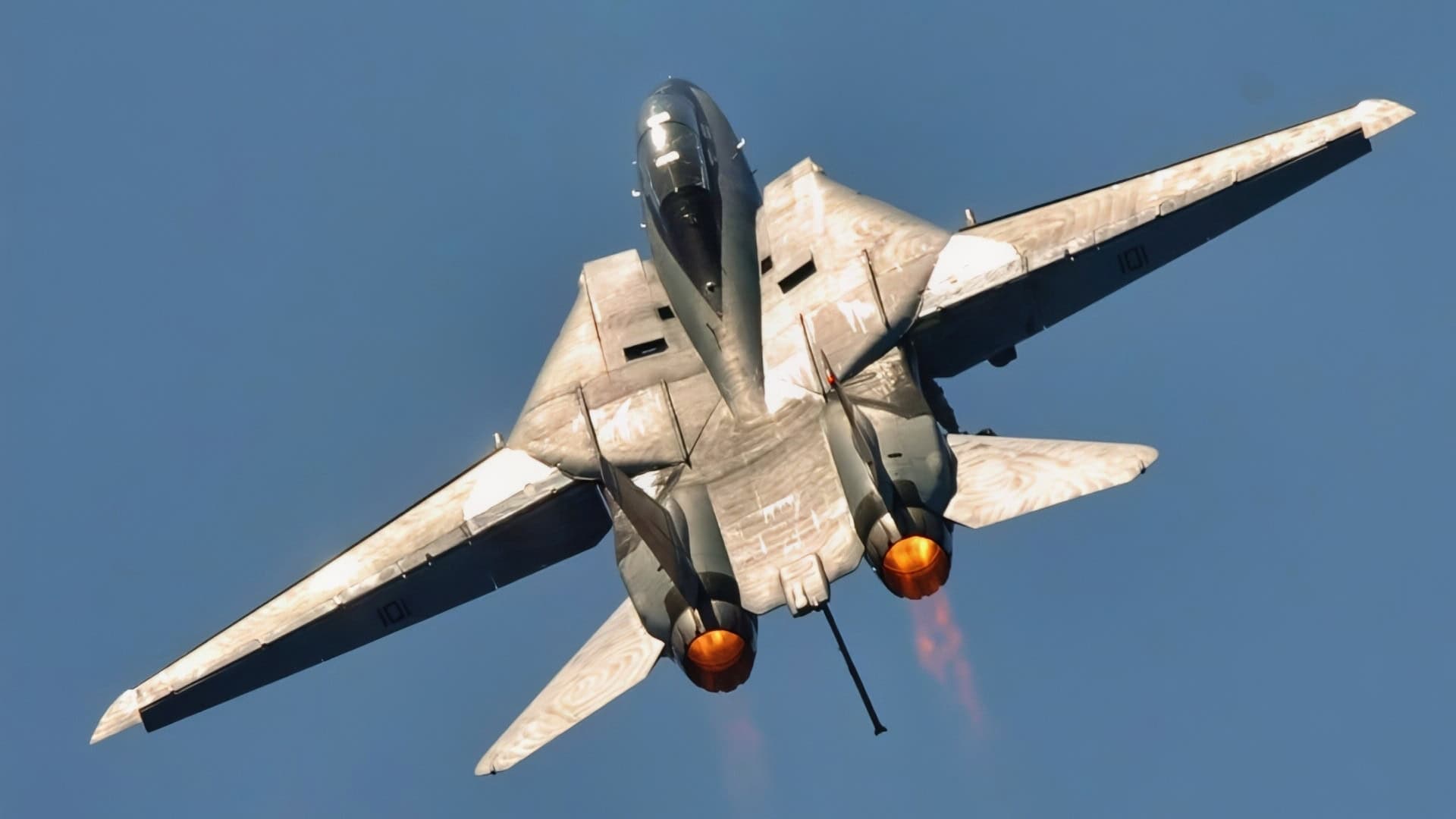
An F-14D Tomcat pulls up after performing a fly-by past the aircraft carrier USS Dwight D. Eisenhower (CVN 69) as the ship operates in the Atlantic Ocean on June 19, 2006. DoD photo by Petty Officer 2nd Class Miguel A. Contreras, U.S. Navy. (Released) PH2 CONTRERAS MIGUEL
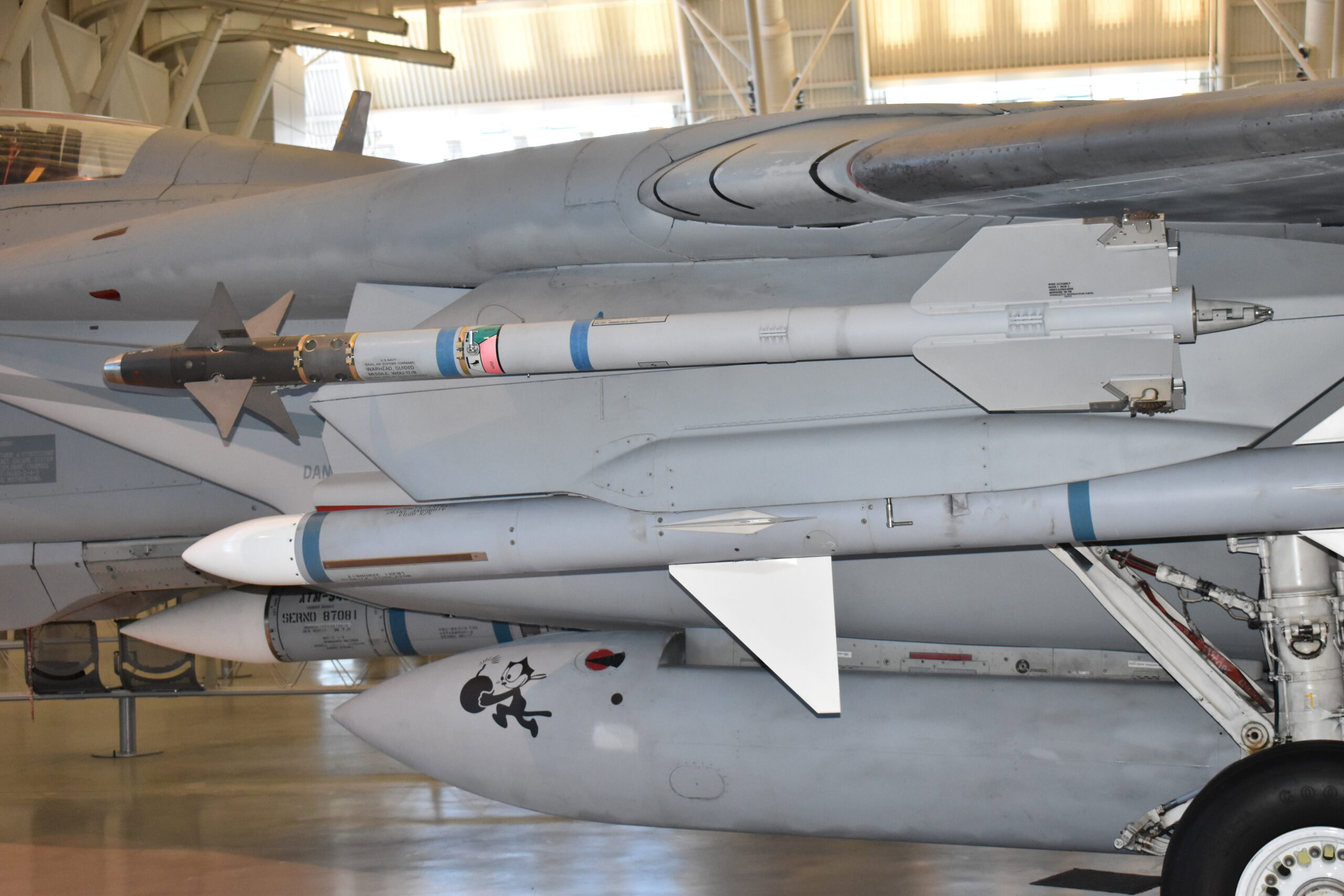
F-14 Tomcat at the Smithsonian. 19FortyFive.com original photo.
Following the end of the Cold War and the subsequent budget cuts, the Navy needed a new carrier aircraft, and some of its programs, like the A-12 Avenger II, had been axed.
Rather than developing a new aircraft from scratch, the Navy decided to enlarge the previously existing F/A-18 Hornet and modify it for carrier compatibility.
Although it shares the same layout and appearance as earlier F/A-18 models, the Super Hornet is essentially a new aircraft.
It is 20 percent larger than its predecessors, carries more fuel, has a greater range and payload, and much more.
The first prototype made its maiden flight in 1995 before officially entering service in 1999.
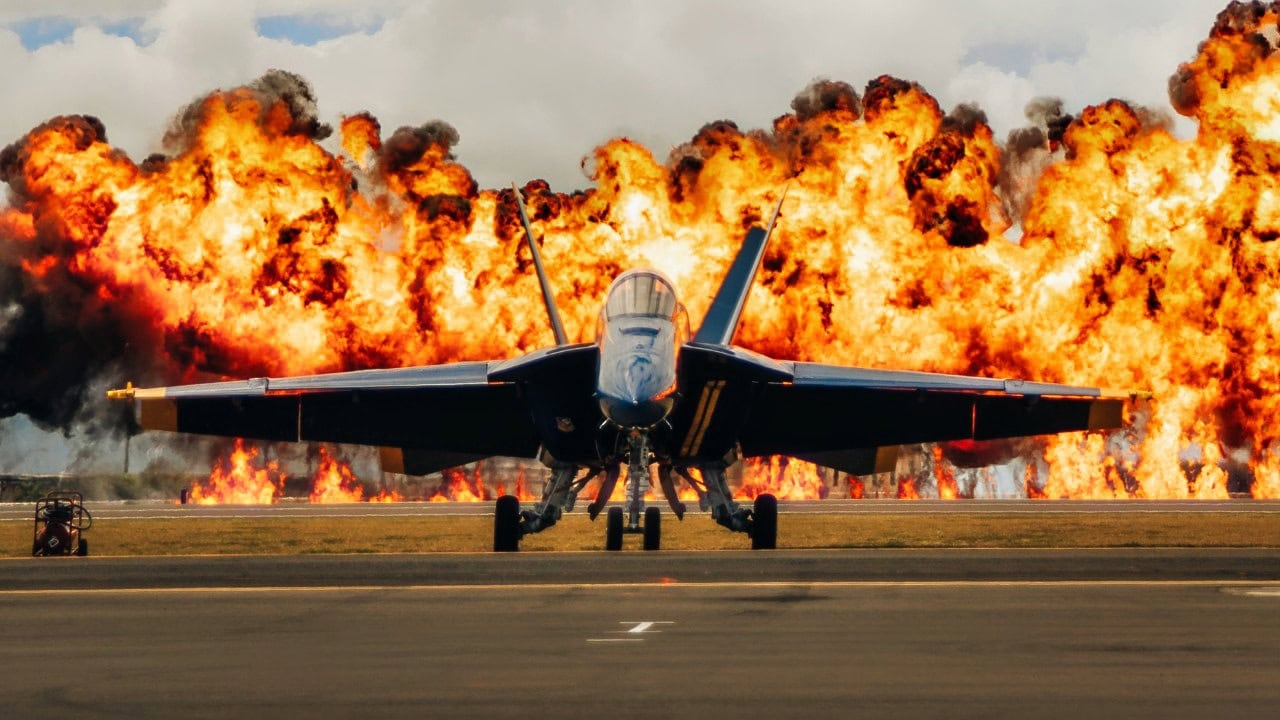
The ‘Wall of Fire” detonates behind two U.S. Navy Blue Angels F/A-18 Super Hornets during the 2022 Kaneohe Bay Air Show, Marine Corps Air Station Kaneohe Bay, Marine Corps Base Hawaii, Aug. 13, 2022. The air show provided an opportunity to demonstrate the capabilities of a Joint Force in the Indo-Pacific Region. The Kaneohe Bay Air Show, which contained aerial performances, static displays, demonstrations and vendors, was designed to express MCBH’s appreciation to the residents of Hawaii and their continued support of the installation. (U.S. Marine Corps photo by Cpl. Patrick King)
It was modified to withstand the rough conditions of carrier operations and withstand multiple catapult launches/arrested landings.
The Super Hornet has a longer fuselage and larger wings to carry more fuel.
These changes serve to enhance the aircraft’s overall combat radius and mission endurance.
Powered by two General Electric F414-GE-400 turbofan engines, the F/A-18E/F can reach Mach 1.6 and has a combat radius of 558 nautical miles.
The Super Hornet With a Nasty Sting
While the F/A-18 is not a stealth fighter, it was designed for survivability.
As such, it incorporates several features to reduce its radar signature.
The engine intakes have been redesigned into a new caret shape that partially hides the engine blades from radar waves.
The Super Hornet also uses panel-join serrations and edge alignment to help reflect waves.
The aircraft also uses radar-absorbent materials, though to a much lesser degree than the F-35, to further reduce its radar cross-section.
Again, the Super Hornet is nowhere near the level of a fifth-generation stealth fighter.
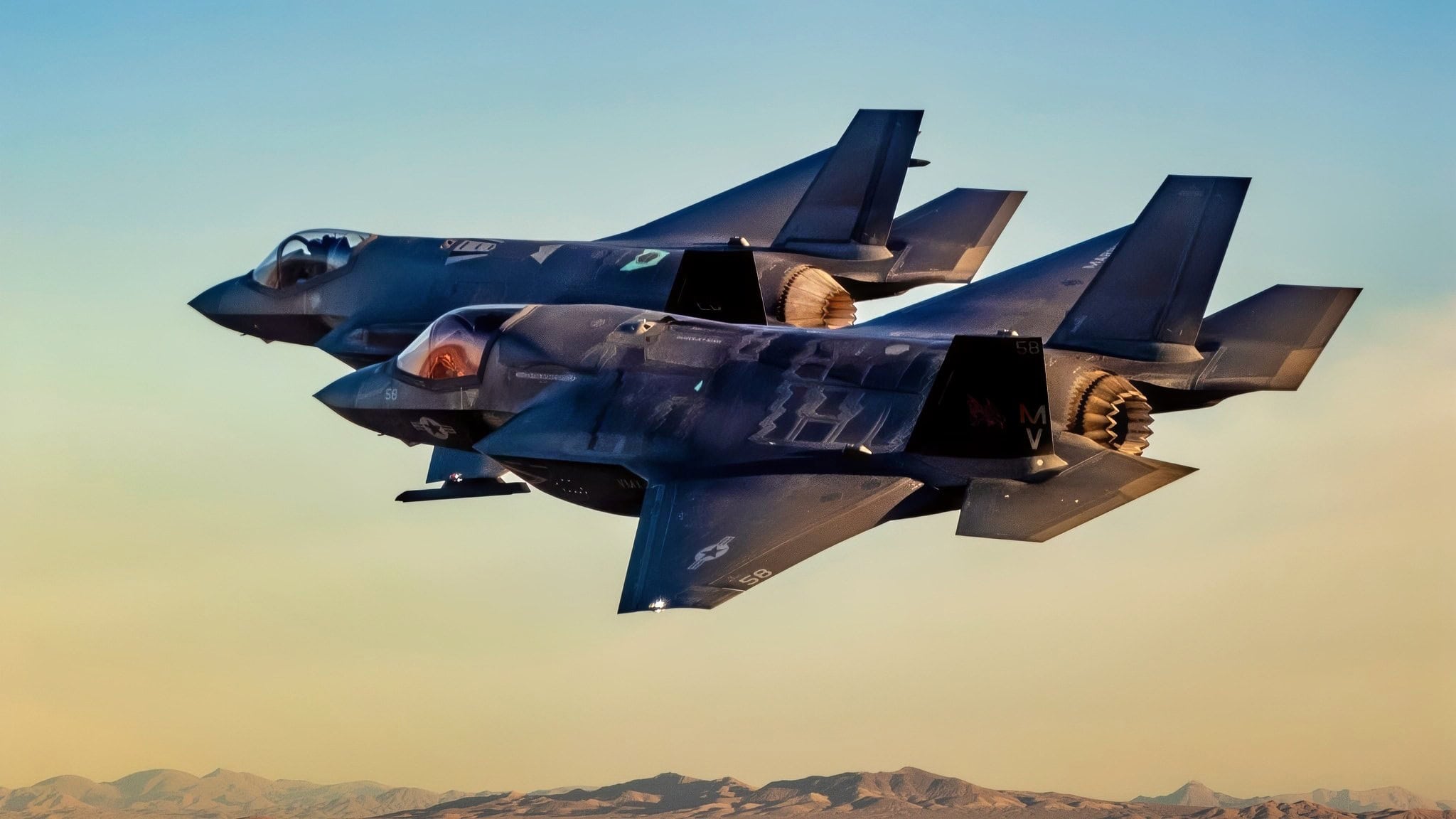
Test pilots with the 461st Flight Test Squadron, 412th Test Wing, return to Edwards Air Force Base, California, on January 21 after conducting a TR-3 AIM-120 live fire mission over the Pacific Test Range. The F-35 Integrated Test Force at Edwards is responsible for developmental testing of all three F-35 aircraft variants across the joint-services. (Courtesy Photo)
However, most estimates suggest the aircraft is significantly harder to detect (though its radar signature varies depending on its weapons loadout).
Original Super Hornets were fitted with an AN/APG-73 multi-mode radar, although Block II variants were fitted with the more capable AN/APG-79 AESA radar.
Additionally, the F/A-18E/F is equipped with an AN/ALR-67(V)3 radar warning receiver, an IRST pod, and the AN/ALQ-214 integrated defensive electronic countermeasures system.
The aircraft’s external hardpoints can carry other targeting pods or towed decoy systems.
Complementing its avionics suite, the F/A-18E/F can carry a wide range of munitions to support air-to-air or air-to-ground missions.
It was designed to conduct any strike mission the Navy might need, ranging from missile defense to anti-ship missions.
The U.S. Navy’s Workhorse
The F/A-18 Super Hornet has served the Navy well since it entered service.
The aircraft made its first combat debut in 2002 during Operation Southern Watch, when two aircraft struck air defense launchers and command centers in Iraq.
Later, aircraft forward-deployed to the USS Abraham Lincoln (CVN-72) took part in Operation Iraqi Freedom, which kicked off the Second Gulf War.
Super Hornets conducted SEAD, close air support, strike, and escort missions throughout the war.
Throughout the Global War on Terror (GWOT), the F/A-18E/F became the workhorse of the U.S. Navy, conducting strike missions against insurgents across the Middle East.
As of 2025, the Super Hornet has logged 12 million flight hours since its introduction.
Today, the F/A-18 remains an indispensable component of the U.S. Navy’s carrier fleet. It was essential during the recent war with Iran.
Although it lacks the stealth capabilities of the F-35, the Super Hornet can carry more munitions and is arguably a more versatile aircraft overall.
The F/A-18, along with the EW variant, the F/A-18 Growler, works in tandem with the F-35 to suppress and destroy enemy air defenses.
Arguably, its greatest limitation is its range, or lack thereof. With a combat range of 550 nautical miles, the U.S. Navy is at a disadvantage against adversaries with longer-range munitions, such as China.
However, the Super Hornet is unlikely to be replaced anytime soon due to its versatility and reliability.
About the Author: Isaac Seitz
Isaac Seitz, a Defense Columnist, graduated from Patrick Henry College’s Strategic Intelligence and National Security program. He has also studied Russian at Middlebury Language Schools and has worked as an intelligence Analyst in the private sector.

