
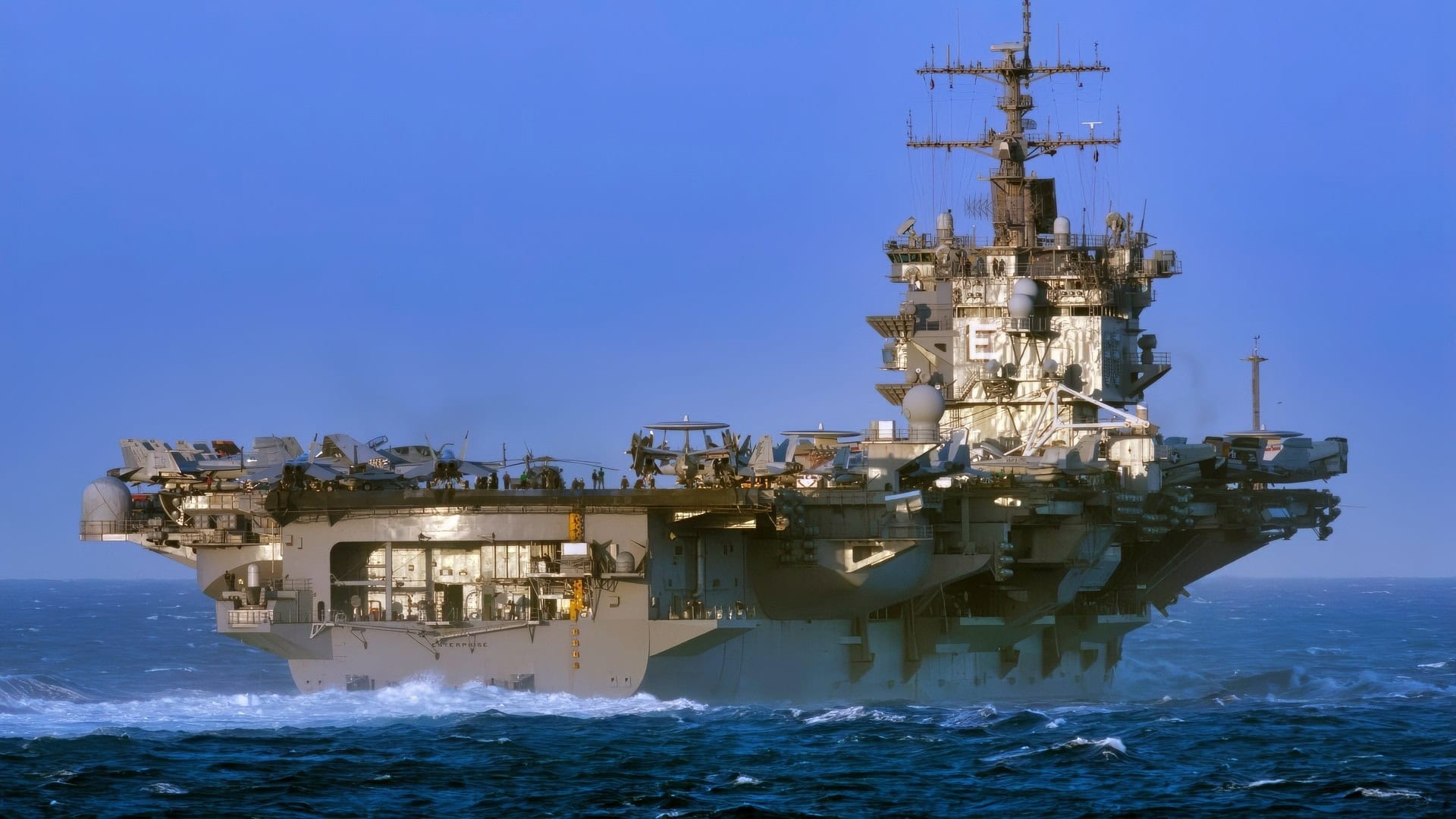
Why USS Enterprise Has 8 Nuclear Reactors, and Why Scrapping Her Costs 3 Times What She Cost to Build – The United States Navy built USS Enterprise for $451.3 million. Taking her apart is now costed, by the most complete public accounting, at $1,431,497,668, more than three times the price of construction, on a job that will not finish before 2030, nearly eighteen years after her last day in service.
Both numbers trace to the same decision, made in 1958, to power the world’s first nuclear aircraft carrier with eight reactors, and the explainer for why she has eight, and why those eight are now the most expensive disposal problem in naval history, is the same story told twice: once going up, once coming down.
Why Eight Nuclear Reactors for US Navy USS Enterprise Aircraft Carrier
When Enterprise was laid down at Newport News in February 1958, naval nuclear propulsion was seven years old and lived in submarines. The pressurized-water reactors of the day were submarine-sized because submarines were what they had been built for, and no single core then available could come close to driving a 1,123-foot, 90,000-ton-class carrier, the longest warship ever constructed, at the sustained 30-plus knots the Navy demanded.
So the designers did the only thing 1958 technology allowed: they ganged small reactors together, installing eight Westinghouse A2W pressurized-water reactors, derived from submarine designs, in four propulsion compartments, two reactors per shaft, feeding thirty-two heat exchangers and some 280,000 shaft horsepower, with legs measured in years and hundreds of thousands of miles between refuelings.
It worked magnificently. Commissioned on November 25, 1961, Enterprise steamed for 51 years, rode shotgun on the Cuban blockade, circled the globe unrefueled with two nuclear escorts in 1964’s Operation Sea Orbit, survived a devastating flight-deck fire off Vietnam in 1969, and flew strikes into the twenty-first century. But the price of pioneering was written into the keel.
The ship cost $451.3 million in 1961 dollars, roughly four times that of a conventional carrier, so much so that the Navy canceled her five planned sister ships and sailed her as a class of one.
And reactor technology promptly made her layout obsolete: within a decade, cores had grown so much more powerful that every Nimitz-class carrier runs on two A4W reactors, and the new Ford-class runs on two of an even stronger design. No carrier before or since has carried eight. No shipbreaker had ever faced eight. That is the whole disposal story in advance.
Why the Bill Is So Big
A conventional carrier leaves service into a simple market: the Navy transferred the oil-burning Kitty Hawk and the first John F. Kennedy to a Texas scrapper for one cent apiece, because the steel pays for the work.
Nuclear propulsion inverts the economics. The government remains responsible for every gram of radioactive material aboard, and Enterprise multiplied that responsibility by eight.
Her fuel was removed in a defueling campaign completed by her formal decommissioning in February 2017, but the eight reactor plants themselves, their vessels, piping, and shielding, remain low-level radioactive waste distributed through four machinery spaces deep in the hull, wrapped in a 1950s ship full of asbestos, lead, and PCBs, and every hour of work near them requires nuclear-qualified people working under regulatory oversight.
The Navy has recycled more than a hundred nuclear submarines and cruisers with a settled method, cutting out the single reactor compartment in one piece and shipping it to the Department of Energy’s trench in Washington State, but a carrier’s machinery spaces are too large to cut free as single packages, so the hull must be disassembled around the reactor plants, a first-of-its-kind industrial project on a 95,000-ton hulk.
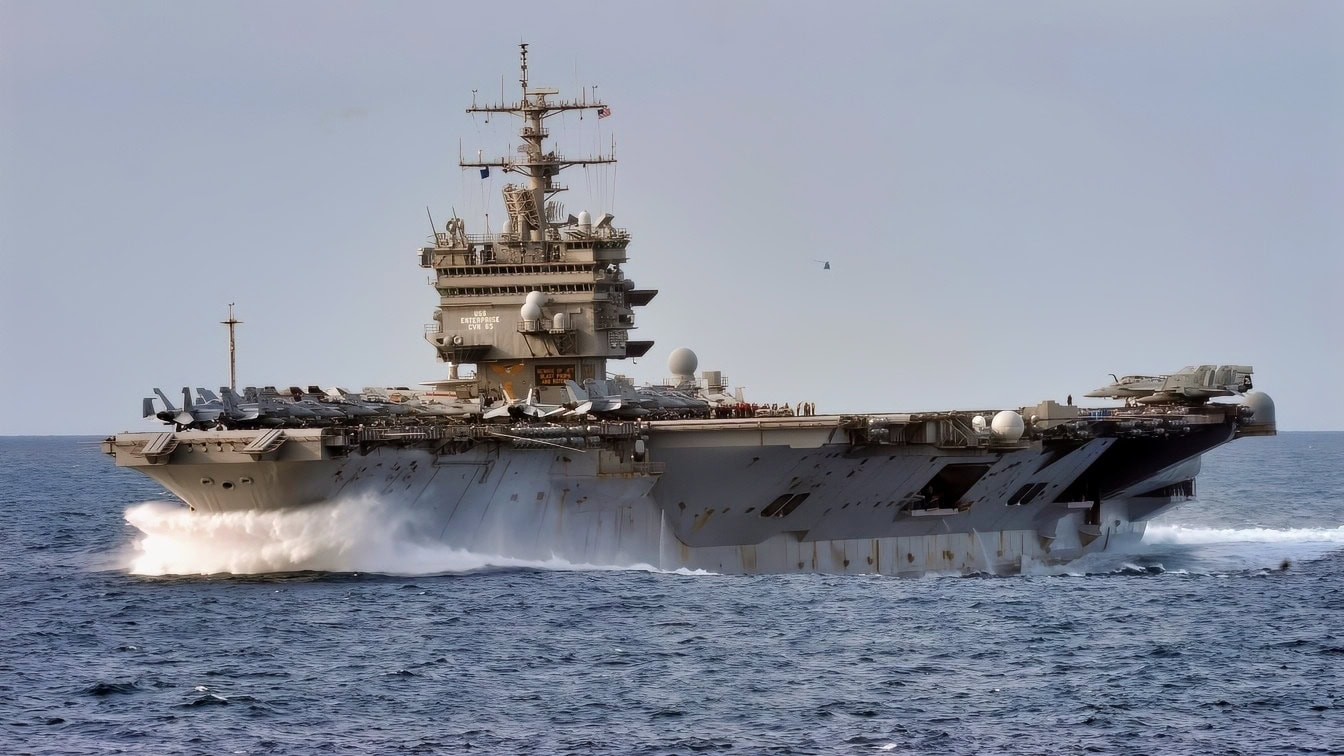
ATLANTIC OCEAN (Feb 04, 2012) Aircraft carrier USS Enterprise (CVN 65). Enterprise is underway participating in exercise Bold Alligator 2012. Bold Alligator 2012, the largest naval amphibious exercise in the past 10 years, represents the Navy and Marine Corps’ revitalization of the full range of amphibious operations. The exercise focuses on today’s fight with today’s forces, while showcasing the advantages of seabasing. This exercise will take place 30 Jan – 12 Feb, 2012 afloat and ashore in and around Virginia and North Carolina. (US Navy photo by Mass Communication Specialist 3rd Class Nick C. Scott)
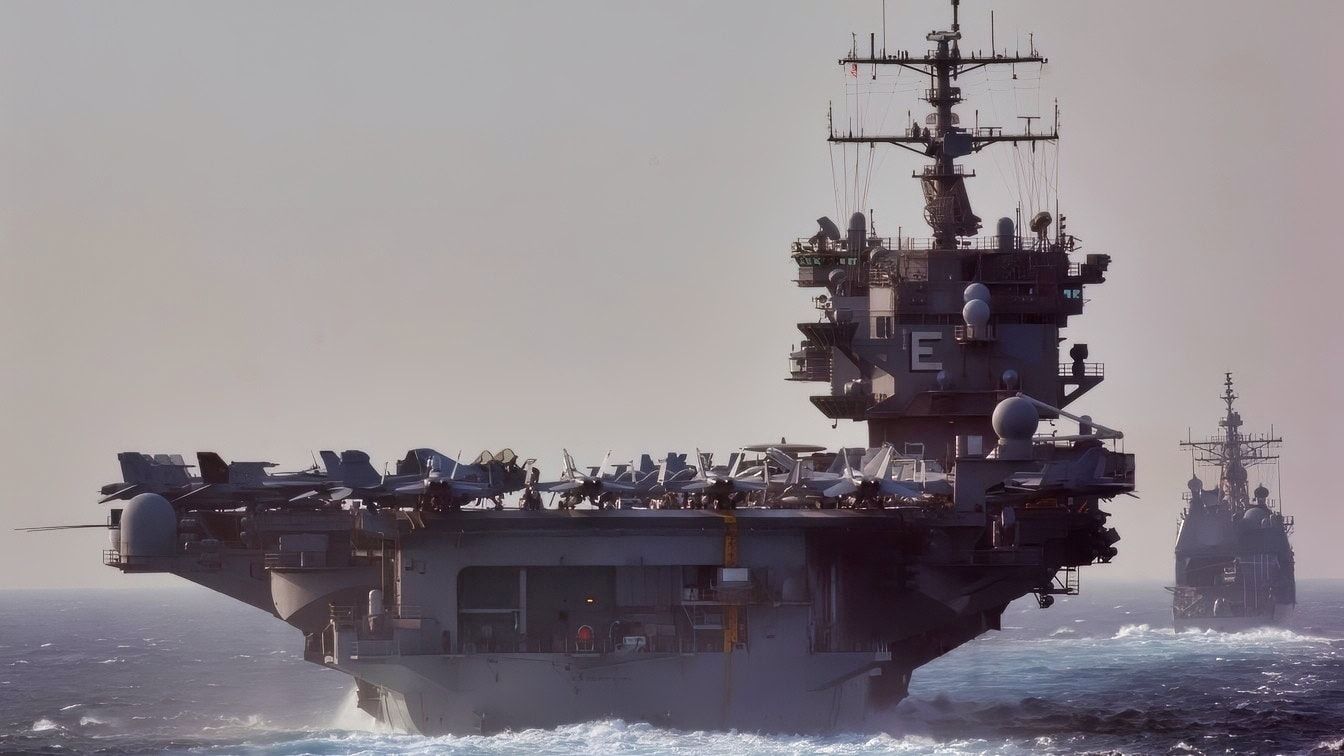
USS Enterprise At Sea US Navy Creative Commons Photo
When the Navy priced that work at its own Puget Sound Naval Shipyard, the estimate exploded: a projection of $500 to $750 million swelled, by 2013, to well over a billion dollars and a timeline of roughly fifteen years, occupying a public shipyard the fleet needs for maintenance.
That blowout, documented by government auditors, drove the Navy in September 2023 to a decision without precedent: hand the entire dismantlement of a nuclear-powered capital ship to commercial industry, the way civilian reactors are decommissioned, at an estimated saving approaching a billion dollars against the government-yard route and a schedule of five years instead of fifteen.
The Biggest Figures, As of Now
The contract itself took two tries.
NorthStar Maritime Dismantlement Services of Vermont won the work in June 2025 at $536.7 million; a rival bidder protested that a malfunction on the government’s procurement website had blocked its proposal, a court ordered a re-competition, and on July 15, 2026, NorthStar won again at $418,497,668, about $118 million below the first award, with nearly the full amount obligated on day one and completion now expected by September 2030.
The full ledger, as this publication’s own accounting has itemized precisely, runs: $902 million already spent inactivating and defueling the ship at Newport News, $111 million for years of pier-side storage, and the $418.5 million dismantlement contract, for a committed total of $1,431,497,668, the widely cited $1.3 billion being the same three line items rounded down.
The Navy considers the stakes high enough that it established a dedicated program office for nuclear carrier disposal to manage this ship and everything after her.
Under the contract, the hulk will be towed from Newport News to Mobile, Alabama, past the mothballed ocean liner SS United States on the Gulf Coast, where NorthStar’s partner Modern American Recycling and Radiological Services will take her apart; low-level radioactive and mixed waste goes to the licensed Waste Control Specialists site in Andrews, Texas, clean steel is recycled, and some of it is planned for the hull of CVN-80, the Ford-class carrier under construction at Newport News that will carry the name Enterprise next.
The fixed-price structure shifts overrun risk to the contractor, which is precisely the lesson the Navy wants proven, because the queue behind Big E is long: USS Nimitz, two reactors, roughly 100,000 tons, decommissions in 2027, nine more Nimitz-class hulls follow across the coming decades, and the Fords after them.
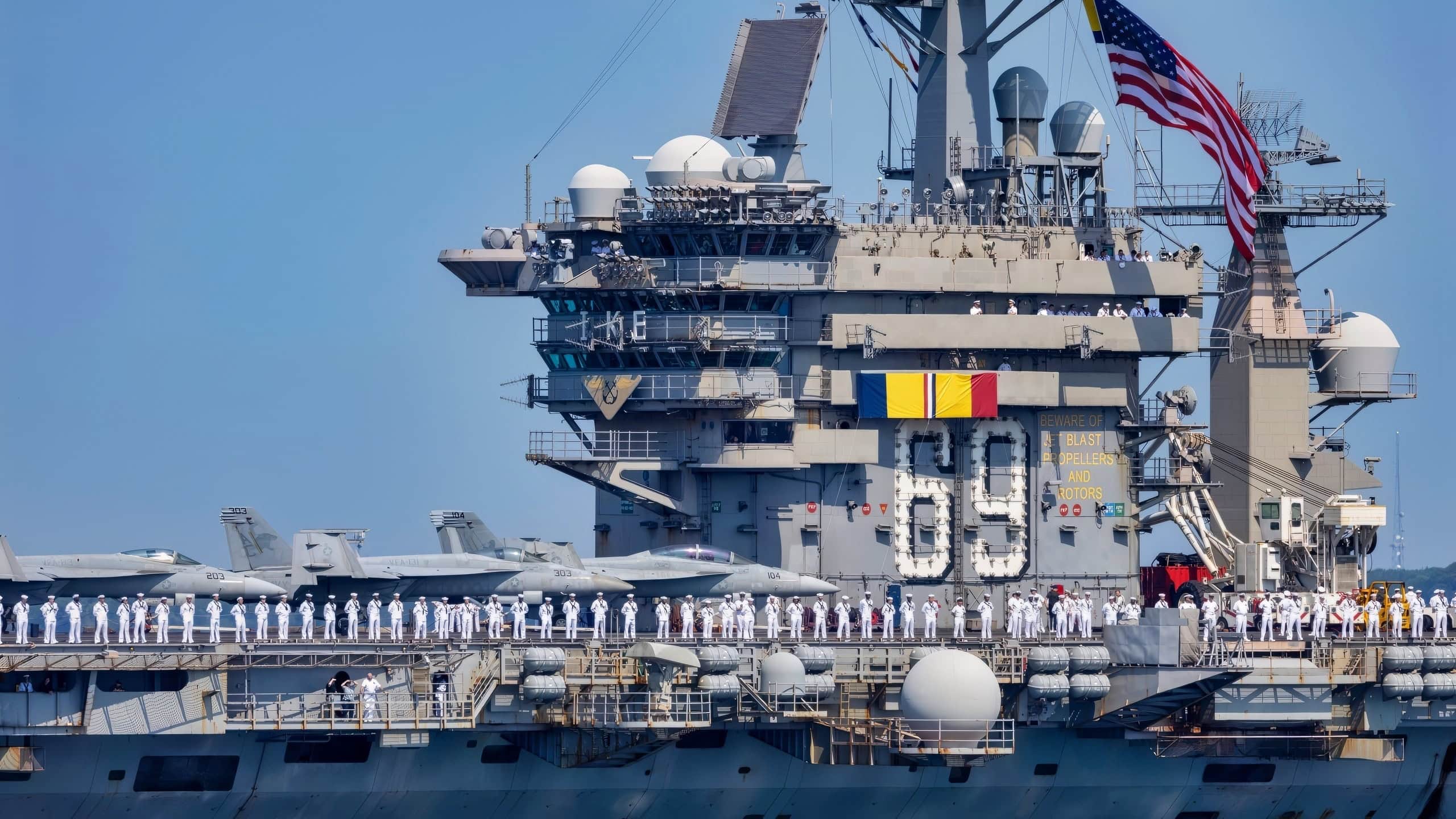
(July 14, 2024) The Nimitz-class aircraft carrier USS Dwight D. Eisenhower (CVN 69) returns to Naval Station Norfolk, July 14, 2024, concluding a nine-month deployment to the Atlantic. Eisenhower, the flagship of the Ike Carrier Strike Group, departed Norfolk October 14, 2023 to conduct a scheduled deployment to U.S. 5th and 6th Fleet area of operations in support of maritime security operations, theater security cooperation efforts, and enhanced vigilance activities operations with NATO Allies and Partners. (U.S. Navy Photo by Mass Communication Specialist 2nd Class Hunter Day)
Every cut made in Mobile writes the manual, and this publication’s own reporting has already priced the next entry: retiring the two-reactor Nimitz is expected to cost at least a billion dollars even with the template in hand.
It Won’t Be Easy
Eight reactors made Enterprise the fastest, longest, most inexhaustible warship of her era and the only carrier that ever needed a class of one; the same eight reactors made her the disposal problem no navy had ever solved, at a committed price three times her construction and a calendar consuming most of two decades.
There is no villain in the arithmetic, only 1958 doing the best it could and 2030 paying for it.
On the tow south, the hull that once outran her escorts will move at the speed of a barge, bound for the torches, while the ninth Enterprise takes shape in the dry dock she left behind, built partly from her own recycled steel, powered, like every American carrier since her, by exactly two reactors, which is the most expensive engineering lesson the Navy ever taught itself, written in a ledger that reads: built for $451.3 million, disposed of for $1.43 billion, remembered at any price.
About the Author: Harry J. Kazianis
Harry J. Kazianis (@Grecianformula) was the former Senior Director of National Security Affairs at the Center for the National Interest (CFTNI), a foreign policy think tank founded by Richard Nixon based in Washington, DC. Harry has over a decade of experience in think tanks and national security publishing. His ideas have been published in the NY Times, The Washington Post, The Wall Street Journal, CNN, and many other outlets. He has held positions at CSIS, the Heritage Foundation, the University of Nottingham, and several other institutions related to national security research and studies. He is the former Executive Editor of the National Interest and the Diplomat. He holds a Master’s degree focusing on international affairs from Harvard University.