
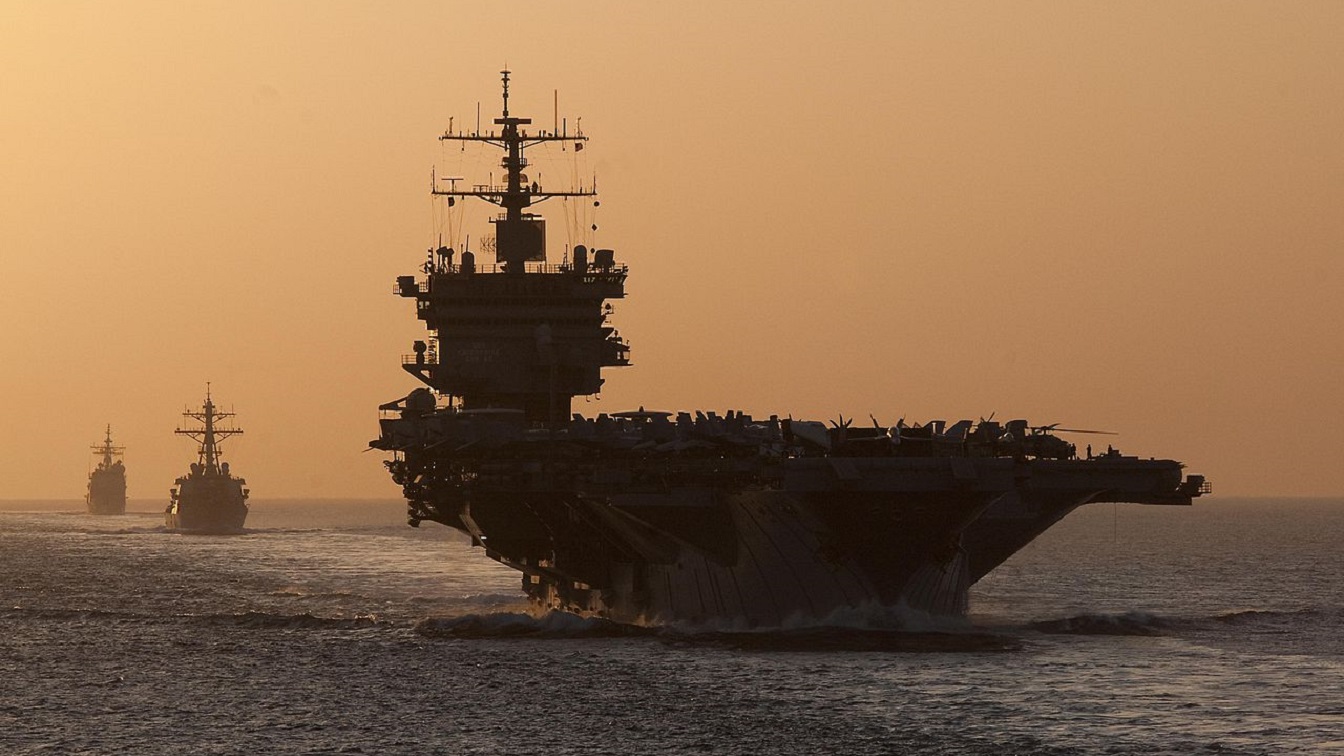
The Navy Is Paying More Than 1.4 Billion Dollars to Scrap One USS Enterprise While the Next One Slips to 2031 – USS Nimitz decommissions in March 2027, and USS Enterprise, the carrier meant to take her place in the fleet, now arrives in March 2031. Between those two dates sits a four-year hole, and on one side of it the Navy is spending more than 1.4 billion dollars taking apart the last ship named Enterprise while it waits for the next one.
The new Enterprise, CVN-80, third of the Ford class, was originally slated for delivery in March 2028. The slippage has come in two distinct pieces. In March 2024, the Navy announced the ship would fall roughly a year and a half behind schedule, and the date was eventually set for July 2030.
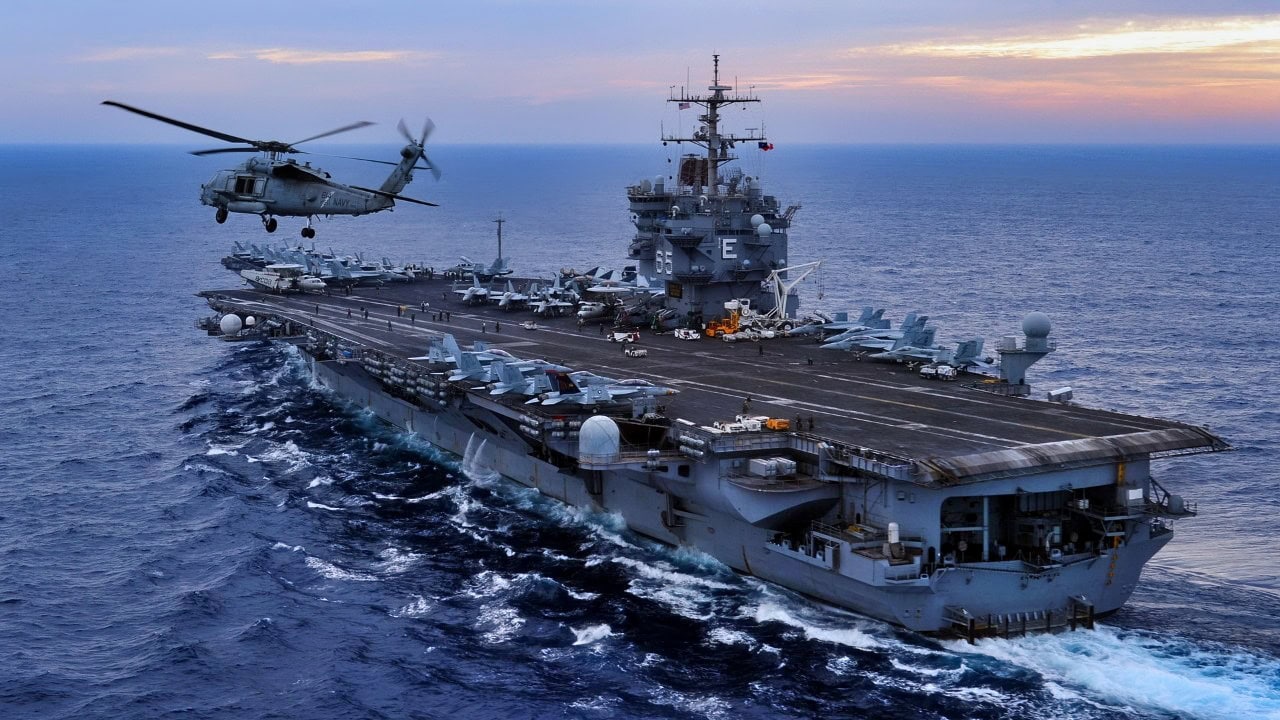
USS Enterprise from 2012. Image Credit: Creative Commons.
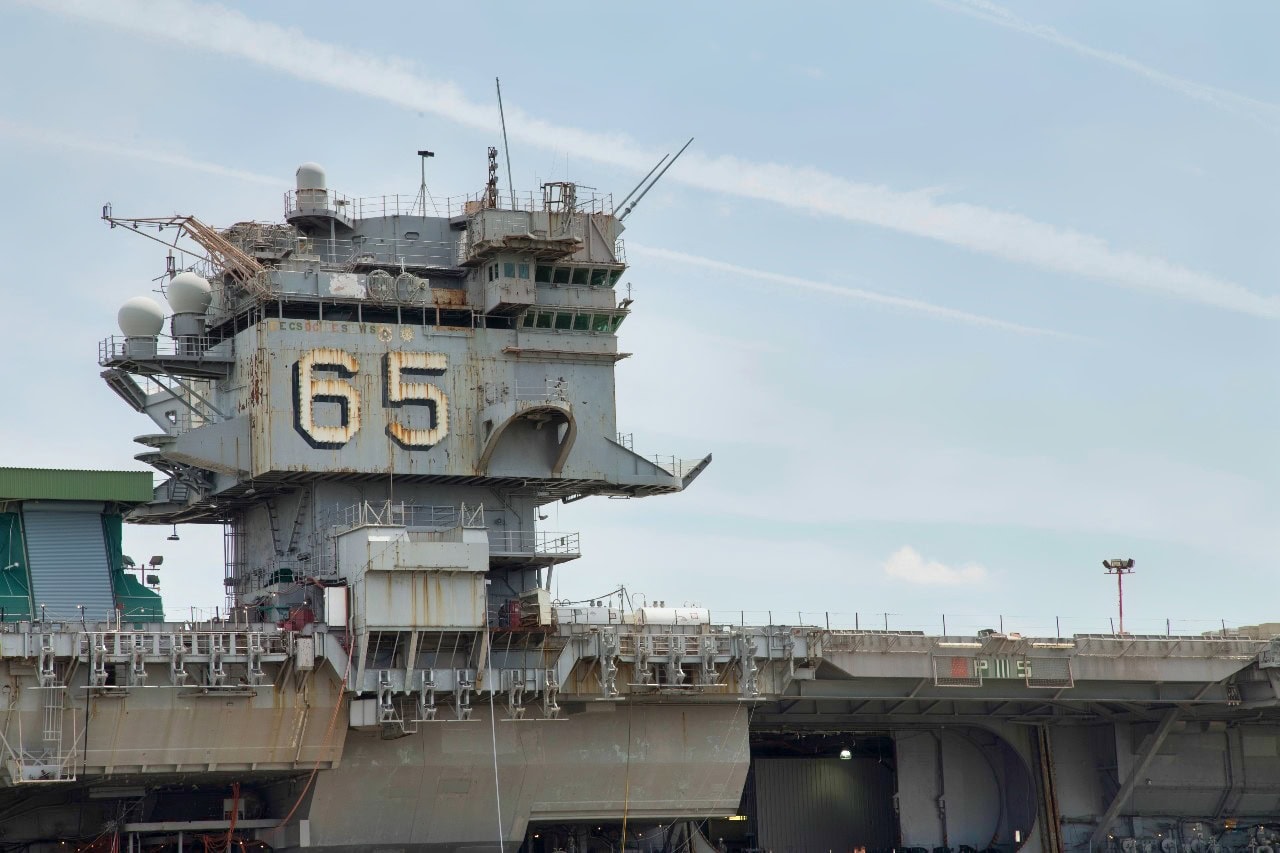
NEWPORT NEWS, Va. (July 15, 2018) — USS Enterprise (CVN 65) sits pierside at Newport News Shipbuilding following its decommissioning in February 2017. (U.S. Navy photo by Mass Communication Specialist 2nd Class Cat Campbell/RELEASED)
Then, in May 2026, the Navy’s budget submission moved it again, to March 2031, an eight-month slide layered on top of the earlier one, bringing the total slip to three full years.
The US Navy Aircraft Carrier Challenge
The budget books attribute the latest move to critical-path construction work required before the ship can launch.
Newport News Shipbuilding traced the trouble to the “late arrival of large, sequence-critical equipment” that held up the structural build in the dry dock, and the company says all of the delayed material has now arrived, which is worth stating plainly: the specific problem the Navy named has, by its builder’s account, been fixed. What cannot be fixed is the calendar. When she is delivered, Enterprise will have been under construction for more than twelve years.
The delay did not stay on one ship. The fourth Ford-class carrier, USS Doris Miller, has been pushed from February 2032 to February 2034, and the Navy’s stated reason is not her own progress but that of her sister: there is no shipyard construction space left for her largest assemblies because Enterprise still occupies it.
The unfinished carrier is sitting in the yard’s final assembly area, the one space its heavy-lift crane can reach, and until she vacates it, Doris Miller’s biggest modules cannot come together. HII told investors the keel will be laid later this year for a ship that now faces a 15-year build.
A delay, it turns out, is not a property of a ship. It is a property of a shipyard with finite room, and it compounds.
One USS Enterprise Is Being Built, Another USS Enterprise Is Scrapped
While one Enterprise refuses to arrive, the Navy is still paying to make the last one disappear. CVN-65, the world’s first nuclear-powered carrier, returned from her final deployment in 2012. Fourteen years later, on July 15, 2026, the Navy awarded NorthStar Maritime Dismantlement Services a 418.5-million-dollar contract to cut her up in Mobile, Alabama, with the work expected to run to September 2030, in what the Navy describes as the first commercial dismantlement of a nuclear-powered aircraft carrier.
That award came on top of 902 million dollars already spent on the initial inactivation and 111 million dollars for storage, a combined bill of over 1.4 billion dollars, roughly eleven percent of the cost of building her successor at the Ford class’s cost of about 13 billion dollars per hull.
Before the torches start, the hull will be towed from her pier at Newport News to the Gulf, past the mothballed ocean liner SS United States, a dead ship passing a dying one. The eight reactors that made her historic are the reason her disposal has taken this long and cost this much. The teardown of the old Enterprise and the construction of the new one will now run side by side for years, two programs, one name, moving in opposite directions.
The USS Nimitz Retirement and the Law
The four-year gap between Nimitz’s departure and Enterprise’s arrival runs straight into a legal floor. A 2011 law requires the Navy to maintain at least 11 operational aircraft carriers, and the service has been engineering its schedule around that number rather than falling short of it.
Nimitz was set to retire in May 2026 until the Navy, in March, extended her to March 2027, timed to the delivery of the USS John F. Kennedy that same month, a swap that keeps the count at eleven on paper.
And know this: Paper is doing real work in the above sentence, no doubt. A carrier delivered is not a carrier deployable; a newly delivered ship faces months of trials, certifications, and crew workups before her first cruise, which is why the fleet’s usable strength through the gap years will be thinner than the ledger shows, and why the question of whether the Navy is meeting the law or merely reciting it has become a running argument in Washington.
None of that arithmetic improves before March 2031, the scrapping now underway in Alabama notwithstanding.
Eight ships have carried the name Enterprise across two and a half centuries of the American Navy, from a Revolutionary sloop to the eight-reactor carrier now under the torches.
The ninth sits unfinished in a Virginia dry dock. For the next several years, the United States will be taking one Enterprise apart and putting another together at the same time, on opposite ends of the same coastline, and the fleet will spend four years without either.
About the Author: Harry J. Kazianis
Harry J. Kazianis (@Grecianformula) was the former Senior Director of National Security Affairs at the Center for the National Interest (CFTNI), a foreign policy think tank founded by Richard Nixon based in Washington, DC. Harry has over a decade of experience in think tanks and national security publishing. His ideas have been published in the NY Times, The Washington Post, The Wall Street Journal, CNN, and many other outlets. He has held positions at CSIS, the Heritage Foundation, the University of Nottingham, and several other institutions related to national security research and studies. He is the former Executive Editor of the National Interest and the Diplomat. He holds a Master’s degree focusing on international affairs from Harvard University.