
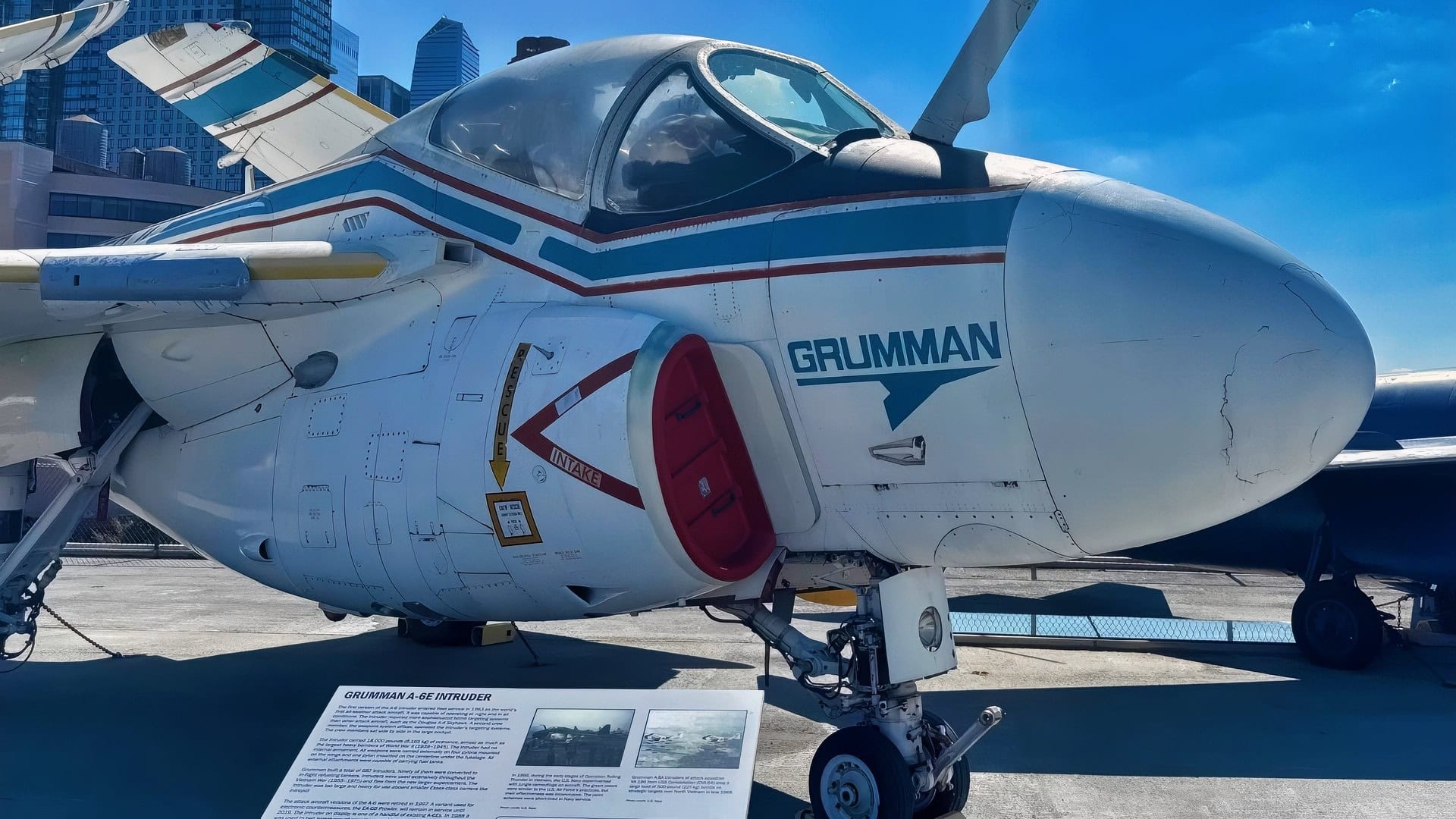
The A-6 Intruder Was a Multi-War Stalwart for the U.S. Navy and Marine Corps
It wasn’t the most elegant and sleek attack bomber in the world, but this airplane was worth its weight in gold. The A-6 Intruder seldom disappointed the U.S. Navy and Marine Corps pilots.
It was a stalwart during the Vietnam War and led numerous strike missions against the North Vietnamese Army and Viet Cong targets, helping U.S. fighters on the ground to execute the war for years.
This was a fully all-weather carrier-based airframe, developed when friendly forces regularly needed reliable strike packages. The A-6 Intruder had extensive bombing experience spanning more than 30 years. This aircraft could fly low and fast to evade enemy radar.
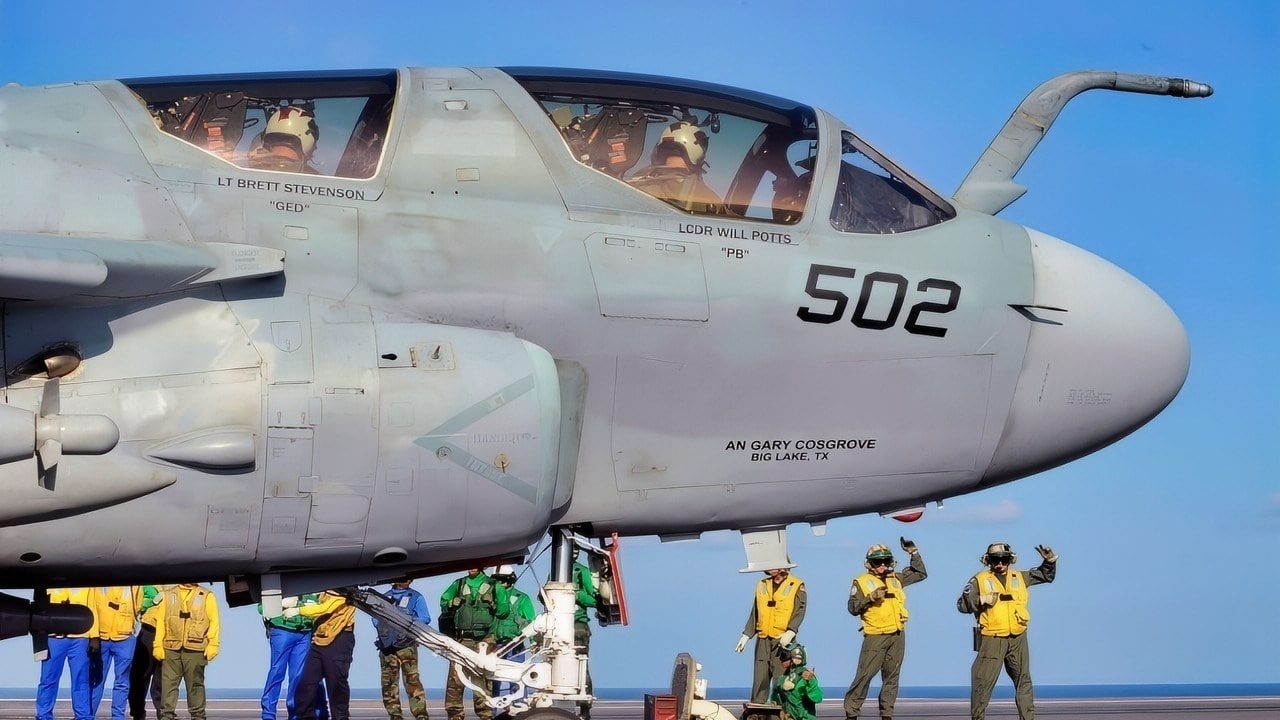
A-6 Intruder U.S. Navy Photo. Image Credit: Creative Commons.
It had five hard points capable of carrying 18,000 pounds of payload even in the worst visibility conditions. This included conventional munitions and even nuclear weapons.
Penetrating and Accurate Strikes for Danger Close Missions
The arms delivery for air support saved many soldiers and Marines’ lives in Vietnam. Its danger-close bombing was very accurate. The Intruder could also strike far into the enemy’s territory and punish them mightily.
Impressive Bombing Missions at Night or in Poor Weather
The A-6 was known for having its crew sit side by side, consisting of the pilot and the bombardier-navigator.
The Intruder featured one of the earliest uses of an “integrated electronic display,” which allowed the crew to see even in the worst weather conditions and darkness, according to the Naval History and Heritage Command.
The A-6 also served as a “pathfinder,” enabling follow-on aircraft to attack the enemy after air defense systems had been suppressed.
Quick Look at Specs
The A-6’s wingspan was 53 feet, with a total length of 55 feet. Its maximum takeoff weight was 58,600 pounds. It could cruise at a top speed of 647 miles per hour. The range with a combat load was 878 nautical miles.
The Grumman Aerospace warbird was powered by two Pratt and Whitney J52-P-8B turbojets.
Numerous Upgrades Gave the Intruder Tactical Advantages
The Intruder was updated to the A-6E, the final variant. “The A-6A first entered service in February 1963 with VA-42. The A-6B, whose main role was to suppress surface-to-air missiles, was essentially an avionics upgrade of the A-6A, with features for the Navy’s anti-radiation missile. The A-6C, developed during the Southeast Asia War, includes electro-optical sensors to observe and attack vehicles moving at night,” Naval History and Heritage Command wrote.
Hollywood Even Came Calling
The A-6 was the subject of a book by Stephen Coonts and a later movie starring Willem Dafoe and Danny Glover. I remember reading the book and watching the movie. They fascinated me with the primacy of naval aviation and inspired me to apply to the U.S. Naval Academy (I received a Congressional nomination but was not accepted).
Still, the A-6 will always bring back fond memories.
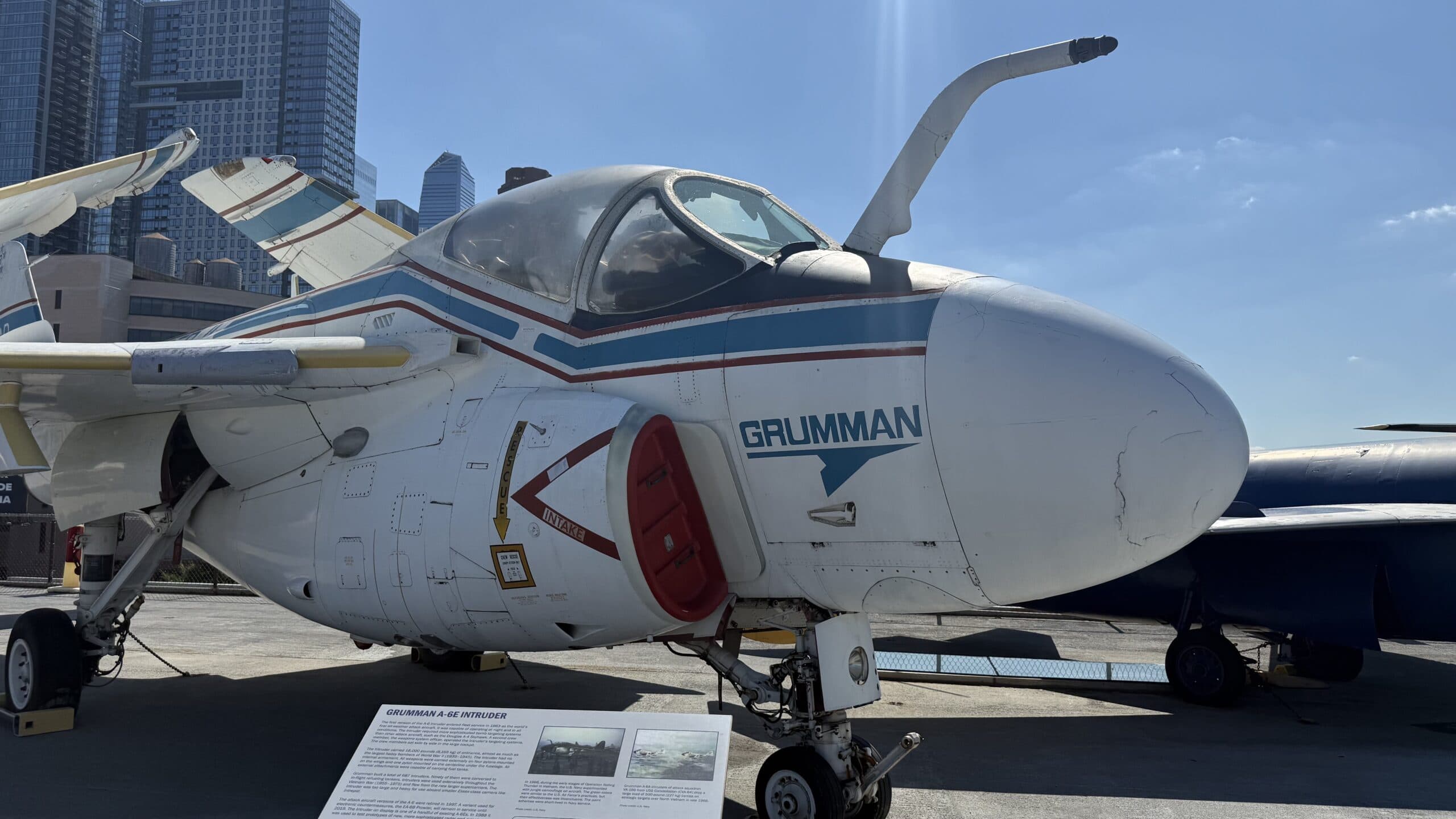
A-6E Intruder. 19FortyFive.com Image Taken Onboard USS Intrepid.
Numerous Types of Flexible Bombing Packages
The A-6 was a versatile plane capable of handling multiple mission types, including targeting enemy command-and-control centers, ammunition dumps, surface-to-air missiles, bridges, and other infrastructure.
Renowned for carrying the AGM-45 Shrike anti-radar missile, it was effective at destroying air defense systems that had challenged other aircraft during Vietnam.
This Warbird Could Be Dangerous to Fly
Aviators flying low for bombing runs were often targets of enemy fire. Anti-aircraft crews generally had a clear sight picture of the A-6. Additionally, they were sometimes shot down by North Vietnamese Air Force MiG-17, MiG-19, and MiG-21 jet fighters.
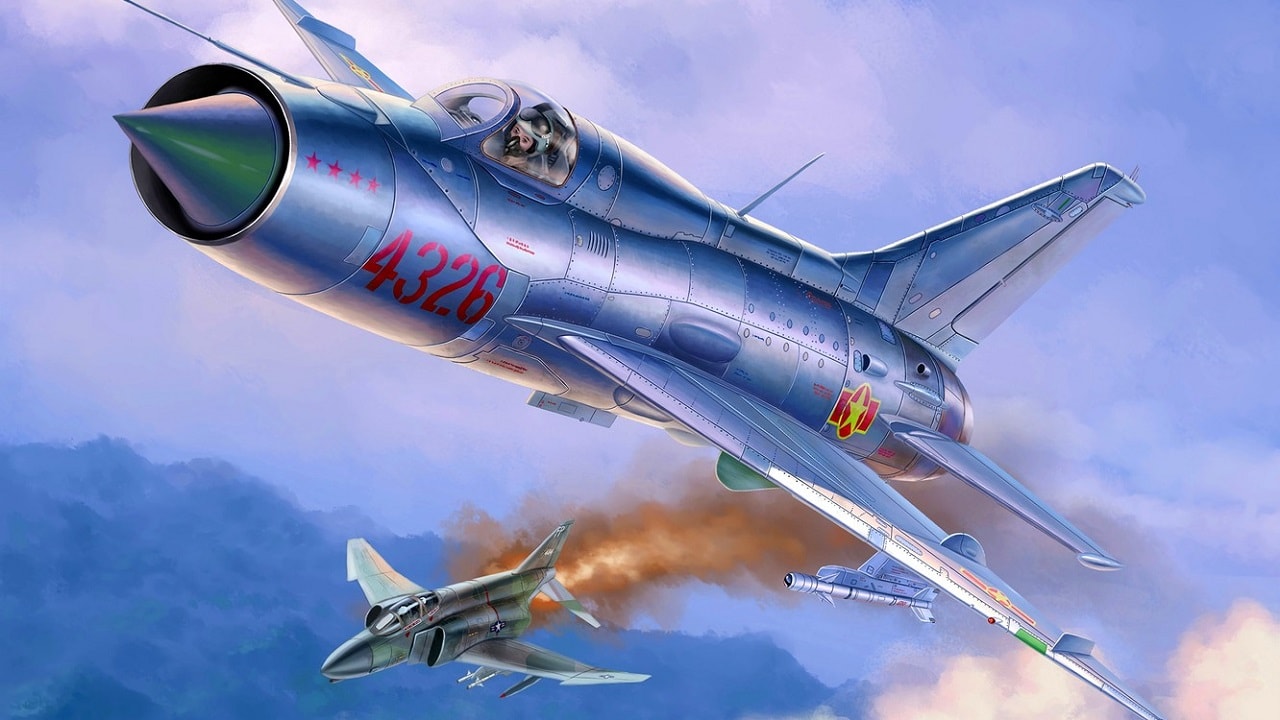
MiG-21 fighter. Image Credit: Creative Commons.
Eighty-four Intruders were destroyed during Vietnam, with ten shot down by SAMs and 16 due to non-combat incidents. Fifty-six losses were attributed to various ground fire sources.
More Action after the Vietnam War
After Vietnam, the A-6s participated in air strikes in Lebanon in 1983. The Syrians shot down one Intruder. The pilot was killed, and the bombardier-navigator survived, although he was taken prisoner for 30 days.
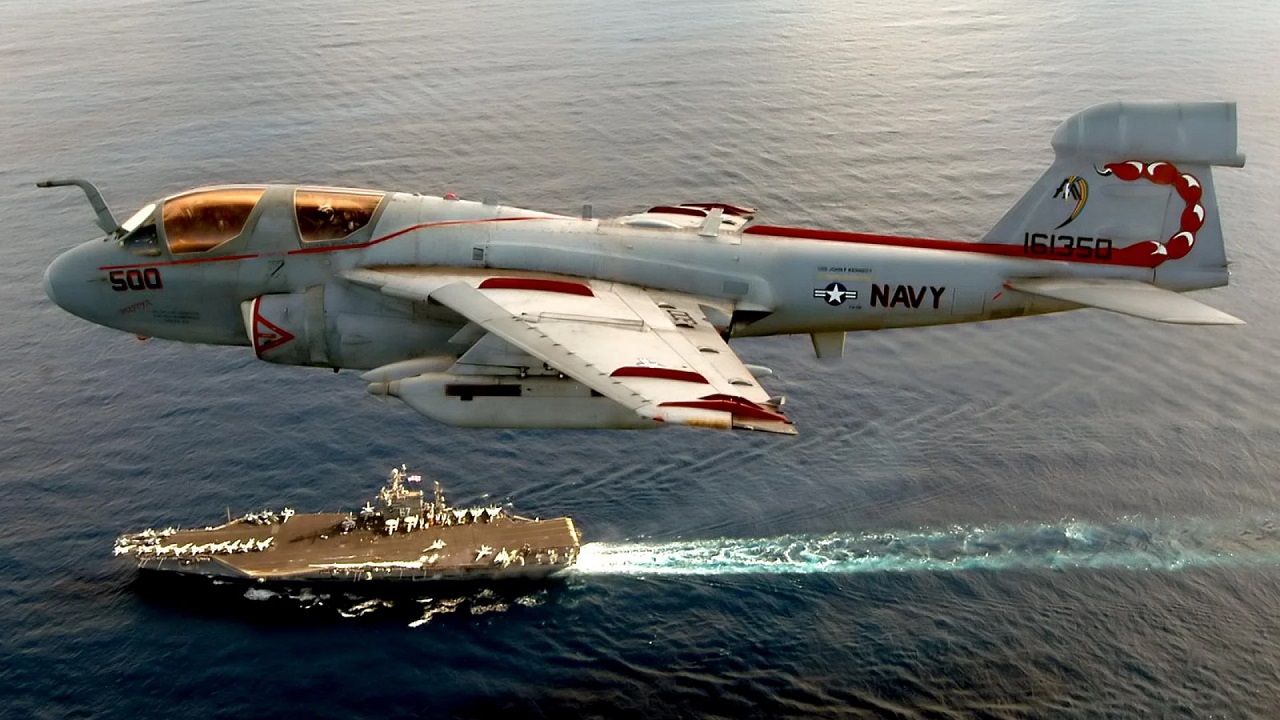
A-6 Intruder. Image Credit: Creative Commons.
The A-6 maintained an unblemished record during strikes on Libya in 1986 for Operation Eldorado Canyon.
Dominant During the First Gulf War
The A-6 was a tough opponent during Operation Desert Storm. The aircraft repeatedly attacked Saddam Hussein’s forces and led the charge in the brief conflict. Intruders flew at least 4,700 combat sorties. They were highly effective at suppressing enemy air defenses and even struck some naval targets. Three were shot down by Iraqi anti-aircraft fire, and one pilot was captured.
The Intruder Answers the Call During the Balkans Crisis
The last combat deployment of the Navy A-6 was during operations against Bosnia in 1994.
The Marine Corps had already retired the A-6E, followed by the Navy in 1997.
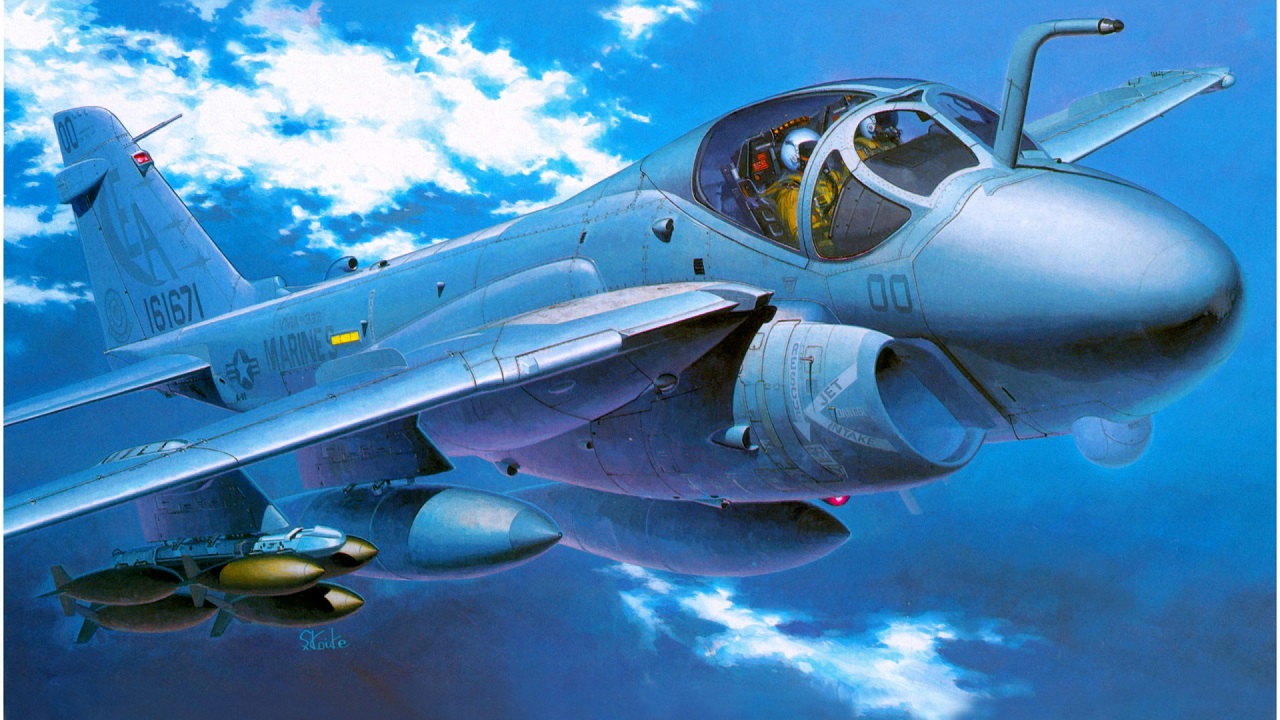
A-6 Intruder. Image Credit: Creative Commons.
The airframe continued as an electronic warfare variant, the EA-6B Prowler, which remained in service until 2019 without losses.
The A-6 Intruder remains popular for its durability and versatility. Without it, the Navy and Marine Corps would not have been able to attack and destroy so many targets over the years. It paved the way for the F-14 Tomcat and will be remembered as a pilot-friendly, powerful warbird that demonstrated great durability through courageous service spanning three decades and multiple conflicts.
About the Author: Brent M. Eastwood
Author of now over 3,000 articles on defense issues, Brent M. Eastwood, PhD, is the author of Don’t Turn Your Back On the World: A Conservative Foreign Policy and Humans, Machines, and Data: Future Trends in Warfare, plus two other books. Brent was the founder and CEO of a tech firm that predicted world events using artificial intelligence. He served as a legislative fellow for U.S. Senator Tim Scott and advised the senator on defense and foreign policy issues. He has taught at American University, George Washington University, and George Mason University. Brent is a former U.S. Army Infantry officer. He can be followed on X @BMEastwood.