From Nixon’s Christmas Bombings to Trump’s 15-Point Plan: Why the IRGC and Iran’s Regular Army Are Fighting Two Different Wars
From the man who invented the concept, coined the phrase, and wrote the book on “The Art of the Deal” comes the unsurprising declaration that he wants to reach a peace agreement with the regime in Iran. U.S. President Donald Trump said he wants some manner of a negotiated settlement, which he characterizes as “winding down” the war.
However, the back-and-forth horse-trading for a ceasefire between Washington and Tehran has not thus far resulted in much beyond competing sets of conditions proposed by both parties. On the U.S. side, the path proposed is murky at best.
As the BBC reports, “Trump’s mixed messaging suggests he’s still undecided about what would work best: ramping up the conflict to try to end it as quickly as possible or pushing for a negotiated settlement with Tehran.”
Trump seemed to be indicating that he may actually prosecute both initiatives in parallel. What could be in the offing is a repeat of the last chapter of the Vietnam War.
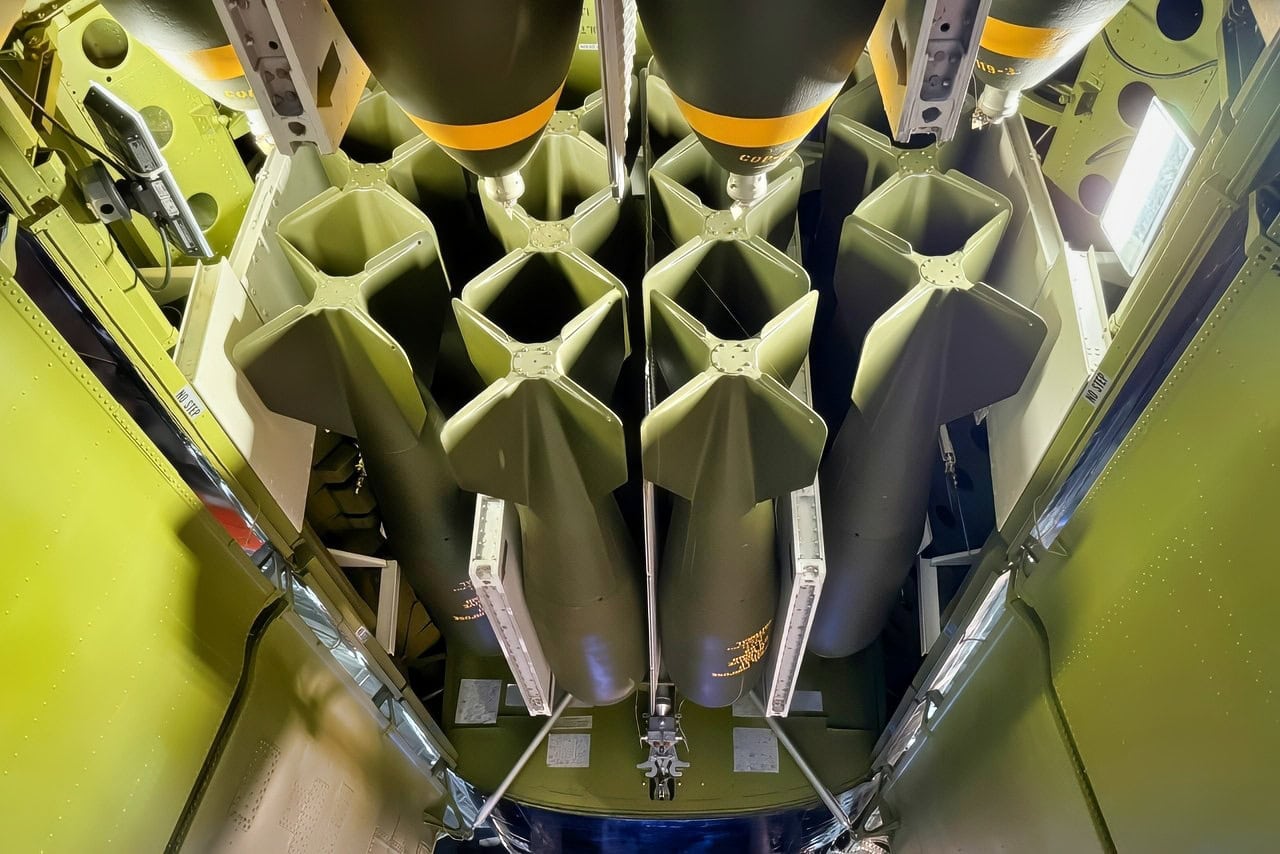
In 1972, U.S. President Richard Nixon ordered a campaign of retaliatory bombings of North Vietnam, which became known as the Linebacker II air offensive. The bombing runs began on December 18, and a combined force of U.S. Air Force B-52 strategic bombers and fighter-bombers and U.S. Navy aircraft dropped more than 20,000 tons of bombs on the northern cities of Hanoi and Haiphong.
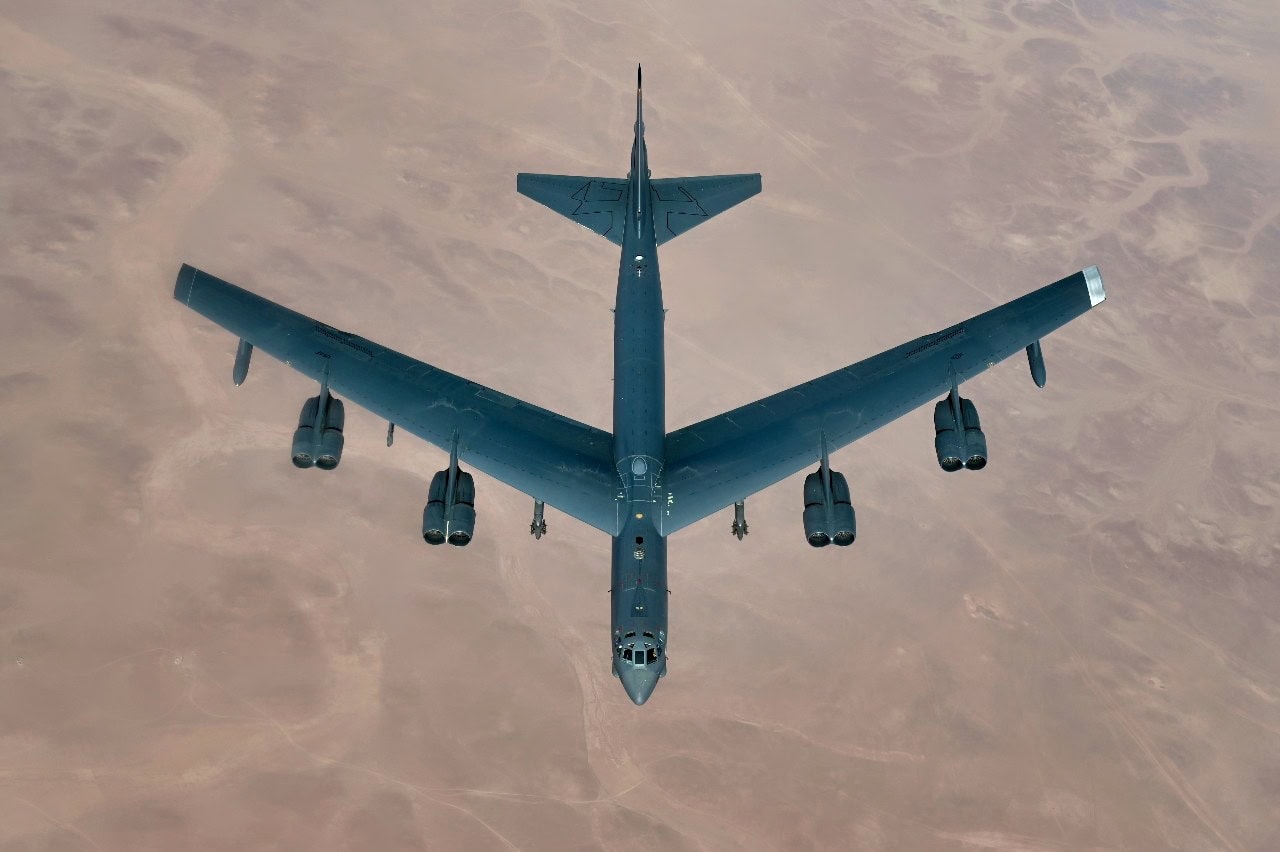
A U.S. Air Force B-52H Stratofortress conducts a combat air patrol in support of Operation Inherent Resolve over the U.S. Central Command area of responsibility Nov. 23, 2024. The deployment of the long-range heavy bombers into the USCENTCOM theater demonstrates the United States’ dedication to deterring aggression and maintaining stability in the region alongside allies and partners. (U.S. Air Force photo)
These bombings were initiated by Nixon after the December 13 refusal of the North Vietnamese government to come to a negotiated settlement. The bombings continued regularly until December 29, when the North Vietnamese government agreed to resume peace negotiations.
Within a few weeks, the Paris Peace Accords were signed, and the Vietnam War officially came to an end.
The war, at least for the American public, was now over, and the work that would be needed to heal the divide in the United States would stretch on for years. The significance of what became known as the “Christmas Bombings” is still debated.
But the costs to the U.S. military at the time would be politically disastrous for any current occupant of the White House. The Air Force, during the bombing runs, lost 15 bombers from its B-52 fleet and 11 other aircraft. Additionally, the North Vietnamese claimed that more than 1,600 civilians were killed during attacks on what were supposed to be military targets.
The Point Plans for Peace
As an indication of just how serious Trump might be about pressuring Iran with military actions—even while insisting he pursues peace—the Pentagon has now ordered ground troops dispatched to Iran. Simultaneously, U.S. negotiators presented the Iranian regime with a new 15-point peace plan.
By Wednesday, the White House was saying that if Tehran did not accept the deal, the United States would hit Iran harder than ever.
“President Trump does not bluff, and he is prepared to unleash hell,” said the White House press secretary while speaking to the White House press corps. “Iran should not miscalculate again.”
Iran responded by rejecting the U.S. peace proposal. The exchange raised the question of whether the two countries are actually engaged in meaningful diplomacy or are simply talking past one another. Trump has since claimed that the Iranians have offered a counterproposal to end the war.
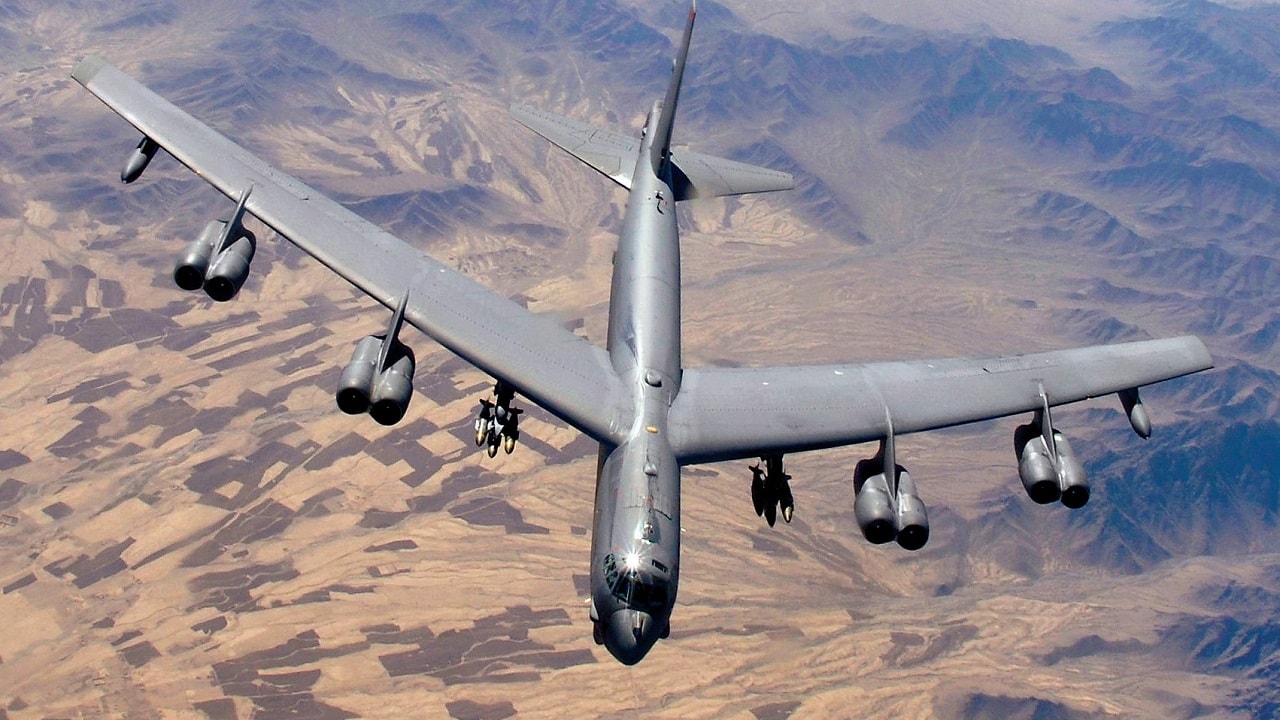
B-52H Stratofortress Primary function: Heavy bomber. Speed: 650 mph. Dimensions: Wingspan 185 ft.; length 159 ft. 4 in.; height 40 ft. 8 in. Range: 8,800 miles unrefueled. Armament: M117, Mk-56/62/65/82/84, CBU- 87/89/103/104/105, AGM-86B/C/D/129A/158A, GBU- 10/12/28/31/38; nuclear weapons. Crew: Five. (U.S. Air Force photo by Master Sgt. Lance Cheung)
The Iranian response was a shorter, five-point set of conditions that includes demands for sovereignty over the Strait of Hormuz and a cessation to any “aggression” on the part of the United States and Israel.
But as a clue of Iran’s conduct if Trump fails to agree to its proposed demands, the Iranian Consulate General in Mumbai, India, declared that “Iran will end the war at a time of its own choosing and only if the conditions it has set are fulfilled. It will not allow Trump to determine the timing of the war’s end.” The statement was posted by the Consulate General on X.
Additional Iranian demands include assurances from the United States and its allies that the war will not resume anew at some later date; payments will be made for war damages and other reparations; and there will be no support for resistance groups in Iran.
These demands seem to mirror comments by an unnamed Iranian official posted on an Iranian state broadcasting outlet. The official said Tehran will continue its own offensive campaign in the region, according to a statement obtained by The Associated Press.
Iran hit Kuwait International Airport, plus other targets in Persian Gulf countries, during President Trump’s Tuesday pause on strikes targeting Iranian energy infrastructure.
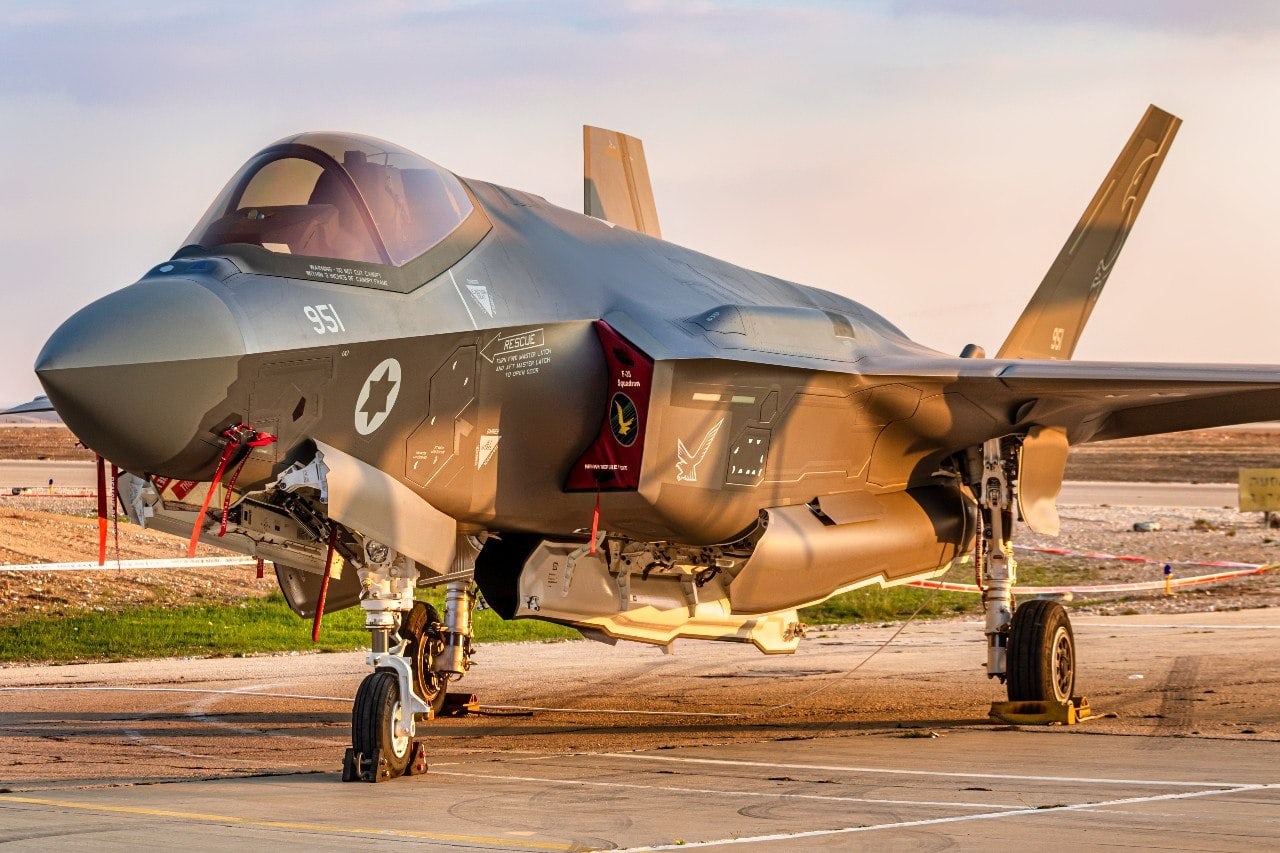
F-35I Adir from Israel. Image Credit: Creative Commons.
At the same time, Israel resumed its own air offensive, which seems to signal that for now, the fighting will continue.
Trump’s initial 15-point ceasefire proposal addressed multiple issues between Washington and Tehran. It included demands to shut down aspects of Iran’s nuclear program; a reopening of the Strait of Hormuz with some conditions attached; plus a limit on Iran’s inventory of missiles. The United States, in turn, offered some sanctions relief, according to The Associated Press.
Iran has also stated that the demands it presented on Wednesday are not a replacement for the preconditions it presented during the second round of negotiations with the United States in Geneva last month.
Those discussions began on February 27, which was a day before U.S. and Israeli strikes began. The talks generally focused on the Iranian nuclear program. They seemingly made progress on some issues, but it did not result in any tangible agreements.
Parallel Universes
During a visit to Iran some years ago for an international aerospace trade expo and air show, I had a long lunchtime discussion with a group of Iranian aerospace engineers, designers, and program management professionals. If there was any group of people in the country who understood how deeply the Islamic regime was holding back economic progress and personal aspirations in Iran, it was this gathering of people.
The discussion was largely centered on what course the country might take if there were ever a rapprochement with the United States and its allies—an end to sanctions and a general reintegration of Iran into the world’s community of nations.
This was at a time when such a prospect seemed realistic, and when it was still semi-safe for a U.S. citizen to visit Iran—it was also during the time that some of the sanctions relief given to Tehran by the Obama administration was still in effect.
At one point in the discussion, we talked about how Iran might—as Trump now says— “make a deal” with the United States. I commented that it would be in everyone’s interests for tensions in the Middle East not to escalate further.
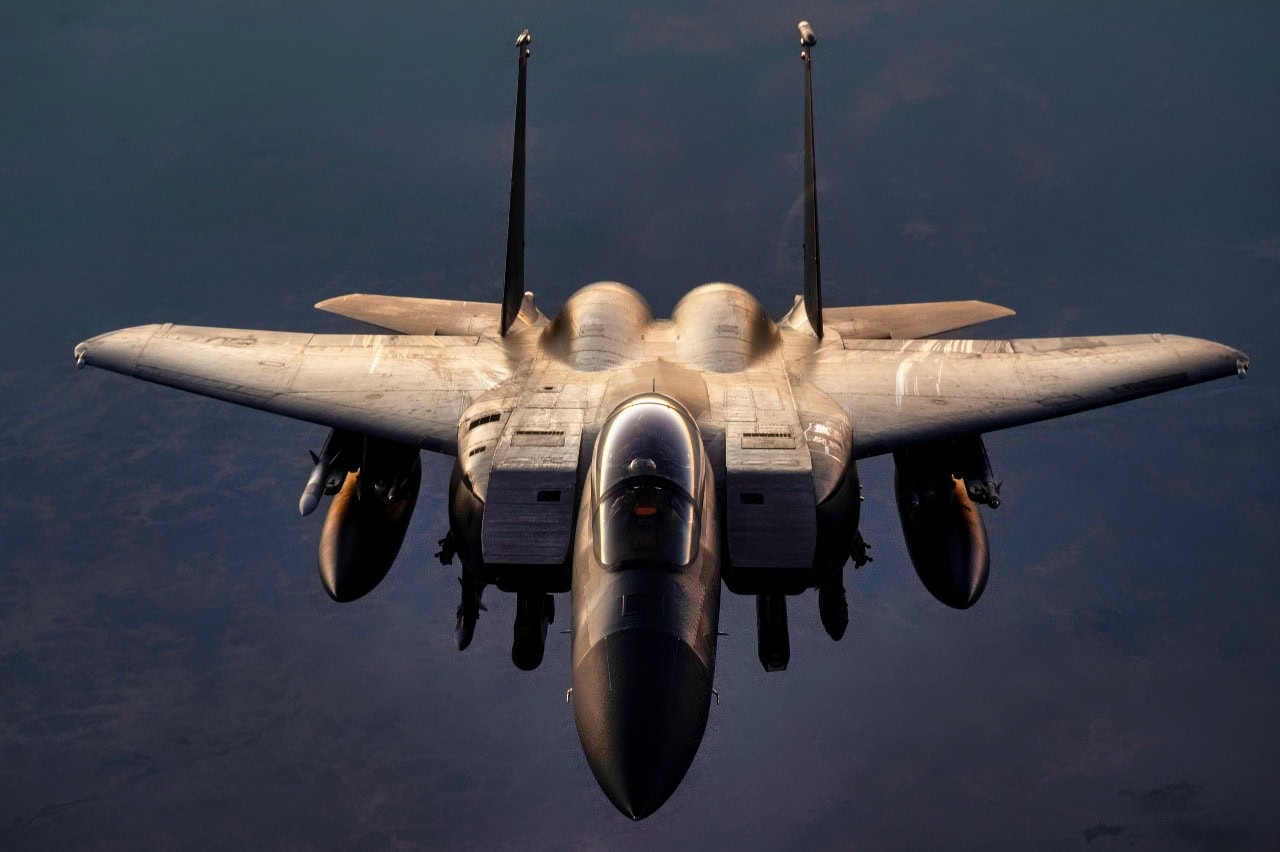
A U.S. Air Force F-15E Strike Eagle flies over the U.S. Central Command area of responsibility, Jan. 7, 2025. The F-15E’s superior maneuverability and acceleration are achieved through its high engine thrust-to-weight ratio and low-wing loading. (U.S. Air Force photo by Staff Sgt. William Rio Rosado)
“You have an elected government that might be willing to come to some agreement,” I said, “and there are numerous points that both sides might find it beneficial from a trade, economic, etc. standpoint to come to terms on.”
I then began my next statement with “but,” and one of the Iranians at the lunch table finished it for me.
“Then there is the unelected government we have,” she said. “And any agreement with the U.S. or whoever is most likely going to be held hostage or overturned altogether by that unelected government.”
The hand of that unelected government is seen in the disposition of the Iranian armed forces. As an article from less than two weeks ago points out, that is a tale of two Iranian armies.
One element is the Islamic Revolutionary Guard Corps (IRGC), which is staffed with what the article calls “fierce loyalists”—some would say fanatics. Their mission is to guard the clerical leadership of the ayatollahs and safeguard the “gains of the Revolution,” according to the official description of their responsibilities.
The IRGC is estimated to have about 150,000 personnel and is organized into separate ground, air, and naval service branches. This force has been the focus of most of the targeted U.S. and Israeli attacks.
The regular armed services formation is the conventional Islamic Republic of Iran Army, usually referred to as the Artesh. This military formation, which traces its roots to the military establishment established under the Shah of Iran, numbers 350,000 and is designed to protect the nation’s borders and secure the Iranian homeland.
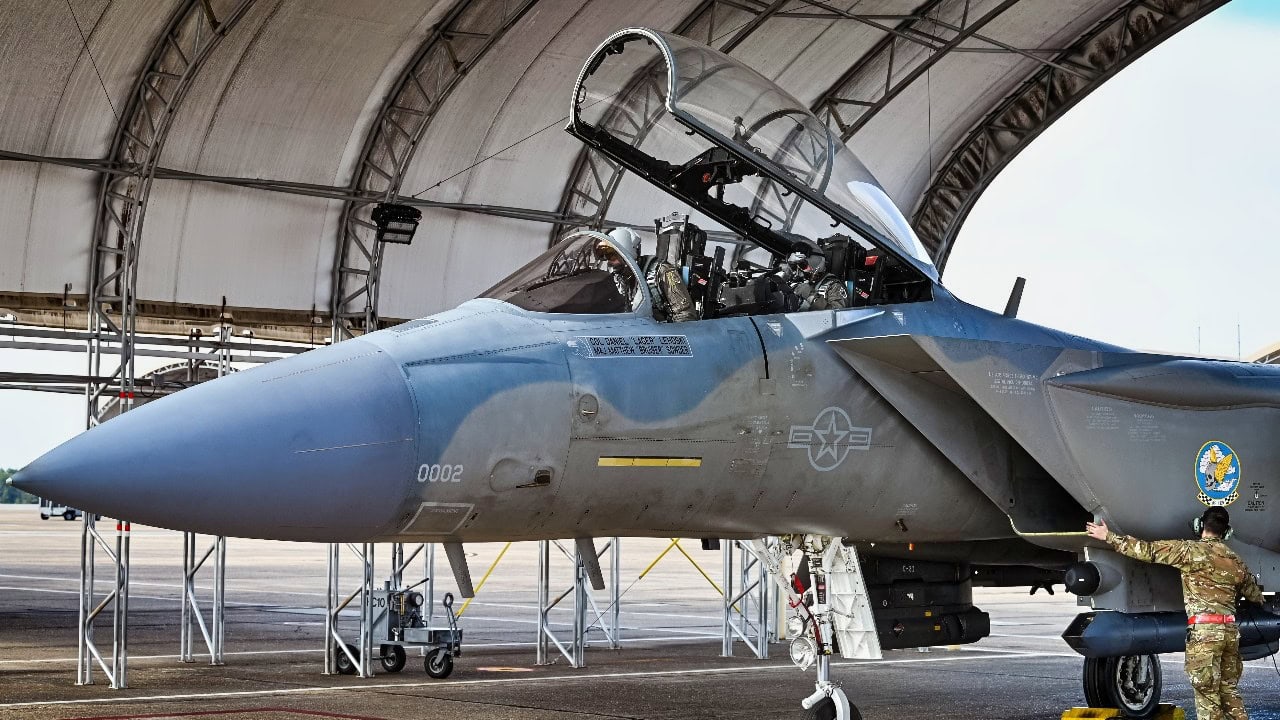
U.S. Air Force Maj. Aaron Eshkenazi, F-15EX Test Director for the 84th Test and Evaluation Squadron, performs preflight procedures for the F-15EX with Lt. Gen. Michael Koscheski, deputy commander of Air Combat Command, at Eglin Air Force Base, Florida, January 29, 2025. During his visit, Koscheski gained valuable insights from the 84th TES and 85th TES to help inform future decisions regarding the platform. The future F-15 fleet will complement 5th generation aircraft, bringing substantial additional capacity for over-sized long-range fires, sensors, and electronic warfare capabilities to defend critical locations in highly contested areas. (U.S. Air Force photo by 1st Lt. Rebecca Abordo)
There is a reason that they have received far less attention and have suffered far fewer direct attacks on their facilities compared to the IRGC. Washington hopes the Artesh could turn against the Islamic religious leadership and fight the IRGC out of power.
Indeed, the Artesh may not wish to take on the U.S. and Israeli militaries if it only serves the interests of the clerics. Speaking with veterans of the Shah-era armed forces and the industry that supported them often reveals that there is little desire among many of them to be “bullet catchers” for the mullahs—as one now-retired Iranian military officer described it.
One of the most respected veterans of what was the Shah’s modern and professional military told me years ago that he and his colleagues had little use for the mullahs and the guardians of their 1979 revolution. “That Islamic revolution was a disaster for us,” he said, “It literally broke the back of the air force.”
One sign of the two forces’ conflicting agendas is that the IRGC is not really counting on fighting alongside their counterparts if the United States commits ground forces to the conflict. As a testament to this, the IRGC has not conducted any maneuvers or exercises simulating a defense of the Strait of Hormuz, the most strategically important site in the current conflict. If the strait has to be defended, the Artesh gets to do all the fighting and dying.
But the intransigence of the Iranian negotiating teams, both before the war began and now—as well as the differing sets of conditions presented in Geneva last month and today—are symptoms of a similar uncoordinated malady.
What it means for those who hope for an end to the war is that some elements of that duality will remain inside Iran, even if the regime in power is overthrown. If the mullahs survive, the split could be worse.
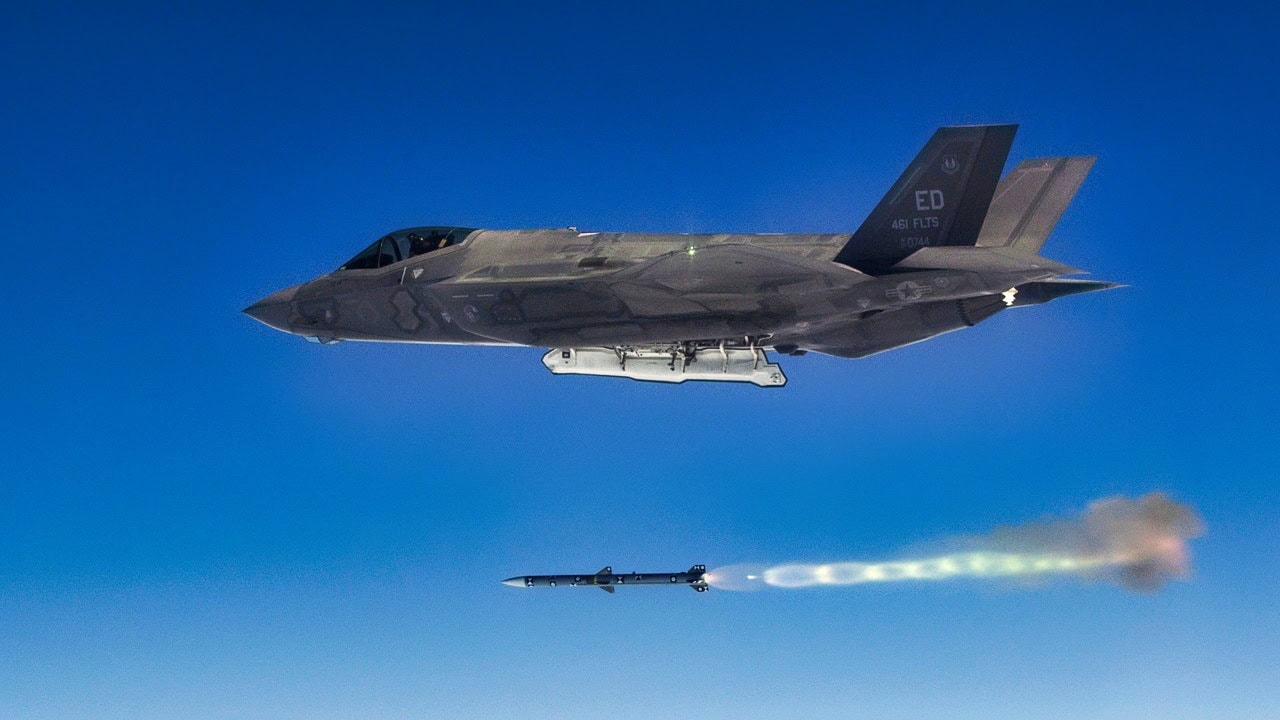
An Edwards AFB F-35A Lightning II fires an AIM-120 Advanced Medium-Range Air-to-Air Missile as part of Weapons Delivery Accuracy testing. The 461st Flight Test Squadron and F-35 Integrated Test Force completed WDA testing in early December, which concludes a large and important part of F-35 developmental test and evaluation. (Courtesy photo by Chad Bellay/Lockheed Martin)
Tehran’s leaders have now called on U.S. Vice President J.D. Vance to negotiate with them—they are accusing Trump and his two-track approach of stabbing them in the back. His talk of hitting Iran even harder than before appears to contradict the approach of U.S. special envoy to the Middle East Steve Witkoff and Trump’s son-in-law Jared Kushner, who previously led the peace talks with Iran.
Egypt, Pakistan, and Turkey are also mentioned as potential mediators in negotiations between Iran and the United States. No matter how many parties engage to end the conflict, a clean-cut capitulation by Iran is not the most probable outcome.
Whoever remains the legitimate government in Tehran will not control events across the entire country. One can count on rogue units—remnants of the IRGC or other elements—conducting random missile attacks or supporting terror attacks. The IRGC and its followers have been in power for 47 years, and old habits are hard to break.
About the Author: Reuben F. Johnson
Reuben F. Johnson has thirty-six years of experience analyzing and reporting on foreign weapons systems, defense technologies, and international arms export policy. Johnson is the Director of Research at the Casimir Pulaski Foundation. He is also a survivor of the Russian invasion of Ukraine in February 2022. He worked for years in the American defense industry as a foreign technology analyst and later as a consultant for the U.S. Department of Defense, the Departments of the Navy and Air Force, and the governments of the United Kingdom and Australia. In 2022-2023, he won two consecutive awards for his defense reporting. He holds a bachelor’s degree from DePauw University and a master’s degree from Miami University in Ohio, specializing in Soviet and Russian studies. He lives in Warsaw.