
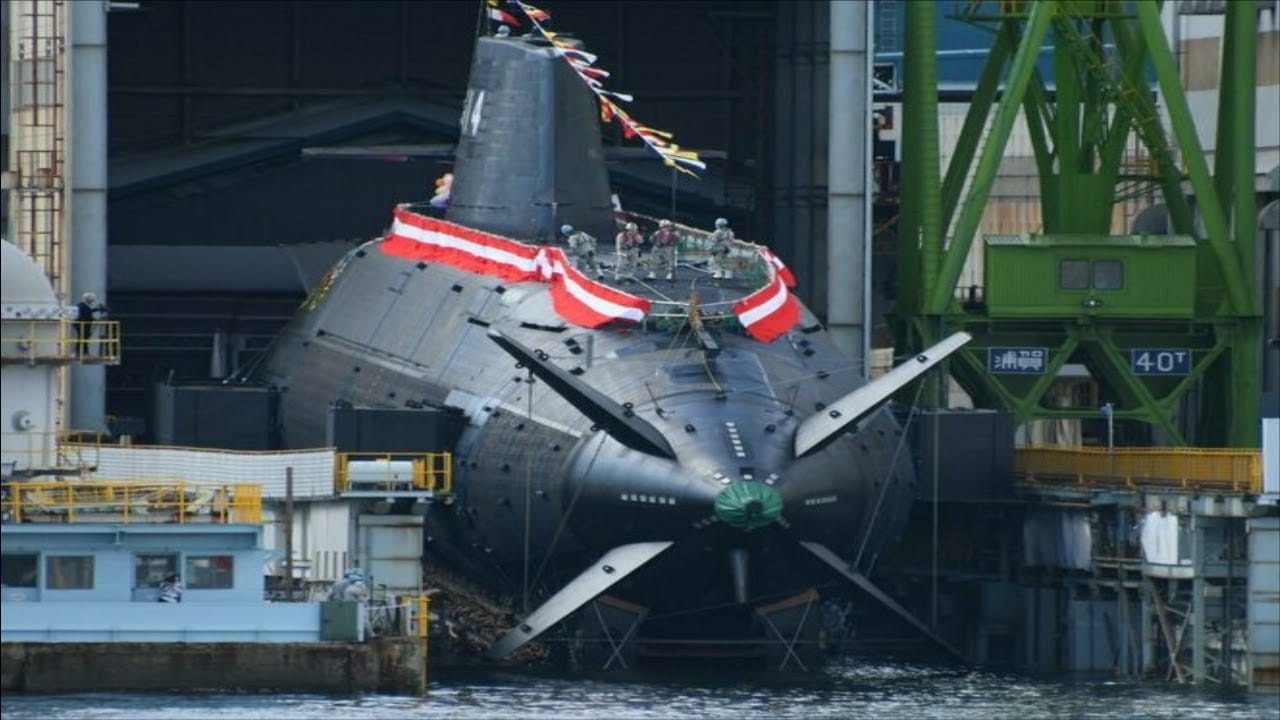
In August 2026, Kyodo News and Russia’s TASS reported that Japan’s Ministry of Defense intends to begin developing an underwater-launched hypersonic missile as part of its fiscal 2027 defense program.
The disclosure, buried among more than 150 unpriced “item requests” in the ministry’s draft budget, marks one of the most significant steps yet in Tokyo’s decade-long shift from a purely defensive military posture to one built around long-range counterstrike capability.
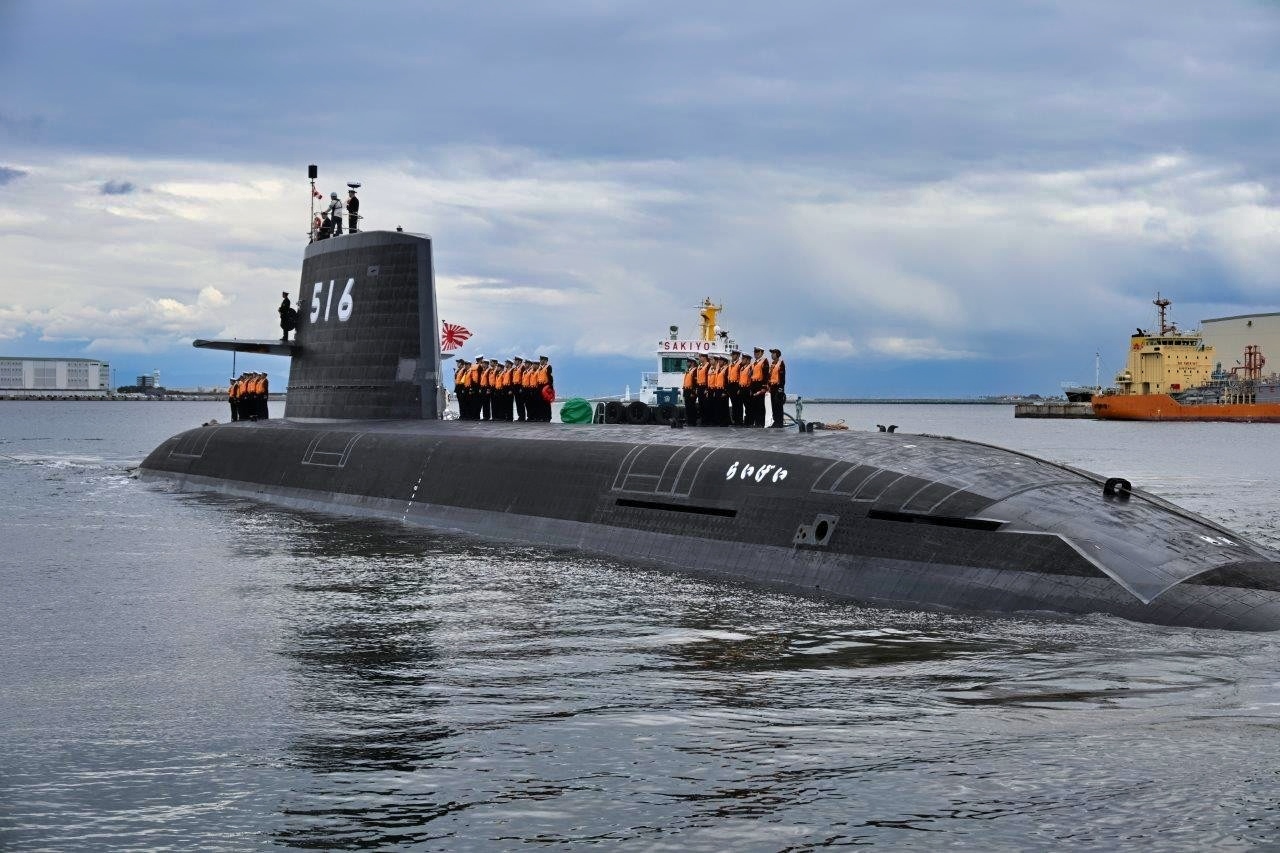
Taigei-Class Submarine. Image Credit: Creative Commons/JSDF.

Taigei-Class. Image Credit – Creative Commons.
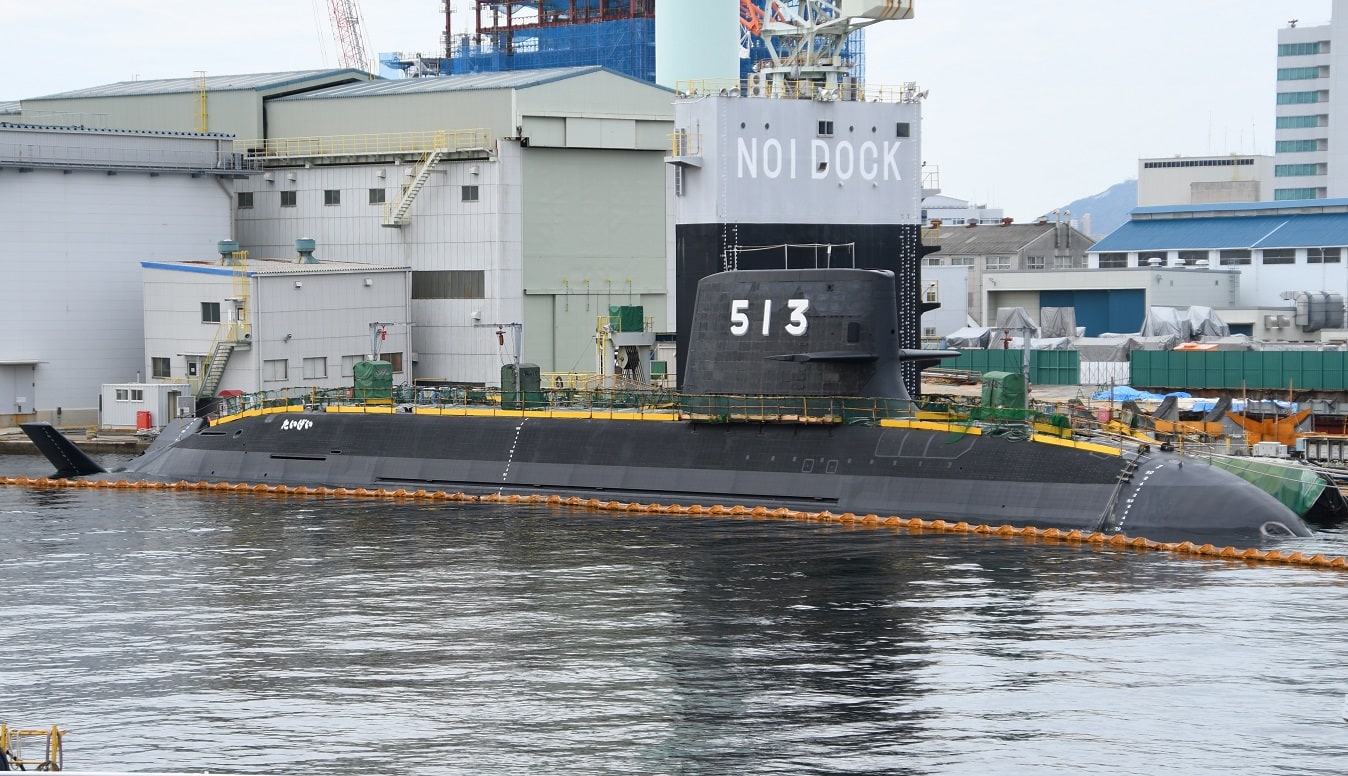
Taigei-class. Image Credit: Creative Commons.
The program is still in its earliest stages.
Neither Kyodo nor TASS disclosed the missile’s range, propulsion system, warhead design, or expected fielding date, and Japanese officials have carefully framed it as research rather than a committed acquisition.
But taken alongside Japan’s parallel work on submarine vertical launch systems (VLS), stand-off cruise missiles, and a rapidly maturing family of ground-launched hypersonic weapons, the submarine-launched variant fits into a broader and increasingly coherent undersea strike architecture that Tokyo has been quietly assembling since 2019.
What Is Actually Being Built
The centerpiece of the near-term effort is not the missile itself but the platform meant to carry it. Japan’s Ministry of Defense has funded a vertical launch system for future conventionally powered diesel-electric submarines, with development running from 2026 to 2029 at an estimated cost of roughly ¥3.9 billion (about $24.8 million).
Official renderings depict launch modules holding seven to eight cells each, with a submarine potentially carrying two or three modules for a total of 14 to 24 launch cells.
The VLS is being designed to be highly versatile, capable of accommodating long-range cruise missiles, a naval variant of Japan’s High-Velocity Gliding Projectile (HVGP), and, eventually, a purpose-built submarine-launched hypersonic weapon.
That approach mirrors, and is reportedly motivated in part by, developments in South Korea’s submarine fleet, which has drawn attention across the region for its own long-range strike ambitions.
Japan’s hypersonic work has been underway more broadly since 2019, and in December 2025 the Ministry of Defense announced it was beginning mass production of a land-based hypersonic glide weapon, designated Type 25 HVGP, which entered service in March 2026.
That system uses a rocket booster to loft a warhead to high altitude before it separates and glides toward its target at speeds exceeding Mach 5, maneuvering along the way to defeat missile defenses.
A naval version of this design is now among the candidates being evaluated for the submarine VLS program, though the full development cycle for the broader hypersonic effort is not expected to conclude until fiscal 2031.
Why A Submarine-Launched Missile Changes Everything
Land-based and even ship-based missile systems, however capable, share a common vulnerability: they can eventually be located and targeted. A submarine-launched hypersonic missile directly addresses that weakness.
Submerged platforms are inherently difficult to detect and track, and they can reposition across wide stretches of ocean, denying an adversary the fixed coordinates needed to plan a preemptive strike.
Combining that concealment with a hypersonic glide vehicle, which flies an unpredictable, maneuvering trajectory rather than the fixed arc of a ballistic missile, would give Japan a strike option that is difficult to find before launch and difficult to intercept afterward.
Defense analysts describe this as a survivability multiplier rather than simply a speed upgrade. A retaliatory strike capability only deters an adversary if that adversary believes some portion of it will survive a first strike and remain able to hit back.
Fixed missile sites, however numerous, can, in principle, be suppressed by a sufficiently large opening salvo. A dispersed, submerged missile force is a different proposition, and Japanese defense planners have described submarine-launched hypersonic weapons as a means of retaliatory strikes against enemy bases precisely because of that survivability requirement.
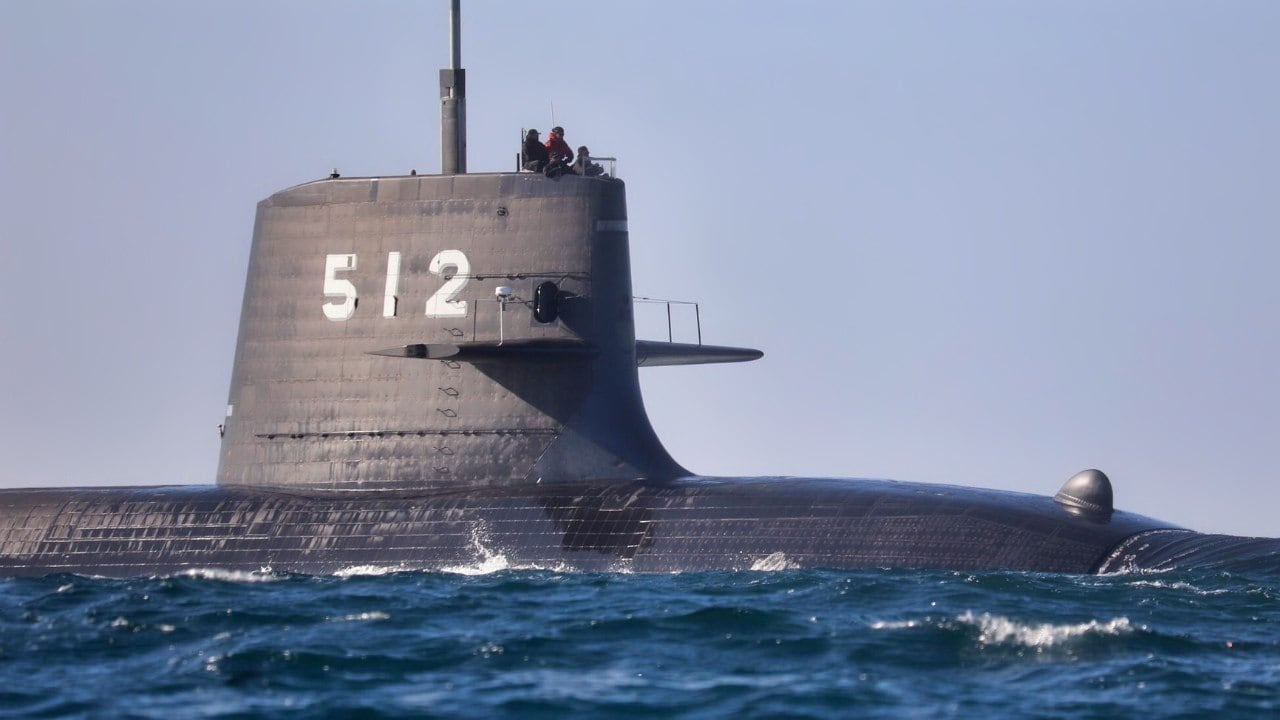
Soryu-Class Japan Submarines. Image Credit: Creative Commons.
The Broader Counterstrike Buildup
The submarine missile is the latest addition to a counterstrike doctrine that Japan formally adopted when it revised its National Security Strategy in December 2022, breaking with the country’s long-standing informal cap on defense spending.
Since then, Tokyo has moved to acquire roughly 400 U.S.-made Tomahawk cruise missiles as an interim capability, begun deploying upgraded Type 12 surface-to-ship missiles with ranges extended from roughly 200 to 1,000 kilometers, and started fielding the ground-based HVGP at bases including Camp Fuji, Camp Kengun, Camp Kamifurano, and Camp Ebino.
From some of these locations, missile ranges are said to extend across large portions of North Korea and parts of China’s eastern coast.
Japanese officials and outside analysts alike point to two factors behind this buildup: China’s expanding naval power, including ambitions to field multiple carrier strike groups capable of power projection across the Indo-Pacific, and North Korea’s growing, increasingly mobile nuclear missile arsenal.
A submarine-launched hypersonic weapon would let Japan keep both classes of targets at risk without relying solely on layered missile defenses, which analysts worry could be overwhelmed by a sufficiently large saturation attack.
Real but Bounded Gains for Deterrence
None of this makes Japan’s counterstrike force a peer to China’s, which fields thousands of missiles against Japan’s planned inventory in the hundreds.
Analysts have also flagged persistent gaps in the intelligence, surveillance, and reconnaissance networks needed to find and track time-sensitive targets such as mobile missile launchers, as well as unresolved questions about command-and-control integration with the United States and the fragility of Japan’s domestic munitions supply chains.
Even so, a credible submarine-launched hypersonic capability would meaningfully complicate a potential adversary’s planning.
It adds a strike option that is hard to locate, hard to intercept, and hard to discount when weighing the risks of aggression against Japan or its regional partners.
For a country whose defense doctrine has historically emphasized restraint, the program clearly signals that Tokyo intends its deterrent to be not just present, but survivable, and that undersea concealment is becoming as central to that goal as speed.
About the Author: Steve Balestrieri
Steve Balestrieri is a National Security Columnist. He served as a US Army Special Forces NCO and Warrant Officer. In addition to writing on defense, he covers the NFL for PatsFans.com and is a member of the Pro Football Writers of America (PFWA). His work was regularly featured in many military publications.