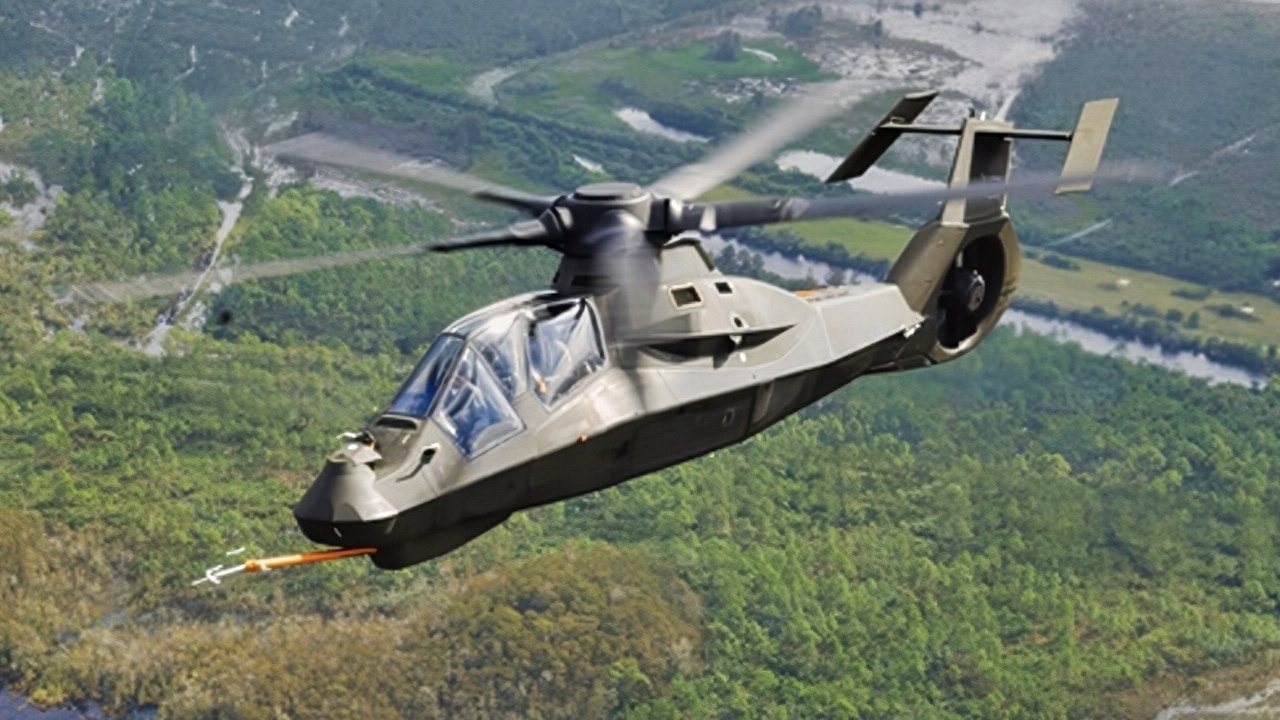
At one point, it looked like the United States Army was developing a stealth helicopter that would do for the helicopter force what the Lockheed F-22 Raptor fifth-generation stealth fighter did for the Air Force.
That system was the RAH-66 Comanche.
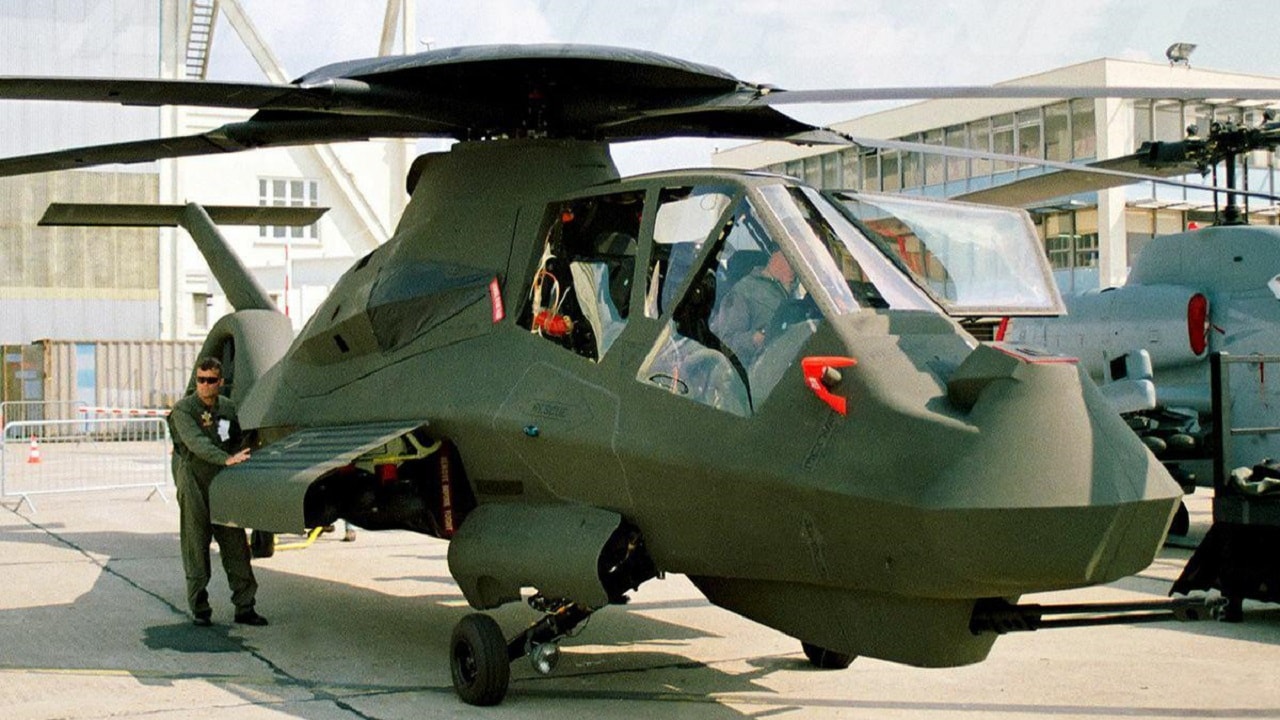
RAH-66. Image Credit – Creative Commons.
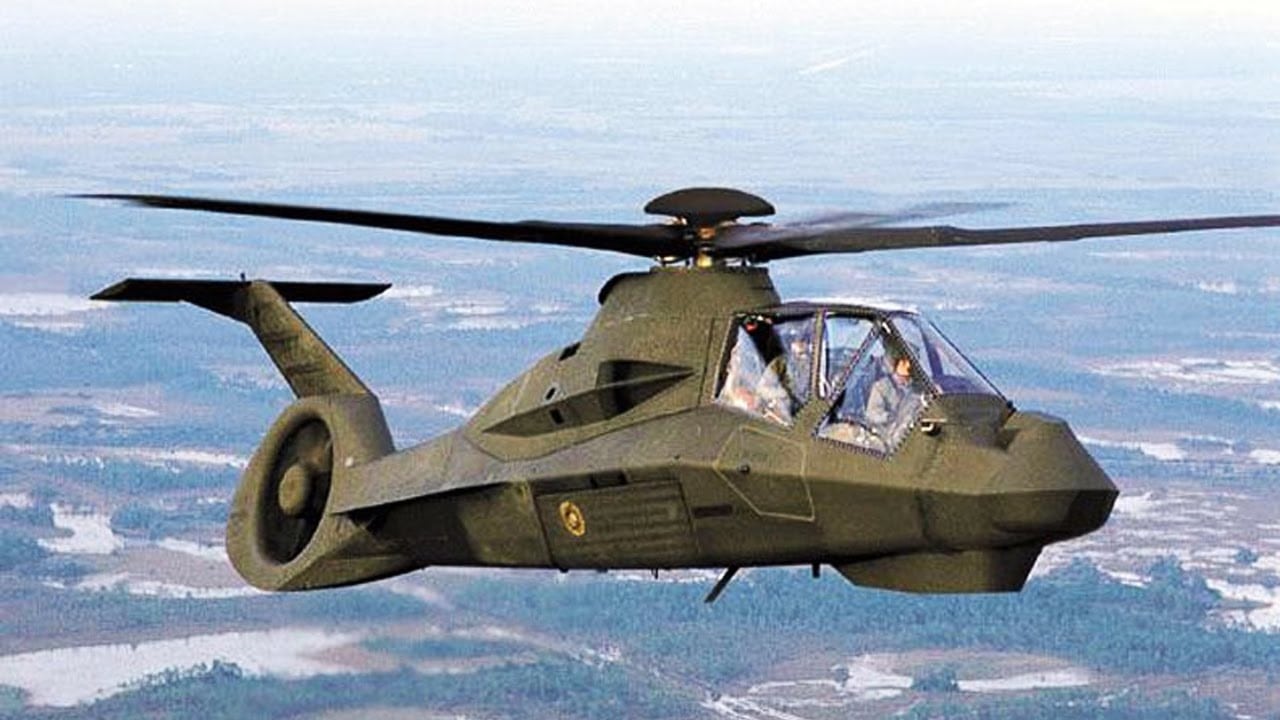
RAH-66 Comanche.
The F-22 of Helicopters?
It even looked like a helicopter version of the F-22.
After years of development, though, the system was ultimately canceled. Some today pine for the return of the Comanche attack helicopter.
The rise of drones might have made the very notion of a manned stealth attack helicopter obsolete.
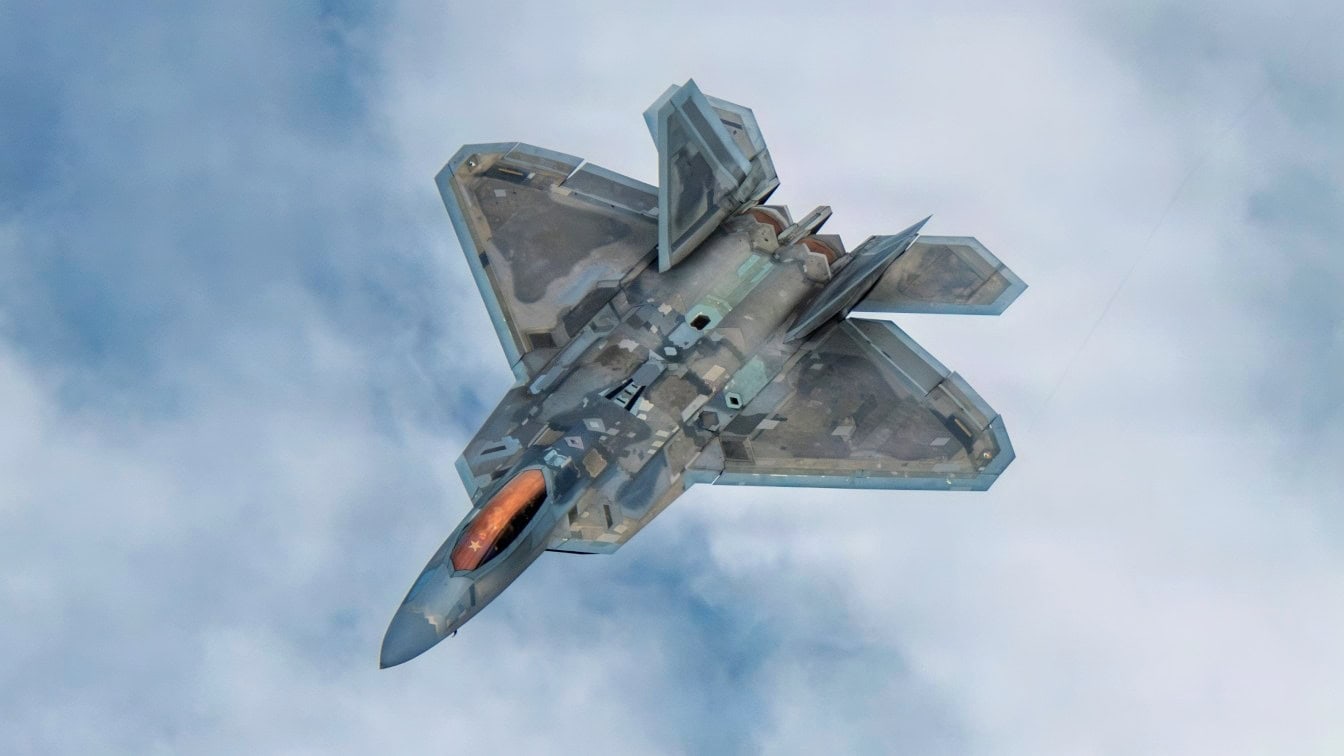
A U.S. Air Force F-22 Raptor assigned to the 154th Wing, Hawaii Air National Guard, takes part in a multi-ship formation off the coast of Hawaii, Jan. 5, 2026. The aircraft participated in a comprehensive training sortie designed to integrate the 154th Operations Group’s distinct mission sets, including air superiority and aerial refueling, to ensure peak mission readiness in the Indo-Pacific theater. (U.S. Air National Guard photo by Senior Master Sgt. Mysti Bicoy)
Beginning in 1984, the United States Army sought a new attack helicopter to usher in the new century. At the time, the Soviet threat seemed as implacable as ever.
Few had any idea that the Reds were about to implode.
So, the Army (like the rest of the United States military) was preparing itself for another long round of the Cold War with Moscow.
The Comanche would have played a prominent role in those plans.
Developed by Boeing and Sikorsky, the sleek, stealthy helicopter was designed to combine reconnaissance, advanced attack capabilities, next-generation stealth, and sensors into a single cutting-edge platform.
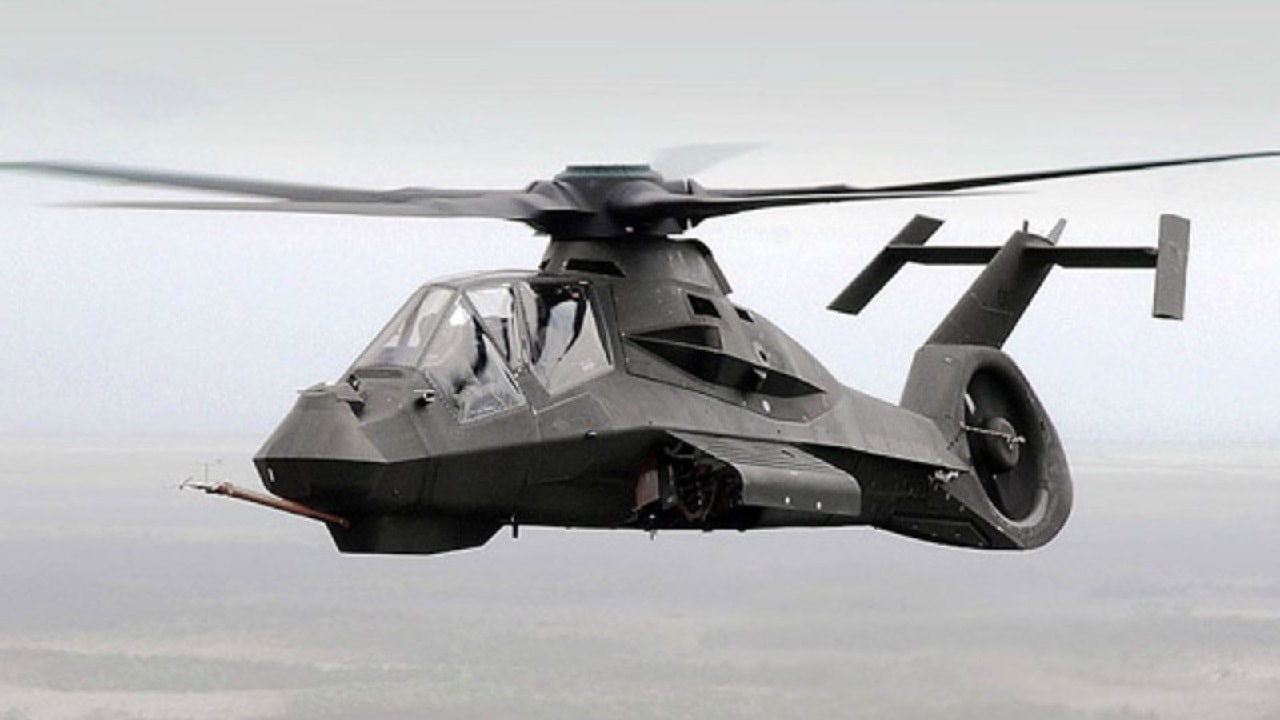
RAH-66 Comanche. Image Credit: Creative Commons.
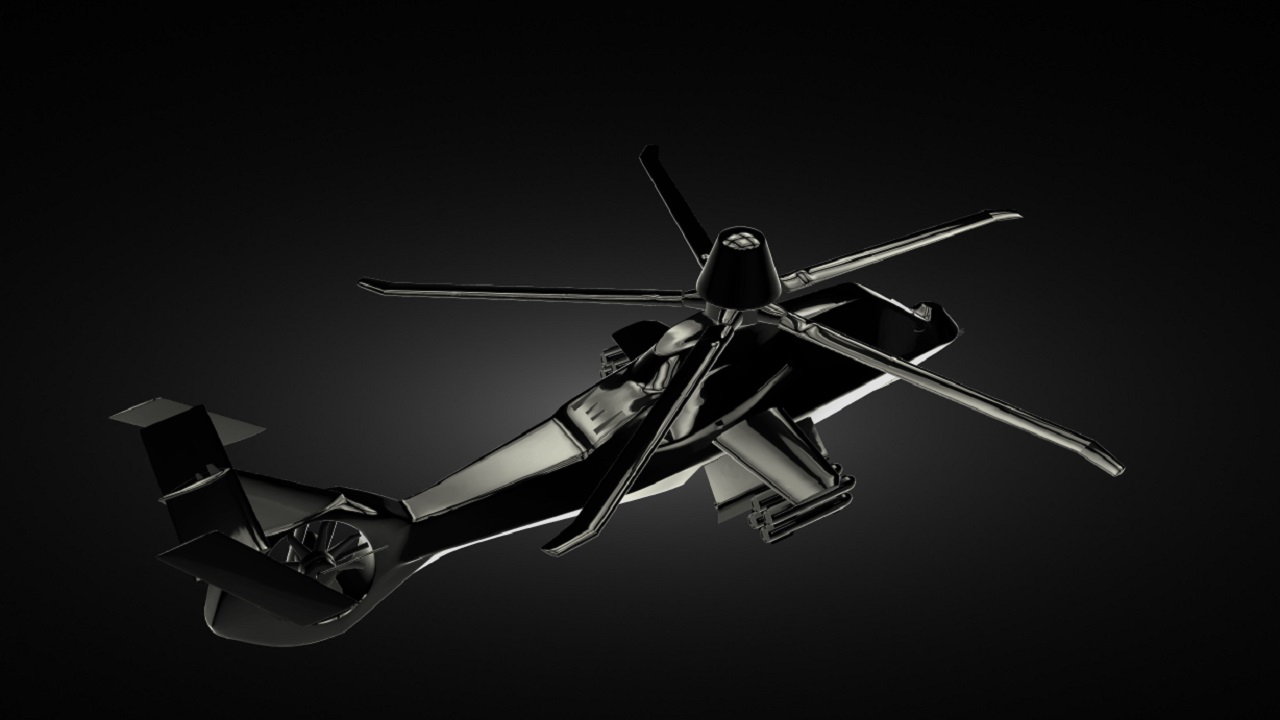
RAH-66 Comanche model. Image Credit: Creative Commons.
These choppers would have flown ahead of US forces, identified enemy targets, and passed that intelligence on to advancing US forces.
But 20 years of development and $7 billion culminated in the Comanche’s cancellation in 2004.
Only two flying prototypes were ever completed.
The Comanche was designed as a two-seat, twin-engine reconnaissance and light attack helicopter.
Its airframe incorporated advanced composite materials and low-observable shaping intended to reduce its radar signature.
Weapons could be carried internally to preserve its stealth, while external stores could be fitted when low observability was less important. Its planned weapons included AGM-114 Hellfire missiles, Stinger air-to-air missiles, and a powerful 20mm cannon.
A Red Army Armor Hunter
These helicopters could have been paired with AH-64 Apache attack helicopters to identify Soviet tank formations and relay that targeting information to the Apaches without exposing themselves to a Soviet counterattack.
Once the Soviet Union collapsed in 1991, the Army’s development priorities shifted, and budgets tightened.
The Comanche did not fly until 1996. By then, many believed the program lacked relevance to the post-Cold War era (and certainly had too high a price tag).
One of the biggest complicating factors is the large rotor blades of helicopters. Plus, helicopters have a significant acoustic signature.
The Comanche also had to remain agile at extremely low altitudes.
All this had to be done effectively while carrying sensors and weapons–as well as enough fuel–to perform complex recon missions.
Because of the engineering complexities involved and the political changes underway during its development, the Comanche struggled.
Dashed Hopes for RAH-66
The Army originally wanted more than 2,000 Comanches.
Then they thought that 1,213. Finally, the Army reduced its order to 650 before the Pentagon scrapped the program entirely.
One of the reasons the Pentagon scrapped the program was the reduced order the Army settled on.
Economies of scale are a key cost factor behind many Pentagon programs. The smaller the number built, the less economical it is for defense contractors to produce such systems–and the higher they must charge the military.
By 2004, the Army had already spent nearly $7 billion on the Comanche. And that was made was two prototypes.
Completing the program would require tens of billions more for a system that was not as relevant in the Global War on Terror (GWOT) as it would have been against the Soviet Red Army.
Of course, the system would likely be helpful in today’s age of great-power competition.
Yet, the Ukraine and Iran wars have demonstrated that manned systems in general are nowhere near as helpful for militaries as are drone and missile swarms.
On February 23, 2004, the Army finally pulled the plug on the system.
The decision was unusual because the Army wanted to cancel the system rather than have Congress or the Secretary of Defense kill it.
Instead, the service intended to redirect the money toward existing helicopters and unmanned aircraft. Canceling the program cost the Army as much as $680 million, depending on some estimates.
Not a Total Loss
Still, the program would have cost much more if the Army remained committed to it in 2004.
The Comanche was a beautiful helicopter, and it might still have found purpose in today’s modern age of warfare. But drone and missile-swarm issues would have made this expensive system less relevant.
Not all was wasted, though.
Research into composites, sensors, digital avionics, and low-observable rotorcraft went into the broader American aerospace technology base. It has been applied to other sensitive programs.
The Army’s RAH-66 Comanche is an interesting case study in what might have been, offering insight into the complexities of the post-Cold War procurement system and the politics behind high-end military acquisition programs.
It was one of the few times the Army itself chose to cancel a beloved program. We might never see something like that again.
About the Author: Brandon J. Weichert
Brandon J. Weichert is the Senior National Security Editor at 19FortyFive.com. He also manages The Weichert Brief on Substack. Weichert also hosts “National Security Talk” on Rumble. He is the author of four bestselling national security books, the most recent of which is A Disaster of Our Own Making: How the West Lost Ukraine (Encounter Books). Follow him via Twitter/X @WeTheBrandon.