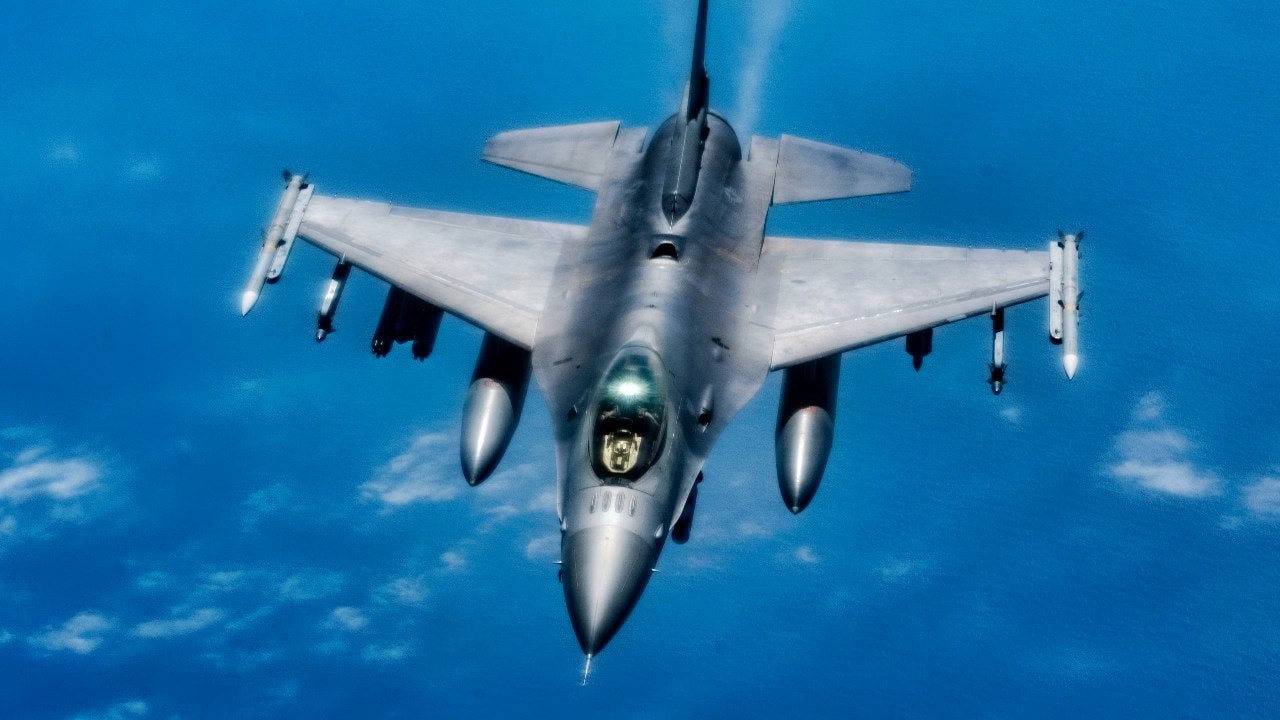
Summary and Key Points: The US Air Force is shopping for a new brain for the F-16s it still expects to fly into the 2040s. On September 18, the Air Force Life Cycle Management Center posted a special notice for an industry day at Wright-Patterson Air Force Base on October 20–21, covering the F-16 Next-Generation Mission Computer for Blocks 40, 42, 50, and 52. The box it would replace, the Modular Mission Computer, is the jet’s central computer — the hub through which every subsystem and avionics feed runs.
The Big F-16 Brain Upgrade
Another huge computing upgrade could be on its way for the F-16 fleet. It could upgrade its aging computer hardware, colloquially known as the jet’s “brain.”
This time, it will target the Block 40, 42, 50, and 52 aircraft, which are set to fly for many more years. While the F-15s are being phased out, F-16s are set to be used well into the 2040s, until enough F-35s are available to replace them.
The jets are currently being used in military operations surrounding Iran. On Tuesday, the U.S. Secretary of State Marco Rubio said the U.S. could hold talks with Iranian officials during the ongoing UN General Assembly.
At the time of writing, no meeting has been announced, and no new peace deal has been arranged.
A special notice posted September 18 says the Air Force Life Cycle Management Center will hold an industry day at Wright-Patterson Air Force Base on October 20-21 for the F-16 Next-Generation Mission Compute, or NGMC, effort.
The meeting will focus on the program’s “technical challenges” and gather industry views on “potential solutions and acquisition approaches.”
A New Central Computer
The NGMC is set to replace the post-block Modular Mission Computer (MMC) that the U.S. Air Force and Foreign Military Sales partners currently use.
In a January 2026 arms-sale notice, the U.S. Defense Department dubbed the MMC the F-16’s “central aircraft computer” and “hub for all aircraft subsystems and avionics data transfer.” The purchase permitted a “next-generation mission computer equivalent.”
The new system is set to offer a “significant increase in reliability and processing performance,” according to the Air Force.
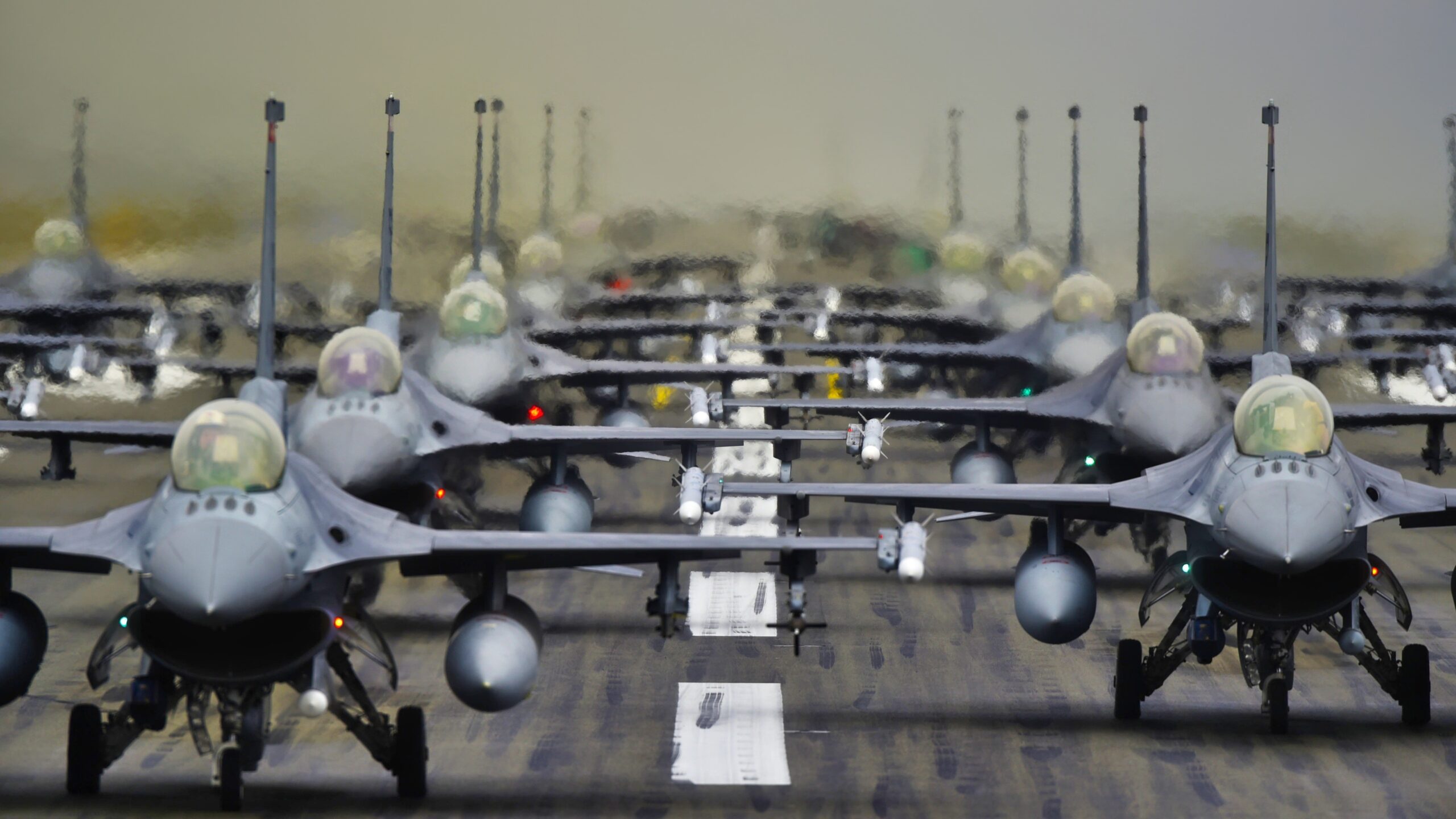
F-16 Fighter in a Elephant Walk. Image Credit: Creative Commons.
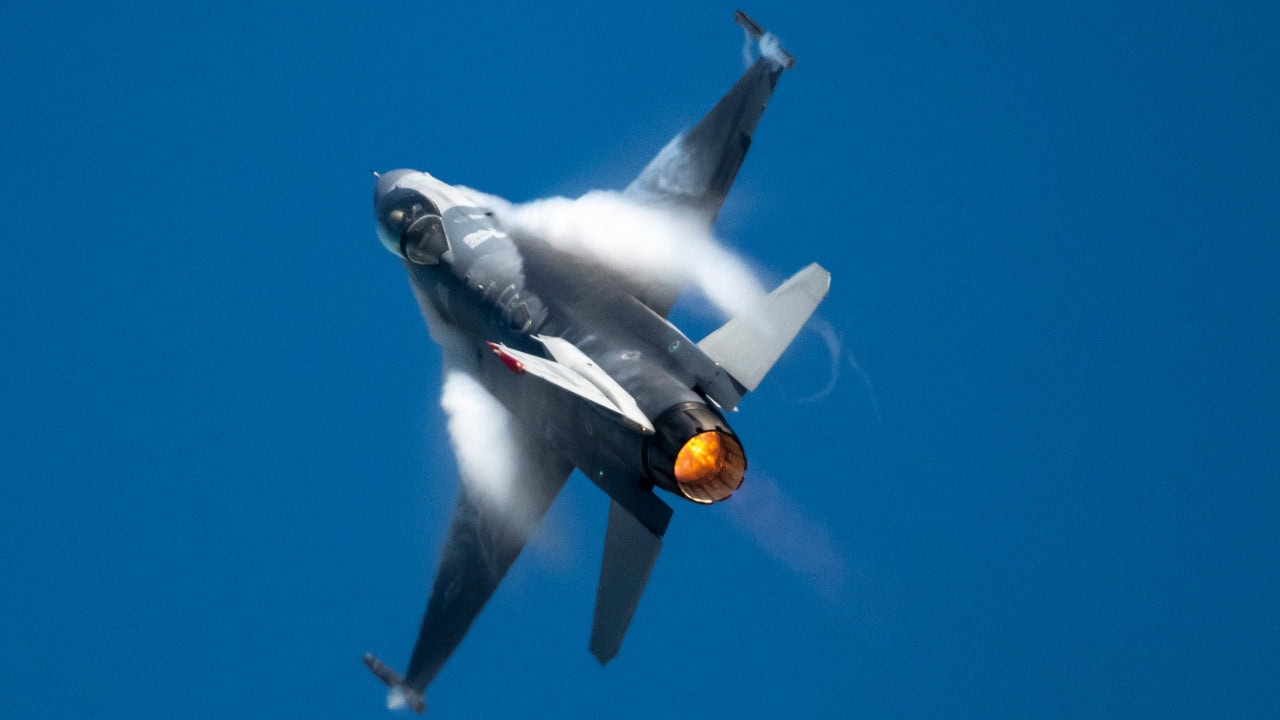
U.S. Air Force Capt. Ethan “Bantam” Smith, Pacific Air Forces F-16 Demonstration Team pilot, conducts a falcon turn during Misawa Air Fest at Misawa Air Base, Japan, Sept. 8, 2024. The demonstration team’s primary mission is to inspire goodwill and promote positive relations between the U.S. and partner nations across the Indo-Pacific region by showcasing displays of F-16 combat prowess and dedication to U.S. Air Force core values. (U.S. Air Force photo by Tech. Sgt. Peter Reft)
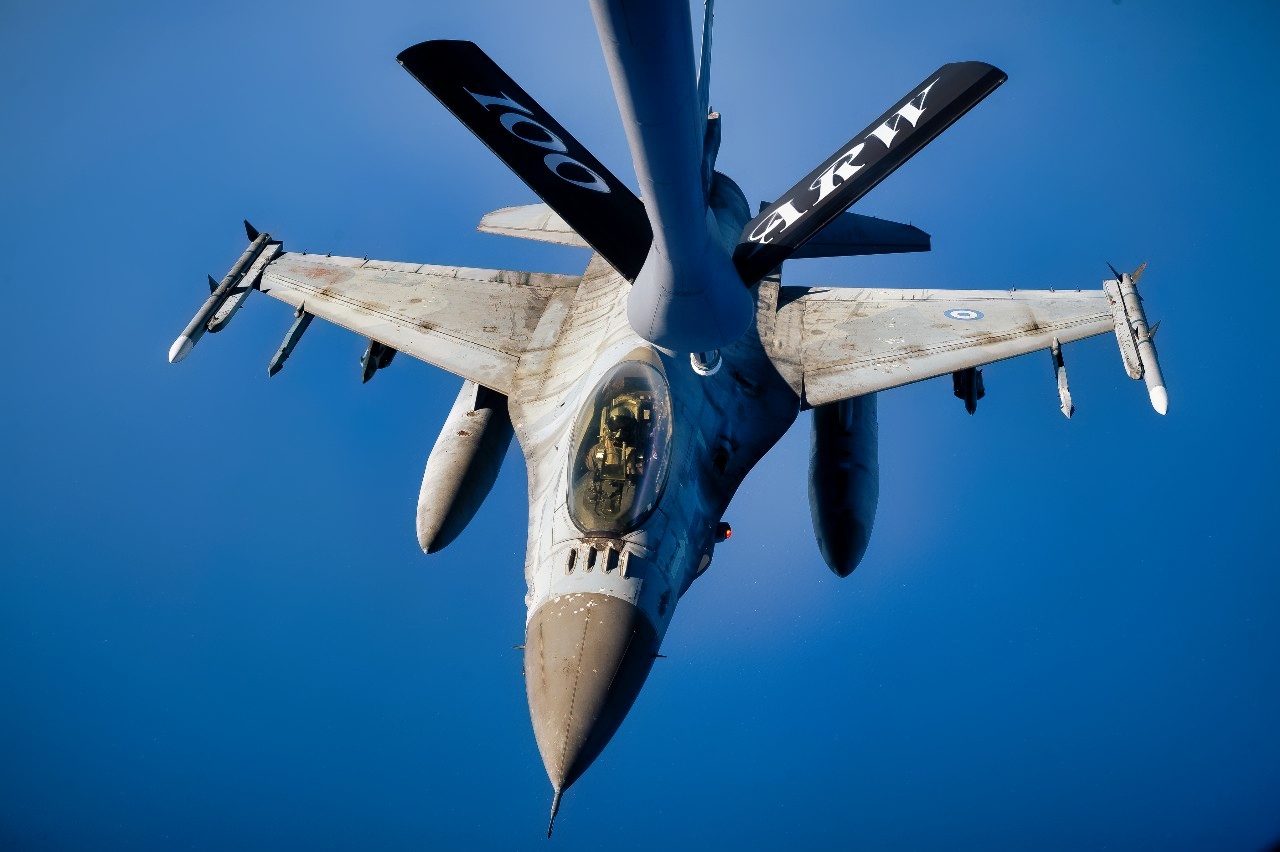
A U.S. Air Force KC-135 Stratotanker aircraft, assigned to the 100th Air Refueling Wing, refuels a Hellenic Air Force F-16 Fighting Falcon aircraft during exercise RAMSTEIN FLAG 2024 while flying over the coast of Greece, Oct. 4, 2024. RAFL24 demonstrates NATO unity and strength, as Allies across the Euro-Atlantic area train side by side in defensive and offensive air operations scenarios in support of the enduring commitment to shared values and ability to adapt to the emerging environment. (U.S. Air Force photo by Senior Airman Edgar Grimaldo)
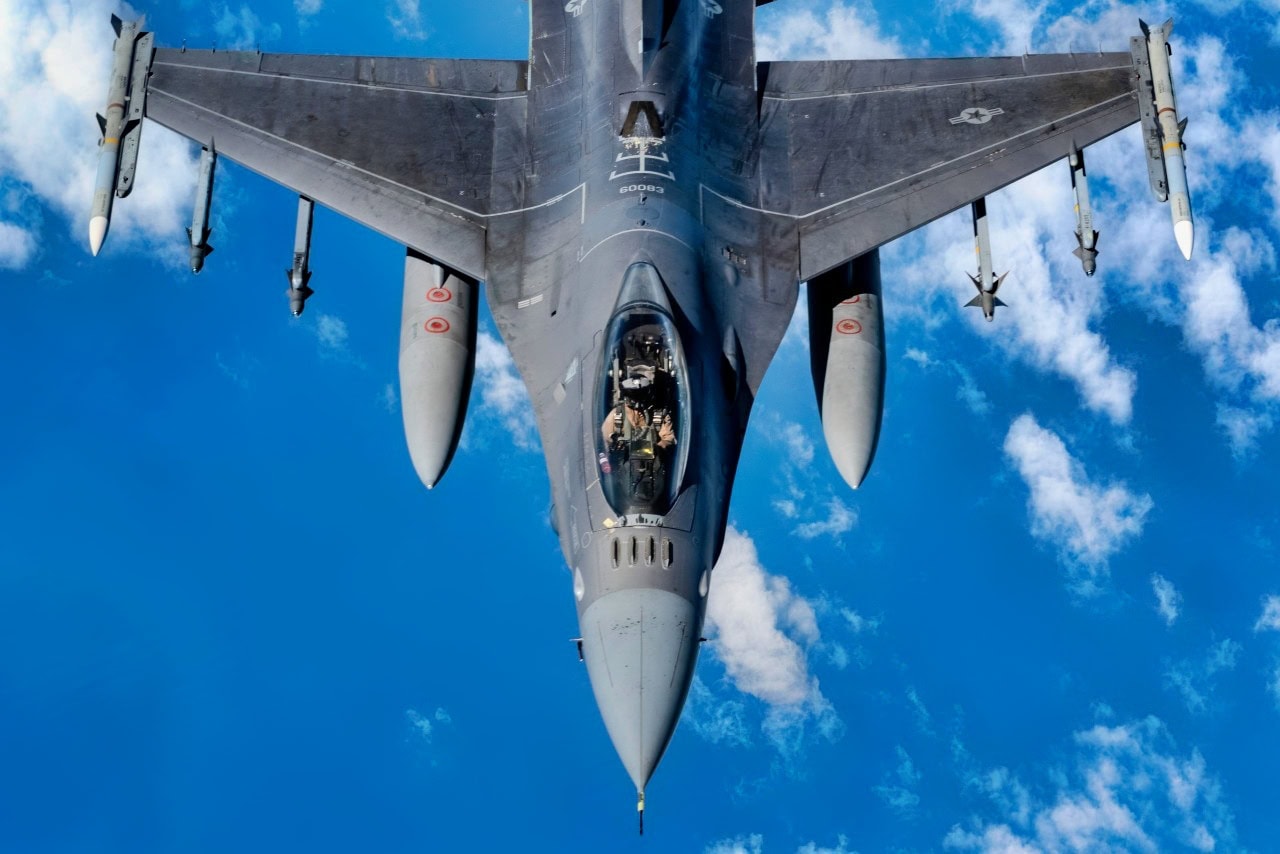
A U.S. Air Force F-16 Fighting Falcon flies a presence patrol over the U.S. Central Command area of responsibility, Feb. 23, 2025. Fighting Falcons fly routine patrols over the AOR to deter aggression and bolster the regional defensive posture. (U.S. Air Force photo by Staff Sgt. Jackson Manske)
It also said that it would remain compatible with current F-16 infrastructure.
The MMC operational flight program will be rehosted and executed.
The new system will also need to fit into the same space and use the pre-installed wiring where possible.
The service now refers to the NGMC as a “strategic pivot” toward a “software-defined architecture.” It will support future updates, rather than being another closed computer that is pricier and more complex to upgrade.
The Air Force also wants a system that can scale its general-purpose processing, storage, GPU, and AI/ML resources, and says that outside software providers could even help “deliver more capability in less time.”
Why More Computing Power Matters
The F-16 is already in the middle of a huge modernization program. In 2022, F-16 program manager Oryan “OJ” Joseph called the overlapping work a “pretty massive effort” and a “collision of mods.”
The Post Block Integration Team program includes the APG-83 active electronically scanned array radar, new cockpit displays, Link 16, a high-speed data network, electronic-warfare improvements and a modernized mission computer.
Joseph said the Air Force had to “significantly modernize the fleet” to keep the F-16 useful for combatant commanders in the coming decades.
Pilots have already described what the newer avionics change in practice.
After flying a PoBIT-upgraded F-16 in 2023, Col. John Caldwell said the new displays “reduced my workload.” He also said the F-16 is planned to “continue service into the 2040s.”
Capt. Michael Durham, an F-16 weapons tactics officer, said avionics improvements let pilots “take full advantage” of advanced weapons and sensors. He outlined how the upgrades would help pilots with tactical decision-making, since new radar and display systems would push more information into the cockpit.
Open-Architecture F-16
The NGMC effort is part of a broader Air Force campaign to update aircraft software more easily.
Back in July, AFLCMC released the Agile Mission Suite Government Reference Architecture.
This is the very same software framework referred to in the F-16 notice, and the open-systems push has been framed as “breaking traditional vendor lock,” by the Air Force.
Back in August, Col. Timothy Helfrich told companies at the Life Cycle Industry Days that open architecture meant “Continuous competition!”
“Keep your IP (Intellectual Property)! If you keep doing a great job, I’ll keep coming to you. If you don’t, I’ll go find somebody else because I understand the interfaces. Someone else can bring that capability,” he said.
The Air Force continues to stress that it has not issued any requests for proposals so far.
About the Author: Georgia Gilholy
Georgia Gilholy is a journalist based in the United Kingdom who has been published in Newsweek, The Times of Israel, and the Spectator. Gilholy writes about international politics, culture, and education.