
The war in Ukraine is in its fifth year, and thus far, Moscow has been unable to break Kyiv’s stubborn resistance. However, there are indications that the coming fall and winter may prove decisive for the conflict, and that this time Putin intends not only to ratchet up military pressure in Ukraine but also to threaten NATO itself along the Nordic/Baltic Northeast Corridor.
The staccato of Russian clandestine operations on allied territory, including the recent attempted drone attack at the Leipzig airport, a foiled plot to set fire to four drone-manufacturing sites in Swindon, UK, a fire at the WB Electronics UAV components production center in Skarżysko-Kamienna, Poland, and attempts to sabotage railroads across Europe, has been accompanied by an increasing number of cases of Russian drones, missiles, and aircraft brazenly entering NATO airspace. There are troubling indicators that Putin may be planning to further pressure NATO, possibly including a direct kinetic operation.
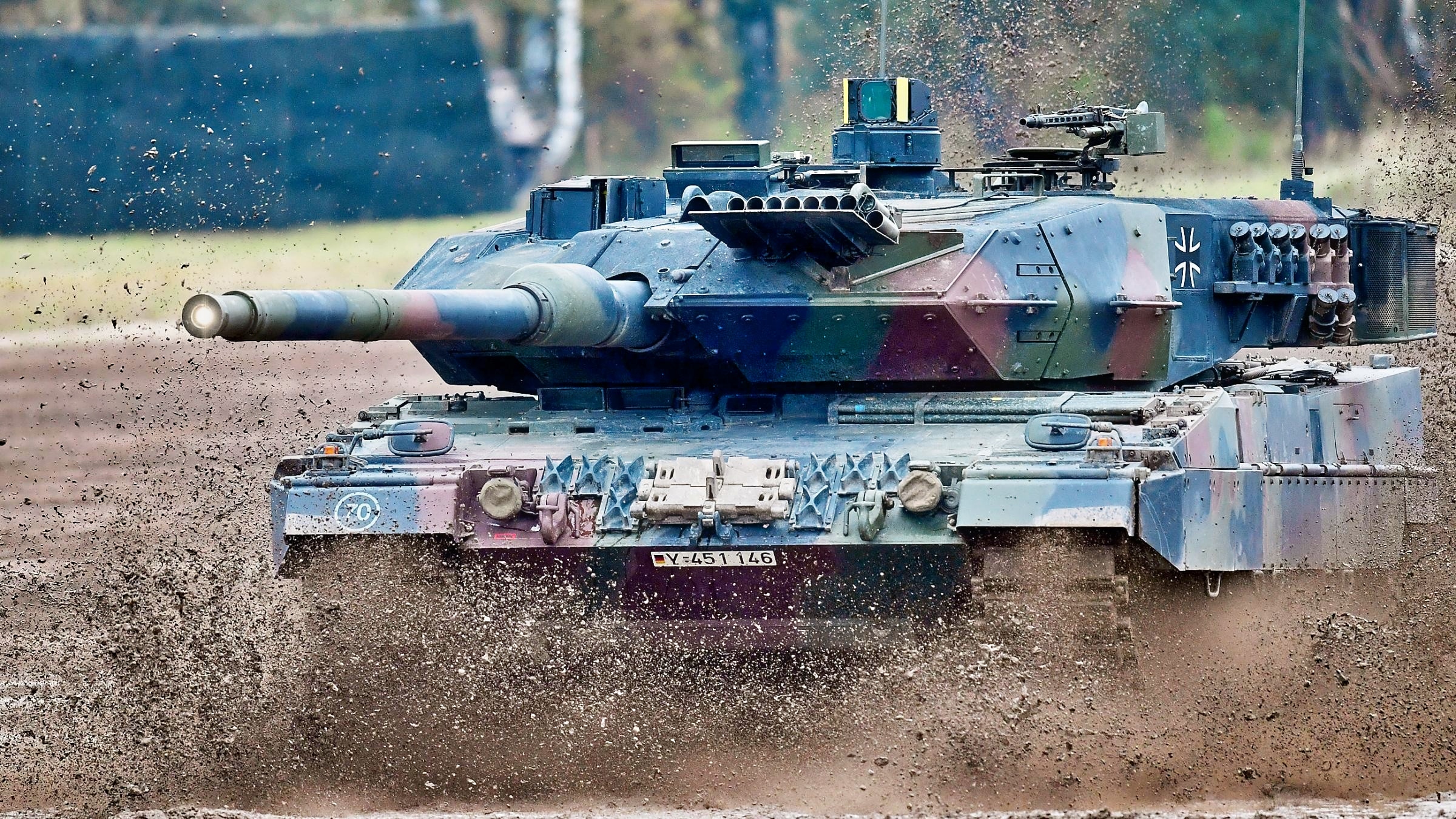
Leopard 2 Tank. Leopard 2 Tank. Image Credit: Creative Commons.
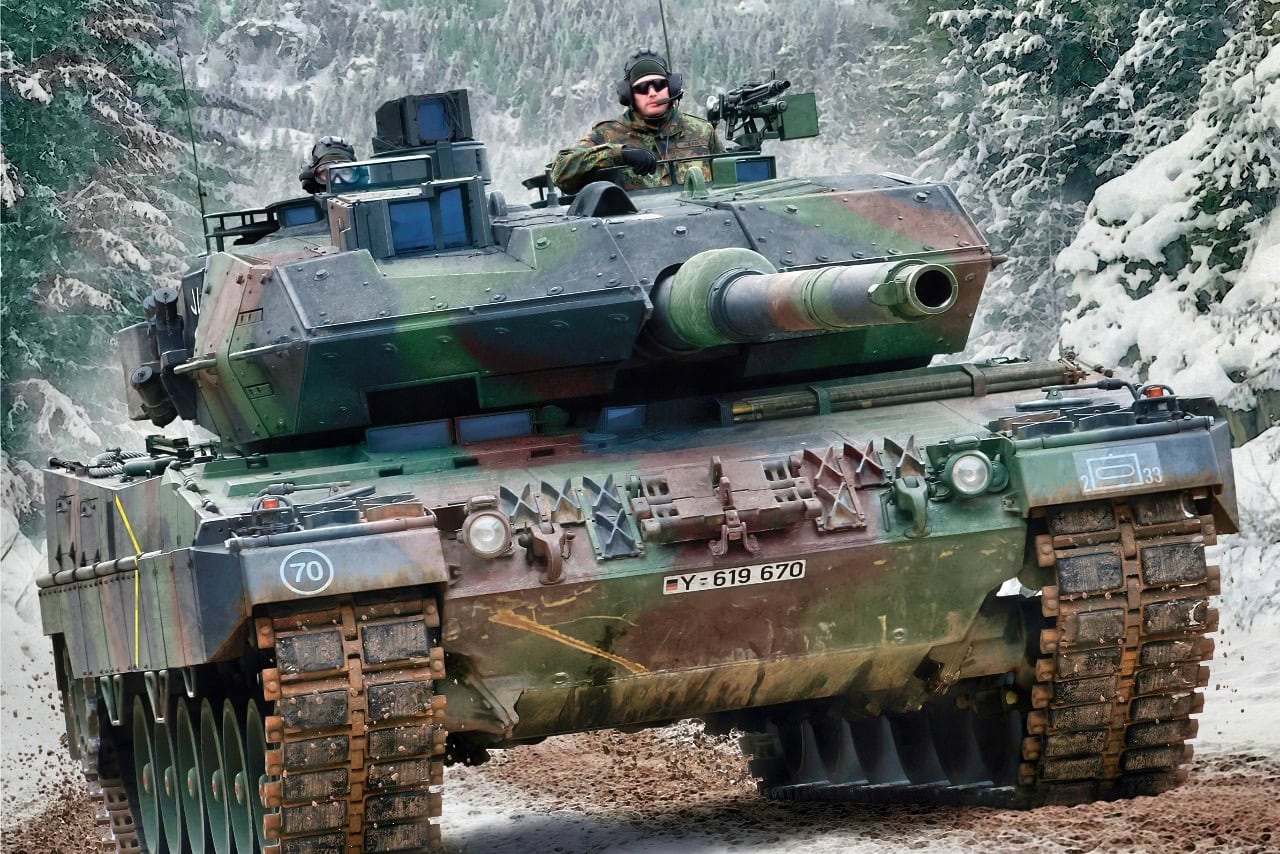
Leopard 2 Tank. Image Credit: Creative Commons.
Warning Signs From Narva to the Finnish Border
The nighttime curfew on the border with Russian-speaking Narva has already heightened tensions in Estonia. Railroad construction in Belarus is expanding to handle more military trains, while Russia and Belarus are integrating their transportation networks more closely, putting Ukraine, Poland, and Lithuania on notice.
Even more troubling is Russia’s investment in military infrastructure along its border with Finland. Russia is preparing new facilities around Petrozavodsk, roughly 150 miles from the Finnish border, with satellite imagery showing the renovation of a largely dormant Soviet-era garrison and the construction of new barracks. Russia is also constructing a new military complex at Lupche-Savino—only 68 miles from the Finnish border—for a new artillery brigade and other elements. Satellite analysis suggests that this is particularly significant because permanent infrastructure is being built to support additional Russian forces, rather than equipment merely moving through the area for the Ukrainian front.
In addition, Russia has been modernizing a base at Pechenga, near the Norwegian and Finnish borders, and new equipment and military activity have been spotted on the Karelian Isthmus north of St. Petersburg—indicators that Russia is likely preparing to move some one hundred thousand troops into the area, fundamentally changing the regional dynamic along Finland’s 830-mile-long border.
The Skeptics’ Case—and Its Hidden Assumptions
Skeptics argue that Russia is in no position to expand the conflict in Ukraine horizontally and that NATO, collectively, is in a much stronger position. That is true, provided one assumes that the United States will not suddenly face escalating threats in two critical Asian theaters, the Korean Peninsula and the Indo-Pacific, and that European allies can act in unison during a crisis. Today, despite tough rhetoric from Berlin, Paris, and London, the largest European states have yet to build sufficient public consensus to defend allies on NATO’s eastern frontier in a crisis.
Regionalized Security Optics: Europe’s Fractured Threat Perception
Europe lacks a unified perception of the Russian threat. This “regionalized security optics” means that how a country sees Russia’s aggression depends largely on where it sits on the map – allies bordering Russia have a keen existential sense of the threat, but as one travels west, the intensity diminishes as other priorities begin to dominate, be they migration or dramatic shifts in domestic politics.
Unlike during the Cold War, when European allies keenly felt the Soviet threat regardless of how far from the Warsaw Pact frontier they lay, such unity seems all but impossible today.
Hence, although Russian forces are not ready for an all-out assault on NATO, Putin may be banking on fracturing the alliance altogether by creating an acute crisis on NATO’s eastern flank short of an all-out invasion.
Why Moscow Thinks the Timing Favors Russia
Moscow likely views Washington’s preoccupation with the war with Iran and the simmering political tensions at home in the run-up to the midterm congressional elections as conditions that favor a more aggressive posture toward NATO. Persistent bottlenecks in platforms and ammunition production, whether for Ukraine or to restock Europe’s magazines neglected for years while the Continent consumed the “peace dividend,” are another data point that favors Russia’s more aggressive stance vis-à-vis NATO.
In fact, as Germany and others in Europe finally begin to take rearmament seriously, time is bound to work against Russia, which at this point enjoys the advantages of a mobilized wartime economy, while Europe’s defense industrial base remains inadequate to the task.
The Indicator That Matters Most
The point is not to predict when Russia’s all-out move against NATO may occur, but to highlight the indicators that a significant escalation of tensions along NATO’s eastern flank is likely. This realization has finally registered in major European capitals, but Europe’s policy elites seem more nervous than resolved.
That factor alone, more than any other indicator, could be the key inducement for Putin to test NATO in a way he has not before: with an all-out crisis on NATO’s flank, or even by operating openly behind the allied fence.
About the Author: Dr. Andrew Michta
Andrew A. Michta is Professor of Strategic Studies at the Hamilton School at the University of Florida, a Nonresident Senior Fellow at the Atlantic Council in Washington, D.C., and a Visiting Fellow at the Hoover Institution at Stanford University. The views expressed here are his own.