
The Ankara NATO summit concluded, leaving the overall impression that the alliance stayed united despite noticeable nervousness across Europe’s capitals and President Trump’s several broadsides about his disappointment with Europe’s insufficient support for the US campaign against Iran, or outright obstruction. The summit declaration reaffirmed an “ironclad commitment to (…) collective defense under Article 5 of the Washington Treaty and to the transatlantic bond,” as allies aimed to ease growing concerns about America’s pledge to defend Europe. As expected, Ankara has effectively formalized Europe’s shift toward taking greater responsibility for conventional deterrence and defense.
The summit’s key strategic outcome is that the United States remains committed to nuclear deterrence and alliance leadership, while Europeans are expected to develop much stronger conventional capabilities than before.
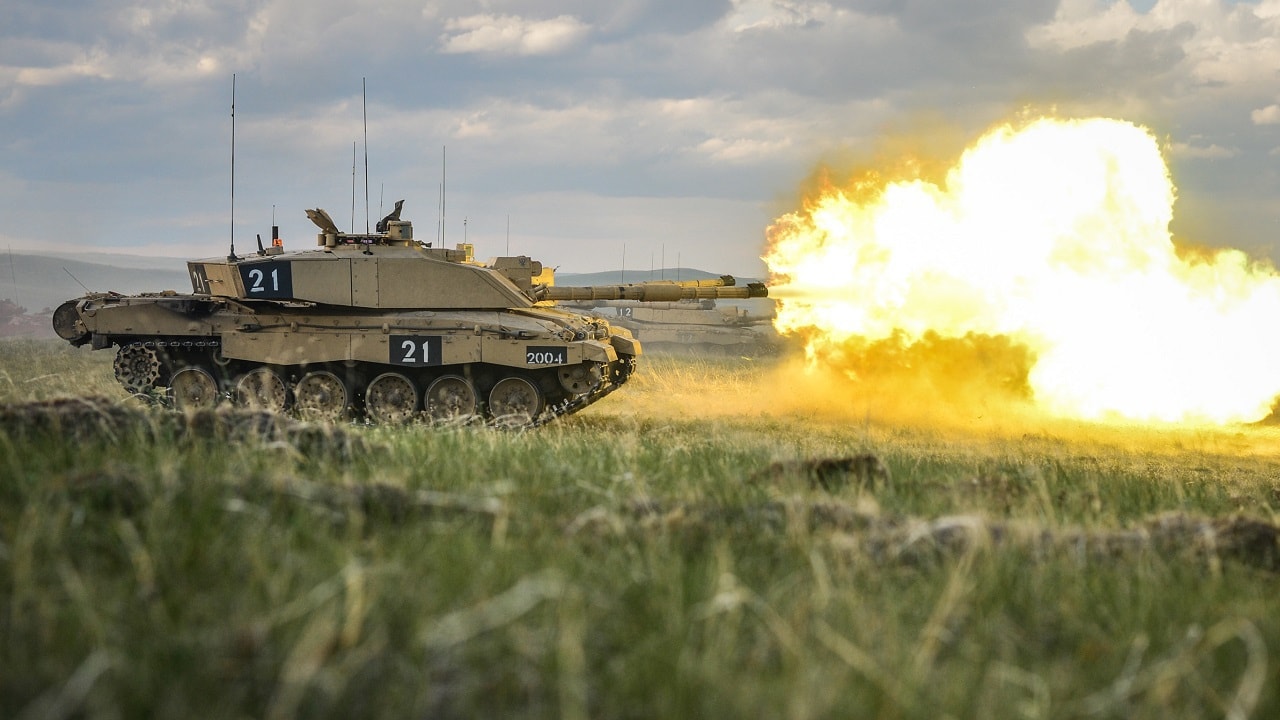
A Challenger 2 Main Battle Tank of the Royal Welsh Battle Group on Exercise Prairie Storm at the British Army Training Unit Suffield (BATUS) in Canada.
The prairie of Alberta has provided an excellent opportunity for the British Army to train on a large scale since 1972. The British Army Training Unit Suffield (BATUS) is an organisation situated on one of the most sparsely populated areas of the Alberta plain.
BATUS is equipped with in excess of 1000 vehicles including a full complement of Challenger 2 tanks and Warrior Infantry Fighting Vehicles. Each year a Regiment is sent there for six months to take the part of the ‘enemy’ for the other Regiments that are there to train each year.
As always, the proof will be in the pudding, or rather, in specific initiatives expected to deliver tangible, measurable results.
Here, two developments stand out: one potentially transformative initiative focused on the eastern flank that began before Ankara, and the other concerning decisions on NATO’s defense industrial base and procurement.
The Eastern Flank Takes Center Stage
Arguably, the most important development in NATO’s changing structure and priorities is the Eastern Flank Deterrence Initiative (EFDI), a relatively new U.S.-supported, NATO-led operational concept designed to reshape how NATO protects its eastern border—from the Arctic through the Nordic-Baltic region, Poland, and down to the Black Sea. Although not an official, standalone summit deliverable, EFDI was discussed on the margins and in military planning meetings leading up to the summit.
It has been developed with strong backing from U.S. Army Europe and Africa, while placing greater operational responsibility on NATO’s eastern-flank allies. Its main idea is to move beyond relying solely on reinforcement after an attack and instead create an integrated regional defense system that deters aggression and, if deterrence fails, prevents Russia from quickly achieving a fait accompli through an immediate NATO response.
EFDI focuses on integrated regional planning to coordinate NATO’s operational plans into a unified theater, including multi-domain operations and a forward defense posture from the outset, with forces pre-positioned and ready to act immediately. This strategy enhances the vital “tripwire” deterrent effect by deploying combat-ready forces capable of contesting Russian advances right away.
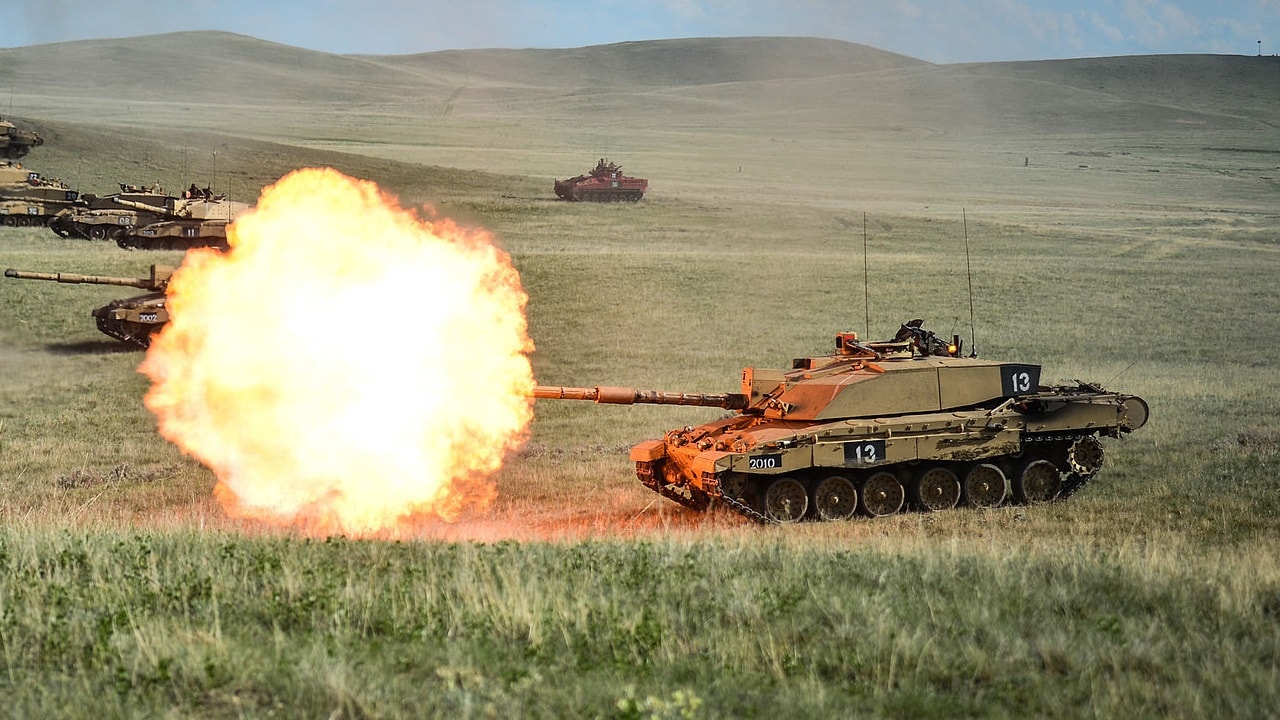
A Challenger 2 Main Battle Tank of the Royal Welsh Battle Group on Exercise Prairie Storm at the British Army Training Unit Suffield (BATUS) in Canada.
It also highlights regional interoperability and ongoing force modernization to incorporate lessons learned from the Ukrainian battlefield. Most importantly, for the Trump administration, EFDI aligns with the shift in strategy from “burden-sharing” to “burden-shifting,” as discussed at the Ankara meeting, and increasingly reflects the “burden-shedding” discourse in Washington about the European theater, even though the term has not yet become part of NATO’s official language.
From Pledges to Production
The second major development is in defense industrial cooperation among allies. Instead of merely announcing higher spending targets, NATO launched several multinational procurement and industrial initiatives—some newly announced, others officially endorsed or expanded—including negotiations to acquire up to ten Saab GlobalEye airborne early warning aircraft; a joint Lockheed Martin–Rheinmetall ATACMS production line in Germany; a European PAC-3 maintenance hub; a multinational procurement of up to five MQ-4C Triton surveillance drones; and the expansion of NATO’s multinational A400M and A330 MRTT fleets. Whether it ultimately results in the “transatlantic defense industrial revolution” described by Secretary General Mark Rutte remains to be seen, but the move toward increasing production capacity and accelerating procurement is clear.
In effect, after Ankara, NATO is prepared to go beyond spending pledges and toward tangible industrial capacity.
Burden-Shifting, Not Burden-Sharing
Overall, Ankara can be viewed as a potentially transformative summit that will influence NATO’s future direction. For the Trump administration, it was less about burden-sharing and more about burden-shifting by the United States, but it also advanced the alliance in line with the U.S. current priorities.
It could pave the way for faster burden-shedding in Europe as the Indo-Pacific and other theaters place increasing demands on the U.S. military.
The difference is notable: burden-sharing suggested that Europe would contribute more, while the U.S. remained the primary provider of NATO’s traditional military strength. Instead, a new model is emerging in which Europe assumes greater responsibility for the alliance’s conventional deterrence and defense, while the U.S. focuses more on nuclear deterrence, strategic support, global power projection, and, especially, competition with China in the Indo-Pacific.
For Europeans, EFDI, and especially its Nordic-Baltic Northeast Corridor segment, which aligns well with the U.S. hemispheric defense strategy, offers a new approach that reflects the shifting geopolitical realities that are moving NATO’s focus northeast.
This shift is much more significant than just increasing defense spending and, if fully carried out, could be remembered as Ankara’s most important legacy.
MORE – 18,000 Applied to Become a NASA Astronaut, 12 Made It
About the Author: Dr. Andrew Michta
Andrew A. Michta is Professor of Strategic Studies at the Hamilton School at the University of Florida, a Nonresident Senior Fellow at the Atlantic Council in Washington, D.C., and a Visiting Fellow at the Hoover Institution at Stanford University. The views expressed here are his own.