
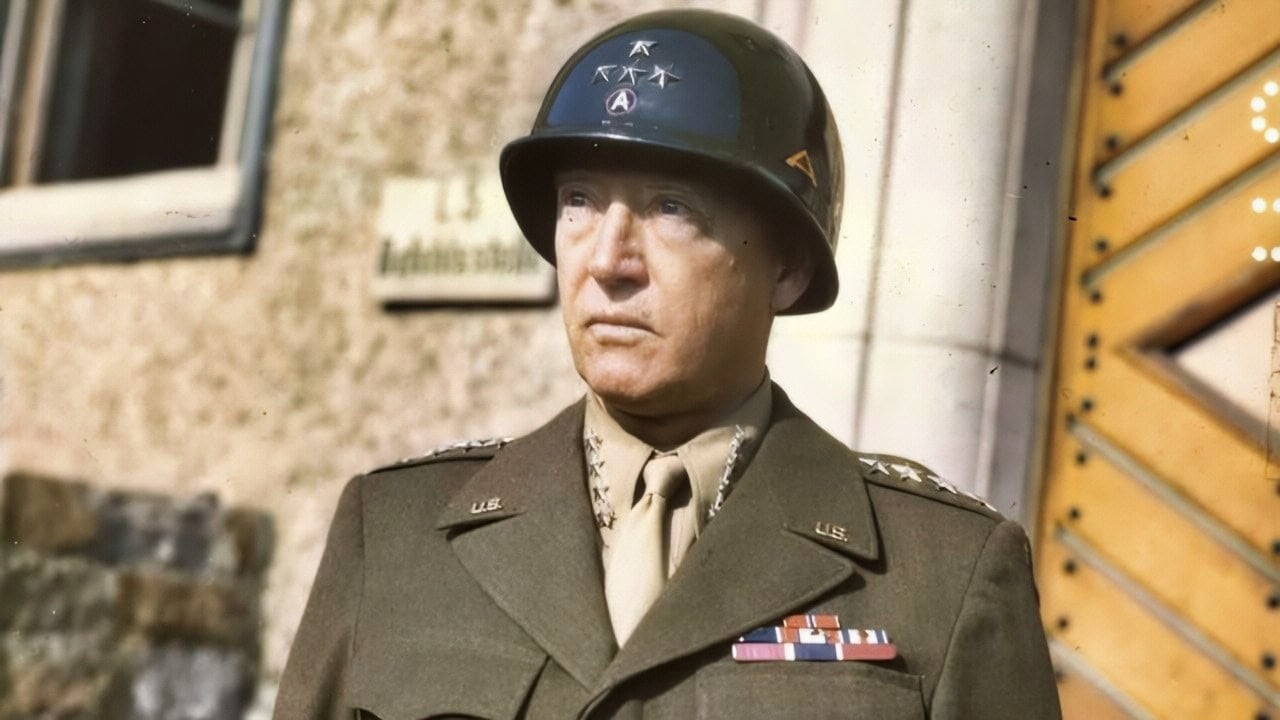
Summary and Key Points: Journalist Stephen Silver traces George S. Patton’s line, “There can never be too many projectiles in a battle. Whether they are thrown by cannon, rockets, or recoilless devices is immaterial,” from his 1947 memoir “War As I Knew It” back to November 1917, when the Army’s first tank soldier wrote a 58-page report that created the tank corps, ran the Bourg light tank school and led the 304th Tank Brigade, then moved 1,000 tanks in 1940.
“There can never be too many projectiles in a battle. Whether they are thrown by cannon, rockets, or recoilless devices is immaterial.”- US Army General George S. Patton
US Army General George S. Patton Made Countless ‘Pages’ of New Military History
General George S. Patton has been called the father of U.S. tank warfare. That began in World War I, when, according to an account on the Patton’s Third Army website that included documents from the time, Patton served as a staff officer at General Pershing’s American Expeditionary Forces headquarters.
At that point, Patton did clerical office work, the kind of work that, according to that account, wasn’t an ideal career path for a man trained at West Point. But during that war, people discussed “the new battle implement called a tank.”
The U.S. had no tanks at that point, but General Pershing convened a panel called the “tank board” to study this new weapon and decide whether the Army should procure them. They soon decided that they should, and that they would buy the tanks from Britain and France.
The First Tank Soldier
Patton was offered a leading role in this effort, but according to Patton’s Third Army account, he had some apprehensions, worried that taking on the assignment and failing would hurt his career. The account said the future general “thought long and hard and then took assessment of what he was doing…pushing papers,” and ultimately agreed.

General Patton Portrait. Image Credit: Creative Commons.
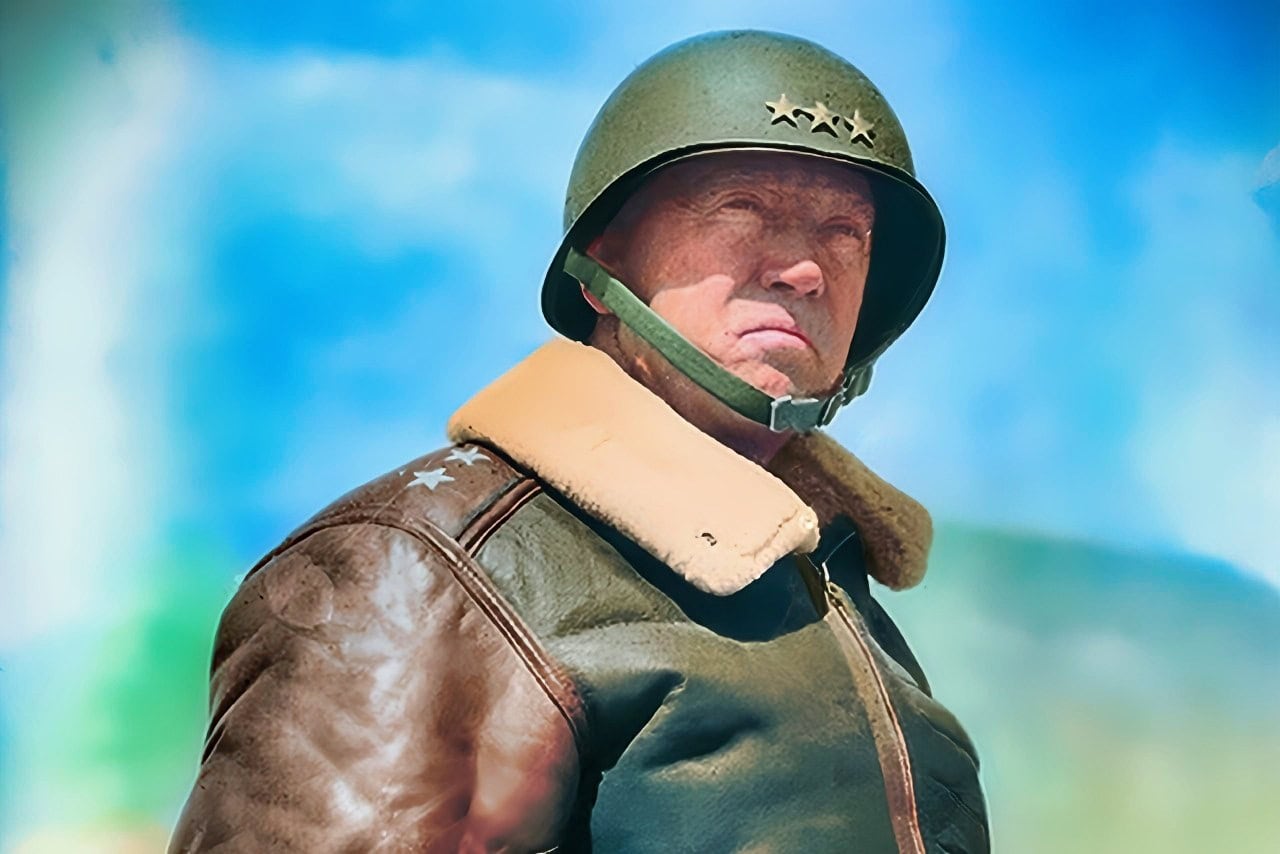
George Patton U.S. Army Photo
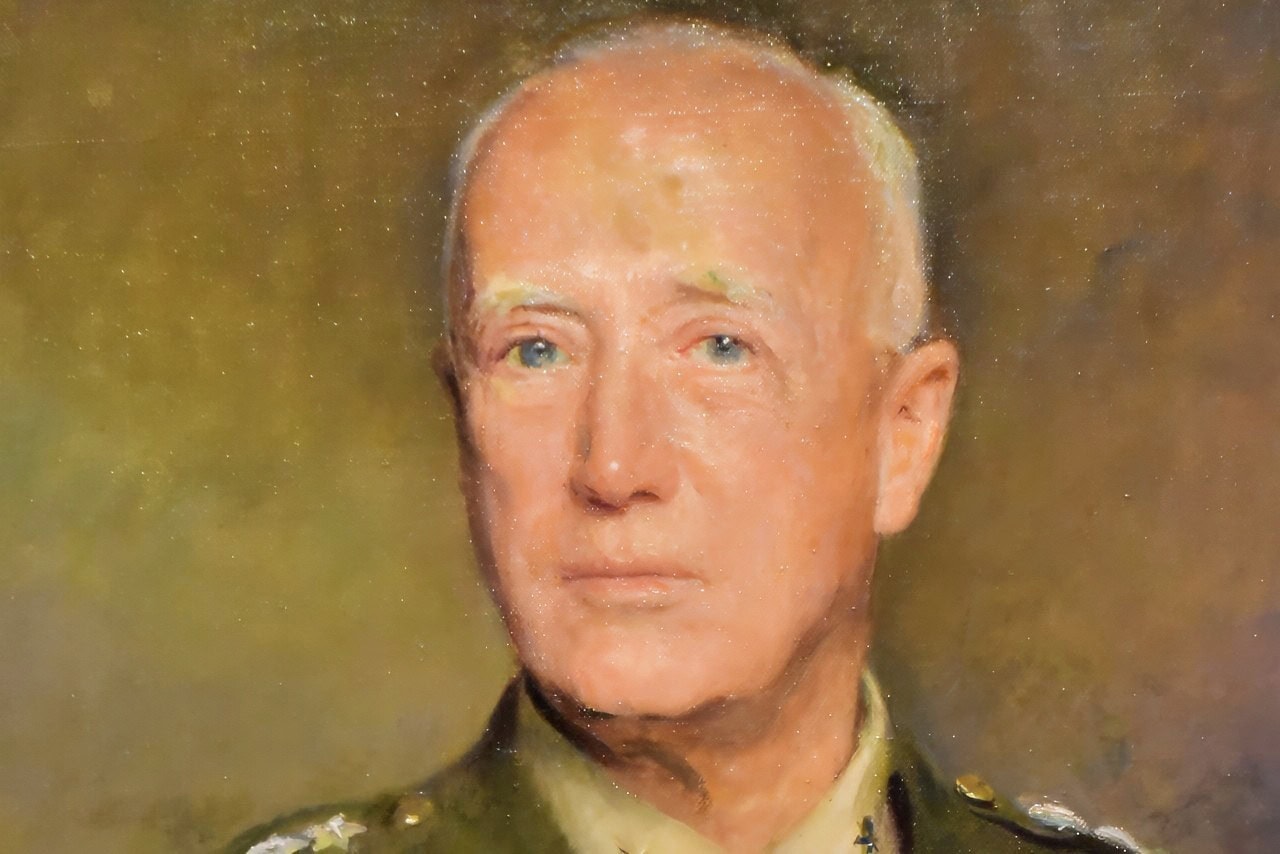
General George Patton National Portrait Gallery Photo. Image Taken by 19FortyFive on 1/23/2026 in Washington, DC.
This happened in November 1917, when Patton was, according to the account, “officially assigned to develop a tank program in the US Army.” This made him the Army’s first “tank soldier,” and the assignment involved studying the British and French tank programs, including visits to battlefields and training centers. The goal was to “come up with a plan of action to bring light tanks into the US Army as a fighting force.”
This study led Patton to write a 58-page report that laid out exactly what the U.S. would need to do to establish a tank corps. His superiors adopted the report and ordered Patton to “make it happen.”
Patton was soon placed in charge of the light tank school in Bourg, France, when it was established in late 1917; the first tank battalions were organized in 1918, and Patton, by then promoted to major and later to lieutenant colonel, took command of the 304th Tank Brigade.
A New Strategy for Tanks
Patton remained closely associated with tanks for the rest of his career; between the World Wars, he spent time authoring a manual on tank operations and concluded that “tanks should be used as an independent fighting force and not just for infantry support.”
Later, per a Museum of the American GI biography, Patton “began to push for more development of armored warfare with an emphasis on speed, mobility, and surprise.”
And once World War II got underway, Patton “sought to build up the power of the U.S. armored forces.” In 1940, he led an exercise in which 1,000 tanks and vehicles were driven from Columbus, Ga., to Panama City, Fla., and repeated it the following year.
Once the United States entered the war, with Patton among its leading generals in command of the Third Army, tanks became a major part of Patton’s successful campaigns, including the use of hundreds of tanks in the Battle of the Bulge in late 1944, into early 1945.
After World War II, and after Patton’s death later in 1945, the Army named a series of tanks for him, and they remained in service through the 1990s.
The Quote
“There can never be too many projectiles in a battle. Whether they are thrown by cannon, rockets, or recoilless devices is immaterial,” Patton wrote in his posthumously published memoir, “War As I Knew It: The Battle Memoirs of ‘Blood ‘N Guts,’” which first appeared in 1947, two years after his death.
It’s not one of Patton’s best-known quotes, but it illustrates the famed general’s career-long penchant for embracing cutting-edge tactics and strategies, perhaps most notably his pioneering use of tanks.
About the Author: Stephen Silver
Stephen Silver is an award-winning journalist, essayist, and film critic, and contributor to the Philadelphia Inquirer, the Jewish Telegraphic Agency, Broad Street Review, and Splice Today. The co-founder of the Philadelphia Film Critics Circle, Stephen lives in suburban Philadelphia with his wife and two sons. For over a decade, Stephen has written thousands of articles on politics, national security, technology, and the economy. Follow him on X (formerly Twitter) at @StephenSilver, and subscribe to his Substack newsletter.