
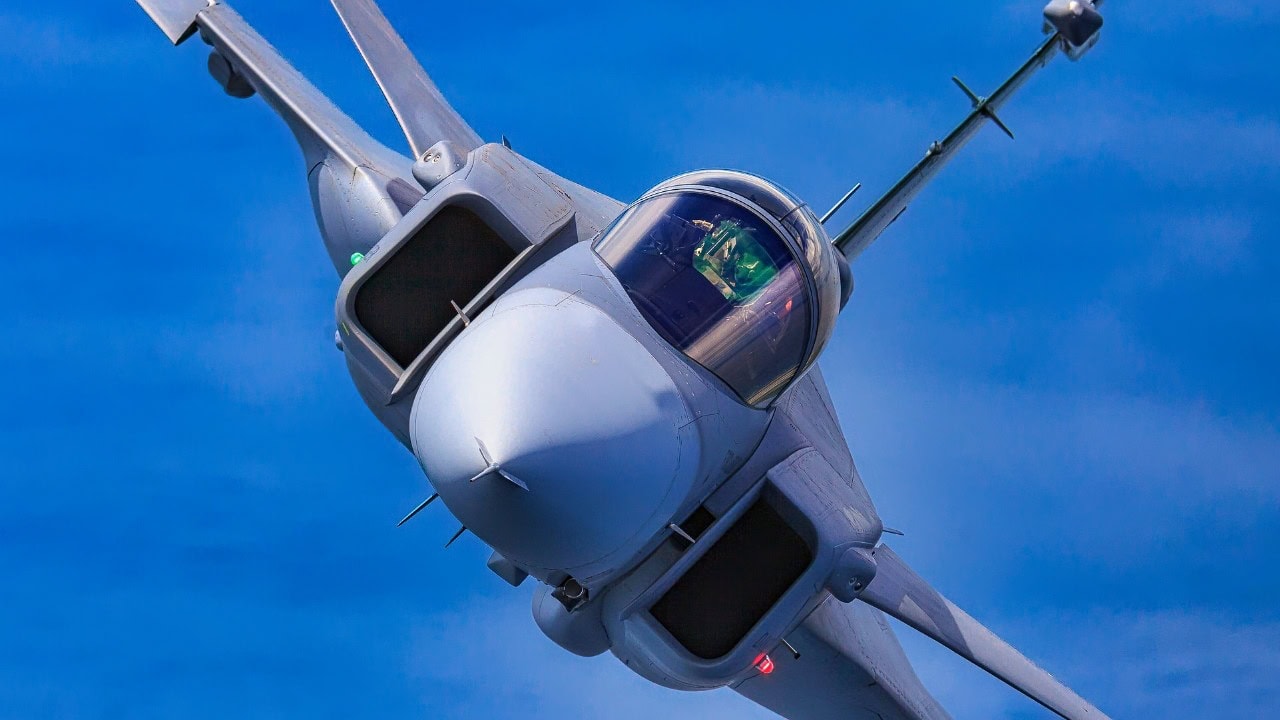
Like the proverbial bad penny, the Royal Canadian Air Force (RCAF)’s F-35 Lightning II vs. JAS 39 Gripen debate keeps coming back, stubbornly refusing to die.
Some folks have suggested that, instead of putting all the proverbial eggs in one basket, the RCAF should integrate both the 5th-generation American-made Lockheed Martin “Skunk Works” stealth fighter and the 4.5 Generation Swedish-made Saab non-stealth fighter into the RCAF fighter fleet, giving the best of both worlds. As great as this sounds in theory, a retired RCAF general officer says it’s not so feasible in practice.
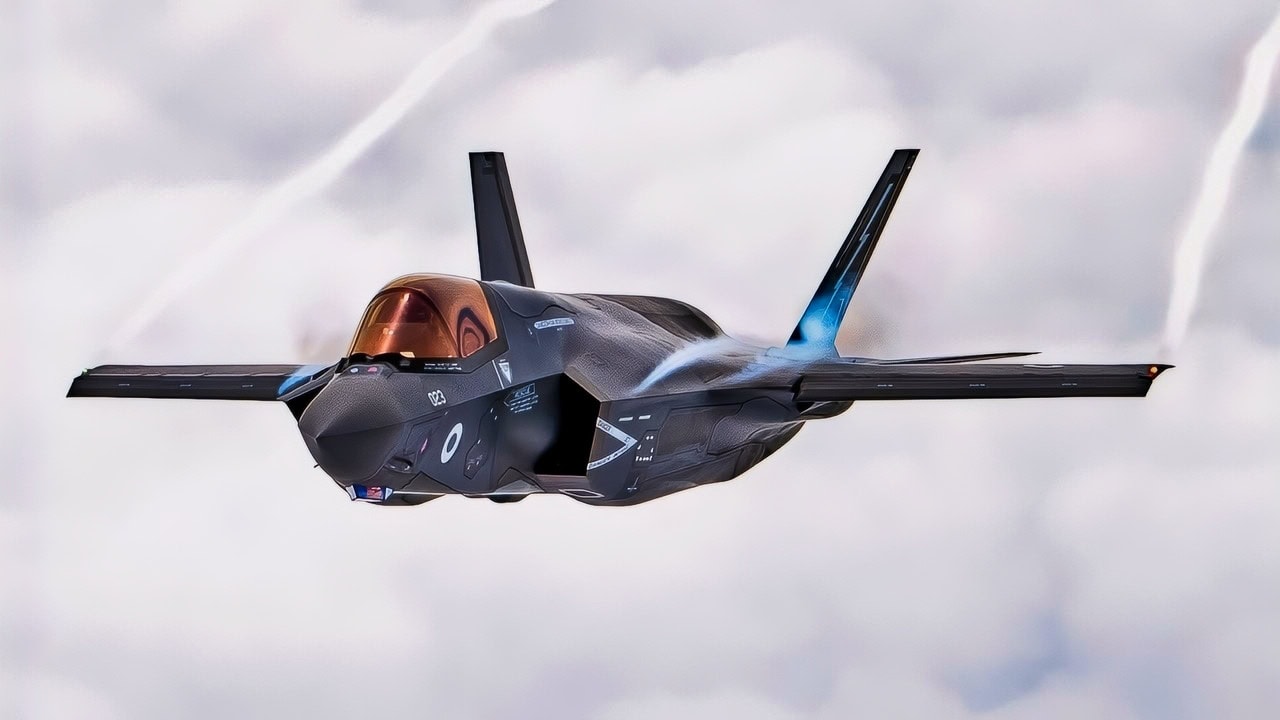
A UK F-35 flies above the Baltics on 25 May 2022. UK and Czech fighter jets have been taking part in air defence training over the Baltic region. UK Eurofighter Typhoons, F-35s and Czech Gripens were involved in an exercise as part of Neptune Shield 22 (NESH22), a multinational maritime vigilance activity. NESH22 has seen a range of multi-domain activities between air, land and maritime assets across Europe and in the Baltic and Mediterranean Seas. It runs from 17 to 31 May 2022.
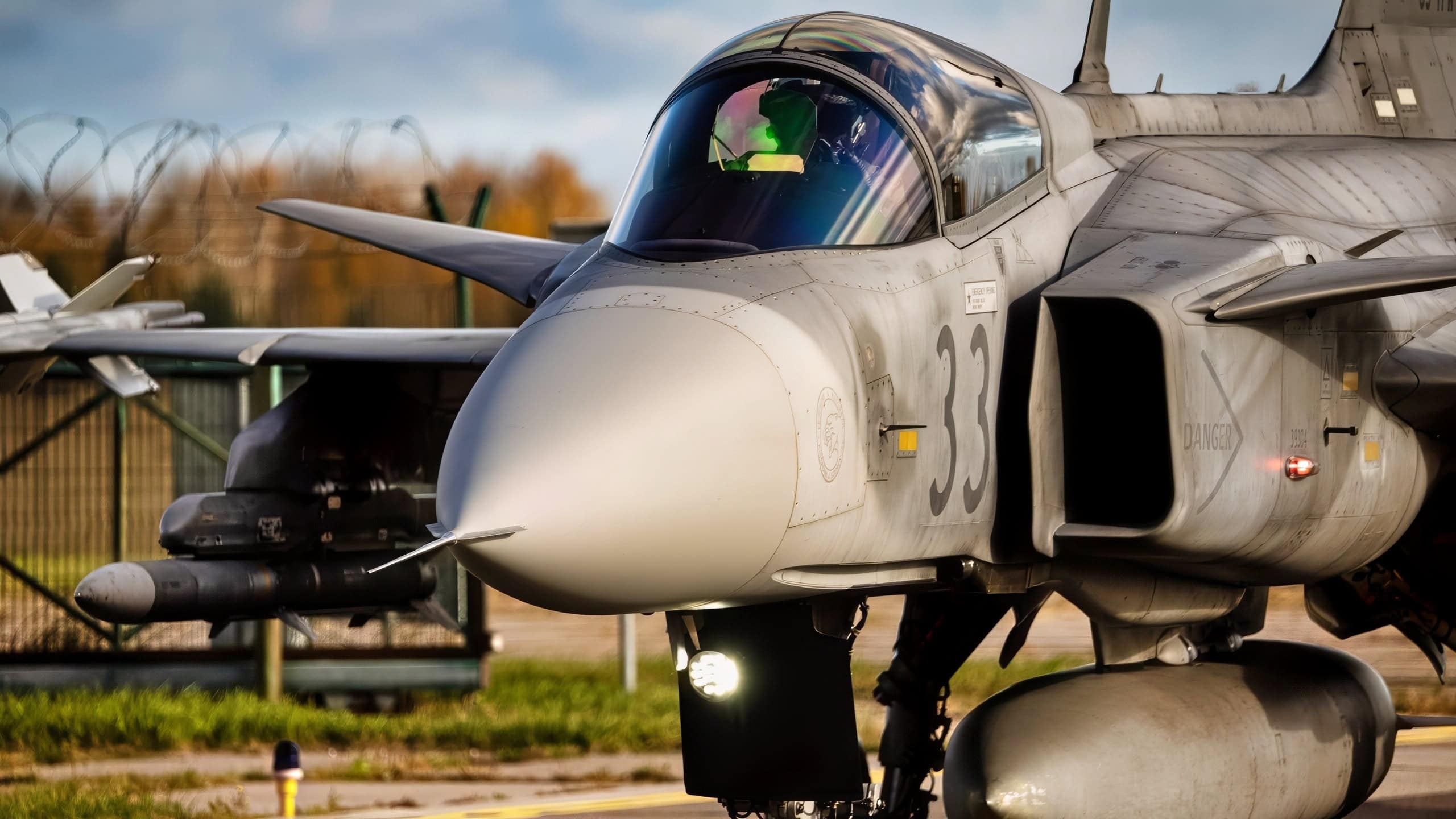
A Hungarian Air Force JAS-39 Gripen is seen taxiing across the runway after completing a successful training scramble.
Hungary took command of NATO’s Baltic Air Policing mission in August 2022, deploying JAS-39 Gripen fighter jets to Siauliai Air Base in Lithuania for the third time since 2015. Air Policing is a long-running mission that operates 24 hours a day, 365 days a year. It includes quick reaction fighter aircraft are ready to take off within minutes to intercept any aircraft that may threaten Allied airspace.
Bottom Line Up Front (BLUF)
The retired general officer is Lieutenant-General (abbreviated “LGen” in Canadian Forces convention) Alain Pelletier, and Chris Lambie cites his assertions in an October 13, 2026 article for The National Post, a Canadian newspaper headquartered in Ontario. To wit, “Having two fleets of fighters is a challenge for any air force… If they do go that route, with a dual fleet, ‘the RCAF will suffer in the short (term) because you need to be able to transition to that new fleet, but now you’re transitioning not to a single fleet, you’re transitioning to two new fleets at a time when you’re just short of people. You cannot duplicate people. You cannot clone people. So, it will be a growing pain.’”
In other words, notwithstanding the truism of “Where there’s a will there’s a way,” a surplus of willpower can only go so far in overcoming a deficit of manpower, at least in the short term.
Beyond workforce shortages, LGen Pelletier cites very pragmatic reasons for his country to continue to purchase the U.S.-made stealth jet:
“I’ve had a chance to look at all the contenders that are out there on at least two occasions. I think the F-35 was a good decision, one of our NATO partners reflected… I think it is the right choice. It’s the choice that will provide operational capability for the next 30 years or so… As a pilot, that is crucial to mission effectiveness. You’re able to sense a threat that is out there before it can sense you.”
Besides the United States, those NATO partners using the F-35 are Belgium, Czechia, Denmark, Finland, Germany, Greece, Italy, the Netherlands, Norway, Poland, Romania, and the United Kingdom.
About Those RCAF Manpower Numbers
According to the most recent available figures from the Government of Canada, the total RCAF workforce strength is 14,951 troops. Compare and contrast that number with the FY 2025 workforce stats for the U.S. Air Force:
-Active-duty USAF: 325,000
–Air National Guard (ANG): 107,000
–Air Force Reserve Command (AFRC): 70,000
That adds up to 502,000, or more than half a million American airmen, which is a 33.57-to-1 numerical advantage over the USAF’s RCAF counterparts.
That’s why the USAF can afford the luxury of multiple Gen 5 fighters, e.g., the F-35 and the F-22 Raptor, **AND** 4.5 Gen fighters like the F-15EX Eagle II and F-16V Viper, plus the crews needed to fly and maintain them all, while the RCAF cannot.
LGen Pelletier Mini-Bio
Allain Pelletier certainly knows what he’s talking about.
He served as deputy commander of North American Aerospace Defense Command (NORAD) at Peterson Air Force Base, Colorado Springs, Colorado, from July 2020 until June 2023.
According to his official NORAD bio page, “In 1978, Lieutenant-General Alain Pelletier joined the Air Cadets unit of La Pocatière, Québec, where he earned his glider and private pilot license.
Lieutenant-General Pelletier joined the Canadian Armed Forces in 1983 as a student pilot. After graduating from the Royal Military College of Kingston with a Bachelor of Science in Mechanical Engineering, he completed pilot training and earned his wings in 1989. He was then selected to fly the CF-18 fighter aircraft.”
What’s more, LGen Pelletier is a grizzled veteran of air combat, having flown missions in support of Operation Allied Force, the 1999 NATO mission to stop then-Serbian strongman Slobodan Milosevic’s ethnic cleansing campaign against Kosovar Albanians.
In that regard, Pelletier shares a connection with another retired RCAF officer who’s an outspoken proponent of the F-35: LCol Billie Flynn, who served as commanding officer of the “Balkan Rats” during OAF and then spent 17 years as an F-35 test pilot for Lockheed Martin.
Other pieces of LGen Pelletier’s pedigree include:
-Commander of 425 Tactical Fighter Squadron, Commander of 3 Wing Bagotville, Québec, Commander of Task Force Libeccio, the Canadian Air Component to NATO’s Operation Unified Protector over Libya.
-Deputy Commander, Continental U.S. NORAD Region, based at Tyndall AFB, Florida—which coincidentally was this writer’s first assignment as a 2nd Lieutenant after my graduation from USAF Officer Training School (OTS)—where he was responsible for the Continental U.S. (CONUS) daily air defense readiness in addition to the defense of the U.S. National Capital Region (NCR)
-Deployed in support of U.S. Air Force Central Command as the Combined Air Operations Center (CAOC) Director responsible for the daily air tasking orders of AFCENT’s area of responsibility (AOR), including Operation Inherent Resolve in Iraq and Syria.
-Distinguished Graduate (“DG”) of USAF Air War College (AWC), with a Master of Strategic Studies degree.
About the Author: Christian D. Orr
Christian D. Orr is a Senior Defense Editor. He is a former Air Force Security Forces officer, Federal law enforcement officer, and private military contractor (with assignments worked in Iraq, the United Arab Emirates, Kosovo, Japan, Germany, and the Pentagon). Chris holds a B.A. in International Relations from the University of Southern California (USC) and an M.A. in Intelligence Studies (with a concentration in Terrorism Studies) from American Military University (AMU). He is also the author of “Five Decades of a Fabulous Firearm: Celebrating the 50th Anniversary of the Beretta 92 Pistol Series,” whose second edition was recently published.