
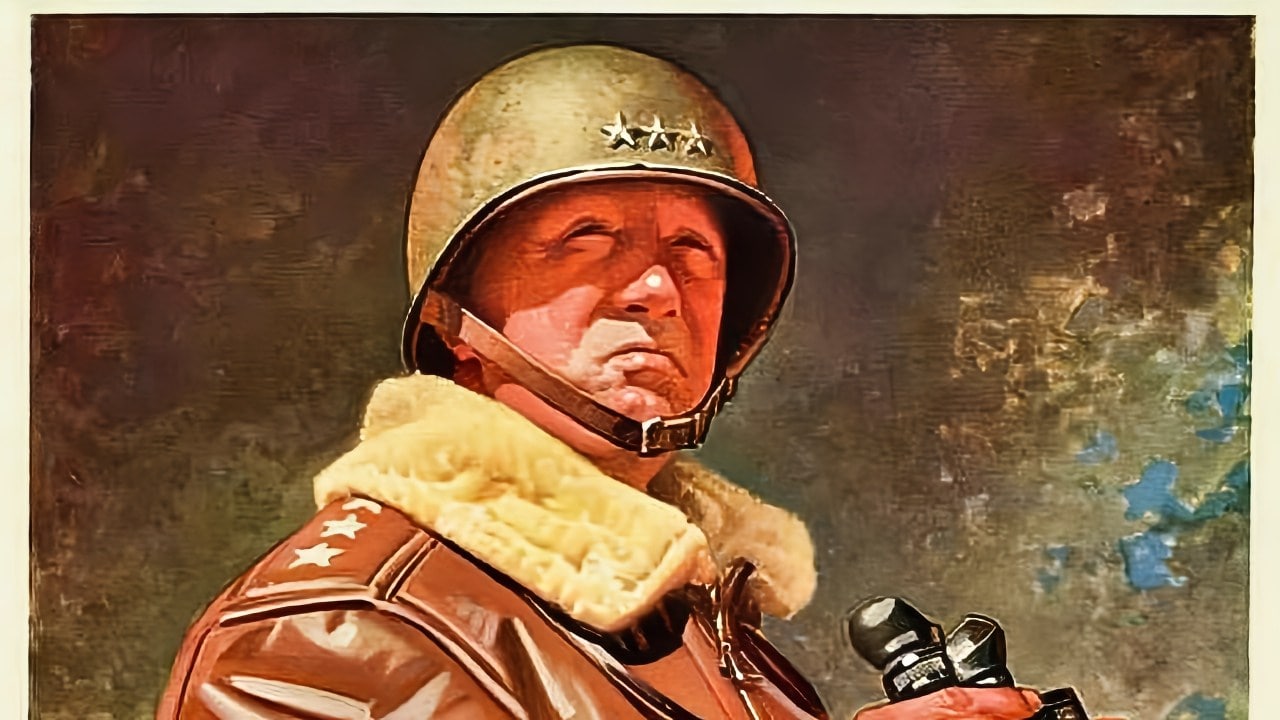
Summary and Key Points: Stephen Silver traces the line attributed to George S. Patton, “When in doubt, attack,” through Patton’s own words and deeds: his pre-North Africa vow to “attack and attack until we are exhausted, and then we shall attack again,” the Third Army’s pivot of 250,000 men to relieve Bastogne and close the Bulge at Houffalize by January 16, 1945, his letter calling leadership “the thing that wins battles,” 750,000 prisoners, and his death in December 1945.
US Army General George S. Patton Is Military History Like No One Else
The phrase “When in doubt, attack” has been used in various contexts and has several reported origins. In an episode of HBO’s “Rome,” Marc Antony says it. It’s been cited as strategic advice for chess players.
But the quote is most often attributed to Gen. George Patton.
Like many quotes attributed to Patton, it’s unclear whether he actually said it word for word. But it’s indisputable that the quote matched his personal military philosophy, and that he said similar things.
Another version, “We shall attack and attack until we are exhausted, and then we shall attack again,” was said by Patton to his men before they landed in North Africa, according to the New York Times obituary when the general died in late 1945.
According to a History Channel biography, Patton landed in North Africa in early 1942.
The following year, Patton commanded his forces in the Battle of El Guettar, which was the first major American victory over the Nazis. Later in 1943, Patton headed to Europe
That Times obituary cited not only Patton’s battlefield heroics but also his character, calling him “one of the most colorful personalities of his period.” But it also credits Patton with his series of victories in World War II, in which he and the Third Army rolled through six countries, crossed six major rivers and several smaller ones, and “captured more than 750,000 Nazis, and killed or disabled 500,000 others.”
That Philosophy in Action
One of the most famous applications of Patton’s attack philosophy was the Battle of the Bulge, which took place over six weeks between December 1944 and January 1945.

General Patton Portrait. Image Credit: Creative Commons.
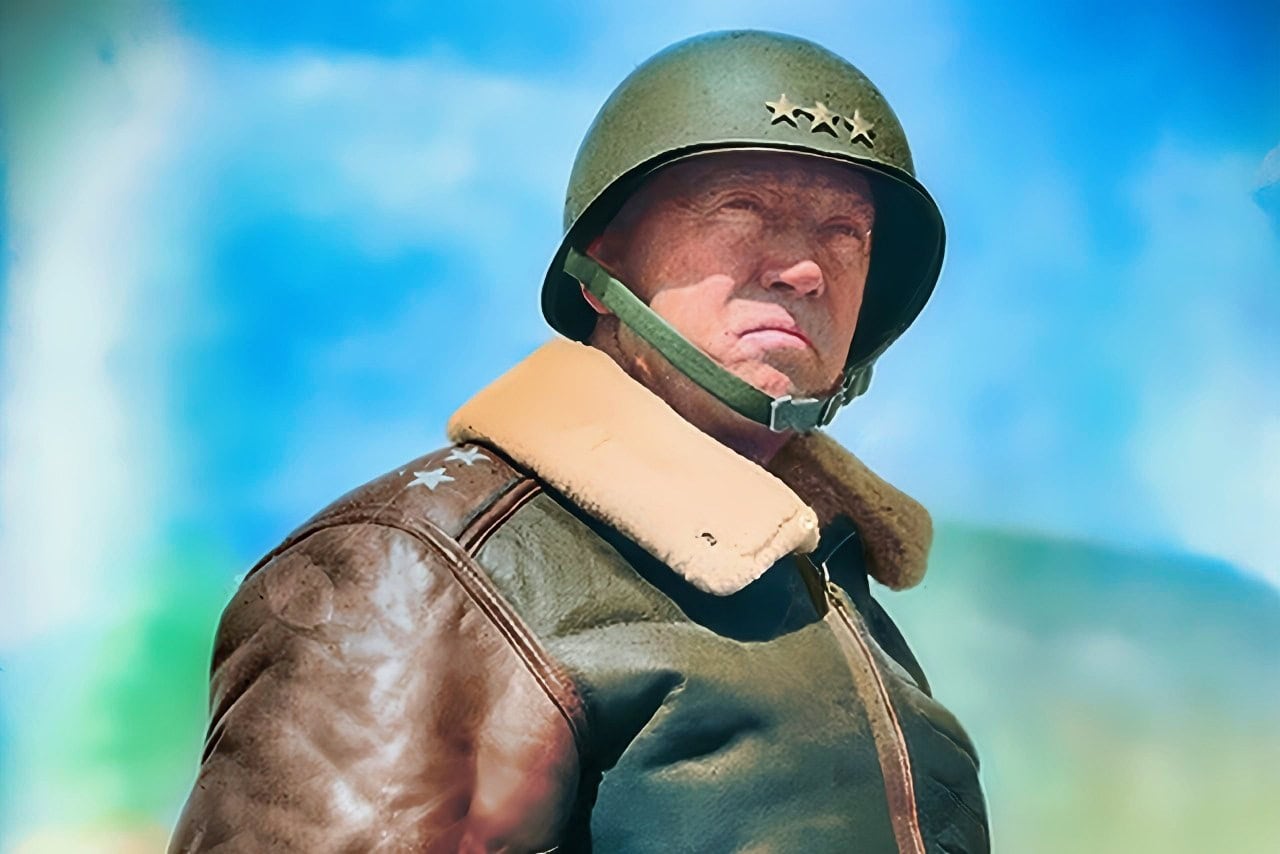
George Patton U.S. Army Photo
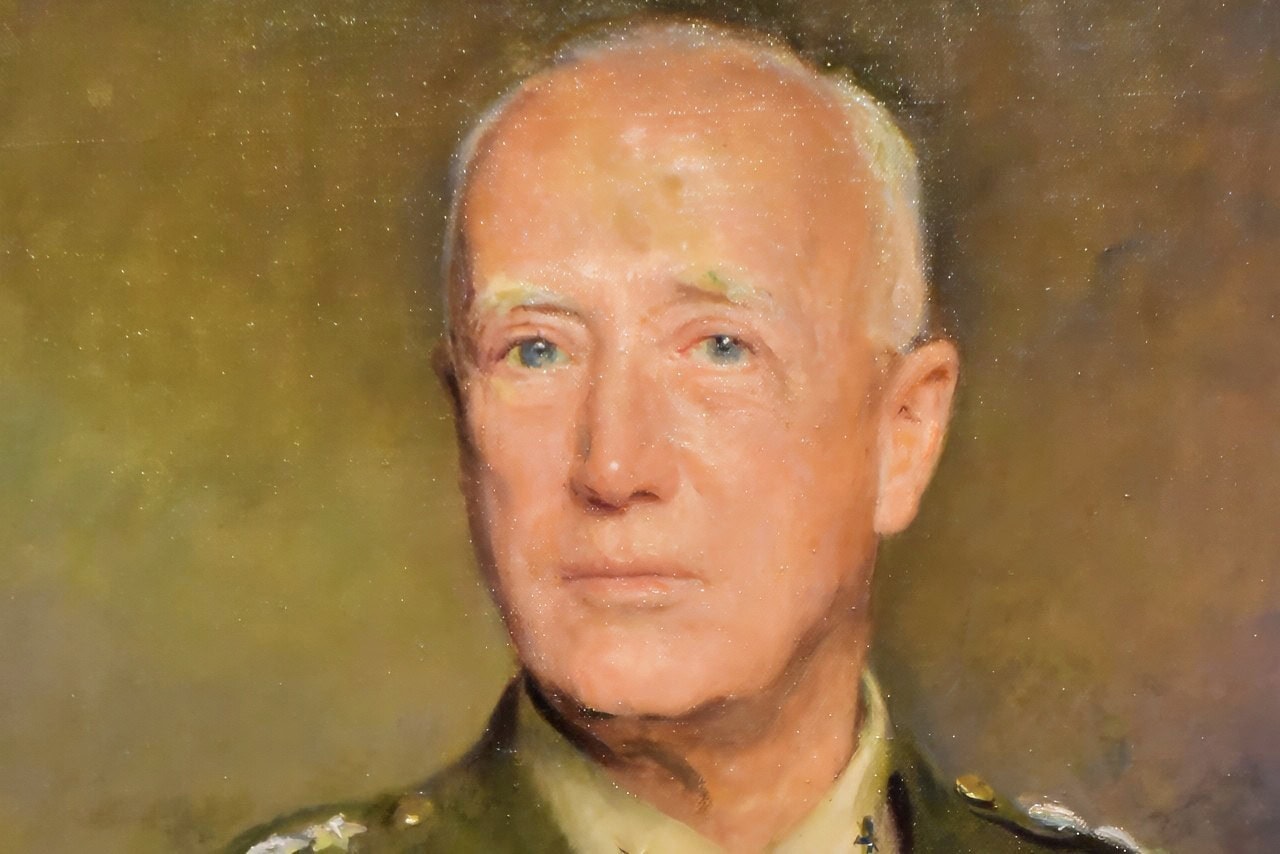
General George Patton National Portrait Gallery Photo. Image Taken by 19FortyFive on 1/23/2026 in Washington, DC.
According to the History Channel biography, Patton had hoped to command the invasion of Normandy. Instead, however, he commanded “a fictitious force that was supposedly preparing for an invasion in southeastern England.”
Alex Kershaw, a Patton biographer, wrote in 2023 for the Friends of the World War II Memorial website about his latest visit to the battlefield in Luxembourg, Belgium, and the Ardennes, which included a trip to Patton’s grave.
The great general, who died shortly after the end of the war, is buried in the Luxembourg American Cemetery, having requested to be buried alongside his men.
After writing that the Hollywood movie was more myth than fact about Patton, Kershaw said the famed general was “the only senior Allied general to emerge from the Battle of the Bulge with his reputation enhanced.”
It was Patton, Kershaw writes, who “promised and then delivered decisive action, pivoting his entire Third Army of over 250,000 men, and hundreds of tanks,” to break the Nazis’ siege of Bastogne.
In that engagement, Kershaw says he was “tireless and merciless” in leading his men into battle, never letting up the pressure. By January 16, he had beaten the Germans to Houffalize, closing the “bulge” that gave the epic battle its name.
That day, Kershaw’s account says Patton wrote to his son, also named George.
“Leadership…is the thing that wins battles,” the general wrote in that 1945 letter. “I have it – but I’ll be damned if I can define it. Probably it consists in knowing what you want to do and then doing it and getting mad if anyone steps in the way.”
After the Battle of the Bulge
In the early part of 1945, Patton continued the attack, which included crossing into Germany, “capturing 10,000 miles of territory and helping to liberate the country from Nazi rule.” Hitler died in late April, and the Germans surrendered about a week later, bringing the war in Europe to an end.
Patton’s final months were controversial.
In September of 1945, he gave an interview trashing the post-war deNazification policies, and the next month, Gen. Eisenhower removed him from command of the Third Army.
Then, in December, Patton was injured in a car accident near Mannheim in Germany, and he died 12 days later, on December 21, 1945.
Patton’s memoir, “War As I Knew It,” the source of many of his famous quotations, was published posthumously in 1947, two years after his death.
About the Author: Stephen Silver
Stephen Silver is an award-winning journalist, essayist, and film critic, and contributor to the Philadelphia Inquirer, the Jewish Telegraphic Agency, Broad Street Review, and Splice Today. The co-founder of the Philadelphia Film Critics Circle, Stephen lives in suburban Philadelphia with his wife and two sons. For over a decade, Stephen has written thousands of articles on politics, national security, technology, and the economy. Follow him on X (formerly Twitter) at @StephenSilver, and subscribe to his Substack newsletter.