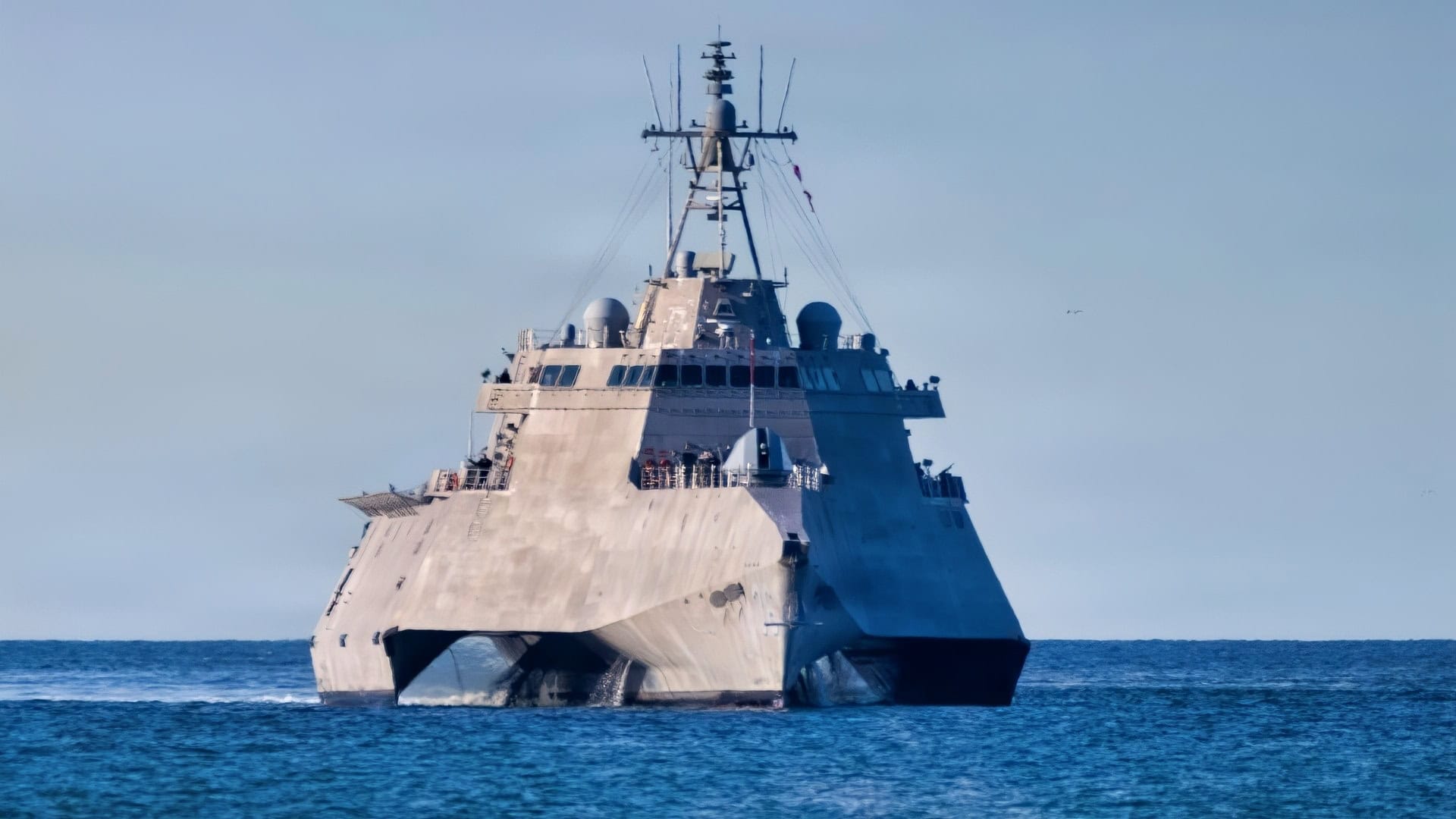
Summary and Key Points: The Littoral Combat Ship joined them: it never reached its 40-to-50-knot speed, its modules were never integrated, and the per-ship cost doubled to $500 million. The Navy cut the order from 50 to 32 and tried to retire ships early; Congress made it take 35. Total cost: $28 billion.
The Littoral Combat Ship Failure: Naval History the US Navy Wants to Forget
Designing naval vessels is a high art, and the US Navy has built great ships for 250 years, from the Age of Fighting Sail to the Frigate USS Constitution.
It has also had its share of ship designs that looked good on paper but failed in execution.
In WWII, the US built the Alan Sumner-class destroyers.
Based on the exceptional Fletcher-class, the Sumners had 20% more main-gun firepower and 50% more anti-aircraft guns than the standard Fletcher, while adding only about 150 tons of weight.
That looked like a great idea on paper, but in practice most of that extra 150 tons ended up above the ship’s center of gravity, making the Sumner top-heavy and nose-heavy in rough seas, and causing the hull to split its welds.
Instead of getting a better Fletcher in the Sumner, the Navy got a slower, shorter-ranged destroyer that rolled perilously in heavy seas. Not really an improvement at all.
Design Compromises Can Prove Fatal to Ship Designs
The aircraft carrier USS Wasp (CV-7) also seemed like a good idea on paper.
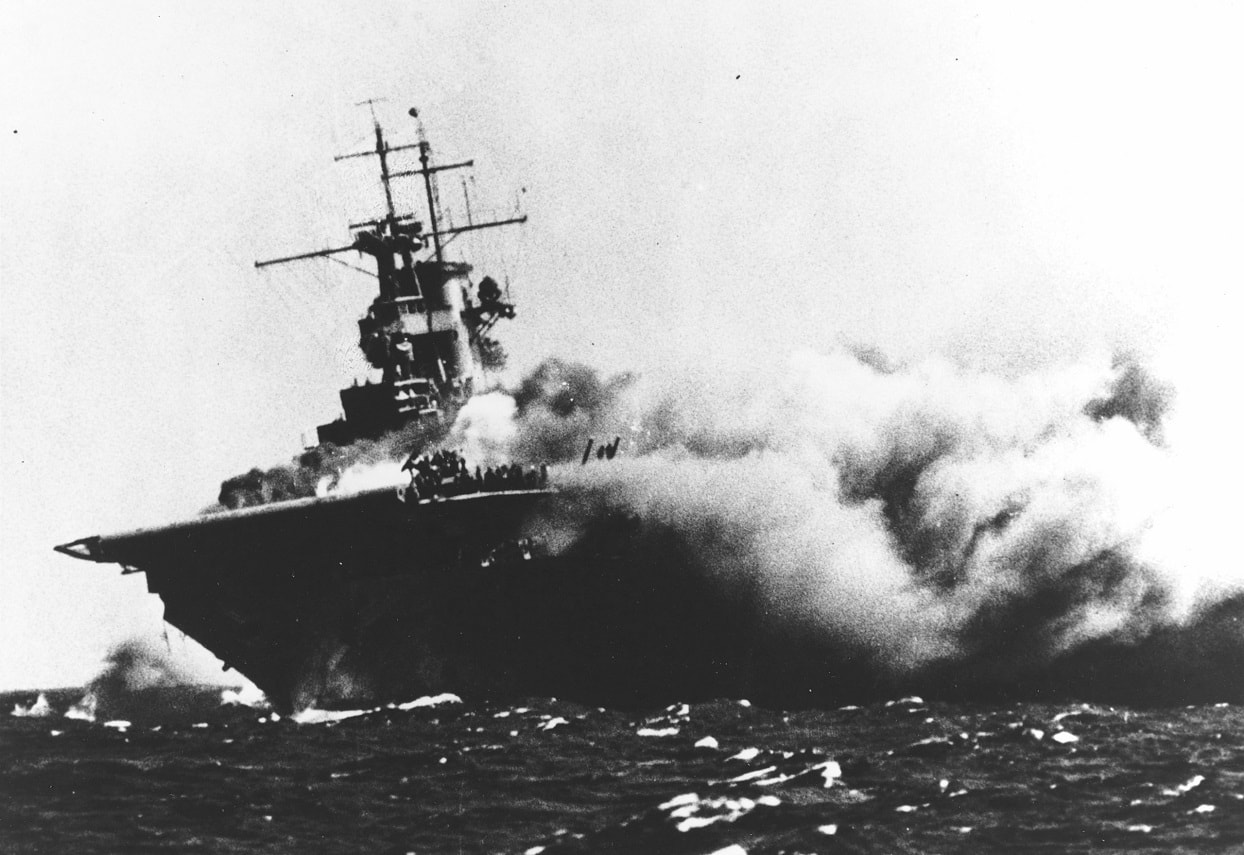
The U.S. Navy aircraft carrier USS Wasp (CV-7) burning and listing after she was torpedoed by the Japanese submarine I-19, on 15 September 1942, while operating in the Southwestern Pacific in support of forces on Guadalcanal. Note that the wartime censor has removed the CXAM-1 radar antenna, only its lower frame is still visible.
Take the excellent Yorktown-class carrier, trim it by 5,000 tons to meet pre-war treaty restrictions, and still fit an entire carrier air group aboard.
Not a bad idea on paper, but execution proved more difficult to pull off.
To save weight, the armor around vital machinery spaces, aviation fuel storage, and magazines was thinned; she had no torpedo blisters on her hull to preserve speed.
Wasp had fewer watertight compartments, and her firefighting piping was also thinned out.
In September 1942, Wasp was hit by two torpedoes from a Japanese submarine.
Her unarmored fuel and ammunition lockers exploded, and her water mains burst, preventing the firefighting needed to save the ship.
All the compromises made to save weight ultimately doomed the Wasp. She sank, taking 193 crew members with her.
The Navy Forgot What It Learned About Compromises In Ship Designs in WWII
Naval ship designers in WWII should have learned from good ideas executed badly.
Things that look good on paper must be married to perfect execution, with minimal compromises along the way.
This brings us to the Littoral Combat Ship, or LCS. On paper, the concept seemed solid. And in fact, when we visited a LCS last year, we came away thinking it was pretty impressive. We have some photos below to take a look at.
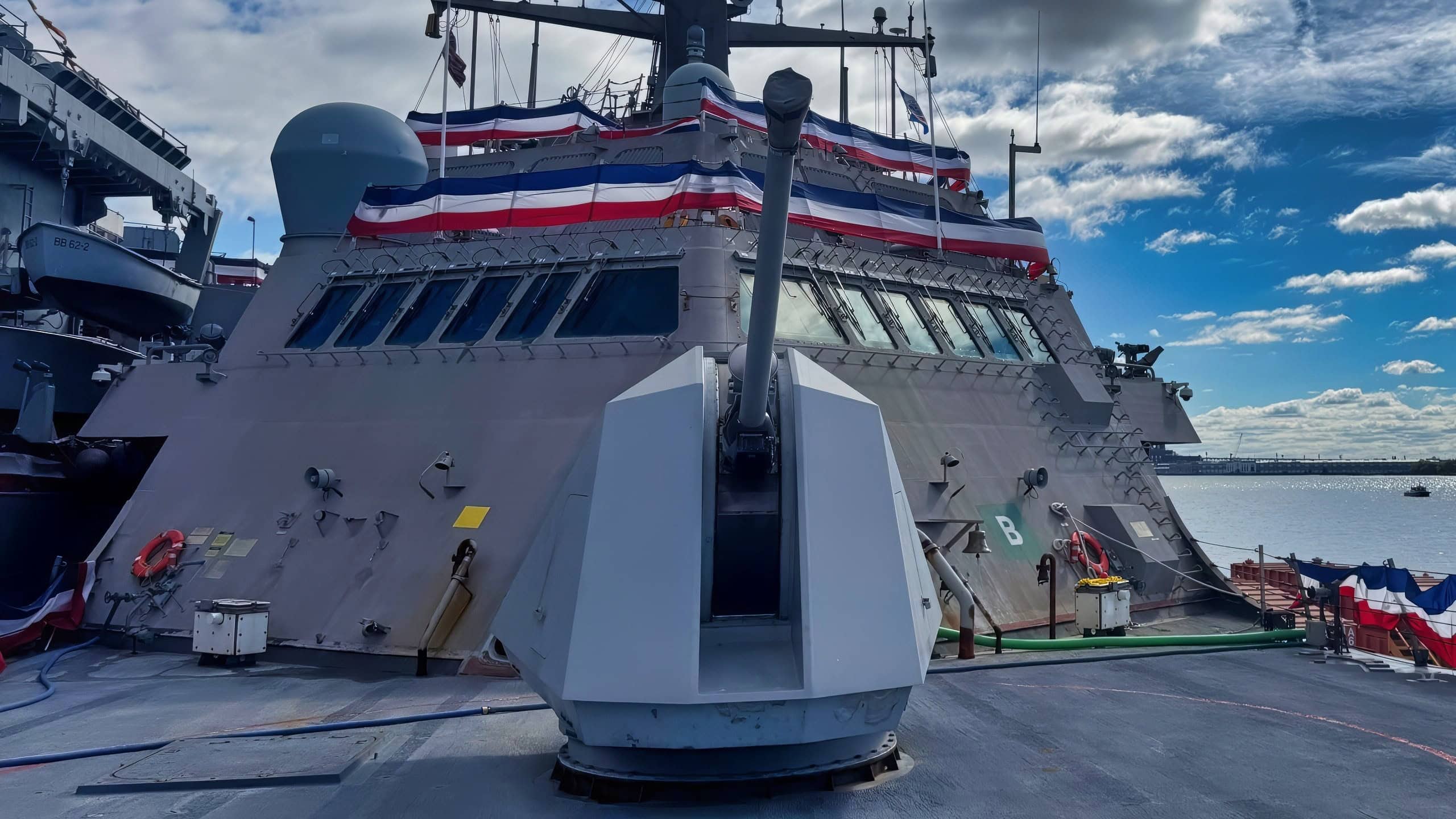
Littoral Combat Ship from 19FortyFive.com Visit During Fleet Week in late 2025.

USS Billings Littoral Combat Ship 2025 Fleet Week. Image by Stephen Silver for 19FortyFive.com

Littoral Combat Ship from Fleet Week 2025. Image Credit: Stephen Silver/19FortyFive.com
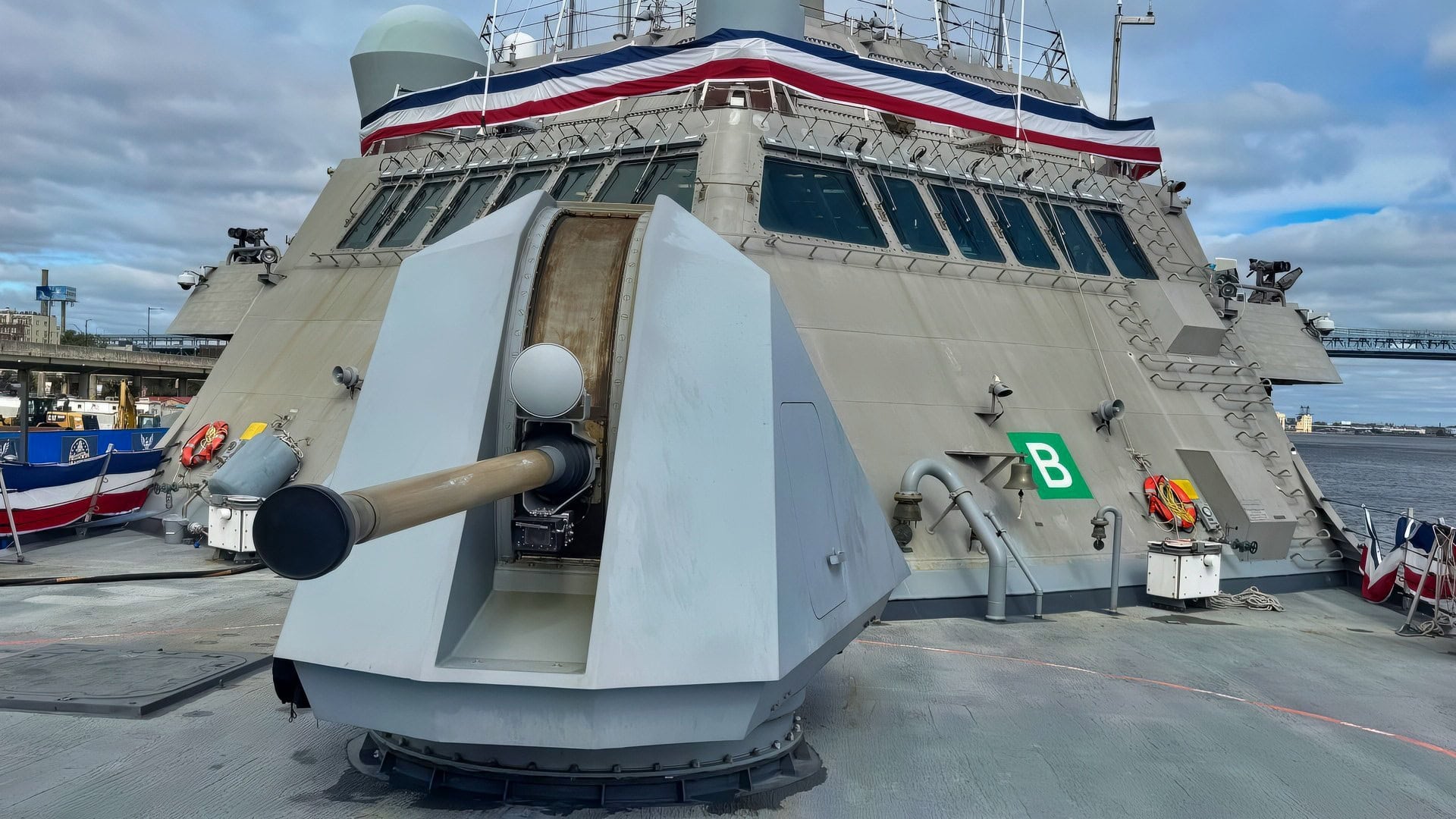
Littoral Combat Ship USS Cooperstown. Image Credit: 19FortyFive.com
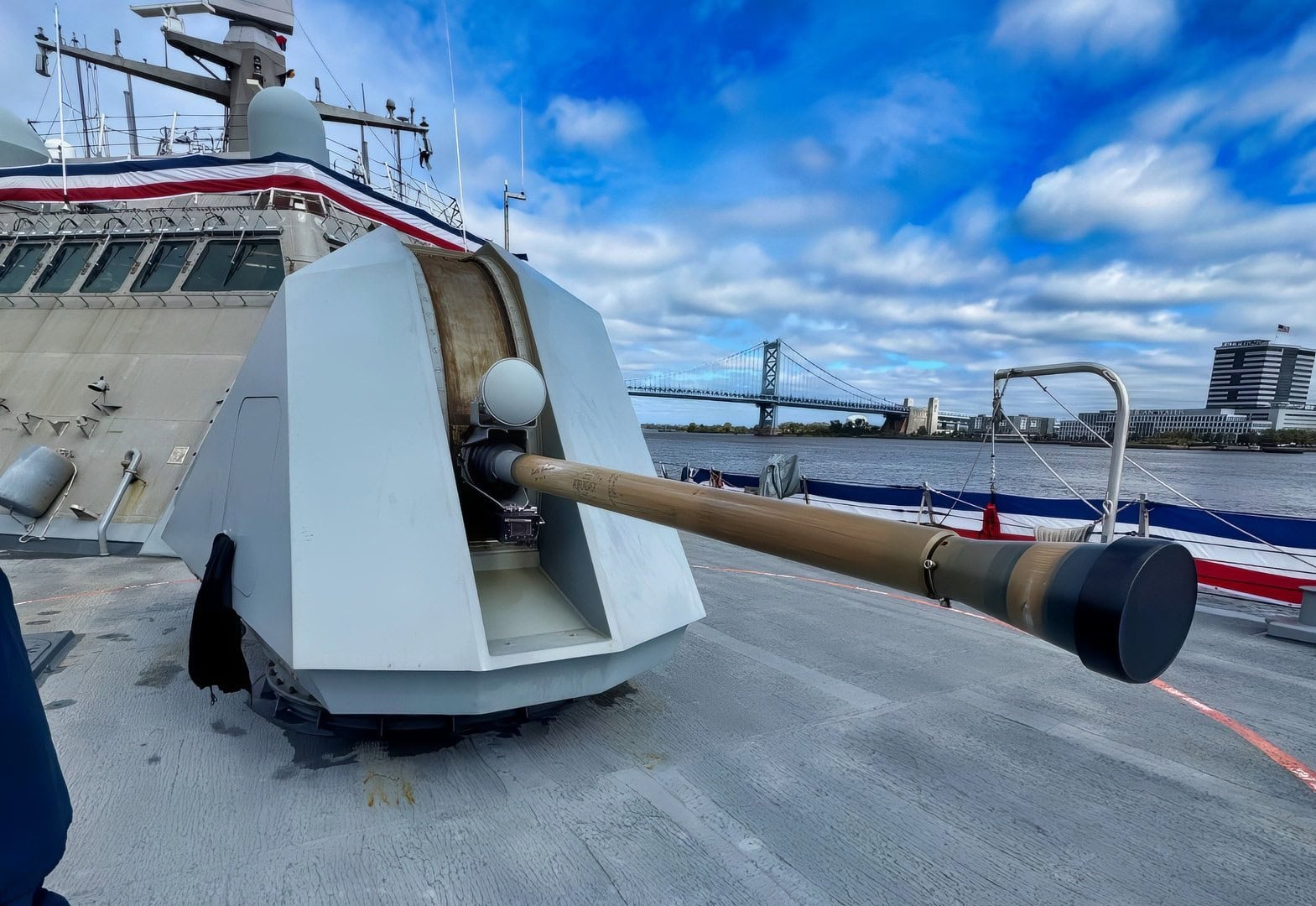
Littoral Combat Ship Deck Gun U.S. Navy. Image Credit: 19FortyFive.com
A fast, shallow-draft ship for near-shore or Littoral waters, for missions you did not want to risk a much larger destroyer on.
The LCS would be a sort of Swiss Army Knife with mission modules for anti-submarine warfare, surface warfare against small patrol boats, and mine countermeasures using unmanned drones.
The mission modules would be easy to swap within hours, even in forward areas.
That’s a perfectly fine idea for a ship, as long as you can execute it within the original concept and follow sound shipbuilding practices.
The LCS Was A Swiss Army Knife With Blades And Tools That Didn’t Work
It didn’t work that way for the LCS.
The mission modules would need to draw their electrical power from the ship’s generators to work.
The modules would also take up space on the rear deck, and the design would have to account for their weight, balance, and tie-down requirements.
Except they were not.
Instead, work on the modules proceeded separately from the ship’s design.
As a result, they found the modules couldn’t be integrated.
The Navy canceled the ASW module because it was delayed and over budget.
The mine countermeasure module took two decades to complete, and the surface warfare module was scrapped and redesigned.
Remember, these interchangeable modules were the defining feature of the LCS, the blades and tools of a Swiss Army Knife.
Best practice for building a warship is to finalize the design before you start cutting steel.
Everyone working on the ship has to know exactly what they are doing.
In the case of the LCS, 19 of its major system components weren’t fully matured, tested, and proven ready to go into a ship’s hull.
The LCS became a massive research and development project during construction.
The Navy Tried To Build The LCS Before They Even Knew Which Type Of Ship They Wanted
The Navy couldn’t even decide which kind of LCS it wanted to build.
It embarked on building two different models: the Freedom-class, a steel monohull design, and the Independence-class, an all-aluminum trimaran.
Both had their own problems.
At high speeds, the Freedom-class gearing system would destroy itself, severely limiting its safe operating speed in a ship that was supposed to make 40-50 knots.
The Independence-class ship’s aluminum hull would crack at critical structural points from the cyclic stress of wave pounding at higher speeds.
Design compromises to preserve high speed (which both ships proved incapable of) reduced armor and both offensive and defensive armament.
So not only could the LCS not reach 40-50 knots, but it couldn’t even defend itself at slower speeds.
The Navy Heads For The Exits On The LCS
The Navy knew it had a mess on its hands and tried to escape the tentacles of a project way over budget and incapable of living up to the concept that looked so good on paper.
In 2014, the Navy scaled back its order from 50 ships to 32.
Perhaps the Navy knew what it was doing here. Shortening the order spread the R&D cost across fewer ships; the per-ship cost skyrocketed from $250 million to about $500 million.
That should have been enough to get Congress to cancel further funding.
The LCS couldn’t move fast, its modules didn’t work, it couldn’t defend itself, and costs doubled.
Congress Fought The Navy To Keep Spending Money On Ships It Didn’t Want, Because 14,800 Jobs Were On The Line
Instead of canceling the program and hauling all the admirals in for a grilling before the House and Senate Armed Services Committees, Congress voted to keep funding the LCS anyway.
The program employed about 14,800 workers directly and indirectly, along with 1,000 suppliers, including General Dynamics and Lockheed Martin.
Congress continued to fund the LCS well past the point where it made no sense to continue and told the Navy it would have to take 35.
The Navy’s fallback position was to retire the LCS ships as quickly as possible.
Rather than keep them for their expected 25-year service life, the Navy tried to retire them at about 12-13 years, citing their lack of utility and high operating costs.
In 2012, they tried to get rid of four of them.
Congress then fought the Navy to keep them in service.
The LCS program would cost the Navy $28 billion for something that looked good on paper but came apart (literally) in its execution.
The Navy retired 7 of the LCSs and, in recent years, has dedicated three as full-time mine countermeasures ships in the Indian and Pacific Oceans.
About the Author: Sean Spoonts
Sean Spoonts is the former Editor-In-Chief of SOFREP.com. He is a military analyst, writer, and commentator whose work has appeared in Newsweek, CNS News, Ukrinform, and various military/veteran media networks and professional publications, including the Military Intelligence Professional Bulletin. He is a U.S. Navy veteran, having served as an Aviation Anti-Submarine Warfare Operator and Search and Rescue Helicopter Aircrewman.