
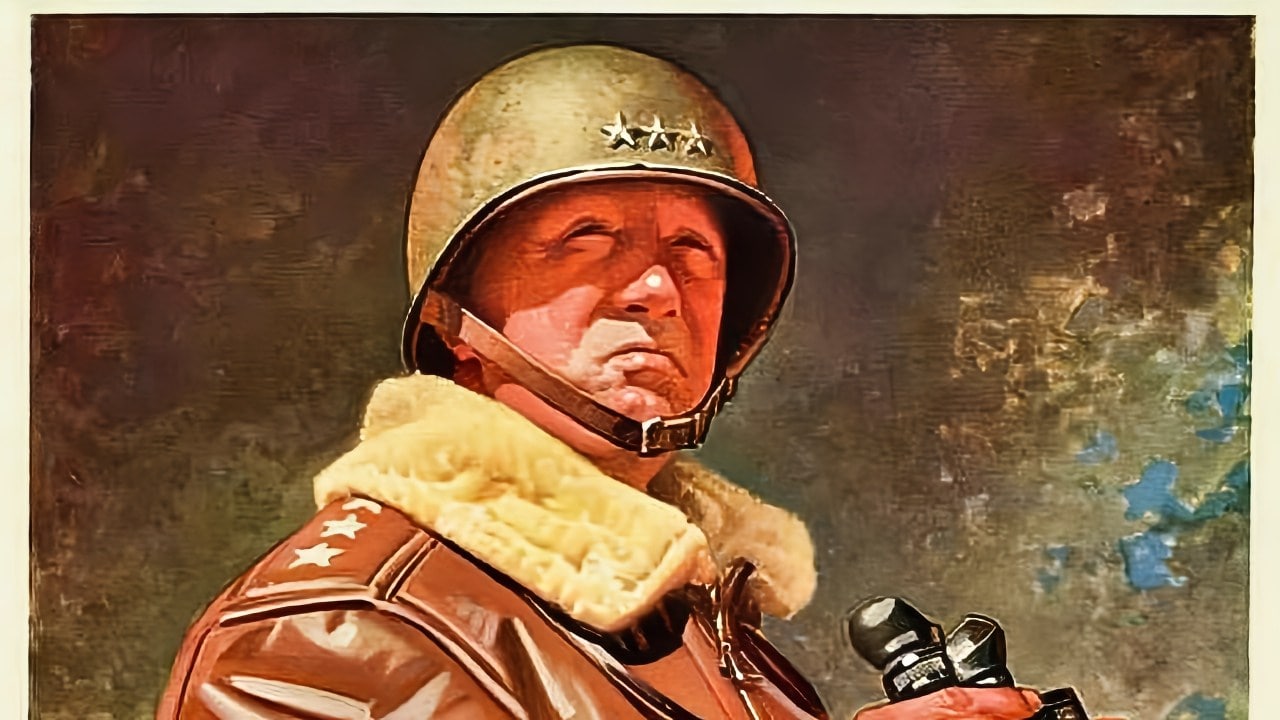
Summary and Key Points: Patton took II Corps in March 1943 after Kasserine Pass, drove the Seventh Army into Messina on August 17, 1943, then slapped two hospitalized soldiers, drew Eisenhower’s reprimand, and lost the Normandy command. With the Third Army, operational August 1, 1944, he ran it across Brittany and northern France past German lines rather than through them, and when the Ardennes offensive surrounded Bastogne, the 4th Armored Division broke through on December 26.
Why US Army General George S. Patton Is a US Army Legend
“The objective of war is not to die for your country, but to make the other poor ******* die for his country.” This is General George S. Patton’s most famous remark, an unsentimental assessment of combat.
Patton believed winning required destroying the enemy’s capacity and willingness to fight, and did not glorify American sacrifice—which may seem counterintuitive given that Patton was one of World War II’s most aggressive and recognizable American commanders, with a reputation built on speed, initiative, and a refusal to surrender momentum.
Although Patton’s methods and behavior generated controversy, his offensive approach contributed to major Allied victories in Europe.
Along the way, Patton’s underlying premise was to keep the enemy reacting, on their back foot, and unable to prepare.
Patton’s Philosophy
Patton emphasized mobility, surprise, initiative, and relentless offensive action, believing an army should maintain pressure after a breakthrough rather than pause unnecessarily.
Patton’s approach relied on mechanized formations, particularly tanks, supported by infantry, artillery, engineers, and logistics.
For Patton, speed was not simply moving vehicles quickly; it meant forcing the enemy to decide faster than it could respond effectively.
In Patton’s view, these rapid advances could prevent German units from establishing defensive positions or coordinating counterattacks.
Therefore, Patton encouraged subordinate commanders to act decisively rather than wait for perfect information.
Patton also believed that excessive caution could create additional casualties by prolonging battles.
While Patton’s approach was certainly aggressive, it did not mean launching frontal assaults against every fortified position; when possible, Patton favored maneuvering around strongpoints and exploiting weaknesses.
Developing his Reputation
Patton gained prominence after taking command of the US II Corps in North Africa in March 1943. American forces had just suffered a humiliating defeat at Kasserine Pass before Patton’s arrival.
Patton arrived, imposed discipline, and restored the corps’ confidence and combat effectiveness.
During the subsequent Sicilian campaign in July and August 1943, he commanded the US Seventh Army, advancing rapidly across western Sicily before pushing towards Messina.

General Patton Portrait. Image Credit: Creative Commons.
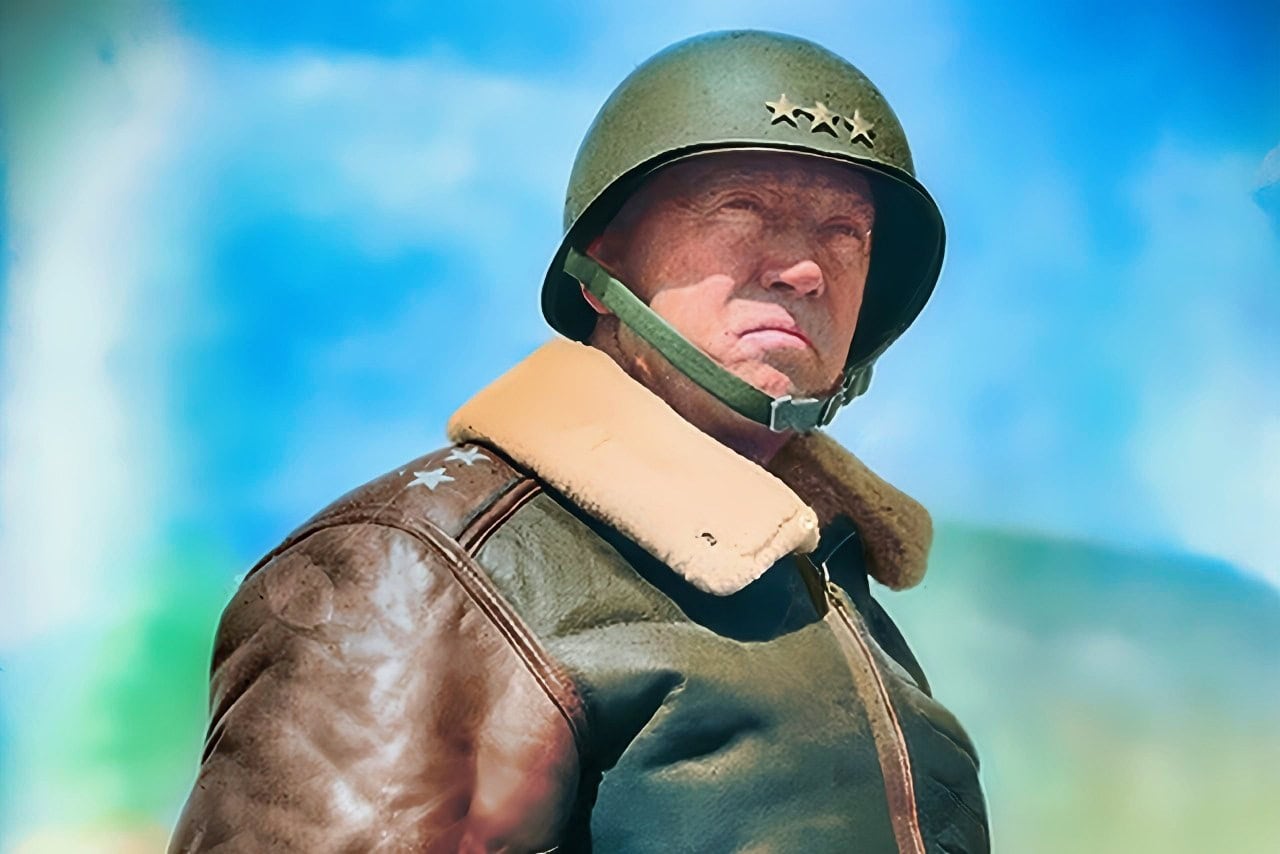
George Patton U.S. Army Photo
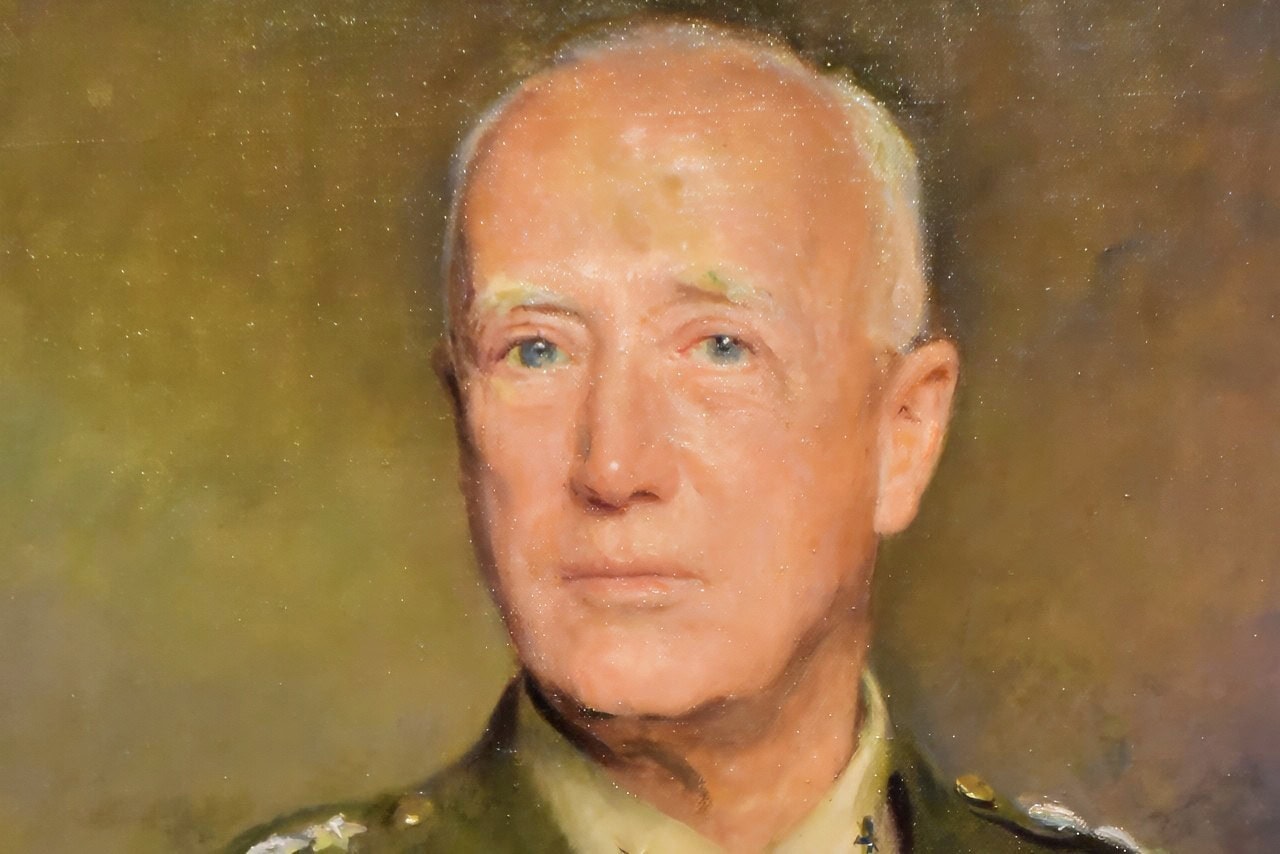
General George Patton National Portrait Gallery Photo. Image Taken by 19FortyFive on 1/23/2026 in Washington, DC.
Patton’s rivalry with British General Bernard Montgomery contributed to the campaign’s competitive atmosphere.
The Americans entered Messina on August 17, 1943, shortly before British forces.
However, many of the German forces evacuated Sicily before Patton’s arrival.
The campaign demonstrated Patton’s operational energy while revealing the limitations of speed alone.
The Slapping Incident
Patton’s aggressiveness extended beyond the battlefield and sometimes led to serious lapses in judgment.
During the Sicily campaign, he struck two hospitalized American soldiers suffering from what was then commonly described as combat fatigue.
The incident generated outrage within the Army and eventually became public. General Dwight D. Eisenhower reprimanded Patton and required him to apologize, and Patton lost the opportunity to command American ground forces during the initial Normandy invasion.
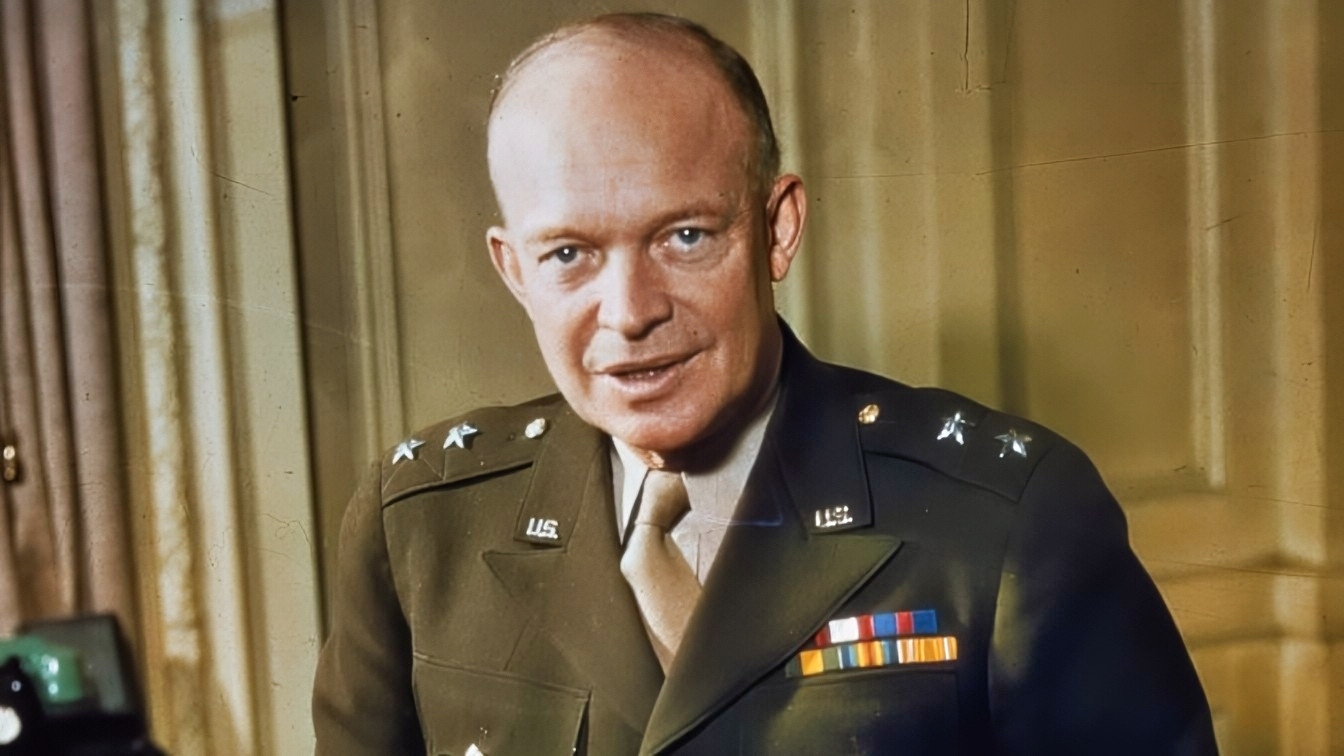
Dwight D. Eisenhower 1942 Photo Creative Commons
The incident, and his behavior generally, exposed the harsher side of his leadership philosophy; he did not tolerate perceived weakness, and his behavior sometimes undermined the welfare of soldiers recovering from traumatic experiences.
Yet Eisenhower recognized that Patton was valuable to the cause, with considerable operational abilities. The episode demonstrated why Patton was both admired and controversial.
The Third Army
Patton assumed command of the US Third Army, which became operational in France on August 1, 1944.
Following the Allied breakout from Normandy during Operation Cobra, the Third Army exploited the collapse of German defensive positions.
Patton’s forces advanced rapidly through Brittany and across northern France.
His formations covered enormous distances, often bypassing resistance rather than allowing German forces to establish coherent defensive lines.
The pace disrupted German operations.
In December 1944, Germany launched a surprise offensive through the Ardennes, creating the Battle of the Bulge.
American forces around Bastogne became surrounded and faced mounting pressure.
Patton’s Third Army operated farther south but had already begun contingency planning for northward movement.
On December 26, 1944, troops from the 4th Armored Division broke through to reach the surrounded defenders in a maneuver that required substantial logistical coordination and movement under difficult winter conditions.
Ultimately, Patton believed that decisive offensive action could reduce the duration and human cost of war. His campaigns demonstrated the military advantages of speed and initiative.
But aggression also carried risks, and its casualty-saving effects cannot be precisely quantified.
His enduring legacy reminds us that battlefield momentum can be a powerful tool.
About the Author: Harrison Kass
Harrison Kass is a writer and attorney focused on national security, technology, and political culture. His work has appeared in Tablet, City Journal, The Hill, The Spectator, and The Cipher Brief. He holds a JD from the University of Oregon and a master’s in Global & Joint Program Studies from NYU.