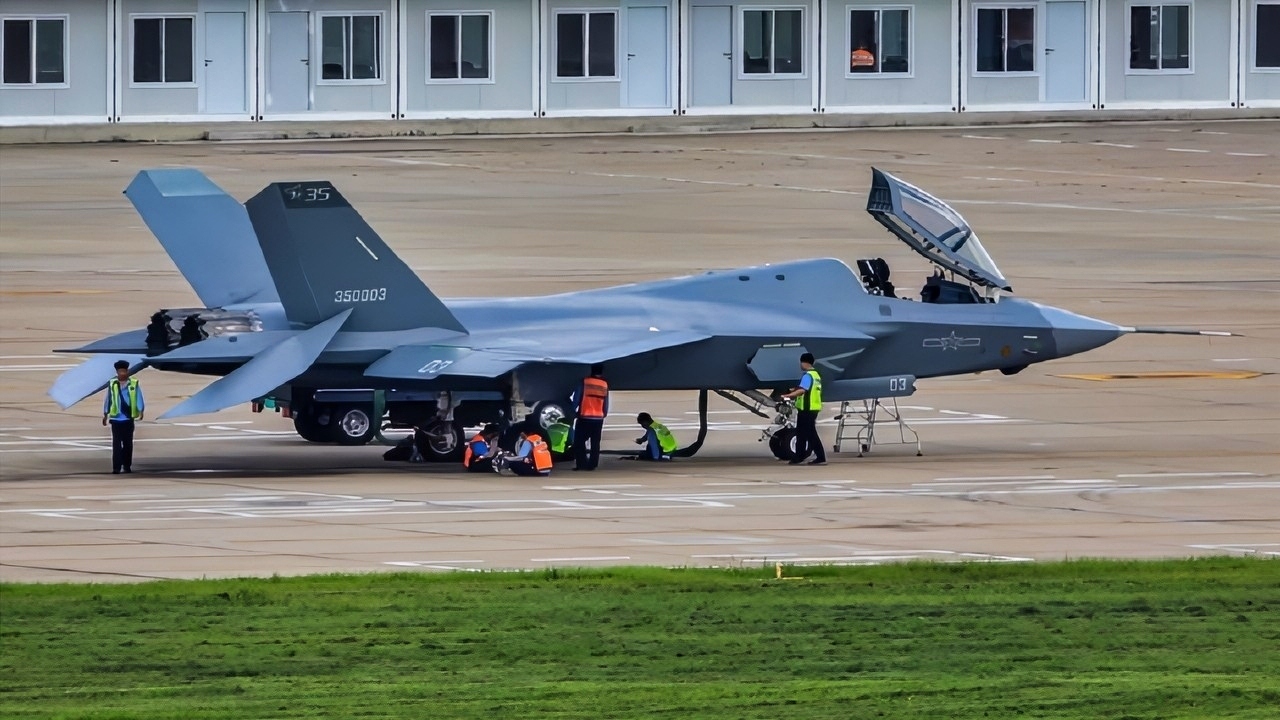
China’s J-35 stealth fighter is an early-production fifth-generation fighter with both naval and air force variants. The latest development in that ongoing program is a strong sign of maturing aerospace programs. Both variants appeared bearing markings consistent with in-service aircraft during a Beijing parade in September of last year. Furthermore, the navalized variant of that program has completed aircraft launches from China’s Fujian aircraft carrier.
The J-35: What it is
The J-35 program began as the Shenyang FC-31, a privately funded demonstrator aircraft that first flew in October of 2012. After several years seemingly in limbo, the project was revived for the People’s Liberation Army Navy, or PLAN, which required a low-observable fighter capable of operating from catapult-equipped aircraft carriers. The subsequent J-35A, a land-based variant of the original naval design, quickly followed for the PLA Air Force, or PLAAF.
The jets in question are medium-weight, twin-engine, single-seat stealth fighters intended to complement, rather than replace, their immediate predecessor, the much larger and heavier J-20, also a fifth-generation fighter.
The navalized J-35 variant has folding wings, a tail hook, and a catapult-launch bar. The J-35A dispenses with those naval-specific features completely. Open-source reporting estimates production at more than 57 aircraft by the fall of last year, though that number is a best guess, as Beijing published neither fleet totals nor production targets, so such figures are estimates rather than confirmed inventory.
The jet’s public debut in the fall of 2024 described the J-35 as a multirole fighter for air superiority and precision strikes. Its sensor fit is believed to include an electro-optical targeting system and distributed apertures.
Still, China has not disclosed the radar or electronic warfare suite, nor its weapons loadout in detail. While the aircraft is real and entering service, its combat effectiveness remains unproven and speculative.
Perhaps one of the more consequential aspects of the aircraft, and the least known, is its propulsion. Early iterations of the aircraft sported Russian-derived or interim Chinese engines.
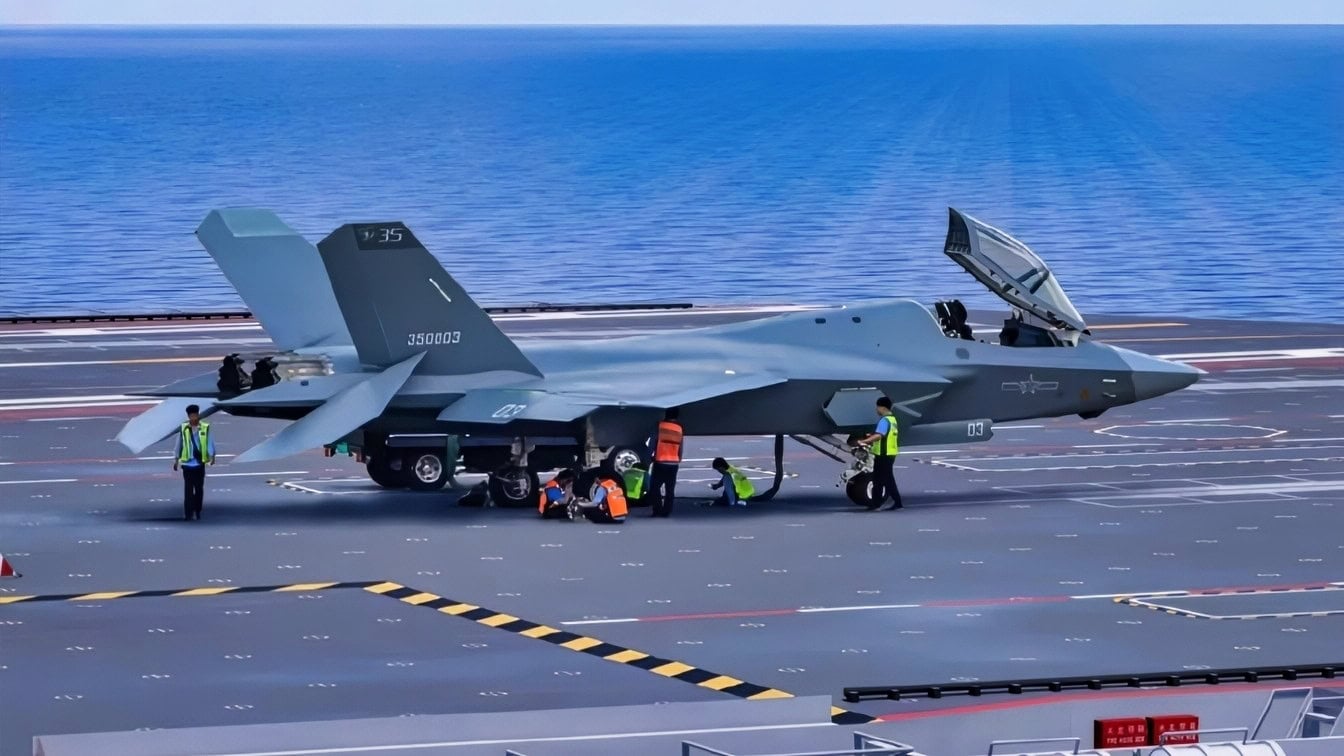
China J-35 Blue Shark Stealth Fighter
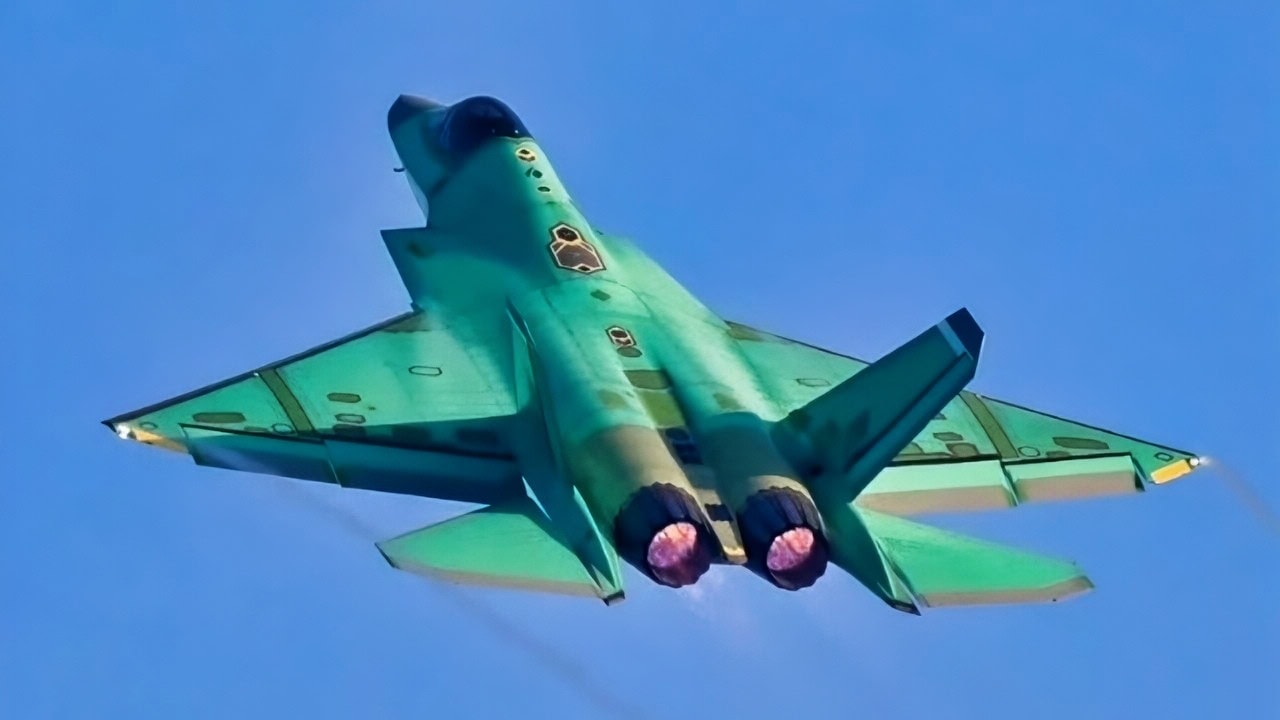
J-35A Stealth Fighter. Image Credit: Social Media Screenshot.
Currently, the WS-21 is believed to be the platform’s relatively mature, current power plant, while the more powerful WS-19, intended to enable supercruise, has not been publicly confirmed on operational aircraft.
It is an important question mark over the program, as engine reliability, thrust, and overall power-plant longevity will determine whether the J-35 is operationally constrained.
Two Look-Alikes: the J-35 and F-35
The similarities between China’s J-35 and America’s F-35 are difficult to ignore. Both aircraft are relatively compact stealth fighters. Both also sport canted twin tails, side-mounted air intakes, faceted edges, and place a particularly strong emphasis on low radar visibility. Their similarities have led to speculation of industrial espionage.
But appearances can be deceiving. Stealth shaping of the two aircraft followed shared physical constraints. These include managing heat and aerodynamic drag, minimizing protrusions, burying engines inside the airframe, and controlling radar returns.
Industrial espionage cannot, however, be dismissed entirely.
Chinese cyber operations against U.S. defense programs, including the F-35 stealth fighter program, have been observed and reported, and information gleaned from these operations could certainly have informed Chinese design choices for their own home-grown J-35 fighter.
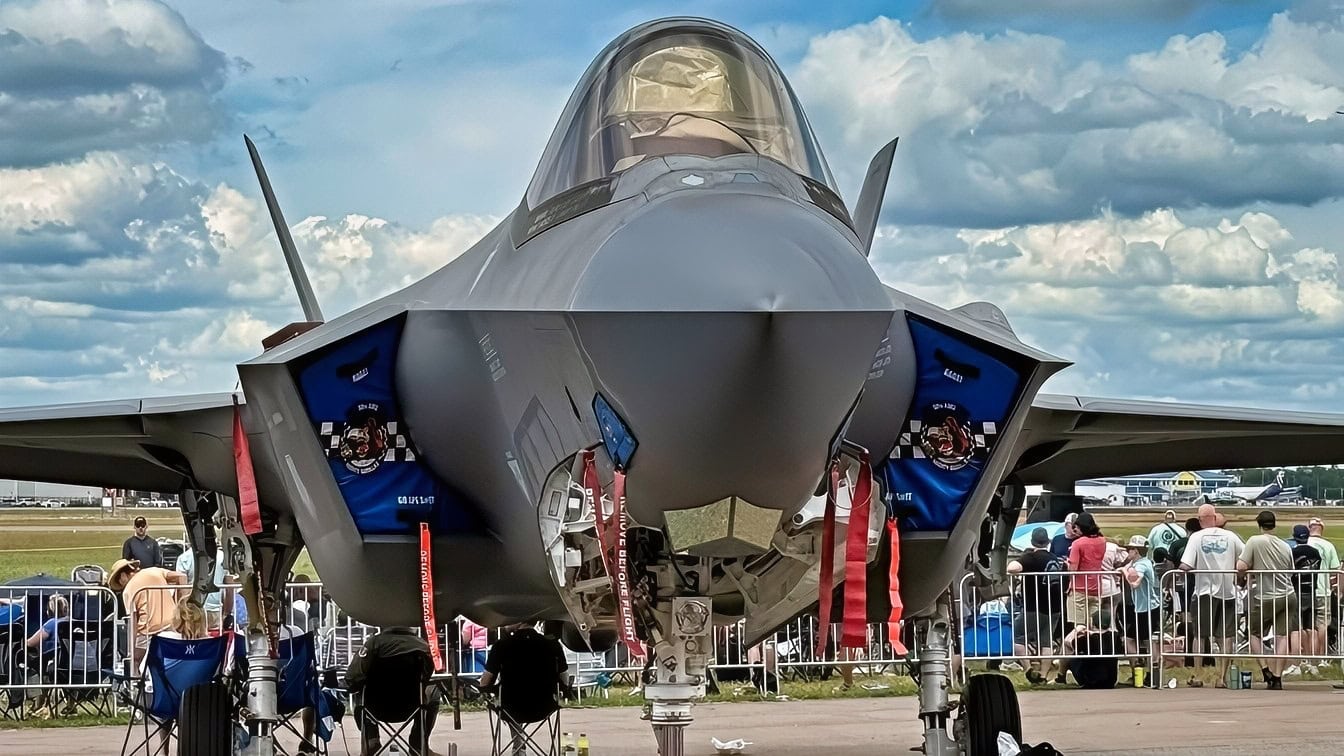
F-35C Lakeland Airshow Photo 19FortyFive Image Taken on 4/19/2026.
China, Pakistan, and India
Pakistan is arguably among the most likely first customers for the J-35 platform.
Pakistan already operates Chinese-designed platforms, including JF-17s, J-10CE fighters, and PL-15 long-range air-to-air missiles.
Islamabad has also received Chinese early-warning and air defense systems. In 2025, China reportedly offered Pakistan a package of about 40 J-35s, KJ-500 early-warning aircraft, and HQ-19 missile-defense systems, though the veracity of that report is difficult to confirm. But if true, Pakistan has yet to receive the fighters.
Evidence for a concrete sale to Pakistan is thin. Pakistani reports suggested earlier this year that an initial collaboration-type agreement with China had been established, with potential pilot training established.
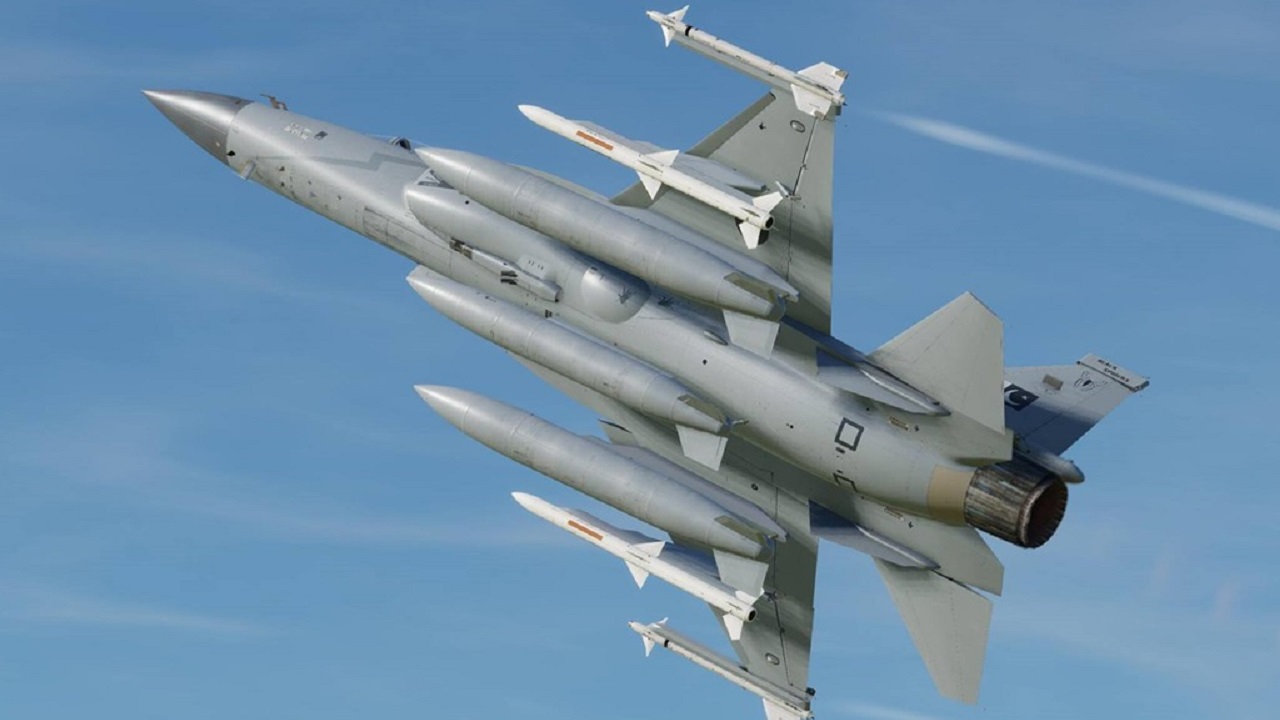
JF-17 fighter. Image Credit: Creative Commons.
But no delivery to Pakistan has been confirmed yet. A phased acquisition is perhaps more likely, if Beijing ultimately decides to export the aircraft.
If delivered to Pakistan, the J-35 would give the country its first fifth-generation fighter and a qualitative answer to India’s Rafale fleet. More importantly than the aircraft alone, however, would be the systems that surround and support it.
These include the KJ-500 surveillance aircraft, long-range PL-series missiles, robust ground-based air defenses, and integration with Chinese command-and-control. These would serve to complicate Indian planning for deep strikes and the detection of Pakistani aircraft.
If Islamabad can secure Chinese fifth-generation aircraft, it would also accelerate India’s own efforts to secure access to fifth-generation aircraft. But there would be risks for China, too.
If J-35s perform poorly or otherwise underperform, it would be a significant credibility and reputational blow, and could hinder other export opportunities.
About the Author: Caleb Larson
Caleb Larson is an American multiformat journalist based in Berlin, Germany. His work covers the intersection of conflict and society, focusing on American foreign policy and European security. He has reported from Germany, Russia, and the United States. Most recently, he covered the war in Ukraine, reporting extensively on shifting battle lines in Donbas and writing about the war’s civilian and humanitarian toll. Previously, he worked as a Defense Reporter for POLITICO Europe. You can follow his latest work on X.