
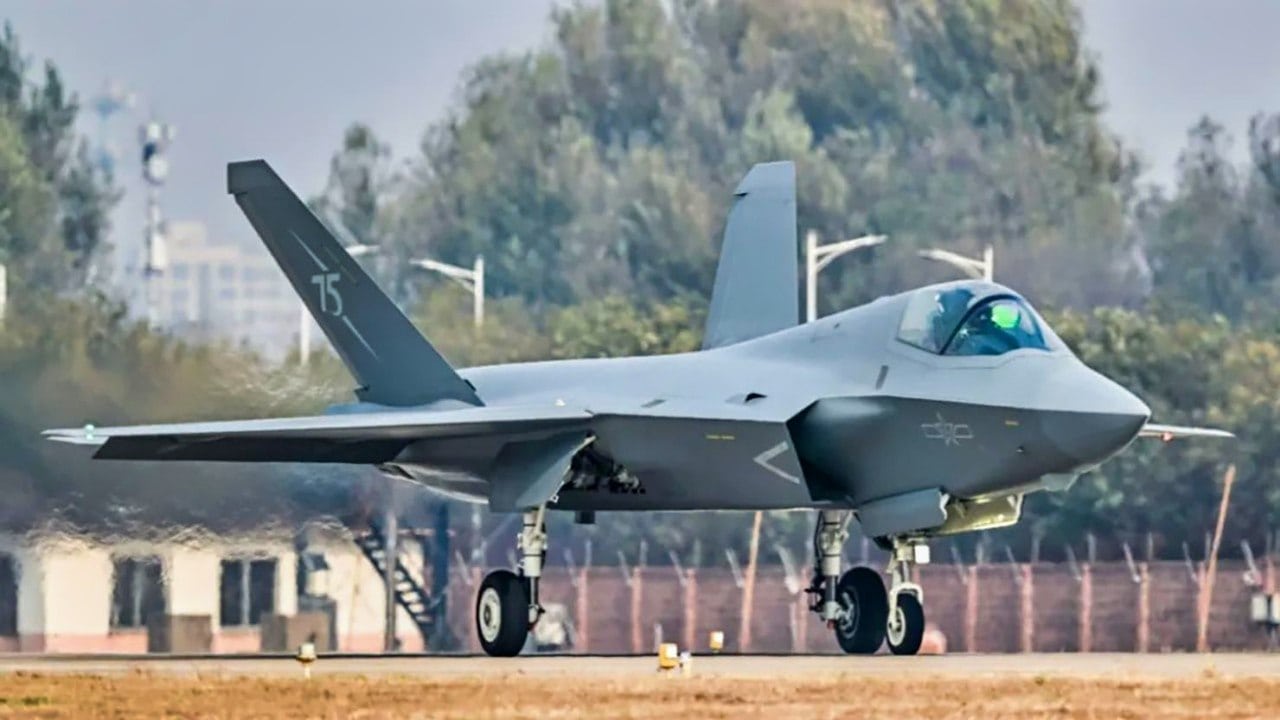
On August 15, new images of the Shenyang J-35 fifth-generation stealth fighter began to spread, showing the aircraft with what appears to be a new coat of radar-absorbent materials (RAM) with a reflective chrome-like appearance.
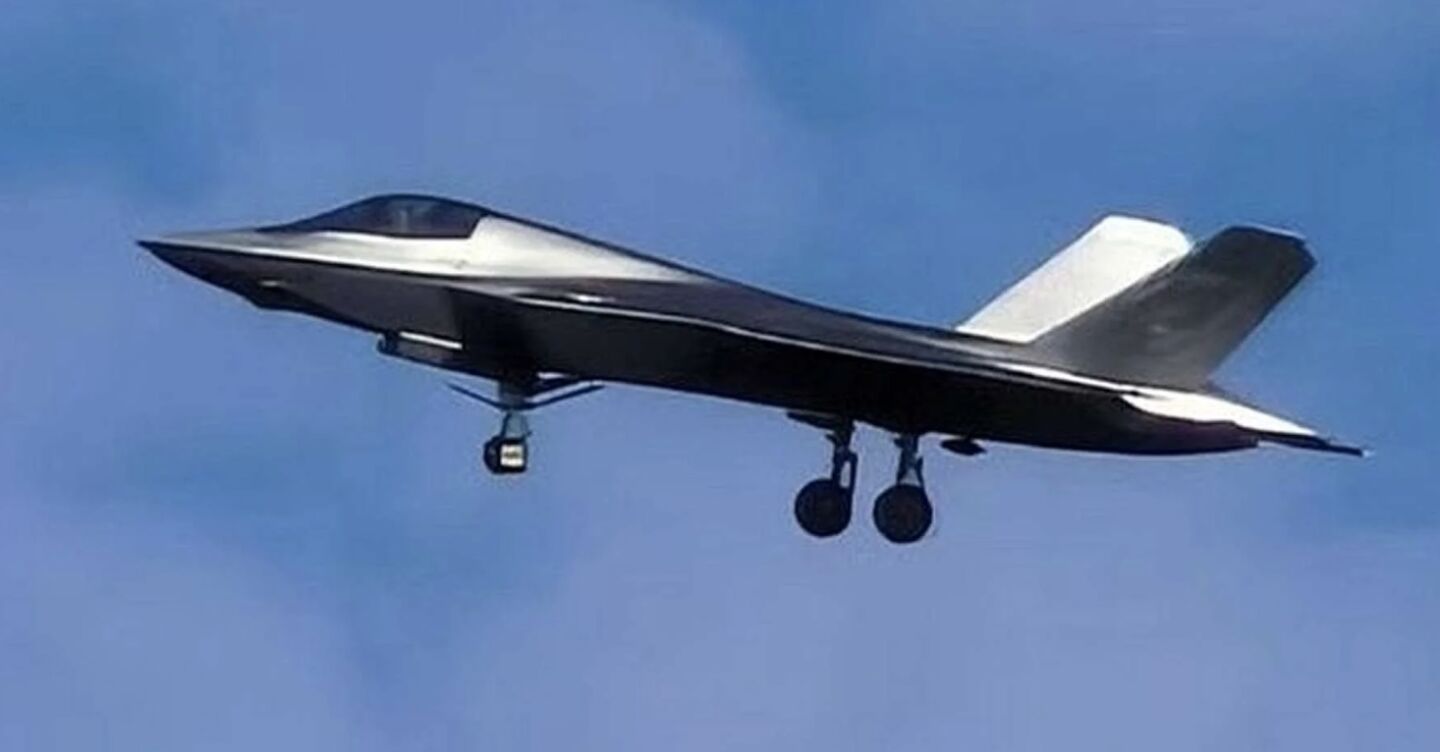
J-35 image from Weibo. Screenshot Image.
Assuming the images aren’t AI-enhanced (which is annoyingly common for Chinese aircraft, especially), the new coatings have spurred a flurry of speculation among online commentators about what this mirror-like coating is.
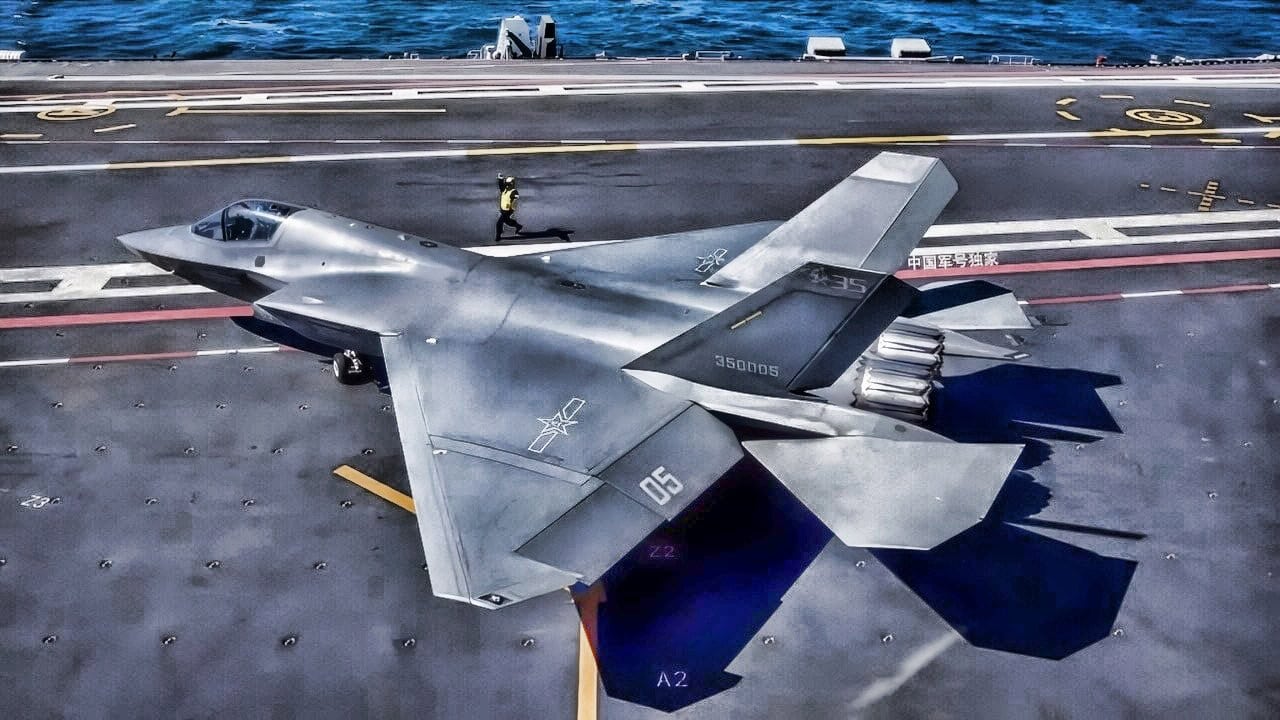
China J-35 Naval Stealth Fighter. Image Credit: PLAN.
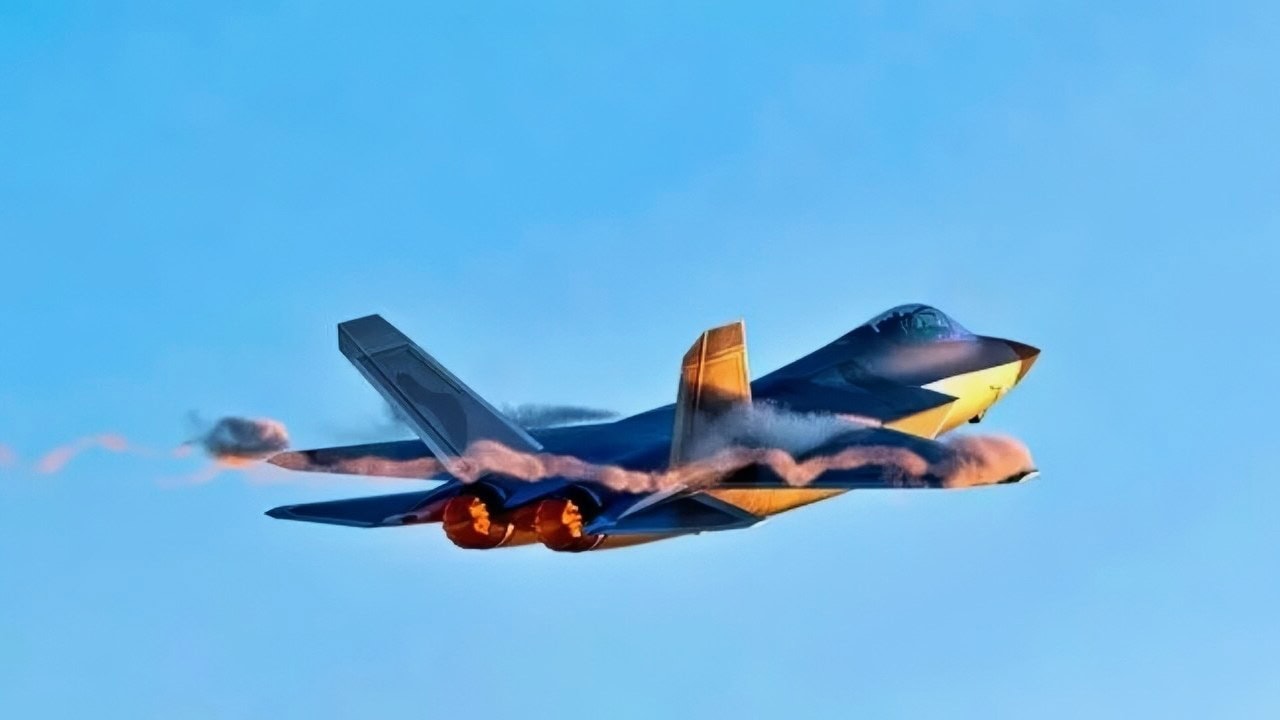
J-35A Fighter from China PLAAF. Image Credit: Creative Commons.
Is it a trick of the light, a new experimental stealth coating, or something else entirely?
Unfortunately, no one has definitive answers.
Chrome coatings have been an area of experimentation for some time now and are likely intended to reduce the aircraft’s infrared signature.
A New Stealth Camo or a Trick of the Light?
Assuming the footage is legitimate, there are a few possible explanations for the J-35’s “new look.”
First, China may be experimenting with a new form of RAM coating that gives off a mirror-like shine.
China has reportedly been developing new stealth coatings to hide its current and future-generation aircraft from modern anti-air radars.
According to some reports, Chinese researchers were testing new composite materials to create a heat-resistant stealth coating that could more effectively shield an aircraft from more advanced search radars.
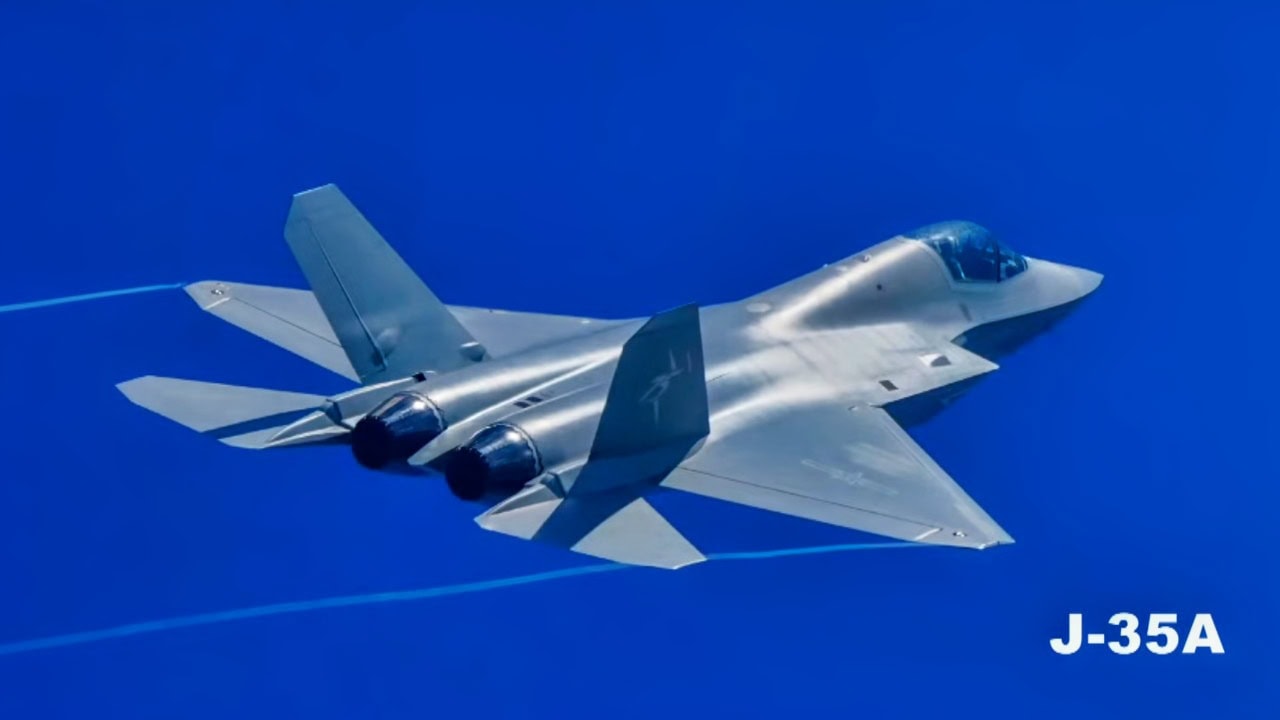
J-35 flying at Zhuhai Airshow 2024.
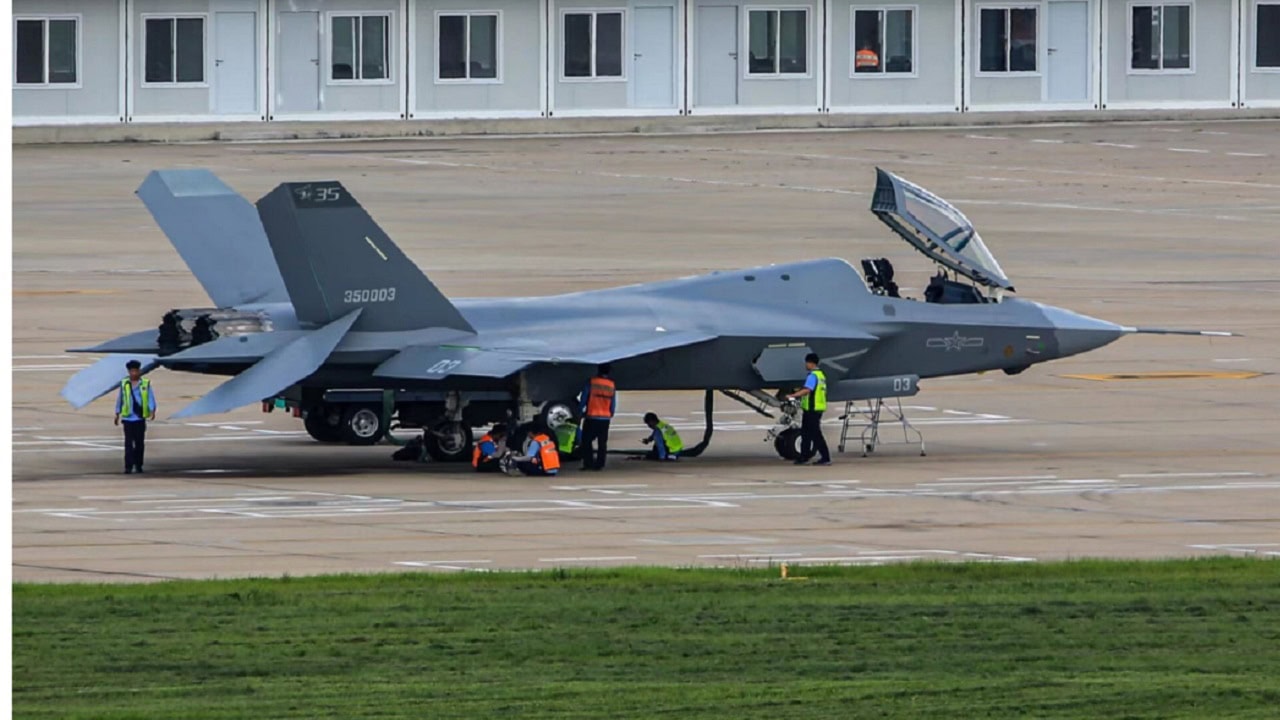
J-35 Stealth Fighter. Image Credit: Chinese Internet.
The recently spotted J-35 may have been testing a new type of advanced RAM coating, though there is no way to confirm such claims.
Another, much more boring possible explanation is that this is typical Chinese RAM coating, but the lighting and the angle simply make it look more reflective.
Over time, Chinese fifth-generation fighters have received different RAM treatments.
As some commentators have pointed out, a similar phenomenon was observed with the J-20.
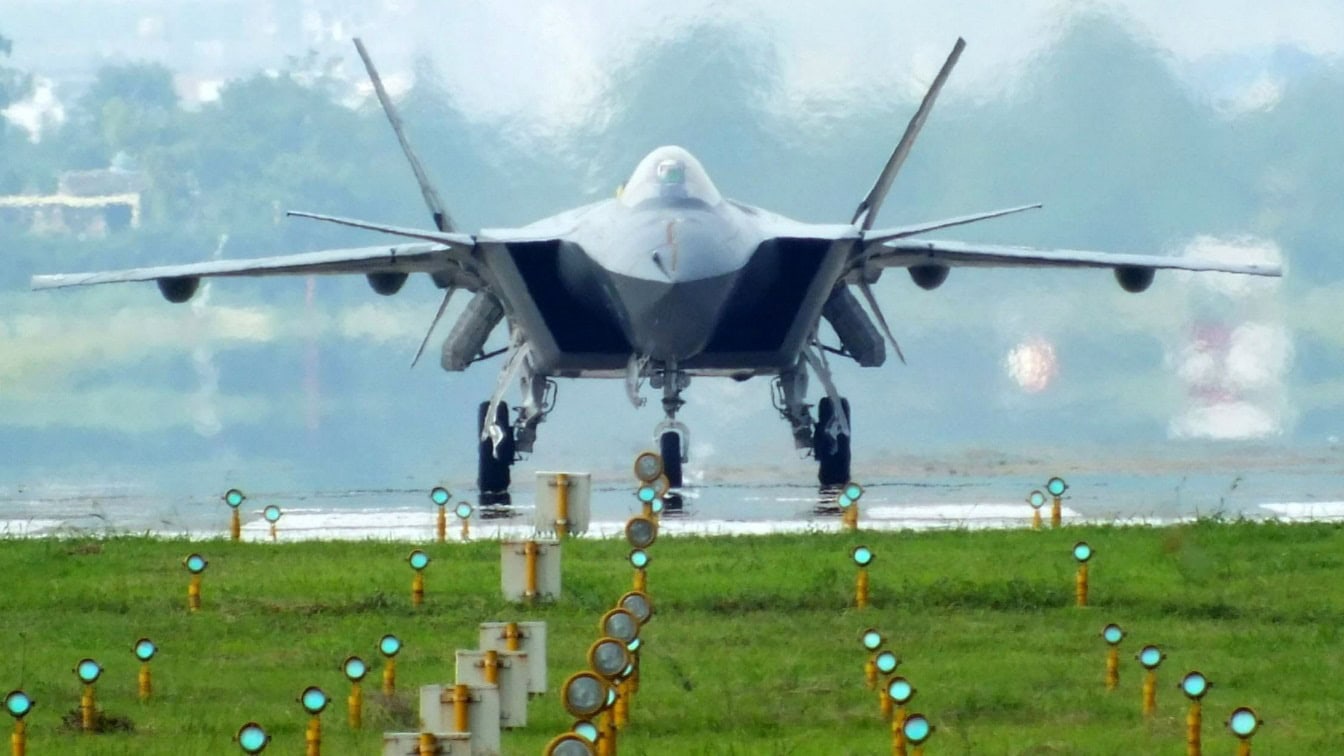
J-20 stealth fighter. Image Credit: Creative Commons.
On the ground, the J-20’s coatings looked like flat matte paint, but in the air, the lighting gave them a more reflective sheen.
The J-35 may be using the same, or at least a similar, RAM coating. The reflective sheen could also be the result of whatever low-quality camera the images were originally taken with, or perhaps of upscaling.
Chrome Coatings in the U.S.
What makes this story more interesting, however, is that the U.S. has experimented with reflective, chrome-like coatings numerous times.
In 2021, an F-22 Raptor was spotted with what appeared to be mirror-like tiles in place of its typical grey coatings.
Rather than a chrome-like coating as seen on the J-35, the F-22 appeared to have square, trapezoidal, and triangular tiles along the frame, with select areas like the radome, leading edges, and exhaust left untreated.
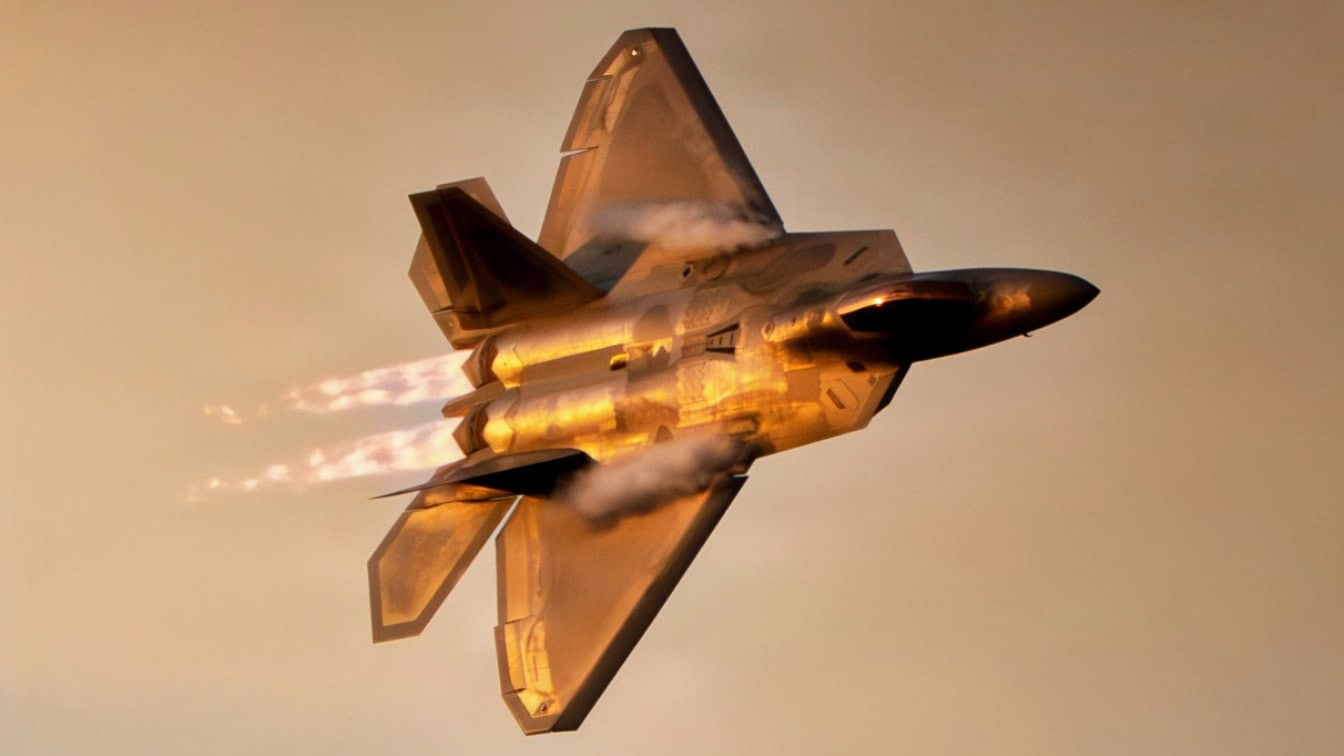
U.S. Air Force Capt. Nick “Laz” Le Tourneau, pilot and commander of the F-22 Raptor Aerial Demonstration Team, performs an aerial demonstration during the 52nd Annual SUN ‘n FUN Aerospace Expo in Lakeland, Florida, April 18, 2026. Capt. Le Tourneau showcased the unmatched capabilities of the F-22 to the SUN ‘n FUN crowds by performing multiple series of combat maneuvers. (U.S. Air Force photo by Staff Sgt. Lauren Diaz)
A second chrome-covered Raptor was spotted in 2022, this time with arrays of smaller rhombus tiles.
The F-22 is not the only American fifth-generation aircraft to receive the chrome treatment.
In 2022, two F-35s, belonging to the Navy’s Air Test and Evaluation Squadron Nine (VX-9), were spotted on separate occasions with chrome-like coatings.
These F-35s, like the second chrome F-22, were also intermittently covered with small rhombus tiles.
It is unknown whether all these aircraft received the same metallic-like coating or whether each had a different coating.
The story doesn’t end there, however.
In fact, the U.S. has been experimenting with reflective coatings since the 1990s, when the F-117 Nighthawk was photographed with a chrome-like coating as part of the SENIOR SPUD program, which aimed to further reduce the aircraft’s radar signature.
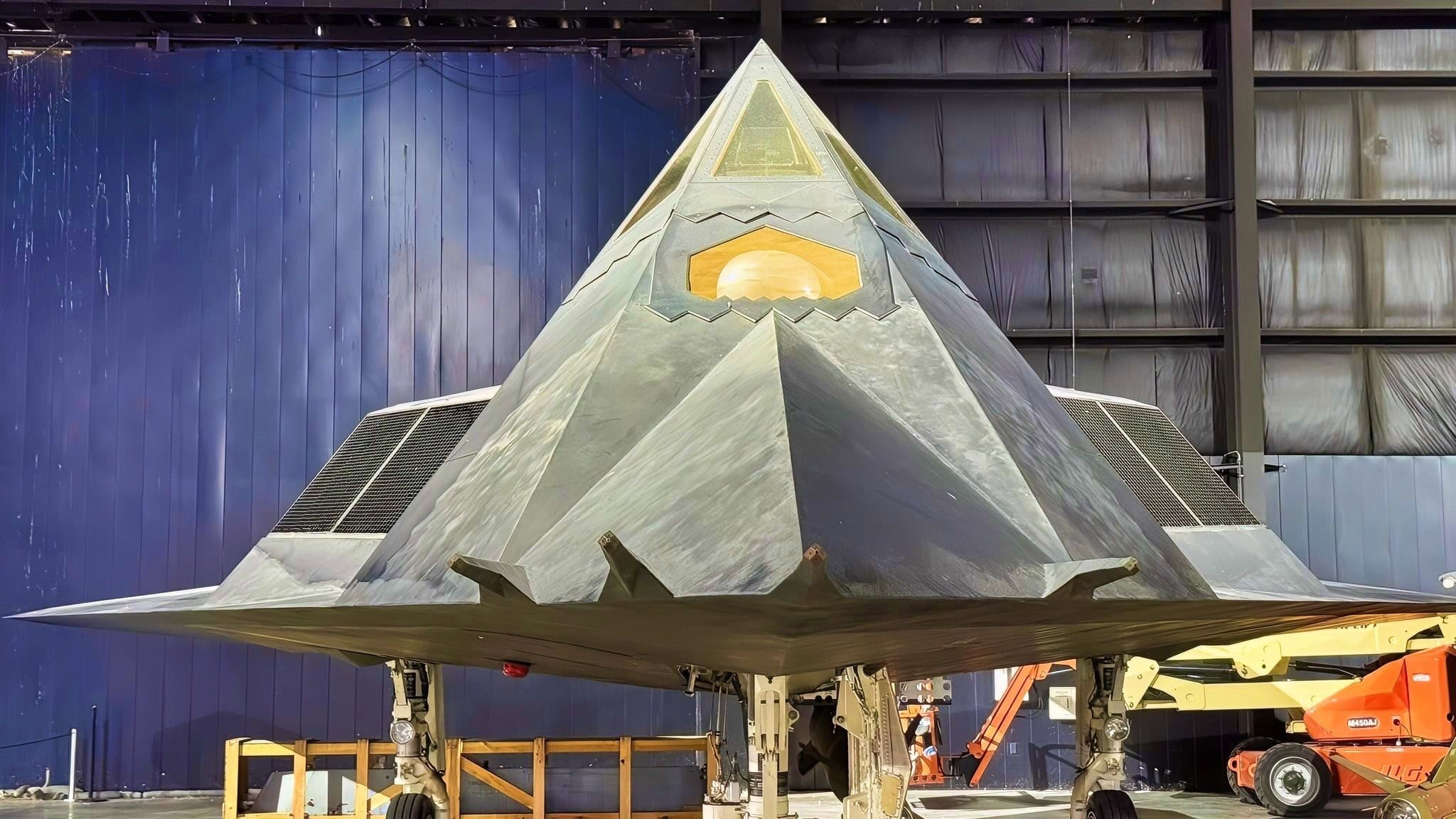
F-117 Nighthawk Stealth Fighter Harry Kazianis Photo from the U.S. Air Force Museum back in July of 2025.
Another F-117 was spotted with a mirror-like coating in 2022 near Eureka Dunes in the Saline Military Operating Area.
What’s the Point of Reflective Coatings?
What is the purpose of these reflective stealth coatings? Unfortunately, no one knows for sure. Most analysts surmise that the metallic finish is intended to reduce the aircraft’s IR signature.
After decades of research on low-observable technology, the U.S. has pretty much mastered the art of creating low-observable aircraft.
The F-35, for example, even without RAM coatings, still has a median frontal RCS of 0.06 square meters. The bigger threat to stealth aircraft, however, is IR search-and-track systems.
Stealth aircraft, despite measures to reduce their IR signatures, still emit noticeable heat signatures that can be detected and tracked.
The F-35 that was hit in Iran, for example, was likely hit by an IR missile (though this is also not confirmed).
This is, of course, speculation. No confirmation either way that metallic coatings are meant to reduce IR or that the U.S. intends to put chrome-like coatings into service at all.
It is simply interesting to note that both the U.S. and China have apparently experimented with reflective coatings for their fifth-generation fighters.
How will we know whether the recently spotted J-35 was a trick of the light or a forbearer of a new type of stealth coating?
The answer is to simply wait for the next batch of J-35s and see if they share a similar stealth camo. If future aircraft share a similar sheen, we will know this J-35 was really testing a new type of stealth coating.
About the Author: Isaac Seitz
Isaac Seitz, a Defense Columnist, graduated from Patrick Henry College’s Strategic Intelligence and National Security program. He has also studied Russian at Middlebury Language Schools and has worked as an intelligence Analyst in the private sector