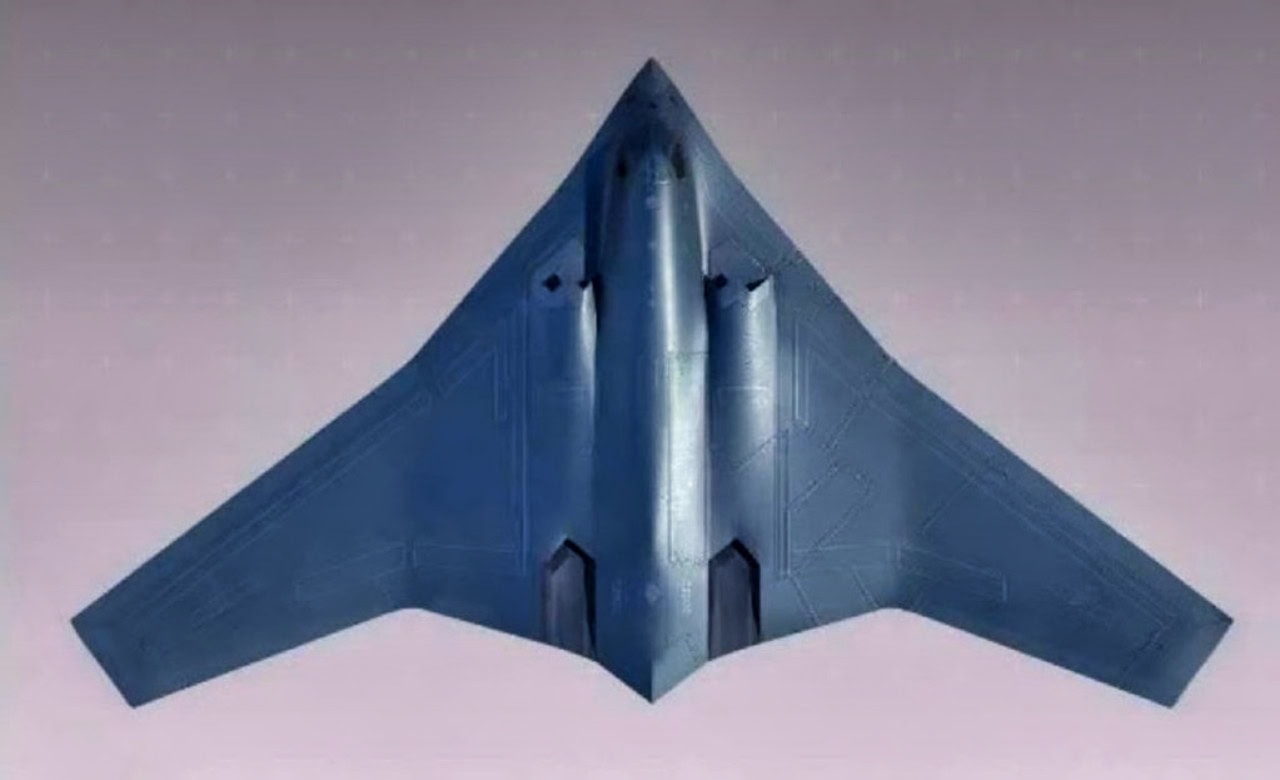
Bomber Mystery: China’s Xi’an H-20 stealth bomber, under development for the People’s Liberation Army Air Force (PLAAF), is anticipated to rival America’s B-2 Spirit.
-Featuring a flying wing design for stealth and extended range, the H-20 could reportedly carry nuclear and conventional payloads and strike targets beyond 10,000 km.
-The PLAAF envisions the bomber as a key tool for global power projection.
-While the aircraft’s exact specifications remain unclear, U.S. Defense reports suggest the H-20 could refuel mid-air to achieve intercontinental reach.
-As the H-20 progresses, it represents a significant leap in China’s strategic military capabilities, signaling its ambitions in global security dynamics.
China’s Xi’an H-20 Stealth Bomber
Although not much is known about China’s future long-range stealth bomber, a few details can be gleaned from the information about the plane from what has been said.
China’s H-20 bomber, developed by Xi’an Aircraft Industrial Corporation, is a stealthy strategic bomber in development for the People’s Liberation Army Air Force, the PLAAF.
Very little is known about the bomber publicly, but some details can be worked out based on what Chinese officials as well as information released by the Department of Defense.
Tthe H-20 will likely be intended for long-range missions of a strategic nature.
To that end, the bomber will reportedly use a flying wing design similar to that of the American B-2 stealth bomber or the upcoming B-21 Raider.
A flying wing design would give the H-20 both a reduced radar cross-section, and potentially improve its range.
Chinese officials have explained that the H-20 would carry both nuclear and conventional payloads, which would afford the bomber significant strike capabilities.
A recently-released assessment of the Chinese military released late last year sheds some light on what the stealth bomber’s capabilities may be.
“The PRC is developing a new generation of long-range bombers, likely named the H-20. The H-20, which may debut sometime in the next decade, will have a range of more than 10,000 km, enabling the PLAAF to cover the Second Island Chain and into the western region of the Pacific,” the report said.
“The H-20 bomber’s range could be extended to cover the globe with aerial refueling. It is expected to employ conventional and nuclear weaponry and feature a stealthy design.”
Why A New Stealth Bomber for China?
The reason the PLAAF wants a stealthy bomber is for nuclear and conventional power projection, the Department of Defense explained.
“The PLAAF is seeking to extend its power projection capability with the development of a new H-20 stealth strategic bomber, with official PRC state media stating that this new stealth bomber will have a nuclear mission in addition to filling conventional roles. The PLAAF is developing new medium- and long-range stealth bombers to strike regional and global targets. PLAAF leaders publicly announced the program in 2016; however, it may take more than a decade to develop this type of advanced bomber.”
H-20 stealth bomber artist rendering. Image Credit: Creative Commons.
The development of the B-2, conceptualized at the hight of the Cold War with the Soviet Union, experienced delays and cost overruns thanks in part to the project’s complexity.
Design considerations to support stealth performance incorporated a great deal of new technology, including fuselage shaping aided by computer, new stealth coatings, and other measures to keep the plane’s radar cross-section to a minimum.
A report from Rand Corporation, a think tank, commented on the bomber’s anticipated stealth capabilities.
“Judging from recent Chinese military commentary, it would appear that the PLA has already instructed Xi’an to focus on stealth, as demonstrated by the flying wing configuration, rather than supersonic capabilities,” the report explained.
“According to Yin Zhuo, China has gained essential expertise on stealth through its development of the J-20 and F-31 stealth fighters. Indeed, Yin opined, the H-20 would be on par with the B-2 Spirit in terms of stealth performance. Another military expert, Li Li, assessed that it would be technically demanding to incorporate both stealth and supersonic capabilities into the new bomber because of differences in the required aerodynamic configuration of the aircraft for each capability. This strongly suggests that Xi’an will have to remain focused on stealth.”

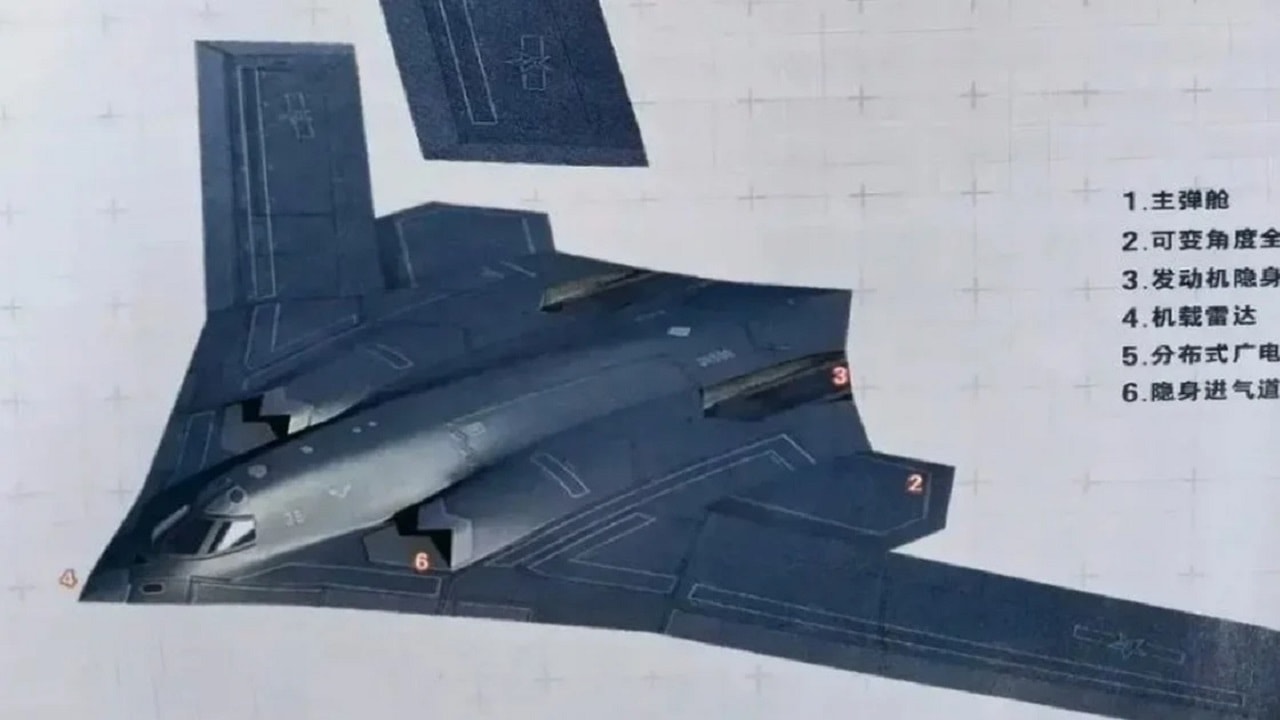
China’s H-20 Stealth Bomber? Video Screen Shot from YouTube,
The PLAAF released a small hint at what the bomber would look like in a video several years ago, revealing the general outline of the airframe just briefly.
Despite the dearth of information available about China’s Xi’an H-20 Stealth Bomber, it will by all accounts be a stealthy, long-range bomber that could rival the America B-2 Spirit.
About the Author: Caleb Larson
Caleb Larson is an American multiformat journalist based in Berlin, Germany. His work covers the intersection of conflict and society, focusing on American foreign policy and European security. He has reported from Germany, Russia, and the United States. Most recently, he covered the war in Ukraine, reporting extensively on the war’s shifting battle lines from Donbas and writing on the war’s civilian and humanitarian toll. Previously, he worked as a Defense Reporter for POLITICO Europe. You can follow his latest work on X.