

Key Points and Summary – Sweden may have joined NATO only in 2024, but during the Cold War it quietly designed its own nuclear strike jet: the Saab A-36.
-Conceived under Projekt 1300 as a single-seat, Mach 2+ delta-wing bomber, the A-36 would have carried a 1,300–1,800-pound gravity nuke from Swedish bases to Soviet targets in the Baltics, Poland, East Germany, or even Leningrad.
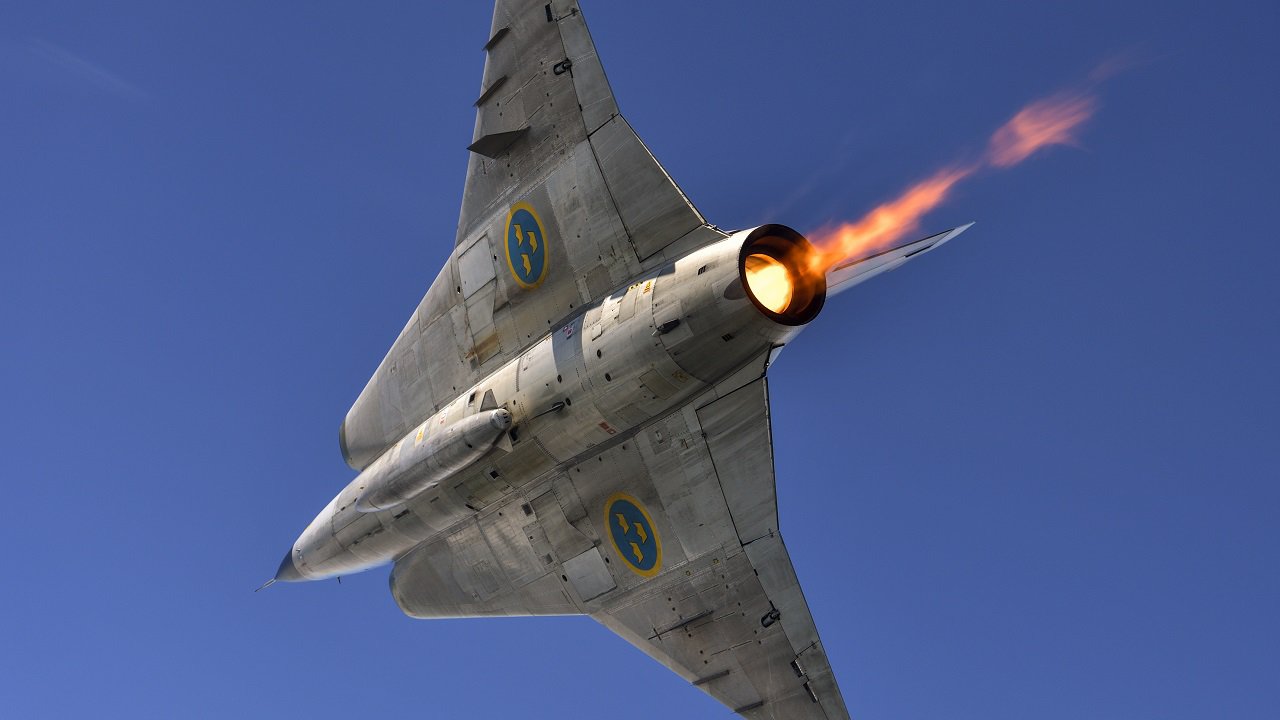
Image of a Cold War Saab 35, a plane that would have looked similar to the A-36.
-Powered by twin Olympus engines and using an internal bomb bay to cut drag and heating, it stayed on paper. Political reluctance, high costs, and weak public support for nuclear weapons led Stockholm to cancel the bomber in 1957.
Saab A-36: Sweden’s Forgotten Mach 2 Nuclear Bomber
The Scandinavian state of Sweden, after a longstanding policy of neutrality (the last time it participated in an officially declared war was during the Swedish-Norwegian War of 1814), finally formally joined NATO on March 7, 2024.
However, that longtime neutrality policy should not be misconstrued as a wimpish lack of military preparedness on the Swedes’ part.
Sweden has remained ever mindful of Scandinavia’s unpleasant history of dealings with Moscow, from its own eleven wars with Russia between the 12th and 19th centuries to Finland’s military run-in with the Soviets during the Winter War of 1939-1940.
Accordingly, the Swedes designed a goodly number of impressive warplanes during the Cold War. One such warplane that unfortunately never got off the ground (literally or figuratively) was our current subject, the Saab 36 or A-36 supersonic bomber.
(NOTE: The Swedish A-36 is definitely not to be confused with America’s B-36, i.e., the Convair B-36 Peacemaker, a massive 10-engine mega-bomber that was the largest mass-produced piston-engined aircraft ever built.)
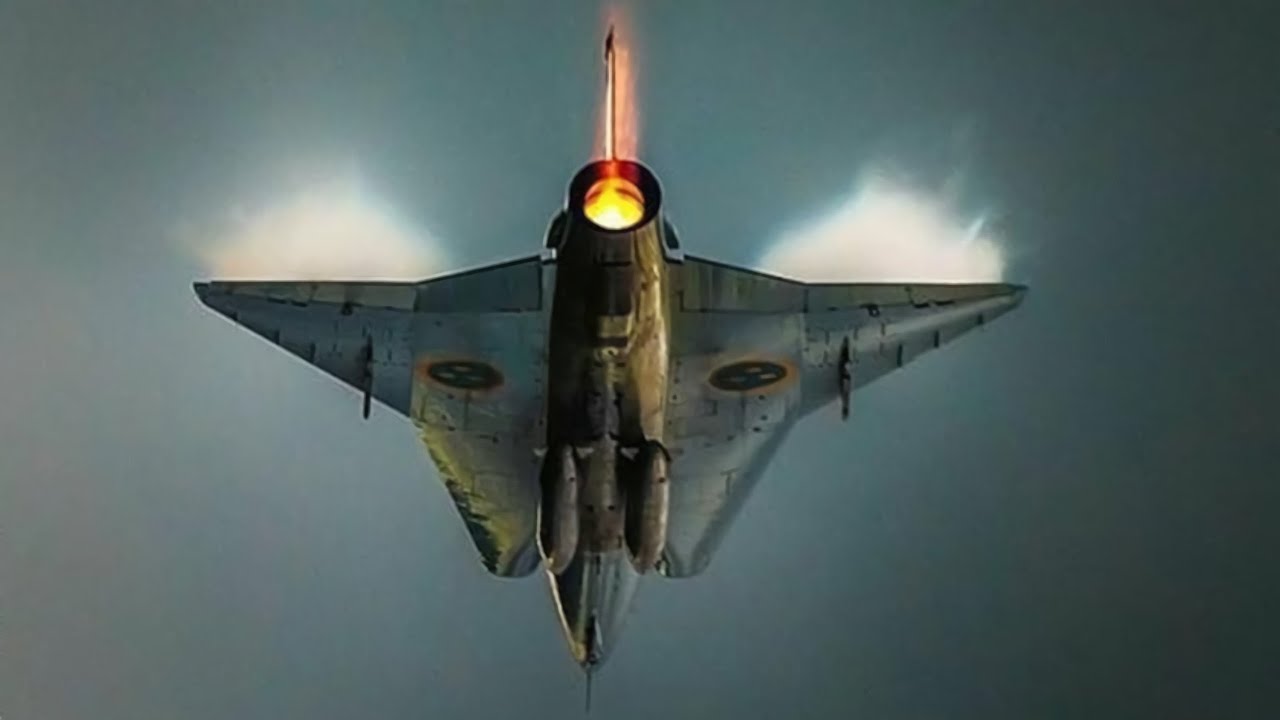
Saab 35 fighter, also from Sweden. Image Credit: Creative Commons.
Saab 36 Initial History, Premise, and Promise
When most Americans see or hear the name “Saab,” they likely think of the automaker that went out of business in 2000.
However, that particular Saab was merely a spinoff division of an aerospace and defense firm that is very much alive and well today and headquartered in Stockholm (Saab was originally an acronym for Svenska Aeroplan Aktiebolaget, which literally translates to “The Swedish Aeroplane Corporation”).
Surprisingly enough, Saab and the peace-loving Swedes even had their own nuclear-weapon program in the 1950s and 1960s, and accordingly, they needed a warbird to carry the bomb had they decided to go all-in on the project and produce an actual doomsday device.
Ergo, enter Project 1300, which envisioned a delta-wing supersonic bomber capable of carrying a free-falling nuclear weapon weighing up to 1,700 pounds (800kg).
Unlike American or Soviet bombers of the era (such as the Boeing B-52 Stratofortress [AKA the “BUFF”] and the Tupolev Tu-95 “Bear,” respectively), which needed to fly extreme distances, the Swedes were able to opt for a smaller bomber that could be flown by a single pilot, with sufficient range of around 250 miles (410 km) that was sufficient to reach targets in the Baltic States—which were under the control of the Soviet Union at the time—and even the city of Leningrad (now known as St. Petersburg). Poland and East Germany—both part of the USSR’s Warsaw Pact alliance at the time—would also have been within striking distance.
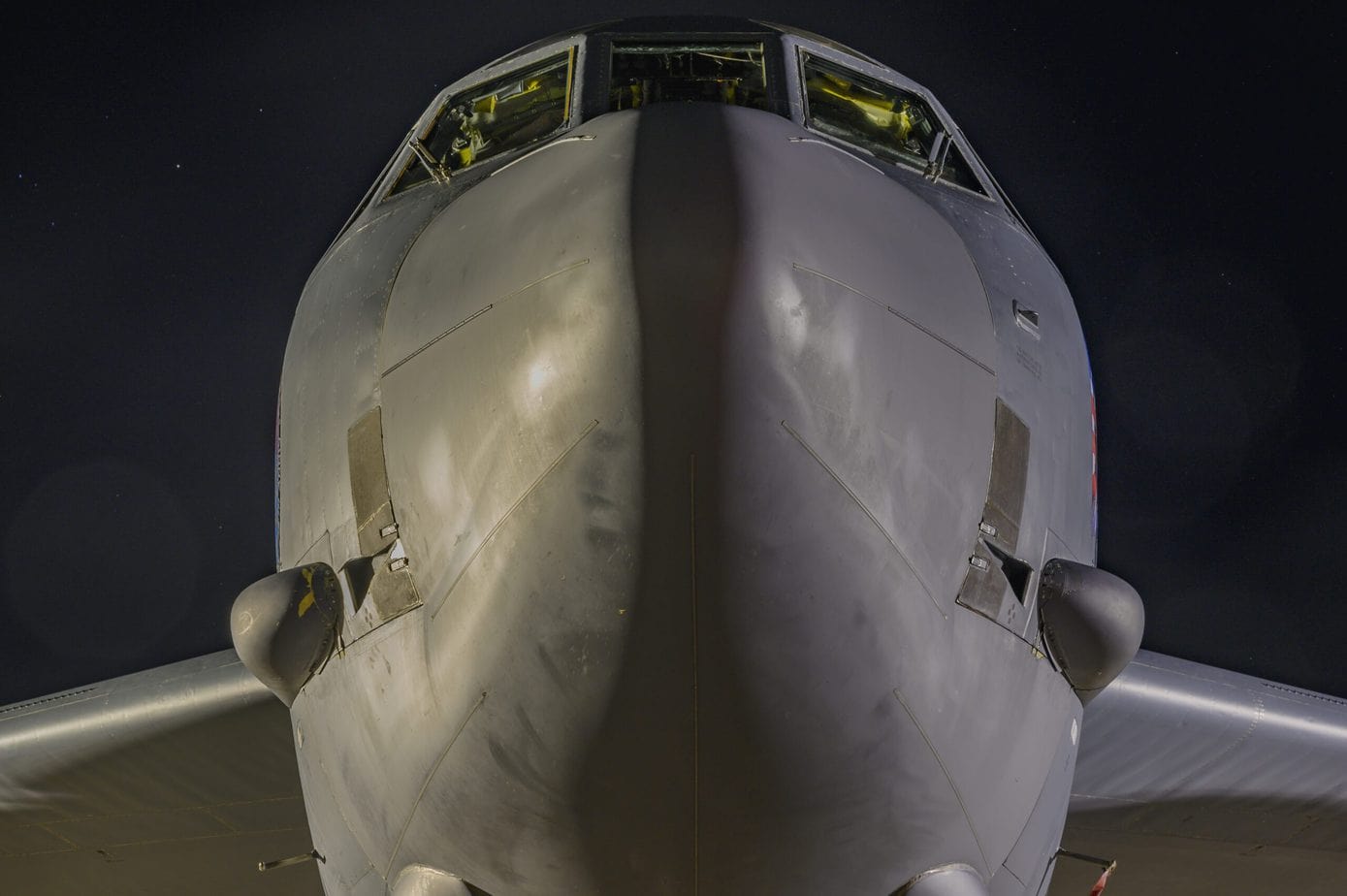
A U.S. Air Force B-52 Stratofortress assigned to Barksdale Air Force Base, La., is prepared for a Mark-82 munitions load, in support of a Bomber Task Force deployment, Feb. 1, 2020, at Andersen Air Force Base, Guam. The bomber deployment underscores the U.S. military’s commitment to regional security and demonstrates a unique ability to rapidly deploy on short notice. (U.S. Air Force photo by Senior Airman Jacob M. Thompson)
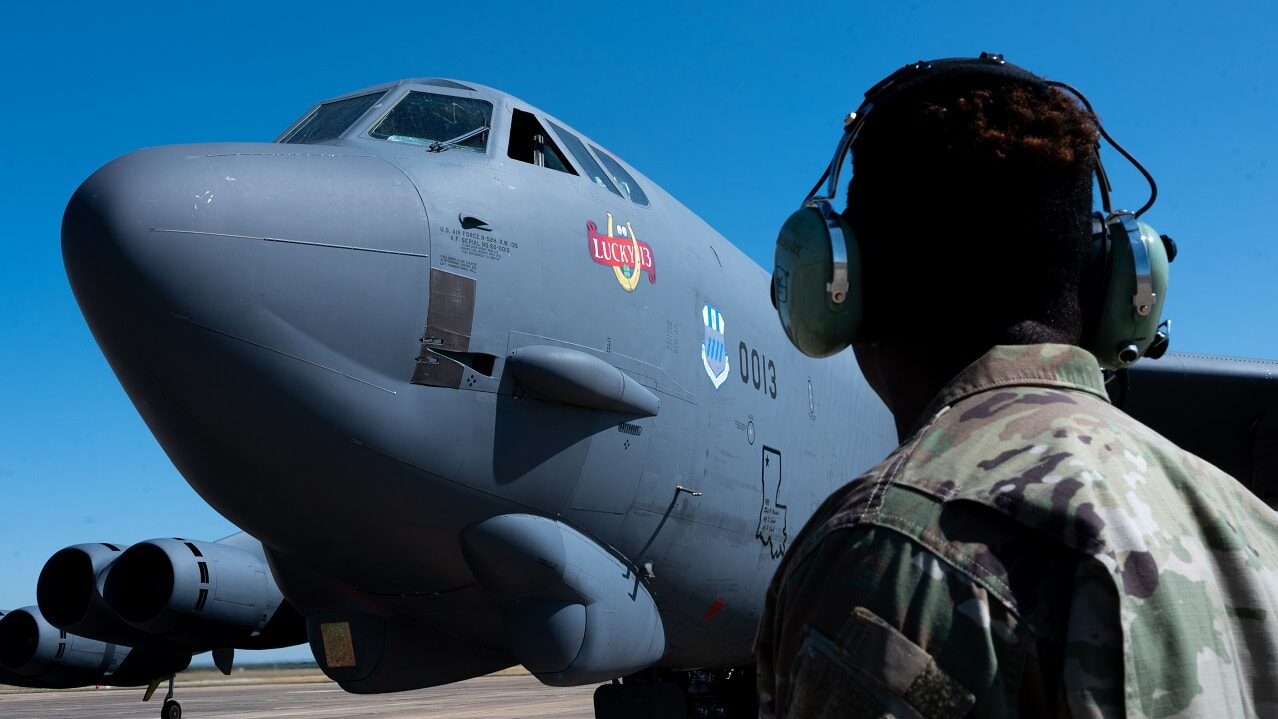
A U.S. Air Force maintainer conducts a visual inspection of a B-52H Stratofortress at Morón Air Base, Spain in support of Bomber Task Force 21-3, May 24, 2021. Strategic bomber missions enhance the readiness and training necessary to respond to any potential crisis or challenge across the globe. (U.S. Air Force photo by Staff Sgt. Jason Allred)
Saab 36 or A-36 Would-Be Tech Specs and Vital Stats
Crew: 1
Fuselage Length: 17 m (55 ft 9 in)
Wingspan: 8.22 m (27 ft 0 in)
Empty Weight: 9.6 m (31 ft 6 in)
Gross Weight: 15,000 kg (33,070 lb)
Powerplant: 2 × Bristol (Rolls-Royce) Olympus engines, each generating 44 kN (10,000 lbf) of thrust
Range: 410 km (250 mi)
Service Ceiling: 18,000 m (59,100 ft)
Max Airspeed: Mach 2.14
Armament: 1 × 600–800 kg (1,300–1,800 lb) free-fall nuclear bomb
The delta-wing design was deemed more optimal for that Mach 2+ speed. Regarding the armament, an internal weapons bay would have been chosen to avoid (1) issues with the payload overheating that would have resulted from underwing carry and (2) drag stemming from an external bomb that would’ve impeded the aircraft’s overall performance. Since this predated the day & age of smart weapons, the payload itself would have been a free-floating “dumb” bomb, AKA gravity bomb.
So, What Went Wrong?
Alas, as impressive as the concept looked on paper, the A-36 ended up, in the immortal words of Moe Howard of the Three Stooges, “getting nowhere fast.” But why?
Well, their weariness of the Soviets notwithstanding, the Swedes decided that discretion was the better part of valor.
The country’s political leadership never wanted an utterly catastrophic nuclear exchange with Moscow, nor was there sufficient popular support for a nuclear weapons program amongst the general public.
Besides the lack of compatibility with the Swedish peace-loving culture, there were the pragmatic considerations of difficulty, time-consumption, and expense of a homegrown nuclear weapons program.
Thus, the A-36 project was canceled in 1957. For good measure, Sweden’s leaders decided in 1966 that they were going to resist going nuclear, and in 1968, they scrapped their nuclear bomb project altogether.
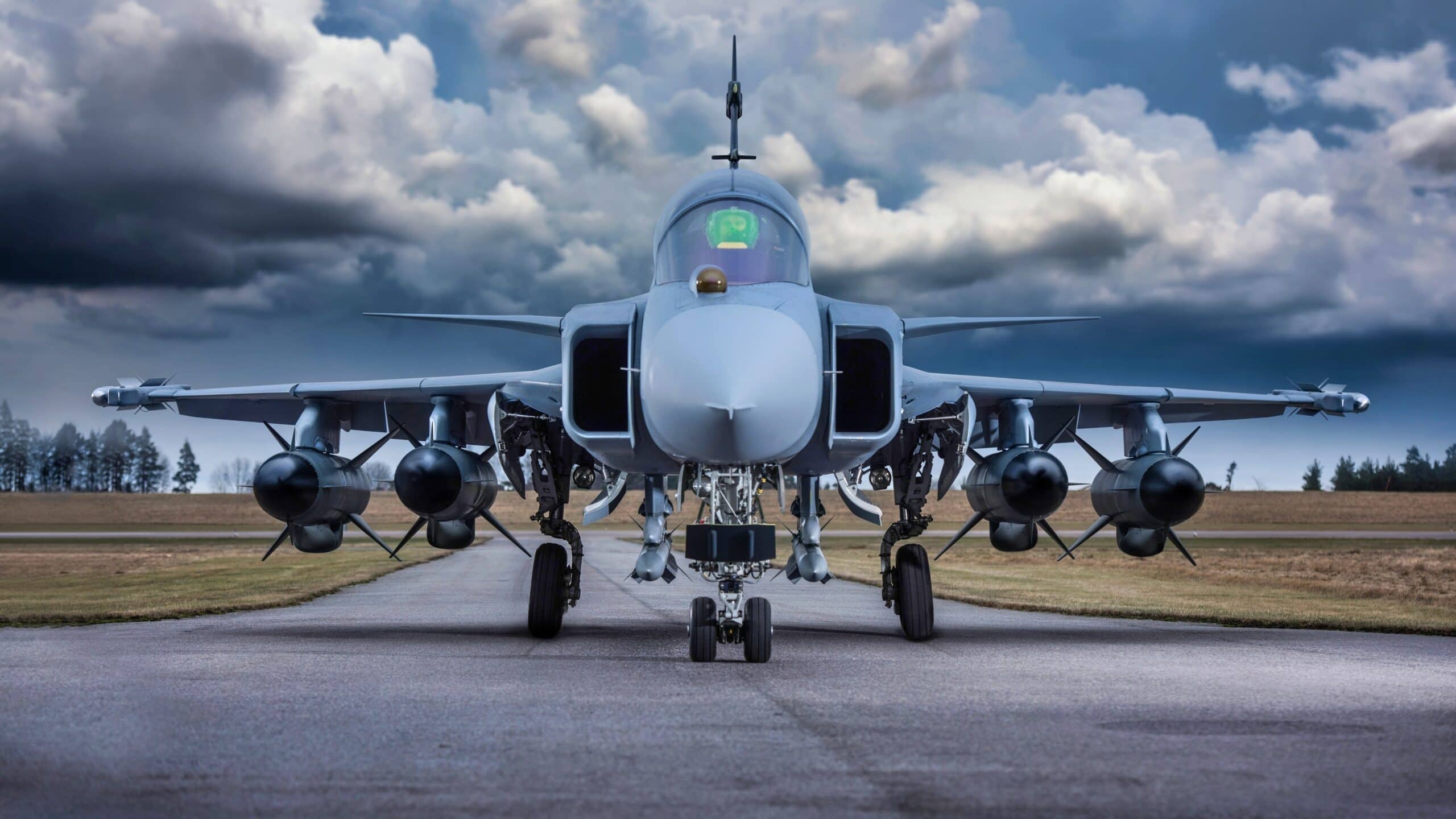
JAS 39 Gripen. Image Credit: Creative Commons.
About the Author: Christian D. Orr, Defense Expert
Christian D. Orr is a Senior Defense Editor. He is a former Air Force Security Forces officer, Federal law enforcement officer, and private military contractor (with assignments worked in Iraq, the United Arab Emirates, Kosovo, Japan, Germany, and the Pentagon). Chris holds a B.A. in International Relations from the University of Southern California (USC) and an M.A. in Intelligence Studies (concentration in Terrorism Studies) from American Military University (AMU). He is also the author of the newly published book “Five Decades of a Fabulous Firearm: Celebrating the 50th Anniversary of the Beretta 92 Pistol Series.”