
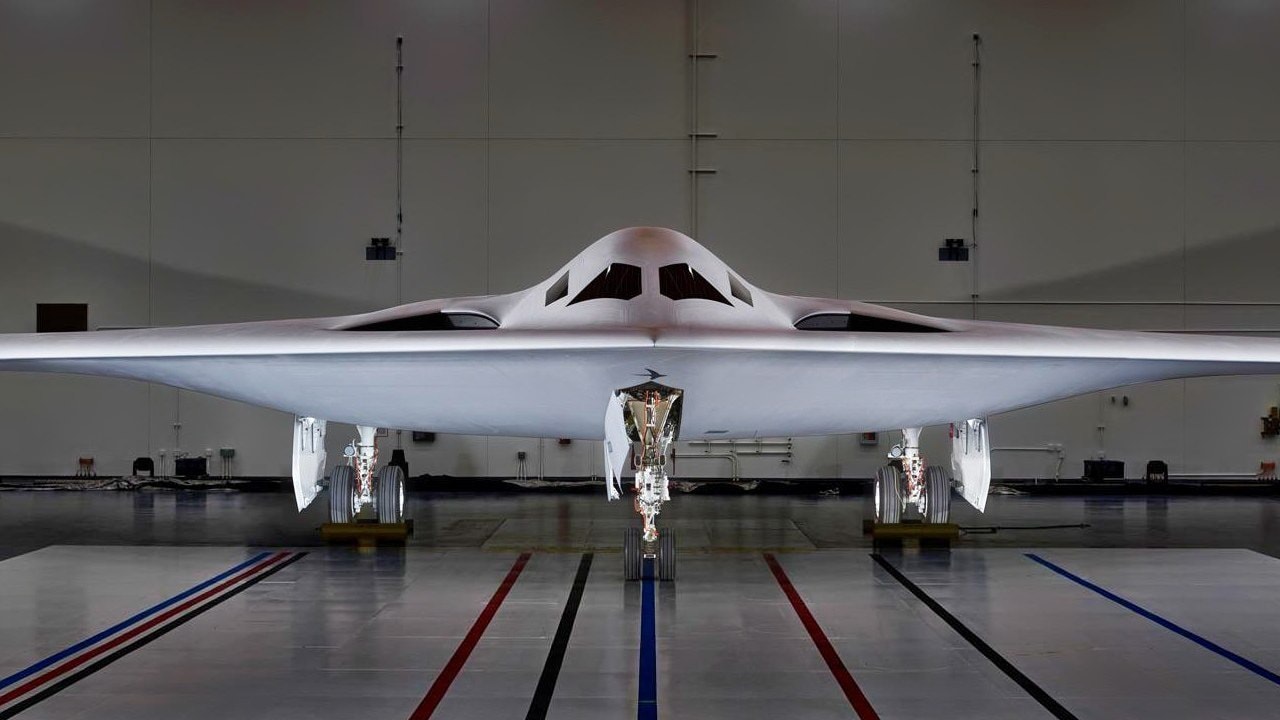
Article Summary – Talk of drones and AI “revolutionizing” warfare repeats the same RMA hype of the 1990s. Technologies like the B-21 Raider, unmanned systems, and AI are powerful, but they are evolutionary advances, not game-changers that alter war’s fundamental character.
-The B-21 still performs classic missions—deterrence, deep strike, nuclear and conventional signaling—only with better stealth, range, and networking.
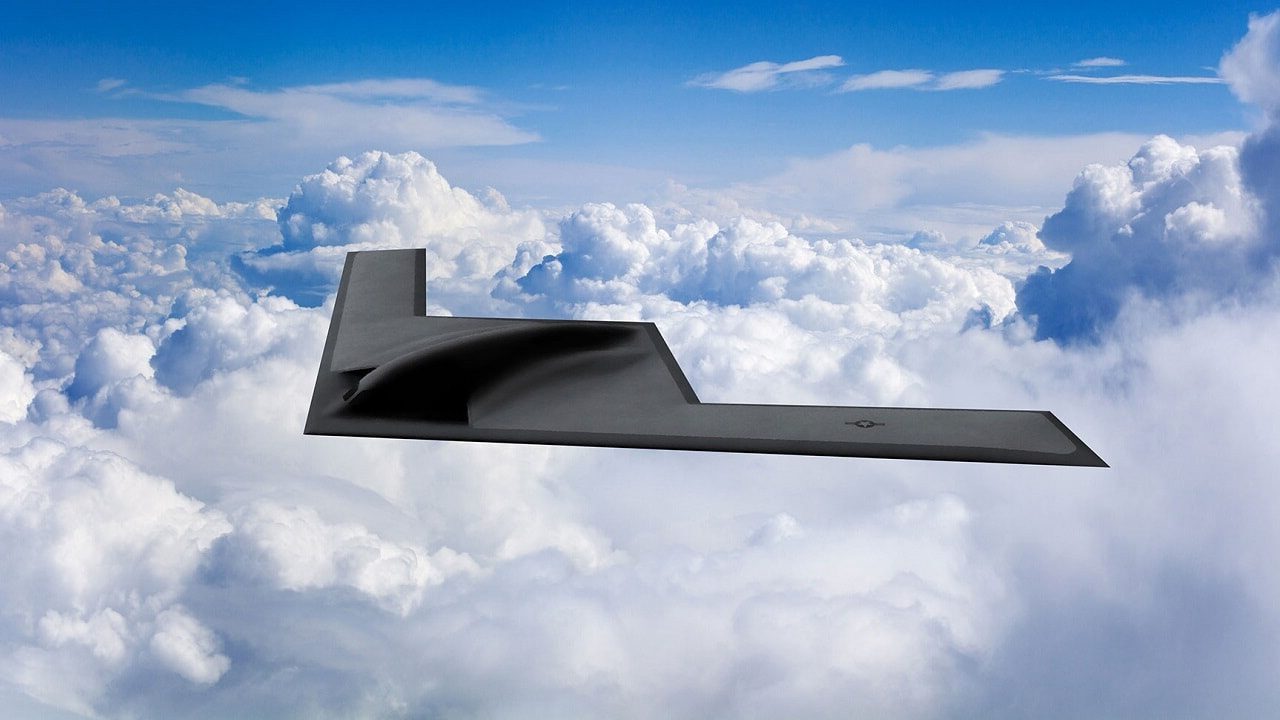
B-21 Raider Stealth Bomber. Image Credit: Creative Commons.
-Far from being the next “battleship,” it anchors a wider force that includes drones and cyber.
-War remains a human, political struggle; advanced manned bombers will stay central to U.S. strategy for decades.
Why the B-21 Raider Proves Drones and AI Aren’t a “Revolution” in Warfare
Much has been made in recent months of the revolutionary effects drones and AI are having on the contemporary battlespace. The discussion about these technologies can usefully be framed as game changer – a Revolution in Military Affairs (RMA) profoundly and rapidly transforming the character of warfighting. But advocates of this viewpoint are just as wrong today as those touting an RMA were in the 1990s.
The reality is that as seductive as drones and AI may be, those technologies are evolutionary advancements on existing weapons systems, not revolutionary weapons systems that will profoundly reshape the very character of warfare.
Sleek and state-of-the-art, the B-21 Raider is the future of strategic bomber. But on balance it is a considerable advance on what came before it — the B-52, B-1 and B-2 bombers.
These have been the workhorses of our country’s air power for these decades, and the B-21 is simply a more advanced version of it, with the newest technology that makes it able to be more effective. Its makeup is designed to fulfill the same fundamental mission: precision strikes and deterrence. The B-21’s advances in stealth, range and payload are impressive, but they are not profoundly transformative of the character of warfighting – no more than drones and AI.

B-21. Image Credit: Northrop Grumman
Rather, the B-21 is an evolutionary improvement on its predecessors, performing the same missions, only more effectively.
The Drones and AI…
Certainly drones and AI have a seductive appeal for the military. You hear that it’s more efficient and you’re able to get folks out of harm’s way and you are able to do mission sets in places that manned fixed-wing and helicopters can’t operate.
But the notion that these new technologies are about to render conventional platforms such as the B-21 obsolete is an oversimplification. Drones do have a role in modern warfare; but they are not game-changers. They excel in some roles — like surveillance and delivering precise strikes — but come with their own types of vulnerability, such as being susceptible to electronic warfare and the challenge of flying in airspace that is highly contested.
Secondly, AI has literally just been added to warfare. And as useful as it is, in certain circumstances, for decision making, AI will not replace the kind of human judgment and strategic thinking that we require. War — in all of its political, social and moral dimensions — is not a problem that can be addressed, solved or prevented by algorithms and machine learning. The human factor is absolutely critical, and the B-21, the crewed version, reflects that fact. The idea that machines can decide life or death on their own, in the heat of battle, is not just ignorant, but dangerous. The horror of war demands the kind of human intuition and experience no machine can have.
That the fog of the new age of drones and AI can mask the age-old lesson of war: the essence of conflict–struggles over resources, over power, over leverage–remains the same.
The war hardware may change, but the software of human conflict does not. The B-21 is a symbol of this enduring reality, a new tool crafted to face evolving threats, mostly the same as those faced by its predecessors over the past 80+ years. In other words, the character of warfare remains sufficiently unchanged that we don’t need radically new weapons systems, only improved versions of the weapons systems that have dominated the battlespace since the Second World War.
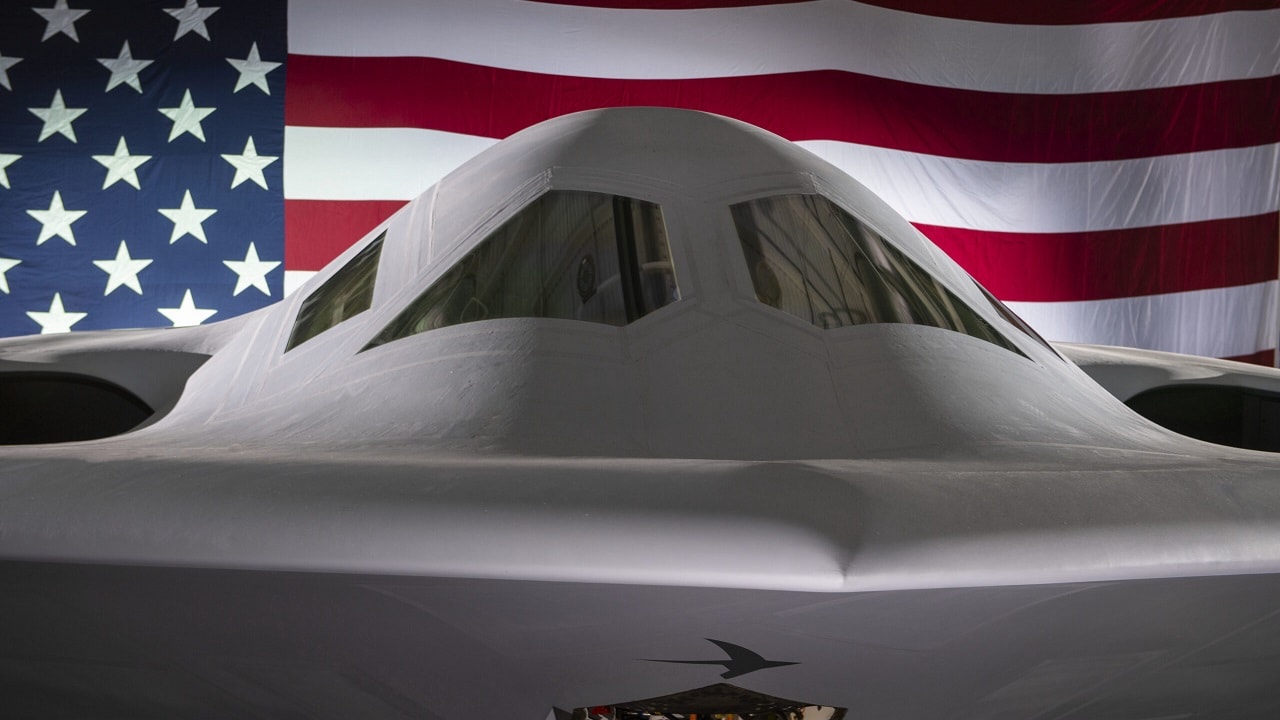
The B-21 Raider was unveiled to the public at a ceremony December 2, 2022 in
Palmdale, Calif. Designed to operate in tomorrow’s high-end threat environment, the B-21 will play a critical role in ensuring America’s enduring airpower capability. (U.S. Air Force photo)
The B-21 is just such a weapon. In a time of mounting threats from our adversaries in a multipolar world, this next-generation bomber is both a highly effective weapon and a weapon system that serves as a symbol — a symbol of American strength. It is a deterrent against possible aggression against allies, whose fears will be stilled once they know the United States will not hesitate to flex its muscles when called for. It is perfectly suited both to this and to the emerging moment in the history of warfare.
B-21 skeptics also argue that, in fact, the purchase of a new bomber is a poor use of money, particularly given that the Pentagon is pivoting to competing with near-peer competitors that themselves are in the process of fielding their own high-end capabilities. They insist that this is the future of war, in which light, nimble forces with a technological advantage outflank big, ponderous conventional forces.
There is some merit in that, but that does not obviate the need for a robust squadron or two of strategic bombers. Not just to defeat today’s threats, the B-21 is for deterrence, and to provide the nation a way to manage a significantly changing world security environment.
B-21 Bomber Is No Battleship…
Fear that the B-21 would become a “battleship” — a superannuated platform hanging on past the prime of such weapons— is a lack of understanding of what the plane is for within the context of modern military strategy.
The battleship, we know, was rendered outdated by aircraft carriers and submarines, and because of profound changes in the character of war in the early 20th century. But no such RMA is taking place in the eerily decades of the 21st century.
The crewed strategic bomber remains as relevant now as it was in 1944, 1964, or 2004. To be sure, the B-21 is more capable than its predecessors – in addition to improved capabilities as a platform, it is able to deploy cutting-edge weapons systems, including drones and cyber.
With this improved technology, the B-21 will be more lethal than its forebears in today’s multi-domain battle environment. But – and here’s the rub – it is still performing the same strategic tasks.
It is worth mentioning that, like its predecessors, the B-21 isn’t a silver bullet. Rather, like them, it is part of a larger constellation of military assets. The future of warfare is not about a single piece of kit — as over the past eight decades or so, warfare in the foreseeable future will be about how well commanders integrate a vast array of technologies and deal with an evolving distribution of power and the threats derived from that evolving multipolar distribution of power.
But again, that has long been the strategic reality within which US strategic bombers have been so critically important to US security and the security of the post-WWII international order it created.
In that vein, as with its forebears, deploying the B-21 at scale will be a powerful signal to both our allies and our adversaries that the United States will not be outpaced by potential adversaries. The B-21– along with the F-35 and eventually the F-47, the latter two improvements on the legacy fighter-bomber concept – will be the system that will ensure US dominance of the skies for generations. The narrative that drones and AI will kill off all the legacy platforms is not only wrong but it’s dangerous. It risks creating a false alarm, which could lead to a dangerous strategic miscalculation.
The advocacy of the B-21 Raider by the Air Force isn’t about the Air Force going all in on obsolescence; it is about ensuring air superiority in the complex and contested security environment the nation faces.
While drones and AI are both useful and will be essential tools in future conflicts, there is no substitute for an advanced manned platform, like the B-21. The discussion of military innovation needs to recognize that while the technology changes, war, at base, never does.
The B-21 Raider Is a Big Deal
The B-21 is not just the “next generation bomber,” but rather represents an essential element of an integrated approach to warfare—one that honors the enduring and integral qualities of the very slowly evolving character of war.
As we prepare for whatever may come next, we need to ensure that the lessons of history and the conditions of today are honored and embodied in our military capabilities.
The B-21 is about far more than new technology, however; it is a declaration of the need for a flexible, agile force capable of confronting the range of challenges inherent in modern warfare – challenges that would nevertheless be recognizable to pilots and planners as long ago as the Second World War.
About the Author: Dr. Andrew Latham
Andrew Latham is a non-resident fellow at Defense Priorities and a professor of international relations and political theory at Macalester College in Saint Paul, MN. You can follow him on X: @aakatham.