
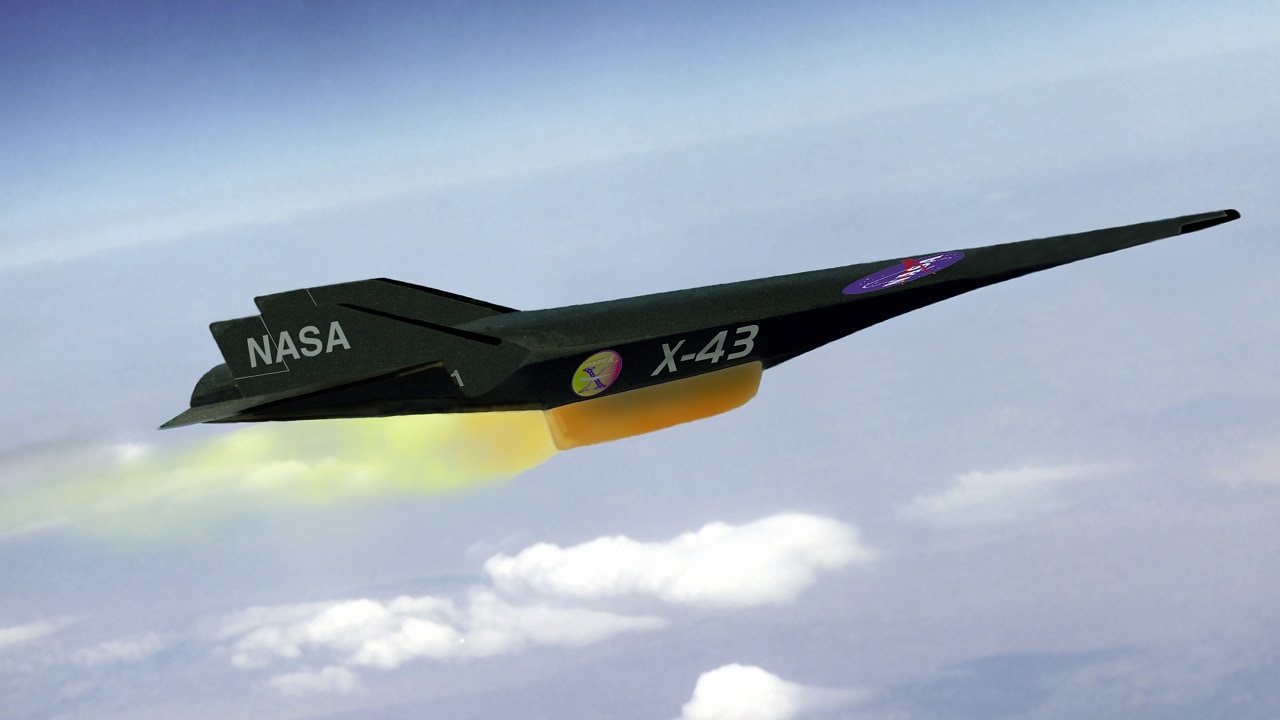
Article Summary – NASA’s X-43A scramjet set a stunning air-breathing speed record in 2004, hitting Mach 9.6 after a B-52/Pegasus launch—but the engine only ran for about ten seconds.
-The Hyper-X program proved scramjets could sustain supersonic combustion in real flight and delivered rare data on thermal loads and control at extreme Mach.
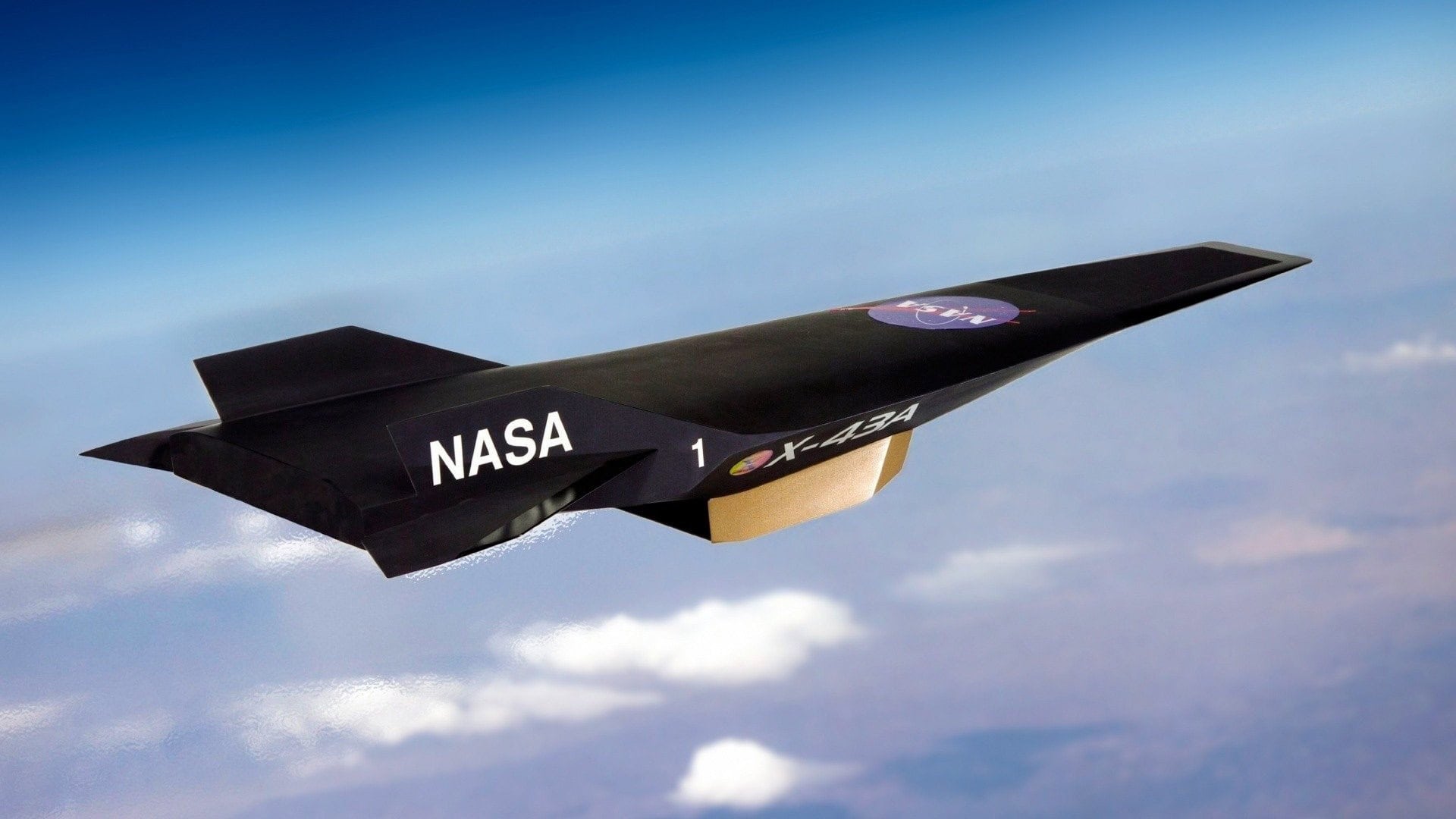
X-43A
The X-43A was a small experimental research aircraft designed to flight-demonstrate the technology of airframe-integrated supersonic ramjet or “scramjet” propulsion at hypersonic speeds above Mach 5, or five times the speed of sound. Its scramjet engine is an air-breathing engine in which the airflow through the engine remains supersonic.
-It also exposed the limits of then-available materials, fuel capacity, and guidance, making follow-on flights above Mach 10 hugely expensive and risky.
-As NASA shifted focus to Moon-to-Mars plans, X-43 follow-ons were shelved. Its legacy now lives on in reusable hypersonic testbeds like Stratolaunch’s Talon-A.
NASA’s X-43A Hit Mach 9.6. Here’s Why It Was Never Built Again
In November 2004, NASA’s X-43A scramjet test vehicle set an air-breathing speed record of Mach 9.6 – roughly 7,000 miles per hour – during a flight over the Pacific.
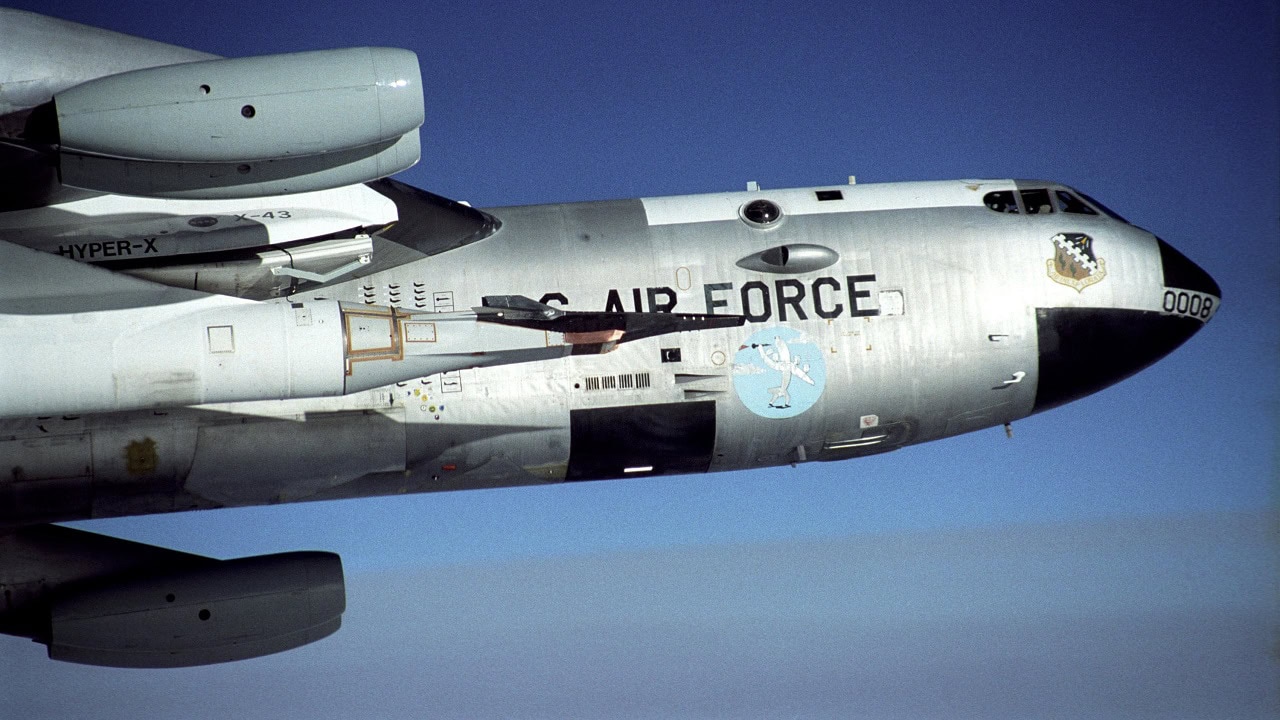
The unmanned demonstrators, dropped from a B-52 and boosted by a Pegasus rocket, ran their scramjet engine for roughly ten seconds before gliding to a splashdown.
It remains the fastest air-breathing aircraft ever flown—and yet, despite that achievement, the program was never extended.
It is one of the most impressive aviation feats in human history, but the story didn’t simply end for no good reason; in fact, the story helps explain both the enduring technical barriers to hypersonic flight we struggle with today, as well as today’s growing push to build reusable hypersonic testbeds.
Today, the U.S. and industry are investing in platforms that can be flown repeatedly, cheaply, and quickly – and in the process, turning hypersonic research and development into a more continuous process that could, one day, make something like the X-43A an operational reality.
In theory, at least.
A Short-Lived Program
The X-43A was part of NASA’s Hyper-X program, conceived in the 1990s to demonstrate supersonic combustion ramjet (scramjet) propulsion at speeds ranging between Mach 7 and Mach 10.
Unlike conventional jet engines, scramjets compress incoming air at supersonic speeds without slowing it down to subsonic speeds, allowing more efficient combustion at high Mach numbers.
Three aircraft were built in total, and each one was mounted on a Pegasus rocket booster carried by a B-52.
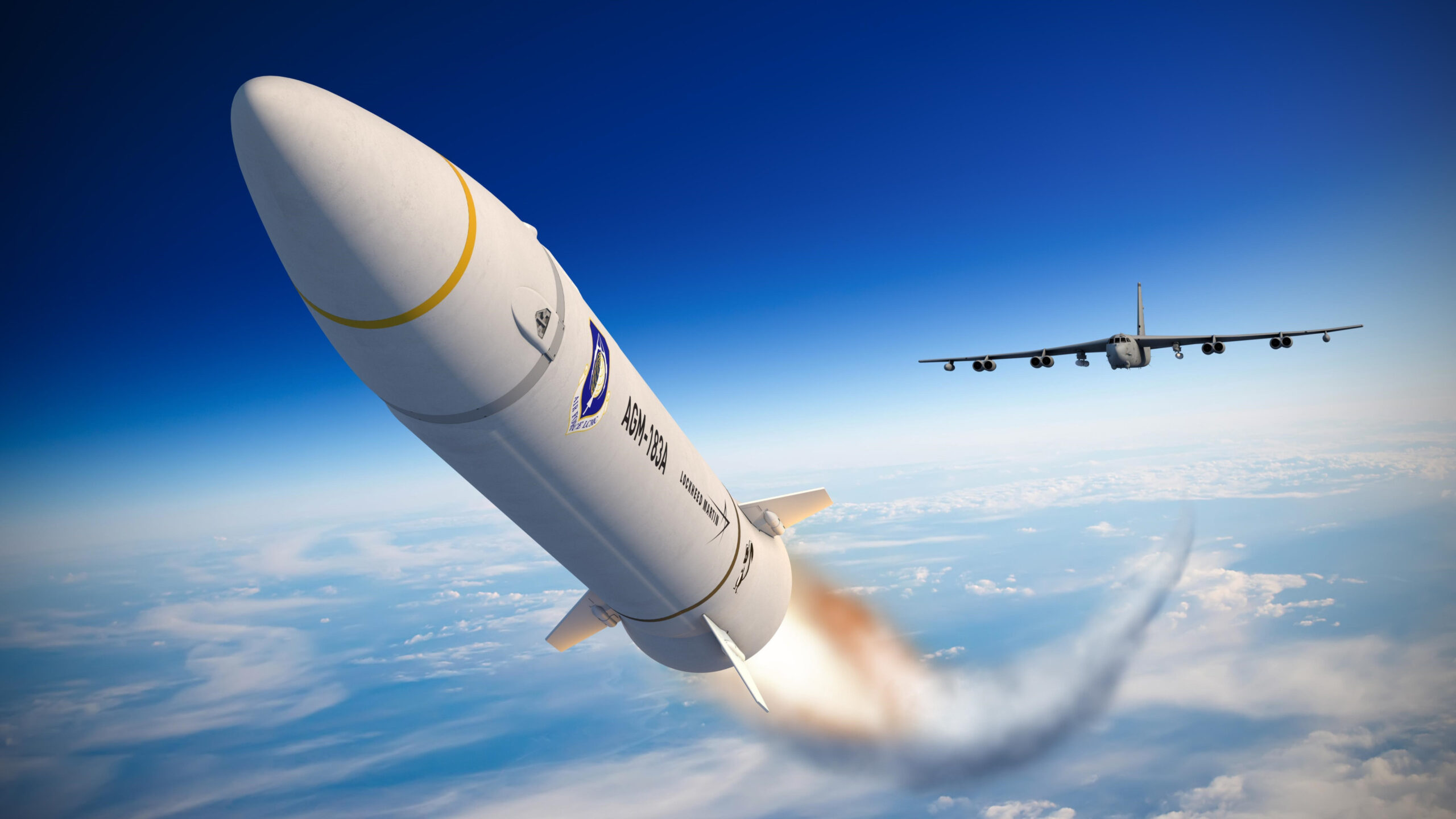
Hypersonic Missiles fired from B-52. Image Credit: Creative Commons.
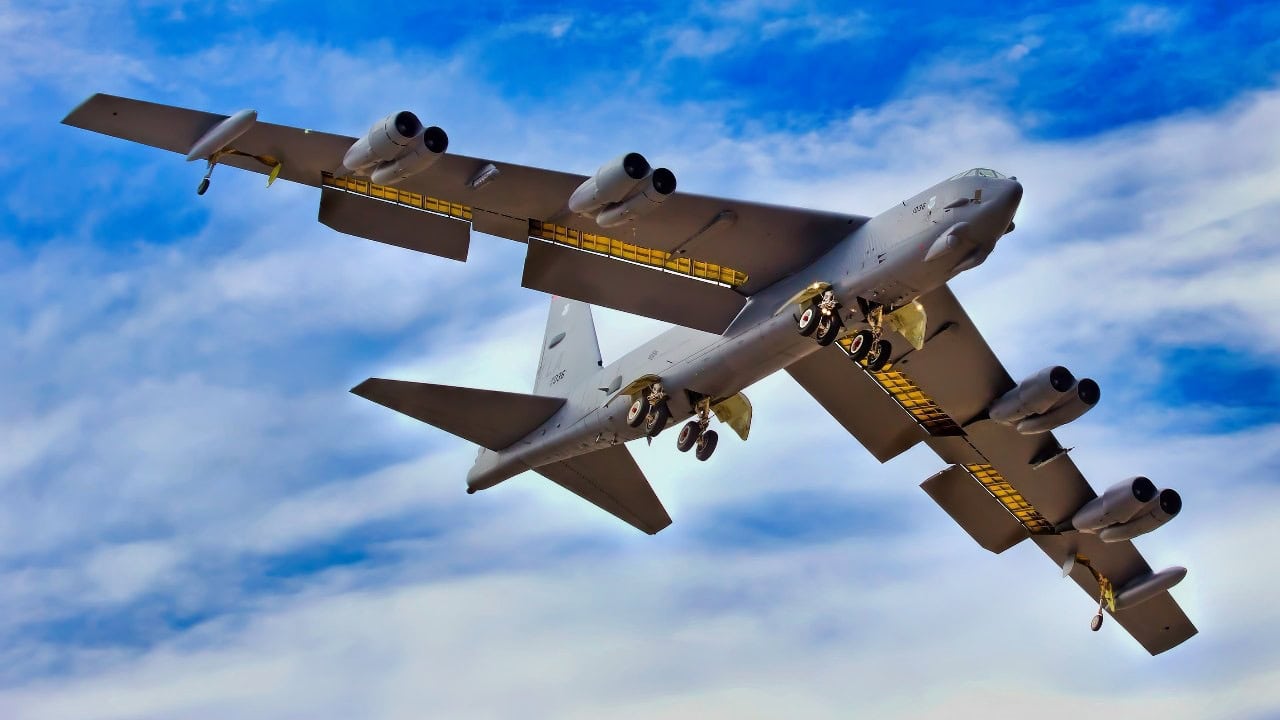
B-52 Bomber. Image Credit: Creative Commons.
The booster, once dropped with the X-43A vehicle, accelerated to test conditions before igniting the scramjet.
The first test in 2001 failed as a result of a booster problem. The second, which took place in March 2004, reached Mach 6.8.
But it was the third and final test flight, in November 2004, that the experimental aircraft reached Mach 9.6 at an altitude of 109,000 feet.
What NASA Learned
The program validated decades of research showing that scramjets – which work by compressing air rushing in at supersonic speed, mixing it with fuel, and burning it to produce thrust – could sustain supersonic combustion in flight.
Engineers confirmed that the integrated inlet, combuster, and nozzle could function under real atmospheric conditions.
The tests also gave engineers invaluable data on thermal loads and the effects of Mach 7+ speeds – conditions that are difficult to replicate in normal ground test facilities.
However, the flights also revealed the limitations of the technology available to NASA engineers at the time.
The scramjet burned for only ten seconds, constrained by fuel capacity and thermal limits.
To reach beyond Mach 10 was simply too risky at the time, given the stresses it would cause on the materials used to construct the experimental craft as well as its control systems.
It is perhaps not surprising, then, that the program came to an end in part because of these limitations
. The cancellation of the X-43A wasn’t a sudden decision, but rather a natural conclusion of an experiment with a narrow scope.
NASA only ever planned three flights with the goal of proving that the concept was technically viable once the materials and technology could catch up.
A combination of diminishing returns and budget priorities also ensured that the program was never really revived with the intention of turning the craft into a real prototype.
Additional flights beyond Mach 9.6 speeds would have required significant and expensive redesigns with no clear payoffs.
Additionally, in 2004, the Bush administration announced the “Vision for Space Exploration,” which redirected NASA priorities toward human spaceflight and the Moon-to-Mars initiative. Hypersonic flight research, despite showing promise, was no longer a strategic priority for NASA or the White House.
Later, proposed successors – like the X-43C, were canceled before flying.
The proposed concept would have been a turbine-based combined-cybe demonstrator, meaning that the craft would use an engine that combines a jet turbine to take the craft to speeds of up to Mach 2-3, and a scramjet that accelerates at higher speeds.
The X-43C was intended to demonstrate an engine that can work from takeoff, all the way into hypersonic flight by switching between turbine and scramjet modes.
Can It Be Done Today?
Two decades on, the central question remains whether a scramjet aircraft like the X-43A could fly not just for seconds, but for sustained, reusable missions. The technical barriers that were exposed in 2004 – chiefly thermal protection, structural durability, and control at extreme Mach numbers – are still unsolved.
Materials that can endure prolonged hypersonic flight without catastrophic heating or erosion/damage are still in development, with advanced ceramics and high-temperature composites showing promise. But no material has yet proven itself.
There are also no current plans to revive the X-43A project specifically, but its legacy shapes today’s programs in many ways. Stratolaunch’s Talon-A hypersonic vehicle, for example, has already demonstrated it can perform recoverable flights above Mach 5.
The vision partly realized by the X-43A is not dead, but its return remains uncertain – especially as the world’s militaries shift resources toward more immediate priorities, including developing huge numbers of inexpensive unmanned systems.
About the Author:
Jack Buckby is a British author, counter-extremism researcher, and journalist based in New York who writes frequently for National Security Journal. Reporting on the U.K., Europe, and the U.S., he works to analyze and understand left-wing and right-wing radicalization, and reports on Western governments’ approaches to the pressing issues of today. His books and research papers explore these themes and propose pragmatic solutions to our increasingly polarized society. His latest book is The Truth Teller: RFK Jr. and the Case for a Post-Partisan Presidency.