
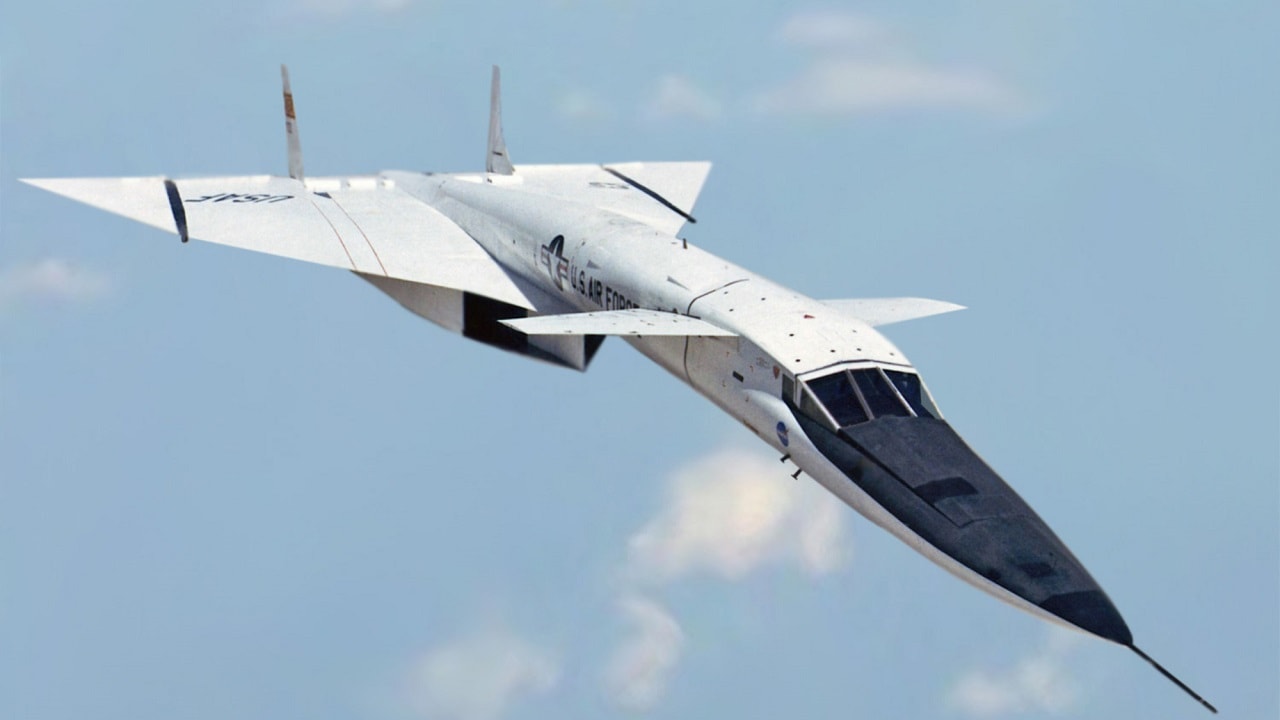
Key Points and Summary – The XB-70 Valkyrie was the U.S. Air Force’s ultimate Cold War dream: a six-engine, Mach 3 strategic bomber flying above 70,000 feet, meant to outrun Soviet defenses and deliver nuclear weapons with impunity.
-But improving Soviet SAMs, the U-2 shootdown, and the rapid rise of ICBMs and SLBMs made the concept obsolete before it ever entered service.
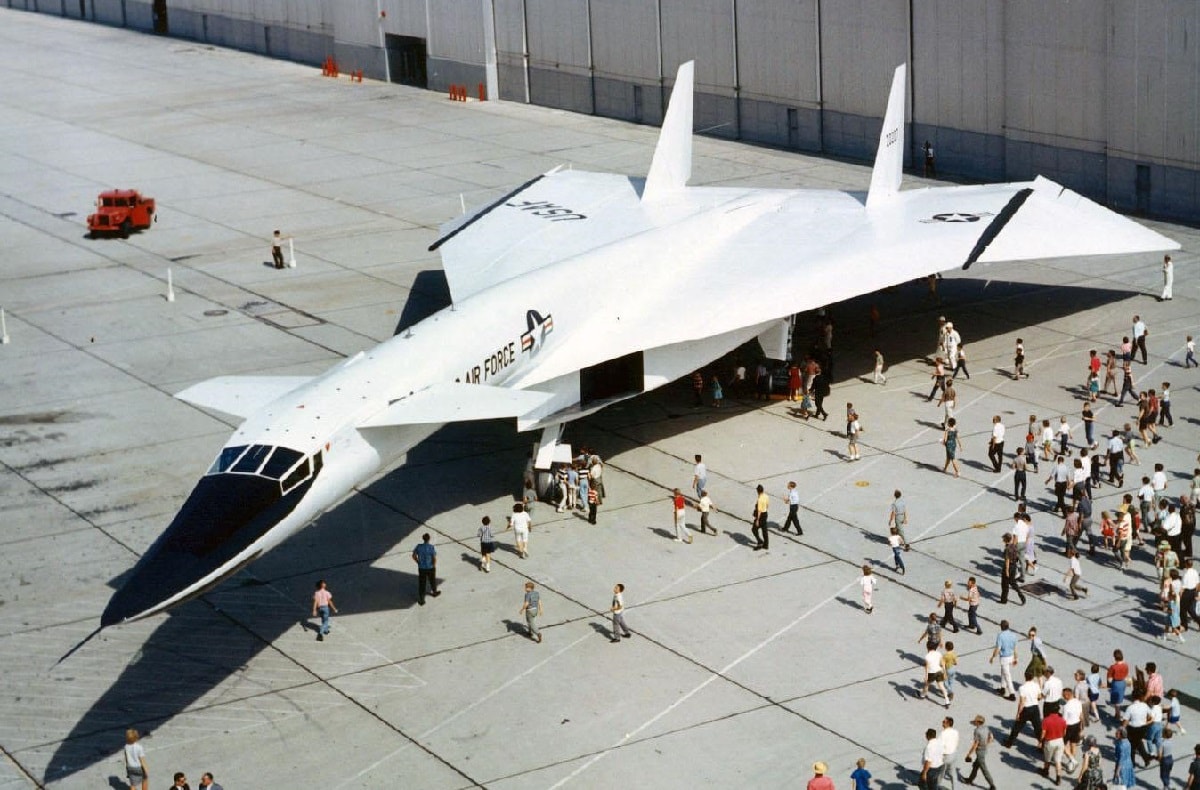
XB-70 Valkyrie
-Only two XB-70s were built, serving instead as high-speed research platforms until a 1966 midair collision destroyed one.
-Even so, the Valkyrie pushed materials, thermal engineering, and aerodynamics forward and helped mark the transition from bomber dominance to missile deterrence.
XB-70 Valkyrie: Inside the Mach 3 Nuclear Bomber That Never Went to War
The XB-70 Valkyrie was one of the most ambitious aircraft ever built, a marvel of engineering: 185-feet long, with six engines, capable of Mach 3 flight.
The strategic bomber was designed in the 1950s to outrun Soviet defenses but never became operational.
Still, the XB-70’s technology influenced the succeeding generation of aerospace development and remains today a symbol of Cold War weapons investment.
The XB-70, Explained
In the late 1950s, the US Strategic Air Command wanted a next-generation bomber capable of sustained Mach 3 flight at altitudes above 70,000 feet.
Something that could penetrate Soviet airspace and deliver nuclear weapons before defenders could react.
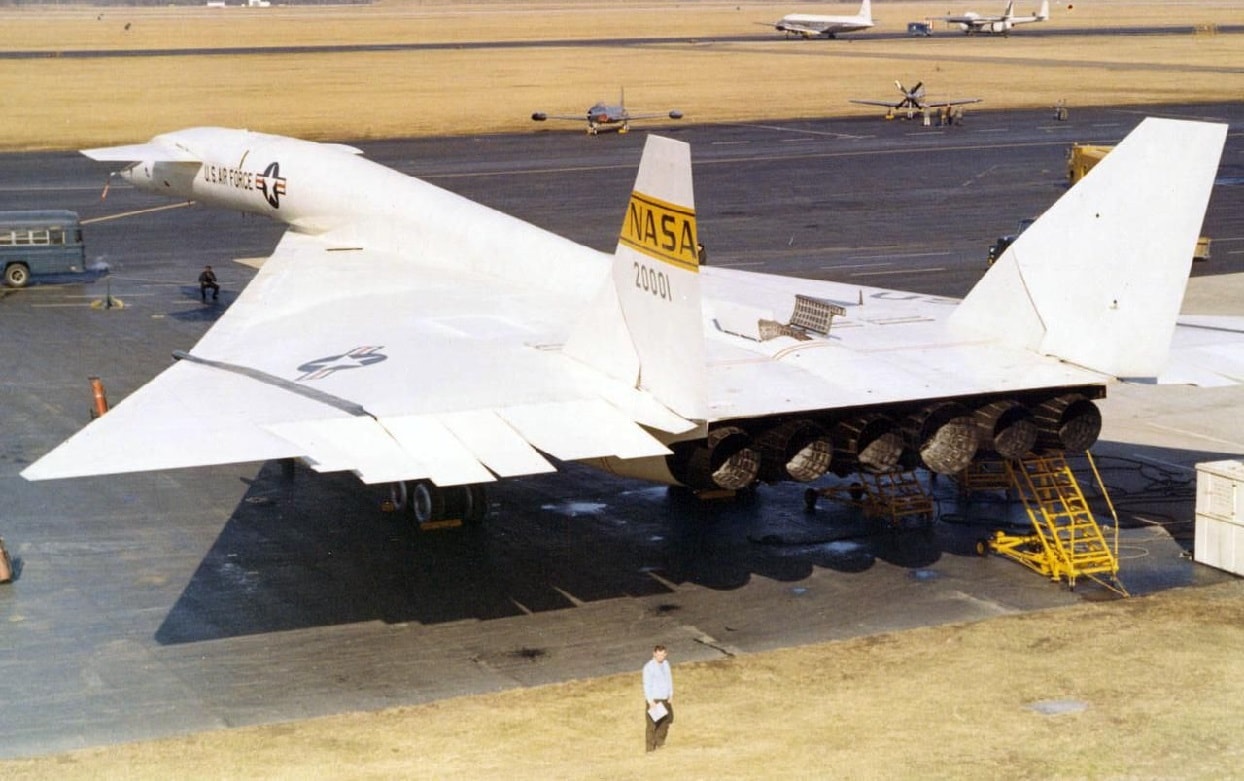
XB-70. Image: Creative Commons.
The idea was that speed and altitude would result in an invulnerable platform. At the time, the idea made sense: Soviet radar-guided surface-to-air missiles (SAMs) and fighters were still relatively primitive.
Against such a strategic landscape, the XB-70 was envisioned as the ultimate deterrent, a complement to early ICBMs and the then-new B-52 bomber.
Designed with six General Electric YJ93-GE-3 turbojets offering 28,800 pounds of thrust each, the XB-70 could reach top speeds of Mach 3.05 (2,056 miles per hour) and altitudes above 70,000 feet.
The 185-foot aircraft had a 105-foot wingspan and weighed 521,000 pounds.
The double-delta wing design was constructed from stainless steel with titanium honeycomb construction, which was highly advanced for its time.
The aerodynamics exploited compression lift, which allowed the airframe to ride its own shock waves to increase efficiency at high speed.
In addition to the compression lift and honeycomb structure, the XB-70 introduced multiple groundbreaking innovations. For example, the folding wingtips created more stability and increased lift at high speeds.
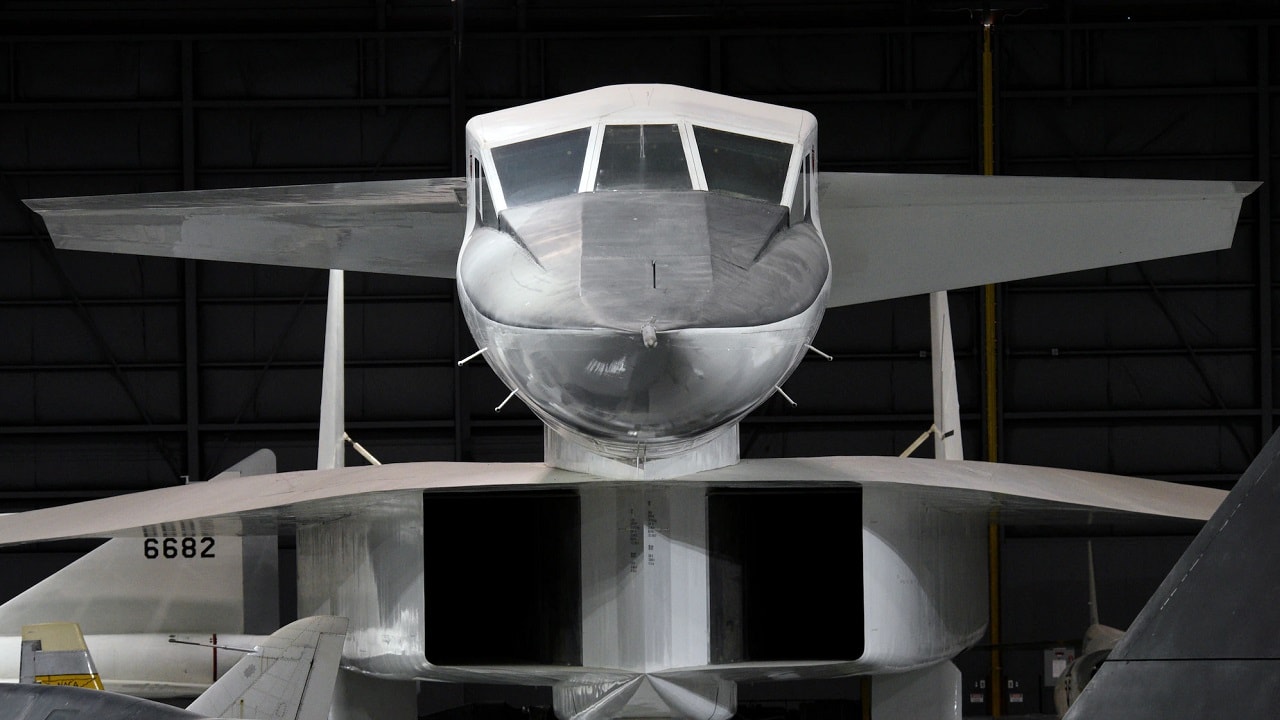
The futuristic XB-70A was originally conceived in the 1950s as a high-altitude, nuclear strike bomber that could fly at Mach 3 (three times the speed of sound) — any potential enemy would have been unable to defend against such a bomber.
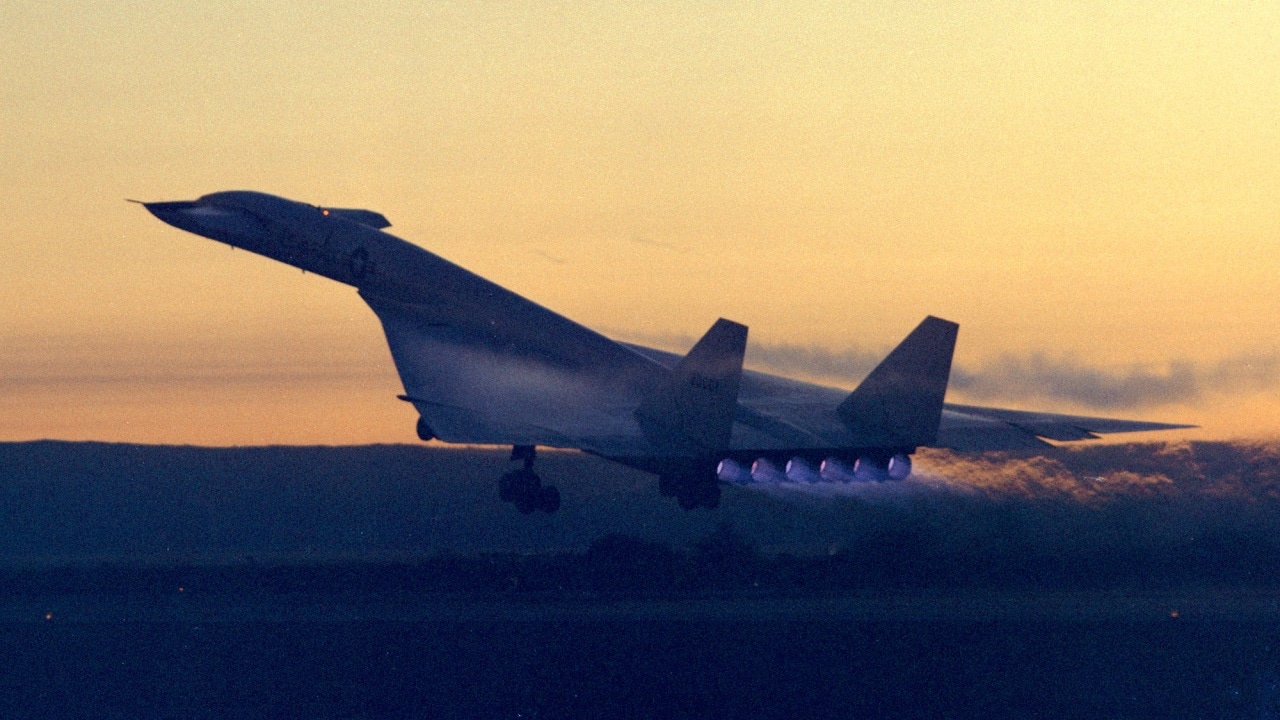
Image is of a an XB-70, another Cold War experimental bomber.
Thermal engineering gave the XB-70 advanced materials that could withstand skin temperatures in excess of 600 degrees.
These features were all decades ahead of their time.
How Would the XB-70 Be Used?
The Air Force envisioned using their technologically advanced XB-70 as a high-altitude penetration bomber.
Had the aircraft ever become operational, a typical mission might have flowed as such: cruise at Mach 3 over the Arctic; dash into Soviet airspace; deliver nuclear payloads; exit the threat zone before interceptors or SAMs could engage.
Simple enough, operating above and beyond Soviet defense systems to deliver world-destroying weapons.
Yet, the XB-70 never entered service.
Soviet surface-to-air missile technology improved in the late 50s and early 60s.
Thanks to systems like the SA-2, the Soviets were able to defend high-altitude areas, as the shoot-down of Gary Powers’ U-2 spy plane demonstrated unequivocally, rendering the entire XB-70 strategy obsolete.
Further marginalizing the XB-70 was the rise of ballistic missiles. ICBMs and SLBMs offered the US a lower-cost method for delivering nuclear ordnances faster, all without risk to a pilot or the need for airbases.

XB-70. Image Credit: Creative Commons.
These practical alternatives, paired with the projected costs of the XB-70 program (over $700 million in 1960s dollars), meant the bomber was just too expensive to justify.
In the end, just two XB-70s were ever built (plus one partial airframe). The aircraft never went into operational service as a bomber; instead, it was used for high-speed aerodynamic research, supersonic transport studies, and material and heating tests. In these testing roles, the XB-70 contributed crucial data to future hypersonic and high-speed aircraft programs.
Tragically, one of the two XB-70s was destroyed in a mid-air collision in 1966, while flying in formation for a photoshoot with an F-104.
Strategically, the XB-70’s limited career still carried value; the aircraft demonstrated the limits of manned high-speed penetration strategies, proving that planes could no longer outrun missile technology.
The program also advanced aerospace materials science, thermal engineering, and high-speed aerodynamics, directly influencing the B-1 program, early SST designs, and NASA high-speed research (which would be applied to SR-71 improvements and later X-planes).
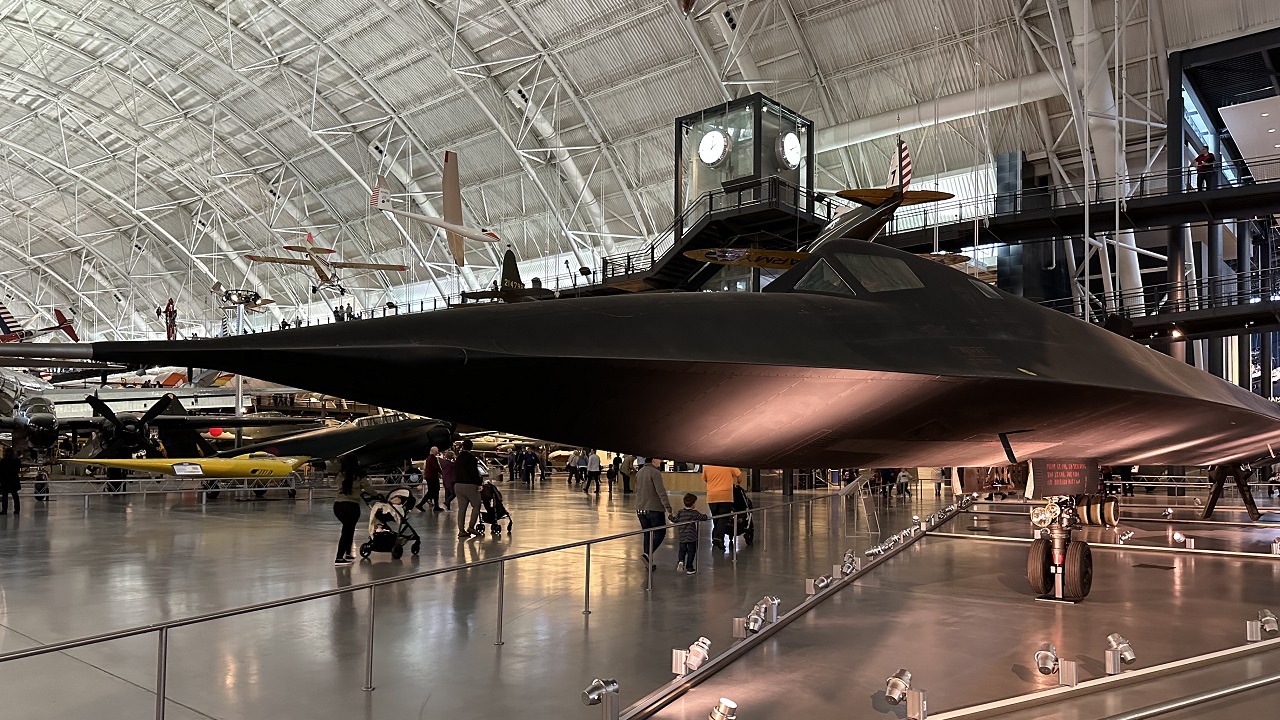
SR-71. SR-71 photo taken at the National Air and Space Museum. Taken by 19FortyFive on 10/1/2022.
The bomber program symbolized the strategic shift from bomber dominance to missile deterrence dominance.
So in these more limited respects—technology, research, precedent—the XB-70 was still a success, even though the aircraft never served in its intended role and was rendered obsolete before taking its first flight.
The bomber represents the last gasp of the doctrine that attributes speed to survivability, arguably the pinnacle of manned bomber aviation.
Though the XB-70 never entered service, its legacy lives on today in every high-speed aerospace project that followed.
About the Author: Harrison Kass
Harrison Kass is an attorney and journalist covering national security, technology, and politics. Previously, he was a political staffer and candidate, and a US Air Force pilot selectee. He holds a JD from the University of Oregon and a master’s in global journalism and international relations from NYU.