

Synopsis: Otto von Bismarck’s warning in 1 quote—“People never lie so much as after a hunt, during a war, or before an election”—is a blunt diagnosis of how incentives warp truth.
-After a hunt, exaggeration is social currency; during war, propaganda becomes a weapon; before elections, promises and narratives are shaped to win rather than to govern.
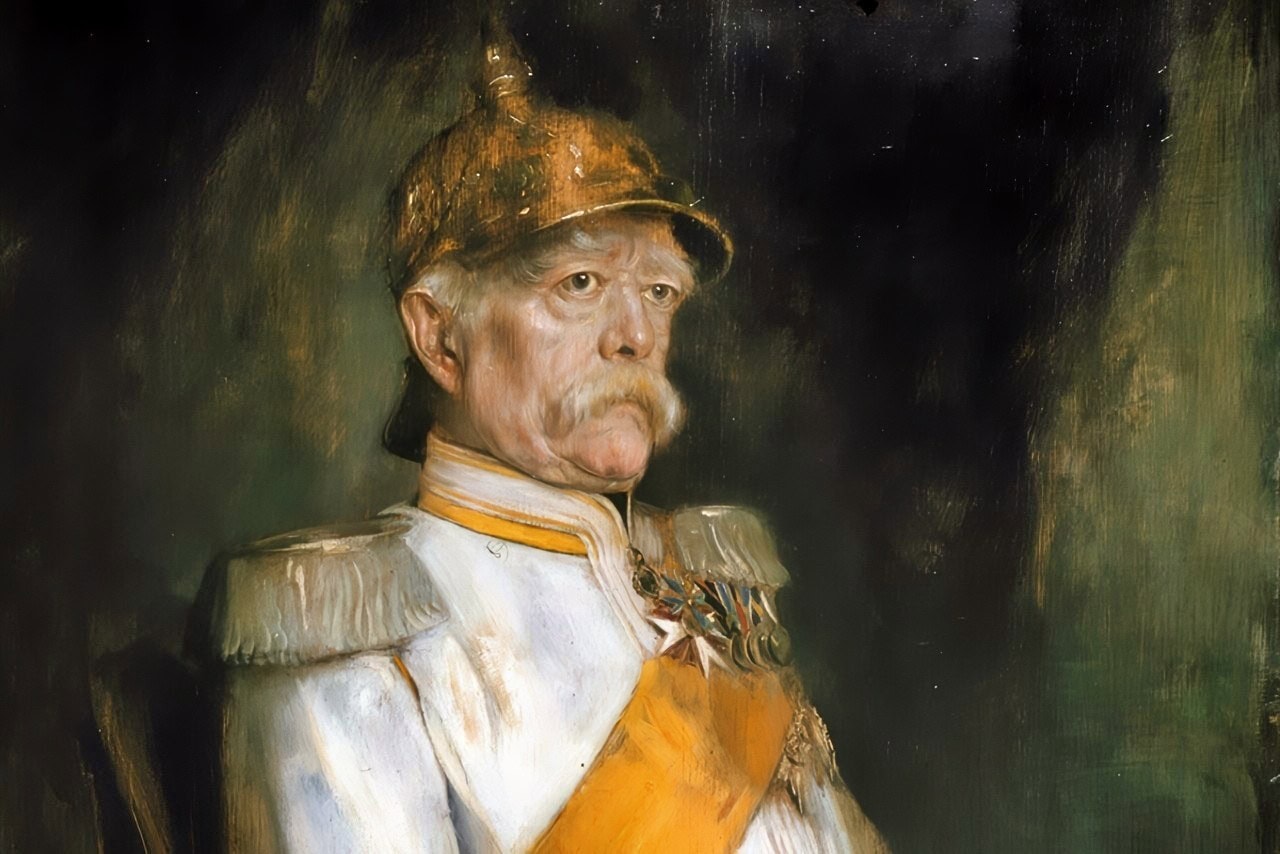
Otto von Bismarck Quote of the Day. Image Credit: Creative Commons.
-The quote reflects Bismarck’s hard-edged realpolitik: politics is not a seminar, it’s a contest for power, and messaging is often the decisive terrain.
-For Bismarck, the point wasn’t despair—it was discipline: trust, verify, and assume self-interest is in play.
Otto von Bismarck, Summed Up in 1 Line: The Truth Dies First
Quote Of The Day, Otto Von Bismarck: “People Never Lie So Much As After A Hunt, During A War Or Before An Election.”
Otto von Bismarck was a Prussian politician and the first chancellor of the unified German nation. Before rising to that role, he was a diplomatic official in Prussia. Prussia was a large and powerful German-speaking country that existed before the unification of 39 separate German states in 1871.
He was nicknamed the “Iron Chancellor.” Bismarck is considered one of the most influential leaders of the 19th century, and his policies and actions had a profound impact on the 20th century.
He left a great legacy for the German people, not only for the unification of the country but also for his contributions to electoral rights and social security.
Bismarck’s Quote Explained
Otto von Bismarck’s quote, “People never lie so much as after a hunt, during a war, or before an election,” means that certain situations and power struggles bring out the most extreme dishonesty, with exaggeration (after a hunt) and outright fabrication (war/elections) used to manipulate perceptions, secure advantage, or win support, highlighting his cynical view of human nature in politics and conflict.
He says people should never trust politicians.
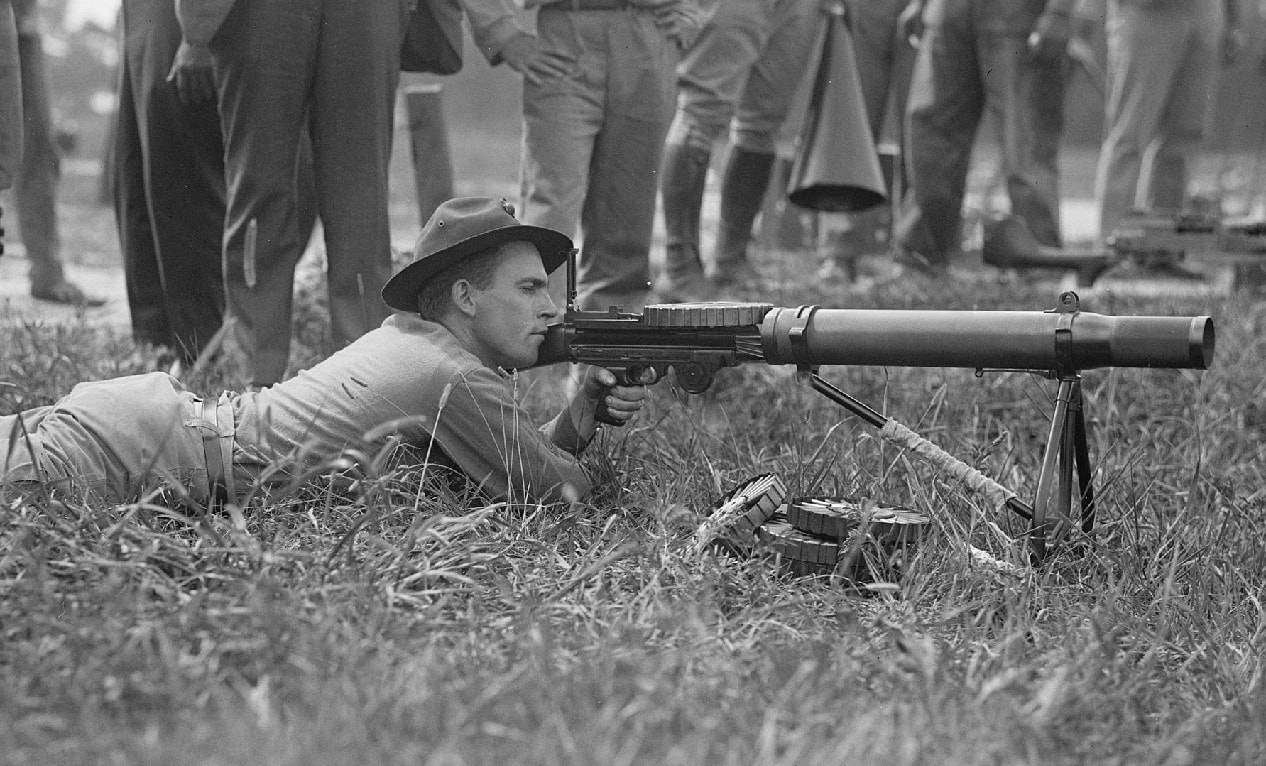
Lewis Gun. Image Credit: Creative Commons.
“After a hunt” refers to tall tales and embellished stories of success (or failure) that people tell to impress others, inflating their achievements. “I caught a fish this big (spreading arms out) is a classic example of such.
“During a war” means governments use propaganda, misinformation, and self-serving narratives to justify conflict, dehumanize enemies, and boost morale, with truth often the first casualty.
“Before an election” is self-explanatory as it points to political promises and rhetoric that politicians use to gain votes, knowing these commitments are often unrealistic or never intended to be fully met.
Who Was Otto Von Bismarck?
Bismarck was born in April 1815, about the time Napoleon was about to be defeated by a coalition that included an enthusiastic German force—the results of this shaped Bismarck’s childhood with war stories about heroism and sacrifice.
At the time of his birth, Germany didn’t exist as a unified nation; it comprised 39 small, independent states.
His father, Karl, was a Prussian aristocrat, known as a Junker with staunchly conservative views. In contrast, his mother, Wilhelmine, was the daughter of a cabinet secretary and was keenly intelligent and witty. The younger Bismarck would be a combination of the two: an arch-conservative Junker with the Machiavellian mind of a politician.
Despite Drifting Career-wise, Fate Stepped In
Bismarck studied law, later agriculture, and served in the Army Reserve. In 1849, he was elected to the Landtag. In October 1857, Frederick William IV suffered a stroke, and his brother Wilhelm took over the Prussian government as Regent.
He appointed Bismarck as Prussia’s ambassador to the Russian Empire in 1859 and to France in 1862. He became Minister-President in 1862. Here, he gained near-total control of the political course the kingdom would take.
Bismarck knew that the people would rally together when faced with foreign enemies, so Bismarck provoked wars against Denmark, Austria, and France.
All three victories gained Prussia increasing respect for its military strength and allowed the German people to feel a sense of common identity.
After the Franco-Prussian War, Bismarck convinced the southern German states, such as Bavaria, to join his Prussian-led North German Confederation.
Why Was Bismarck Called The Iron Chancellor?
Bismarck earned the moniker, the “Iron Chancellor,” due to his iron-fisted, ruthless, and pragmatic rule, his use of military power and force (“blood and iron”) to unify Germany, and his strong, unwavering personality, signifying a ruler who was harsh, unyielding, and controlled his empire with a firm grip.
He was a master of power, using aggressive diplomacy and strong will to achieve his goals, often against liberal or socialist opposition.
In one of his famous speeches, he declared that significant issues would be decided by “Blood and Iron” (war and industrial might) rather than speeches, highlighting his belief in military strength for unification.
His political strategy was purely pragmatic and power-focused, disregarding ideology to advance hard, inflexible national interests.
He ruled the German Empire with an iron fist, crushing opposition from Catholics and socialists, showing no mercy to those who stood in his way.
Bismarck was physically imposing and known for his sharp wit, overbearing nature, and ability to dominate any audience, reinforcing the image of an unbreakable leader.
Bismarck Died an Embittered Man
He served as Chancellor for 28 years and sought to resist the pressure to acquire colonies, as evidenced by his “My map of Africa lies in Europe” quote.
He was dismissed by Kaiser Wilhelm II in 1890. It was the ultimate contradiction that the man who had dominated Europe by exalting stability should conclude his career at the whim of a young, somewhat unstable, sovereign.
Bismarck expressed deep concerns that his successors were “tearing to pieces the house that I built.” He correctly predicted that their blunders, particularly the abandonment of the Reinsurance Treaty with Russia, would lead to Germany being surrounded by enemies and eventually plunge Europe into a major conflict, as happened with World War I.
Under Wilhelm, tensions in Europe began to mount, threatening to engulf the newly formed Germany. And eventually, it would lead to World War I and Germany’s utter ruin.
His bitterness at Wilhelm II extended beyond the grave. The inscription he chose for his tombstone was a final jab at the second Kaiser, reading: “a loyal German servant of Kaiser Wilhelm I,” pointedly omitting any mention of Wilhelm II.
About the Author: Steve Balestrieri
Steve Balestrieri is a National Security Columnist. He served as a US Army Special Forces NCO and Warrant Officer. In addition to writing on defense, he covers the NFL for PatsFans.com and is a member of the Pro Football Writers of America (PFWA). His work was regularly featured in many military publications.