
Synopsis: Napoleon Bonaparte’s legend wasn’t built only on bold attacks—it was built on timing.
-Centered on the quote “Never interrupt your enemy when he is making a mistake,” this piece traces how Napoleon rose from a revolutionary artillery officer to France’s First Consul and then emperor by recognizing openings and punishing blunders.
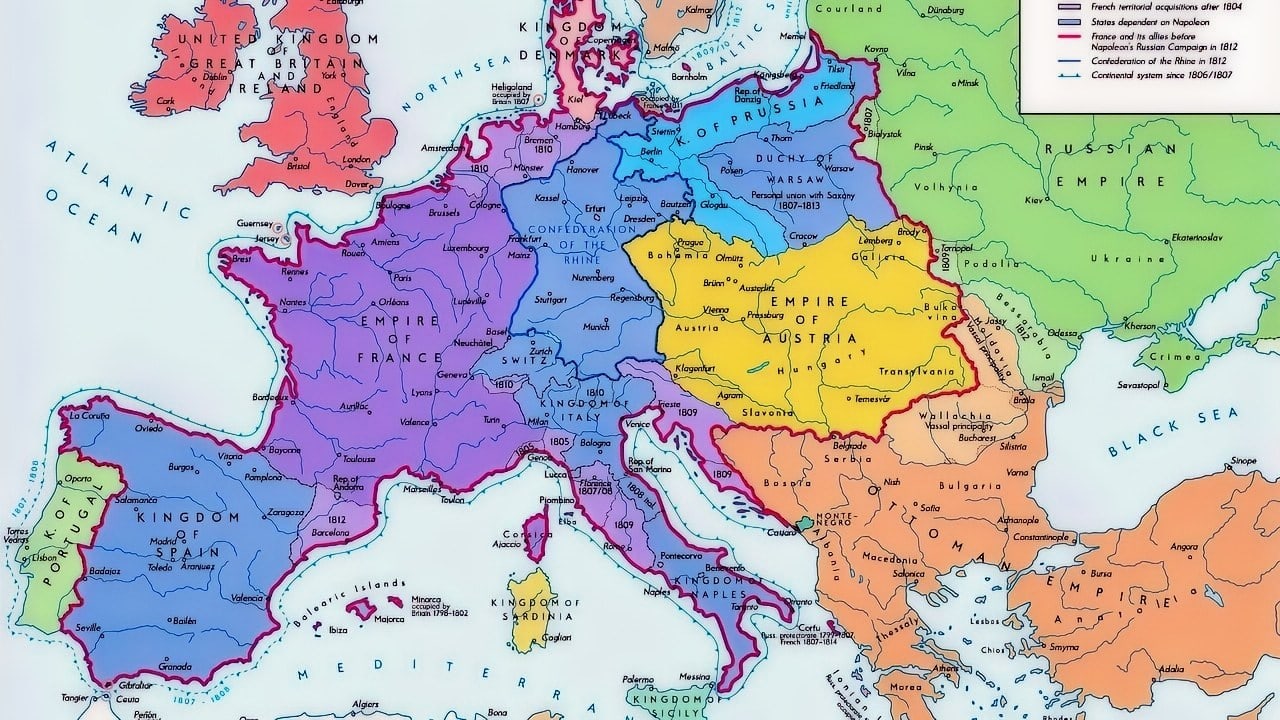
-From Toulon and the defense of Paris to the Italian campaign’s rapid victories and the ambitious Egypt expedition, Napoleon repeatedly leveraged speed, guns, and psychological pressure to turn enemy errors into collapse.
-His political instincts matched his battlefield instincts, until overreach finally caught up with him in Russia and at Waterloo.
“Never Interrupt Your Enemy”: The Napoleon Rule That Won Him Europe
“Never interrupt your enemy when he is making a mistake.” This was one of many quotes from the legendary general and ruler of France, Napoleon Bonaparte.
You would be hard-pressed to find anyone in the civilized world who does not know the name or deeds of Napoleon.
His campaigns showcased his brilliance and tactical prowess.
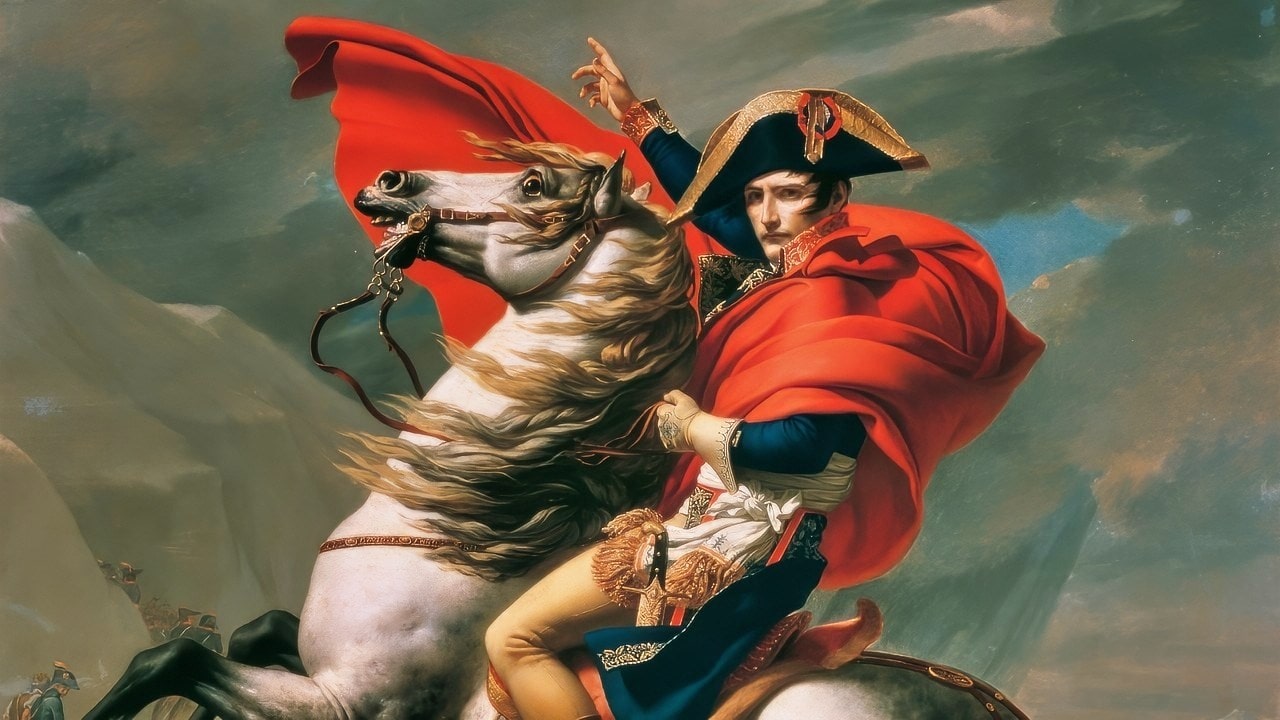
Napoleon Bonaparte. Image Credit: Creative Commons.
The aforementioned quote highlights one of his greatest strengths: Napoleon was a master at reading and directing the battlefield.
He knew when his enemies had made a tactical blunder and was always able to capitalize on his enemies’ mistakes.
Throughout his career, he led his troops with his charisma and his grandiose ego until his final defeat at the Battle of Waterloo.
Napoleon’s Early Military Career
When the French Revolution broke out in 1789, Napoleon supported the Jacobin movement and joined the military.
In 1793, he was appointed captain of a coastal artillery battery and later served as artillery commander of the republican forces.
He was sent to recapture the port of Toulon, during which he first displayed some of his tactical prowess.
His efforts to recapture the city gained the attention of influential figures like Robespierre, one of the leading Jacobins, who promoted him to brigadier general and put him in charge of defenses on the Mediterranean coast.
Soon after, he was promoted again to artillery commander of the Army of Italy.
After Maximilien Robespierre was overthrown during the revolution in 1794, Napoleon’s relations with the Jacobins raised suspicions about his loyalties, and he was imprisoned for two weeks before being released and restored to command.
In October, French royalists staged a counter-rebellion and sought to regain control. Napoleon was made second in command of the forces defending the Tuileries Palace.
He reasoned that artillery would be instrumental in the palace’s defense and thus positioned cannons in key places, which decimated the royalists.
For his efforts in quashing the rebellion, he was promoted to commander of the Army of the Interior and appointed head of the Army of Italy.
The Italian and Egyptian Campaign
As soon as Bonaparte took command of the Army of Italy, he went on the offensive.
His goal was to defeat the Kingdom of Sardinia in Piedmont before the Austrians could arrive and intervene.
This campaign was met with success after success.
He laid siege to the city of Mantua and successfully rebuffed the Austrians’ attempts to relieve the city.
France then pushed deeper, arriving at the city of Leoben, some 100 km from Vienna in Austrian territory.
The push shocked the Austrians so much that they sued for peace, resulting in the Peace of Leoben, which gave France control of most of Northern Italy and most of the Netherlands.
To round off the campaign, Napoleon marched into Venice, forcing the city-state to surrender, thus putting an end to 1,100 years of independence.
After the riveting success of the Italian campaign, Napoleon turned his gaze further south. His goal was to weaken the British Royal Navy.
To this end, he sought to seize Egypt and halt the supplies flowing in from India. This would allow France to establish its presence in the Middle East, join forces with the Sultan of Mysore—an ardent enemy of the British—and secure goods from India.
As part of the expedition, Bonaparte took scientists, chemists, mathematicians, and naturalists with him to study the historical artifacts of Egypt (the results of which greatly enhanced our understanding of ancient languages and culture).
He quickly defeated the Egyptians, securing the capital of Cairo. He would have advanced further, but his fleet was nearly destroyed by the British fleet under the command of Sir Horatio Nelson.
Napoleon would have continued his expedition, but he received troubling news from Paris that the government’s future was in doubt.
Without orders from the Directory, Napoleon secretly left Egypt to return to Paris, leaving his army under the command of Jean-Baptiste Kléber.
From First Consul to Emperor Napoleon
Despite the failures in Egypt, Napoleon was hailed as a hero upon his return to Paris.
He was reprimanded for deserting Egypt, but the Directory had lost the power to punish him.
He formed a political alliance with Talleyrand and other council members in France’s parliament and introduced the Constitution of the Year VIII, which appointed three consuls to govern France.
Naturally, Napoleon was appointed as the first consul (the most powerful), while the other two consuls held advisory roles.
As first consul, Bonaparte sought to consolidate power and increase France’s position on the world stage.
To ensure peace, he led his troops across the Swiss Alps and waged war against the Austrians, which ended in a resounding victory for France.
Despite a somewhat stable peace, war with Britain again loomed on the horizon.
Running low on cash, Napoleon looked for a quick way to secure funds.
His solution was to sell the American colony of Louisiana (which would have been inconvenient to defend in a war) to the newly formed United States.
The subsequent Louisiana Purchase doubled the size of the U.S. and generated some cash for France. Napoleon also sought to secure his regime even in the event of his untimely demise. The solution he found was to crown himself emperor.
By popular vote, the people of France “voted” to crown Bonaparte as Emperor Napoleon I. At his coronation, he crowned himself with the Crown of Charlemagne rather than letting the Pope crown him, effectively declaring himself a higher authority than God.
The End
Through his sheer cunning and military exploits, Napoleon Bonaparte was declared France’s first emperor. His charisma and ability to read people and the battlefield made him a larger-than-life figure, one that is not likely to be forgotten anytime soon.
He was able to capitalize on the blunders of his military and political enemies to his advantage.
Of course, his luck would eventually run out in Russia and at the Battle of Waterloo, but for a period of time, Napoleon was one of the most powerful men in Europe.
About the Author: Isaac Seitz
Isaac Seitz, a Defense Columnist, graduated from Patrick Henry College’s Strategic Intelligence and National Security program. He has also studied Russian at Middlebury Language Schools and has worked as an intelligence Analyst in the private sector.