Synopsis – George Washington’s warning that peace requires readiness wasn’t rhetoric—it was a governing principle.
-Shaped by surveying work, militia service, and hard lessons in the French and Indian War, Washington learned how quickly security collapses when a nation improvises.
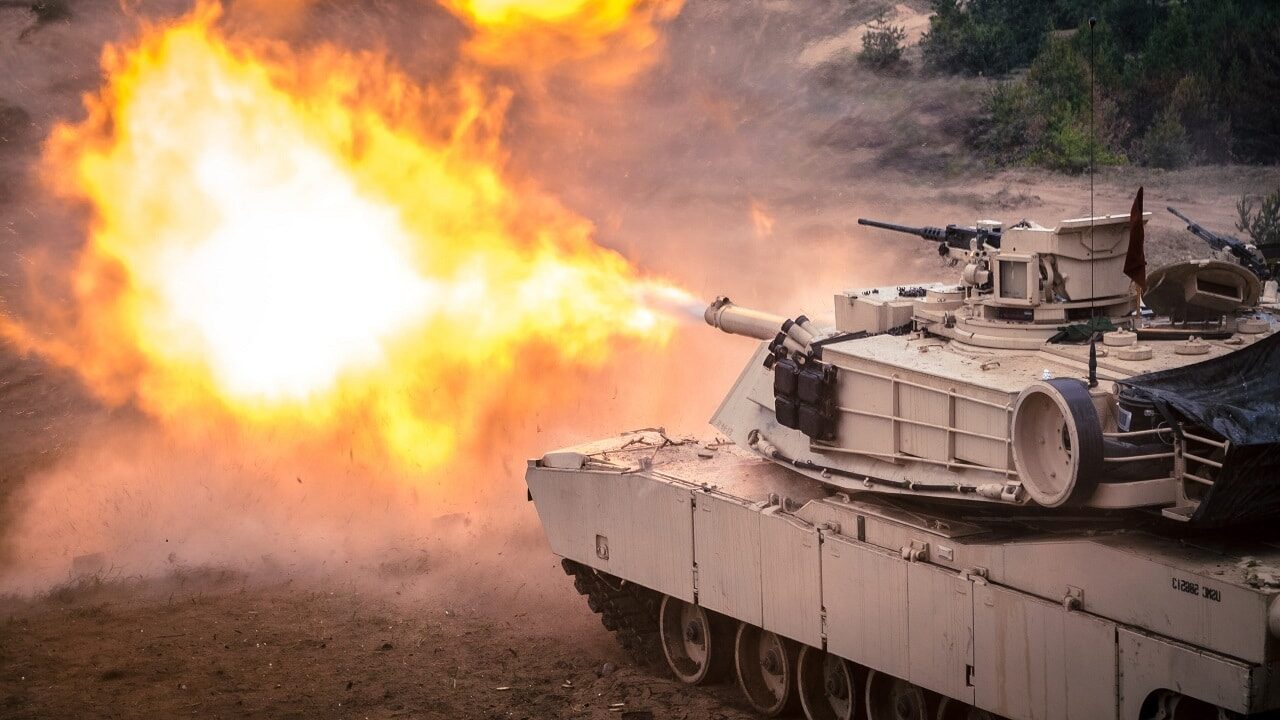
M1 Abrams Tank firing. Image Credit: Creative Commons.
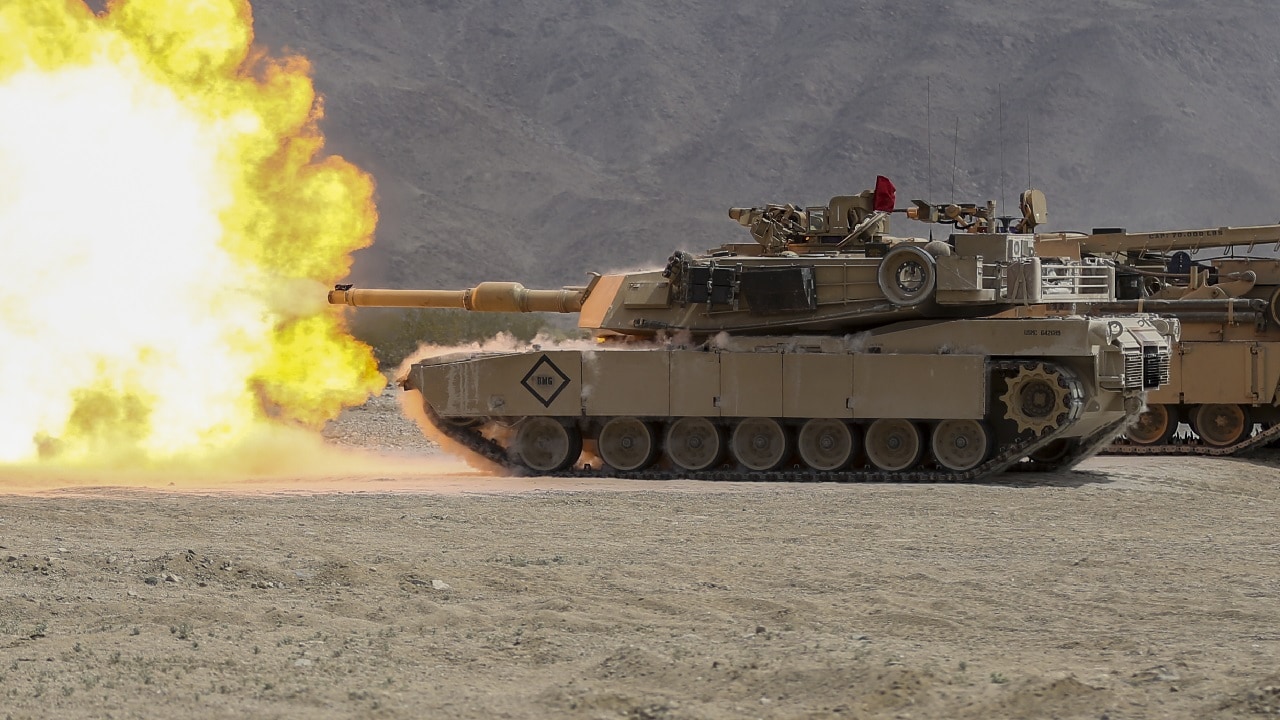
An M1 Abrams Tank fires off a round as a demonstration during 1st Tank Battalion’s Jane Wayne Spouse Appreciation Day aboard the Marine Corps Air Ground Combat Center, Twentynine Palms, Calif., April 3, 2018. The purpose of the event is to build resiliency in spiritual well being, the will to fight and a strong home life for the 1st Tanks Marines and their families. (U.S. Marine Corps photo by Lance Cpl. Rachel K. Porter)
-As commander of the Continental Army, he absorbed defeats, kept the force intact, and helped deliver victory at Yorktown with French support.
-As the first president, he argued for national strength: a professional military, institutions, and civilian control of force.
-He set the cabinet model and the War Department. His example fused restraint with preparedness—the core of America’s earliest national security blueprint.
George Washington’s “Prepare for War” Warning Quote—and the Birth of U.S. National Security
“To be prepared for war is one of the most effective means of preserving peace.”
These were the words delivered by George Washington during his first inaugural address as president of the United States. The quote is a paraphrase of the classic Latin phrase: Si vis pacem, para bellum, roughly meaning, “If you want peace, prepare for war.”
This phrase has been echoed in some version throughout all of history. In Washington’s context, he used it to urge congress to approve the creation of a permanent standing Army of the United States. Influenced by his military experience, Washington knew that the only way for the U.S. to survive was through a position of strength.
Early Life
The man who essentially created U.S. national security policy was born on February 22, 1732, at his family’s plantation in Westmoreland Country, Virginia. He was the eldest child of Agustine and Mary Washington.
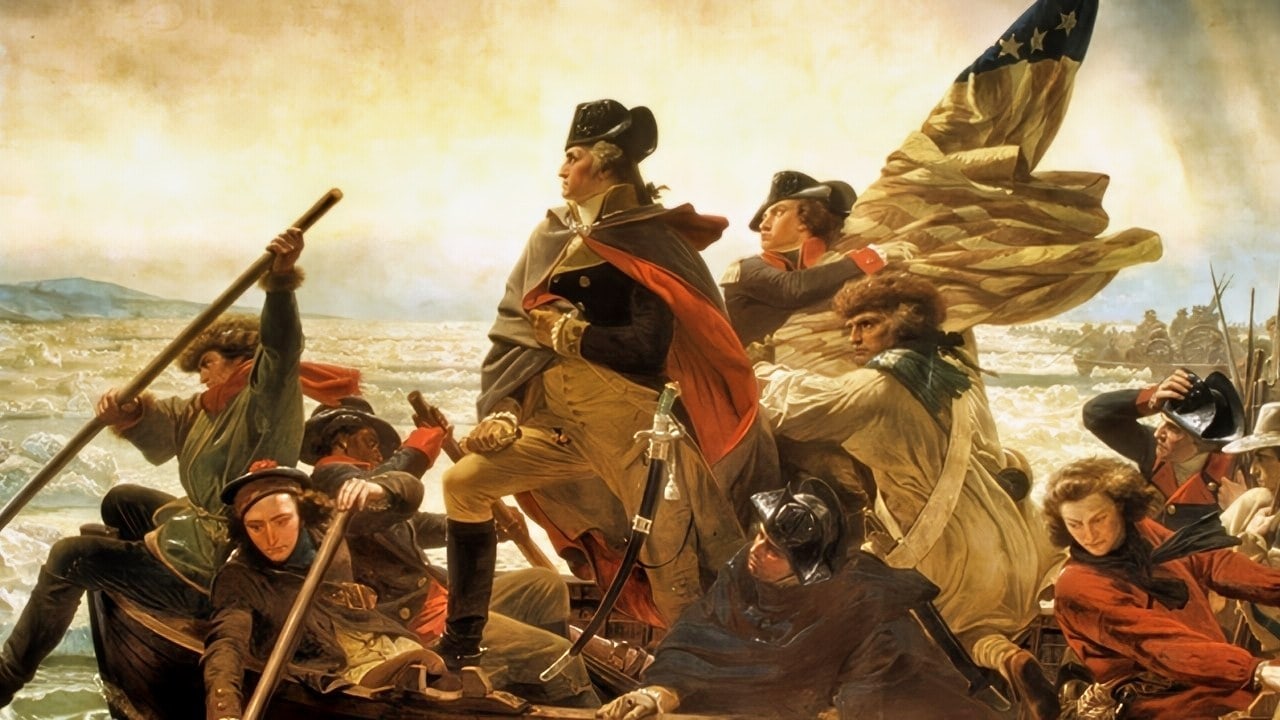
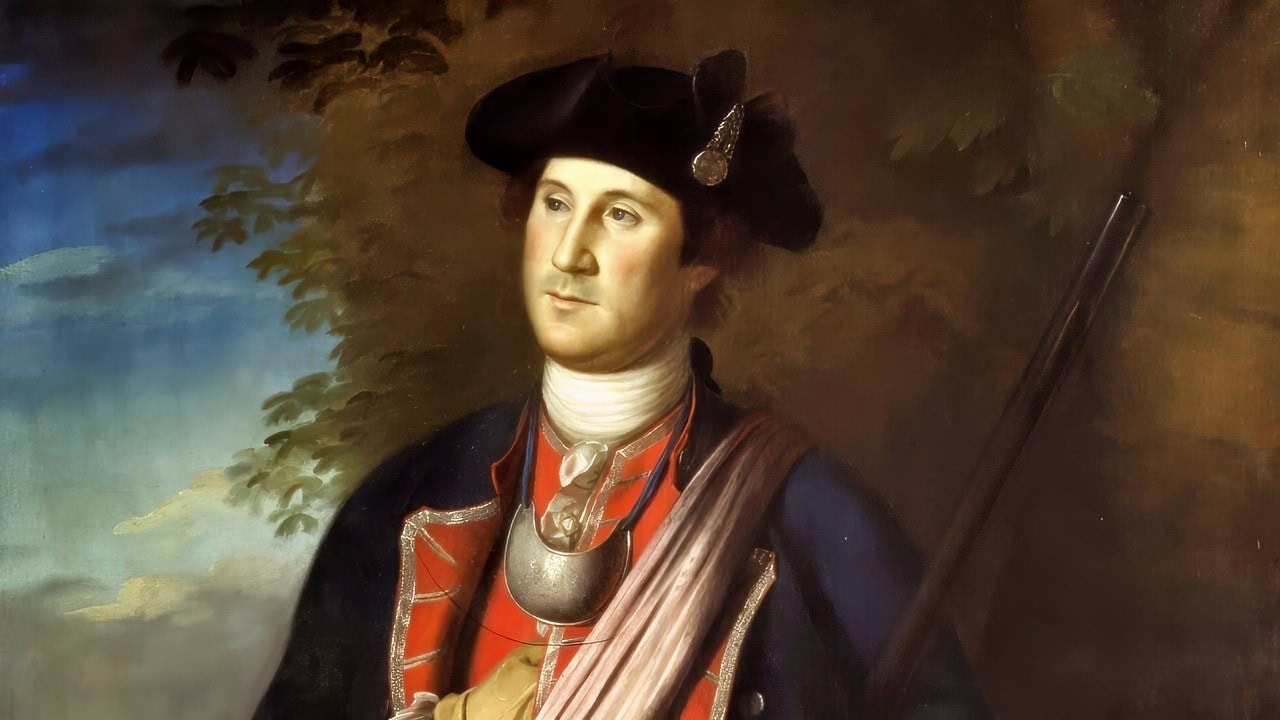
General George Washington. Image Credit: Creative Commons.
In his earliest years, Washington moved with his parents to Little Hunting Creek Plantation (which eventually became Mount Vernon), and then to Ferry Farm near Fredericksburg. Although his family was part of the planter elite in Virginia, George Washington received little formal education.
After his father’s death in 1743, he studied via private tutors and local schools where he focused on reading, writing, legal forms, geometry, trigonometry, and manners in preparation for a career as a surveyor. He was also greatly influenced by The Rules of Civility and Decent Behaviour, which helped develop the leadership qualities that made him a legend.
At age 17 his professional life began as a surveyor of Culpeper Country Virginia, gaining important field experience on the Shenandoah Valley frontier. His surveying work brought him into contact with important figures such as Lord Fairfax, which helped to elevate his social standing.
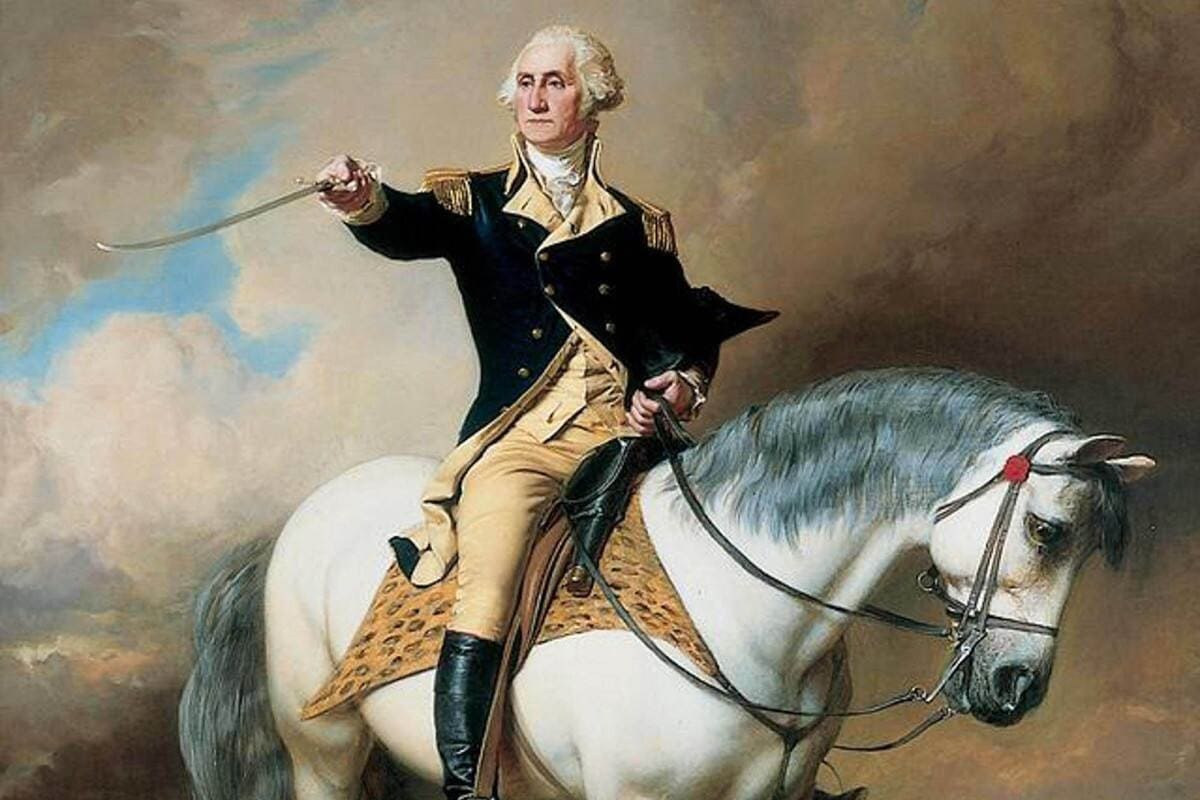
George Washington. Image: Creative Commons.
In 1753, at 21 years of age, Washington joined the Virginia militia. Sent by Governor Robert Dinwiddie, he went on a perilous 900-mile round trip to deliver a message to the French at Fort Le Boef, demanding that they vacate claimed British territory. In 1756, Washington, now a lieutenant colonel, led 150 men to confront the French. This expedition was initially successful, but he was forced to surrender at Fort Necessity, marking his first defeat.
Military Career
When the French and Indian War began, Washington volunteered for the British Army under General Edward Braddock in 1755. It was during this conflict that George Washington first displayed the leadership qualities that would make him a national hero.
At Monongahela, he displayed remarkable courage under fire, sustaining several minor injuries in the process. When the British won the Battle of the Forks, Washington resigned his commission, satisfied that he had served his duty and returned to Mount Vernon. He then entered into politics with the Virginia House of Burgesses from 1758–1775, gaining experience in legislation and colonial leadership.
In the years following the French and Indian War, tensions between the British Crown and its colonies in North America deteriorated drastically. Washington attended the First Continental Congress in 1774 and was a key supporter of Continental unity. In 1775, he was unanimously appointed as Commander-in-Chief of the Continental Army. He took command in Boston, and despite his lack of experience in large-scale operations or supply logistics, he persisted in creating a disciplined fighting force capable of fighting and defeating the British.
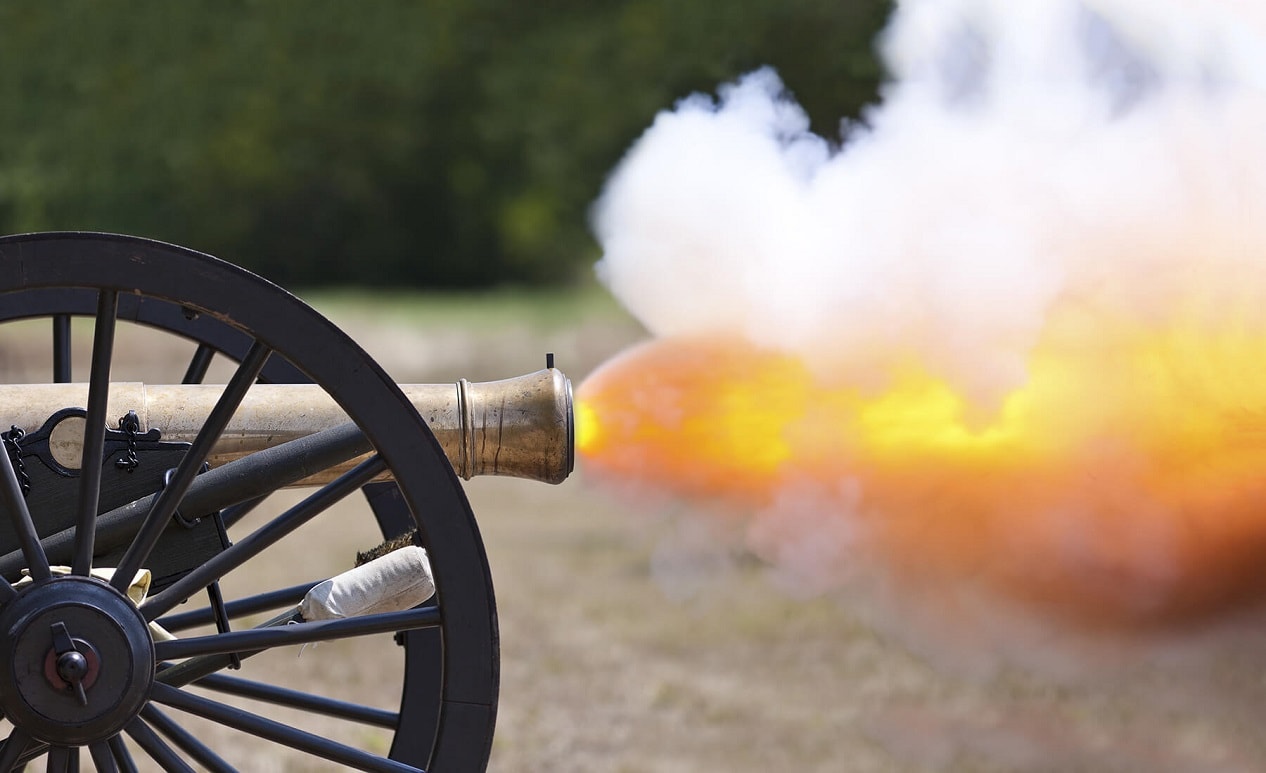
Cannon Firing. Image Credit: Creative Commons.
While Washington was a great leader, he was a poor tactician and was defeated many times during the war. He was defeated at Long Island, Kips Bay, White Plains, and several other battles.
Under his leadership, the British temporarily occupied the capital of Philadelphia, nearly crushing the independence movement altogether. However, thanks to Washington’s leadership and admirable character, the fledgling American Army was able to survive these defeats and retain their morale.
For much of the remaining war, Washington effectively contained British forces in New York while awaiting the arrival of reinforcements. In 1778, the alliance with France and the arrival of Rochambeau’s army turned the tides of the war decisively in America’s favor. At Yorktown in 1781, Washington led the siege against Cornwallis, effectively ending the conflict.
The First President of the United States
After the Treaty of Paris in 1783, Washington resigned his military commission and returned to civic life at Mount Vernon. Recognizing weaknesses in the Articles of Confederation, he championed the movement toward a new constitution.
Elected president of the Constitutional Convention in Philadelphia in 1787, Washington presided over debates that led to the foundational document of the United States. In February 1789, Washington was unanimously elected the first president of the United States by the Electoral College. He was sworn in on April 30, 1789, at Federal Hall in New York City. His presidency set key precedents, establishing the presidential cabinet, implementing financial strategies, signing landmark legislation including the Bill of Rights, and founding the Departments of State and War, and the Treasury. Washington famously declined a third term, setting an informal precedent for a two-term presidency. He retired in March 1797, saying farewell to public life.
Washington returned to Mount Vernon and resumed his farm management, introducing innovations such as a 16-sided threshing barn and expansions of the estate’s infrastructure. He stayed involved in national affairs, especially concerning the Constitution and public finance.
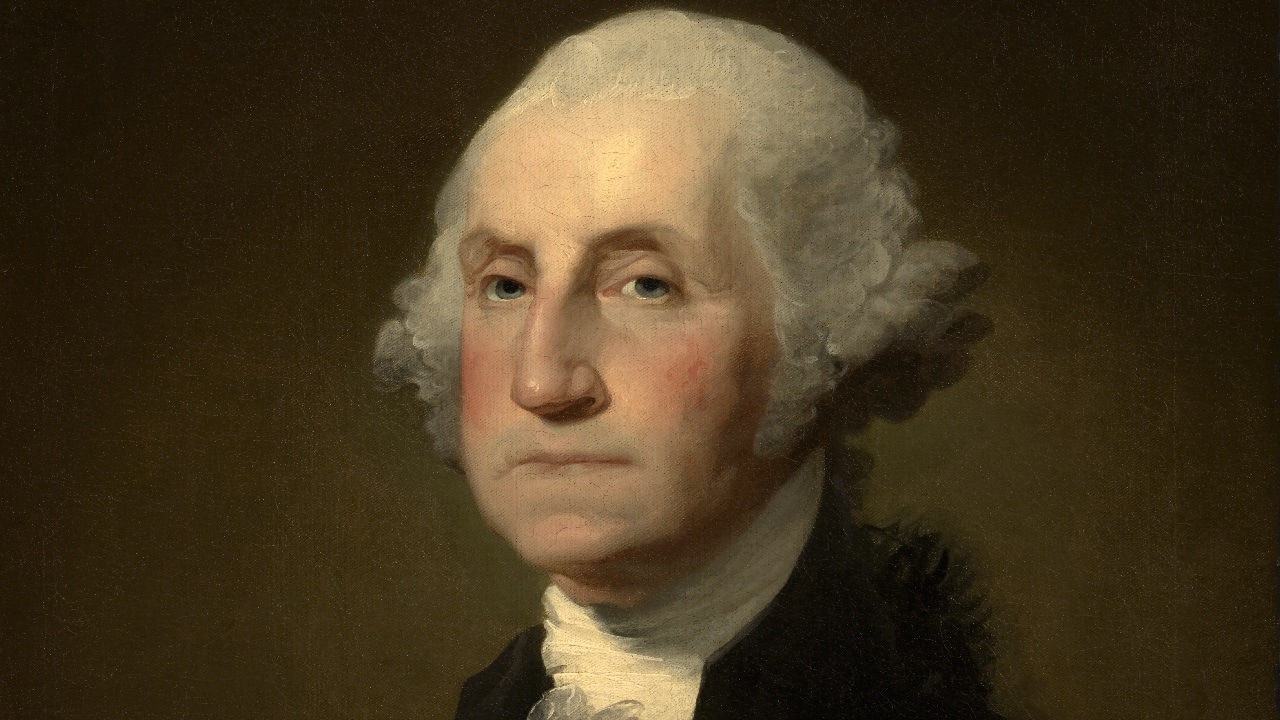
George Washington
On December 14, 1799, at age 67, he died at Mount Vernon from a throat infection following an illness that began with a cold. Contemporary medical treatments, including bleeding and blistering, proved ineffective. His death was met with national mourning.
George Washington is undoubtedly one of the most important figures in all of American history. He was a tremendous advocate for national security, turning militiamen into well-trained soldiers and advocating for a full-time professional army after the war.
His life fused military service, civic responsibility, agricultural innovation, and ethical leadership. The precedents he set for presidential conduct, governance, and civilian control of the military persist as central pillars of American democracy.
His example in both wartime and in peace resonated for generations, and today he remains a beloved national figure.
About the Author: Isaac Seitz
Isaac Seitz, a Defense Columnist, graduated from Patrick Henry College’s Strategic Intelligence and National Security program. He has also studied Russian at Middlebury Language Schools and has worked as an intelligence Analyst in the private sector.