
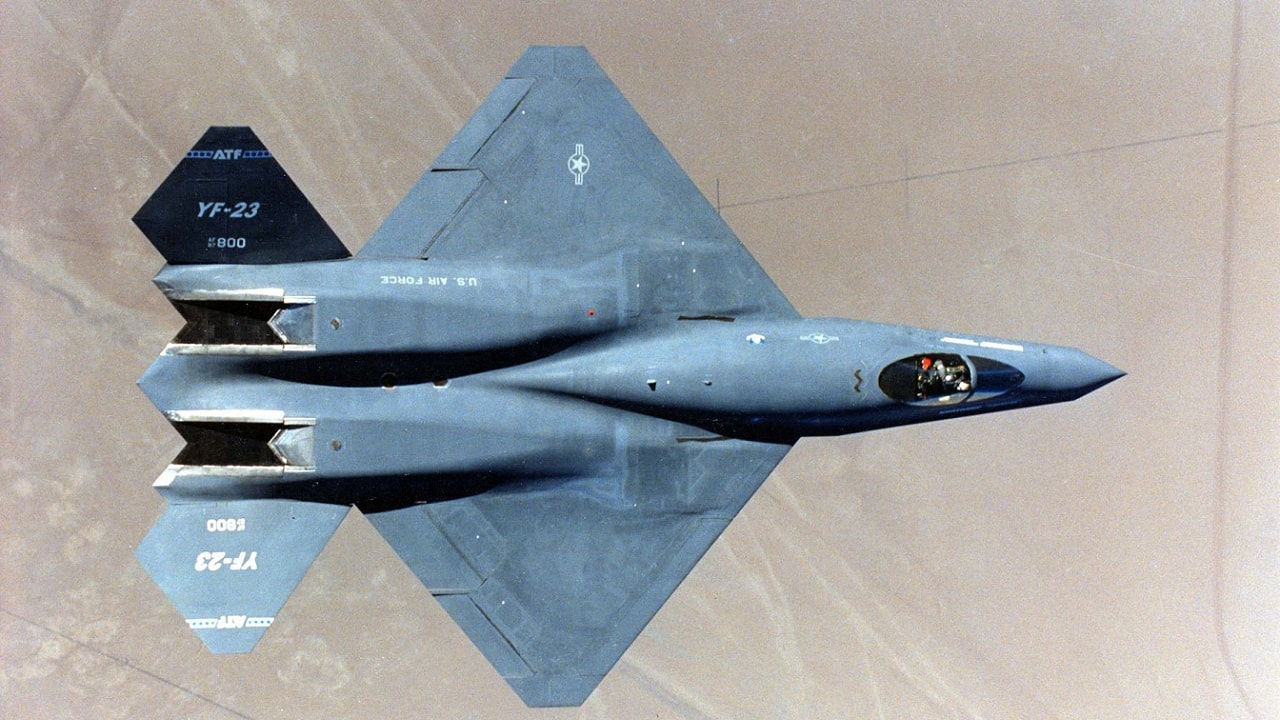
Key Points and Summary – The Advanced Tactical Fighter fly-off pitted Northrop’s YF-23 “Black Widow II” against Lockheed’s YF-22, and the decision still sparks debate.
-The YF-23 offered striking low-observable shaping, strong speed, and long-range potential, but the YF-22 looked more “ready now” to Air Force evaluators.

YF-23. Image Credit: Creative Commons.
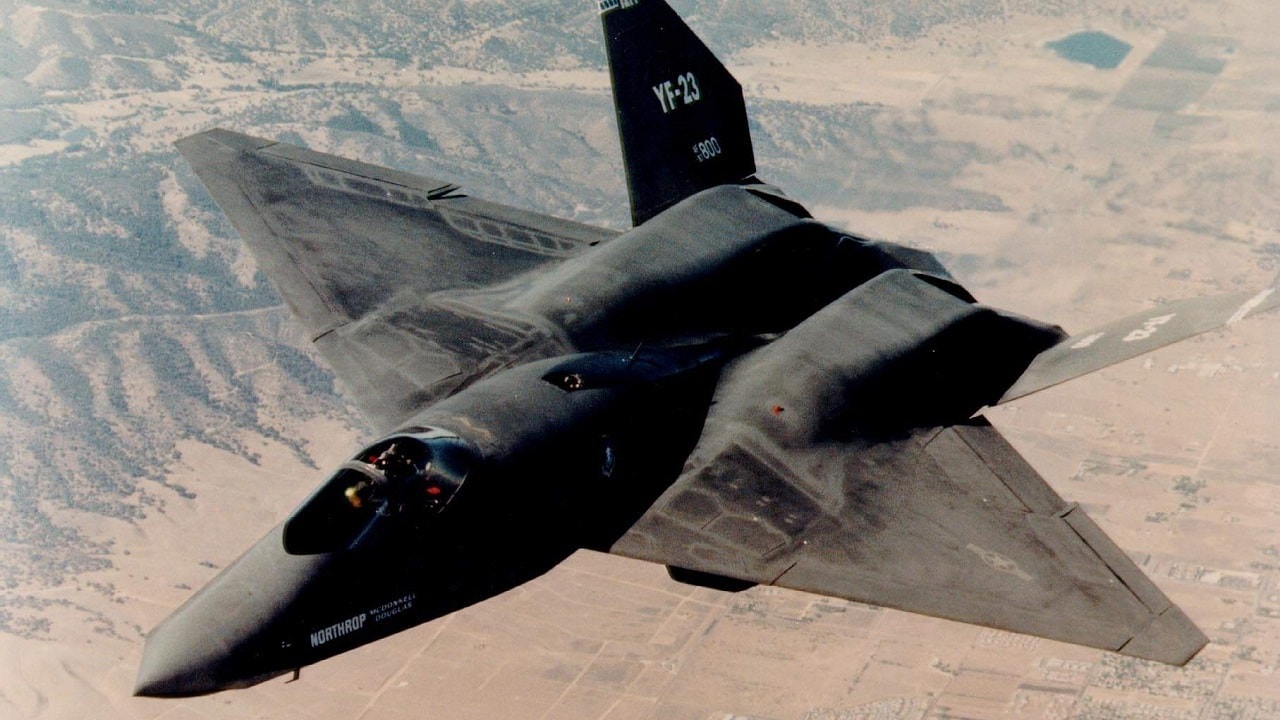
YF-23 stealth fighter, which could inspire the design of the NGAD.
-Thrust-vectoring promised better close-in agility, avionics appeared more mature, and the weapons-bay layout inspired confidence—especially after the YF-22 demonstrated an AMRAAM shot. Logistics and an executable manufacturing path also favored Lockheed.
-The result was the F-22 Raptor: a proven air-superiority platform, even as the YF-23 remains the great “what-if” of stealth aviation.
-In One Word: Fail.
YF-23 vs YF-22: The Stealth Fighter Fly-Off That Still Divides the Air Force
The Black Widow II had a “sting” with high levels of stealthiness and speed.
But it lost the fly-off competition to the YF-22, the warbird that would later become the Raptor. The YF-23 has always been intriguing, boasting compelling features that included long-range capabilities, improved acceleration, and agility. This probably would have turned into a valuable fighter, but it wasn’t meant to be.
The YF-23 lacked a clear path to manufacturing and a well-defined logistical plan. These areas were an advantage that the YF-22 had in spades. The YF-22 also had thrust vectoring and better avionics, leading the Air Force to choose the prototype that would be known as the F-22 Raptor.
This Was the Super Bowl of Airplane Competitions
The competition was called the Advanced Tactical Fighter program, held in the late 1980s and early 1990s. Defense contractors were working at a fever pitch. The engineers, designers, and technicians were giving it their all to win. The Air Force sought a new stealthy air superiority jet that could evade air defenses, overwhelm the enemy, and return home safely.
The F-117 Nighthawk, although quite stealthy, was not a high-performance fighter – it was more of a strike warplane or light bomber. The YF-23 and YF-22 competition was going to be a nail-biter because the Air Force needed a hot-rod jet for aerial combat.
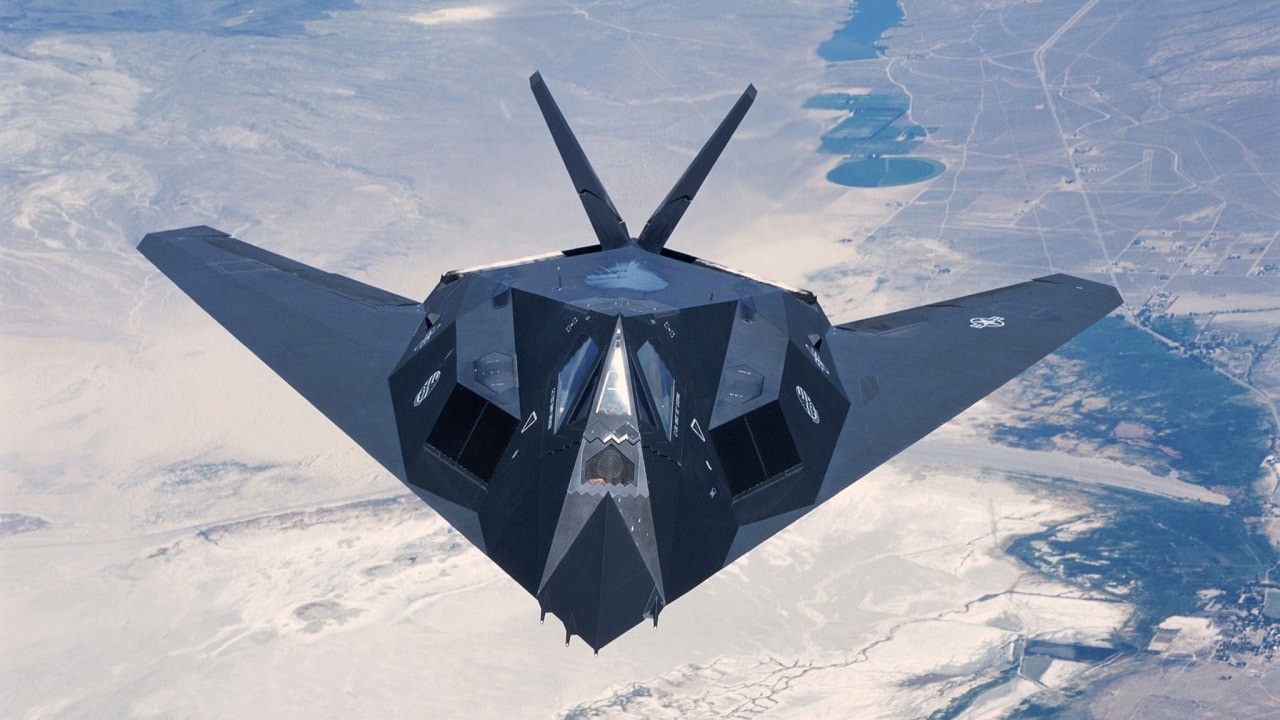
F-117. Image Credit: Creative Commons
Reasons the YF-22 Was Chosen
Evaluators believed that the YF-22, due to its thrust vectoring nozzles, could be a better dog-fighter than the YF-23. The YF-23 instead had fixed nozzles. The YF-22 also featured an enhanced avionics suite, demonstrating a more effective balance of radar, sensors, and electronic warfare systems.
There Was Another Redeeming Quality That the YF-22 Had
Tyler Rogoway of the War Zone has even more reasons why the YF-22 won the competition. Rogoway believes that one key difference between the YF-22 and YF-23 had to do with the weapons bay configuration.
The YF-22 had four AIM-120 AMRAAMs nestled closely on shallow bays around the airplane’s waist like a pair of pistols on a gun belt, Rogoway explained. The Sidewinder short-range missile was also a part of this get-up.
“The seeker heads on the Sidewinders would deploy into the slipstream at an angle once the side bay doors are open and before locking on and firing off their mounting rail at the enemy. The AIM-120s would be punched out of the ventral bay using a pneumatic trapeze-like vertical launcher. Each missile had its own one of these and could be launched freely regardless of the status of the other missiles in the bay,” Rogoway wrote.
Using the YF-22 For Ground Strike Missions
The YF-22 could also carry a 1,000-pound JDAM and four Small Diameter Bombs. This is interesting because the F-22 is not really used as a multi-role surface strike airplane. It is more of an air superiority fighter.
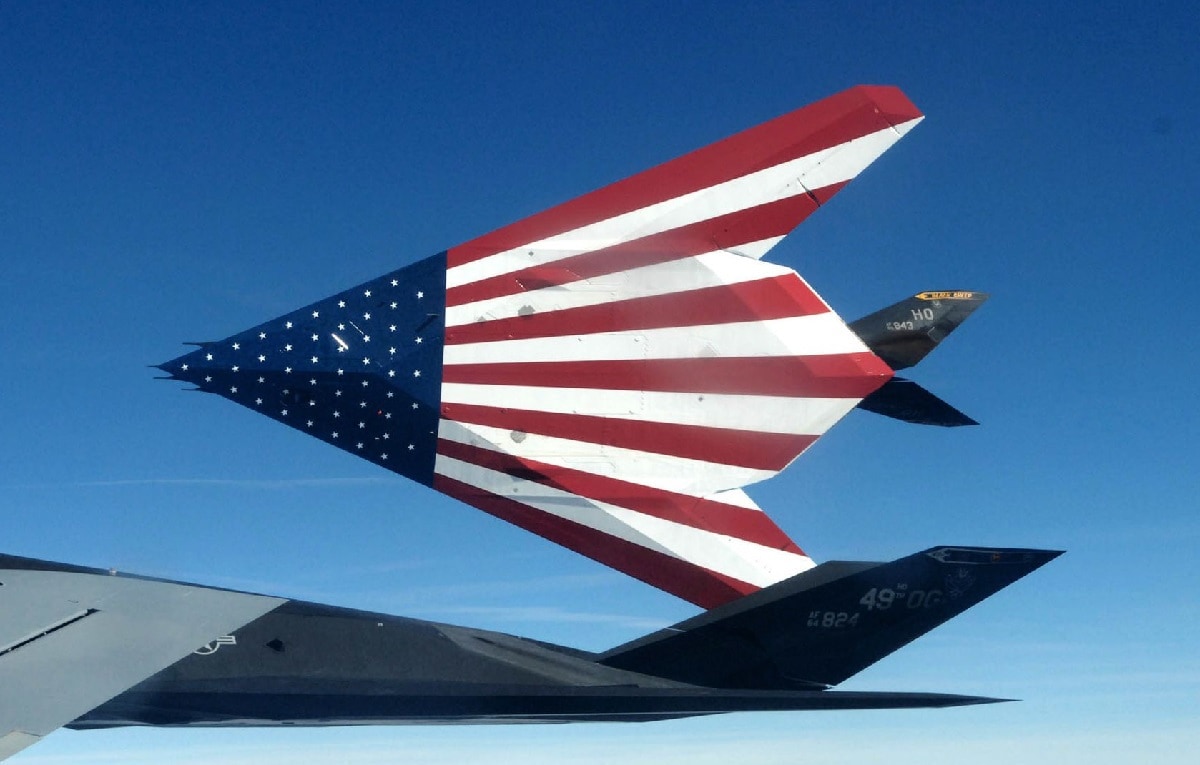
F-117 Stealth Fighter. Image: Creative Commons.
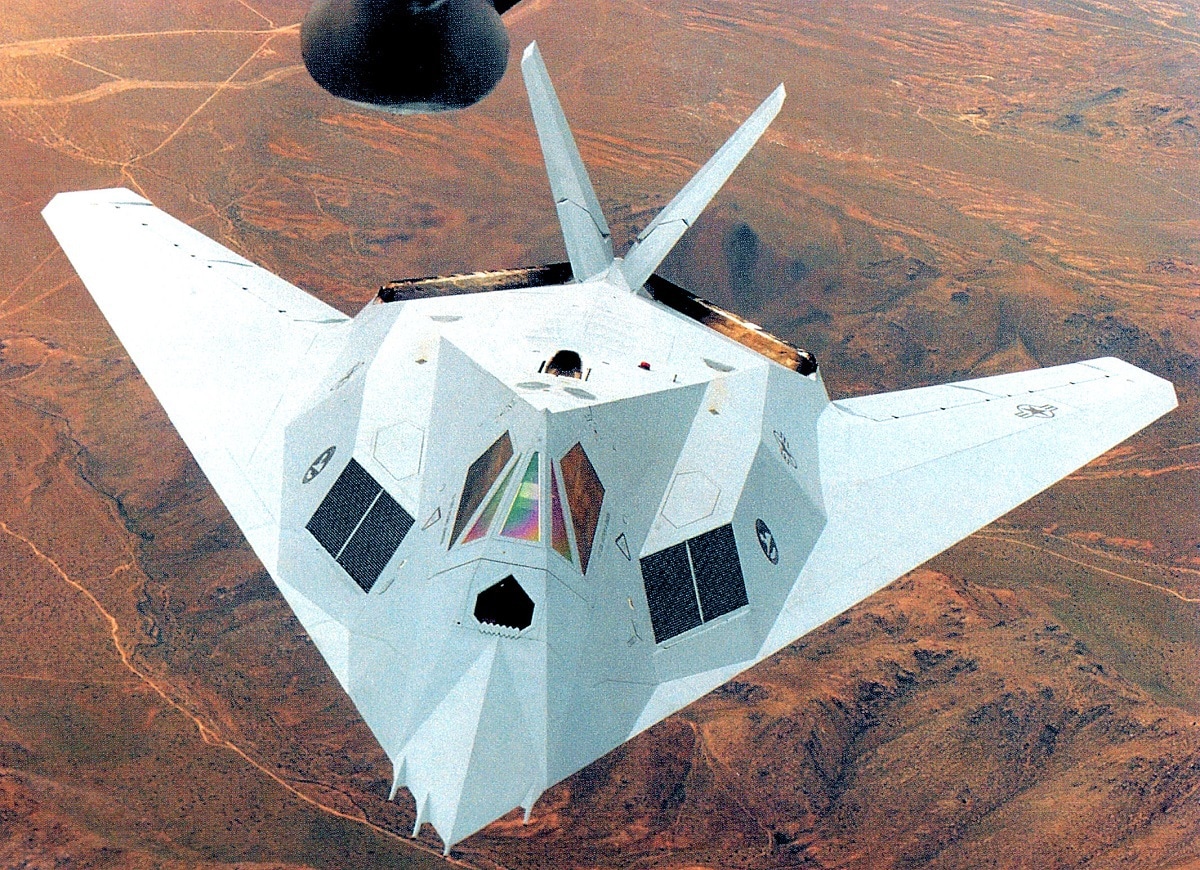
F-117 Stealth Fighter. Image: Creative Commons.
However, the evaluators in the competition likely noted that the YF-22 had this extra level of armament, which may have swayed their opinions.
Later, the F-35 would have a better capability for ground strike and close air support.
What Kind of Weapons Did the YF-23 Feature?
The YF-23, Rogoway declared, had a different weapons bay. It was long, narrow, and deeper – a single bay rather than two on the sides. It was “coffin-like,” he said, and located behind the cockpit between the air intakes. This allowed the YF-23 to potentially carry AIM-120 AMRAAMs and AIM–9 Sidewinders, a total of five missiles.
The big difference was that the YF-22 test-fired an AMRAAM during the competition, and that wasn’t even part of the evaluation matrix. This impressed the graders, and they likely determined that the YF-22 was ready for battle, with its fully equipped weapons bays.
The YF-23 bay was less complex, and it could stack “missiles above other missiles.” These could jam, however, and this gave the observers and graders pause. Maybe the YF-22 would be better in battle after all, they thought.
However, the YF-23 might have enjoyed an advantage in ground strike since it could carry heavier, precision-guided munitions. This was a tough choice – more reliability or better firepower.
The YF-23 could have featured a rotary launcher, but the manufacturer was not ready to integrate that feature on the demonstrator. This meant the YF-23 could fly in battle and have a missile launch jammed under its current configuration. That was seen as unacceptable.
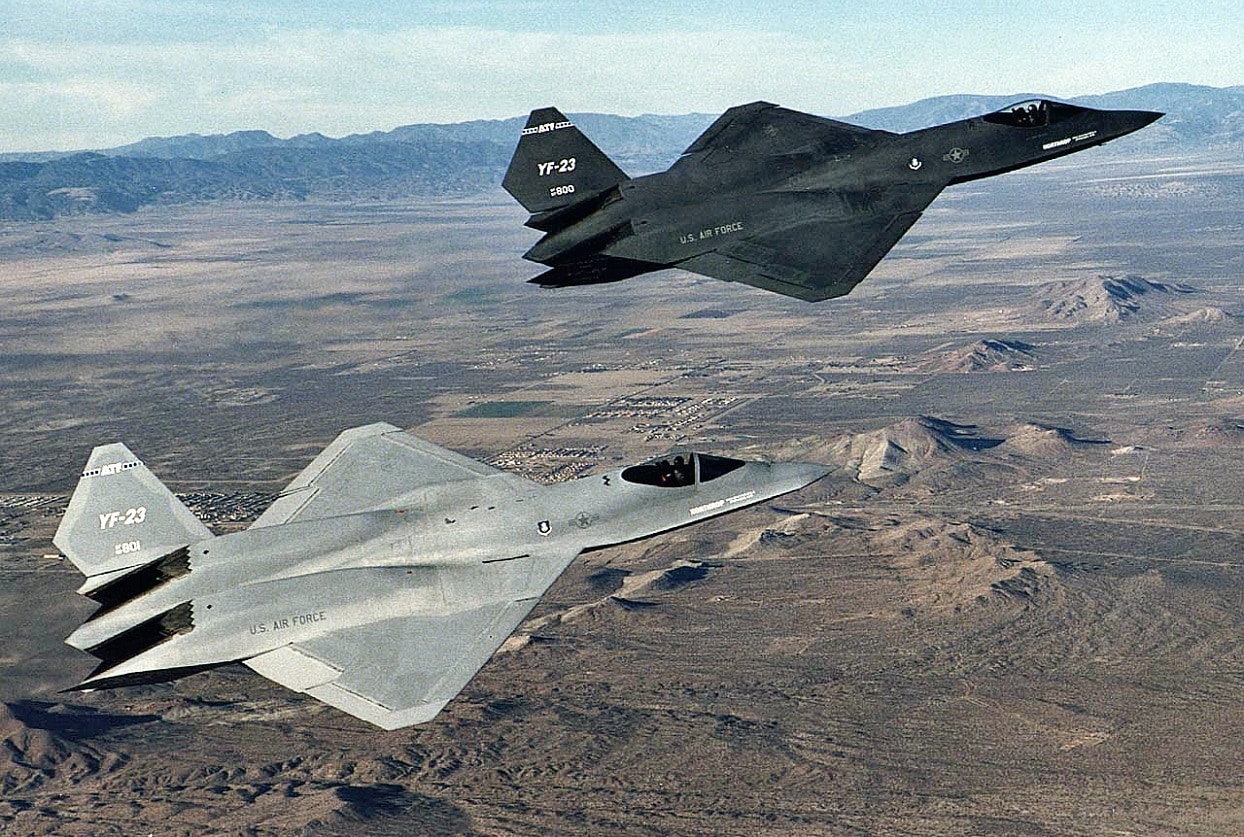
YF-23. Image: Creative Commons.
The YF-22 was overall a more mature design, but the YF-23 had more potential, and there are still pilots and defense analysts who wonder if the Black Widow II was the better choice. The weapons bay configuration was a factor that evaluators wanted to consider in determining the potential for each airplane’s war-fighting capability. And this distinction could have pushed graders over the edge to pick the YF-22.
While the YF-23 had its charms, the Air Force made the right choice. The F-22 is now one of the stealthiest airplanes in the world. It is ready for aerial combat in the event of conflict with Russia or China, and it is a Day One warplane. The weapons configuration is superior, and it has performance advantages that make it a valuable airplane.
However, choosing the YF-23 would not have hurt the Air Force. There were many redeeming qualities, and evaluators had to make a tough choice. We’ll never know how the YF-23 would have served, but the F-22 has stood the test of time and will be a stalwart fighter for many years to come.
About the Author: Brent M. Eastwood
Brent M. Eastwood, PhD is the author of Don’t Turn Your Back On the World: a Conservative Foreign Policy and Humans, Machines, and Data: Future Trends in Warfare plus two other books. Brent was the founder and CEO of a tech firm that predicted world events using artificial intelligence. He served as a legislative fellow for US Senator Tim Scott and advised the senator on defense and foreign policy issues. He has taught at American University, George Washington University, and George Mason University. Brent is a former US Army Infantry officer. He can be followed on X @BMEastwood.