
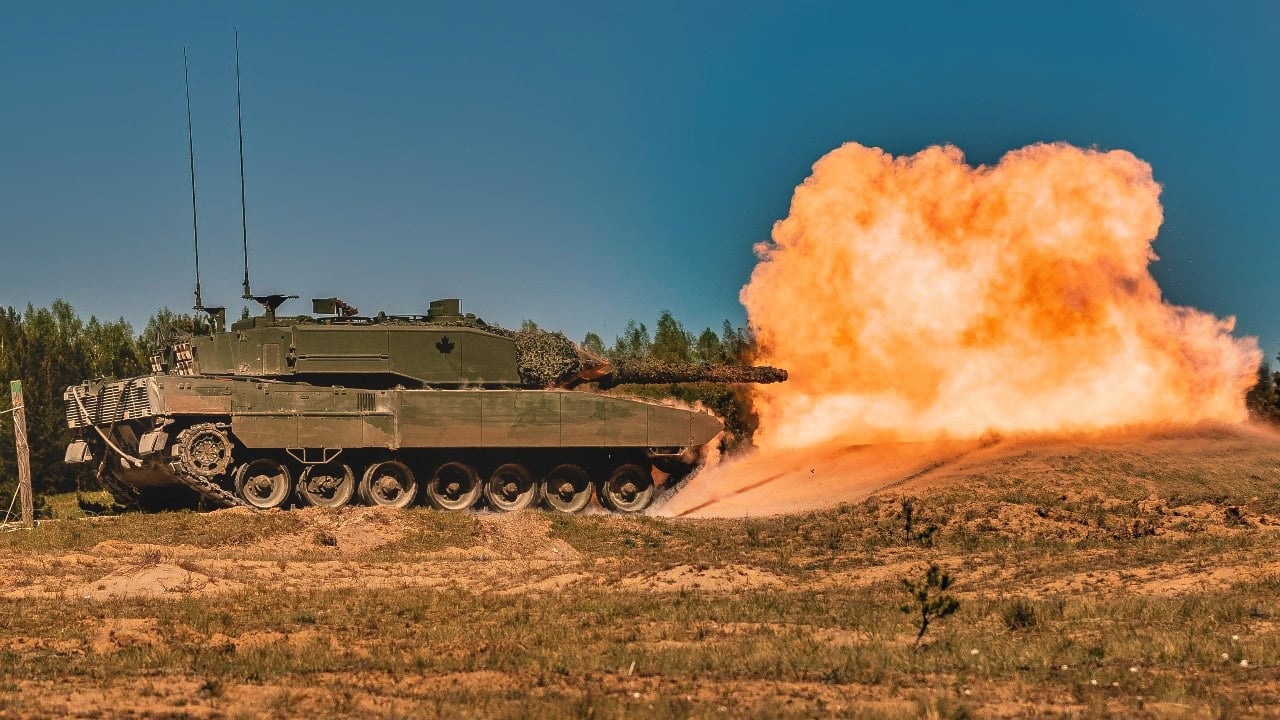
Key Points and Summary – Germany’s Leopard 2A8 is billed as a ground-up answer to Ukraine’s drone- and ATGM-saturated battlefield.
-It keeps the proven 120 mm L55A1 gun and 1,500 hp engine, but adds Trophy active protection, upgraded composite armor, stronger roof and mine protection, and a fully digital, networked architecture that ties into NATO sensors and UAVs.
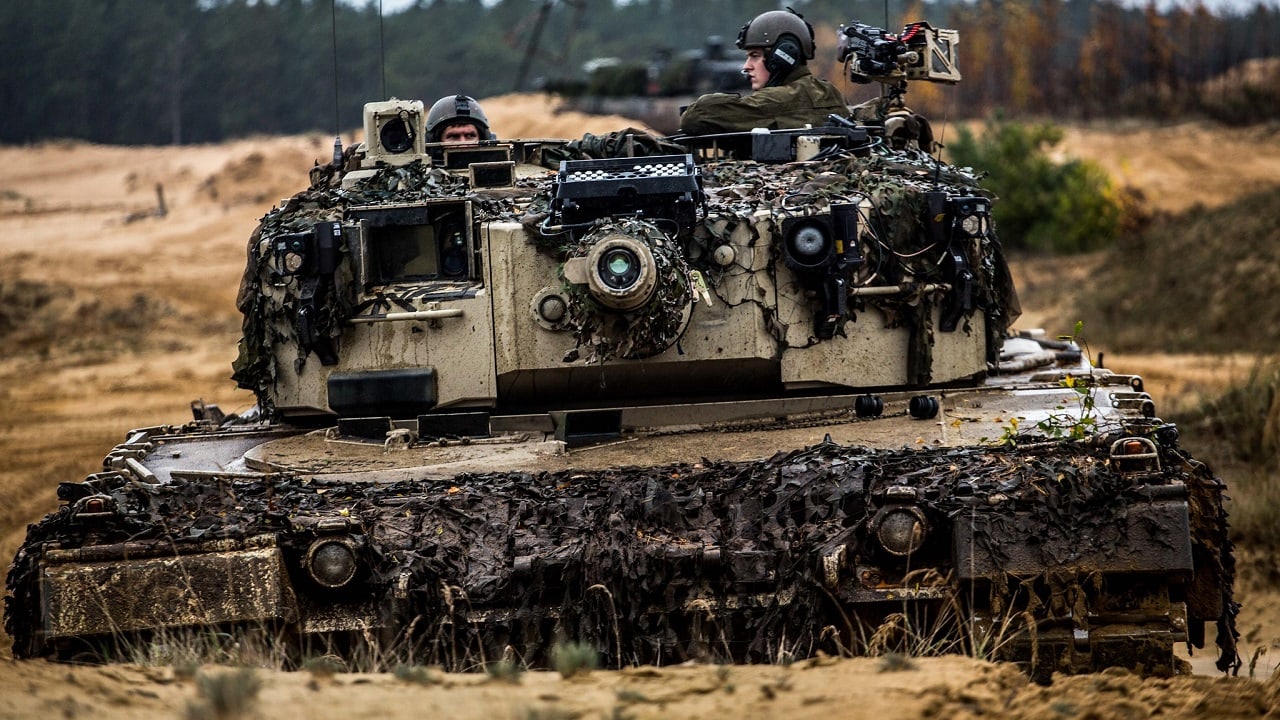
A Norwegian Leopard 2A4 main battle tank during Iron Wolf II in Lithuania. It involves 2,300 troops from 12 NATO Allies. The Lithuanian-led exercise is helping to train the NATO Battlegroup which consists of soldiers from Germany, Belgium, Luxembourg, the Netherlands and Norway. Shot in Rukla, Lithuania.
-Berlin and multiple European partners see it as a new backbone MBT. Yet the 2A8 is even heavier, larger, and more expensive than earlier Leopards, raising doubts about mobility, drone survivability, and whether NATO is privileging exquisite, high-cost tanks over the mass and affordability modern attritional warfare demands.
Leopard 2A8: NATO’s New Super Tank—or a Drone-Age Mistake?
The Leopard 2A8 is the newest iteration of Germany’s beloved Leopard 2 tank.
Rather than a simple modernization, the 2A8 is a comprehensive redesign from the ground up.
While it retains many of the original features, it features a redesigned turret, improved armor, active and passive protection systems, better sensors, better comms systems for networked warfare, and so much more.
But are all of these new upgrades enough to keep the tank relevant in the drone age?
Development of the Leopard 2A8
According to the designers at KNDS, the Leopard 2A8 was designed with lessons from the war in Ukraine in mind (we’ll come back to this later).
These engagements revealed that modern battlefields are saturated with drones, loitering munitions, and advanced anti-tank guided missiles, exposing vulnerabilities in older tank designs.
Germany’s response was the Zeitenwende modernization program, a €100 billion initiative aimed at revitalizing its defense capabilities.
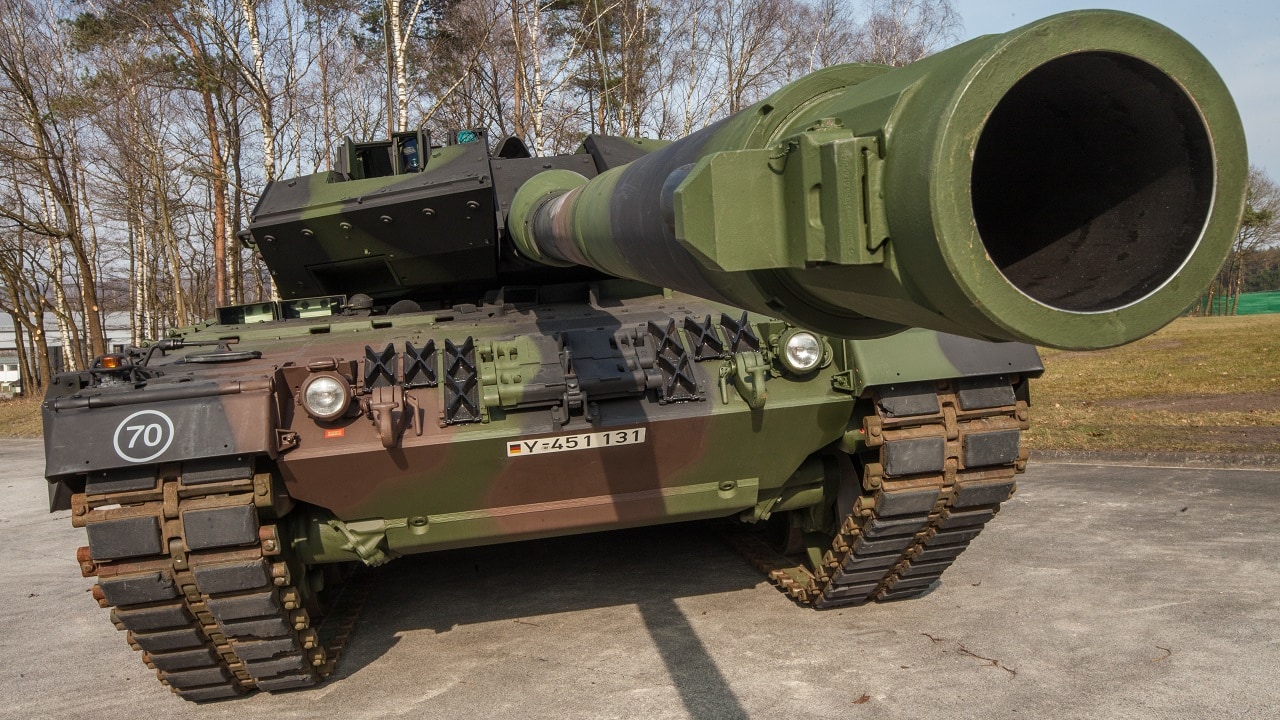
NATO Leopard 2 Tank. Image Credit: Creative Commons.
The Leopard 2A8 became a centerpiece of this effort, designed to survive and dominate in environments where hybrid warfare and precision-guided threats are the norm.
At its core, the Leopard 2A8 retains many aspects of the earlier Leopard 2 variants. It retains the four-person crew and the tanks’ overall internal layout.
It weighs approximately 70 tonnes and is powered by the MTU MB 873 Ka-501 diesel engine, which produces 1,500 horsepower, enabling speeds of up to 70 kilometers per hour and an operational range of about 500 kilometers.
Its primary armament remains the Rheinmetall 120 mm L55A1 smoothbore gun, capable of firing the latest high-pressure ammunition such as the DM73 APFSDS and programmable rounds like the DM11 HE.
Secondary armament includes two 7.62 mm machine guns and smoke grenade launchers.
While these specifications remain the same from previous Leopard variants, the real package lies in its protection systems, digital architecture, and connectivity.
Improved Protection
The Leopard 2A8 is now equipped with the Trophy Active Protection System (APS), developed by Israel’s Rafael.
This hard-kill system detects incoming anti-tank missiles and rocket-propelled grenades using radar and neutralizes them with countermeasures before impact.
Unlike earlier Leopard models, which relied solely on passive armor and optional soft-kill systems, the 2A8’s APS provides a robust defense against top-attack munitions and even drone threats.
This feature alone dramatically enhances survivability in modern combat scenarios.
Armor protection has also been substantially improved. While the Leopard 2A7 introduced modular composite armor, the 2A8 employs next-generation composite packages combined with reinforced turret roof plating to counter top-attack weapons.
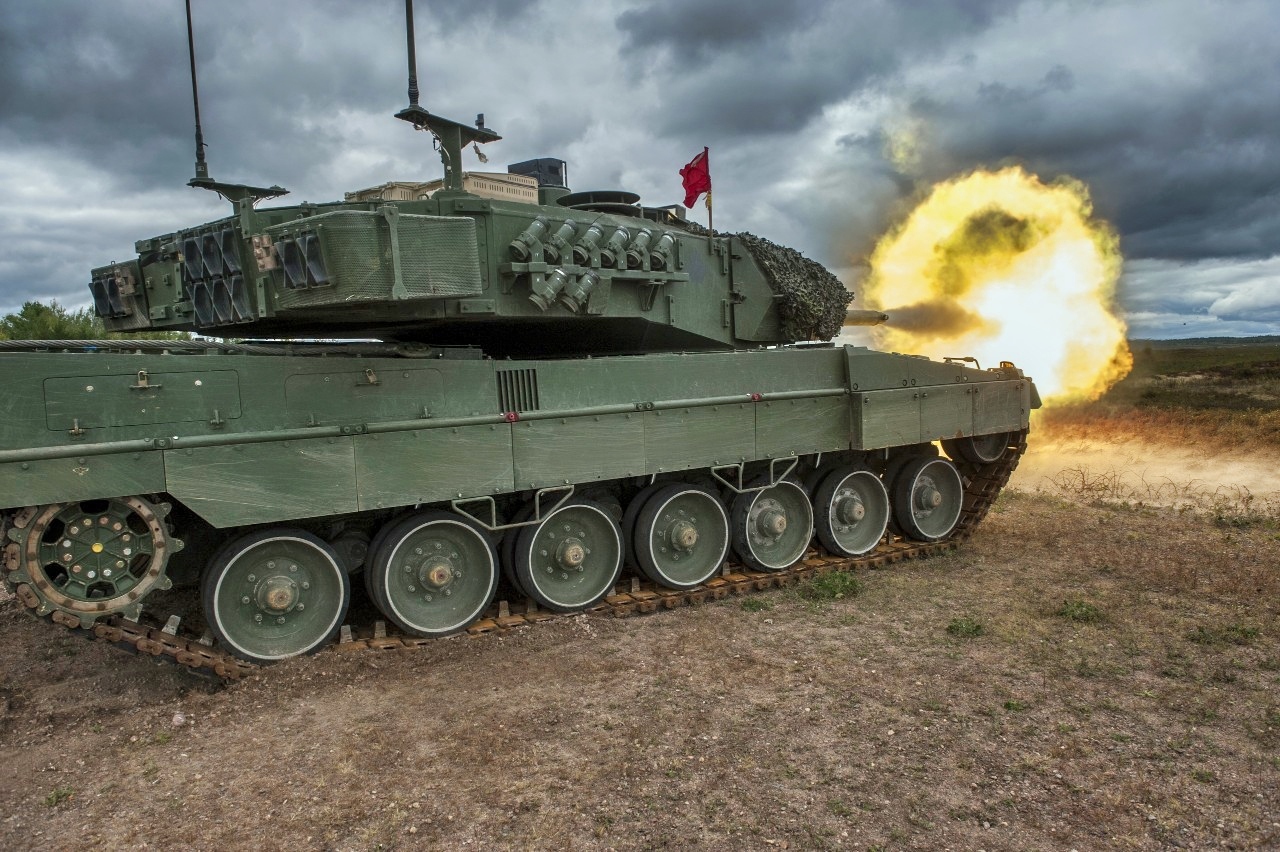
Leopard 2 Tank. Image Credit: Creative Commons.
Mine protection has been expanded, and the tank includes a nuclear, biological, and chemical defense system to ensure crew safety across a wide range of environments.
These upgrades directly address vulnerabilities exposed during recent conflicts, where tanks were frequently destroyed by artillery and drone-delivered explosives.
The Leopard 2 in the Digital Age
The Leopard 2A8 is the first in its lineage to feature a fully digital backbone, enabling seamless integration with NATO command networks, drones, and battlefield sensors.
Its fire-control system now supports advanced thermal imaging, panoramic sights, automated targeting, improved reaction times, and reduced crew workload.
This digitalization future-proofs the platform for emerging technologies such as counter-unmanned aerial systems and autonomous support vehicles.
Perhaps the biggest upgrade to the Leopard 2A8 is its network-centric warfare capability. Unlike the 2A7, which had limited connectivity, the 2A8 is designed for full integration with NATO-standard digital command platforms, reconnaissance assets, and UAVs.
This connectivity allows real-time data sharing and coordinated operations, making the Leopard 2A8 a force multiplier on the modern battlefield.
The Leopard 2A8 is already being positioned as the new cornerstone of NATO’s tank fleet. Germany has ordered 123 units, with deliveries scheduled between 2027 and 2030. Other NATO partners, including Norway, the Netherlands, Lithuania, and the Czech Republic, have placed significant orders, signaling a continental push to strengthen armored forces.
Lithuania, for example, will host Germany’s first brigade equipped with the 2A8, reinforcing NATO’s eastern flank.
Croatia and Sweden have also expressed interest, further expanding the tank’s footprint across Europe.
A Few Concerns…
The Leopard 2A8 is a step in the right direction, but it has some concerns.
The war in Ukraine has exposed several issues with modern Western tanks. Their extremely heavy weight often causes them to get stuck in the mud and makes them a logistical burden to transport.
Additionally, their large size makes it easy for enemy anti-tank crews to spot and identify weak points. So, how did KNDS respond? By making the Leopard even heavier and giving it an even larger turret.
Additional armor is always welcome, but more information is needed on the specific dimensions. How much armor has been added to the turret roof?
How much to the sides?
Will drone nets be added in the future?
In the era of FPV drones, where tanks can be attacked from multiple directions simultaneously, adding a few millimeters to the roof simply isn’t enough to ensure survivability. APS is a good addition, but it does not guarantee protection against slower-moving drones.
Overall, it feels as though the Leopard 2A8 doubles down on the worst aspects of NATO’s tank design philosophy rather than addressing and improving them.
This doesn’t even touch on the industrial side of things. Adding better electronics and improving situational awareness are always a plus, don’t get me wrong, but they also significantly increase the cost of the tank.
Do every tank need the latest and greatest sensors?
This may be the most unambiguous indication that Germany, and NATO by extension, has not learned the most critical lesson from Ukraine.
In a war of attrition, quantity matters more than quality. The T-90M may lack fancy AI-integrated targeting systems and networked capabilities, but it performs its role, and more importantly, it does so at a fraction of the price.
About the Author: Isaac Seitz
Isaac Seitz, a Defense Columnist, graduated from Patrick Henry College’s Strategic Intelligence and National Security program. He has also studied Russian at Middlebury Language Schools and has worked as an intelligence Analyst in the private sector.