
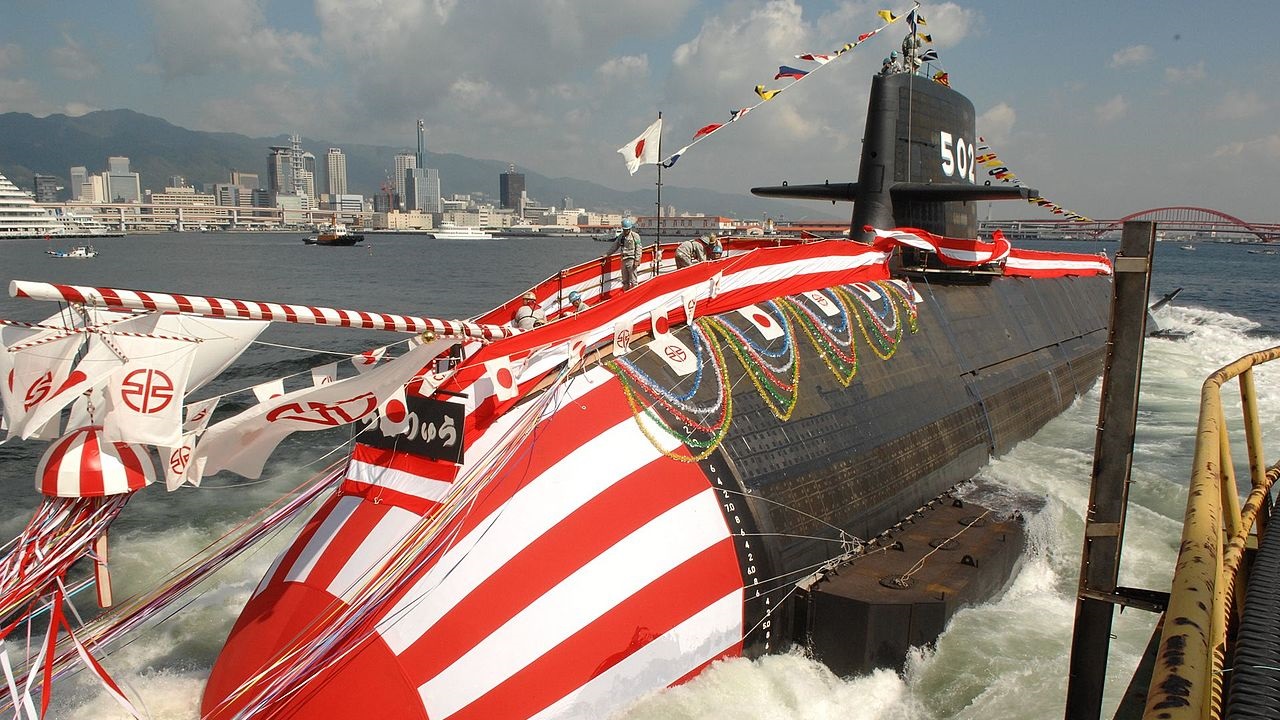
Key Points and Summary – Japan is cautiously opening a debate that would have been unthinkable a decade ago: swapping ultra-quiet diesel boats for nuclear-powered submarines.
-Prompted by a U.S.–South Korea nuclear sub deal, China’s rapid naval buildup, and talk of PLAN moves around Taiwan, Tokyo is weighing whether its postwar nuclear taboo still makes strategic sense.
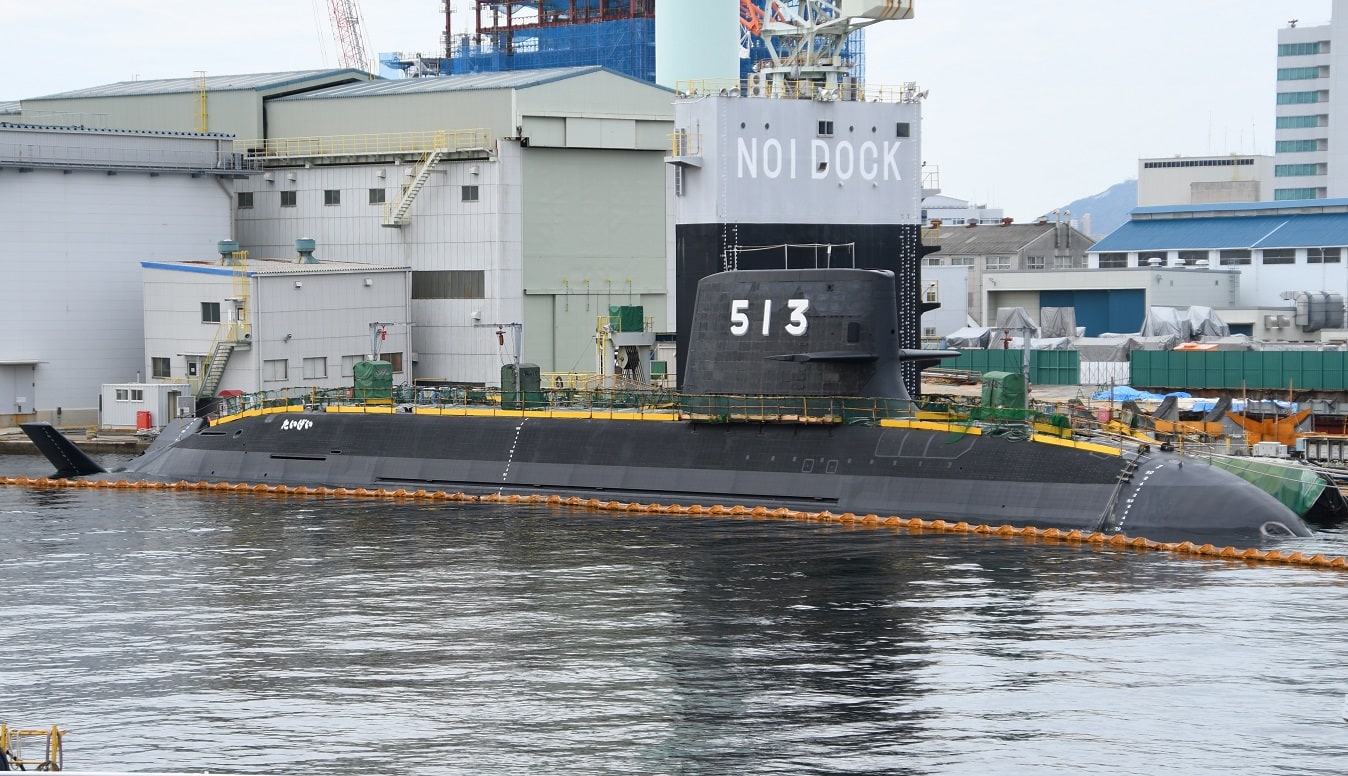
Taigei-class. Image Credit: Creative Commons.
-Senior officials and expert panels now openly discuss next-generation propulsion, while industry explores microreactors.
-Japan’s existing AIP-equipped diesel fleet and favorable geography already worry Beijing, but a nuclear fleet would be a step change—politically explosive at home, yet potentially decisive under the waves.
China, Taiwan, and the Deep: Japan Eyes a Nuclear-Powered Submarine Fleet
During his recent visit to Asia, U.S. President Donald Trump announced that the U.S. would be working with South Korea to build nuclear submarines—some of them are set to be built in Philadelphia.
Could Japan move to do the same?
According to a Naval News story last month, Japan’s new government is considering the pursuit of nuclear-powered submarines. This would be a big and surprising step for Japan, which, per Naval News, would represent a break from the “postwar nuclear taboo.”
Japan is, of course, “the only nation to have suffered atomic bombings and where public sentiment remains deeply averse to nuclear weapons,” and the country now only uses diesel-powered submarines.
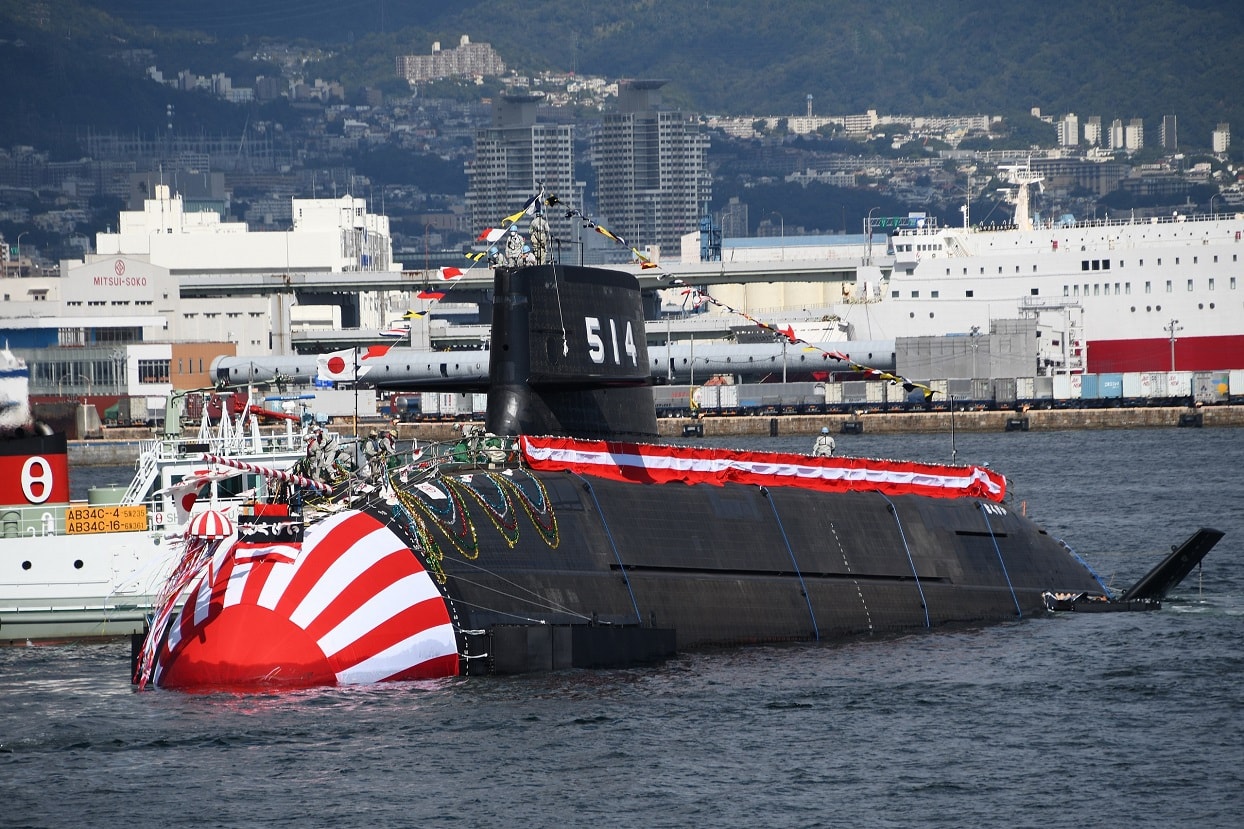
Taigei-Class Submarine. Image: Creative Commons.
“There are new developments, and all the surrounding countries are set to possess (nuclear submarines),” Shinjiro Koizumi, Japan’s new defense minister, said in a television appearance last month.
The Japan Times reported in early November that Japan was likely to discuss construction of nuclear submarines.
“The introduction of nuclear submarines has been a taboo subject in the SDF for a long time and has not been properly discussed,” a Defense Ministry official told the Japan Times. “It depends on whether politicians are ready to decide.”
“If it is only to monitor and deter China and Russia, it is enough to protect areas around Japan, so I wonder whether nuclear submarines are really necessary,” another official said.
Those statements followed the announcement of the U.S.-South Korea deal, as well as reports that China and even North Korea are moving in the direction of nuclear-powered submarine fleets.
“The environment surrounding Japan has become so severe that we need to discuss whether to continue using diesel power for submarines as before, or to switch to nuclear power.”
The minister said in a press conference the following day that “at this point, nothing has been decided regarding the next generation of propulsion systems for submarines.”
A blue-ribbon panel convened by the Ministry of Defense this fall had called for “consideration of utilizing next-generation propulsion systems without being bound by conventional precedents,” although the Ministry offered no specifics about which technologies it would utilize.
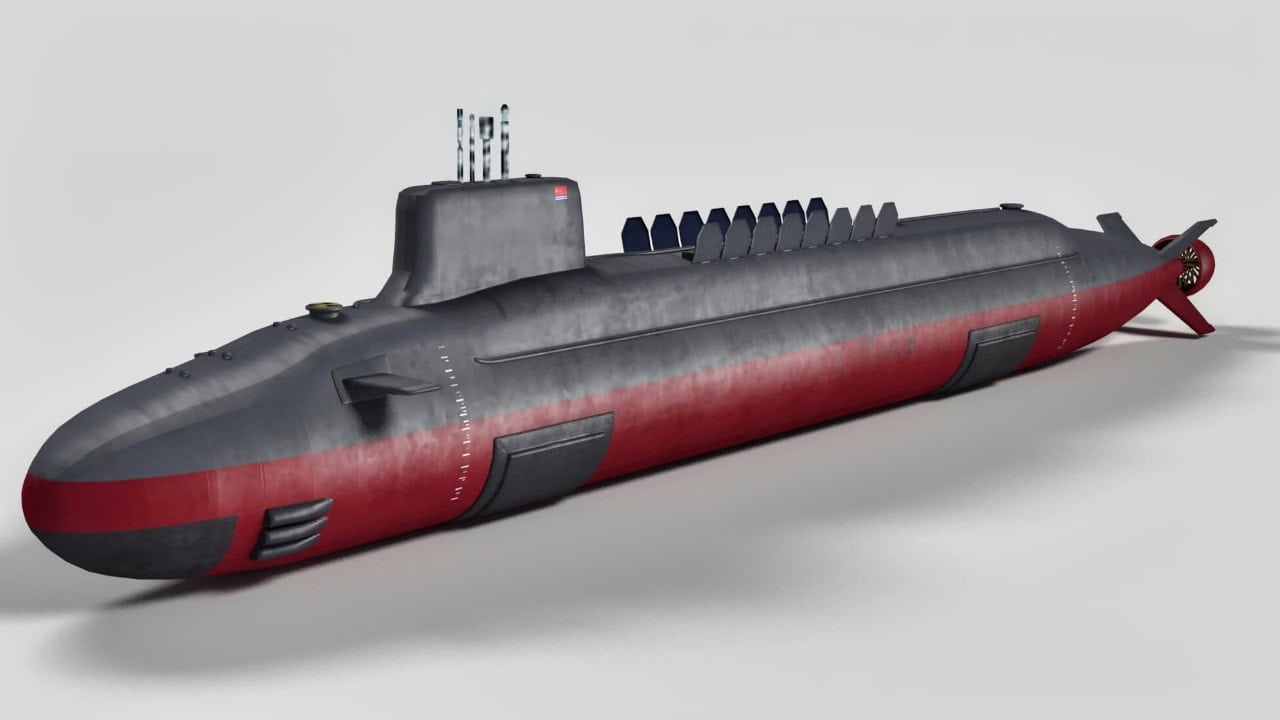
Type 096 Submarine from China. Image Credit: Creative Commons.
Mitsubishi Heavy Industries, meanwhile, is developing a microreactor: “an innovative nuclear reactor that provides new value distinct from conventional land-based power generation reactors.”
How it Would Look: Japan and Nuclear Submarines
A recent report by the Center for International Maritime Security (CIMSEC) lookd at what it called “The Optimum Pathway for Building Nuclear Submarines with South Korea and Japan.”
“Given the unique naval needs of South Korea and Japan, their decades of experience in building conventional submarines, and the U.S. need for allies in reviving its maritime industry – this deal could be very opportune,” Brent D. Sadler writes. “That said, it will not be AUKUS, and to succeed it must also contribute to a revival of America’s shipbuilding to best serve America’s national interests.”
To be clear, there is already a deal in place between the U.S. and South Korea, and not one with Japan.
The piece noted that Japan did pursue a nuclear fleet once before.
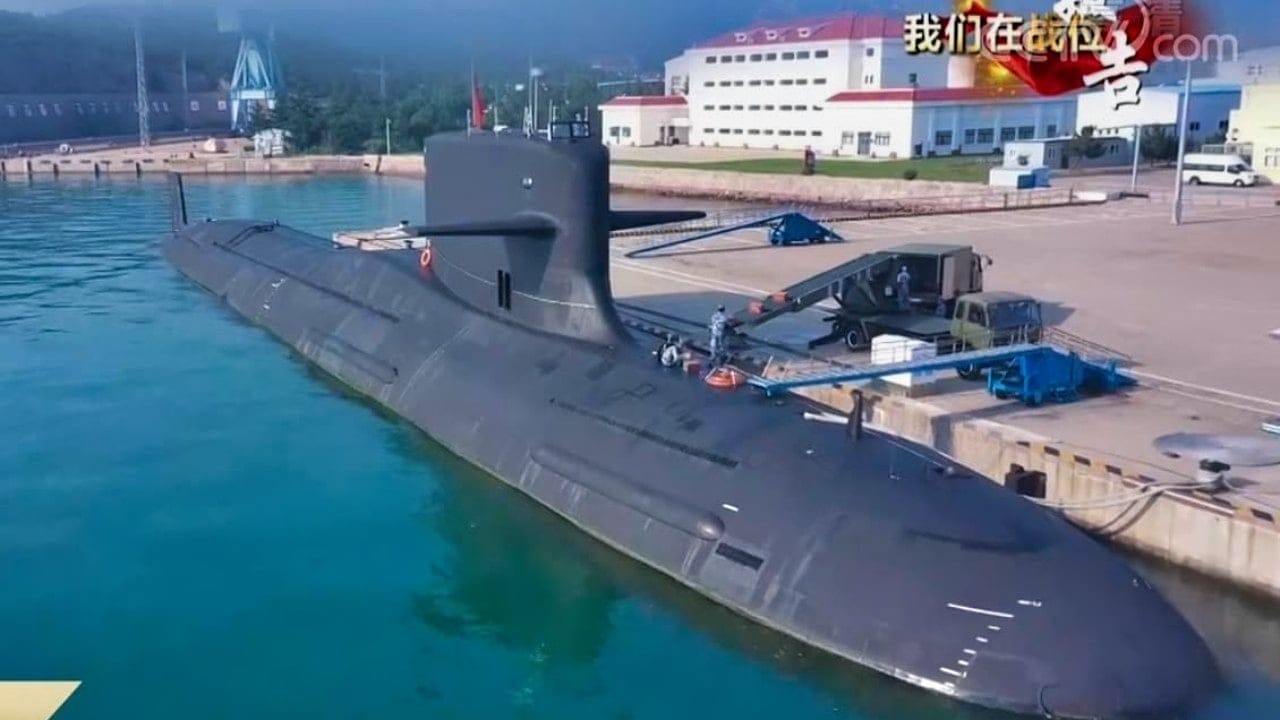
Type 093B Submarine from China. Image Credit: Screengrab.
“Japan is no stranger to maritime nuclear propulsion with its own Mutsu launched in 1969 and retired in 1992,” the CIMSEC story says. “This ship was a flawed attempt at exploring the commercial potential of nuclear power, with unacceptable radiation leakage dooming the ship. Recently, there have been calls by Japanese politicians to pursue developing a nuclear submarine – a call first triggered by the AUKUS initiative in 2021 and now with a potential U.S.-South Korean project.”
It’s All About China’s Navy
Meanwhile, Reuters reported late last month that China criticized a Japanese move to deploy missiles to an island near Taiwan.
China said the move would “create regional tension and provoke military confrontation.”
Shortly before that report, Japanese Prime Minister Sanae Takaichi implied that if China were to attack Taiwan, it could provoke a military response from Japan.
“Her remarks triggered a threatening post from a Chinese diplomat in Japan, while Beijing lodged a formal protest against what it said was blatant interference in its internal affairs,” Reuters reported. “Beijing claims Taiwan, and has not ruled out using force to take control of the island.”
If such a confrontation were to take place, it could end up involving those new Japanese submarines.
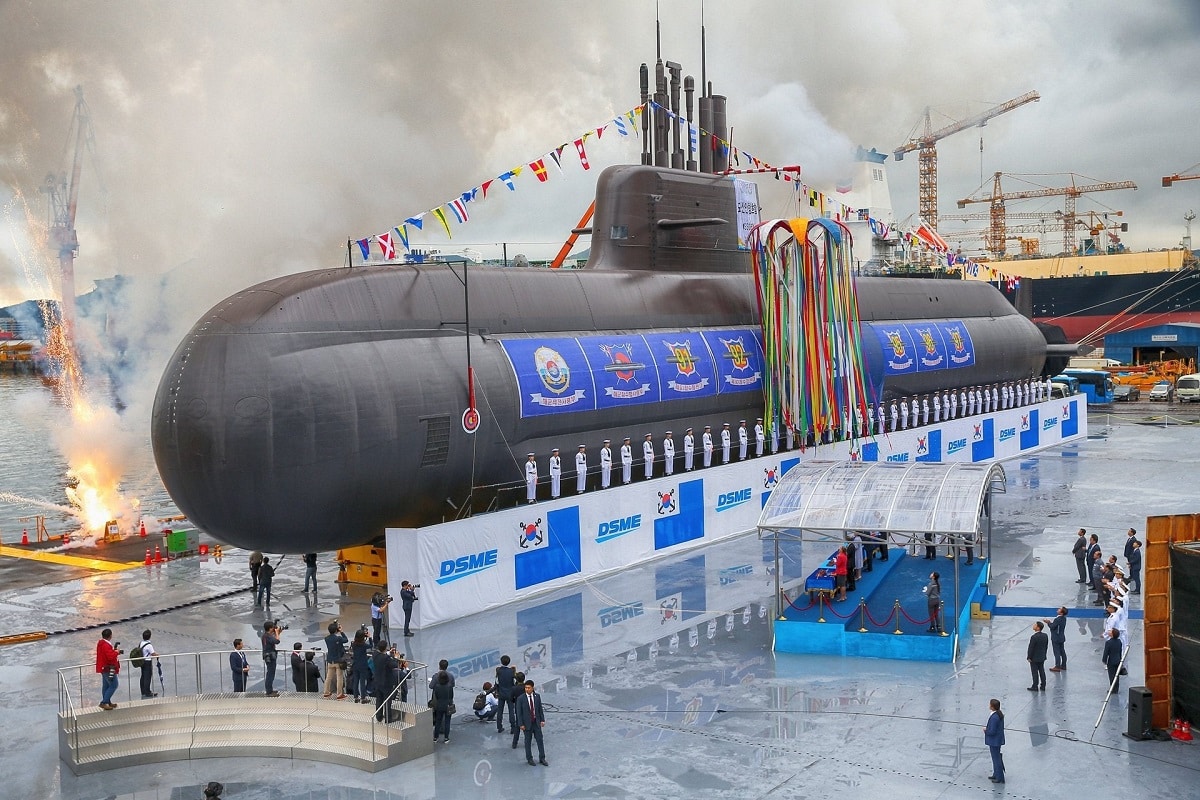
Image: DSME Handout.
According to a report by Interesting Engineering, Japan’s submarines stand to “present a significant constraint on PLAN movements near Taiwan.”
While China now has the world’s largest navy, one that could outnumber the U.S. in the region, Japan offers a potential “ace in the hole.” According to the report, Japan currently boasts just 24 submarines, compared to China’s 61. And while Japan currently has no nuclear subs, China has about 12.
But that doesn’t mean Japanese subs wouldn’t pose a threat.
“Japan’s submarines could prove to be a real thorn in the PLAN’s side should hostilities break out in the region,” according to Interesting Engineering. “About a third of Japan’s submarine fleet (like its Sōryū-class boats) features something called Air-independent propulsion (AIP). This tech lets these subs stay submerged for long periods (roughly 2 weeks), and they are quieter than most comparable submarines.”
Winning With Geography
The other advantage Japan has is the map itself.
Per Interesting Engineering, “beyond Japan’s submarine fleet’s capabilities, geography also plays into Japan’s hands. There are many choke points near the Taiwan Strait and Japan’s island chain in the Pacific…The geography of these areas makes them ideal for such strikes while leaving Japanese submarines near-untouchable from PLA anti-submarine systems in the East China Sea.”
Japan Forward, meanwhile, wrote about a popular Manga from the 1990s called The Silent Service, in which “Japan’s first nuclear-powered submarine, the Yamato, declares itself an independent state and turns its guns on the world.”
About the Author: Stephen Silver
Stephen Silver is an award-winning journalist, essayist, and film critic, and contributor to the Philadelphia Inquirer, the Jewish Telegraphic Agency, Broad Street Review, and Splice Today. The co-founder of the Philadelphia Film Critics Circle, Stephen lives in suburban Philadelphia with his wife and two sons. For over a decade, Stephen has authored thousands of articles that focus on politics, national security, technology, and the economy. Follow him on X (formerly Twitter) at @StephenSilver, and subscribe to his Substack newsletter.