
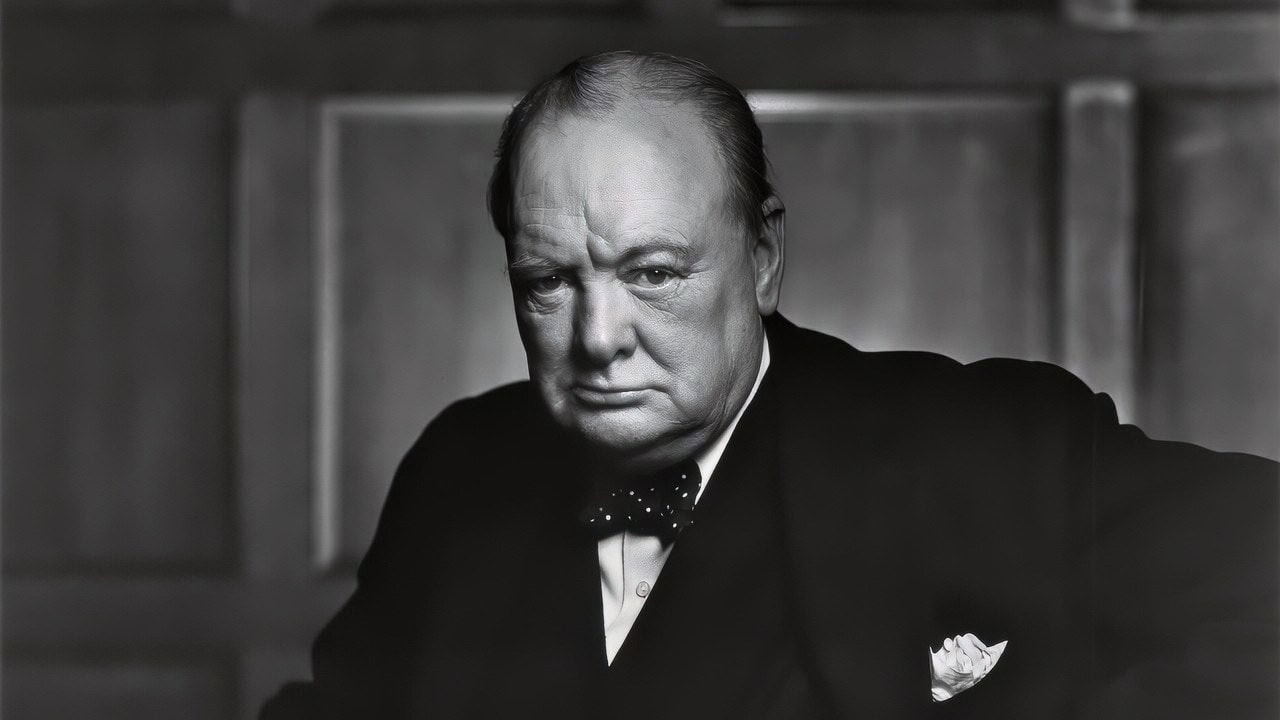
Synopsis: This piece revisits Winston Churchill’s defining moment as Britain’s wartime prime minister, beginning with his May 10, 1940 arrival at 10 Downing Street and the “blood, toil, tears, and sweat” address and quote that set the tone for total war and national endurance.
-It argues that Dunkirk was not a symbol of failure but a strategic retreat that made later victory possible, and highlights Churchill’s ability to turn crisis into resolve through speeches like “we shall fight on the beaches.”
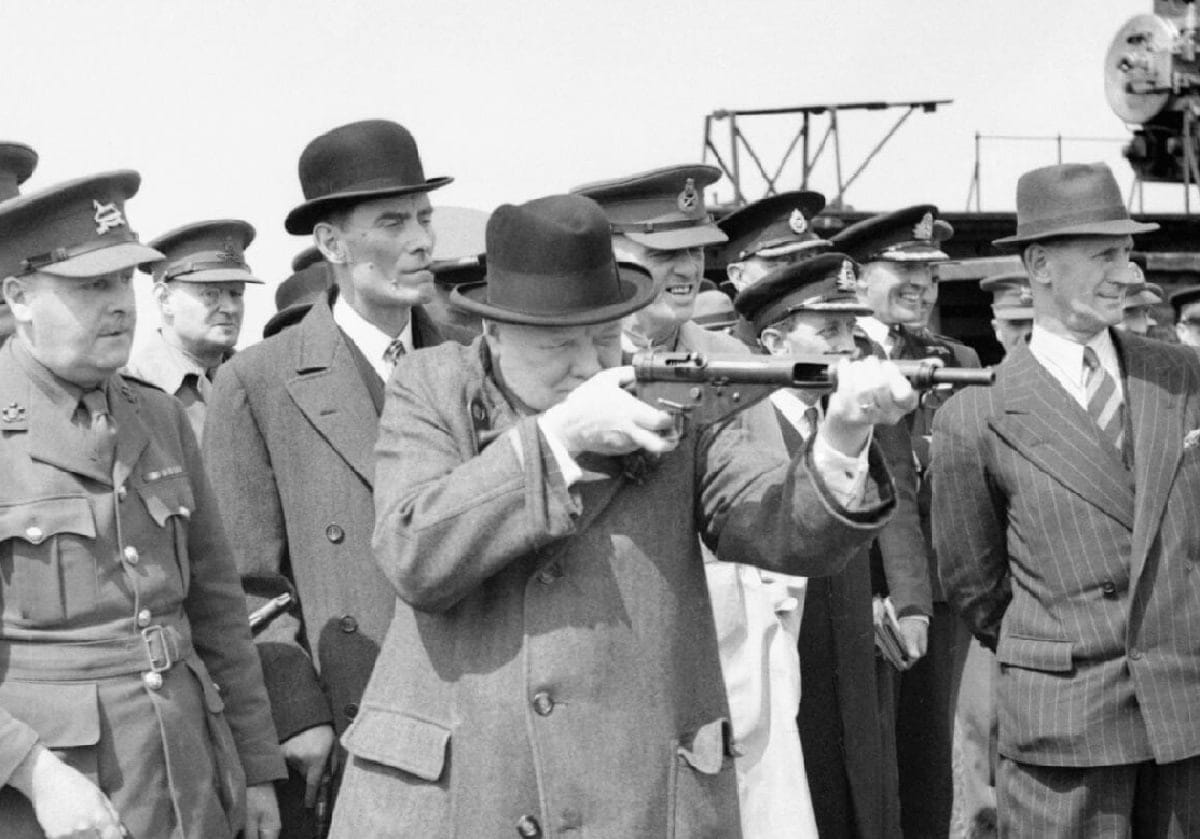
Winston Churchill. Image: Creative Commons.
-The article then traces the arc toward Yalta and Potsdam, framing Churchill as a pragmatist who prioritized winning the war, and closes on his lasting legacy.
Churchill’s “Blood, Toil, Tears, and Sweat” Speech Has a Message for Today
“I have nothing to offer but blood, toil, tears, and sweat.”—That quote, of course, belongs to Sir Winston Leonard Spencer Churchill, though some might nitpick the “Sir” part as he wasn’t knighted by Queen Elizabeth II until 13 years after he uttered those famous words.
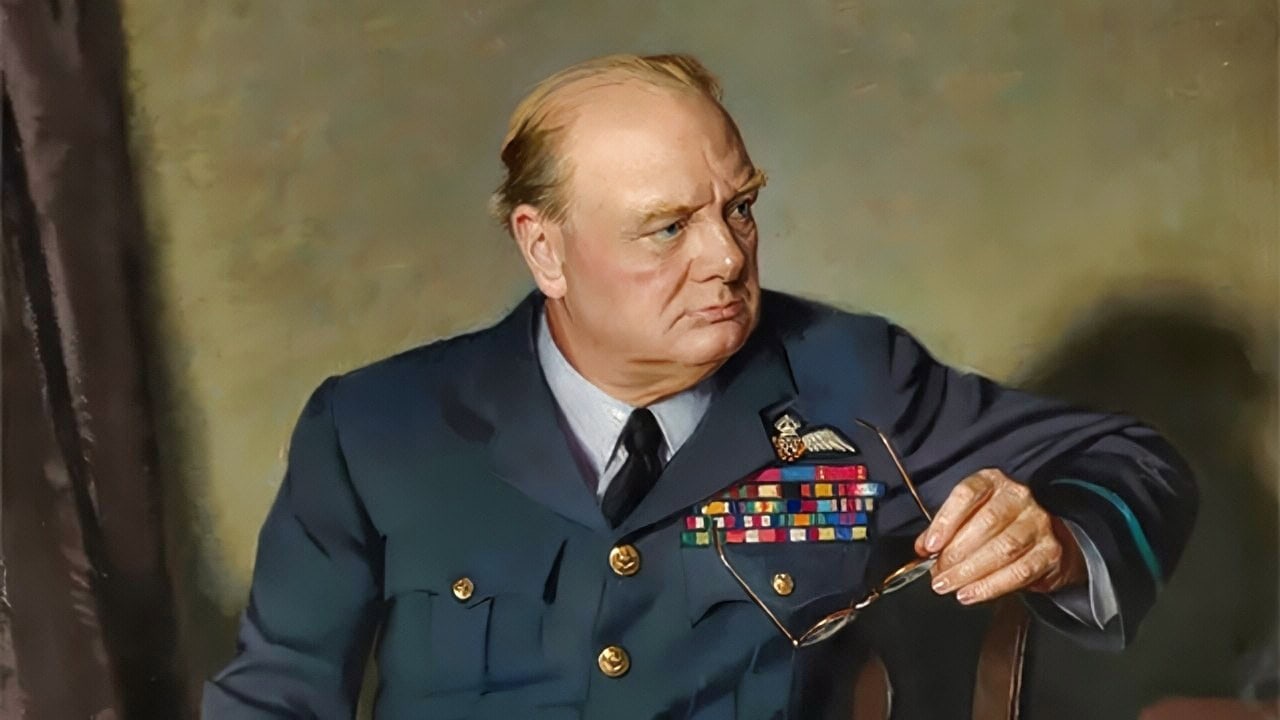
Winston Churchill Portrait. Image Credit: Creative Commons.
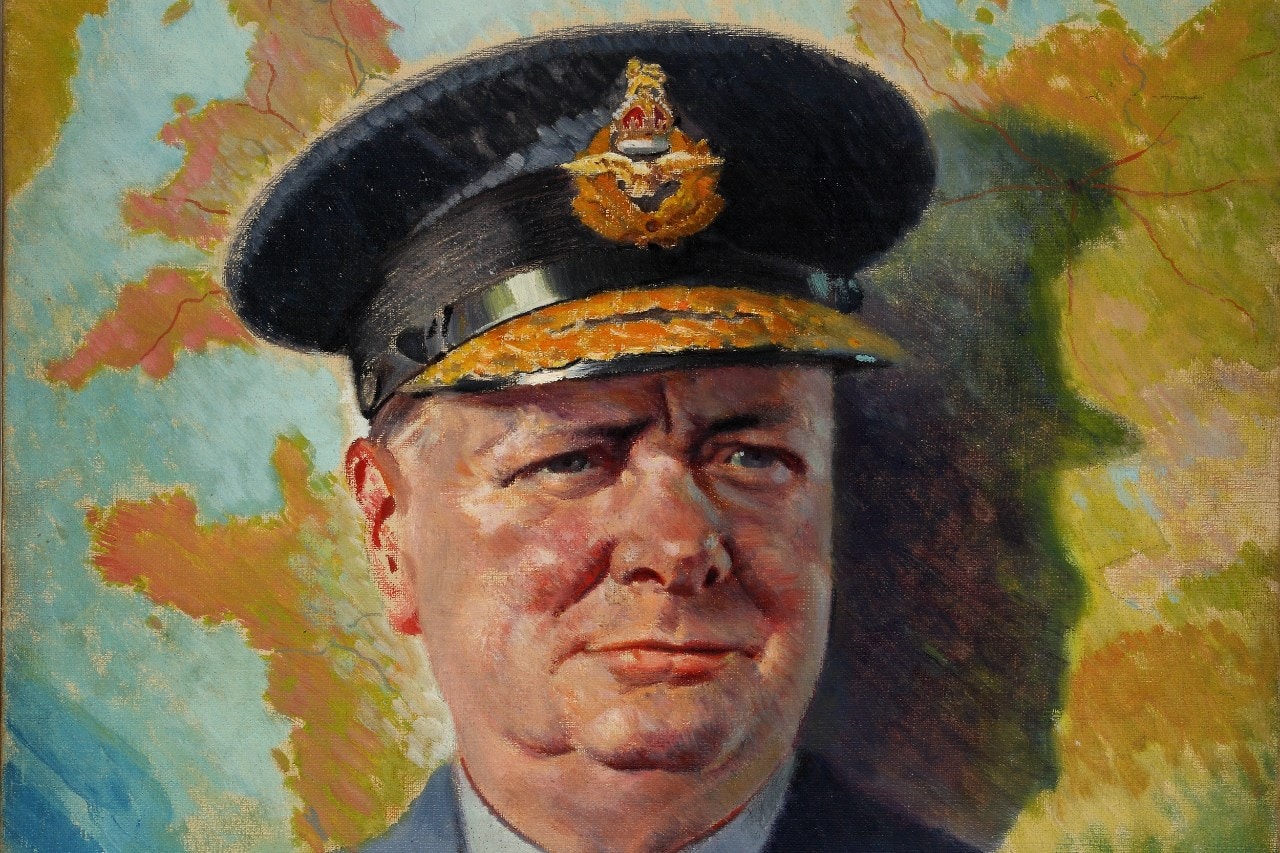
Winston Churchill. Image Credit: Creative Commons.
Sir Winston lived for 90 years (November 30, 1874 – January 24, 1965) and accomplished many things (and, in fairness & balance, had his fair share of failures, just like any human being) over his lifetime.
But it was his tenure as Prime Minister of Great Britain during World War II that cemented his status as Britain’s all-time most excellent political leader (with all due respect to Margaret Thatcher and King Henry V).
The Comeback
When Churchill moved into the PM’s residence at 10 Downing Street in London on May 10, 1940, WWII had already been raging for eight months.
That’s correct, Neville Chamberlain, the same milquetoast British prime minister who preceded Churchill with his infamous “Peace in our time” coddling and appeasement of Adolf Hitler, was in fact the British head of state who ended up declaring war on Nazi Germany.
Needless to say, Chamberlain’s brief wartime leadership case can be summed up as “too little, too late.”
Three days after replacing Chamberlain, Churchill made his legendary first speech as prime minister to the House of Commons:
“I have nothing to offer but blood, toil, tears, and sweat. We have before us an ordeal of the most grievous kind. We have before us an ordeal of the most grievous kind. We have before us many, many long months of struggle and of suffering. You ask, what is our policy? I can say: It is to wage war, by sea, land and air, with all our might and with all the strength that God can give us; to wage war against a monstrous tyranny, never surpassed in the dark, lamentable catalogue of human crime. That is our policy. You ask, what is our aim? I can answer in one word: It is victory, victory at all costs, victory in spite of all terror, victory, however long and hard the road may be; for without victory, there is no survival.”
His Finest Hours: Dunkirk and the Battle of Britain
A lot of self-styled history experts deride the Allied evacuation at Dunkirk (May 26 – June 4, 1940) as a symbol of failure.
Indeed, when this writer was in the Amway/Quixtar business 19 years ago, he listened to a CD by one of that franchise business’s bigwigs contrasting “Dunkirk Mentality vs. D-Day Mentality.” Those pseudo-experts conveniently forget: D-Day wouldn’t have become possible in the first place if it weren’t for the Miracle of Dunkirk. There’s a time to stand and fight to the death, and there’s a time to conduct a strategic retreat and live to fight another day.
To say that Winston Churchill had a knack for speechmaking would be a vast understatement.
Upon completion of the Dunkirk evacuation, the PM rallied the British people with one such famous speech: “We shall fight on the beaches, we shall fight on the landing grounds, we shall fight in the fields and in the streets, we shall fight in the hills; we shall never surrender.“
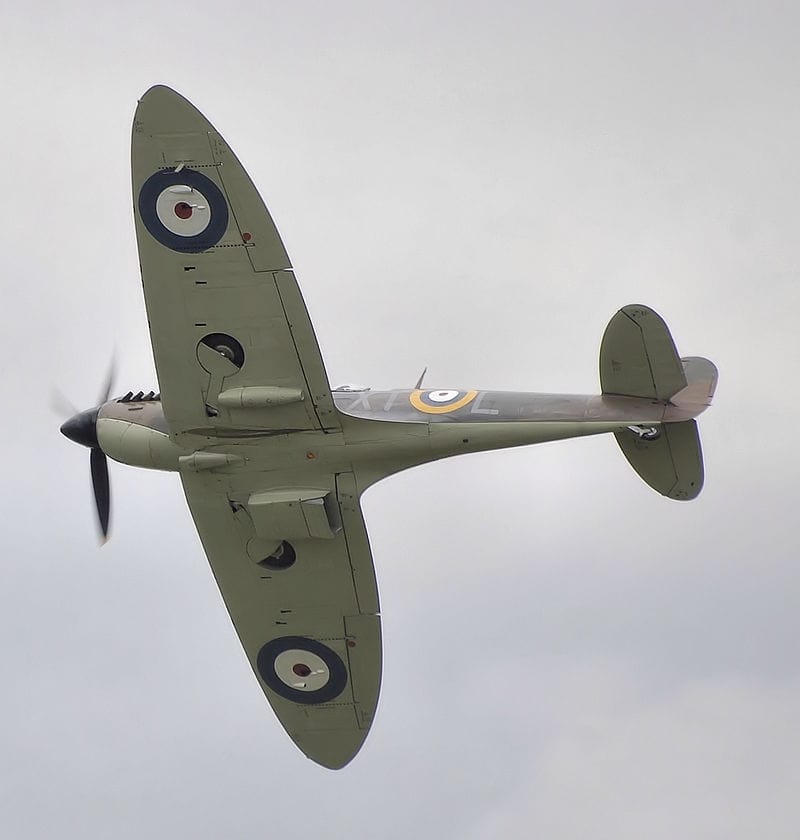
Spitfire. Image Creative Commons.

Spitfire. Image Creative Commons.
That same spirit of defiance and resistance was also visually manifested and immortalized in Sir Winston’s iconic “V” for “Victory” sign.
Just over a month later, the Battle of Britain began. That battle would end in victory for Britain, thanks to the Supermarine Spitfire and Hawker Hurricane fighter pilots of the Royal Air Force (RAF), whose accomplishments were praised by Churchill as “Their Finest Hour.” It’s a safe bet that those RAF aerial warriors in turn drew much of their inspiration from their PM’s “finest hour” in that June 4, 1940 speech.

This is the only airworthy Hurricane with a genuine Battle of Britain history. Since 2015 she has lodged with the Shuttleworth Collection and is seen displaying at the 2017 Season Premier Airshow at Old Warden, Bedfordshire, UK. 7th May 2017

Hawker Sea Fury. Image Credit: Creative Commons.
Prelude to the Iron Curtain Part I: The Yalta Conference (February 4 – February 11, 1945)
This was where Churchill met with U.S. President Franklin Delano Roosevelt and Soviet General Secretary Joseph Stalin to discuss the postwar reorganization of Germany and Europe (and, unfortunately, set the stage for the Soviet subjugation of Eastern Europe during the Cold War).
However, Churchill was still a pragmatist.
As Ted R. Bromund, Senior Research Fellow in Anglo-American Relations at The Heritage Foundation’s Margaret Thatcher Center for Freedom, said to this reporter during the Q&A of a March 2024 event at Victims of Communism Memorial Foundation (VOC) titled “CHURCHILL AND REAGAN: STATESMEN OF THE COLD WAR, “Except at Yalta, the idea that he would have a knockdown, drag-out fight with FDR over the nature of Stalin as an absolute monster…You gotta win the war, and that to Churchill is so overwhelmingly important that he’s willing to swallow a great many things that he doesn’t like for the sake of achieving that end. It’s not glorious, but it’s very necessary.”
Prelude to the Iron Curtain Part Deux: The Potsdam Conference (July 17 – August 2, 1945)
This was the follow-up to Yalta, except this time, FDR was dead, succeeded by his former Vice President, Harry S. Truman, who shared Churchill’s abhorrence of Communism (hence VOC’s Truman-Reagan Medal of Freedom), making them kindred spirits.
Alas, that kindred spirit relationship was rudely interrupted when Churchill inexplicably lost his reelection bid for PM on July 26, 1945, i.e., after Nazi Germany’s surrender but before Imperial Japan’s surrender. However, Churchill would launch yet another political comeback when he regained the Prime Minister’s seat on October 26, 1951, thus enabling his professional partnership with Truman to resume until the latter left office on January 20, 1953.
Sir Winston’s Lasting Legacy
The most acclaimed cinematic depiction of Churchill’s wartime leadership is Gary Oldman’s Best Actor Oscar-winning portrayal in the 2017 film “Darkest Hour.”
Beyond Hollywood embellishment, perhaps the best lasting tribute to Sir Winston’s wartime leadership is the Churchill War Rooms (part of the Imperial War Museums [IWM]) in London; this writer has toured it twice and highly recommends it.
About the Author: Christian D. Orr, Defense Expert
Christian D. Orr is a Senior Defense Editor. He is a former Air Force Security Forces officer, Federal law enforcement officer, and private military contractor (with assignments worked in Iraq, the United Arab Emirates, Kosovo, Japan, Germany, and the Pentagon). Chris holds a B.A. in International Relations from the University of Southern California (USC) and an M.A. in Intelligence Studies (concentration in Terrorism Studies) from American Military University (AMU). He is also the author of the newly published book “Five Decades of a Fabulous Firearm: Celebrating the 50th Anniversary of the Beretta 92 Pistol Series.”