
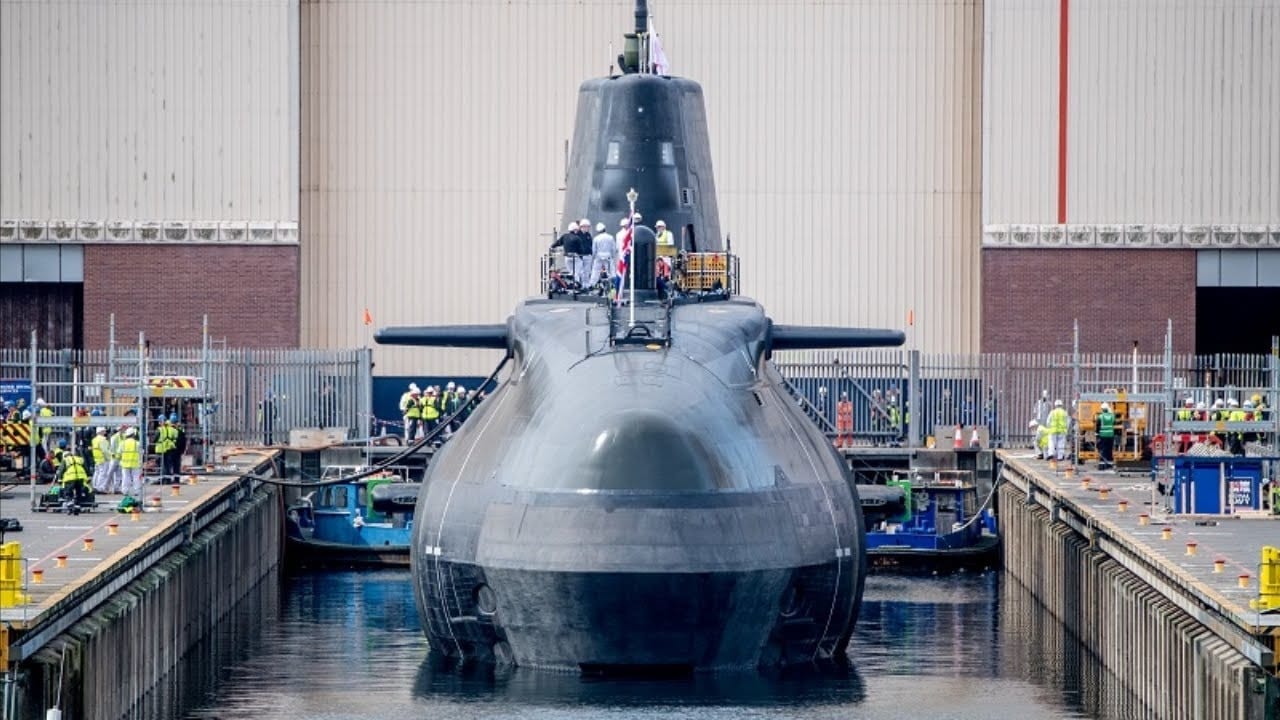
Key Points and Summary – Britain has officially commissioned HMS Agamemnon, the sixth Astute-class nuclear attack submarine and one of the quietest boats ever built.
-Welcomed into service by King Charles III at Barrow-in-Furness, Agamemnon brings near-silent nuclear propulsion, Sonar 2076, Spearfish torpedoes, and Tomahawk Block V missiles with 1,000-mile reach.
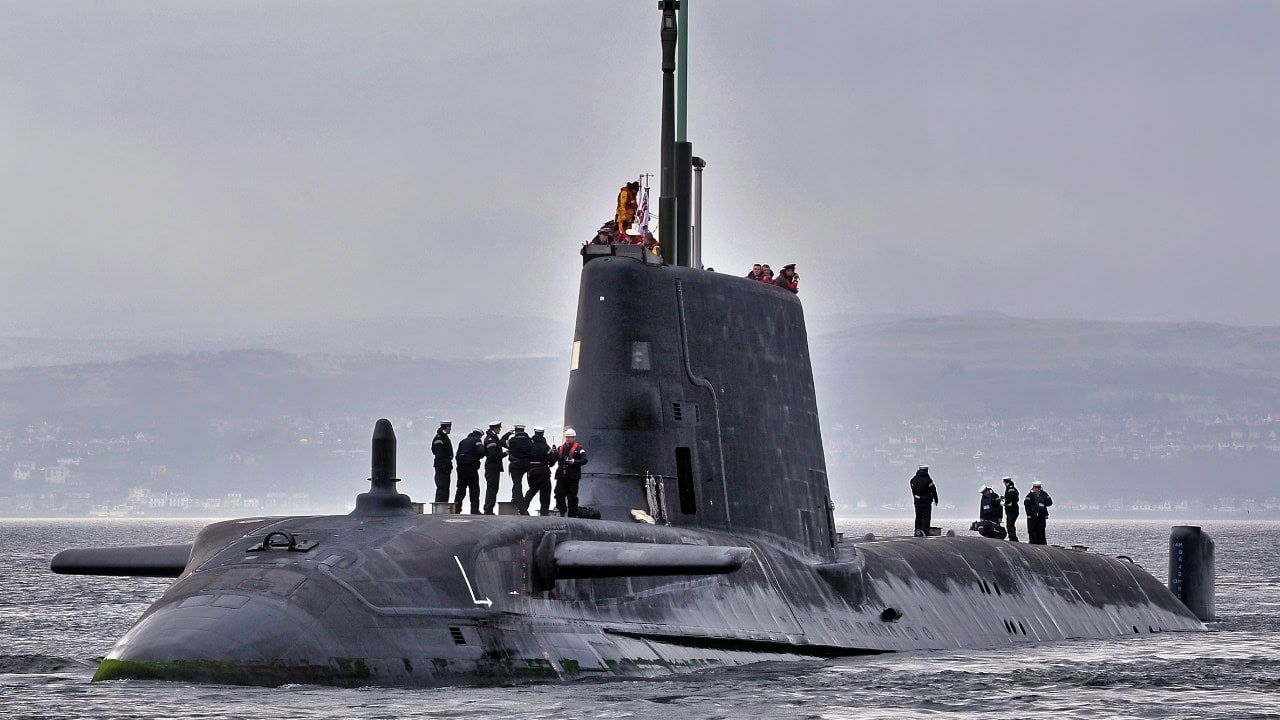
Astute-Class Submarine. Image Credit. Creative Commons.
-Based at HMNB Clyde, she will shield carrier groups, guard the UK’s ballistic-missile subs, and protect critical undersea infrastructure while offering stealthy land-attack options.
-With global undersea competition intensifying from Russia and China, Agamemnon’s “baby dolphin” acoustic signature gives the Royal Navy—and NATO—a first-rate undersea hunter and deterrent.
Astute-Class Submarine HMS Agamemnon Just Changed the Royal Navy
Britain’s Royal Navy added a new nuclear-powered attack submarine to its fleet this year as part of its ongoing effort to modernize its undersea deterrent and maintain its global maritime power.
On September 22, King Charles III formally welcomed HMS Agamemnon into service at BAE Systems’ Barrow-in-Furness yard, marking the sixth Astute-class boat to be commissioned since the program began in 2010. In a rare break from tradition, the King personally read the commissioning warrant, a role typically performed by the Fleet Commander.
The ceremony drew more than 500 guests, including senior defense leaders and families of the crew. Agamemnon’s commanding officer, Commander David “Bing” Crosby, praised the years of effort across government, industry, and the armed forces that brought the 7,400-tonne, 97-meter submarine into service.
Crosby said that the submarine “stands at the forefront of modern submarine warfare in the most unforgiving of all battlespaces.”
“She is a product of stealth, equipped with world-leading sensors and is crewed by a highly-trained and dedicated crew. Together, they form a formidable capability, vital to protecting the United Kingdom’s security interests and supporting our global responsibilities,” he continued.
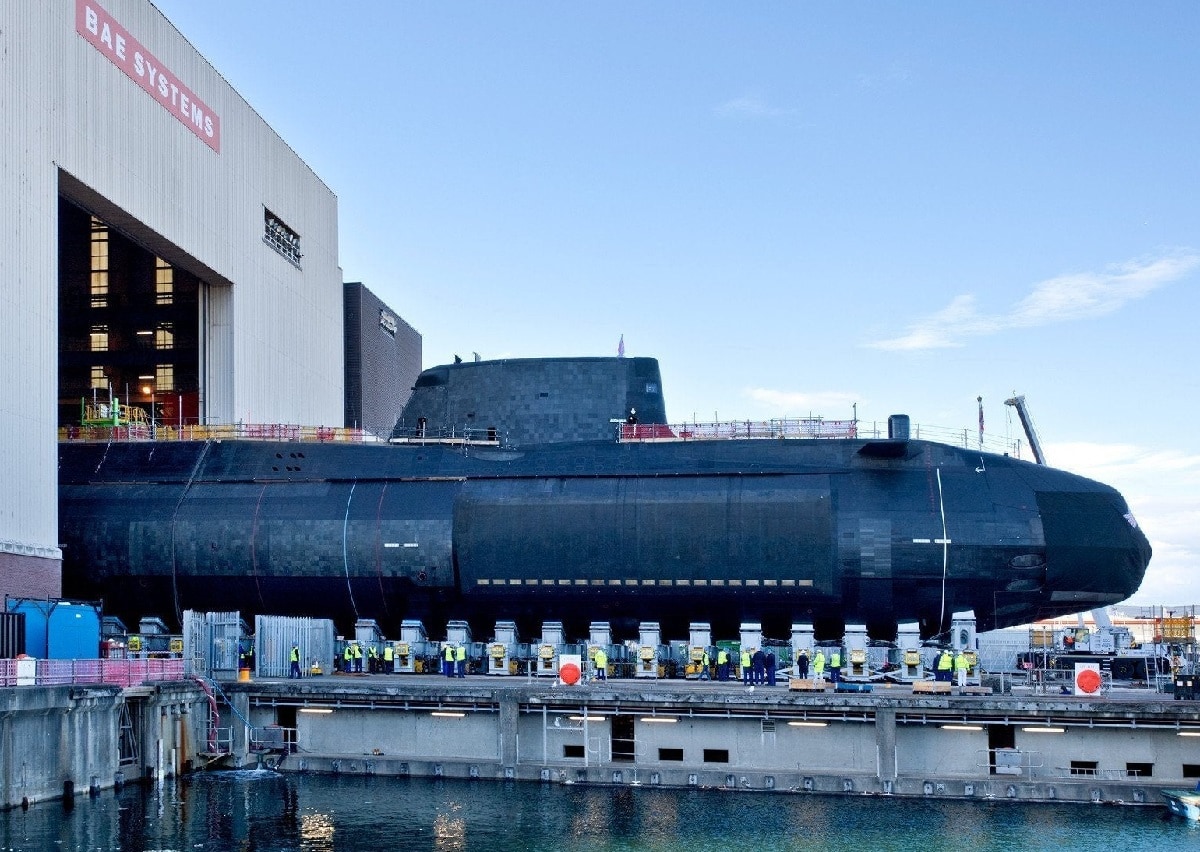
Astute-class Submarine. Image: Creative Commons.
The vessel is equipped with advanced sonar, Spearfish heavy torpedoes, and Tomahawk Block V cruise missiles capable of striking land targets up to 1,000 miles away. Once operational, Agamemnon will be based at HM Naval Base Clyde in Scotland, where she will join five other submarines from the same class. Her mission will be to defend carrier strike groups, safeguard Britain’s ballistic missile submarines, and protect vital undersea infrastructure while providing the option to project power ashore when necessary.
The commissioning came on the same day Defence Secretary John Healey cut the first steel for HMS King George VI, the fourth and final Dreadnought-class missile submarine. Set to replace the aging Vanguard-class sometime in the 2030s, the Dreadnought boats will continue Britain’s Continuous at Sea Deterrent (CASD).
First Sea Lord Admiral Sir Gwyn Jenkins called both events “significant milestones in the Royal Navy’s enduring commitment to safeguarding our nation.” Jenkins added that Britain’s submarine force remains “respected by allies, feared by enemies and the pride of our island nation.”
BAE Systems, which has built every British submarine since the Victorian era, framed the commissioning as proof of enduring cooperation between the defense industry and the Navy. Chief Executive Charles Woodburn described the event as a testament to Britain’s industrial base and national security.
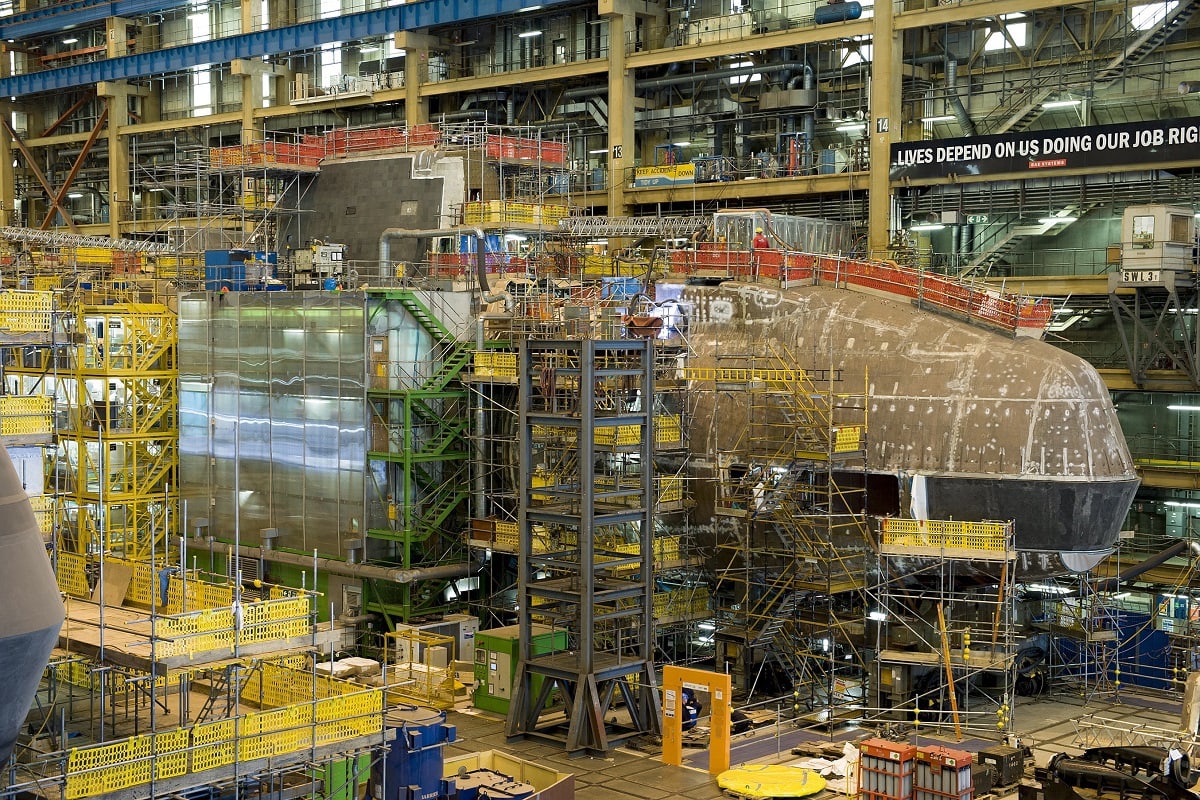
Astute Class submarine Audacious under construction at Barrow in Furness shipyard in Cumbria.
Audacious is the fourth of the seven Astute Class submarines being built for the Royal Navy.
The first two boats, HMS Astute and Ambush, are currently undergoing sea trials. The third boat, Artful, is reaching the final stages of her construction at Barrow shipyard. All three are to be based at Faslane on the Clyde.
The fanfare around the ceremonies is certainly warranted; the Astute-class program, though slow in delivery, represents one of the most advanced submarine designs in the world.
Seven boats are planned in total, with HMS Achilles expected to complete the class later this decade.
The addition of Agamemnon comes at a time of heightened global tension, with Russian aggression in Europe and China’s naval buildup in the Indo-Pacific reinforcing the need for a capable and resilient underseat fleet – not just for the United Kingdom, but for NATO more broadly.
What Makes the Astute-Class So Remarkable: Quiet As Baby Dolphin
From hull to drive train, what truly sets the Astute-class apart is just how quiet she is – and how that quiet is engineered.
The Royal Navy calls these boats “the quietest submarines ever constructed” – and that silence is, today, a strategic necessity in modern undersea warfare.
That incredible quality begins in the hull, which is sheathed in more than 39,000 anechoic (anti-acoustic) tiles that form a rubberized coating designed to absorb incoming sonar pings and dampen any noise emitted by the vessel itself. The tiles help mask the submarine’s acoustic signature and reduce reflections back to active sonar operators.
The propulsion system aids the quiet, too. Astute-class submarines use a pump-jet rather than a conventional propeller, reducing cavitation (the formation of noisy bubbles) and smoothing the water flow around the stern at the same time. The pump-jet’s quieter operation is one of the most important components of stealth, and plays a huge role in making the Astute so quiet.
Third, the internal machinery and systems are isolated and engineered to minimize vibration and noise transmission into the hull structure. While exact internal acoustic isolations methods are typically classified, the combination of quiet reactor output, the use of vibration mounts on internal machinery, and a well-designed layout are all standard components of moder submarine design.
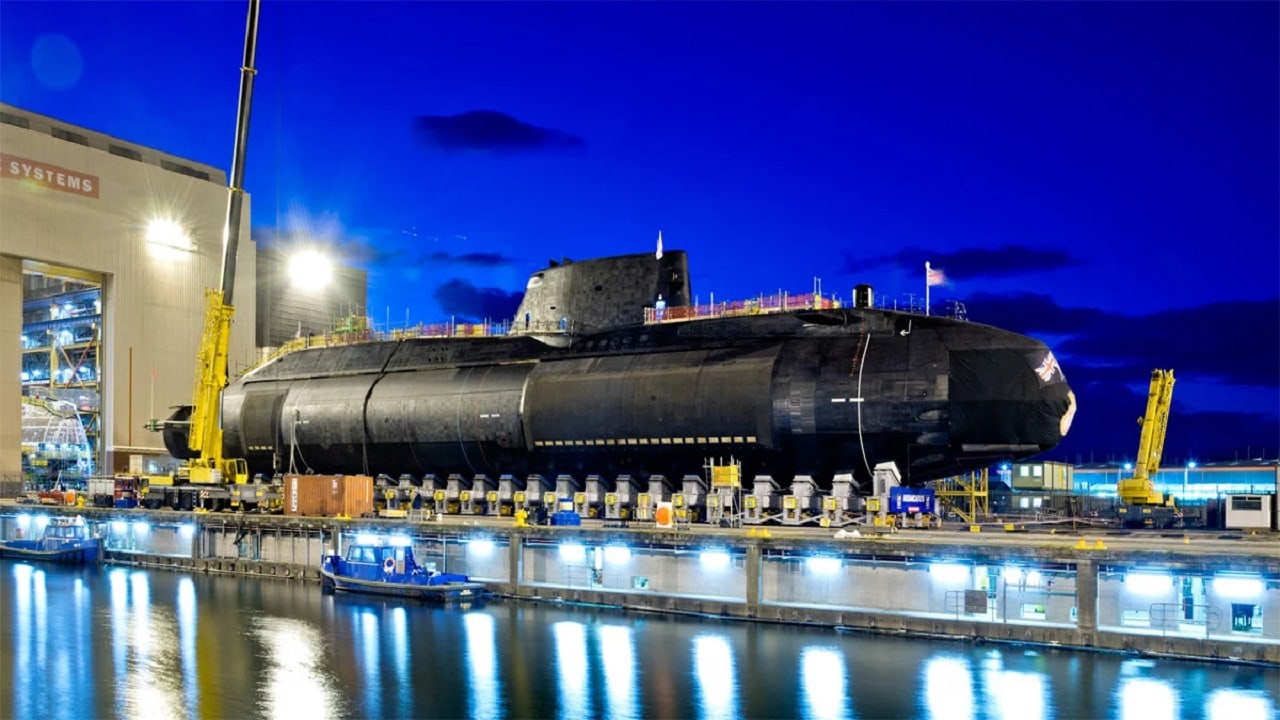
Astute-class Submarine. Image Credit: BAE Systems.
Taken together, these features make the Astute’s acoustic profile so low that observers often liken it to the sound of a “baby dolphin.”
Being one of the quietest submarines in the world, the Astute is a remarkable achievement for the United Kingdom – and a huge asset.
In submarine warfare, detection can be fatal. A submarine that can hear but not be heard gains a vertical advantage; the quieter the platform, the deeper it can operate undetected while making it more difficult for adversaries to localize, classify, or engage it.
By reducing noise, Agamemnon and her sister boats can approach contested zones, follow adversary vessels, or even position strike assets without alerting adversaries to their presence.
Astute boats also carry the advanced Sonar 2076 suite, a passive/active sensor system that enables detection at long ranges while keeping the submarine’s own acoustic signature below enemy thresholds.
Asute-Class Bottomline
In an era where a Russian Yasen-class boat like Arkhangelsk quietly slips beneath the Arctic, or Chinese submarines quietly shadow U.S. formations in the Indo-Pacific, the Astute’s near-silent profile ensures it can stalk, observe, and strike long before adversaries know it’s there.
About the Author:
Jack Buckby is a British author, counter-extremism researcher, and journalist based in New York who writes frequently for National Security Journal. Reporting on the U.K., Europe, and the U.S., he works to analyze and understand left-wing and right-wing radicalization, and reports on Western governments’ approaches to the pressing issues of today. His books and research papers explore these themes and propose pragmatic solutions to our increasingly polarized society. His latest book is The Truth Teller: RFK Jr. and the Case for a Post-Partisan Presidency.

