
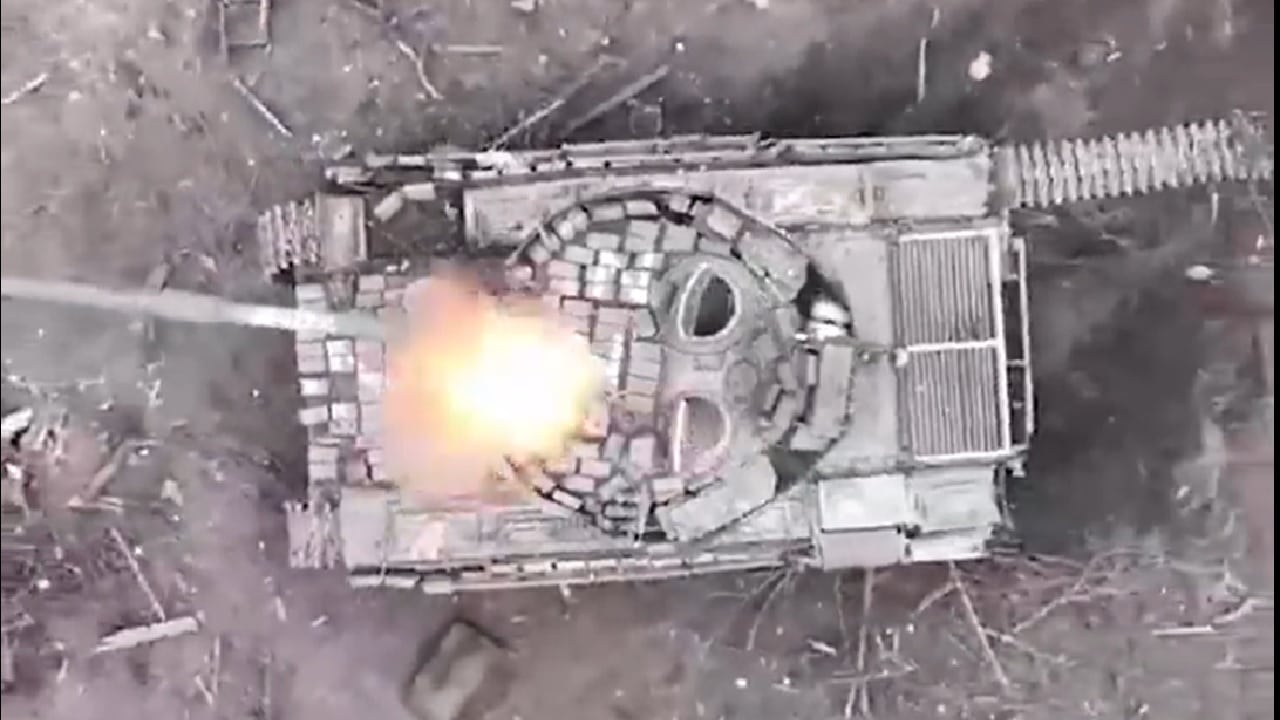
Key Points and Summary: Ukraine has become the world’s largest tank graveyard, specifically for the Soviet-era T-72 Main Battle Tank (MBT), with Russia losing over 1,200 units in a single year.
The Flaw: The T-72’s infamous “jack-in-the-box” design—storing ammo in a ring inside the turret—causes catastrophic “cook-offs” when hit, instantly killing the crew and blowing the turret sky-high.
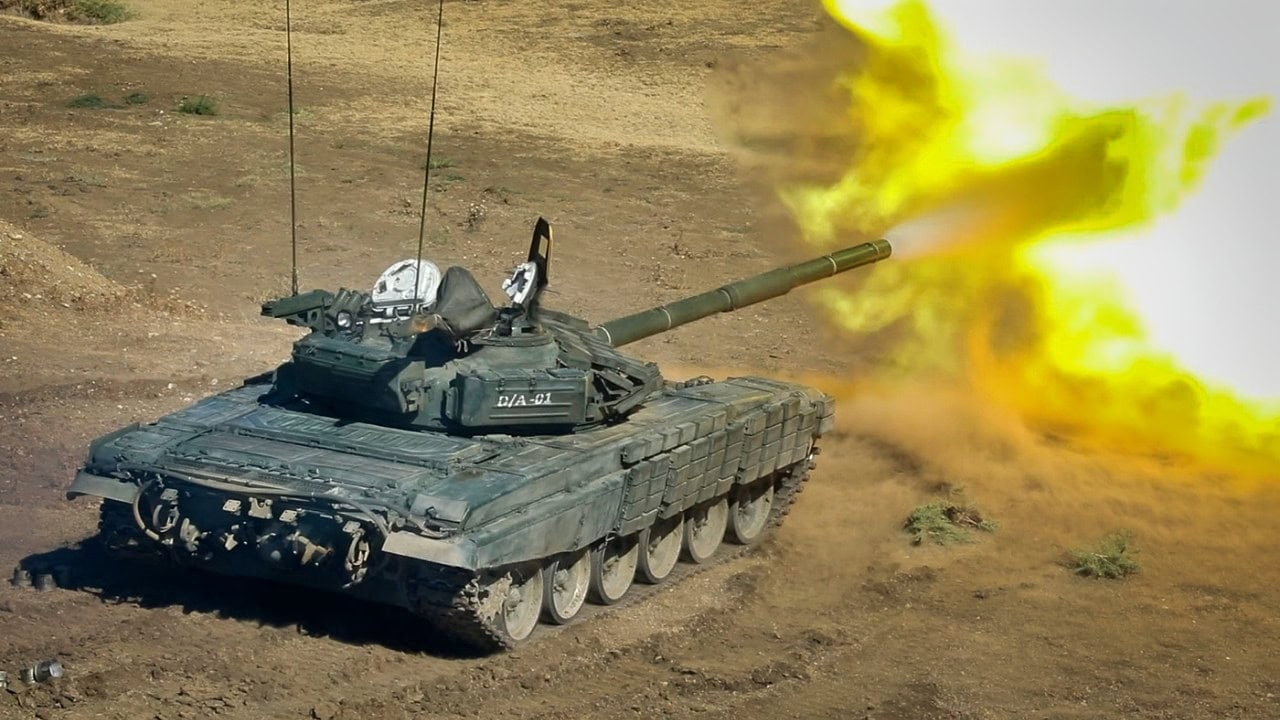
T-72 Tank. Image Credit: Creative Commons.
The Cause: Modern anti-tank missiles and cheap drones have exposed the T-72’s vulnerability, proving that armor without support is a death trap.
The Future: With the advanced T-14 Armata MIA due to cost, Russia is forced to keep feeding obsolete T-72s into the “meat grinder.”
Ukraine is One Massive Tank Graveyard for the T-72 Tank
In addition to flesh-and-blood creatures (human beings and beloved pets alike), the term “graveyard” can also be applied to machines, such as warplanes and tanks.
Regarding tank graveyards in particular, this writer has personally visited two impressive ones in Iraq: one at Camp Taji and the other at Balad Airbase. (Yes, even though the latter is an Iraqi Air Force installation, it has its fair share of main battle tank [MBT] carcasses from the era of now-defunct dictator Saddam Hussein that had been obliterated by A-10 Warthog strafing runs during the 2003 Iraq War, AKA Operation Iraqi Freedom).
According to ScienceInfo.Net, the three largest tank graveyards in the world (in ascending order) are in Rockensra, Germany (Thuringia forest, 300 km southwest of Berlin), Herlong, California (the Sierra Army Depot), and at the Kharkiv factory in Ukraine, approximately 40 km from the Russian border.
It’s highly apropos that a Ukrainian site should top the list, as the country as a whole is one ginormous tank graveyard, especially for the previously prestigious Soviet-designed T-72 MBT.
Bottom Line Up Front (BLUF)
This grim graveyard reality is summed up appropriately in an article titled “Ukraine & T-72: The death of the tank?” authored by Jamie Middleton, Research Assistant at The Tank Museum (located in Bovington, Dorset, England).
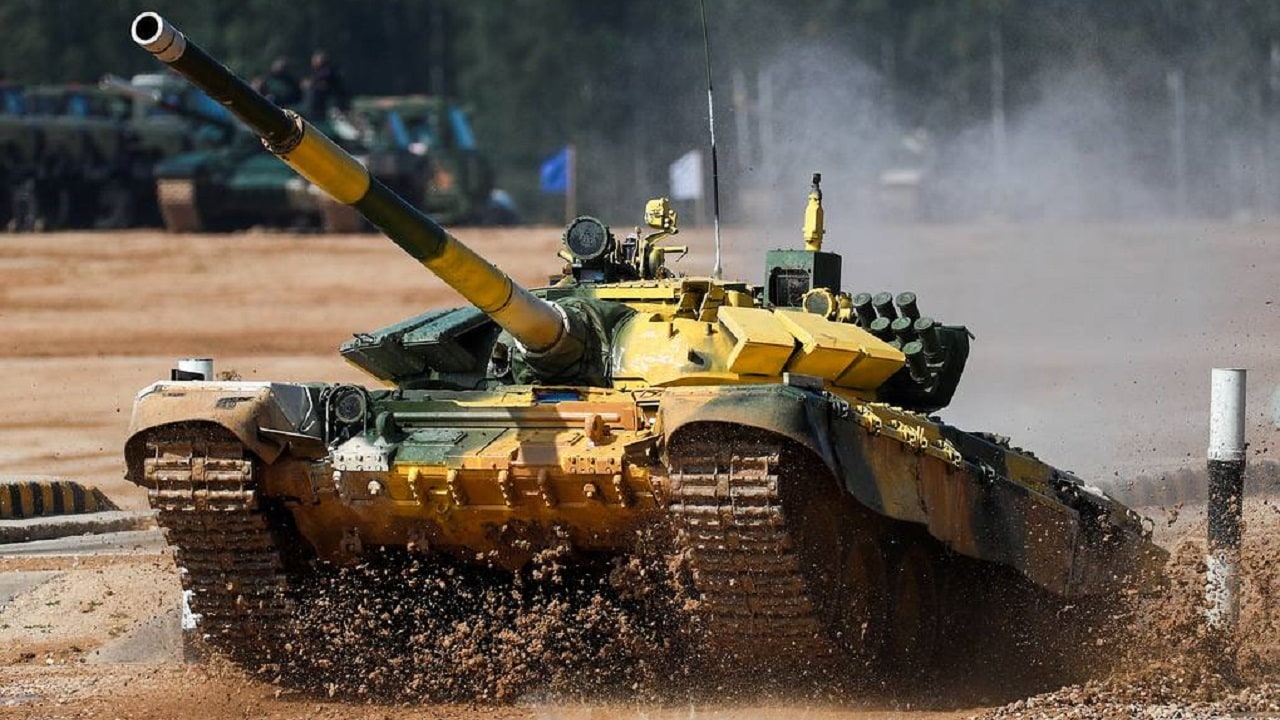
Russian T-72 tank. Image Credit: Creative Commons.
As Middleton states in the opening paragraph, “The invasion of Ukraine has laid bare the ease with which tanks can be killed in modern combat. Social media has been littered with footage and images of destroyed Russian tanks strewn across roads, destroyed by donated Ukrainian drones and shoulder-mounted anti-tank missiles.” Five paragraphs later, the author adds, “Tanks sent into combat alone are easy targets, particularly on roads, another lesson the Russians should have taken from Grozny in 1995 [during the First Chechen War].”
Mind you, Middleton penned that article back in May 2022, a mere three months after Vladimir Putin invaded Ukraine. Jamie was unwilling to declare the tank dead (ditto for The Tank Museum’s then-curator David Willey).
However, the T-72 losses have piled even higher in the 3.5 years since that thoughtful piece was written, with at least 1,200 destroyed in one year alone, and with some estimates suggesting that the total number of these tanks may have dwindled to 1,500 (out of an initial tally of 6,900) as of June 2024.
T-72 Autopsy/Postmortem
So then, why has this once-vaunted tank become such a deathtrap?
From a technical standpoint, it boils down to the so-called “jack-in-the-box” design flaw: the shells are all placed in a ring within the turret, so when an adversary’s projectile hits the right spot, the ring of ammunition can quickly ‘cook off’ and set off a chain reaction, blasting the turret off the tank’s hull in a devastating conflagration.
Beyond the technical factor, there’s also the human factor. (To use an American football analogy, “It’s not just about the X’s and O’s, it’s about the Jimmys and Joes.”) The Russian Army is infamous for its low morale, which in turn stems not only from poor pay and working conditions but also from rudimentary training (a sharp contrast to the super high-intensity training that American tankers undergo at Fort Irwin, California).
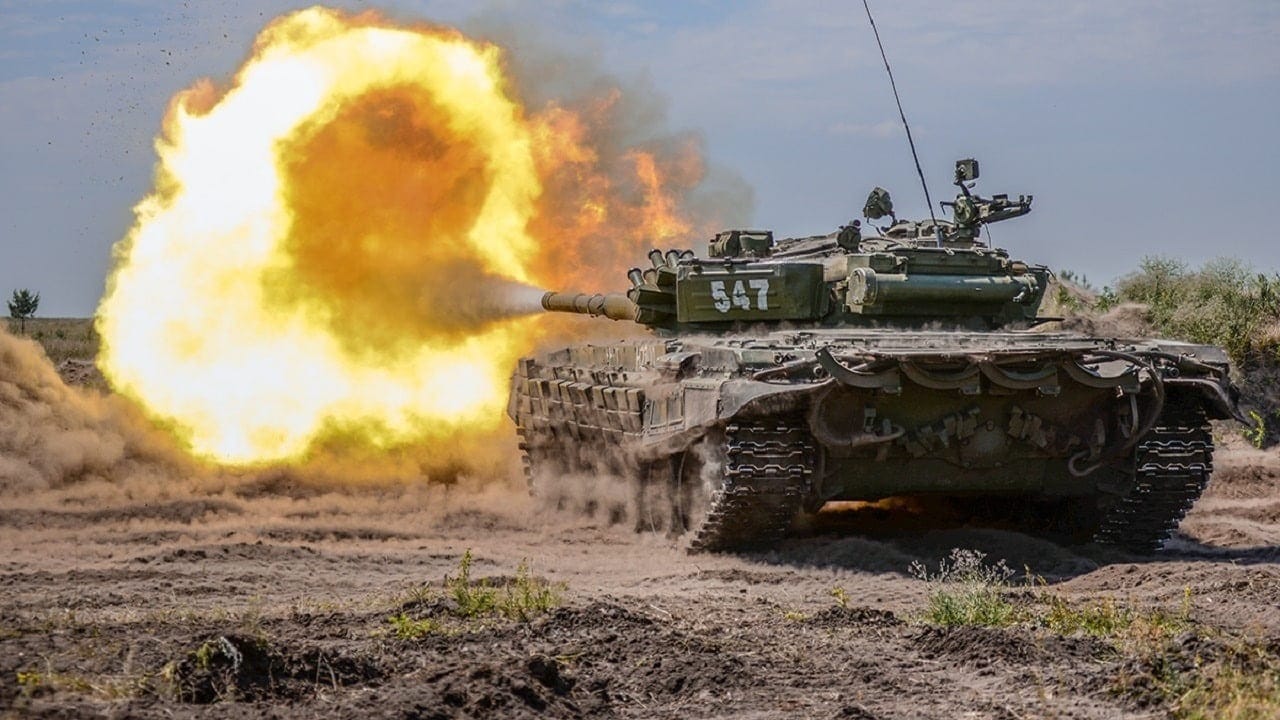
T-72. Image Credit: Creative Commons.
What’s more, the Russian Army’s logistics are, to put it quite bluntly, an egregious violation of the 7 P’s principle, i.e., Proper Planning and Preparation Prevents Poor Performance.
More T-72s Headed to the (Metaphorical) Morgue?
Despite the T-72s ever-declining battlefield performance, given Moscow’s unwillingness to deploy the newer and highly-hyped T-14 Armata due to the its exorbitant expenses and production problems, the Russian Army’s beleaguered armor troops will basically have no choice but to continue to throw its T-72s into the metaphorical meat grinder until the realization of that seemingly far & distant pipe dream of a day when the Putin’s brutal so-called “special military operation” in Ukraine finally comes to an end.
Time will tell, which translates into Russian as “Vremya pocaget” and into Ukrainian as “Chas pokaze.”
In Happier Times: The T-72’s Cold War Combat History
Hard to believe as it may now seem, there was a time when the Cold War-vintage T-72 was arguably the most feared and respected MBT in the world (in other words, before the American-made M1 Abrams cleaned its clock during the 1991 Persian Gulf War, AKA Operation Desert Storm).
Indeed, it’s the most widely used main battle tank in the world, having been manufactured in six countries (approximately 25,000 built to date), serving with the armies of 35 nations, and fighting in all the major wars of the last 20 years.
The T-72’s ability to both take punishment and dish it out was demonstrated during the Iran-Iraq War of 1980–1988. Throughout that conflict, Saddam Hussein’s elite Republican Guard wielded the T-72 with telling effect against the Ayatollah Ruhollah Khomeini’s Iranian tanks.
For example, early in the war, a battalion of T-72s utterly wiped out an Iranian tank battalion comprised of British-made Chieftain tanks – leftovers from the reign of the Shah – without incurring a single loss.
Indeed, one senior Iranian officer was quoted as saying, “The T-72 has the maneuverability and firepower that British tanks…do not go to any comparison with it. Iran has no effective means of dealing with the T-72.”
The T-72’s initial deadly reputation was further bolstered during another 1980s Middle Eastern conflict, the 1982 Lebanon War.
As a result of the war, the Israelis assessed the T-72’s armor as extremely tough to defeat from the front but somewhat easier to beat on the flanks; and (2) the Syrian troops under then-strongman Hafez Assad were very appreciative of these tanks, with a September 14, 1982 article in the Christian Science Monitor citing stories of Syria tank crewmen hugging the armor of their T-72s “in gratitude.”
About the Author: Christian D. Orr, Defense Expert
Christian D. Orr is a Senior Defense Editor. He is a former Air Force Security Forces officer, Federal law enforcement officer, and private military contractor (with assignments worked in Iraq, the United Arab Emirates, Kosovo, Japan, Germany, and the Pentagon). Chris holds a B.A. in International Relations from the University of Southern California (USC) and an M.A. in Intelligence Studies (concentration in Terrorism Studies) from American Military University (AMU). He is also the author of the newly published book “Five Decades of a Fabulous Firearm: Celebrating the 50th Anniversary of the Beretta 92 Pistol Series.”